Article Contents:
- What is a PVC Slatted Ceiling: The Material Without Embellishments
- Where PVC Slatted Ceilings Work Flawlessly
- Bathroom
- Kitchen
- Technical and Auxiliary Rooms
- Rooms with Active 'Ceiling' Traffic of Utilities
- What PVC Slatted Ceilings Provide and What They Don't: An Honest Balance
- What They Provide
- What They Don't Provide
- Polyurethane Ceiling Decor: What It Can Do and in What Context
- When the combination of PVC ceiling and polyurethane decor works
- Bathroom: polyurethane cornice at the transition
- Kitchen: molding as a zone boundary
- Technical rooms with "expensive" neighbors
- When the combination doesn't work: honest diagnosis
- Living room with slatted PVC ceiling and classic moldings
- Attempt to "refine" PVC ceiling in bedroom through decor
- Large-format decor on narrow slatted rhythm
- Too complex profile for ordinary room
- Practice for bathroom, kitchen and technical rooms
- Bathroom: functional system
- Kitchen: zoning and boundaries
- Technical rooms: minimalism without compromise
- Mistakes in decorative 'improvement' of budget base
- First mistake: expensive decor on cheap base
- Second mistake: ornamental molding in utilitarian context
- Third mistake: attaching polyurethane decor directly to PVC battens
- Fourth mistake: color mismatch between decor and battens
- Fifth mistake: attempting to create a 'classical' ceiling through decor on PVC base
- When not to attempt improving such a ceiling at all
- How to Think Correctly: An Algorithm for Solutions
- STAVROS: Polyurethane Ceiling Decor for Those Who Understand the Difference

A conversation about a ceiling doesn't start with choosing a material. It starts with an honest question: what exactly should this ceiling do? Hide pipes? Protect against condensation? Create an atmosphere? Look expensive on a modest budget? Or all of the above at once—which, as we know, doesn't exist in nature.
A PVC panel slatted ceiling is one of the most common solutions in renovation practice, and one of the most misunderstood. It's installed where it's needed, and where it's not. It's decorated where decoration is justified, and attempts are made to refine it where the very concept of 'nobility' poorly matches the material used. Then they look at the result and wonder: why doesn't it look like in the magazine?
This text is about how to think more precisely. Where a PVC slatted ceiling works flawlessly. Where it's a compromise worth making consciously. How and when you can add to itPolyurethane ceiling decoration—and what happens when such a combination is attempted without understanding the logic.



What is a PVC slatted ceiling: the material without embellishment
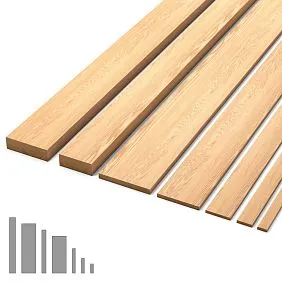
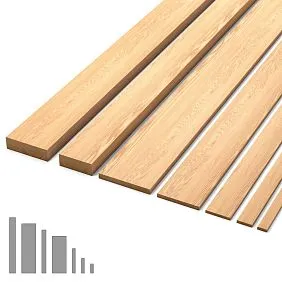
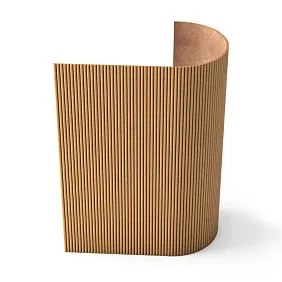
Let's start with the material. PVC—polyvinyl chloride—is plastic. Lightweight, waterproof, non-rotting, non-absorbent, cheap to produce, and easy to install. A PVC panel slatted ceiling is a suspended system: a metal or plastic frame onto which slats of a certain width snap. The space between the base and suspended ceiling hides everything there: pipes, wiring, ventilation ducts, unevenness of the slab.
From an engineering standpoint—almost an ideal material for humid spaces. It's not afraid of water. It doesn't deform from condensation. Mold doesn't form on it with normal ventilation. It can be washed with soapy water. If necessary, an individual slat can be replaced. It's inexpensive—and that's an honest advantage, not an apology.
From an aesthetic standpoint—the story is significantly more complex. A PVC slat is plastic with imitation: white, metallic, wood, mother-of-pearl. Imitation is never equal to the original. The glossy surface of plastic reflects light differently than wood or plaster. The texture the slat tries to reproduce, under side or grazing light, reads as what it is: printed decor on a plastic base. This is neither good nor bad—it's a property of the material. But it means: a PVC slatted ceiling has an aesthetic ceiling (pardon the pun), above which it cannot rise regardless of the decor around it.
Knowing this limit means making the right decisions about decorating.




Where PVC slatted ceilings work flawlessly
There are several contexts where a PVC panel slatted ceiling is not a compromise, but the optimal choice. It should be used precisely in these contexts.
Our factory also produces:



Bathroom
This is a natural environment for PVC. High humidity, condensation, water splashes, regular contact with cleaning agents — PVC withstands all of this without damage. Plaster in the bathroom requires special compounds and careful preparation; MDF without moisture-resistant treatment will swell in one season; painted drywall under constant humidity begins to 'breathe' and eventually loses its shape. PVC slats in the bathroom are a choice without hidden pitfalls, provided the slats are of high quality, the frame is installed with a proper level, and ventilation is ensured.
Another important aspect here: the space above the slatted ceiling in the bathroom conceals wiring and ventilation ducts. This is an engineering necessity that transforms the suspended system from a decorative solution into a functional element. A slat can be removed to access a pipe or ventilation duct without dismantling the entire structure — a valuable property precisely in rooms with active engineering utilities.
Get Consultation
Kitchen
In the kitchen, the ceiling operates under challenging conditions: temperature fluctuations from cooking, grease condensation, steam, intense lighting over the work area. PVC slats here perform the same protective function as in the bathroom, with the difference that surface contamination is more active. Glossy slats in the area above the stove accumulate grease deposits and require regular washing — but simple washing, without special cleaners.
PVC panel slatted ceilings in the 'only over the work area' variant are a popular practice in small kitchens. Over the dining area, a different solution can be used: a stretch ceiling, drywall with paint, or a completely open ceiling in a loft style. Zoning the kitchen by changing the ceiling material is a working technique that allows using PVC where it is appropriate and another solution where aesthetics are important.
Technical and auxiliary rooms
Entrances with poor ventilation, bathrooms, laundry rooms, technical rooms in dachas, corridors — all these are environments where the main criterion for the ceiling is resistance to conditions and ease of maintenance. Aesthetic requirements are secondary here. PVC slatted ceilings cover all pragmatic tasks and require neither special surface preparation, nor complex installation, nor expensive materials.
Rooms with active 'ceiling' traffic of utilities
Private houses, townhouses, premises with exposed utility networks — where heating pipes, water supply pipes, and electrical cables run above the ceiling. A slatted suspended ceiling creates a technical space with access to utilities while providing a visually finished surface from below.
What a PVC slatted ceiling provides and what it doesn't: an honest balance
Before thinking about decoration and 'improving' such a ceiling, it's important to understand its real capabilities and limitations. This is not a criticism of the material — it's an honest conversation about what to expect.
What it provides
Complete moisture resistance. PVC does not absorb water — this is a physical property of the material, not a marketing claim. A PVC slatted ceiling withstands direct contact with water without deformation or loss of geometry.
Concealment of utility networks. The space above the slats hides everything: from pipes to wiring. This is fundamentally important in old housing stock, where ceilings have a complex history of utility routing.
Simple installation without base preparation. The PVC system does not require leveling of the base ceiling. Guides are mounted around the perimeter with a level, slats snap into place. This reduces cost and installation time.
Easy maintenance. The PVC slat surface does not require special products: ordinary soapy water and a soft cloth.
Affordable price. The material and installation of a PVC slatted ceiling is one of the most affordable options for organizing a suspended ceiling.
What it doesn't provide
Visual warmth. PVC is a cold material in the visual sense. Plastic slats do not create the feeling of a living surface that wood, plaster, or a matte stretch ceiling provides. Glossy PVC reflects light harshly, creating glare that in small spaces can be perceived as pressure.
Possibilities for complex color solutions. PVC slats are produced in fixed options: white, glossy, wood-like, metallic. Painting a PVC surface is possible but requires special adhesion primer and does not yield the same result as painting MDF or plaster.
Suitability for 'living' spaces with aesthetic requirements. Living room, bedroom, study — rooms where the ceiling is part of the overall design concept. PVC slats in these contexts create visual dissonance: expensive furniture, quality textiles, thoughtful lighting — and above all this, a plastic suspended ceiling that reads as an element of a different class.
Architectural neutrality. A slatted ceiling has its own pronounced rhythm — horizontal or vertical stripes with a certain spacing. This rhythm is not neutral: it is active and strongly influences the perception of space. In a small bathroom, this is a plus; in a living room — a potential problem.
Polyurethane ceiling decor: what it can do and in what context
Before thinking about how to connect a PVC slatted ceiling with stucco decor, you need to understand what Polyurethane ceiling decor itself is — what its properties are and under what conditions it reveals itself.
Polyurethane ceiling decor is a lightweight, water-resistant, geometrically stable material capable of reproducing complex relief with high precision. Cornices, moldings, ceiling rosettes, coffers, decorative beams — all this arsenal is made from polyurethane of varying densities. The best examples reproduce the detailing of historical stucco with a precision unavailable to other materials in this price segment.Ceiling molding made of polyurethane accepts paint evenly, without pores or absorption stains — provided a quality primer is used.
polyurethanePolyurethane decor for interiors is moisture-resistant — this is an important property precisely in the context of bathrooms and kitchens, where PVC slatted ceilings are most often used. It does not absorb water, does not deform from condensation, does not deteriorate upon contact with household chemicals — provided the surface is properly painted.
But there is a fundamental point: stucco and stucco decoration are architectural elements. They create visual weight, set the stylistic tone, and appeal to a specific tradition of space design. A cornice at the wall-ceiling transition is not just a decorative strip. It is an element of the classical architectural system that presupposes a certain context: a smooth whitewashed ceiling, a proportionate room, a coordinated interior style. When this context is absent, stucco ends up like a person in a tailcoat on the beach.
When the combination of a PVC ceiling and polyurethane decor works
Yes, such a combination is possible and in a number of cases justified. But with specific conditions.
Bathroom: polyurethane cornice at the transition
This is one of the most correct applications. The slatted PVC ceiling is installed, the slats are neat, the frame is hidden. At the transition between the wall and the slatted ceiling is a polyurethane cornice with a simple profile, without complex ornamentation. The purpose of the cornice here is not decorative in the full sense, but functional-aesthetic: it closes the technical gap between the wall and the ceiling frame system, finishes the transition, and gives a sense of completion.
For the bathroom, choosePolyurethane ceiling decorationwith a minimal, clean profile—without curls, without complex relief, without classical order elements. Such a cornice works as a technical finishing element. It is painted to match the wall color or the color of the ceiling slats—depending on whether the transition needs to be noticeable or blended.
Polyurethane in the bathroom does not require special conditions: moisture resistance is its natural property. Painting with moisture-resistant acrylic paint in two to three coats is the only requirement for long-term service in high-humidity conditions.
Kitchen: molding as a zone boundary
In the kitchen, a slatted ceiling is often installed over the work area, while a different solution is used over the dining or sofa area. The boundary between zones is a functional point where polyurethane molding plays an architectural role: it clearly marks the transition between materials and styles, turning an accidental joint into an intentional line.
This is not decoration for decoration's sake. It's a solution to a specific task — to design the transition between two different surfaces so that it reads as an intentional architectural element, not an unfinished joint. In this context, a simple-profile polyurethane molding is completely justified and works well.
Technical rooms with 'expensive' neighbors
There are situations where a bathroom or toilet adjoins a corridor or hallway with a well-thought-out interior. In such cases, the bathroom ceiling — despite its utilitarian nature — should create at least the illusion of consistency with the apartment's overall concept. A simple polyurethane ceiling cornice, painted the same color as the cornices in adjacent rooms, creates a sense of system — even if behind the bathroom door it's a PVC batten, and behind the corridor door it's a plaster ceiling with real cornice molding.
When the combination doesn't work: honest diagnosis
This is more important than a list of situations where the combination of PVC and molding is justified. Because unjustified applications are significantly more common in practice.
Living room with batten PVC ceiling and classic moldings
Imagine: a living room of 20 square meters, a batten ceiling made of PVC panels in white gloss — and at the wall-ceiling transition, a polyurethane cornice with an 'egg-and-dart' or 'ionics' profile is installed. The classic ornamental profile appeals to an architectural tradition where its base is a smooth plastered surface. Plastic battens negate this tradition by their very presence. The result: elements from different value systems are in direct proximity, and it shows.
The richer the relief of the stucco cornice, the sharper the dissonance with the PVC base. The 'stucco ceiling' profile in a classic execution requires context: a smooth white ceiling, a proportional room, coordinated furniture. On a slatted PVC ceiling, it looks like a cake with cream roses on a plastic plate.
Attempt to 'ennoble' a PVC ceiling in a bedroom through decor
A bedroom is a room with high aesthetic requirements. The ceiling here influences the overall feeling of the space: its height, warmth, intimacy. A batten PVC ceiling in a bedroom is already a questionable choice from an aesthetic standpoint. Attempting to add a ceiling rosette, cornice, and polyurethane moldings to it won't fix the situation: the decor will draw attention to the material mismatch and create a contrast that reads as incompleteness. Here, it's better to either change the core solution — choose a stretch ceiling, drywall with paint, or leave the base ceiling after leveling — or accept that the bedroom ceiling will be simple, without decor.
Large-format decor on a narrow slat rhythm
A wide ceiling rosette with a diameter of 40–50 centimeters against a background of narrow PVC slats 10 cm wide creates a scale conflict: a large element on a small rhythm looks 'floating,' unanchored in space. Forceiling moldingspolyurethane elements, the scale of the surroundings is important: on a solid, homogeneous surface, a large accent element works. On a structured surface with its own rhythm, it competes with that rhythm instead of organizing it.
Too complex a profile for an ordinary room
An ornate ornamental cornice in a four-square-meter bathroom is visual overload. A small room with high detailing on all surfaces creates a feeling of crampedness and bustle. A simple 'technical' cornice is better here in every way: it solves the task of designing the transition, doesn't create unnecessary tension, and is easier to maintain in conditions of constant humidity.
Practice for bathrooms, kitchens, and technical rooms
Let's examine specific scenarios—not theoretically, but from the perspective of solutions that work.
Bathroom: a working system
A slat ceiling made of PVC panels is the optimal choice for a bathroom. What needs to be done correctly:
Mounting the frame—strictly level, with a gap from the base ceiling of at least 5 centimeters for ventilation. Without proper air circulation above the slats, condensation will accumulate on the base ceiling, creating conditions for mold—not on the PVC slats, but on the ceiling slab.
Slat selection – a matte or semi-matte finish is preferable to a glossy one. Gloss in the bathroom creates harsh glare from recessed lighting and visually 'lowers' the ceiling in a room with a narrow rectangular layout.
Polyurethane ceiling decorIn the bathroom – a cornice with a simple profile, 40 to 60 mm high, without ornamental details. Painting – with moisture-resistant acrylic paint in two coats, with prior surface priming.
Lighting – recessed spotlights, with moisture protection IP44 and above. Decorative ceiling rosettes for a chandelier in the bathroom are unnecessary. A chandelier in the bathroom is a separate safety issue, and decor for it is usually not needed in this space.
Kitchen: zoning and boundary
In the kitchen, the ceiling is often designed in several zones. Above the work surface and stove – a slatted ceiling made of PVC or metal slats (the second option is preferable if the budget allows). Above the dining area – a stretch ceiling or painted drywall.
The boundary between zones is formed by a polyurethane molding with a simple geometric profile. This is not classic stucco—it is an architectural belt separating two different ceiling solutions. The molding is painted in the wall color or a neutral white—depending on whether you want the transition to be noticeable or unobtrusive.
Above the dining area, if the ceiling here is already plaster or drywall, a full-fledgedCeiling moldingpolyurethane decor is possible: a ceiling rosette above the chandelier, a cornice around the perimeter of the zone. It works here because the base is appropriate. The transition to the slatted zone is fixed with molding – the system is complete and reads as a deliberate decision.
Technical rooms: minimalism without sacrifice
In technical spaces, the task is to make a ceiling that will withstand the conditions and require no maintenance. A slatted ceiling made of PVC panels is the perfect answer. Decoration here is excessive. The only exception: if the technical room is in direct visual contact with the living space – for example, a laundry room with an open door to the hallway. In this case, a cornice in the same color as in the hallway creates a sense of system continuity without the need to change the material.
Errors of Decorative 'Improvement' of a Budget Base
The desire to improve a budget solution with decor is understandable. But decor does not change the nature of the base: it only creates a new visual context in which the base reads even more clearly.
First error: expensive decor on a cheap base
A high-quality polyurethane cornice with a rich profile, properly installed and painted, draws attention. This means that everything next to it also attracts attention. Glossy PVC battens next to a professional molded cornice become more noticeable, not less. The principle is the same as in jewelry: an expensive stone in a cheap setting looks cheaper, not more expensive.
Second error: ornamental molding in a utilitarian context
ClassicCeiling moldingwith ornamental details requires an appropriate environment: walls with paneling, furniture of a matching style, flooring with a suitable covering. In a bathroom with 'subway' tiles in light gray and a white PVC ceiling, a classic cornice with egg-and-dart molding creates stylistic chaos: elements from different value systems occupy the same space.
Third error: attaching polyurethane decor directly to PVC battens
Polyurethane molding is glued with construction adhesive. A PVC batten is a smooth surface with low adhesion. Adhesive sticks worse to a PVC surface than to plaster or painted drywall. Without an adhesion primer, the molding will begin to peel off after a few months. Rule: if decor is attached to a PVC surface, a special plastic primer—an adhesion primer—is necessary.
Fourth error: color mismatch between decor and battens
A polyurethane cornice in 'warm white' next to PVC battens in 'cool white' creates a color dissonance, especially noticeable under good lighting. Both elements are white, but the whites are different. Solution: paint the cornice the same shade as the battens, or use battens with a matte surface, which is less sensitive to subtle color discrepancies.
Mistake five: attempting to create a 'classical' ceiling through PVC-based decor
This is the most conceptual mistake. A classical interior is a system where all elements are coordinated: materials, proportions, detailing, style. A slatted ceiling made of PVC panels does not fit into this system. Attempting to add classical molding to a PVC ceiling does not turn it into a classical ceiling—it merely creates an interior narrative with several mutually exclusive signals. If the goal is classicism, a different base is needed.
When it's generally not worth trying to improve such a ceiling
Sometimes the best advice sounds like this: don't add anything. A slatted PVC ceiling is a utilitarian solution. A good utilitarian solution in the right context. There's no need to 'refine,' 'decorate,' or 'visually elevate' it. There's no need to hide its utilitarian nature behind molded decor that creates the illusion of a different class.
If the room is a bathroom, kitchen work area, or technical space—let the slatted PVC ceiling be what it is: a reliable, practical, easy-to-maintain material. A clean, even white slat without decor in a bathroom looks more correct than the same slat with an ornamental cornice that clearly came from a different interior context.
A decoratively restrained solution is also a solution. Sometimes the strongest one.
If a persistent desire arises to have something more than functional slats on the ceiling—this is a signal to reconsider the base material itself.Batten panels for ceilingsmade of natural wood or MDF open up completely different possibilities for decor: their surface accepts paint, their material combines organically with polyurethane molding, their texture creates a living base on which qualityPolyurethane ceiling decorworks as a system, not as an attempt to improve an initially unsuitable material.
How to think correctly: a decision algorithm
Three questions to ask before any ceiling decision:
What is the functional purpose of the room? Humidity, temperature fluctuations, intensity of use — this dictates the base material. For wet and technical rooms, PVC is the right choice. For living spaces with aesthetic requirements — it's already questionable.
What is the aesthetic goal? If the goal is to 'make it beautiful' in the full sense, you need a base that supports beauty. PVC slats are not such a base. If the goal is to 'fulfill the functional task with minimal aesthetic loss' — PVC is quite appropriate.
Does the decor match the base? Moldings require a base of their class. A simple polyurethane cornice as a technical finishing element is suitable for PVC. Ornamental classical moldings are not. The scale, style, and complexity of the decor must match the material and function of the base.
By answering these three questions, you can make a decision that won't require redoing in a year. This is the main principle of working with ceilings: not 'how to make it beautiful,' but 'how to do it right — and that in itself will be beautiful.'
STAVROS: polyurethane ceiling decor for those who understand the difference
When the base matches the task, polyurethane ceiling decor reveals its full potential. STAVROS offersPolyurethane Itemsfor ceilings — cornices, moldings, rosettes, coffers — with precise relief detailing, stable geometry, and a surface ready for professional painting.
polyurethaneCeiling decorationfrom the STAVROS range is not mass-produced products with randomly selected profiles. These are coordinated lines of elements where the cornice, molding, and ceiling rosette are verified for scale, proportions, and style. For wet rooms — moisture-resistant, not requiring special installation conditions. For living spaces — with rich relief that accepts the finest color tuning.
Where the base is correct — be it a plaster ceiling in the living room, drywall in the bedroom, or woodenSlatted panels for the ceiling — Polyurethane Decortransforms the ceiling from a closed plane into an architectural element of the space. This is precisely the scenario for which STAVROS creates its assortment.
FAQ: Answers to Popular Questions
Can polyurethane cornice be glued directly onto PVC ceiling slats?
Technically yes, but an adhesion primer for plastic is required. Without it, the adhesive will not provide sufficient bond to the smooth PVC surface, and the cornice may start to detach after a few months. After priming — use mounting adhesive for polyurethane and secure with tape during polymerization.
Which polyurethane cornice profile to choose for a bathroom with a slatted PVC ceiling?
For a bathroom — a simple geometric profile 40–60 mm high without ornamental details. Ornamental relief in constant humidity conditions accumulates dirt in the recesses and is more difficult to maintain. A simple profile is functional, looks neat, and is easy to clean.
A slatted PVC ceiling 'eats up' the room's height. How to minimize this?
The minimum frame clearance is about 3 centimeters from the base ceiling. If utilities allow, the frame can be mounted as close as possible to the slab. Choosing narrow slats instead of wide ones also visually reduces height loss: a narrow slat creates a more delicate rhythm that doesn't fill the space.
Can PVC slats be painted to the desired color?
Yes, but an adhesion primer for plastic and acrylic paint for plastic surfaces are required. Standard interior paint won't adhere to PVC — it peels off during the first wash. The correct technology provides a durable coating, although in bathroom conditions it will still require periodic renewal.
Is a slatted PVC ceiling appropriate in a hallway?
Yes, provided that the corridor is not a visual extension of the living room or another space with higher aesthetic requirements. In an isolated corridor or hallway without direct visibility from living rooms, PVC slat ceiling is practical and appropriate. If the corridor opens into the living room, the ceiling solution must be coordinated with the main space.
What makes a polyurethane ceiling cornice better than a polystyrene one?
Density, clarity of relief, and durability. Polystyrene is a soft and brittle material with low detail. High-density polyurethane holds its shape, does not dent upon accidental contact, reproduces fine ornamentation without loss of clarity, and accepts paint evenly. In bathrooms and kitchens, polystyrene quickly yellows and loses its appearance, while polyurethane remains stable.