Article Contents:
- Why MDF is the right base for slatted panels for painting
- Density: a parameter that cannot be ignored
- Structure of an MDF slatted panel module for painting
- Three slat profiles: three different surface characters
- Rectangular profile: strictness and graphic clarity
- Semicircular profile: softness and tactility
- Trapezoidal profile: volume and rich decorativeness
- Color strategies for slatted panels for painting
- Monochromatic system: relief without color noise
- Tonal accent: safe expressiveness
- Saturated accent: transformation with one wall
- Two-color system: depth through gap
- Slat spacing: rhythm controlling room scale
- How spacing affects space perception
- Rule of slat width and spacing
- Slat orientation: free proportion correction
- Painting-ready slat panels in different spaces
- Living room: accent wall as main design move
- Bedroom: headboard as natural shelter
- Entrance Hall: Architectural Greeting
- Children's Room: Color as a Pedagogical Tool
- Kitchen: Color Precision in the System
- Office and Meeting Room: Architecture of Corporate Identity
- Restaurant and Cafe: Atmosphere Through Color and Texture
- Coordinated Finishing System: From Slat Panel to Final Detail
- Molding Along the Upper Edge of the Slat Field
- Floor skirting: the lower boundary of the system
- Decorative Overlays: Framing System for Classic Style
- Extension Slats for Corner Joints
- Balusters and Staircase in Wooden Theme
- Lighting for paintable slatted wall panels
- Installation of paintable MDF slatted panels
- Adhesive installation: for even walls
- Frame installation: for uneven walls and laying utilities
- Acclimatization: mandatory stage
- Painting: before or after installation?
- About the Company STAVROS
- FAQ: paintable slatted wall panels
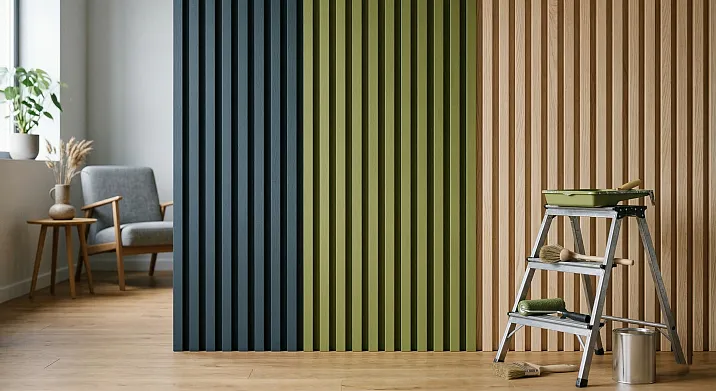
There is one question that everyone who takes interior design seriously asks themselves sooner or later: what to do with the walls? Painting is simple. Wallpapering is predictable. But there is a solution that gives the wall architectural volume, spatial expressiveness, and at the same time preserves complete freedom in color choice. This ispaintable slatted wall panels— a material that has changed the language of modern interior design.
Why specifically paintable? Because MDF panels with relief slats are not just a finish, they are a system where the relief works as an architectural tool, and the color enhances or restrains its expressiveness. In monochrome white — a delicate play of shadows, a gentle texture. In deep anthracite — monumentality, weight, character. In bottle green — natural intimacy. One material, an infinite number of statements.
This is the main strength of paintable slatted wall panels: they do not dictate style and color to you — they follow your concept and realize it with architectural precision.

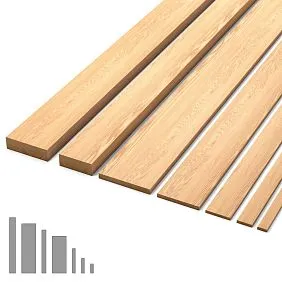
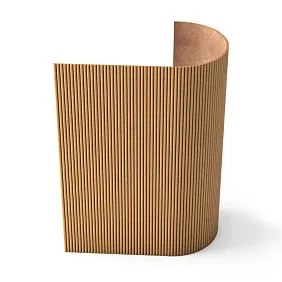
Why MDF is the right base for paintable slatted panels
Let's start with the material, because this is where the difference lies between panels that will last twenty years and those that will disappoint within a year.
MDF (medium-density fiberboard) is a pressed wood fiberboard with a homogeneous structure, free of internal voids, knots, and density variations. It is precisely this homogeneity that makes it an ideal base for slatted panels that will later be painted: the paint applies evenly, without 'spots' of varying absorbency or the emergence of natural defects.




Density: a parameter that cannot be ignored
For wall slatted panels intended for painting, the working density of MDF is 750–850 kg/m³. This is not a marketing phrase, but a specific technical parameter that determines the material's behavior throughout its entire service life.
At a density of 750–850 kg/m³:
-
The slats maintain straightness at humidity fluctuations of 40–70%
-
The ends do not swell during priming and painting
-
Fasteners (finish nails, screws) hold securely without damaging the fibers
-
The paint applies evenly, and the finish coat does not 'bubble'
At a density of 630–700 kg/m³:
-
Ends swell from soil moisture even during the painting process
-
After 6–12 months, battens develop micro-bends visible in side lighting
-
Fasteners weaken, panels begin to 'pull away' from the wall
-
Price is 25–30% lower — the penalty comes in six months
Simple pre-purchase check: request the technical data sheet for the MDF batch indicating density. A conscientious manufacturer will provide the document without delay.
Our factory also produces:


Structure of a paintable MDF batten panel module
A standard module consists of three layers:
-
MDF substrate — a 12–16 mm thick board, the load-bearing structure. Attached to the wall or frame.
-
Battens (beads) — strips made of MDF of the same or higher density, fixed to the substrate at a specified pitch. Height above substrate 15–35 mm.
-
Factory primer — a base layer for the finish paint. Ends are sealed with edge tape or additionally primed.
Standard module format: 0.6 × 2.4 m = 1.44 sq.m. Multiple modules join into a single surface — with precise spacing, the joint is invisible.
Get Consultation
Three batten profiles: three distinct surface characters
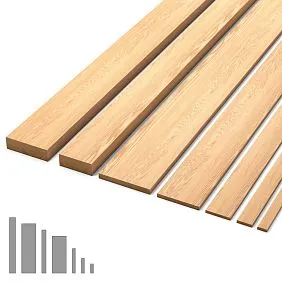
A batten profile is the cross-section of the molding that defines the character of light and shadow and, consequently, the visual appearance of the finished wall. Choosing the right profile is choosing the atmosphere you create.
Rectangular profile: strictness and graphic clarity
Batten with vertical side edges. Under directional lighting, the shadow in the gap is sharp, with a clear boundary. The surface reads as architecturally precise, structural, disciplined. It works best with monochromatic color schemes.
Ideal for: offices, meeting rooms, kitchens with linear design, minimalist living rooms in neutral tones.
Semi-circular profile: softness and tactility
Rounded edges soften the shadow, making it smooth and diffused. Despite the synthetic material, the semi-circular molding is perceived as organic, natural. It is this profile that gives the surface a sense of warmth and liveliness.
In white RAL 9010 with warm light at 2700 K — semi-circular battens create an interior where you want to spend time.
Ideal for: living rooms, bedrooms, children's rooms, hallways — spaces where humanity is more important than architectural strictness.
Trapezoidal profile: volume and saturated decorativeness
The downward extension of the slat creates a multi-level shadow: the side edge and the lower platform produce different shadow zones simultaneously. The surface is dynamic, saturated, and weighty.
Ideal for: restaurants, hotel lobbies, boutiques, reception areas — commercial spaces with high decorative requirements.
Color strategies for paintable slatted panels
The ability to specify an exact color from the RAL or NCS catalog is the main practical advantage of paintable slatted wall panels. This allows for the implementation of any design concept with professional precision. But a color strategy is not just about choosing a shade. It is an architectural decision.
Monochromatic system: relief without color noise
paintable slatted wall panelsare painted in the same RAL as the adjacent walls. Molding, baseboard, reveals — all in a unified tone. The relief exists only through shadow. No color contrast — only parallel shadow lines that enliven the monolithic surface.
This is the highest form of architectural restraint. With proper side lighting, a monochromatic slatted wall is meditative, delicate, incredibly 'stylish' in terms of controllability of the interior image. For minimalism, this is the only correct strategy.
Working monochromatic RALs:
-
RAL 9010 — warm white, neutral, universal
-
RAL 9001 — cream white, even warmer
-
RAL 7044 — silk grey, Scandinavian character
-
RAL 7032 — pebble grey, natural warmth
Tonal accent: safe expressiveness
Walls — light neutral. Slatted panel — the same tone, but 2–3 shades deeper. The relief is perceived through both color contrast and shadow simultaneously. Safe, elegant, professional. Works in 9 out of 10 residential projects.
Example: wall RAL 9010 white + panel RAL 9001 cream. Or wall RAL 7047 telegrey + panel RAL 7043 traffic grey.
Saturated accent: transformation with one wall
One slatted wall in a deep, saturated color — against a background of neutral other surfaces. This is the most radical color solution, and simultaneously — the most effective for transforming a space.
Working accent RALs for paintable slatted panels:
| RAL | Name | Character | Best rooms |
|---|---|---|---|
| 7016 | Anthracite | Strictness, modernity | Living room, office |
| 6005 | Moss Green | Nature, tranquility | Bedroom, study |
| 5011 | Steel Blue | Depth, style | Living room, bedroom |
| 3005 | Wine Red | Warmth, character | Living room, restaurant |
| 8025 | Pale Brown | Earth, coziness | Bedroom, living room |
| 4009 | Pastel Violet | Tenderness, sophistication | Bedroom, children's room |
| 6019 | Pastel Green | Freshness, lightness | Children's room, hallway |
Two-tone system: depth through the gap
Slats and substrate — in different RAL. The substrate is visible in the gaps between the slats. Result: spatial depth through color contrast.
Most striking combinations:
-
White slats + black substrate — maximum graphic contrast
-
Cream slats + dark green substrate — natural luxury
-
Gray slats + dusty pink substrate — delicate spatial complexity
-
White slats + golden substrate — glamorous accent
Slat spacing: rhythm that controls the scale of the room
Step — the distance from the center of one batten to the center of the next — controls the visual density of the surface. This is a parameter that is often underestimated, yet it works no less effectively than color.
How step affects the perception of space
Narrow step (15–25 mm): an active, dense, rich surface. In monochrome — almost ornamental. For large rooms from 25–30 sq.m, where 'wall fullness' is needed.
Medium step (30–40 mm): a balanced, universal rhythm. Works in any room, in any style. The safest choice when there is no strict design concept.
Wide step (45–60 mm): an airy, light rhythm. Each batten reads as an independent element. Visually 'raises' the ceiling. For small rooms and styles with minimal details.
Very wide step (80 mm and more): monumental, sculptural. Each batten is an architectural accent. For niches, accent fragments, spaces with high ceilings.
Rule of batten width and step
Narrow batten (12–15 mm) with a wide step — lightness, graphic quality. Wide batten (30–40 mm) with a narrow step — massiveness, heaviness, 'woodiness'. Batten width and step should be chosen as a pair: this is a single decision, not two independent parameters.
Batten orientation: free proportion correction
Batten orientation is set during installation — and it is one of the most effective and free tools for spatial correction.
Vertical slats direct the gaze from bottom to top. The ceiling appears higher. For standard apartments with ceilings of 2.5–2.7 m, this is a critically important technique.
Horizontal slats guide the eye along the wall. The room appears wider. For narrow corridors and elongated rooms with a lack of width.
Diagonal slats create movement, kinetics. For non-standard spaces with an author's concept.
Note: The orientation of the slats is determined before ordering, as it affects the length of the blanks and the direction of module installation. It cannot be changed after production.
Painter-ready slatted panels in different spaces
Living room: an accent wall as the main design move
The wall behind the sofa is the traditional place for a slatted accent wall. Area: 10–16 sq.m, 7–11 modules. Rectangular or semi-circular profile. Monochrome or saturated accent.
For a living room in a modern classic style — a slatted panel +Decorative Inserts in framing create an architectural frame system, reminiscent of classical boiserie. Vertical posts and horizontal crossbars in the same RAL turn the wall into a full-fledged architectural object.
Lighting: directional spotlights 30–40° + LED strip behindwooden moldingAlong the upper edge. Downward light across the slatted surface — a cinematic effect.
Bedroom: headboard as a natural shelter
3–4 modules behind the bed. Semi-circular profile. Soft neutral RAL or saturated accent. LED strip along the lower perimeter of the panel — upward warm light 2700 K across the slatted surface. This serves as both a nightlight and an architectural accent simultaneously.
Headboard made of paintable MDF slatted panels — a solution that gives the bedroom intimacy and architectural character without expensive work.
Be sure to complete the system:wooden moldingalong the upper edge +— is a horizontal element that frames the room at the bottom of the walls where the wall meets the floor. Skirting boards perform several functions: they hide the technological gap between the wall and floor covering (necessary for thermal expansion), protect the lower part of the wall from mechanical damage, create visual completion, and may conceal wiring.from below in the same RAL.
Hallway: architectural greeting
The hallway is the first space that greets guests and the homeowner.paintable slatted wall panelshere they work as an instant architectural statement: 'people with taste and character live here'.
For a narrow hallway: horizontal slats, medium spacing of 30–35 mm, neutral warm RAL (9001, 7044). Visually expands the space plus creates a warm atmosphere.
Moisture-resistant coating is essential for the entryway. At the entrance: wet shoes, damp jackets, accidental splashes. MDF with moisture-resistant varnish or two-component 2K paint will withstand the everyday wear and tear of an entryway without losing its appearance.
Children's room: color as an educational tool
A child's room is a space where color works especially actively. MDF slatted panels for painting allow creating a color concept for a child's room with professional precision: soft pastel for a girl, calm blue for a boy, neutral warm green for both.
Semi-circular profile — no sharp edges, safe. Wide spacing. Vertical slats — visually 'raise' the ceiling, which is important for children's rooms with standard ceiling height.
Important: when choosing paint for a child's room — only water-based compositions without volatile organic compounds (VOC).
Kitchen: color accuracy in the system
Slatted wall in the kitchen area — in the RAL of the kitchen fronts. A unified color monolith: fronts + slatted wall + molding. For kitchens with fronts in precise custom RAL, this is the only way to achieve systemic wall consistency.
Moisture-resistant coating is essential.Furniture HandlesMolding from the coordinated material — the finishing touch to the system.
Office and Meeting Room: Architecture of Corporate Identity
Corporate RAL on a slatted wall is a branding statement through architecture. A reception area with a slatted wall in the company's brand color creates a first impression of professionalism and precision.
For meeting rooms: paintable MDF slatted panels + acoustic filling in the frame (mineral wool 50–100 mm). Reduced reverberation is a practically measurable result: meeting participants get less tired, hear each other more clearly, and negotiations become more productive.
Restaurant and Cafe: Atmosphere Through Color and Texture
Trapezoidal or rectangular profile. Dark accent RAL: anthracite, dark green, cherry red. Directional spotlights 2700 K.
A slatted wall in a restaurant is an atmosphere-forming element that subconsciously influences the perception of the establishment: the rhythm of the slats creates a sense of intimacy, color sets the mood, warm light adds coziness. Guests stay longer. This is not abstract aesthetics—it's economics.
Coordinated Finishing System: From Slatted Panel to Final Detail
Paintable slatted wall panels deliver maximum results only as part of a coordinated system. Uncoordinated elements—molding from a different source, baseboard of a different profile, slats of a different shade—disrupt the integrity of the image, and no quality of panels can compensate for this.
Molding along the upper edge of the slatted field
Wooden moldingor paintable MDF molding along the upper end of the panel—a horizontal architectural boundary. Without molding, the upper end of the panel looks like an unfinished line. In the same RAL—monolithic. Oak molding—a natural contrast to the MDF surface.
Technical technique: a 20–30 mm gap between the molding and ceiling + LED strip inside — downward lighting along the slatted surface. The molding becomes a lighting tool.
For classic and neoclassical interiors —Wooden cornicewith a profiled front surface: the architectural 'roof' of the slatted field with historical dignity.
Floor baseboard: the lower boundary of the system
— is a horizontal element that frames the room at the bottom of the walls where the wall meets the floor. Skirting boards perform several functions: they hide the technological gap between the wall and floor covering (necessary for thermal expansion), protect the lower part of the wall from mechanical damage, create visual completion, and may conceal wiring.in the same RAL — the lower boundary of the color system. Monolithic from floor to ceiling.
Alternative:Solid oak wooden skirting board— a natural 'grounding' element for the MDF system. Warm oak at the bottom + precise RAL on panels + neutral molding at the top = a multi-layered system with a natural foundation.
Decorative overlays: a frame system for classic style
Decorative Insertscreate architectural frames around the slatted field. Vertical posts + horizontal crossbars = classic boiserie panel system. In the same RAL — monolithic. In a contrasting RAL — an architectural dialogue of surfaces.
Additional slats for corner junctions
wooden plankfor corner transitions from paintable MDF in the same RAL. Organic addition in niches, near slopes, in areas of non-standard junctions. Continuity of the color system — without exceptions.
Balusters and staircase in a wooden theme
In country houses and apartments with stairs —balusters for staircasessolid oak serves as a natural, warm counterpoint to the precise painted MDF surfaces. Wood and paintable MDF in the same space create a dialogue that enriches the interior.
Lighting for paintable slatted wall panels
Without proper lighting, a monochrome slatted wall in white RAL 9010 is just a white wall. With proper lighting, it becomes an architectural surface with a meditative rhythm of parallel shadows. Light is a constructive element of the slatted system, not an option.
Directional spotlights at a 30–45° angle to the surface. Shadow in the gaps creates depth. Warm light 2700 K for living spaces. Neutral 3000–3500 K for offices.
LED strip behind molding — downward light along the slatted surface. With high molding and a gap, it provides soft backlighting, making the entire surface 'glow' from above.
LED in the gaps — the strip is mounted on a backing before attaching to the wall. Light from within the gaps is the most effective solution for dark, saturated RAL colors.
Dimmer: essential for living spaces. A slatted wall with dimmable light is a surface with a mood that changes throughout the day.
Installation of paintable MDF slatted panels
Adhesive installation: for even walls
Substrate requirements: deviation no more than 5 mm over a two-meter straightedge. Surface must be clean, dry, and primed.
Adhesive: neutral MS-polymer mounting adhesive or acrylic-polyurethane without solvents. Application: zigzag along the perimeter + dots in the center. Finish nails Ø1.2 × 30 mm along the perimeter to secure until the adhesive cures (24–48 h).
The first panel must be aligned strictly with a laser level. A 1 mm deviation on the first module = noticeable shift after 6–7 modules.
Frame installation: for uneven walls and routing utilities
Metal profile CD 60×27 mm. Load-bearing profile spacing: 400–600 mm. Frame horizontality — laser level. All cables (LED, outlets) — before installing the first panel.
Panel fixation: mounting adhesive + finish nails into the profile. Double fixation is reliable for any loads.
Acclimatization: a mandatory step
48 hours horizontally at the room's working temperature and humidity. MDF reacts to humidity changes. Acclimatization stabilizes geometry before installation. Without it — risk of micro-bends in slats after installation.
Painting: before or after installation?
Factory painting (production) — optimal option. Even spraying in a climate chamber, no drips, no missed edges.
Painting after installation — acceptable if conditions are met: medium-nap roller, 2 coats, intermediate sanding P400 between coats. Advantage: installation damage is painted over. Disadvantage: difficult to evenly paint the depth of gaps.
About the company STAVROS
Painting-ready slatted wall panels are a material where MDF quality, slat spacing accuracy, and color consistency from batch to batch entirely determine the final result. No installer skill can compensate for unstable slat spacing or porous MDF. That is why choosing the manufacturer is an architectural decision.
STAVROS — Russian manufacturer of MDF and solid wood products for interior finishing and furniture production. Painting-ready slatted wall panels made of MDF with density 750–850 kg/m³, with spacing accuracy control ≤ 0.5 mm in each production batch. All profiles: rectangular, semicircular, trapezoidal. Factory painting in any RAL or NCS. Two-tier quality control system. Hand-finishing of decorative elements.
Fully coordinated system:Moldings and cornices, MDF skirting boards for paintingandBaseboards made of solid oak, additional slats, Decorative Inserts, balusters for staircases, Furniture Handles.
Over 4000 models. 20,000 modifications. 39 product groups. Shipping from a single piece. Delivery across all of Russia. Professional consultation on system selection, quantity calculation, and lighting planning — before placing an order.
FAQ: wall-mounted slatted panels for painting
Can slatted MDF panels be painted independently after installation?
Yes. A medium-nap roller, matte or satin water-based paint without VOCs, 2 coats with intermediate sanding using P400 grit. It is important to thoroughly paint the depth of the gaps — for this, the first coat is conveniently applied with a brush in the gaps, then the second coat with a roller over the entire surface.
Which RAL to choose for slatted panels for painting in a small room?
Light neutral tones: RAL 9010, 9001, 9002 — optically enlarge the space. Vertical slats with a light RAL additionally 'raise' the ceiling. For small rooms, a monochrome system (walls and panels in one tone) is the most effective technique.
Is factory painting needed, or can primed panels for independent painting be purchased?
Factory painting — preferable for precise corporate RAL and two-color systems. Primed panels for independent painting — acceptable for residential projects where the color can be adjusted on-site.
How to calculate paint consumption for slatted panels?
The surface area of the slats and substrate combined is 25–35% greater than the projection area of the panel due to the side edges of the slats. Standard consumption: 180–220 ml/sq.m per coat with matte paint. For 10 sq.m of panel — about 1.8–2.2 liters per coat, 3.5–4.5 liters for two coats.
Can slatted MDF panels be repainted after several years?
Yes — one of the main advantages of MDF over solid wood. Light sanding with P240, degreasing, new RAL color. No dismantling required. Refreshing takes 1–2 days for a 15 sq.m wall.
Slatted panels for painting vs. wallpaper — what's the fundamental difference?
Slatted panels create physical volume on the wall — texture, shadow, depth. Wallpaper is only color and flat pattern. Slatted panels interact with light: they change the character of the surface as lighting changes throughout the day. Wallpaper is static. The durability of MDF slatted panels is 20+ years vs. 5–7 years for wallpaper.
What paint is suitable for paintable slatted MDF panels in a bathroom?
Two-component polyurethane paint (2K) or special moisture-resistant acrylic-urethane. Regular acrylic paint in a bathroom provides insufficient protection: MDF swelling in areas of coating damage after 12–18 months. Moisture-resistant 2K coating creates a film that withstands prolonged exposure to steam.