Article Contents:
- Why wood-look panels remain in demand
- The psychology of wooden surfaces
- Trend or constant?
- Solid wood or imitation: what's the real difference
- Why polyurethane molded decor works alongside wood
- Wood carries emotion, molding carries structure
- Polyurethane as a 'neutral partner'
- Where the combination looks organic and premium
- Living room: accent wall with wooden slats and molding frame
- Bedroom: wooden panel behind the headboard and delicate ceiling decor
- Study and library: slats as a backdrop for an intellectual space
- Hallway and entrance: a warm welcome with architectural rhythm
- Restaurant, lounge, private club
- How to choose colors, rhythm, and scale: a coordinate system
- Color logic: three working strategies
- Slat rhythm: how frequency affects the result
- Scale of stucco decor in a system with wooden slats
- Style matrix: wood and stucco in different interior concepts
- Modern interior and Scandinavian style
- Neoclassical interior
- Modern classic (the most common request)
- Loft with wood
- Country, Provence, rustic
- Where is the line between expressiveness and overload
- The 'one strong element' principle
- Number of surfaces with wooden slats
- When stucco disappears — and that's good
- Check test: 'remove one'
- Installation nuances: features of combining two materials
- Installation sequence
- Thickness of slatted panel underlay
- Acclimatization of wooden slats
- Fastening of wooden slats and polyurethane moldings
- About the Company STAVROS
- FAQ: Answers to Popular Questions

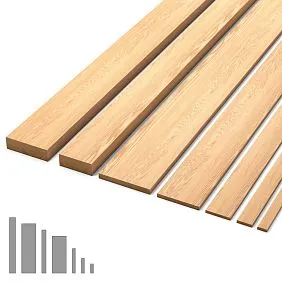
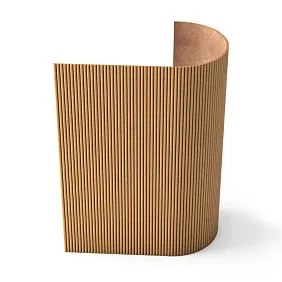
There are combinations that seem paradoxical — until you see the result. The natural texture of wood and the formal decor of polyurethane. The organic warmth of wood and the geometric precision of molding. The living texture with veins and knots — and the perfectly smooth relief of the cornice. At first glance — a conflict. In reality — a dialogue between two languages that, when skillfully translated, create an interior with rare depth and character.wood-look slatted panelsin combination withmolded decoration made of polyurethane— this is one of the most enduring designer combinations in recent years. Enduring — because it works in several styles simultaneously and does not 'become outdated' with every change in fashion trend. Let's examine why and how.



Why wood-look panels remain in demand
One could simply say: 'wood is beautiful.' But that is not an explanation. Let's be more honest: wood is in demand because it brings into the interior something that no synthetic material can — a sense of the living. Not in the literal sense, but perceptually: wood texture is non-linear, it never repeats exactly, it changes with the angle of light, it is tactilely warm.




Psychology of wooden surfaces
Humans are biological beings with millions of years of evolutionary memory about forests, homes, fire, and wood. A wooden surface in the interior activates this memory at a level inaccessible to conscious analysis. It simply 'feels good' — without explanation.
Exactly thereforewood-look slatted wall panelmaintains its position even in an era dominated by concrete, glass, and metal. Minimalism with wood is not a contradiction. It's a humane minimalism that carries warmth.
Our factory also produces:


Trend or constant?
Wood-textured slatted panels emerged in mass interior design around 2015–2018 as a trendy element. But unlike many fashionable solutions that faded as quickly as they appeared, wooden slats have endured. The reason: they solve several problems at once—they create texture, structure a wall, improve acoustics (especially when combined with a soft underlay), and bring in naturalness. This is not just a decorative technique, but a functional tool with an aesthetic dimension.
According to interior market industry analysts, demand for wood-textured slatted wall panels has been stable since 2020 and continues to grow—especially in the business-class apartment segment and suburban construction.
Get Consultation
Solid wood or imitation: what's the real difference
An important question to resolve before starting a conversation about combining: how does a natural wooden slatted panel differ from an MDF wood-look panel?
A natural wood panel is a solid wood cut or veneered surface. The texture is unique for each slat: the grain pattern, knots, tonal transitions—none of this repeats. Under side lighting, the surface 'comes alive': the fine relief of pores and grain creates a play of light and shadow that cannot be imitated.
An MDF wood-look panel is a precise print of wood texture (sometimes with embossed relief) or veneer on an MDF base. When well executed, it is visually convincing. But the difference is noticeable upon tactile contact and under side lighting.
For most interior tasks, natural solid wood or veneer is the preferred choice. It costs more, requires more careful handling, but creates that very living effect which is the main argument in favor of 'wooden' finishes.Wood-look slatted panelsMade from natural oak, ash, walnut, or pine with oil or wax — this is a material category worth investing in.
Why polyurethane molding works alongside wood
At first glance, it seems incongruous: the organic nature of wood and a polymer material. But this is precisely where the main idea of this combination lies.
Wood carries emotion, molding carries structure
Wooden slat paneling is texture, warmth, vitality. But texture alone without structure is beautiful yet architecturally incomplete. The eye 'drowns' in the beauty of the texture and loses its bearings: where is the wall's boundary? Where is the top? Where is the transition to the ceiling?
Molding answers these questions: the cornice marks the top boundary, the baseboard — the bottom, the moldings — the sides. PolyurethanePolyurethane Moldingscreates an architectural framework within which the wooden texture 'lives' as artistic content within a frame.
This is not a random metaphor. A good frame does not compete with the painting — it highlights it. A well-chosen molding does not compete with the wooden slats — it gathers them, makes them complete.
Polyurethane as a 'neutral partner'
Polyurethane molding decor in a basic white finish is neutral in color. A white molding next to warm wood does not argue with it but creates a contrasting border that only emphasizes the warmth and vitality of the wooden texture. This is the principle of artistic contrast: warm next to cool, living next to formal — each becomes brighter from its proximity to the opposite.
Moreover, polyurethane can be painted any color—allowing you to choose not white, but a tinted tone that harmonizes with wood. Molding in 'warm gray' next to oak in light oil is a different story, more delicate and monochromatic.
Where the combination looks organic and premium
Not every place and not every context is equally good for this combination. Let's name the zones where it works flawlessly.
Living room: accent wall with wooden slats and molding frame
A classic and most refined scheme. An accent wall with vertical wooden slats (oak oil, 60–80 mm, vertical orientation) is framed by a polyurethane molding frame. The frame creates a 'picture' effect: the slatted field is perceived as an artistic installation, not just a finishing material.
A ceiling cornice made of polyurethane, 80–100 mm, completes the system along the upper perimeter. With lighting behind the cornice (LED strip), the warm light falling on the wooden slats creates an effect where the wood texture reveals its full depth.
Bedroom: wooden panel behind the headboard and delicate ceiling decor
A headboard wall with wooden slats is one of the most sought-after techniques in the bedroom. The slats create a warm, cozy background that 'hugs' the sleeping area. A ceiling cornice made of polyurethane in a simple profile completes the space, creating a sense of finish.
Additionally: a molding frame around the perimeter of the slatted headboard field (from floor to ceiling or up to a height of 1.5–1.8 m). This creates a 'panel' effect—the slatted field looks like a built-in architectural element, not just a set of slats on the wall.
Study and library: slats as a background for an intellectual space
A study with wooden slats on one or two walls is an environment that changes how you work. Wood creates a sense of shelter, concentration, and solidity. Polyurethane moldings add formality: it's no longer just a 'cozy study,' but an architecturally designed workspace with a claim to seriousness.
A ceiling cornice with a 80–100 mm ogee, a horizontal molding at a height of 1.2 m, and wooden slats in the lower register of the wall—this is the classic scheme of a study in modern classic style.
Hallway and foyer: a warm welcome with architectural rhythm
Wood-look slatted wall panelsIn a hallway with polyurethane cornice and baseboard—this is a solution that transforms a functional passage into a full-fledged architectural space. Warm wooden slats make the first impression of the apartment welcoming. White moldings provide clarity and completeness.
Restaurant, lounge, private club
Commercial spaces with high demands for atmosphere are a separate context for applying this combination. Wooden slatted panels with polyurethane decor in a restaurant or bar create a feeling that's hard to articulate but easy to sense: this is a place with history, character, and an architectural idea. Not a catalog kit, but a thoughtfully designed space.
How to choose colors, rhythm, and scale: a coordinate system
This is the most practical section. Because a correct idea, implemented with incorrect proportions or color choices, yields a result far from the desired one.
Color logic: three working strategies
Strategy one: warm wood + white decor. A classic and foolproof combination. Natural oak (light or medium tone) or ash oil finish — and white polyurethane moldings, cornices, baseboards. The contrast of warm texture and cool white creates visual clarity and elegance.
Strategy two: dark wood + tinted decor. Fumed oak, wenge, or dark walnut — and moldings in 'warm gray' (RAL 7044) or 'dark ivory' (RAL 1014). A monochrome system with depth: the boundary between wood and molding is discernible but not loud.
Strategy three: medium-tone wood + wall-colored decor. Slats in medium oak tone — and moldings painted the same color as the wall (light gray-beige). The decor is present as relief against the wall, not as an independent color element. This is a very delicate, almost 'architectural' solution, where everything is read through form and shadow, not through color contrast.
Slat rhythm: how frequency affects the result
The rhythm of vertical slats is not just 'how many will fit.' It is an architectural decision that defines the character of the entire wall.
| Batten width | Gap | Character | Best context |
|---|---|---|---|
| 30–45 mm | 8–10 mm | Frequent, 'textile-like' rhythm | Bedroom, study, hallway |
| 50–70 mm | 10–14 mm | Balanced rhythm | Living room, dining room, hall |
| 80–100 mm | 15–20 mm | Large, 'architectural' rhythm | Large living rooms, ceilings from 3 m |
| 120 mm+ | 20–30 mm | Monumental rhythm | High spaces from 3.5 m |
The narrower the slat, the more 'quiet' and delicate the finish appears. The wider, the more monumental. The polyurethane molding should be proportionate to the slat width: cornice width no more than 150% of the slat width, baseboard no more than 120%.
Scale of stucco decor in a system with wooden slats
One rule is important here:polyurethane molding decorationin combination with wooden slats, it should not visually 'overpower' the wood texture. Stucco is the frame, wood is the content. A too large, complex relief cornice next to delicate wooden slats is competition, not partnership.
Practical scale rule:
-
For battens 30–50 mm — cornice 50–70 mm in a simple profile.
-
For battens 60–80 mm — cornice 70–100 mm with moderate relief.
-
For battens 90–120 mm — cornice 100–140 mm with a more pronounced profile.
Style matrix: wood and molding in different interior concepts
One of the main advantages of this combination is its wide stylistic range. Let's consider specific implementations.
Modern interior and Scandinavian style
Wood: light ash or birch with transparent oil. Battens 40–60 mm. Dark or neutral-toned underlay for a 'floating' battens effect.
Molding: cornice 60–70 mm of rectangular profile without ornamentation. White. Baseboard 70–80 mm simple profile. No acanthus or volutes.
Effect: fresh, light, natural interior with architectural completeness.
Neoclassical interior
Wood: dark-toned oak or American walnut. Battens 70–90 mm. Vertical orientation from floor to ceiling.
Molding: cornice 100–130 mm with a round molding and a shelf. Horizontal belt at a height of 1.2 m. A molding frame surrounds the slatted field. Ceiling rosette in the chandelier area.
Effect: a room with architectural significance. Wood adds natural solidity, molding adds formal structure.
Modern classic (the most common request)
Wood: light or medium-toned oak with oil. Slats 60–80 mm. Vertical orientation.
Molding: cornice 80–100 mm with moderate relief. Baseboard 80–90 mm. Belt molding optional.
Effect: a balanced, 'readable' interior that appeals to most and does not become outdated.
Loft with wood
Wood: brushed slats with a pronounced texture, in a dark stained tone or natural with a sense of aging. Wide slats 80–120 mm.
Molding: minimalist — only a rectangular cornice 60–80 mm. Same tone as the ceiling or wall.
Effect: wood is the main character, molding is an almost invisible architectural finisher.
Country, Provence, rustic
Wood: solid wood with knots, narrow slats 40–60 mm, aged finish or horizontal orientation (imitation of rustic cladding).
Molding: polyurethane ceiling beams — the main decorative element. Cornice matching the beams, dark or terracotta. No white gloss.
Effect: the atmosphere of a country house with warm coziness without a single real wooden beam.
Where is the line between expressiveness and overload
This question arises in every project. Because a good solution can easily be 'overdone' — add one more element beyond measure, and the entire harmony falls apart.
The 'one strong element' principle
In any room, there should be one main architectural element. If it's a slatted wall — it's the main one. The other walls and ceiling are a neutral background. Molding — frames, structures, but does not compete with wood for attention.
If a room has a slatted wall with wooden slats, a cornice around the entire perimeter, horizontal belts, vertical pilasters, decorative applied medallions, and even a ceiling rosette — that's overload. The rule: the richer the wood texture, the more delicate the decor should be.
Number of surfaces with wooden slats
In a standard room (15–25 sq.m.), maximum one accent slatted wall. In a large room (from 30 sq.m.), two are acceptable if there is a neutral pause between them.
Slatted panels on three or four walls are a special architectural technique (imitating a wooden house, sauna, alpine style), requiring the entire interior to fully align with this concept. It is not a universal solution.
When moldings disappear—and that's good
If wooden slats are complex, with rich texture, pronounced grain, and a warm saturated tone—moldings can be minimized: only a cornice and baseboard in a single neutral tone. No belts, pilasters, or molding frames. The wood itself carries enough. Moldings here are a quiet partner, not a bright actor.
Check test: 'remove one'
A good way to understand if an interior is overloaded: mentally remove one decorative element. If it looks better without it—it wasn't needed. If it looks less complete—it was needed. This test works for every molding, every decorative element, and every slatted panel.
Installation nuances: features of combining two materials
Installation sequence
Correct sequence: first slatted panels, then molding decor. This is crucial. Molding decor (cornice, baseboard, molding) is installed over the slatted system, covering expansion gaps at the ceiling, floor, and side walls.
If moldings are installed before slatted panels—the gap between the cornice and the end of the slat will appear as an installation defect.
Thickness of the slatted panel underlay
MDF wall slat panelsor solid wood are mounted on a substrate or frame, which adds thickness to the wall: typically 15–30 mm. This means the baseboard must have sufficient depth (a shelf) to cover the lower end of the substrate without a gap. The same applies to the cornice and side moldings.
Acclimatization of wooden slats
Natural wood must acclimate in the room for at least 48–72 hours before installation. This is especially important during humidity changes (e.g., brought indoors from outside in winter to a heated room). Without acclimatization, the slats will expand after installation—causing the system to either swell or develop gaps.
Polyurethane decor requires 24 hours of acclimatization—for the same reasons.
Fastening wooden slats and polyurethane moldings
Wooden slats on a frame—fastening is hidden (using clips or screws in the substrate grooves). Massive, heavy slats are additionally secured with finish nails in the gaps.
Polyurethane molding—acrylic mounting adhesive with an open time of 2–3 minutes + fixation with painter's tape for 4 hours. For ceiling cornices in rooms over 3 m high—additionally use hidden finish nails every 50–60 cm.
About the company STAVROS
The combination of wood texture and polyurethane decor is an interior philosophy where nature and form do not contradict each other. STAVROS produces slat panels from solid wood and MDF—in a wide range of wood species, tones, and slat widths, with finishes (oil, wax, varnish, enamel) selected for specific operating conditions.
STAVROS polyurethane decorative products—cornices, moldings, baseboards, trim profiles, overlay elements—were created with principles of compatibility with wooden materials in mind. This is why the scale of the profiles, the stylistic neutrality of the base collections, and the wide paintability of STAVROS products allow for creating harmonious systems—from minimalist Scandinavian interiors to rich neoclassical ones.
STAVROS is a full-cycle manufacturer responsible for the quality of each product from the blank to the finish coating. STAVROS slatted panels and moldings are materials that not only look good in photos but also perform in real interiors for many years without losing shape or aesthetics.
FAQ: Answers to popular questions
Can dark wooden slats be combined with white polyurethane moldings?
Yes, and this is one of the most expressive options. Dark wood (stained oak, wenge, dark walnut) against white moldings creates a strong graphic contrast. The key condition is sufficient lighting—with dark slats, the room should have plenty of artificial or natural light.
What coating is best for wooden slatted panels in a living room?
Hard oil or wax—for a natural matte surface with a lively texture. Acrylic varnish—for a more practical glossy or semi-matte surface. Oil coating is easier to restore if damaged; varnish coating is more durable under high traffic.
Can wooden slats be installed without a frame, directly on the wall?
On a flat wall (deviation up to 3–5 mm over 2 m)—direct adhesive or adhesive+mechanical mounting of lightweight MDF panels is possible. For heavy solid slats—a frame is mandatory. If you need to hide utilities or create backlighting behind the slats—a frame is required in any case.
How to choose the width of a cornice for wooden slatted panels?
The cornice should be proportional to the width of the slat: no more than 150% of the slat width. For 60 mm slats—a cornice up to 90 mm. Important: the richer the wood texture, the simpler (less relief) the cornice profile should be.
Is special wall preparation needed for wooden slats?
The wall must be dry (humidity no more than 8–10%), treated with an antiseptic primer (especially when installing without a frame). Cracks and chips are filled. For the frame — a level surface is sufficient for the direct hangers to be placed on.
Can wooden slats and polyurethane beams be combined in one room?
Yes. Wooden vertical slats on an accent wall + polyurethane beams on the ceiling — this is an organic combination in country, rustic, or modern classic style. The key condition: a unified tonal range for the wood and the tinting of the beams.
How long do wooden slatted panels with oil last?
With proper care (wiping with a damp cloth, annual renewal of the oil coating), wooden slats with hard oil last 15–20 years without loss of aesthetics. Varnished slats with moderate traffic — 10–15 years.