Article Contents:
- Bathroom as a special environment: what to understand before choosing a material
- Three factors that determine everything
- Zoning the bathroom ceiling by humidity level
- Slat panels for bathroom ceiling: conditions and possibilities
- Which slat material is permissible in the bathroom
- Slat coating: the decisive factor
- Installation: ventilation behind slats is mandatory
- Parameters of slats for bathroom ceiling
- Polyurethane Ceiling Decor in Wet Areas: Advantages and Limitations
- Why Polyurethane is Water-Resistant
- Which Polyurethane Ceiling Decor is Suitable for Bathrooms
- What Not to Use in Bathrooms from Polyurethane Decor
- How to Address Lighting, Ventilation, and Joints: Technical Block
- Lighting in a Slatted Bathroom Ceiling
- Ventilation: A Systematic Solution
- Sealing Joints: A Detailed Approach
- What Works in Small Bathrooms: Solutions for Standard Urban Bathrooms
- Principles for Small Bathrooms
- Option for a full slatted ceiling for a small bathroom
- Option for a partial slatted ceiling
- What to do with a combined bathroom: bathtub and toilet
- What's better not to do at all: an honest list of mistakes
- First mistake: standard MDF in the bathroom
- Second mistake: oil-based coating on slats in the bathroom
- Third mistake: gypsum stucco in the bathroom
- Fourth mistake: installation without a ventilation gap
- Fifth mistake: stretch ceiling without ventilation — and then slats over it
- Sixth mistake: complex ornamental cornice in the bathroom
- Mistake seven: wrong lighting fixture
- About the Company STAVROS
- FAQ: Answers to Popular Questions

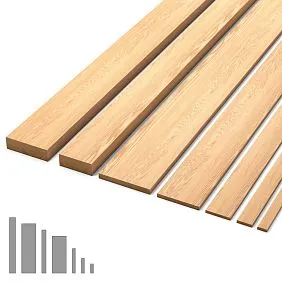
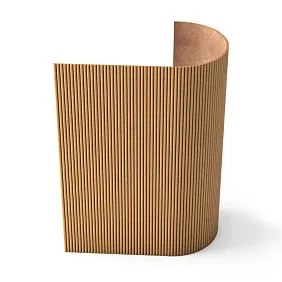
The bathroom ceiling is perhaps the only horizontal surface in an apartment that most people design with the principle 'just don't let it leak.' White grout, a PVC stretch ceiling, tile at best. Everything else is 'not for the bathroom.' But is that really the case? Professional bathroom design has long moved beyond this modest paradigm.Batten panels for the bathroom ceilingandPolyurethane ceiling decoration— these are real, tested, professionally applied solutions. The question is not 'is it possible,' but 'how to do it correctly' — with what material, in what execution, and under what conditions. This is exactly what the detailed, honest, and practical conversation is about.



The bathroom as a special environment: what to understand before choosing a material
Before talking about specific materials, it's necessary to understand what exactly happens in the bathroom from a physics perspective. Without this understanding, any choice becomes guesswork.




Three factors that determine everything
Humidity. In a bathroom without forced ventilation during a hot shower, the relative humidity of the air reaches 90–100%. After finishing — it gradually decreases to the background level of 50–70%. This cyclic wetting-drying is the main enemy of organic materials, primarily wood.
Temperature. The temperature fluctuation in the bathroom when a hot shower is turned on — from +18–20°C to +35–40°C in a few minutes. The ceiling heats up less than the walls, but thermal expansion of materials still occurs.
Condensation. The ceiling is the coldest surface in the bathroom (in contact with the interfloor slab). Water vapor rising upward condenses right here. This means the bathroom ceiling is regularly covered with a thin layer of water — even if there is no direct contact with water.
Now, an honest answer: not every material can work under these conditions. Standard MDF—no. Untreated wood—no. Unprotected plaster—no. Moisture-resistant HDF with proper coating—yes. Polyurethane with a closed-cell structure—absolutely yes.
Our factory also produces:


Zoning the bathroom ceiling by humidity level
This is an important detail that most people overlook. The bathroom ceiling is not uniform in terms of moisture exposure:
Zone A (above the shower cabin or bathtub): maximum exposure to steam, condensation, splashes. Only special moisture-resistant materials with complete sealing of joints.
Zone B (middle part of the ceiling): moderate exposure to steam, condensation. Moisture-resistant materials with sufficient coating.
Zone C (above the sink, near the entrance): minimal exposure. A wider choice of materials.
Dividing into zones is not just theory. It forms the basis for a practical solution: in zone A—tiles or special PVC profiles; in zones B and C—it is possible to use moisture-resistant slatted panels and polyurethane decor.
Get Consultation
Slatted panels for bathroom ceilings: conditions and possibilities
The question 'can slatted panels be installed on a bathroom ceiling' has the answer 'yes'—but with specific caveats. Let's examine them in detail.
Which slat material is permissible in the bathroom
Moisture-resistant MDF (HDF — High Density Fibreboard). This is not simply 'MDF with moisture resistance' — it's a specifically manufactured board with an impregnated core. Standard MDF swells at humidity above 70% and deteriorates within several months. HDF board with moisture-protective core impregnation withstands constant humidity up to 85–90% with proper surface coating.
Thermowood (thermally modified wood). Wood that has undergone heat treatment at 180–230°C in an oxygen-free environment. During thermomodification, moisture-absorbing organic components are removed from the wood — and it stops reacting to humidity changes. Thermowood doesn't swell, shrink, or darken from water contact. Service life without protective coating outdoors — up to 25 years. In bathrooms with coating — practically unlimited lifespan.
Teak wood. Teak is one of the few natural wood species traditionally used in wet environments (marine finishing). High natural oil content makes teak water-resistant without coatings. High price — but exceptional durability.
PVC slat panels. Technically suitable for moisture resistance, but from aesthetic and ecological perspectives — not the best choice for modern interiors. Synthetic appearance, low temperature resistance (deform under hot steam above bathtub).
Standard MDF and untreated solid wood — absolutely not for bathroom ceilings with regular shower use.
Slat coating: the decisive factor
Base material is only half the equation. The slat coating determines its durability in wet conditions no less than the base properties.
Two-component polyurethane varnish (2K PU): best choice for wet rooms. Creates a completely sealed film resistant to moisture, temperature fluctuations, and cleaning chemicals. Service life without renewal — 8–12 years.
Oil with hard wax: absolutely not suitable for bathrooms. Oil coating is open, allowing wood to 'breathe,' meaning exchange moisture with the environment. In bathrooms this means constant swelling even with moisture-resistant base.
Water-based acrylic enamel (1K): satisfactory option when applied in 2–3 coats with intermediate sanding. Inferior to 2K varnish in moisture resistance, but with good room ventilation — acceptable for zones B and C.
Installation: ventilation behind the slats is mandatory
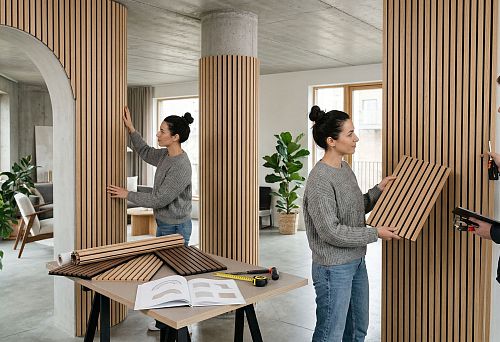
Slatted panels for bathroom ceilingare mounted exclusively on a frame with a ventilation gap of at least 25–30 mm between the base (slab) and the back side of the panels. Why?
Condensation forms precisely on the cold surface of the slab — behind the slats. Without ventilation, this condensation accumulates, creating a constantly damp zone behind the slats, which leads to mold even with moisture-resistant slats. The ventilation gap ensures air movement that dries this zone between bathroom uses.
Additional requirement: seal the ends of the slats at the walls with silicone sealant (neutral, moisture-resistant). Open ends are a zone of moisture penetration.
Parameters for bathroom ceiling slats
Slat width: 40–70 mm — optimal for the ceiling. Slats that are too wide (from 90 mm) create excessive weight on the ceiling (aesthetically — the ceiling 'presses down') and require a more robust frame.
Slat thickness: 12–18 mm — sufficient for ceiling mounting. Thicker slats add weight to the structure without decorative advantage.
Orientation: for most bathrooms — perpendicular to the long side of the room. This visually expands the bathroom.
Gap: 8–12 mm — optimal. A gap that is too wide on the bathroom ceiling (more than 15 mm) exposes the view to the dark space behind the slats, which is unaesthetic in a humid environment.
Substrate behind battens: moisture-resistant board (GVL, moisture-resistant drywall) or exposed floor surface painted with dark-toned moisture-resistant paint.
Polyurethane ceiling decor in wet areas: advantages and limitations
Polyurethane is one of the few decorative materials originally created to work, including in wet conditions. Understanding why means understanding its chemistry.
Why polyurethane is not afraid of water
Decorative closed-cell polyurethane (rigid polyurethane foam) has a structure where each cell is sealed—the gas inside the cell is isolated from neighboring cells and the external environment. This means: water cannot penetrate the material via capillary action. Polyurethane does not swell, deform, or lose shape upon contact with water or steam.
Unlike gypsum, which begins to gradually deteriorate at humidity above 70%—Ceiling molding—polyurethane is absolutely inert to humidity. It will last in a bathroom as long as in a dry living room—without any changes in shape, strength, or appearance.
The second important point: when applying moisture-resistant acrylic paint (which is done during standard finishing), the decorative surface of polyurethane is additionally protected from direct contact with water. Even condensation running down a cornice is not a problem.
What polyurethane ceiling decor is applicable in a bathroom
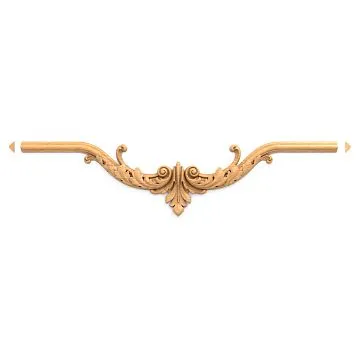
Ceiling cornice. The main and practically indispensable element for a bathroom with a slatted ceiling. The cornice covers the joint between the ceiling slatted surface and the wall surface, conceals the expansion gap and technical irregularities of this junction. In a bathroom, the cornice additionally performs a waterproofing function—together with silicone sealant, it seals the gap at the ceiling-wall junction area, where condensation could otherwise seep into the wall structure.
Cornice width for bathroom: 40–80 mm. Profile: straight (for modern interior) or with slight curvature (for classic bathroom). No complex ornamented profiles in the bathroom—they accumulate moisture in small reliefs with poor ventilation.
Cove (ceiling corner cornice). Small (20–35 mm) cornice for finishing the ceiling-wall angle. Minimalist solution for small bathrooms where a large cornice would be excessive. Mounted with moisture-resistant acrylic adhesive + silicone sealant along the seam.
Ceiling rosette. Decorative element around the ceiling light fixture. Used in the bathroom with limitations:
-
Only above areas with minimal moisture exposure (above the sink, near the bathroom entrance).
-
Diameter: small, 100–200 mm. A large rosette above the shower area—excessive decoration that will be constantly wet.
-
Profile: simple, without fine relief.
Straight ceiling molding. Decorative strip on the ceiling, framing a panel field or creating geometry for additional division. In the bathroom—only straight profiles without fine ornament.
What not to use in the bathroom from polyurethane decor
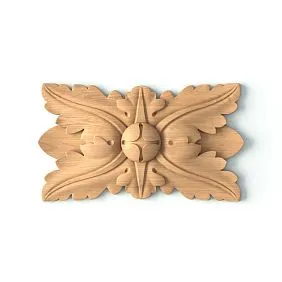
Elaborate ornamented profiles with plant or figurative motifs. Moisture accumulates in the fine reliefs of the ornament during condensation. With poor ventilation, this creates constantly damp 'pockets' where mold develops over time—right on the surface of the decor, in its recesses.
Large rosettes (over 250 mm) above the shower area. Condensation runs off the surface and gets trapped in the relief details.
Multi-level cornice systems. A three-tier cornice with scrolls and fillets has no place in the bathroom. At most, two simple elements: a cornice + a cove or a cornice with a straight profile.
How to address lighting, ventilation, and joint issues: the technical block
The aesthetics of a bathroom ceiling are inseparable from technical solutions. Three key tasks — lighting, ventilation, and joint sealing — must be resolved before installing decorative elements.
Lighting in a slatted bathroom ceiling
The issue of lighting a slatted ceiling in a bathroom is fundamentally important because recessed lights in the slats require a special approach.
Recessed moisture-protected spotlights (IP54 and above). The only permissible type for a slatted ceiling in a bathroom. IP54 means protection against splashes from any direction. For the area above the bathtub or shower — IP65 (protection against water jets). They are mounted in special holes in the slats or in the gaps between slats.
Important: the mounting location for the light fixture is not just a hole in the slat. There must be sufficient clearance behind the slat for the fixture's mounting box (at least 35–50 mm). This is another argument in favor of frame mounting with a ventilation gap.
LED strip behind the slats (indirect lighting). An excellent option for the bathroom. The LED strip is mounted on the back side of the substrate or on the frame, shining through the gaps between the slats from bottom to top. Creates soft, even illumination without bright sources — ideal for the bathroom as a place of relaxation.
Requirement: the LED strip for the bathroom must be moisture-protected (IP67 or IP68), coated with silicone compound. The power supply must be outside the humidity zone (in the hallway or a closed panel).
Light fixtures with decorative ceiling framing. In a bathroom with a slatted ceiling, a ceiling light fixture is mounted on a bracket that extends through the gap between the slats. Around the exit point — a decorative polyurethane overlay with a diameter of 100–150 mm in the form of a small rosette. This is a delicate and effective solution for areas with moderate humidity.
Ventilation: A Systematic Solution
Forced ventilation for a bathroom with a slatted ceiling is not an option but a necessity. Without it, even moisture-resistant materials will eventually suffer—not from moisture itself, but from mold that develops under conditions of consistently high humidity without air movement.
The ventilation duct must provide at least 8 air changes per hour for the bathroom. A standard ventilation grille valve is typically insufficient. A forced ventilation fan (built into the grille or separate) with a timer or humidity sensor is required.
The ventilation gap behind the slats must be connected to the general ventilation system—or at least have openings through which air from the bathroom can penetrate behind the slats and exit back. A completely sealed space behind the slats is a moisture trap.
Where to place the ventilation grille relative to the slatted ceiling: in one of the slats (with appropriate positioning) or in the gap between slats. A decorative polyurethane frame for the ventilation grille is a delicate solution that combines function and aesthetics.
Sealing Joints: A Detailed Approach
Joints are vulnerable areas of any ceiling covering in a wet room. For a slatted ceiling in a bathroom—three types of joints, each requiring its own solution.
Ceiling field–wall joint. Closed with a polyurethane cornice on acrylic adhesive + neutral silicone sealant along the line of contact between the cornice and the wall. The silicone seam is elastic, waterproof, and durable.
Joint between slats (open gaps). Gaps between slats should be visually covered by a dark backing behind them. The gaps themselves are not sealed—they provide ventilation.
Joint of slat ends at the wall. Wooden ends should not abut the wall directly. An 8–10 mm expansion gap is filled with neutral silicone and covered with a cornice.
What works in small bathrooms: solutions for a standard urban bathroom
Most urban bathrooms are 3–5 sq.m. A small space imposes special requirements for ceiling solutions: everything should be light, bright, and visually expanding.
Principles for a small bathroom
Light-colored slats. In a small bathroom, dark wood on the ceiling is an oppressive 'box'. Light gray MDF with moisture-resistant varnish, bleached HDF, white enamel — that's what you need for a small space. The ceiling should be light — it visually 'rises'.
Small slat width. 40–55 mm is optimal for a small bathroom. Wide slats of 80–100 mm scale down and press on the space.
Minimal cornice. 40–55 mm of a straight-line profile — and no more. Elaborate cornices are not suitable for small bathrooms.
Orientation of slats perpendicular to the entrance. This creates a visual sense of 'depth' — the bathroom appears longer.
Recessed lighting, not pendant. Pendant lights in a small bathroom reduce the perceived ceiling height. Recessed spotlights — invisible until turned on — preserve the sense of height.
Option of a full slatted ceiling for a small bathroom
Fully slatted ceiling in a bathroom 2.2×1.8 m, ceiling 2.5 m. Slats: moisture-resistant HDF, white 2K enamel, width 50 mm, gap 10 mm. Orientation: across the width (2.2 m). Frame: aluminum T-profile on hangers, gap behind slats 30 mm. Ventilation: built-in fan in one of the slats near the exhaust duct. Lighting: four recessed IP65 spotlights, 7 W each. Cornice: straight-line polyurethane 50 mm around the entire perimeter, white, silicone joint.
Result: a fresh, clean, warm ceiling with a wood texture that doesn't 'press down' or turn a small bathroom into a cramped cage—quite the opposite: it creates a natural character in a space where nature is typically absent.
Option for a partial slatted ceiling
If a full slatted ceiling seems excessive or the budget is limited, a partial solution works too. A slatted 'insert' above the bathtub area or in the central part of the ceiling (not over the shower), framed with a polyurethane molding. The rest of the ceiling is a neutral white surface.
This is a delicate, architecturally conscious solution that works even in a 4–5 sq.m. bathroom.
What to do in a combined bathroom: bathtub and toilet
A combined bathroom is a specific case. The toilet area is less humid than the shower area. This opens up possibilities:
-
Slattedpanels for bathroom ceilingswith an HDF base and lacquer coating—for the entire area of the combined bathroom.
-
The area above the bathtub or shower—must be a moisture-resistant material with forced ventilation.
-
The area above the toilet and sink—acrylic-enameled MDF is acceptable if forced ventilation is present.
A single ceiling covering for the entire bathroom looks much more finished than a combination of different materials in a small space.
What's better not to do at all: an honest list of mistakes
First mistake: standard MDF in the bathroom
The most common and most costly mistake. 'Moisture-resistant' is written in the description—but that's just marketing for standard MDF without impregnation. After 6–12 months—swelling of the edges, surface delamination, darkening. Only HDF with moisture-protective core impregnation and two-component lacquer—for the bathroom.
Second mistake: oil coating of slats in the bathroom
Oil is an open coating. Wood 'breathes,' meaning it exchanges moisture with the environment. In the bathroom, this means a constant cycle of swelling and drying even for an HDF base. The result—deformation, coating cracking, darkening. Only closed lacquer (2K PU) for wet rooms.
Third mistake: gypsum molding in the bathroom
Gypsum and humidity are enemies. At humidity above 70%, gypsum gradually begins to deteriorate: first micro-cracks appear, then peeling, then crumbling. A gypsum cornice in the bathroom is a temporary solution for 2–5 years. Only polyurethane.
Fourth mistake: installation without a ventilation gap
Slats flush against the ceiling—condensation accumulates behind them with no chance to dry. Mold on the back of the slats after 1–2 years—even with moisture-resistant material. A ventilation gap of 25–30 mm is mandatory.
Mistake five: stretch ceiling without ventilation — and then slats over it
Some craftsmen suggest installing slats over a stretch ceiling on thin profiles. This creates a completely enclosed space between the stretch and slatted ceiling — an ideal incubator for mold. Absolutely not recommended.
Mistake six: complex ornamental cornice in the bathroom
A beautiful profile with a plant ornament in relief — in the bathroom, this is a 'moisture collector'. Condensation gets trapped in the small recesses of the relief, creating mold hotspots with poor ventilation. Only straight or simple profiles (with a cove) for wet rooms.
Mistake seven: incorrect light fixture
A standard recessed light fixture without moisture protection in the bathroom is a direct path to a short circuit. The protection class for the entire bathroom area is at least IP44, for the area above the bathtub — IP65. Saving on electrical safety in wet rooms is not allowed.
About the company STAVROS
When the question is how to properly designBatten panels for the bathroom ceilingand select for themPolyurethane ceiling decoration— a manufacturer is needed who understands the specifics of the material and application conditions. STAVROS is a Russian production with a full range of slatted panels, including on a moisture-resistant base, with coatings permissible for wet rooms.
The STAVROS polyurethane product line includes ceiling cornices for wet rooms — straight and profiled, covings, decorative overlays — all made from closed-cell polyurethane, which does not react to moisture by its nature. For painting in any shade with acrylic paint — the STAVROS cornice in the bathroom looks like a professional designer detail, not a construction necessity.
STAVROS specialists provide consultations on material selection for wet areas: they help choose the correct type of slat, coating, cornice profile, calculate the quantity, and warn about typical mistakes. Because the bathroom is too complex an environment for guesswork. Expertise is needed here — and STAVROS provides it.
FAQ: Answers to popular questions
Can ordinary wooden slats be used in the bathroom if they are well painted with varnish?
No. Ordinary wood (pine, spruce, standard MDF) will still swell through the ends and in areas of even the smallest coating damage when varnished. Varnish creates a temporary barrier that gradually breaks down. Specialized materials are needed for the bathroom: thermowood, moisture-resistant HDF, teak.
At what humidity does a polyurethane cornice begin to deteriorate?
Closed-cell polyurethane does not deteriorate at any humidity — up to 100%. Its structure prevents capillary water absorption. Surface deterioration is only possible due to mechanical impact or prolonged contact with aggressive chemicals (acids, solvents). In a domestic bathroom — practically unlimited service life.
Is a special primer needed for a polyurethane cornice in the bathroom before painting?
Acrylic waterproof primer — recommended. Additionally: final painting — moisture-resistant acrylic paint for wet areas (with additives that prevent mold growth). Applied in 2 coats with complete drying between coats.
What frame to use for a slatted ceiling in the bathroom?
Aluminum frame — the optimal choice for the bathroom. Aluminum does not rust, does not deform due to humidity, and is lightweight. Wooden frame — only possible from hardwood (larch) treated with antiseptic. Galvanized steel profile — acceptable with complete protection from water contact (behind sealed cladding).
Can slatted panels be installed in the bathroom independently without a professional?
Yes, with basic tool skills. Key requirements: precise calculation, proper frame with ventilation gap, sealing all joints with silicone, moisture-resistant fixtures. Mistakes in these four areas are the only sources of problems during DIY installation.
How often should the varnish coating on bathroom ceiling slats be renewed?
Two-component polyurethane varnish with proper application (2–3 coats, sealed ends) lasts 8–12 years without renewal under normal ventilation. Single-component acrylic enamel lasts 4–6 years. Signs requiring renewal: matte spots, surface clouding, microcracks on ends.
What's better for a bathroom — slatted ceiling or stretch ceiling?
Different solutions with different advantages. PVC stretch ceiling: maximum moisture resistance, simple installation, wide range of textures. Slatted ceiling: natural or natural-like texture, warm visual character, architectural expressiveness. With proper material choice and installation, slatted ceiling in bathroom is aesthetically much richer than stretch ceiling.