Article Contents:
- What are slatted panels and where are they used
- Slatted wall panels: construction and logic
- Types of Slatted Panels by Material
- MDF slatted panels
- PVC slatted panels
- Wooden and veneered slatted panels
- Acoustic slat panels
- WPC and metal slatted panels
- Where to use slatted panels in interior design
- In the living room
- In the bedroom
- In the entryway
- In the kitchen
- In the bathroom
- In the TV area
- On the Ceiling
- Slat panels for walls or ceilings: what to choose
- Slat panel dimensions
- Standard wall panel sizes
- Colors, decors, and textures
- White slatted panels
- Wood: oak, walnut, ash
- Black and graphite panels
- For painting
- With lighting
- Slat panels with lighting
- How to choose slat panels for a specific room
- living room
- for the bedroom
- For Kitchen
- For the bathroom
- For the hallway
- For the balcony
- For Offices
- Installation of slatted panels: mounting methods
- Mounting methods
- Step-by-step installation guide
- What to cut with and how to fit panels
- Tools by material
- How to avoid chipping
- How to finish corners and junctions
- DIY slatted panels: when it's feasible
- When it's better to do it yourself
- When it's more cost-effective to buy ready-made modular panels
- Reiki by the piece vs ready-made module
- How much do slatted panels cost
- Price ranges by material (per m²)
- Where to buy slatted panels
- Popular brands and series
- Pros and cons of slatted panels
- What is better: slatted panels, PVC panels, tiles, or decorative plaster
- About the Company STAVROS
- Frequently asked questions about slatted panels
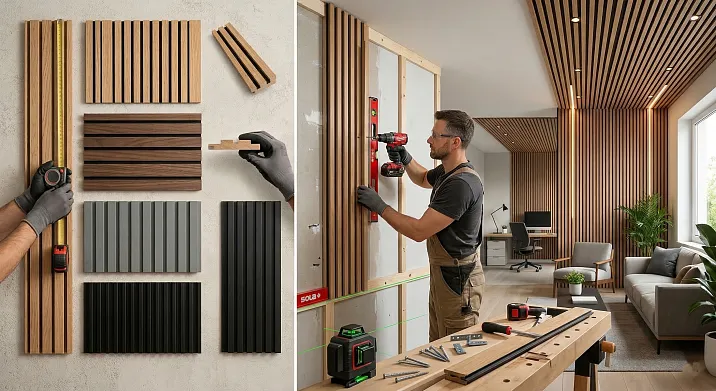
Slatted panels for walls and ceilings are one of the most dynamically growing segments of modern finishing, which has held leading positions in the design of residential and commercial interiors for several years. This is not a fleeting trend, but a full-fledged tool for transforming space: vertical slats change the proportions of a room, create a lively play of light and shadow, dampen echo, and turn an ordinary wall into an architectural accent. If you are choosing between MDF, PVC, natural wood, and acoustic solutions—this article will give you a comprehensive answer.


What are slatted panels and where are they used




Slatted wall panels: construction and logic
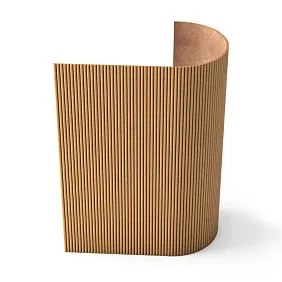
A slatted wall panel is a structural module made of parallel slats of the same cross-section (slats or laths), fixed at equal intervals on an MDF backing, fabric base, or directly in a mounting system. The uniform rhythm of the slats creates a linear relief, which, under any lighting—side, directional, diffused—forms an expressive play of light and shadow. This is precisely whyslatted panels for wallsthey are perceived not as a flat covering, but as a three-dimensional architectural surface.
Structurally, a slatted wall panel differs from ordinary wall coverings in that it does not cover the wall 'flush,' but forms a structured relief with air gaps between the slats. This fundamentally changes the perception of the room. Furthermore, slatted-type panels fundamentally differ from slatted ceilings: ceiling systems have different mounting mechanics (a suspended structure on guides), different geometric parameters, and a different joining logic.
Where wooden slatted panels and their analogues from other materials are used:
-
Living room walls — accent wall behind the TV, wall behind the sofa, niche decoration
-
Bedroom — headboard of the bed, accent behind bedside tables, wardrobe area
-
Hallway — vertical slats visually raise the ceiling in a narrow corridor
-
Kitchen — backsplash or side walls for zoning
-
Bathroom — accent zone with moisture-resistant materials
-
Ceiling — installation of horizontal slats as an alternative to stretch systems
-
TV area — slats as a background for built-in lighting and media center
-
Office, meeting room — walls with acoustic function
Vertical slats visually elongate a room in height — this is a proven design technique, especially valuable in apartments with ceilings of 2.5–2.7 m. Horizontal slats, on the contrary, widen narrow spaces and are more often used in corridors or attic spaces.
Our factory also produces:
Types of slatted panels by material
The key choice when purchasing is the material. It determines the appearance, moisture resistance, price, installation method, and service life.
Get Consultation
MDF slat panels
MDF Plank Panels— the most popular option for residential interiors. MDF (medium-density fiberboard) with a density of 750–850 kg/m³ has a uniform, smooth surface without defects, ideally suited both for lamination to resemble wood and for painting in any RAL shade. MDF slat wall panels have become a standard finish in modern apartments precisely due to the combination of external appeal and affordable price.
Advantages of MDF panels:
-
Excellent geometry and precision of relief
-
Rich choice of decors: oak, walnut, ash, wenge, concrete, monochrome
-
Can be painted any color without special treatment
-
Relatively low price compared to natural wood
-
Easy to work with — can be sawn, sanded, and fitted using standard tools
Disadvantages:
-
Standard (non-moisture resistant) MDF is sensitive to constant moisture — swells with prolonged contact with water
-
Heavier than PVC — requires secure fastening
Best used in: living room, bedroom, hallway, TV area, office, conference room, children's room.
MDF slatted panel for painting — a special subclass. This panel is installed before painting and painted together with the wall, creating a monochrome relief. This technique is currently at the peak of popularity in minimalist, Japandi, and Scandinavian styles.
PVC slatted panels
PVC slatted panels are a solution primarily focused on wet and 'difficult' rooms. Polyvinyl chloride is not afraid of water, steam, temperature fluctuations, or chemical cleaning agents, making plastic slatted panels the optimal choice for bathrooms, toilets, balconies, and kitchen ceilings.
Advantages of PVC panels:
-
100% moisture resistance — can be installed in bathrooms and shower areas
-
Very lightweight — minimal load on floor structures
-
Easy maintenance — can be cleaned with any household cleaners
-
Affordable price — budget-friendly finishing segment
-
Wide selection of textures and colors, including wood imitation
Disadvantages:
-
Less 'lively' and premium appearance compared to MDF or wood
-
May crack or deform upon impact
-
Plastic 'doesn't breathe' — MDF is preferable for living rooms
Where to use: bathroom, restroom, toilet, balcony, loggia, ceilings in damp areas.
PVC slatted wall panels are often confused with standard plastic 'clapboard' panels. The difference lies in the width and shape of the profile: the slatted format implies narrower and more pronounced slats with clear gaps, creating a structured pattern rather than a solid homogeneous coating.
Wooden and veneered slatted panels
Wooden slat panels are the pinnacle of finishing hierarchy. Natural wood is a living texture, a unique grain pattern, and an inimitable tactile value that no film can replicate.planks made of woodIn solid oak execution — exactly what STAVROS offers: each slat of dense oak (700–750 kg/m³) carries its own pattern, which comes to life under tinting oils and varnishes.
Three types of wooden panel execution:
-
Solid wood — entirely from solid or glued wood. Maximum density, mechanical strength, possibility of multiple sanding and re-varnishing. Oak slatted panel is the most in-demand option.
-
Veneer — MDF substrate with a thin layer of natural wood glued on. Preserves the natural texture, cheaper than solid wood, but not suitable for deep sanding.
-
Eco-veneer — PVC film with imitation wood grain. The most affordable 'wooden' option, but inferior in feel and durability to both previous types.
Where wooden slats look most expensive: a living room with high ceilings, a bedroom in Japandi or Scandinavian minimalist style, a restaurant, a boutique hotel, a conference hall. It is wooden slats that organically fit into modern, calm interiors, where the main task is to create a sense of natural warmth without visual noise.
Veneered slatted panels — a compromise between price and aesthetics. Oak veneer in 'American walnut' or 'Scandinavian birch' tinting gives a visual result very close to solid wood at a significantly lower cost.
Acoustic slatted panels
Acoustic slatted panels — a category whose demand has multiplied over the past three years. Construction: wooden or MDF slats mounted on a felt, polyester, or acoustic mineral wool base. The felt or foam layer absorbs sound energy, and the slats scatter the primary reflection — resulting in reduced reverberation (echo) in the room.
Constructive elements of the acoustic panel:
-
Slats made of MDF or natural wood (oak, pine, birch)
-
Acoustic base — felt with a density of 1000–1800 g/m² or acoustic foam
-
Frequency of slat placement (pitch) — affects the ratio of absorption and diffusion
Where acoustic slatted wall panels are relevant:
-
Bedroom — reducing street noise and echo from parallel walls
-
Home theater — clean sound without reflections
-
TV area in an open living room — improving speech intelligibility
-
Study, meeting room — reducing fatigue from voice calls
-
Restaurant, cafe, bar — combating noise in large halls
Acoustic slatted decorative panels solve two problems at once—they are both beautiful and functional. That's why they are chosen not only as a finishing material but also as an engineering solution for acoustic comfort in a room. The trend towards a quiet, 'soft' sound climate in living spaces makes acoustic panels one of the most promising products in the finishing market.
Slatted panels made of WPC and metal
Slatted panels made of WPC (wood-polymer composite) are a material at the intersection of wood and plastic. The main area of application is exterior work: facade slatted panels made of WPC are not afraid of ultraviolet light, precipitation, sharp temperature changes, and fungus. Facade slatted panels made of WPC are mounted on a ventilated facade and last more than 25 years without painting or impregnation.
Slatted metal panels—aluminum and steel—are more often used in commercial architecture: shopping centers, office buildings, parking lots. Slatted aluminum panels are lightweight, non-combustible, and do not corrode, making them a universal solution for both ceilings and facade cladding. In residential interiors, metal slats are less common—they are used as an accent element in loft, high-tech, and industrial styles.
Fundamental difference between facade and interior panels:
| Parameter | Facade | Interior |
|---|---|---|
| Material | WPC, aluminum, galvanized steel | MDF, wood, PVC, aluminum |
| Installation | Ventilated facade | Glue, lathing, hidden fasteners |
| Protection | UV resistance, frost resistance | Not required |
| View | Technological, architectural | Decorative, textured |
Where to use slatted panels in interior design
In the living room
Slatted panels in living room interiors are a classic and most common application. An accent wall behind the sofa or behind the TV with vertical slats instantly changes the perception of the entire room. Wall slatted panels in living room interiors are most often chosen in warm wood decors: oak, walnut, ash. For modern minimalism and Japandi style — paintable MDF in neutral tones or acoustic panels with a felt base in black graphite shade.
Vertical slats in the living room visually make the room taller — a particularly effective technique for standard apartments with ceilings of 2.4–2.7 m. Horizontal slats on an accent wall widen elongated rooms.
In the bedroom
Slatted panels in the bedroom are most often installed behind the bed headboard. This technique replaces a soft headboard and creates an expressive accent wall without bulky structures. For the bedroom, acoustic slatted panels with a felt base are optimal—they dampen sound and create a feeling of coziness and quiet. For finishes—warm natural shades of oak or walnut, matte white, or soft gray.
In the hallway
Slatted panels in the hallway solve two problems at once: they protect walls from wear and visually transform a narrow space. Vertical slats make the corridor appear taller, horizontal ones—wider. For the hallway, it's better to choose MDF with a laminated surface (a moisture-resistant option)—it wipes clean easily.
In the kitchen
Slatted panels in the kitchen are used cautiously—the area near the stove and sink requires moisture-resistant materials. PVC slats on the kitchen ceiling are an excellent solution. In the dining area or on side walls, MDF panels will fit organically provided there is normal ventilation.
In the bathroom
For the bathroom, slatted panels are used selectively—as an accent zone, not for covering all walls entirely. For the slatted format in the bathroom, only PVC or aluminum systems are suitable. MDF and natural wood are not recommended without special protective treatment under conditions of constant steam and moisture.
In the TV area
The TV area is top-1 in requests for slatted panels. Slats form a visual frame for the screen, hide cables in the gaps between the slats, and serve as a base for built-in LED lighting. Dark finishes look best in the TV area: graphite, anthracite, wenge, black MDF. Acoustic slatted panels in the TV area provide an additional bonus—they improve the TV's sound.
On the ceiling
Slatted panels for the ceiling— a special segment. For ceilings, aluminum or PVC are often used: they are lightweight and don't require a heavy frame. MDF on the ceiling is possible but weighs significantly more. Wooden slats on the ceiling are rare in the mass segment but look exceptionally impressive in premium projects.
Slatted panels for walls or for ceilings: what to choose
Wall and ceiling slatted panels are not the same thing, although they look similar visually.
Differences between wall panels and ceiling panels:
| Characteristic | Wall | Ceiling |
|---|---|---|
| Material | MDF, wood, acoustic, PVC | Aluminum, PVC |
| Installation | Glue, lathing, hidden fasteners | Suspension system, guides |
| Load | Side | Vertical (gravity) |
| Weight | Medium and heavy | Lightweight |
| Decor | Any | Limited |
A slatted ceiling is a striking alternative to a stretch ceiling. Aluminum slats on the ceiling provide a concise, modern look and pair well with spot lighting installed in the gaps between the slats. An aluminum slatted ceiling is a standard solution for corridors, kitchens, and bathrooms in office and commercial spaces.
For walls, priority is given to MDF, veneer, natural wood, and acoustic panels. They offer a wider choice of decors, better tactile value, and fit organically into residential interiors.
Slatted panel dimensions
Correct size selection is key to accurate material calculation and clean installation without unnecessary joints.
Standard wall panel dimensions
Slatted panel dimensions depend on the manufacturer and design:
-
Module length: 2400 mm, 2700 mm, 3000 mm (for standard ceiling height)
-
Module (substrate) width: 120–600 mm
-
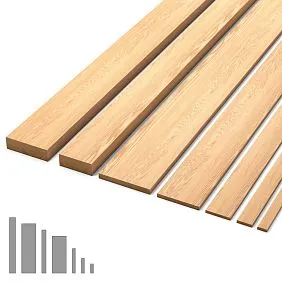
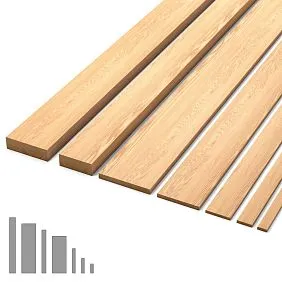
Lamella (slat) width: 12–80 mm — ranges from narrow battens to wide boards
-
Spacing between slats: 5–30 mm
-
Substrate thickness: 9–18 mm (MDF), 3–5 mm (fabric base)
-
Slat thickness: 8–25 mm
How to choose the size of a slatted panel for ceiling height:
-
For ceilings up to 2.7 m — modules 2400–2700 mm long without horizontal joints
-
For ceilings 3.0 m and higher — 3000 mm modules or joining with a horizontal decorative insert
-
Narrow slats (12–20 mm) visually raise the ceiling more than wide ones
How to calculate the number of panels for a wall:
-
Measure the wall width (in mm)
-
Divide by the module width
-
Add 10–15% for cutting and joining
-
Account for door and window openings
For example: wall 4000 mm, module 300 mm → 4000 / 300 = 13.3 → 14 modules + margin = 15–16 modules.
Colors, decors and textures
White slatted panels
White slatted wall panel — a universal solution for any interior. White slats on a white wall create a monochrome relief that is 'read' only through the play of light and shadow. Especially effective in Scandinavian interiors, minimalism, and modern classic styles.
Wood: oak, walnut, ash
Wood-effect decors are the most popular group. Slatted panels with wood effects in shades of natural oak, American walnut, ash, or smoky gray wood create a warm, lively atmosphere. Oak slatted panel is the top-1 most requested in this group. In solid wood — unique live texture; in laminated MDF — stable, repeatable pattern.
Black and graphite panels
Black slatted panels and graphite shades are a choice for TV zones, bars, meeting rooms, and modern living rooms. The dark background visually 'sinks' the wall, making it appear deeper. Black slats on a light wall create maximum contrast.
For painting
Painting-ready slatted panels are pure MDF without decorative coating. They are primed and can be painted with any acrylic or alkyd paints. They allow for obtaining an absolutely precise color in the RAL or NCS system, which is critical for design projects with custom color schemes.
With lighting
Slats with gaps between the lamellas are ideal for installing LED strips. The slatted texture of the panel creates an effect of 'floating' strips of light, making TV walls and decorative niches truly picturesque.
Slatted panels with lighting
Slatted panels with lighting are one of the most popular designer techniques in recent years. The lighting is mounted in the gaps between the slats or behind the panel's backing (wall lighting), creating a soft, diffused glow between the lamellas.
Where lighting looks best:
-
TV zone — lighting reduces eye strain from the contrasting screen
-
Bedroom — soft warm light behind the bed headboard
-
Hallway — decorative function in case of insufficient daylight
-
Restaurant, cafe — atmospheric zoning lighting
Which light to use:
-
Warm white (2700–3000 K) — for bedroom, living room, restaurant
-
Neutral white (3500–4000 K) — for work area, kitchen
-
RGB or Tunable White — for TV zone and game rooms
Where to hide the strip:
-
In a special aluminum profile in the gap between slats
-
Behind the lower or upper edge of the panel (floor or ceiling lighting)
-
In a groove milled inside the substrate
Typical mistakes:
-
Visible strip without diffuser — creates spotty highlights instead of even glow
-
Too bright strip (more than 600 lm/m) — creates a blinding effect
-
Violation of color temperature - cold light in the bedroom creates discomfort
How to choose slatted panels for a specific room
For the living room
Dry room - any material can be used. Priority: MDF for painting or with wood-like decor,veneered slatted panels, acoustic panels with felt. For the TV zone - dark decors with LED lighting.
For the bedroom
Acoustic comfort and thermal atmosphere are the main criteria. Choice: acoustic slatted panels, solid oak, MDF in neutral tones. Avoid glossy finishes - they reflect light and create discomfort.
For Kitchen
Cooking zone - PVC or aluminum. Dining area and side walls - MDF with moisture-resistant coating or wood-like PVC. Pure solid oak is possible but requires regular oil treatment.
For the bathroom
Only PVC or aluminum. Use slatted format as an accent zone - for example, the wall above the bathtub or the sink area. Full bathroom cladding with PVC slats is possible but requires good ventilation.
For the hallway
Moisture-resistant MDF or PVC. In the hallway, slats should be abrasion-resistant—choose panels with laminated or varnished surfaces.
For the balcony
PVC or WPC—the only materials that can withstand temperature fluctuations and condensation. Wooden and MDF panels are not used on open balconies without glazing.
For an office
Acoustic slatted panels—a priority. Office meeting rooms and work areas with acoustic walls reduce sound fatigue, improve concentration, and enhance the quality of negotiations. Decoration—neutral wood tones or gray shades.
Installation of slatted panels: mounting methods
Installation of slatted panels is a process that can be done independently. It is important to choose the right mounting method for the specific material and substrate.
Methods of mounting
With adhesive. Mounting adhesive (liquid nails or special acrylic adhesive) is applied in a zigzag pattern to the panel's backing. The panel is pressed against the wall and held for 30–60 seconds. This method is suitable for even substrates without significant irregularities. Pros—no visible fasteners, cons—difficult to dismantle.
On battens. Wooden battens or metal profiles are leveled and attached to the wall with dowels. Panels are fixed to the battens with screws or clips. Allows installation on uneven walls and creates an air gap for sound insulation.
With hidden fasteners. Special clips are inserted into the grooves on the panel ends and secured to the battens. The fasteners are not visible from the outside—the surface looks monolithic. Used in premium-class interiors.
With screws. A simple and reliable method—screws are driven through the panel's backing into the battens. The screw heads are covered with decorative caps or filled with putty.
Ceiling installation. For the ceiling, a suspended system on a metal frame made of UD and CD profiles is used. Panels are attached to stringers or with adhesive (only lightweight PVC panels).
Step-by-step installation instructions
-
Base preparation. The wall must be dry, clean, without flaking plaster fragments. If necessary — putty and primer.
-
Marking. Apply vertical and horizontal lines using a level. Mark the positions of the battens (batten spacing 40–60 cm).
-
Panel trimming. Saw the panels to the height of the room, taking into account the baseboard and ceiling profile. Use a miter saw or circular saw.
-
Mounting the first panel. Set the first panel strictly level — it sets the entire installation rhythm. Secure it firmly.
-
Joining elements. Each subsequent panel is joined butt-to-butt with the previous one so that the rhythm of the slats is not interrupted. The accuracy of the slat spacing ensures a seamless connection.
-
Installing the last panel. Trim the last panel at the corner or opening to width. Cover the edge with a decorative corner.
-
Installing corners and lighting. Internal and external corners are covered with decorative profiles. Insert the LED strip into prepared grooves or aluminum profiles.
What to cut with and how to fit panels
The right tool is half the battle when installing slatted panels.
Tools by material
-
MDF: Miter saw with a fine-toothed blade (60–80 teeth), circular saw. For crosscuts — 90° angle, for 45° bevels — miter saw in angle mode. Cutting direction — slats down, backing up (this reduces chipping).
-
PVC: Jigsaw with a fine-toothed blade for plastic, or a regular handsaw. A manual jigsaw provides a clean cut without chipping.
-
Aluminum panels: Angle grinder with a metal cutting disc, miter saw with a non-ferrous metal disc. Eye protection and gloves are mandatory.
How to avoid chipping
-
When working with MDF — apply masking tape along the cut line and cut through the tape
-
Cut at the maximum speed of the saw (it 'tears' the fibers less)
-
Place a sacrificial board underneath during jigsaw cutting
How to finish corners and joints
External corners: decorative L-shaped MDF or aluminum profile. Internal corners: panels are joined at 45° (warm joint) or via a decorative profile. Junction with ceiling and floor — ceiling and floor skirting boards, which conceal the expansion gap.
DIY slatted panels: when is it feasible
Homemade slatted panels are a frequent request from those who want to save money or obtain non-standard sizes.
When it's better to do it yourself
-
Non-standard room dimensions or curved walls
-
Desire to achieve unique slat spacing and width
-
Availability of woodworking tools and experience
When it's more cost-effective to buy ready-made modular panels
-
Lack of tools for precise slat cutting
-
Need for uniform factory spacing without errors
-
Saving time is more important than saving money
-
An acoustic base is needed — gluing felt at home is significantly more difficult
Slats individually vs. ready-made module
| Parameter | Slats individually | Ready-made module |
|---|---|---|
| Price | Below | Higher |
| Spacing precision | Depends on the craftsman | Factory-made |
| Installation time | Long | Fast |
| Acoustic base | No (needs to be added) | Available in specialized panels |
| Radius surfaces | Difficult | Flexible modules — easy |
Typical mistakes of DIY solutions:
-
Uneven spacing between slats (visually noticeable)
-
Crooked slats — visible "wave" on the wall
-
Insufficient fixation of slats on the substrate — they peel off over time
-
Lack of expansion gap — warping due to humidity changes
For those who want natural wood with guaranteed quality, Solid oak slat panelsFrom a professional manufacturer — the optimal choice: precise geometry, stable wood, and readiness for finishing.
How much do slatted panels cost?
The price of slatted panels depends on several factors: material, brand, construction, finish, and the presence of an acoustic base.
Price ranges by material (per m²)
| Material | Price per m² (approximate) |
|---|---|
| PVC | from 300–800 rub. |
| Laminated MDF | from 800–2500 rub. |
| MDF for painting | from 700–2000 rub. |
| Acoustic panels (MDF + felt) | from 2000–5000 rub. |
| Veneered panels | from 3000–7000 rub. |
| Oak solid wood | from 5000–15,000 rub. |
| Aluminum panels | from 1000–4000 rub. |
The price per m² for slatted panels also depends on:
-
Width and thickness of the slat — wider and thicker slats are more expensive
-
Decoration — rare wood species and complex tinting increase the price
-
Moisture resistance of the base — moisture-resistant MDF is 20–30% more expensive than standard
-
Brand and country of origin
The cost of installing slatted panels is a separate expense item: professional installation costs 500–1500 rubles/m² depending on the region and complexity of the work.
What is more cost-effective: buying ready-made panels or assembling them from individual slats?
In most cases, a ready-made module is more cost-effective considering labor costs. Self-assembly from individual slats is only justified for large volumes (from 30–50 m²) and having your own woodworking equipment.
Where to buy slatted panels
You can buy slatted panels through online stores, construction hypermarkets, manufacturers' branded showrooms, and designer decor studios.
For those looking for slatted panels for walls made from natural wood and MDF with professional quality — the STAVROS catalog offers a wide range of solid oak and paintable MDF modules, including flexible panels for curved surfaces.
Where to buy slatted panels in major cities:
-
Moscow — a wide market online and in showrooms; delivery from suppliers on the same or next day
-
St. Petersburg is a developed market for designer panels; selection of acoustic solutions
-
Novosibirsk, Yekaterinburg, Krasnodar — regional dealers of federal brands and manufacturers; delivery by transport companies
-
Minsk — Belarusian manufacturers of MDF panels, good price-to-quality ratio
When ordering online, it's important to clarify:
-
Whether there are modules of the required length for your ceiling height
-
Whether delivery is possible to your region
-
Whether there are decor samples to assess the real color
Popular brands and series
The Russian market features both domestic and foreign manufacturers of slatted panels:
-
STAVROS — Russian production, solid oak and paintable MDF, rigid and flexible modules, professional quality for design projects
-
Stella — a wide range of wall MDF panels in various finishes, including wood-look slatted series and paintable panels
-
AkuPanel / AkuWood — specialized acoustic panels with a felt base, popular in design environments
-
Savash — Turkish production, wide assortment of laminated MDF panels
-
Albes, Cesal — specialization in aluminum ceiling slat systems for commercial facilities
What is the difference between modular and assembled panels:
| Type | Modular | Assembled |
|---|---|---|
| Construction | Slats on a backing (unified module) | Individual slats |
| Installation | Faster | Longer |
| Spacing precision | Factory-made | Depends on the installer |
| Acoustics | Can be built-in | Added separately |
Pros and cons of slatted panels
| Criterion | Pros | Cons |
|---|---|---|
| Appearance | Architectural relief, play of light and shadow, wide choice of decors | Not suitable for all styles |
| Installation speed | Faster than tiles and plaster, modular system | Requires base preparation |
| Care | Wipe with a dry cloth, no special cleaners needed | Dust accumulates in gaps between slats |
| Moisture resistance | PVC and aluminum are 100% moisture resistant | Untreated MDF and wood not suitable for bathrooms |
| Sound insulation | Acoustic panels significantly reduce reverberation | Regular decorative panels have minimal effect |
| Price | Wide range from budget PVC to premium solid wood | Wood and acoustic panels cost significantly more than PVC |
| Repairability | Individual modules can be replaced | MDF is difficult to restore without replacement if damaged |
What is better: slatted panels, PVC panels, tiles, or decorative plaster
| Criterion | Slat panels | Standard PVC panels | Tiles | Decorative plaster |
|---|---|---|---|---|
| Appearance | Architectural, volumetric | Simple, household | Traditional | Textured, artistic |
| Price | Medium–high | Low | Medium–high | Medium |
| Installation | Simple, fast | Very simple | Complex (adhesive, grout) | Medium (skill) |
| Moisture resistance | Depends on material | High | Very High | Low (without special impregnation) |
| Durability | High | Medium | Very High | Medium |
| Suitability in living rooms | Excellent | Not very | Limited | Good |
| Suitability in bathroom | PVC/aluminum — yes | Yes | Yes | Only with waterproofing |
Slat panels excel where a pronounced design accent with minimal installation effort is needed. Tile is indispensable in areas with constant water contact. Plaster is the best choice for 'living' textures without a structured rhythm. PVC cladding is the cheapest but least decorative option.
About the company STAVROS
If you are looking for slat panels that don't just cover the wall but create a new mood in the space — pay attention to a manufacturer with its own production and high quality standards.
STAVROS is a Russian company with a full production cycle, specializing in solid wood and MDF products for interior finishing and decoration. The STAVROS range includes over 4000 models and 20,000 modifications of products across 39 product groups: fromslatted panels for wallsto furniture legs, decorative moldings, handles, trims, and stair elements. Production is carried out from solid oak and beech under strictly controlled microclimate conditions: temperature 20–24°C, humidity not less than 40% — this ensures product stability during operation in any conditions.
STAVROS slatted panels are available in two basic versions: MDF for painting (for those who work with color as the main design tool) and solid oak for tinting and varnishing (for connoisseurs of living wood texture). The catalog also includes flexible panels on a fabric base for curved surfaces. Shipping is available from 1 piece — convenient for both individual designer orders and large project volumes.
View STAVROS slatted panel catalog
Frequently asked questions about slatted panels
What are slatted panels?
These are finishing modules made of parallel slats (laths), fixed on a substrate or fabric base. They create a structured relief on the wall or ceiling, used for decoration, acoustics, and space zoning.
Which slatted panels are better: MDF, PVC, or wood?
Depends on the room: for dry living rooms — MDF or wood, for wet areas (bathroom, balcony) — PVC or aluminum. For maximum aesthetics and durability — solid oak.
Can slatted panels be used in the bathroom?
Yes, but only from PVC or aluminum. MDF and wood without special moisture-resistant treatment are not used in bathrooms. The slatted format in the bathroom is better used as an accent zone, not for total cladding.
Are slatted panels suitable for the kitchen?
Yes. In the food preparation area (by the stove and sink) — PVC, on side walls and in the dining area — moisture-resistant MDF or wood with oil impregnation.
How to attach slatted panels to the wall?
With adhesive (on even walls), on a frame with self-tapping screws or clips, with hidden fasteners. The choice of method depends on the panel material and wall condition.
Can slatted panels be installed on the ceiling?
Yes. For ceilings, lightweight PVC and aluminum systems on a suspended frame are optimal. MDF on the ceiling is possible but requires a reinforced frame due to weight.
Which panels are better for a TV zone?
MDF in dark decors (graphite, anthracite, black) or acoustic panels with a felt base — they improve sound and create the right background for the screen. Built-in LED lighting is a standard addition.
How do acoustic slatted panels differ from decorative ones?
Acoustic panels have a felt or foam base that absorbs sound. Decorative panels only have a relief module without a sound-absorbing layer. Acoustic panels scatter and absorb echo, while decorative panels only scatter it due to their relief.
What sizes do slatted panels come in?
Module length — 2400–3000 mm, substrate width — 120–600 mm, slat width — 12–80 mm, pitch — 5–30 mm. Exact dimensions depend on the manufacturer and series.
How much do slatted wall panels cost?
PVC — from 300 rub./m², MDF — from 800 rub./m², acoustic — from 2000 rub./m², solid oak — from 5000 rub./m². Installation cost is an additional 500–1500 rub./m².