Article Contents:
- What is DCP on a Facade: Material, Logic, Character
- Why DCP is Chosen for Facades
- Where DCP Works Best
- Where DCP Should Not Be Used
- Polyurethane Facade Molding: Not Just Decoration, but an Architectural Tool
- What Molding Does to a Facade
- The Key Question: Are DCP and Polyurethane Molding Compatible?
- Style as a Point of Reconciliation
- Scale as a Condition of Compatibility
- Color as a Language of Unity
- Climate Factor: What Happens to the Facade After Ten Years
- Four Scenarios Where the Combination Works
- Country House in Modern Classic Style
- Reconstruction of a Soviet-Era Building
- Guest House in Scandinavian Style
- Terrace and Entrance Group of a Private House
- Mistakes That Ruin the Facade
- Stucco Across the Entire Facade Over Battens
- Mismatched white tones
- Ignoring ventilation gap
- Different scales of molding elements on one facade
- Slatted panels without finishing elements
- Molding without facade paint coating
- How to consider climate when choosing a system
- Installation logic: how the facade is assembled in the correct sequence
- What to look for in the catalog: selecting elements without losing system integrity
- Quick selection algorithm for those who have already made a decision
- Frequently Asked Questions
- STAVROS: materials with architectural logic

The combination of DPK (Wood-Plastic Composite) batten facade panels and polyurethane facade molding is one of the most discussed and simultaneously most ambiguous techniques in modern facade architecture. Ambiguous not because they are bad. But because they require understanding: what DPK is as a material, what polyurethane facade decor is, how they relate in terms of scale, character, climate resistance—and under what conditions they together yield an architectural result, and under what conditions they create a visual conflict that neither money nor labor can fix.
This text is not about inspiration. It's about the architectural logic of the facade. About how two modern materials can work in a system, not compete. About mistakes even experienced builders make, and about solutions that work for decades.
Read on if:
-
you are building or renovating a private house and want a modern facade with a decorative accent;
-
you are choosing between a purely technical facade and a facade with architectural character;
-
you have already decided to use DPK but don't know if polyurethane molding is compatible with it;
-
you want a facade that doesn't look like a construction market, but reads as cohesive architecture.

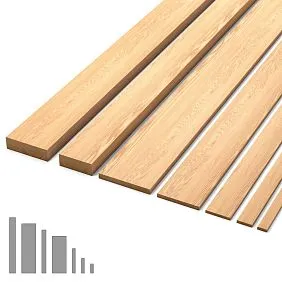


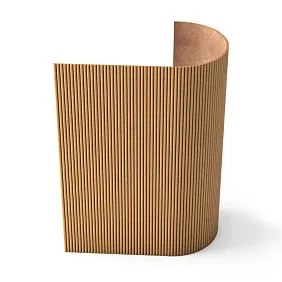
What is DPK on a facade: material, logic, character
Wood-Plastic Composite is a material born from compromise. Engineers took two components opposite in nature: wood flour and polymer binder, combined them under pressure and temperature—and got something fundamentally new. Not wood and not plastic. Something third: with the warmth of the first and the durability of the second.
DPL plank panel for facades is a profile with longitudinal stiffening ribs, closed or open cross-section, with wood-like surface: brushed, smooth, embossed. Mounted on a ventilated frame with a gap between cladding and wall — for condensate drainage and ventilation of the sub-facade space. This is a key durability condition: without ventilation, any facade material, including DPL, begins to degrade prematurely.




Why DPL is chosen for facades
The main argument — climate neutrality. Natural wood on facades requires protective treatment every two to three years. In Russia's climate with its freeze-thaw cycles, wet autumns and peak summer UV, untreated wood grays, cracks, loses shape. DPL is not susceptible to this. Polymer matrix doesn't absorb moisture, doesn't swell, doesn't crack from frost. Operating temperature range — from minus fifty to plus seventy degrees. No wooden facade provides such range without serious chemical protection.
Second argument — zero maintenance. DPL facade plank panel requires no painting, impregnation, sanding. Maintenance reduces to periodic washing with water — once or twice a year. For country houses where owners aren't present daily, this is fundamentally important.
Third argument — authentic aesthetics. Wood-like texture in modern DPL achieves very high authenticity level. Brushed profile with embossed fibers from three to five meters distance is practically indistinguishable from natural larch or teak. Meanwhile it maintains color and geometry for twenty to twenty-five years.
Fourth — production eco-friendliness. DPL uses wood waste — sawdust, shavings, veneer — and recycled polymer materials. This isn't waste recycling for marketing claims, but actual technological necessity: precisely fine wood flour provides needed surface structure and profile thermal conductivity.
Slatted Façade PanelsDPL panels are used in three main formats: horizontal cladding resembling planks, vertical cladding resembling battens, and diagonal installation as design accent. Each format has its own installation rules, visual effect, and building height limitations.
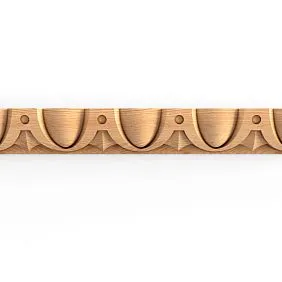
Our factory also produces:


Where DPL works best
Private one- or two-story house with ventilated facade. Country cottage, dacha, townhouse — this is DPL's native environment. Material scales to facade size, mounts on standard aluminum or wooden frame, requires no specialized tools.
Commercial property requiring durability without maintenance: cafe, hotel, office in suburban area. Where appearance is part of brand identity, and regular facade maintenance is an unnecessary expense item.
Reconstruction of a Soviet-era building with the goal of radically changing its appearance. A ventilated facade made of WPC is installed over the old plaster on a frame—and the building becomes unrecognizable without serious intervention in the load-bearing structures.
Get Consultation
Where WPC should not be used
Multi-story buildings above three floors—WPC is not a certified facade material for multi-story construction according to Russian fire safety standards. Buildings in historical areas where appearance is regulated by preservation requirements. Areas with constant direct exposure to moisture without a ventilation gap—canopies, cornice zones without water drainage.
Polyurethane facade molding: not just decoration, but an architectural tool
The word 'molding' evokes one image for many: plaster swirls, Baroque garlands, a palace facade with putti and acanthus. The image is beautiful, but long outdated as the only way to think about facade decoration.
Polyurethane molding allows creating a stylish and presentable exterior of a house, while the material retains its qualities in any weather conditions.—this is not a replica of palace decor for a private house. It is a system of architectural profiles: cornices, pilasters, architraves, pediments, corner blocks, friezes, rustication, keystones, window sills. Each of these elements performs an architectural function: defines boundaries, organizes rhythm, sets scale, manages shadow. This is not ornamentation for beauty's sake—it is the language of architecture that people have learned to read over millennia.
Polyurethane as a material for facade decoration has brought about a revolution that is still underestimated. Before it, facade decor was either plaster—fragile, heavy, requiring regular restoration—or cement, durable but primitive in form. Polyurethane combines casting precision with lightness and resistance to the external environment.
A facade polyurethane profile weighs five to eight times less than a plaster equivalent of the same size. It does not absorb moisture, does not crack from frost, does not crumble upon mechanical impact—it bends and returns to shape. It is painted with facade paints in any color: RAL, NCS, any bases. It is mounted with facade adhesive foam and dowels—many times faster than plaster, without special skills.
Facade decoration made of polyurethane—service life is twenty to thirty years without restoration with proper painting and sealing of joints. This is comparable to a ventilated facade made of WPC—which is fundamentally important for a systemic solution.
What molding does to a facade
Molding organizes the facade vertically and horizontally. The horizontal cornice above the first floor divides the facade into tiers and gives each of them scale and completeness. Vertical pilasters establish the rhythm of window openings. Window casings eliminate the 'bare' joint between the frame and the wall and give the window an architectural frame. Corner rustication emphasizes the volume of the building, making the corners visually clear and substantial.
All this works through one mechanism: shadow. The profile of the molding is a protruding surface that casts a shadow onto the underlying plane. The architectural legibility of a facade is the legibility of its shadows. A flat facade without relief in side light looks like a canvas without painting: nothing extra, but nothing interesting either.
The main question: are WPC and polyurethane molding compatible?
Direct answer: yes, they are compatible — provided several principles are followed. Without these principles — no. This is precisely where most people make a mistake, and this is precisely where 'a facade that argues with itself' arises.
The problem is that WPC slatted facade panels and polyurethane facade molding belong to different architectural languages. WPC is a modern, technological material with a natural texture and a pronounced linear rhythm. Molding is a historical, plastic element, tending towards classical forms. When these two languages meet on one facade without a translator — they can talk past each other. The result: visual noise instead of architecture.
The translator here is style, scale, and color. Three variables that either reconcile the materials or finally set them at odds.
Style as a point of reconciliation
Not all styles equally accept this combination. Let's analyze honestly.
Modern classic and neoclassicism — the most organic context. Here, WPC plays the role of a natural background: the warm wood texture of the slats creates a 'living' foundation on whichfacade decor made of polyurethane— cornice, casings, corner rustication — acquires an architectural role, rather than looking like a glued-on decoration. The key condition: the molding must be delicate — a thin profile, clean geometry, minimal ornamentation. Not a baroque facade with garlands, but a modern interpretation of the classical language.
Scandinavian and Nordic style — possible, but requires surgical precision. Vertical DPC slats in neutral tones — gray, anthracite, cool beige — and a concise profile cornice above the cornice overhang. No ornament. No platbands with profiled shelves. Only clean horizontal and vertical lines — and minimalist molding as a finish, not a decoration.
Minimalism and high-tech — here DPC works on its own, without stucco. Any decorative element in the style of historical architecture — even the thinnest cornice — disrupts the logic of a minimalist facade. If minimalism is chosen — DPC slat panels without any profile decoration.
Eclecticism and postmodernism — allow almost any combination provided it is controlled. Conscious eclecticism with a pronounced authorial logic is one thing. An unconscious mixture is quite another. In eclecticism, the combination of DPC and stucco can be a strong technique: zoning the facade, where the lower tier is classical decor, the upper tier is modern slats. Or vice versa. But this requires a project, not intuition.
Scale as a condition of compatibility
Scale is the most underrated parameter of facade design. And the most critical in the case of combining DPC slat panels and stucco.
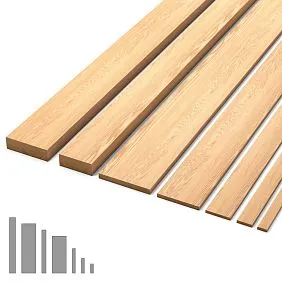
The width of the slat and the scale of the stucco must be coordinated. Narrow slats of twenty-thirty millimeters with a dense rhythm — a delicate, almost textural surface. A thin profile cornice with a cross-section of forty-sixty millimeters, no more, suits it. A massive cornice of one hundred eighty-two hundred millimeters with a developed profile against the background of a fine slat rhythm creates a scale disproportion: the cornice 'eats up' the wall and makes the slats insignificant.
Wide slats of sixty-eighty millimeters with a sparse rhythm — a monumental surface. A developed cornice, voluminous corner rustication, massive platbands suit it. A fine, thin cornice against the background of wide slats will look like a random element without architectural weight.
The rule of scale in one phrase: the size of the decor must correspond to the density of the slat rhythm. The finer the rhythm — the thinner the decor. The larger the rhythm — the more substantial the stucco can be.
Color as the language of unity
Color is what visually 'glues' materials together or 'tears' them apart. In a facade with DPC and stucco, one of two approaches works.
First - monochrome: battens and molding in the same tone. White DPK and white molding. Gray DPK and gray molding. This creates a unified architectural surface where the relief is read through shadow, not through color contrast. The facade looks complete, sleek, professional - even if the building is small.
Second - zoning: battens of one tone, molding of another. Dark anthracite battens and white molding. Natural brown DPK and light gray molding. Contrast works if it is deliberate and consistent - not a random shift, but architectural graphics. In this case, the molding reads as an architectural drawing superimposed on a textured background.
The third approach - color chaos - is the most common and looks the worst. Warm brown DPK and cream molding with an orange undertone, while window frames are white and the plinth is gray. Four tones of white with different warm shades on one facade. This is exactly what a 'facade that argues with itself' looks like.
Climate factor: what happens to the facade after ten years
Architectural solution is not only about how the facade looks on the day of handover. It's about how it looks after five, ten, twenty years. And here, climate is the main test for material compatibility.
DPK in Russian climatic conditions - central region, Volga region, Urals, Northwest - behaves predictably. The polymer matrix retains its shape when frozen, does not swell when wet, and does not crack with sudden temperature changes. The only change that occurs with DPK in the first two to three years of operation is slight fading of the surface pigment under UV exposure. High-quality DPK with co-extrusion coating - a surface layer of pure polymer without wood filler - fades several times slower.
PolyurethanePolyurethane molding allows creating a stylish and presentable exterior of a house, while the material retains its qualities in any weather conditions.with proper painting and joint sealing behaves no worse. Polyurethane does not absorb water, is not damaged by frost, and is chemically neutral to atmospheric influences. The critical point is joints and abutments. An open, unsealed joint between a molding element and the base is a capillary pump that gradually accumulates moisture. When frozen, it ruptures the adhesive bond. Therefore, sealing all joints with silicone or acrylic sealant is a mandatory requirement, not an option.
Important nuance for facades with a ventilated gap: polyurethane elements are mounted not on the DPK batten profile, but directly on the wall base or on frame elements. Molding is stationary wall decor, while battens are cladding of a ventilated facade over the frame. These are different levels of the structure, and they do not compete technically - only visually.
Four scenarios where the combination works
Abstract discussions about compatibility are good. Concrete examples are better.
Country house in modern classic style
Two-story cottage. Lower tier - plaster facade with rustication made of polyurethane blocks and a cornice under the second floor. Corner pilasters made of polyurethane define the volume. Upper tier - ventilated facade made of vertical DPC slats in a natural warm brown tone. Eave overhang - profile cornice made of polyurethane, painted to match the plaster of the lower tier. Windows throughout the facade - polyurethane casings of uniform scale.
Here, DPC and stucco do not compete - they divide the facade horizontally into two independent tiers with a unified architectural logic. Slats are the material of the upper tier, lively and natural. Decor is the organizer of the entire facade, providing scale and completeness.
Reconstruction of a Soviet-era building
Two-story administrative building of Soviet-era construction with a flat, faceless facade. The task was to change the appearance without major renovation. Solution: ventilated facade made of horizontal DPC slats in an anthracite tone across the entire plane + white polyurethane cornice profiles above each floor + white casings on all window openings.
The slats create a dark neutral background with a natural texture. White profiles organize the facade horizontally and accentuate the windows. The combination works through color contrast: a dark field and white architectural graphics on top of it.
Guest house in Scandinavian style
Single-story guest house with a high roof. Vertical DPC slats in a cool gray-brown tone - on all facade planes without exception. Under the eave overhang - one thin profile cornice made of polyurethane in the same gray tone: not white, not contrasting, but in the color of the slat or two tones lighter. Result: Scandinavian restraint with a minimal architectural gesture.
Here, the stucco is almost invisible. But it is precisely what gives the facade completeness: without the cornice, the slatted surface ends technically at the roof - with the cornice, it gains an architectural horizon.
Terrace and entrance group of a private house
A special case is the terrace and entrance group. This is a zone where the transition from exterior to interior must be architecturally designed. WPC slat panels as cladding for the terrace ends and side walls of the portico. Above the entrance door is a semicircular polyurethane pediment. Around the opening perimeter are architraves. Corner rustication on the portico columns.
This combination creates a point of architectural emphasis—an entrance group with character—against the backdrop of a restrained slatted facade. Molding is concentrated where it has maximum visual impact, while WPC occupies the main planes. No overload, no competition.
Mistakes that ruin a facade
No section on facade design is complete without an honest conversation about mistakes. They are the most valuable experience because a facade is built once and for a long time.
Molding all over the facade over the slats
The most common mistake is to perceive WPC as a neutral background and apply molding everywhere there is space. Cornice, architraves on every window, rustication on all corners, frieze under the roof, keystones over every opening. Result: an overloaded facade where the eye finds no anchor and tires from an excess of details.
The rule here is simple: decor should organize, not fill. Architectural decor works on pauses—on the distance between elements, on the clean plane between details. Remove the pauses—and the decor ceases to be decor, turning into ornamental noise.
Uncoordinated white tones
WPC in 'ivory', molding in pure white RAL 9010, window frames in warm cream—three different 'white' tones on one facade. In daylight, especially under oblique morning or evening light, this mismatch turns into visual clutter: each element 'reflects' differently, and the facade looks not like a considered solution but like a collection of random materials.
Solution: match the tone of the molding and the border of the finish coating with the main WPC tone in one color sample. Or work in contrast, but consistently: one tone for all molding, another for all WPC.
Ignoring the ventilation gap
Mounting polyurethane molding directly onto DPC battens is a technical error. Battens are an element of the ventilated system; they must be able to 'breathe' freely in the sub-facade space. Molding attached to the battens disrupts the ventilation gap's function and creates a condensation point. Molding should be mounted on the wall base or on fixed structural elements—independently of the batten cladding.
Different scales of molding elements on the same facade
A 150 mm cornice and 30 mm architraves on the same facade. A five-to-one scale difference creates the impression that the elements are taken from different projects and ended up next to each other by chance. All molding elements on one facade should belong to the same scale range—either all large or all small.
Bat panels without finishing elements
Slatted panels for the facadeWithout corner, starter, and finishing profiles—it's an unfinished structure. The open ends of the battens at corners and at the cornice overhang create a feeling of temporary installation. DPC manufacturers produce complete profile systems—corner, starter, finishing—precisely so that the facade looks finished. Neglecting them to save money means devaluing the entire remaining budget.
Molding without painting with facade paint
Polyurethane profile is supplied white—this is a primed surface for painting, not a final finish. Untreated polyurethane on an open facade under ultraviolet light will yellow within one or two seasons. Painting with two coats of facade acrylic paint is a mandatory step, not an option. Good facade paint on polyurethane lasts eight to twelve years without repainting.
How to account for climate when choosing a system
Russia is a country with a contrasting climate. What works in Krasnodar may require adjustments for Yekaterinburg or Murmansk.
In regions with harsh winters and numerous freeze-thaw cycles per season, sealing molding joints is particularly important. With each heating-cooling cycle, the material slightly changes its linear dimensions—thermal expansion is minimal in polyurethane, but with poor joint sealing, accumulated moisture will still find a way. Use frost-resistant silicone sealant in the joints and facade acrylic for the final painting with a frost resistance class not lower than 'F'.
In regions with high humidity—St. Petersburg, the Northwest, the Far East—a proper ventilation gap in the WPC system is crucial: at least thirty millimeters between the cladding and the wall, with open vents at the bottom and top. A closed ventilation gap in high humidity conditions is a source of condensation, mold, and premature deterioration of any facade material.
In regions with high insolation—southern Russia, the Volga region—choose WPC with a co-extruded surface layer coating: it significantly reduces the rate of pigment fading. For moldings, use paint with a UV filter—this is crucial for preserving whiteness and color on southern facades.
Installation logic: how the facade is assembled in the correct sequence
The correct installation sequence is not just construction neatness. It is a condition for the facade to look as intended.
The first stage is design. On paper or in 3D, the areas of slat cladding, the location and scale of all molding elements, and the color scheme are determined. No 'on-the-fly' decisions on the facade—only the implementation of a finished project.
The second stage is installing the frame for the ventilated facade. The aluminum or wooden frame is set strictly level, taking into account the ventilation gap. At this same stage, vapor barrier and insulation are laid, if provided for in the project.
The third stage is installing the WPC slat panels. The slats are attached to the frame with clips or using an open method—depending on the chosen system.installation of slatted panelsInstallation proceeds from the bottom row upward, with mandatory thermal gaps between panel ends—to compensate for thermal expansion.Slatted wall panelsInterior and exterior systems are installed on a similar principle, but the facade system requires a mandatory ventilation gap.
Stage four — installation of facade molding. Polyurethane elements are mounted using foam adhesive or special facade polyurethane adhesive, with additional fixation with dowels for large elements. Joints are sealed. After the adhesive has completely dried — painting with two coats of facade acrylic paint.
Stage five — finishing details: DPC corner profiles, cover strips, drip edges, sealing of junctions with windows and doors.
Stage six — inspection. Checking all joints, seals, and color conformity. Any discrepancy is corrected before project handover — it is significantly more difficult to do after occupancy.
What to look for in the catalog: selecting elements without losing systematicity
When the project is ready and the sequence is clear, the moment comes to select specific elements. Here it is important not to lose systematicity in the details.
For DPC slatted facade panels, pay attention to Rafter panels in the catalog — it presents formats suitable for facade applications with different width and profile parameters. Choose the system as a whole: slat plus all accessory profiles from one manufacturer — corner, starter, finishing, end. Systematic installation always looks better than an assembled construction from elements of different manufacturers.
For polyurethane molding, the full assortment of cornices, architraves, pilasters, rustication, keystones, and corner blocks is collected on the page polyurethane products. When selecting, pay attention to scale: cornice width, profile projection, rustication block height. These parameters must correspond to the scale range defined in the project — do not choose 'by eye' from a catalog photo.
If the project involves combining a slatted facade with interior finishing in a unified style, look at Slatted Façade Panels— there is a detailed breakdown of the application of slat systems both externally and internally, which allows for building a seamless architectural concept from facade to interior.
A quick selection algorithm for those who have already made a decision.
Not theory, but a specific sequence of steps for those ready to take action.
Determine the facade style. Modern classic and neoclassical — allow full combination of WPC and molding. Scandinavian, Nordic, minimalism — only a thin cornice without ornament, or complete rejection of molding. Eclectic — only if there is a project.
Determine the scale of the slat rhythm. Narrow slats — thin molding. Wide slats — developed decor.
Choose a color scheme before purchasing materials. Monochrome or contrast — but consistently across the entire facade.
Compile a complete list of molding elements with dimensions and quantities for procurement. A shortage of one element during installation risks disrupting the entire sequence.
Order materials with a five to eight percent surplus. WPC and polyurethane profiles — the rule is the same for both.
Check the climatic requirements for your region and choose appropriate brands of adhesive, sealant, and paint.
Create an installation plan in the correct sequence and follow it without deviation.
Frequently asked questions
Can polyurethane molding be mounted directly onto DPC battens?
Technically, it is not possible: DPC battens are part of a ventilated system and are not designed for additional loads. Molding is mounted on the wall base or on stationary structural elements independently of the batten cladding.
How long does DPC last on a facade?
High-quality DPC with co-extrusion coating lasts twenty to twenty-five years without loss of geometry. The surface pigment may fade slightly in the first three to five years under UV exposure, especially on southern facades. This is a normal process and does not affect structural integrity.
Does polyurethane molding require painting before or after installation?
After installation. First, the molding is glued and doweled, joints are sealed—then it is painted in two coats along with the adjacent surface. This ensures a uniform color solution without visible seams between the element and the base.
Is DPC suitable for facades in Siberia?
Yes, with proper material selection. High-quality DPC is designed for a temperature range from minus fifty degrees. The critical factor is correct installation with thermal gaps between panel ends to compensate for seasonal expansion.
Which molding elements are most versatile for combining with DPC?
Cornice above the eave overhang, window opening trims, and corner rustication—three elements that provide maximum architectural effect with minimal quantity. This set is sufficient to turn an ordinary batten facade into an architecturally substantial object.
Can DPC be painted a different color over the factory coating?
Depends on the surface type. DPC with co-extrusion coating does not accept paint well without special preparation. DPC for painting is a separate category of profiles with an unpainted surface, intended for final painting on site. Check the characteristics of the specific product before purchase.
Are slatted facade panels made of DPC compatible with insulation systems?
Yes. A ventilated facade made of DPC is perfectly compatible with any insulation - mineral wool, expanded polystyrene, PIR boards - provided that the insulation is covered with a windproof membrane and a ventilation gap is provided between the membrane and the cladding.
STAVROS: materials with architectural logic
Slatted facade panels made of DPC and facade stucco made of polyurethane are not just two materials. These are two architectural tools that, when applied correctly, transform a facade from a set of surfaces into a cohesive architectural statement. One creates rhythm and texture. The other provides scale and completeness. Together, they allow building houses that you want to look at - not just live inside.
STAVROS producesRafter panelswith precise geometry and stable characteristics. STAVROS offers a complete rangepolyurethane facade molding- cornices, trims, rustication, pilasters, keystones - for any architectural task.
The facade is what everyone sees. STAVROS makes it worth looking at.