Article Contents:
- Why the wardrobe often looks assembled from different solutions
- What does 'one rhythm' mean in the wardrobe
- Step
- Verticality
- Element width
- Module repetition
- Pause between elements
- How the slatted partition works in the wardrobe area
- Separating the bedroom from the wardrobe
- Separating the passage zone
- Lightweight visual framework
- Semi-transparent zoning: when visible and when not
- Which wooden handles are best suited for a wardrobe
- Long vertical handles
- Push-button handles for drawers
- Bracket handles
- Recessed handles
- Minimalist elongated shapes
- How to repeat the rhythm of slats in wardrobe fronts
- Vertical handles as an extension of slats
- Equal spacing: how to calculate it
- Similar width of elements
- Unified logic of the tree
- Repetition of height and proportions
- Where repetition is needed, and where contrast is
- When the handle should blend with the facade
- When the handle should be an accent
- When a long handle is better, and when a short one
- When to repeat the tone, and when to contrast
- Combination scenarios for different wardrobes
- Compact wardrobe by the bedroom (up to 4 sq. m)
- Wardrobe behind a slatted partition in the bedroom
- Built-in cabinets with vertical handles
- Light walk-in closet with oak accents
- Dark walk-in closet with warm wood
- Mistakes in combining battens, fronts, and handles
- Too frequent vertical pattern everywhere
- Long handles clash with battens
- Different wood shades without a system
- Too massive handle on a light front
- Battens are active, and fronts are also overloaded
- What to consider when choosing: wood, profile, grip, length, shade
- Wood
- Profile
- Grip
- Length
- Shade
- What to look for in the catalog for such a composition
- FAQ: Answers to Key Questions
- How to combine a slatted partition and wardrobe fronts?
- Which wooden handles are suitable for a wardrobe?
- Should the slat spacing be repeated in the handles?
- What is better for a wardrobe: long handles or short ones?
- How to avoid overloading the interior with vertical lines?
- Can different wood shades be used in the partition and handles?
- Are recessed wooden handles suitable for a wardrobe?
- How to make a wardrobe cohesive if the partition and cabinets differ in design?
- About the company
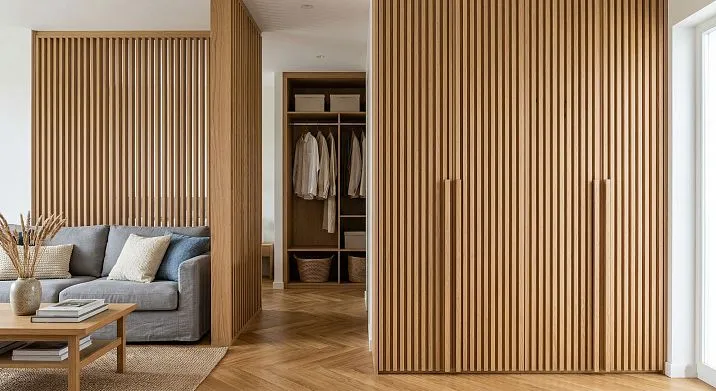
A wardrobe is one of those spaces where you want order in everything. Not just clothes on shelves, but in the interior solution itself. And here's the paradox: it's precisely here that visual inconsistency most often arises.Slatted partition— its own logic of verticals. Cabinet fronts — their own plane.Furniture Handles— a third story. And all three exist independently of each other, don't communicate with each other, don't repeat a common rhythm.
The result is a space where each element is good on its own, but together they don't add up to a whole.
This is exactly what this article is about. About howWooden handlesand a slatted partition can work as one system. How to repeat one rhythm from zoning to fronts. HowWooden Handleon a cabinet door can continue the vertical pattern of the slats — and why this turns a wardrobe from a set of details into a unified interior image.


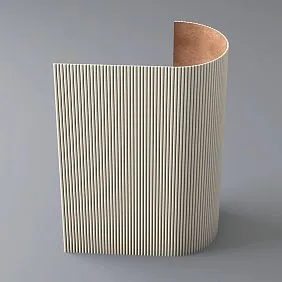
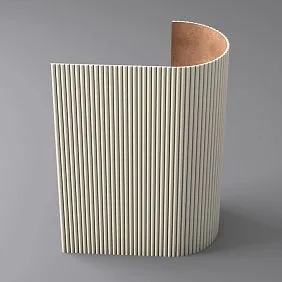
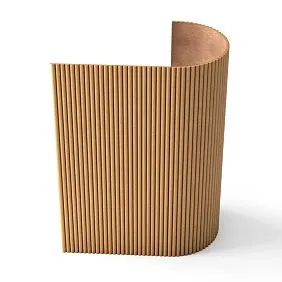
Why a wardrobe often looks assembled from different solutions
Ask yourself an honest question: when was the last time you designed a wardrobe as a unified system — taking into account the zoning element, fronts, and hardware simultaneously? Most likely, these decisions were made sequentially and independently.
First — a slatted partition for zoning. Then — cabinets. Then — handles. And at each stage — its own supplier, its own designer, its own logic.
This is exactly how a 'collected' wardrobe is born: everything functions, nothing clashes overtly, but a sense of wholeness does not emerge. The partition lives its own life—it's made of light oak, with widely spaced slats. The wardrobe is made of paintable MDF, with horizontal metal handles. The visual connection between them is zero.
This disconnect is not a problem of budget or a problem of taste. It's a problem of logic: no one set the task to 'repeat the rhythm.' And rhythm is precisely what turns a set of good elements into a unified space.
The three main reasons why a wardrobe looks disjointed:
-
The partition and the cabinets are made of different materials without coordination in tone, wood species, or surface character.
-
Handles were chosen as hardware, not as an element continuing the rhythm of the verticals.
-
The spacing, width, and height of elements are not coordinated between the partition and the cabinet fronts.
All three problems are solved at the design stage—if you understand what 'one rhythm' means in a wardrobe.




What does 'one rhythm' mean in a wardrobe
Rhythm in interior design is repetition. Repetition of form, spacing, width, vertical lines. It's not literal copying, but kinship: when one element reminds you of another, and the eye feels the connection.
In a wardrobe, rhythm is formed from several parameters.
Our factory also produces:




Step
Step — the distance between repeating elements. In a slatted partition, this is the distance between slats. In wardrobe fronts, it can be the distance between handles on multiple doors or the step of vertical milled grooves on the front.
When the step of the partition slats and the step of the handles on the fronts coincide or are multiples (e.g., slat step 80 mm, handle step 160 mm — twice as large), the eye perceives the kinship without explicit explanation. This is rhythmic connection.
Get Consultation
Verticality
Slat — a vertical element. A long vertical handle — also a vertical element. When verticals repeat in the same logic in the wardrobe space — in the partition, in the handles, possibly in the vertical moldings of the fronts — a sense of direction, harmony, and organization arises.
This is precisely why for wardrobes with slatted partitions, elongated vertical handles become the best choice, rather than horizontal brackets or round knobs.
Element width
A slat has a certain width — for example, 30 mm. A handle also has a body width. If the handle width is close to the slat width or proportionally coordinated with it, another level of visual kinship emerges.
Module repetition
A module is the basic unit of repetition. In a slatted partition, the module is 'slat + space between slats'. In a front — it is 'handle + space to the next one'. When these modules are coordinated, the wardrobe is perceived as a designed space, not as a random composition.
Pause between elements
The pause is no less important than the element itself. Too frequent a rhythm (narrow slats with minimal gaps) plus frequent long handles creates overload. A sparse rhythm of slats plus sparsely placed handles creates airiness. The ability to work with pauses is a key skill in building the rhythm of a wardrobe.
How a slatted partition works in the wardrobe area
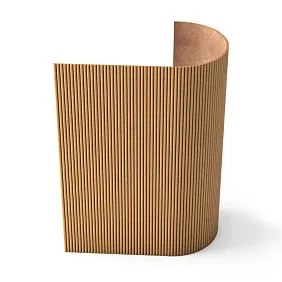
Slatted partition for a wardrobe— this is a fundamentally different solution than a solid wall or a hinged door. It does not close off the space, but structures it. It is a thin boundary—visible, yet permeable to light and view.
Separating the bedroom from the wardrobe
The most common scenario: a wardrobe in the bedroom, separated from the sleeping area by a slatted partition. Here, the partition performs three functions at once: visual demarcation of zones, transmission of natural and artificial light, and creating a sense of spatial depth.
For a bedroom, this solution is significantly more elegant than a wall or sliding door. Oak slats with a warm texture, dark tint, or in a natural light color—create the character of the space. And this character should continue in the cabinets and their fronts.
Separating a passage zone
In apartments with an entrance hall-wardrobe, a slatted partition can separate wardrobe storage from the passage space of the corridor. Here, semi-transparency is important: the wardrobe area is visible through the slats, but not fully on display.
A lightweight visual frame
Slatted partition— it's not just verticals. It's a frame. The horizontal crossbars at the top and bottom create a frame structure in which the slats 'hang' in the field. This is an architectural element, not a finishing surface.
That's why cabinets behind or next to the partition should pick up on this architectural quality — through vertical handles, through the laconic planes of the fronts, through coordinated material.
Semi-transparent zoning: when it's visible and when it's not
The spacing of the slats determines the degree of transparency. Wide spacing (gap between slats is greater than the slat width) — a more open partition, through which the walk-in closet is clearly visible. Narrow spacing — a more closed one, with greater privacy.
This is important for choosing handles: with an open, transparent partition, the fronts of the cabinets behind it are clearly visible, and the handles should be just as neat and coordinated as if there were no partition. With a closed one — the fronts are less visible, and the handles can be a bit more independent.
Which wooden handles are better suited for a walk-in closet
A walk-in closet is a space for everyday use. Handles are opened and closed many times a day. This is precisely where ergonomics and aesthetics are equally important.
wooden furniture handles— the right choice for a walk-in closet with a slatted partition for one reason only: they belong to the same material world as the slats. Wood to wood is not just beauty. It's consistency. It's one language.
Long vertical handles
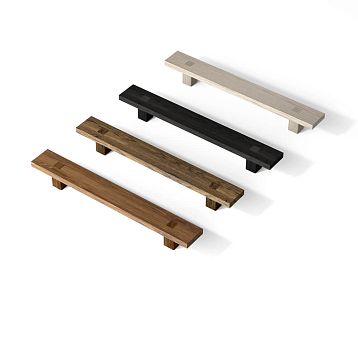
This is the best choice for a walk-in closet with a slatted partition.Wooden long handles— from 200 mm and above — create a vertical accent on the cabinet facade that directly responds to the vertical rhythm of the partition slats. A long handle on a tall cabinet door is an extension of the slat on the facade plane.
A long handle provides a convenient grip at any height — this is important for wardrobe cabinets, where doors are often tall (from 1800 to 2400 mm and above). At the same time, it creates an expressive vertical stroke that is readable even from a distance.
Push-to-open buttons for drawers
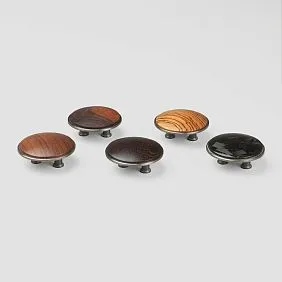
Drawers in a wardrobe — drawers for accessories, linen, small items — require a different approach. Here, a Round wooden handle or a small button is appropriate: a compact element that does not overload the small drawer front. At the same time, the material — wood, the same as the handles on the doors — creates a series unity.
Pull handles (bail handles)
Wooden pull handle— an intermediate option between a button and a long vertical handle. Works well on medium-sized wardrobe fronts (door width 400–600 mm). A pull with vertical orientation — when installed vertically — also supports the rhythm of the slatted partition. wooden hook handle with a narrow body and a slight lift above the facade plane — an elegant and functional choice.
Recessed handles
For wardrobes in a modern minimalist style, where facades should be as clean as possible, Wooden recessed handles are ideal. They recess into the facade plane and visually do not create an additional protruding element. The facade remains clean, and the rhythm of verticals is not interrupted by extraneous volumes.
This is especially relevant when the slatted partition is active and rich in details: in this case, it's better to make the cabinet fronts quieter so they don't 'argue' with the partition.
Minimalist elongated forms
For wardrobes in the style of modern classic or Nordic minimalism — elongated, laconic forms without ornament, with a smooth surface and a clear profile.Wooden handlewith a rectangular cross-section or a slight rounding of the corners — this is an element that works simultaneously as a function and as part of a rhythmic system.
How to repeat the rhythm of slats in wardrobe fronts
This is the main question of the entire article. Not 'how to choose a pen' separately and not 'how to choose a partition' separately, but how to make them work together.
Vertical handles as a continuation of slats
Imagine: a slatted oak partition with slats 30 mm wide and a 50 mm gap — resulting in an 80 mm module pitch. Behind the partition — a cabinet with doors 600 mm wide. On each door — one vertical handle 28–32 mm wide and 300–400 mm long.
The handle's width almost matches the slat. In form — it's the same vertical element. In material — wood of the same species. The eye, gliding from the partition to the cabinet, catches a familiar element in a new context. This is the rhythmic connection.
Same pitch: how to calculate it
If there are several door sections next to each other in the wardrobe — for example, three 600 mm doors — handles on each of them, when installed vertically along the central axis, create a repeating rhythm with a step equal to the width of the door (600 mm). The spacing of the partition slats should then be commensurate: a multiple of 600 or synchronized with it according to the logic of the module's coarseness.
In practice, exact mathematical coincidence is not required — visual commensurability is important. Slats with an 80 mm spacing and handles with a 600 mm spacing are perceived as a system because both elements belong to the same scale register: both are verticals, and both are wood.
Similar width of elements
The width of the slat and the width of the handle body should not diverge greatly in scale. A 25 mm slat and a handle with a 20–35 mm body are one scale register. A 25 mm slat and a heavy handle with an 80 mm body are a scale conflict.
Unified tree logic
Rhythm is not only form. It is material. When a slatted partition is made of light oak, and the handles on the cabinets are made of the same species or wood of a similar tone, a material rhyme arises between them. This is felt not as an explicit thought, but as a sense of calm: everything is connected, everything is 'one's own'.
buy wooden handlesmade of oak — if the partition is also oak — is the simplest way to ensure material unity without additional effort. Different species work too, but require more care: the tone of the wood and the character of the texture must be coordinated.
Repetition of height and proportions
If the partition slats run from floor to ceiling — the handles on the cabinets should also be long enough so as not to look like a 'small detail' against the background of the elongated vertical elements. The proportion 'door height to handle length' should be no less than 1:5. That is, with a door height of 2000 mm, the handle should be at least 400 mm.
Where repetition is needed, and where — contrast
An important nuance that is often overlooked: not everything should be repeated. An interior where literally everything is the same becomes monotonous and boring. The goal is to find a balance between repetition and accent.
When the handle should blend with the facade
If the slatted partition is visually rich—active rhythm, contrasting dark slats on a light background, expressive texture—the facades and handles should be calm. A handle in the same tone as the facade, without strong contrast, is the right choice. It functions but does not claim an independent role.
When the handle should be an accent
If the partition is neutral—light slats, restrained rhythm, almost uniform background—handles can become an accent. A dark wooden handle on a light facade, with an expressive shape—here the handle 'speaks' directly with the space, without intermediaries.
When a long handle is better, and when a short one
Long handles are for tall doors, for accent solutions, for spaces with ceiling heights from 2.7 m. Short handles are for drawers, for small doors, for rooms where a 'quiet' solution without unnecessary accents is needed.
When to repeat the tone, and when to contrast
One wood tone throughout the space—calm, cohesive, elegant. A contrasting tone—dark handles on light facades—more dynamic, expressive, modern. The choice depends on the overall character of the interior: Nordic minimalism calls for monochrome wood, modern classic allows moderate contrast.
Combination scenarios for different wardrobes
Now — specific solutions for specific situations.
Compact walk-in closet by the bedroom (up to 4 sq. m)
In a small walk-in closet, all elements should be as concise as possible. A slatted partition with narrow slats (20–25 mm) and moderate gaps creates a light visual boundary without consuming space. Cabinet fronts are flat, without decoration.Furniture Handles— vertical, narrow, not too long (160–200 mm), made of light wood to match the slats.
Result: a compact space where everything follows a unified logic of verticality and wood. No element 'pushes' forward.
Walk-in closet behind a slatted partition in the bedroom
Partition made of dark stained oak, height — from floor to ceiling, slat spacing — 70–80 mm. Cabinets behind the partition — with dark matte fronts.wooden furniture handles— made of the same dark oak, long, vertical, centered on each door.
When viewed from the bedroom side, through the slats, stripes of dark fronts and dark vertical handles are visible. The partition and cabinets create a unified layered image — deep, warm, well-organized.
Built-in cabinets with vertical handles
In apartments with niches for walk-in closets — built-in wardrobes from wall to wall. Here, a slatted partition may not be a separate object, but an element integrated into the overall system: slats as part of the wardrobe's side panel or as a dividing section between the wardrobe and the passageway.
Wooden wardrobe handles— here, the series is important: all handles on all fronts should be from the same collection. This creates the monolithic quality necessary for a built-in system.
Light walk-in closet with oak accents
White or cream fronts, light walls, natural light. Oak details are introduced into this neutral context: slats of the partition made of light oak,Wooden handle— also made of light oak without tinting. Oak against a white background is a calm, natural accent. A few wooden 'strokes' in the space create warmth without overload.
Dark walk-in closet with warm wood
Dark gray or anthracite fronts, dark laminate or parquet flooring. Slats made of thermowood or dark tinted walnut. Handles — dark walnut, long, vertical.
In such a space, wood works as a thermal 'source': dark wood is softer than a cold dark gray tone. Rhythm is maintained in the verticals and in the unity of the warm wood species.
Mistakes in combining slats, fronts, and handles
Each of these mistakes can be seen in real projects. Knowing them is the best prevention.
Too frequent vertical pattern everywhere
Narrow slats with minimal gaps plus frequent ribs on facades plus several rows of long handles — this is vertical overload. The eye gets tired, the space shrinks. If the partition is saturated with verticals, the facades should be calm, and the handles should be the only vertical accent.
Long handles compete with slats
Very long handles (from 500 mm) on facades visible through the partition slats can create visual competition with the slats themselves. Both details are large, vertical, insistent. The rule: the handle should be slightly shorter than the slat in length or significantly narrower in width, so it reads as a subordinate element.
Different wood shades without a system
Light slats of bleached ash and dark handles of thermo oak — contrast without explanation. The space looks as if the handles were 'forgotten' to coordinate with the partition. Either the shades should match, or the difference should be justified: contrast as a conscious technique.
Too massive a handle on a light facade
A slatted partition is a light, airy element. It lets the gaze through, does not create a solid wall. If a wardrobe with heavy cast wooden handles with rich carving stands next to it — it's a contrast in character: the partition is light, the handles are heavy. This is not a complement, it's a conflict. Handles for a wardrobe with a slatted partition are always in the register of lightness and conciseness.
Slats are active, and facades are also overloaded
Carved decor on cabinet fronts —decor for furniture, Moldings for furniture— is beautiful in the right context. But when there's also an active slatted partition nearby, two saturated decorative fields compete side by side. Here you need to choose: either an active partition + simple fronts, or a neutral partition + decorative fronts.
What to consider when choosing: wood, profile, grip, length, shade
Selecting wooden handles for a wardrobe with a slatted partition is a system of parameters. Let's examine each.
Wood
Hardwoods are preferred: oak, beech, ash. They are durable for daily use, work well, and provide a beautiful grain.Wooden handlesOak — is the most versatile choice for wardrobes in modern classic and Nordic styles. Beech — for lighter, almost neutral solutions.
Softwoods — pine, linden — are not recommended for handles: they pick up marks from fingers and mechanical contact too quickly.
Profile
The handle profile is the shape of its cross-section. A rectangular profile — strict, geometric. A rounded one — soft, tactilely pleasant. For a wardrobe with a slatted partition, a rounded rectangle works well: it combines geometric clarity with tactile comfort.
Grip
Grip is the space under the body of the handle where the fingers go. The minimum comfortable gap between the plane of the front and the lower surface of the handle is 20–25 mm. This is especially important for a wardrobe: handles are opened repeatedly, and an uncomfortable grip quickly becomes a source of irritation.
Length
For tall doors (from 1800 mm) — handles from 250 mm. For medium doors (1200–1800 mm) — 160–200 mm. For drawers — 80–128 mm (knob or pull).Wooden long handles— a special category for tall panel-type cabinets.
Shade
The wood shade of the handle should match the shade of the partition slats. Ideal scenario: same wood species, same finish (oil, varnish, stain). Acceptable: similar species with synchronized staining. Undesirable: different shades without deliberate design justification.
What to look for in the catalog for such a composition
For a wardrobe with a slatted partition — it's logical to make the entire selection from one catalog that includes both zoning elements and hardware.
Furniture handles — full range: pulls, knobs, long vertical handles, recessed. Selection by length, shape, and wood species.
Wooden handles with coating: for wardrobes where the finish must be coordinated with the final coating of the fronts.
Wooden handle without coatingfor independent finishing — for the same oil-wax or lacquer used on the partition slats.
Wooden recessed handlesfor minimalist fronts with a maximally clean surface.
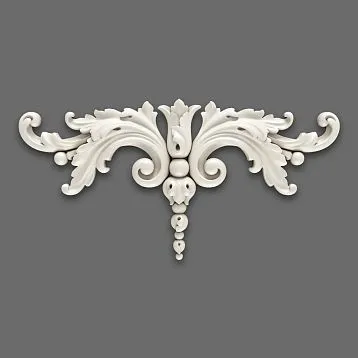
decor for furnitureoverlay elements for fronts, if you want to add a light decorative accent with a neutral partition.
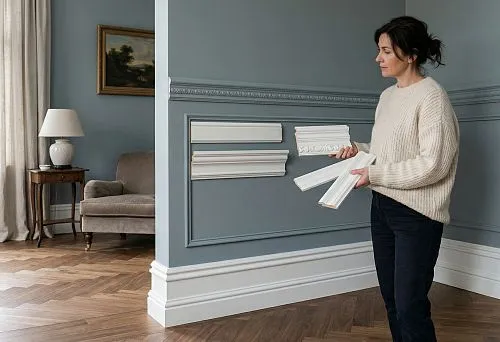
Furniture moldingfor creating framed fronts that complement the rhythm of the slatted partition with a horizontal-vertical grid.
FAQ: Answers to Key Questions
How to combine a slatted partition and wardrobe fronts?
Through three parameters: material (one wood species), vertical rhythm (handles repeat the vertical of the slats), and scale (handle width is commensurate with slat width). These three alignments are enough for the partition and cabinets to look like a unified system.
What wooden handles are suitable for a wardrobe?
Long vertical handles made of hardwoods (oak, beech) — for tall doors. Vertically oriented brackets — for medium doors. Buttons or short brackets — for drawers. Recessed handles — for minimalist fronts with an active partition relief nearby.
Is it necessary to repeat the slat spacing in the handles?
Exact repetition is not required. Commensurability is needed: handles and slats should belong to the same scale register. Slats with an 80 mm spacing and handles with a spacing that is a multiple of 80 (160, 320, 640 mm) — create a perceived rhythmic connection.
What's better for a wardrobe: long handles or short ones?
Long ones for doors. Short ones for drawers. A tall door with a short button looks unfinished. A drawer with a long handle looks overloaded. Matching the handle length to the facade height is a basic rule.
How to avoid overloading the interior with vertical lines?
Choose one dominant vertical element—either the partition or the handles—and make the other element more restrained. With an active partition, choose narrow and concise handles. With a neutral partition, handles can be more expressive.
Can different shades of wood be used for the partition and handles?
Yes—if it's a deliberate contrast, not an accidental mismatch. Dark handles on a light facade with a light partition is a working technique. But different shades without explanation look like a coordination error.
Are recessed wooden handles suitable for a wardrobe?
Yes, especially for wardrobes in modern and Nordic styles. They provide clean, flat facades, don't add unnecessary protruding elements, and maintain the wooden material language connected to the slatted partition.
How to make a wardrobe cohesive if the partition and cabinets are structurally different?
Through material and handles. Even if the partition and cabinets are structurally different—slats and facades—they are connected by a unified material (one type of wood) and a unified type of hardware.wooden furniture handlesfrom the same wood species as the slats, become a 'translator' between two structural systems.
About the Company
When the task is to create a walk-in closet where a slatted partition and cabinet fronts work as a unified system, you need a manufacturer that offers both.
STAVROS is a manufacturer of wooden interior products: furniture handles made of oak and beech, decorative overlays, moldings, architectural elements. The STAVROS catalog features wooden handles in various forms — brackets, knobs, inset, long vertical — made from several wood species with different finishes. All products are crafted from solid natural wood with high-quality surface treatment. This is what allows you to select handles that will continue the rhythm of the slatted partition — not by chance, but intentionally, precisely, and beautifully. STAVROS — when not only the detail matters, but also the system it creates.