Article Contents:
- Why the TV zone is the perfect scenario for slats and texture
- The TV requires a background
- Slats add depth without mass
- Precise geometry holds the gaze
- What to choose for the base: slatted partition, wall panel, or decorative panels
- Slatted panel as a rhythmic background
- Wall panel as a solid base
- Decorative panels as flexible decor
- When one system is needed, and when — a combination
- When rails work better in the TV zone
- When vertical rhythm is needed
- When soft shadow is needed without heavy textures
- When the interior is modern or neoclassical
- When the furniture under the TV is a cabinet or built-in system
- When decorative elements are needed, not just panels
- When the TV zone lacks a 'frame'
- When an accent is needed above or below the screen
- When targeted reinforcement is needed without overload
- How to combine slatted panels and decorative elements on one wall
- The principle of one leading technique
- Slats as a background — and quiet decorative accents
- Decorative elements as the main focus, slats — locally
- You cannot make both the background, decor, and moldings active
- How not to overload the wall under the TV
- The TV is already a large accent
- If the relief is too active — the technology 'gets lost'
- The rule of one leading technique — in practice
- Color as a tool for managing relief
- Best TV Area Design Scenarios
- Modern Living Room: Slatted Panels in Monochrome
- Neoclassicism: Molding Frame + Slats Inside the Field
- Soft Minimalism: Flexible Slatted Panel on a Radius Niche
- Warm Interior with Wood: Solid Oak Slats + Natural Tone
- Calm Monochrome TV Area: MDF Panels in Wall Color
- What to Choose by Material: Analysis of Options
- MDF for Painting: Monochrome and Precise Geometry
- Solid Oak: Live Texture and Natural Character
- Flexible Panels: Radius Surfaces and Non-Standard Geometry
- Decorative elements made of wood or polyurethane: choosing based on the task
- Mistakes when designing a TV zone: what goes wrong
- Mistake 1: too frequent slat rhythm
- Mistake 2: too active decor behind the TV
- Mistake 3: overloaded texture
- Mistake 4: several competing geometries
- Mistake 5: contrasting wall without a system
- Mistake 6: Ignoring Lighting
- Additional elements that enhance the TV zone
- Cornice with lighting
- Horizontal shelf-lintel
- Side vertical moldings
- FAQ: Answers to Popular Questions
- Conclusion: relief is about dosage, not quantity
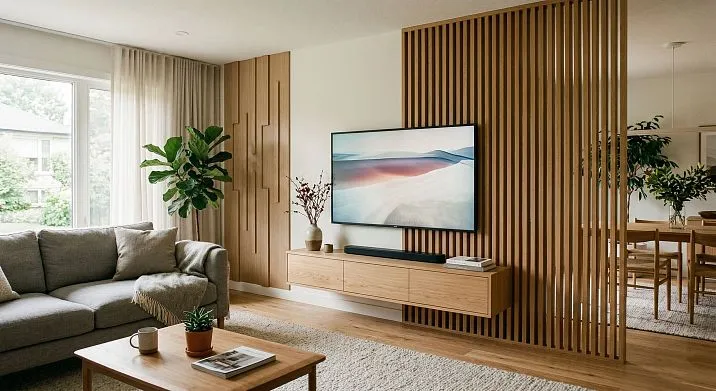
The TV wall is one of the most 'problematic' surfaces in the living room. On one hand, it demands attention: it's the main focal point in the room, the feature wall around which the entire space is arranged. On the other hand, it already has a dominant element: the TV itself. The dark rectangle of the screen, which when turned on completely captures the gaze, and when turned off—darkens like a hole in the wall.
This is why the TV zone either remains empty—'well, it'll do'—or turns into an overloaded surface wheredecorative elements, battens, moldings, and textured panels compete with each other and with the TV for the right to be called the main feature.
The correct answer is in the middle.Rafter panelsset the rhythm and depth,Wall Panelsform the base,decorative wall panelscomplement the plasticity—and all of this together creates an architectural TV zone where the relief works for the benefit, not against it.
How to maintain this measure? How to add relief to the TV zone without getting a wall that 'shouts'? This is exactly what we'll cover—in detail, with examples, and without unnecessary words.


Why the TV Zone is the Perfect Scenario for Slats and Relief
Let's start with a basic question: why does a TV zone even need relief? Wouldn't it be easier to paint the wall in an accent color and hang the TV?
Easier. But — less expressive. Here's why.




A television requires a background
A turned-off television is a dark rectangle hanging in space. If the wall behind it is uniform and flat, the screen 'sags' visually: it is not integrated into the wall, it is simply attached to it. A relief wall — slatted, paneled, with a molding frame — turns the television into an element of an architectural composition. It becomes inscribed into a system, not attached to a random plane.
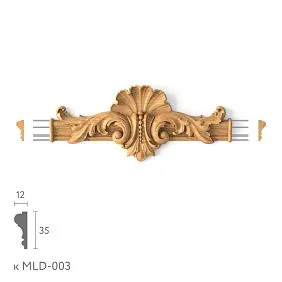
Our factory also produces:


Slats add depth without mass
Slatted partition— it's not a solid cladding. Vertical slats with spacing create a play of shadow and light: with side lighting, each slat casts a thin shadow, and the surface begins to 'breathe'. This is depth without weight — a fundamental difference between slatted texture and, for example, stone tile or dark decorative plaster coating.
It is precisely this property that makesWooden planksespecially appropriate in a TV zone: there is relief, but no feeling of monumentality or overload.
Get Consultation
Precise geometry holds the gaze
The TV zone is a rectangular area with a horizontal accent (the television). The vertical rhythm of the slats works as a counterpoint: the vertical element balances the horizontal screen. The wall stops 'lying down' and begins to 'stand up'. The geometry of the slatted field supports the TV as the center — and that is precisely the point.
Read more about how a slatted panel for a TV builds an architectural composition in the article TV zone with a slatted panel — scenarios for zonal and full-width slatted fields are analyzed in detail there.
What to choose for the base: a slatted partition, a wall panel, or decorative panels
Before discussing details — a basic decision must be made: what will be the foundation of the TV zone? Three options, each with its own logic.
Slatted panel as a rhythmic background
Rack panel — this is a set of parallel slats with equal spacing, mounted on a substrate or fabric base. The surface becomes linear, graphic, with a sense of movement along the slats. This is the most 'lightweight' type of base in character: the slats create texture without creating mass.
A slatted background works well when the television does not need additional framing — it is a sufficient accent on its own. The slats provide it with a 'pedestal' without competing for dominance.
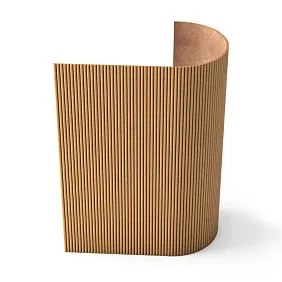
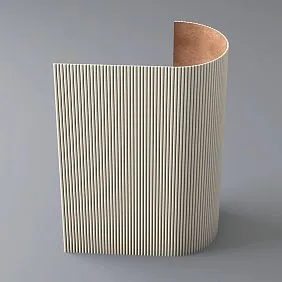
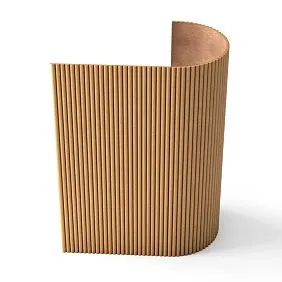
The slatted panel range from STAVROS includes solid oak modules with natural texture, paintable MDF panels for monochrome solutions, and flexible PAN-001 panels on a fabric base — they wrap around curved surfaces and columns, which is critical for non-standard TV zones.
Wall panel as a solid base
Wall Panels— this is a more traditional, classic solution. Boiserie, wooden panels with a frame structure, vertical raised panels — they create not a linear rhythm, but an architectural mass. This is a base with weight and character.
Wall panel as the basis for a TV zone — a choice for classic, neoclassical interiors and for those who want the wall behind the TV to be perceived as an independent architectural object, not just a background. The panel solution can include moldings, carved overlays, profiled frames — that is, integrateWall Decorative Elementsdirectly into the structure of the base.
Decorative panels as flexible decor
decorative wall panels— a more flexible category. This includes both slatted modules and relief cladding panels, panels with geometric patterns, and combined solutions. Their difference from classic boiserie is less architectural 'weight' with comparable visual expressiveness.
Decorative wall panels are good for modern interiors that need texture without classical strictness. They allow creating an accent TV zone without extensive carpentry work.
When one system is needed, and when — combining
If the TV zone is the entire wall from corner to corner: one system. A slatted field across the entire width, or wall panels across the entire wall. Mixing several types of cladding on one wall requires precise logic and a professional eye.
If the TV zone is only the area behind the screen, and the wall continues smoothly on the sides: then the slatted panel or decorative panels occupy only the central part, and a molding frame or cornice separates this zone from the rest.
The logic of combining slatted panels and decorative elements is explained in detail in the articleslatted wall panels and decorative elements— it shows how these two components create an expressive interior composition.
When slats work better in a TV area
Slats are not a universal solution. But there are scenarios where a slatted partition or slatted field solves the problem better than any other cladding.
When vertical rhythm is needed
A TV area in a room with a ceiling of 2.7 m or higher is a situation where vertical elements enhance the space. Vertical slats visually 'stretch' the height: the eye moves from bottom to top along the strips and perceives the wall as taller than it actually is.
Horizontal slats, on the contrary, expand the space widthwise. For a TV area in a narrow living room, a horizontal slatted rhythm can visually 'push apart' the wall.
When soft shadow is needed without heavy textures
Wallslats for zoningThey cast a shadow with a depth of only 15–25 mm (based on the profile height of the slat), but this is enough for expressive chiaroscuro with directed or side lighting. For the TV zone, where it's important to create a background that doesn't overload perception, this is optimal: there is depth, but no heaviness.
When the interior is modern or neoclassical
In a modern living room, a slatted panel is one of the most organic ways to add texture. It carries no historical connotations, works in any color and material, and doesn't require classical profiles. In neoclassicism, slats are appropriate as part of a more complex system: a slatted background + molding frame + decorative elements.
When the furniture under the TV is a cabinet or a built-in system
A TV cabinet or built-in storage system under the screen is a horizontal accent in the lower part of the TV zone. Vertical slats behind it create a 'plinth': they visually lift the TV, separate it from the cabinet, and give the entire vertical axis of the zone a unified rhythm.
When decorative elements are needed, not just panels
Slats and wall panels are the base. But sometimes the base is not enough. There are situations where the TV zone needs not just a background, but an architectural frame, an accent, a center.
When the TV zone lacks a 'frame'
A slatted field without a frame looks like an unfinished detail — especially if it occupies only part of the wall.Decor for Molding— corner rosettes, molding frames around the perimeter of the slatted field, a cornice shelf on top — turn a 'piece of slat' into a complete architectural element.
Molding framing for the slatted TV wall field is what distinguishes 'done' from 'finished'. The frame gives the slatted background a border, and thus—scale and significance.
When an accent above or below the screen is needed
Above the TV, there often remains an unused wall area that is inconvenient to use functionally.Wall Decorative Elements—relief overlays, stucco medallions, frieze inserts—can fill this zone without excess mass. This is not 'decoration for decoration's sake', but an architectural upper accent that completes the vertical composition.
Similarly below: a decorative horizontal shelf-lintel or molding separating the screen zone from the console zone—this is a boundary that structures the TV zone vertically.
When targeted enhancement without overload is needed
Decorative overlays and carved decor allow for targeted work: one medallion in the center of the wall above the screen, a pair of corner elements in the corners of the slatted field—and the zone gains architectural quality without large-scale intervention. This is especially valuable when the interior is already rich in textures and cannot tolerate additional 'noise'.
How to combine slatted panels and decorative elements on one wall
This is the central question of the article. This is where most people go wrong: they add both slats, and decorative elements, and moldings, and cornices—and end up with a wall that 'screams' with all elements simultaneously.
The principle of one leading technique
It works like this: one active element per wall. Everything else is secondary.
If the leading element is a slatted field, then decorative elements serve as framing: a molding frame around the perimeter, a cornice on top. The slats themselves remain the main feature. The decor outlines them but does not compete.
If the leading element is a wall panel with a rich profile or classic boiserie, then slats are not needed at all. The relief is already present—it's in the structure of the panel itself.
If the leading element is a TV as the focal point, then the slats and decorative elements should be as subdued as possible: background, not participants.
Slats as background—and quiet decorative accents
The slatted field occupies the entire width of the TV zone. The planks are of one tone, the spacing is even, the profile is simple. This is rhythm, not noise. Against this background—one decorative element: a cornice with lighting on top, or a horizontal molding under the ceiling, or one corner rosette in the upper corner of the slatted field. Only one accent. The rest is silence.
Decorative elements as the main feature, slats—locally
The reverse scheme: the TV zone is resolved through a molding frame andDecorative Insertsin the corners. This is classic framing with architectural character. Slats are added as background filling inside the frame—not the entire wall, but only the space between the molding and the screen. The result: the frame is the main feature, the slats are the texture inside it.
You cannot make both the background, the decor, and the moldings active.
This is the main rule that is most often broken. An active slat rhythm + pronounced moldings + voluminous stucco decor + contrasting color — these are four active elements on one wall. Each of them demands attention, and they all pull the eye in different directions. The TV simply gets lost in this chaos.
How to build the correct balance between slat panels and decorative elements is discussed in detail in the article about decorative panels made of slats: it shows the logic of choice, solution compatibility, and application scenarios by room type.
How not to overload the TV wall
This is the most important conceptual block. Because 'overload' is the main fear when designing a TV zone, and it is also the main real problem in most unsuccessful solutions.
The TV is already a major accent
Understand the scale: a 65-inch screen is about 145 cm wide. It's a large horizontal rectangle occupying a significant part of the wall. It's dark (or gray), it contrasts with any background. It's already there — and it's already an accent.
Therefore, everything else on this wall should either be a background for it or an architectural frame that supports it — but does not compete.
If the relief is too active — the technology 'gets lost'
Small, frequently alternating elements (too frequent slat rhythm, small relief of decorative overlays over the entire surface, fragmented panel geometry) create 'noise': the surface vibrates, the eye cannot find a point of rest. Against such a background, the TV is not perceived as the center — it dissolves in a textural mush.
The optimal spacing for TV zone slats is 30 to 80 mm (distance between slats). Too frequent spacing (less than 20 mm) creates vibration. Too sparse spacing (more than 100 mm) loses the sense of slatted texture and turns into a random set of planks.
The rule of one leading technique — in practice
Applied to the TV zone, this works as follows:
-
Slats + nothing — the cleanest solution. A slatted field, TV in the center, cornice on top. Three elements are enough.
-
Wall panel + TV — a classic. A panel with moldings, TV in the central niche. No more decor is needed.
-
Molding frame + slats inside the frame + TV — slightly more complex, but works if the slats don't overpower the molding in scale.
-
Slats + decorative cornice on top + decorative horizontal shelf below — a vertical system with upper and lower boundaries.
In all these schemes, the principle works: one rhythm, one focal point, one boundary.
Color as a tool for managing relief
A monochrome TV zone — slats, panels, moldings, and wall in one color — is relief through shadow, not through contrast. The calmest and yet deepest solution. The relief is perceived through shadows from the slats, not through color contrast. The TV always remains the main focus against such a background.
A contrasting TV zone—dark wood slats on a light wall—is an active technique. It works in interiors with minimalist furniture, where the wall is deliberately brought to the forefront. But it requires purity: no additional decorative elements. The contrast itself is a sufficient accent.
Best TV zone design scenarios
Let's look at specific options—for different styles and rooms.
Modern living room: slatted panels in monochrome
Light living room, simple-shaped furniture, ceiling 2.7 m. The TV zone is solved with a painted MDF slatted field—from floor to ceiling or from 30 cm above the floor to the ceiling. The color of the slats is the same as the wall or half a tone darker. Slats are vertical, spacing 50–60 mm, profile 20×20 mm. TV centered on a bracket. Cornice with top lighting. That's it. It's finished.
No decorative overlays, no molding frames. Pure rhythm of slats + light + TV. This is exactly what is called a 'calm accent wall'.
Neoclassical: molding frame + slats inside the field
Living room with a higher ceiling (3 m+), furniture with classical elements. TV zone: molding frame around the perimeter of the slatted field, frame corners with decorative rosettes made ofdecoration for moldings. Inside the frame—vertical slats of solid oak or painted MDF. Cornice with a profile on top. Horizontal shelf-molding at the bottom.
This is a full-fledged architectural TV zone with a neoclassical character—without overload, because the frame sets the boundaries, and the slats inside remain a quiet background.
Soft Minimalism: Flexible Slatted Panel on a Radius Niche
If the TV zone is built into a niche with radius edges — flexible fabric-based STAVROS slatted panels allow you to clad curved surfaces without breaking the rhythm. The slats smoothly follow the radius, there are no sharp transitions, no visible joints. A TV in a niche, slats inside and on the side surfaces — a complete sculptural TV zone.
Warm Interior with Wood: Solid Oak Slats + Natural Tone
An interior with wooden elements — solid wood flooring, wooden architraves, furniture with wooden details. The TV zone — a slatted field made of solid oak with a natural texture and oil finish. The wood on the wall echoes the wood on the floor, creating a warm natural cocoon. Decorative elements are minimal: perhaps one wooden cornice at the top, no more.
STAVROS solid wood slats are available with a finish tone and for painting — this allows you to either preserve the natural texture of the oak or integrate the slats into a monochrome interior scheme.
Calm Monochrome TV Zone: MDF Panels in Wall Color
The most universal solution for any style. MDF slatted panels for painting are painted the same color as the wall — and the boundary between the background and the slatted field disappears. The relief exists only through shadows: in daylight the surface appears almost smooth, with evening directional lighting — it comes to life, a play of light and shadow appears.
This solution is described as one of the most in-demand in the article aboutslatted wall panels and decorative elements— and it truly works flawlessly.
What to Choose by Material: Breakdown of Options
The material of the slatted panel or decorative element determines not only the appearance but also the technical capabilities, installation, and performance in use.
MDF for painting: monochrome and precise geometry
MDF slats have a perfectly smooth surface, without pores or structural defects. Paint applies evenly, without stains or variations. The profile remains sharp even after several layers of finishing. This is the choice for monochrome solutions when precise geometry and predictable results are needed.
MDF for painting is the most economical and technologically simple option. It is not fussy about humidity within reasonable limits, cuts and installs easily, and is compatible with any paint.
Solid oak: living texture and natural character
Slats made of solid oak are living wood with natural texture, pores, and growth rings. Under oil or wax, oak 'breathes' and becomes warmer over time. The oak texture is visible even under a layer of clear varnish.
This is the choice for interiors where the naturalness of the material is not a background but an accent. Solid oak is justified where wood is already present in other elements—flooring, furniture, trim—and the slatted panel should complement them.
Flexible panels: curved surfaces and non-standard geometry
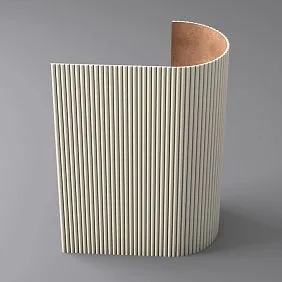
The flexible slatted panel PAN-001 STAVROS on a fabric base is a technological solution for non-standard architectural situations. The panel bends in-plane without tearing, installed on curved walls, columns, and arched openings. For TV zones in niches or with rounded elements—it is an indispensable format.
Decorative elements made of wood or polyurethane: choice based on the task
decorative elementsWooden elements — corner inserts, rosettes, overlays — are a natural and tactile material. They are organic in interiors with wooden dominants, providing a warm character even under paint.
Polyurethane decorative elements — more voluminous forms, classic profiles, molded motifs. They are lighter, do not deform, and perfectly accept any paint. For a TV zone in a classic or neoclassical interior — polyurethane cornices, frame moldings, and overlays provide maximum architectural effect with minimal labor costs.
Mistakes in designing a TV zone: what goes wrong
Knowing typical mistakes is half the success. Let's examine the most common ones.
Mistake 1: too frequent slat rhythm
Slats with a spacing of 10–15 mm create a 'noisy' surface: the eye cannot settle on any single slat, and the surface is perceived as vibrating. Against such a background, the television loses out to the wall texture.
The minimum recommended slat spacing for a TV zone is 25–30 mm. The optimal spacing for most living rooms is 40–70 mm.
Mistake 2: overly active decor behind the television
Large decorative overlays, voluminous molding, pronounced carved elements — all of this behind the TV screen creates competition. The eye doesn't know where to look: at the screen or at the decor beside it. Decorative elements in the TV zone should function as a frame — above and to the sides of the screen, but not directly behind it.
Mistake 3: overloaded texture
Slatted panel + decorative plaster on the rest of the wall + contrasting cornice + molding frames — four textures on one wall. Each requires its own space for perception. Together they create interior noise.
Mistake 4: several competing geometries
Vertical slats + horizontal moldings in different scales + diagonal floor pattern = geometric conflict. In the TV zone, one dominant geometry should work. If the slats are vertical — the moldings are horizontal, but in a subordinate role (thin profile, smaller scale).
Mistake 5: contrasting wall without a system
A dark slatted background looks expressive — but only if it contrasts with clean, light furniture and walls. If the entire room is dark — the dark TV zone blends with the surroundings. Contrast works only when there is something to push off from.
Mistake 6: Ignoring lighting
Relief in the TV zone lives by light. If there is no directional lighting — spotlights, built-in lighting in the cornice, wall sconces on the sides — the slats and decorative elements are not readable. Flat diffused light 'kills' the relief. Designing the lighting for the TV zone should be done simultaneously with choosing panels and decor, not after.
Additional elements that enhance the TV zone
Several elements that are often underestimated but fundamentally change the result.
Cornice with lighting
A ceiling cornice or shelf-profile with built-in LED lighting above the slatted field is a tool for light management. The lighting is directed at the slats from above and emphasizes their vertical rhythm. This turns a static slatted background into a living one, changing with different lighting modes.
Horizontal shelf-lintel
A molding or wooden shelf separating the screen area from the area below it is a boundary that structures the vertical TV zone. It divides the wall into the 'TV zone' and the 'cabinet/storage zone', and each part begins to be perceived separately.
Side vertical moldings
Vertical moldings or pilasters at the edges of the slatted field are 'portals' that frame the TV zone as an architectural niche even without a physical recess. A wall with such vertical boundaries looks like a built-in structure.
The article details how decorative slatted panels are used in living rooms, bedrooms, and hallways, taking into account the type of room.decorative panels made of slats— including scenarios with zoning and accent application.
FAQ: Answers to popular questions
What's better for a TV zone: a slatted panel or decorative elements?
This is not a choice between the two—it's a choice of hierarchy. The slatted panel is the background and rhythm. Decorative elements are the framing and accent. In a properly designed TV zone, both components work, but one is leading, the other is subordinate.
Can you combine slats and decor on one wall?
Yes—if you follow the principle of hierarchy: one active element, the others quiet. Slats + molding framing around the perimeter work. Slats + active stucco decor + cornice with relief + moldings within the field—this is already competition that overloads the wall.
How to make a TV zone accent but calm?
Monochromatic solution: battens and wall in the same color, relief through shadow. Or: solid oak battens on a light wall with minimal framing. In both cases — no additional decorative details. Accent is created by texture, not color contrast.
Which wall panels are suitable for a TV wall?
For modern interiors — paintable MDF batten panels. For natural warm interiors — solid oak battens. For classic and neoclassical styles — boiserie or wall panels with moldings. For non-standard shapes — flexible panels on a fabric base.
When are decorative elements appropriate in a TV zone?
When an architectural frame is needed — moldings around the perimeter of the batten field. When a top accent is needed — a decorative cornice above the screen. When a lower boundary is needed — a horizontal shelf-molding. In other cases — without decorative elements: battens are sufficient on their own.
How not to overload the wall under the TV?
Follow the rule of one leading technique. Choose one type of relief (battens or panels), set one accent (cornice or molding frame), remove the rest. Monochromatic painting further reduces visual saturation.
What batten spacing is optimal for a TV zone?
From 40 to 70 mm — universal range for a standard living room. For high ceilings and large walls — spacing of 70–100 mm. For small accent zones — 30–50 mm. Spacing less than 25 mm creates visual noise.
Is special lighting needed for a slatted wall?
Preferably. Directional spotlights from above, built-in lighting in the cornice, or wall sconces on the sides greatly enhance the relief effect of the slats. With diffused, flat lighting, the slats get lost.
What are flexible slatted panels and when are they needed?
These are fabric-based panels that bend along a plane — for cladding radiused niches, columns, arched surfaces. Indispensable if the TV zone is built into a niche with rounded edges.
Can slatted panels be painted after installation?
Yes — if they are MDF panels with a primed surface. The installed slatted wall is painted together with the wall for a perfect color match.
Conclusion: relief is about dosage, not quantity
A TV zone with slats and decorative elements is not about 'the more, the better.' It's about precise dosage: how much relief does this particular wall need, in this particular room, for this particular TV.Rafter panelscreate rhythm and depth.decorative elementsadd pinpoint accents and a frame.Wall PanelsThey bear the architectural weight. And all this works only when one leading technique is chosen—not several competing ones.
Relief without overload is not a limitation, but mastery. And when it is achieved, the TV zone ceases to be a 'wall with a TV' and becomes an architectural event.
STAVROS is a Russian manufacturer of architectural decor and wooden finishing materials. The STAVROS catalog featuresRafter panelsMDF for painting and solid oak, including flexible modules for curved surfaces,decorative elements and molding decormade of solid wood and polyurethane, as well as solutions forwall panels—boiserie, classic panels with moldings, and custom-order systems. All products are available from stock in Moscow, with filtering by material, collection, application, and dimensions. STAVROS is a complete line for the architectural TV zone, from slatted lighting to decorative framing.