Article Contents:
- What you need to know before buying a slatted panel in St. Petersburg
- Slatted panel materials: what's sold in St. Petersburg stores
- Solid wood — the natural choice
- MDF — geometry and color
- Chipboard, PVC and other materials
- What slatted panels look like: parameters that determine the result
- Slat width and spacing
- Rail cross-section profile
- Slat length
- Wooden slat panels: stains and finishes
- Stain palette for slat panels
- Where to buy slat panels in St. Petersburg: criteria for choosing the right supplier
- In-house production vs. resale
- Chamber drying: ask for documentation
- Test sample before ordering
- Full range, including finishing elements
- Slat panel in a St. Petersburg apartment interior: practical scenarios
- Living room in a St. Petersburg apartment
- Bedroom: natural backdrop for relaxation
- Hallway: the first word about interior
- Office and work area
- Bathroom
- Slatted panels for different interior styles
- St. Petersburg neoclassicism
- Modern and minimalist style
- Scandinavian and biophilic style
- Loft interior
- Combining slatted panels with other interior elements
- Slatted panels and lighting
- Slatted panels and polyurethane decor
- Slatted panels and parquet
- How to correctly calculate the amount of material when buying slatted panels in St. Petersburg
- Table: approximate material consumption for standard rooms
- Installation of slatted panels in St. Petersburg conditions: nuances
- Acclimatization to the St. Petersburg climate
- Foundation Preparation
- Perimeter finishing — a mandatory element
- Typical mistakes when buying slatted panels in St. Petersburg
- Frequently Asked Questions
- Is it possible to buy a slatted panel in St. Petersburg with same-day delivery?
- Are slatted panels difficult to install?
- How much do oak slatted panels cost in St. Petersburg?
- Are slatted panels suitable for the St. Petersburg climate?
- Can wooden slats be used in bathrooms in St. Petersburg?
- How to combine slatted panels with cornices and moldings?
- Where can I see samples of slatted panels before buying in St. Petersburg?
- Conclusion

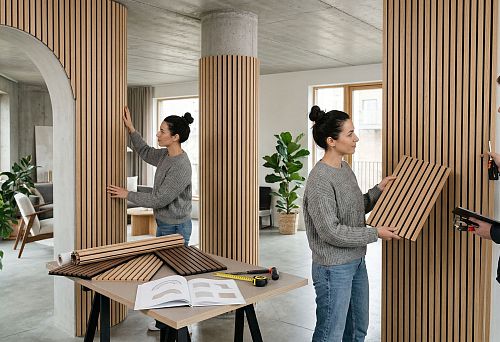
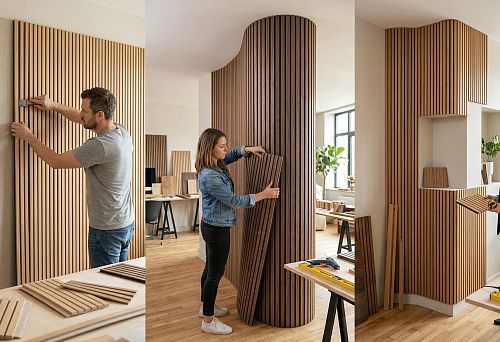
St. Petersburg is a city with a special taste for architecture. It is home to people who understand that a wall is not just a space enclosure. It is a statement. And when a Petersburger searches for 'slatted panel buy in SPb', they are not just looking for a finishing material—they are looking for a solution that will make their space a true interior: thoughtful, material, alive.
Slatted panels have moved out of the 'designer luxury' category in recent years and become a mass choice—in residential apartments and private houses, in restaurants and offices, in showrooms and public spaces. St. Petersburg is one of the most active markets for demand for wooden slatted decor: the city's architectural culture, developed design environment, and high standards for interior solutions make this market particularly demanding. Here, it's not just about buying—it's about buying correctly.







What you need to know before buying a slatted panel in St. Petersburg
The market for slatted panels in St. Petersburg today is saturated. There are many offers—from cheap PVC with film imitation of wood to solid oak with professional tinting. The range in price and quality is colossal. And a person who sees 'slatted panels' on the shelf of a construction store and 'slatted panels' in the catalog of a specialized manufacturer sees two fundamentally different products with the same name.
Tobuy slatted panel in SPband not be disappointed, you need to understand several key things: what material the slats are made of, how they are manufactured, what coating is applied, and how well the stated characteristics match reality. This article is exactly about that.




Materials of slatted panels: what is sold in St. Petersburg stores
Our factory also produces:



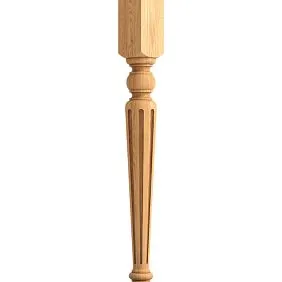



Solid wood—the natural choice
Solid wood is the only material in which the slats carry the natural grain pattern, tactile richness, and those very characteristics for which wooden slatted decor was created in the first place. Oak, ash, pine, larch, walnut, teak—different species with different properties and different visual appearances.
Solid oak slat panels— the undisputed leader among wood species for wall panels. Hardness of 5900 N on the Janka scale, shape stability with humidity changes, durability with proper care, excellent stainability — oak covers most requirements. The natural pattern of medullary rays and annual rings creates that very 'liveliness' which cannot be reproduced with synthetic materials.
In St. Petersburg with its changeable climate, humidity fluctuations during the transitional seasons and heating period — kiln drying of wood is a fundamental requirement. The moisture content of the slats must be 8–12% — only within this range does the material behave stably after installation. Slats with moisture content above 12% will dry out on the wall — resulting in unintended gaps, deformations, and cracks in the coating.
Get Consultation
MDF — Geometry and Color
MDF with a density of 750–850 kg/m³ is a synthetic material with a homogeneous structure and perfect geometry. The main advantage of MDF for slatted panels is its paintable surface: any color from RAL or NCS, matte enamel, semi-gloss. For modern, minimalist, and monochrome interiors — it's the optimal choice.
When buying MDF slats in St. Petersburg, pay attention to density: budget MDF at 600–650 kg/m³ is easily damaged, poorly holds fasteners, and has visible irregularities on the cut. Professional MDF with a density of 750+ is rigid, stable, with a clean surface for painting.
Chipboard, PVC, and Other Materials
The St. Petersburg market also features slatted panels made from chipboard with decorative coating, PVC slats (for wet areas), and aluminum slats (for commercial spaces). Each material has its own application niche. PVC is the only option for areas with constant water contact on a limited budget. Aluminum is for objects requiring fire safety class NG (non-combustible).
What Slatted Panels Look Like: Parameters Determining the Result
Slat Width and Spacing
These are the main visual parameters. Slat width — from 15 to 120 mm — determines the 'scale' of the slatted rhythm. Spacing (the gap between slats) — determines how 'open' or 'dense' the surface appears.
| Batten width | Rhythm character | Recommended Use |
|---|---|---|
| 15–25 mm | Dense, delicate | Small spaces, refined decor |
| 30–50 mm | Universal, standard | Most living spaces |
| 50–80 mm | Monumental, architectural | Large spaces, high ceilings |
| 80–120 mm | Wide, slatted | Commercial spaces, lobbies |
Equal spacing of slats is a condition for expressive rhythm. Uneven spacing, typical of cheap panels without a rigid backing, is a critical visual defect that cannot be corrected after installation.
Slat cross-section profile
Rectangular profile — strict, architectural, modern, creates a clear shadow in the gap. Beveled edges (chamfer) — softer, with a delicate shadow transition. Semicircular profile (bead) — more decorative, ornamental. The choice of profile affects the character of light and shadow: rectangle gives a hard shadow line, semicircle — soft, diffused.
Slat length
Standard lengths — 2400, 2700, 3000 mm. For rooms with ceilings 2.5–3.0 m — standard lengths cover the wall height without visible horizontal joints. For non-standard heights — custom manufacturing. Horizontal slat joints in height are always a visual compromise best avoided.
Wooden slat panels: stains and finishes
The finish of slat panels is one of the key parameters when purchasing. Two fundamentally different types: oil and varnish.
Oil penetrates the fiber structure, does not create a film. The surface is matte, 'alive,' tactilely rich. The grain pattern is maximally visible — oil does not 'cover' the wood but reveals it. For living spaces with moderate traffic — an ideal choice. Periodic maintenance every 1–3 years.
Varnish creates a hard protective film. Matte varnish — minimal shine, natural appearance. Hard varnish — maximum protection for high-traffic surfaces. For commercial spaces and high-traffic areas — preferable.
Stain palette for slat panels
Staining opens up dozens of visual solutions for one wood species:
-
Bleaching / Scandinavian white — light, natural, Nordic look
-
Natural oak — warm golden tone, classic
-
Cognac — rich amber-gold
-
Tobacco — warm dark brown with a reddish undertone
-
Nut — dark brown, rich grain pattern
-
Graphite — dark gray neutral, modern
-
Anthracite — almost black with a warm tone
-
Wenge — deep chocolate-black
All high-quality oil-based stains preserve the wood grain pattern — this is a fundamental difference from painting: the tone changes, but the natural character of the material remains.
Where to buy slatted panels in St. Petersburg: criteria for choosing the right supplier
The question of 'where to buy' is especially acute in St. Petersburg — the market is large, there are many offers, and quality varies from satisfactory to professional. What should you pay attention to when choosing?
In-house production vs. resale
A manufacturer or production company working with specific timber suppliers and controlling every stage—from drying to finishing—represents a fundamentally different level of quality and responsibility compared to a middleman purchasing ready-made panels of unknown origin. When buying from a manufacturer: transparent pricing, the possibility of custom sizing, and controlled quality for each batch.
Kiln drying: request documentation
In the climate of St. Petersburg—with high humidity in autumn and overly dry air during the heating season—the moisture content of wood is critically important. A reliable supplier will always provide data on the batch material's moisture content. Refusal or inability to provide such information is a warning sign.
Test sample before ordering
Any professional supplier of slatted panels will provide material samples—for tone, finish, slat width. Evaluate samples in your room's conditions: under natural lighting and artificial lighting. The tone of wood can differ noticeably under different light.
Full range, including finishing elements
Professional slatted finishing is not just the slats themselves. It includes cornices, moldings, baseboards, corner profiles that complete the slatted field and transform a set of planks into an architectural system. A supplier offering only slats without finishing elements forces you to search for compatible profiles separately, which often results in tonal mismatch.
Complete solution set —solid wood slat panelsanddecorative cornices, moldings, polyurethane stuccofor perimeter completion—is a unified system where every element is coordinated with another.
Slatted panel in a St. Petersburg apartment interior: practical scenarios
Living room in a St. Petersburg apartment
St. Petersburg apartments are most often either pre-revolutionary housing with high ceilings (2.7–3.5 m), Soviet-era 'Stalinkas' (2.8–3 m), or modern new builds (2.5–2.7 m). Each type requires its own approach to slatted panels.
In a pre-revolutionary apartment with high ceilingswall-mounted wooden slatted panelsmade of tinted oak on the lower part of the wall, framed withclassic polyurethane molding— this is an organic continuation of the building's architectural spirit. The slats serve as a modern interpretation of the historical wooden panels that were originally present in such apartments.
In a modern new build with a 2.6 m ceiling — vertical oak slats from floor to ceiling on one accent wall visually 'raise' the ceiling and create an architectural focal point in a space that risks being bland without it.
Bedroom: a natural backdrop for relaxation
A bedroom in a St. Petersburg apartment with a slatted wall behind the bed made of light ash with a whitewashed oil finish — this is an image that combines natural delicacy, Scandinavian purity, and thermal coziness. For a city where gray days predominate over sunny ones for most of the year, natural material in the bedroom is especially important psychologically. Wood in the interior reduces the feeling of urban pressure, creating a sense of 'shelter'.
Hallway: the first word about the interior
In the hallway of a St. Petersburg apartment, often small and elongated, slatted panels solve several tasks at once. Vertical slats visually 'raise' the ceiling in the corridor. An accent wall with dark slats creates depth in a narrow space — instead of a monotonous 'tunnel,' an architectural perspective is achieved. Slatted wall finishing in the hallway is what a guest sees first and what sets expectations for the rest of the interior.
Office and work area
In the era of remote work, the study has become not just a 'room with a computer,' but a full-fledged professional space — including as a visual background in video calls. Dark oak slats behind the desk convey an image of competence and attention to detail, which is instantly perceived. However, dark slats require sufficient lighting — side light from a window or a directed desk lamp is essential.
Bathroom
The question of using wooden slatted panels in the bathroom concerns many buyers in St. Petersburg — and here it is important to give an honest answer. Ordinary oak without special moisture-resistant treatment in a bathroom with regular steam is a risk of deformation. The correct solution: larch or teak with a high-quality oil finish, installation with air gaps behind the slats, mandatory mechanical ventilation of the room. If these conditions are met, wooden slats in the bathroom will last a long time and create a spa-like atmosphere unattainable with any tile.
Slatted panels for different interior styles
St. Petersburg Neoclassicism
Historical St. Petersburg is a neoclassical city. The architectural code of St. Petersburg is order, symmetry, moldings, cornices. Slatted wooden panels in a St. Petersburg neoclassical interior are a modern dialogue with this tradition. Warm oak slats with a 'bevel' profile on the lower third of the wall, framed bya horizontal polyurethane molding— a classic transition between wall zones.Cornice with polyurethane profilearound the perimeter of the ceiling. Ceiling rosette. All this creates an interior that respects the architectural context of the city.
Modern and minimalist style
In modern apartments with open floor plans, concrete ceilings, and large windows, slatted panels made of tinted oak in anthracite or dark walnut on one accent wall create a bold, architecturally precise look. No ornamentation, no historical references—only rhythm, material, and light.
Scandinavian and biophilic style
For residents of St. Petersburg, living in a city with limited natural light, the Scandinavian and biophilic approach to interior design is a psychologically justified choice. Light wooden slats made of ash or birch with white oil, white walls, natural textiles—this is a space that 'adds' light and naturalness in the conditions of St. Petersburg weather.
Loft interior
St. Petersburg is one of the leading Russian cities in terms of the number of loft spaces: former factory buildings, warehouses, and industrial structures. In a loft with brick walls and exposed ceilings, wooden slats provide a natural thermal balance to the industrial cold. Dark tinted oak slats on a longitudinal wall of the loft, directed track lighting—this is a power that cannot be replicated with any other material.
Combining slatted panels with other interior elements
Slatted panels and lighting
Lighting is the 'director' of a slatted wall, and this is especially important to understand before purchasing in St. Petersburg. In a city where diffuse daylight or its lack prevails for a significant part of the year, artificial lighting for a slatted wall becomes a priority issue.
Main scenarios:
-
Track spotlights at a 30–45° angle to the wall — sharp shadow pattern, maximum expressiveness
-
Sconces on both sides (in the bedroom) — soft side lighting, meditative shadows
-
LED strip behind slats — diffuse glow from inside the panel, 'floating' wall effect, especially impressive during St. Petersburg's white nights
-
Recessed spotlights in the upper cornice — uniform 'washing' of the slatted wall from above
Slatted panels and polyurethane decor
Professional slatted finishing system in St. Petersburg — slatted panels plus final architectural elements.Cornices and moldings made of polyurethanecreate an architectural frame for the slatted field: cornice at the top, baseboard at the bottom, divider molding for a two-zone wall solution. Polyurethane decor accepts any profile, is easily painted in any shade, does not deform with changes in temperature and humidity — the ideal material for the St. Petersburg climate.
Slatted panels and parquet
One of the most harmonious combinations in interior design: oak slatted panels on the wall and oak parquet or engineered wood flooring on the floor. A single natural material 'encloses' the space from top and bottom, creating a sense of organic integrity. The tone of the slats and the tone of the parquet must be coordinated: not necessarily identical — tonal contrast within the same color range is acceptable (e.g., light oak on the floor + tinted oak 'cognac' on the wall).
How to correctly calculate the amount of material when purchasing slatted panels in St. Petersburg
Calculation error — loss of money and time. Calculate accurately.
Step 1. Measure the surface area (wall width × height), subtracting window and door openings.
Step 2. Add a 10–15% margin for trimming for simple rectangular rooms; 15–20% — for rooms with niches, protrusions, complex angles.
Step 3. Order the entire volume from one batch. Different batches may vary slightly in tone — this is critical for a single room.
Step 4. Calculate the finishing elements: cornice length along the top perimeter of the slatted field, baseboard length along the bottom, number of corner profiles.
Table: approximate material consumption for standard rooms
| Room | Slatted wall area | Consumption with a 15% margin |
|---|---|---|
| Hallway (wall 3×2.5 m) | 7.5 sq. m | 8.6 sq. m |
| Bedroom (wall behind bed 2×2.5 m) | 5 sq. m | 5.75 sq. m |
| Living room (wall 4×2.7 m) | 10.8 sq. m | 12.4 sq. m |
| TV wall (wall 3.5×2.7 m) | 9.45 sq. m | 10.9 sq. m |
Installation of slatted panels in St. Petersburg conditions: nuances
Acclimatization in the St. Petersburg climate
St. Petersburg is a city with high relative air humidity for a significant part of the year. This means: acclimatization of wooden slatted panels before installation is not a recommendation, but a necessity. The minimum acclimatization time indoors under normal conditions (18–22°C, humidity 45–65%) is 72 hours. In rooms with deviations from the norm in humidity — longer.
Foundation Preparation
Walls in St. Petersburg old housing stock often have significant unevenness. Frame mounting (metal profile 60×27 mm) is the optimal solution for uneven walls and for rooms where additional sound or thermal insulation behind the panels is required. Modern new buildings, as a rule, provide a more even base, allowing for direct adhesive mounting.
Perimeter finishing is a mandatory element
A slatted field without a cornice at the top and a baseboard at the bottom is an unfinished solution. In St. Petersburg interiors, where residents have a high architectural culture and notice details well, the lack of perimeter finishing is immediately noticeable. A wooden horizontal plank matching the tone of the slats,a polyurethane cornicewith a suitable profile or a hidden lighting cornice with LED — are finishing options, each with its own aesthetic.
Typical mistakes when buying slatted panels in St. Petersburg
Buying the 'cheapest' option. Budget panels made of thin, low-density MDF or from raw wood without chamber drying is money spent twice: first on poor material, then on its replacement. A slatted panel is a long-term solution, and saving on material is compensated by the loss of time and quality of the result.
Ordering without samples. A photograph on a screen and the actual tone in your room are fundamentally different things. The lighting in your apartment, the color of adjacent walls, the tone of the furniture — all this changes the perception of the slats' tone. Always request samples.
Ignoring finishing elements. Finishing without cornices and baseboards is a signal of 'incompleteness' that spoils even the most expensive material.
Incorrect choice of slat orientation. Horizontal slats in a long, narrow corridor of a St. Petersburg apartment are a mistake that visually shortens the space. For corridors — only vertical slats.
Ordering in different batches. Even from the same manufacturer, different batches may slightly vary in tone. For one room — one order.
Frequently asked questions
Can I buy slatted panels in St. Petersburg with same-day delivery?
Standard sizes and finishes from a professional manufacturer are usually in stock. Non-standard lengths and rare finishes are made to order within several business days. Check the availability of specific items when ordering.
Are slatted panels difficult to install?
On a flat, prepared surface, installing panels on a substrate is an operation accessible to a person with basic construction skills. Adhesive + finishing nails — not difficult. Hidden fasteners, frame mounting, complex corner transitions — better to involve a specialist.
How much do oak slatted panels cost in St. Petersburg?
The cost depends on the wood species, slat width, finish, and coating. Approximately: MDF slats for painting — from 800–1500 rub./sq. m, solid oak with oil — from 3000–6000 rub./sq. m and above, depending on quality and manufacturer.
Are slatted panels suitable for the St. Petersburg climate?
Yes, provided the material is properly dried (moisture content 8–12%), has a quality finish, and is used under normal conditions. Kiln drying is a mandatory requirement.
Can wooden slats be used in a bathroom in St. Petersburg?
Yes, with limitations: teak or larch with an oil finish, installation with air gaps, good ventilation. Regular oak in a bathroom without special protection is a risk of warping.
How to combine slatted panels with cornices and moldings?
A polyurethane cornice at the top and a baseboard at the bottom create an architectural frame for the slatted field. The cornice color should match the slats or the walls. The cornice profile should correspond to the interior style: minimalist for contemporary, with a richer profile for neoclassical.
Where can I see samples of slatted panels before purchasing in St. Petersburg?
At manufacturers and professional suppliers operating in a showroom or demonstration hall format. The ability to see the material under real lighting conditions is a key advantage over online purchase.
Conclusion
Purchasing slatted panels in St. Petersburg is a decision that, with the right approach, once and for all changes the quality of the space in which you live or work. The right material, the right tinting, the right perimeter finishing, and the right lighting are the four conditions under which a slatted wall becomes an architectural focal point of the interior, not just 'cladding'.
St. Petersburg is a city that knows how to appreciate details. And wooden slatted panels are precisely that detail which elevates an interior from the category of 'renovation completed' to the category of 'this is a place you want to live in'.
Full rangesolid oak slatted panelswith professional tinting and finishing, as well asCornices, moldings, and decorative elements made of polyurethaneFor architectural finishing — in the STAVROS company catalog.
STAVROS — production of decorative interior solutions with European quality standards. Slatted panels with chamber drying, precise geometry, a rich palette of tints, and a full set of finishing elements. For St. Petersburg residents who understand that details matter — and choose materials consciously.