Article Contents:
- 1. Introduction to Mood Board Development
- 1.1 What is a mood board?
- 1.2 Why Mood Board Development is Important
- 2. Preparation Stage: Defining the Goal and Concept
- 2.1 Formulating the idea
- 2.2 Defining Target Audience and Functional Requirements
- 3. Gathering Inspiration Sources
- 3.1 Searching Online Materials
- 3.2 Traditional Sources
- 4. Systematization and Selection of Materials
- 4.1 Classification by categories
- 4.2 Selection of key elements
- 4.3 Creating a "raw collection"
- 5. Mood Board Composition: Step by Step
- 5.1 Choosing the format
- 5.2 Composition Principles
- 6. Final Refinement and Feedback Collection
- 6.1 Break and fresh perspective
- 6.2 Obtaining Feedback
- 7. Practical Tips and Ideas for Successful Mood Board Development
- 7.1 Use Additional Keywords
- 7.2 Experiment Fearlessly
- 7.3 Share and Be Inspired
- 8. Conclusion
In the world of creativity and design, an important stage in transforming abstract ideas into concrete projects is mood board development. A mood board is not just a random collection of images, but a carefully crafted visual compilation that helps form a general vision of the future project. In this article, we will thoroughly examine the mood board development process, step by step break down each stage, provide practical tips, and share ideas so that you can create a unique and inspiring concept.





1. Introduction to Mood Board Development




1.1 What is a mood board?
Mood board (from the English 'mood board') is a visual board on which elements conveying the mood, style, and concept of a future project are collected. These can be images, textures, color palettes, fonts, graphic elements, quotes, and even text fragments. A mood board helps:
● Visualize ideas. Abstract thoughts become concrete images.
● Structure the creative process. All ideas and associations are gathered in one place, simplifying further work.
● Facilitate communication. The presented visual concept helps convey the vision to the client and team.
Our factory also produces:



1.2 Why Mood Board Development is Important
Mood board development is the starting point for any creative project, whether it's interior design, branding, or advertising campaign development. A well-crafted mood board:
● Helps determine the direction and style of the project;
● Serves as a guide for selecting materials, colors, and textures;
● Reduces the risk of misinterpretation of the idea among project participants;
● Saves time and budget, as key decisions are made in the early stages.
Get Consultation
2. Preparation stage: Defining the goal and concept
2.1 Formulating the idea
The first step in mood board development is clearly defining the main idea of your project. To do this, answer several key questions:
● What mood do you want to convey?
For example, coziness, energy, minimalism, elegance, or dynamism.
● What is the main style?
Choose between modern, classic, retro, loft, Scandinavian, and other directions.
● What message do you want to convey to your audience?
Think about the key values and associations that should arise in the viewer's mind.
Tip: Write down all your thoughts and associations in a notebook or digital document. The compiled list of keywords (e.g., "harmony," "light," "innovation," "comfort") will serve as a basis for selecting visual elements.
2.2 Defining the target audience and functional requirements
Considering who your project is intended for, clarify the following points:
● Target audience.
Define who your idea is addressed to — clients, internal team, or end users.
● Functional aspects.
What tasks should the final concept solve? This could be creating a comfortable interior, enhancing brand style, or preparing an advertising campaign.
Practical tip: The more precisely you define your audience and goals, the easier it will be to select appropriate elements for your mood board.
3. Collecting sources of inspiration
3.1 Searching online materials
There are countless resources on the internet where you can find high-quality images and ideas:
● Pinterest: Create thematic boards dedicated to your project and collect images that align with your ideas.
● Behance and Dribbble: Browse professionals' work, look for innovative solutions and unconventional approaches.
● Instagram: Follow trending accounts in the design field, use relevant hashtags to search for inspiration.
Tip: Create separate collections for different aspects of the mood board: color palette, textures, furniture, graphic elements. This will simplify subsequent organization.
3.2 Traditional sources
Don't forget about classic methods of finding inspiration:
● Design magazines and catalogs: Here you can find exclusive ideas and solutions not always presented in the digital space.
● Exhibitions and events: Attending specialized exhibitions, trade fairs, and seminars will help you become familiar with the latest industry trends.
● Personal observations: Walks, trips, visits to museums and galleries — all of this can become a source of unique ideas for your mood board.
Tip: Take photos of interesting details, record your impressions, and save them in a separate archive for future use.
4. Systematization and selection of materials
4.1 Classification by categories
After gathering materials, it is important to organize them properly:
● Color palette: Group images by primary, secondary, and accent colors.
● Textures and materials: Divide samples into groups — smooth, rough, matte, shiny.
● Images and graphics: Separate photographs, illustrations, magazine cutouts, and other visual elements.
● Textual elements: Include inspiring quotes, key words, and brief descriptions that will help convey the concept.
Practical tip: Use digital tools such as tables or specialized apps to create a structured archive. This will simplify searching and allow you to quickly orient yourself in the abundance of materials.
4.2 Selection of key elements
From all the collected information, select the elements that best reflect your concept:
● Emotional perception: Which materials evoke the required associations and emotions?
● Compatibility: Ensure that the selected images and textures harmoniously combine with each other.
● Functionality: Check how well the materials meet the practical requirements of your project.
Tip: Be selective. A concise moodboard with clear focal points will be more effective than an overloaded composition.
4.3 Creating a "raw collection"
Gather all selected materials into one archive (digital or physical) — this is your "raw collection." Experiment with arranging elements at this stage to see the overall picture.
Idea: Arrange elements randomly to later identify the most successful combinations. Allow yourself time for experimentation, as often the best solutions emerge from unexpected pairings.
5. Moodboard Composition: Step by Step
5.1 Choosing the format
Decide whether you will work in digital or physical format:
● Digital moodboard: Use tools like Canva, Milanote, Adobe Spark, or Photoshop. The digital format allows you to easily move elements, resize them, and share the result with your team.
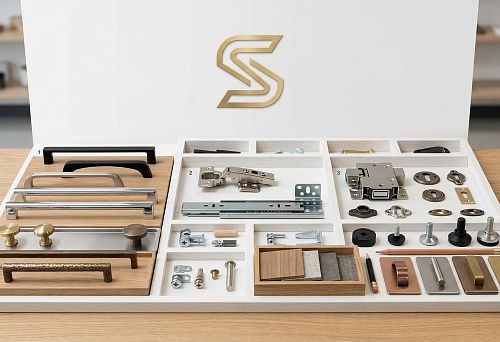
● Physical moodboard: Creating a collage on a large sheet of paper or in a special album allows you to feel the tactile properties of materials and see them at actual scale.
Tip: If possible, combine both approaches. Create a digital prototype, then transfer it to physical form for final review and inspiration.
5.2 Composition Principles
When placing elements on your moodboard, consider the following principles:
● Balance and harmony: Elements should be arranged to avoid overcrowding. Leave empty space so the composition "breathes."
● Focal points: Identify key elements that will attract attention immediately. This could be a vivid texture sample or a key image.
● Contrast and unity: Play with combinations of bright and muted tones, smooth and textured surfaces, strict and free lines. All elements must work within a unified stylistic key.
● Iterative process: Don't be afraid to rearrange elements. Create several moodboard versions, analyze them, and choose the most harmonious one.
Practical tip: Save intermediate versions if working digitally, or photograph stages if creating a physical board. This will allow you to track your progress and return to successful solutions if needed.
6. Final Refinement and Feedback
6.1 Break and Fresh Perspective
After completing the composition, take a break. Step away from your work for several hours—or even the next day. A fresh perspective will help you see what can be improved:
● Final version analysis: Check whether the moodboard aligns with your original concept and evokes the desired emotions.
● Making adjustments: Remove or add elements as needed to enhance overall harmony.
6.2 Getting Feedback
Discuss your moodboard with colleagues, friends, or potential clients:
● Group discussion: Collaborative discussion helps identify weaknesses and uncover new ideas.
● Constructive criticism: Don't be afraid to receive feedback—it will help improve the final result.
Tip: Share your moodboard on professional forums or social media to get diverse opinions and advice.
7. Practical Tips and Ideas for Successful Moodboard Development
7.1 Use Additional Keywords
When searching and selecting materials, pay attention to additional keywords such as:
● concept, visual thinking, design, inspiration, style, harmony, innovation, aesthetics, functionality, trends, individuality.
These words will help narrow your search and suggest which elements may complement your concept.
7.2 Experiment Fearlessly
● Mix styles: Don't be afraid to combine elements that initially seem incompatible. Sometimes unexpected combinations create unique and inspiring solutions.
● Use unconventional elements: Include not only images and samples, but also quotes, handwritten notes, even photos taken by yourself.
● Update your moodboard regularly: Design trends change, and your moodboard should be a living document that can be adjusted and enriched with new ideas.
7.3 Share and Inspire
● Feedback: Share your ideas with colleagues and friends. Joint discussion can open new perspectives and enhance your creative potential.
● Collaboration: Join professional communities and exchange experiences. Discussing your moodboards with other designers can become a powerful source of inspiration.
8. Conclusion
Moodboard development is a comprehensive creative process that begins with a clear definition of the concept and ends with detailed layout and continuous refinement. A well-thought-out moodboard becomes not only a starting point for implementing a project, but also a powerful communication tool for your team and clients, as well as a reflection of your individuality and professionalism.
Let every step in developing your moodboard bring the joy of creativity, and the final visual composition become your key to realizing your boldest and most inspiring ideas.
If you aim to create a project that is not only functional but truly inspiring, trust professionals. STAVROS is a reliable partner in the world of design, capable of turning abstract concepts into real masterpieces.
STAVROS offers comprehensive solutions for interior design, branding, and implementation of projects of any complexity. Their innovative approach, deep understanding of current trends, and attention to every detail will help you create a moodboard that becomes the starting point for realizing your most ambitious ideas.
Let moodboard development become your guide to a world of limitless possibilities, a source of inspiration, and the first step toward creating the perfect project. Create boldly, experiment, and open new horizons of your creative thinking!