Article Contents:
- What is wooden trim
- Wood species for making trims
- Types and varieties of wooden trim
- Application of trim in construction and finishing
- Use of trim in furniture manufacturing
- Decorative use in interior design
- Technology of Professional Installation
- Final Finishing and Decoration
- Advantages of wooden planks
- Maintenance and care
- FAQ: Questions and Answers
- Conclusion
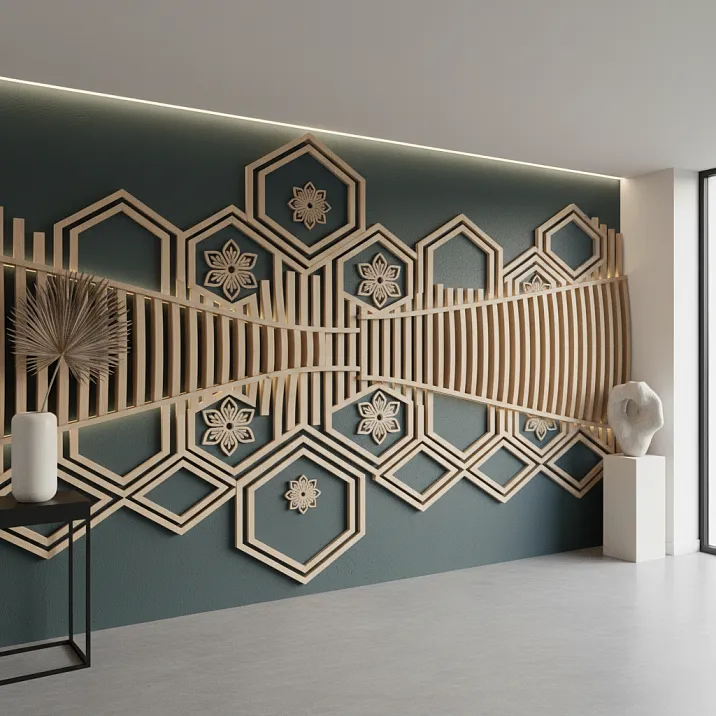
In the world of modern finishing and interior design, where professionalism is revealed in details,Wooden moldingwooden trim occupies a special place among materials capable of transforming an ordinary repair into a piece of carpentry art. This compact decorative trim element, also known as a 'nashel' or 'shchapik', is a thin plank of natural wood that simultaneously solves both functional and aesthetic tasks. Wooden trim embodies the principle that the quality of work is determined not by scale, but by the meticulousness of each joint, each seam, and each transition between materials and surfaces.
What makes itwooden trimThis type becomes a connecting element that unites disparate surfaces into a cohesive composition, giving the interior a finished and professional appearance.wood trim itemsItems of this type serve as a unifying element that integrates disparate surfaces into a cohesive composition, giving the interior a finished and professional look.


What is wooden trim
Wooden trim is a thin rectangular plank, manufactured from solid natural wood by planing on four-sided machines. Standard dimensions vary in width from 16 to 60 millimeters, in thickness from 5 to 20 millimeters, and length from 1 to 3 meters depending on the manufacturer and intended use. These compact dimensions make trims extremely versatile — they are thin enough not to visually overload the space, yet strong enough to perform their functions for decades.
The surface of the trim can be absolutely smooth with natural wood texture, preserving the natural pattern of growth rings and fibers. Such smooth planks are universal and suitable for most applications. An alternative option is a relief surface with router patterns, grooves, and protrusions, creating additional decorative effects. Profiled decorative trims with shaped cross-sections are primarily used for decorative purposes to create expressive interior compositions.
The second common name — 'nashel' — historically accurately reflects the main function of this item. The word comes from the term 'shchel', indicating the primary purpose of covering gaps, seams, and irregularities that inevitably form during construction and finishing work. The third name — 'shchapik' — originated in window manufacturing, where thin strips are used to fix glass in frames. All three names are equally used by professionals depending on the context of application.
The manufacturing process begins with careful selection of high-quality raw material free of large knots, cracks, rot, or resin pockets. The wood undergoes kiln drying to an optimal moisture content of 8-12 percent, ensuring dimensional stability of finished products during use in heated rooms. Dried blanks are planed on modern machines, ensuring precise dimensions with a tolerance of no more than 1 millimeter. Final sanding creates a perfectly smooth surface without burrs, ready for installation or final finishing.




Wood species for making trims
Common pine remains the absolute leader among materials for producing wooden trims due to its optimal balance of price, quality, and technical properties. This coniferous species has a density of 520 kilograms per cubic meter, sufficient strength for decorative applications without heavy loads, and is easily processed by any hand or electric tools. The light yellowish-pink color with characteristic resin canals creates a recognizable texture. The main advantage of pine is its excellent ability to accept stains, toners, and paints, allowing it to imitate more expensive species at a fraction of the original material cost.
Linden (Tilia) is valued by master carpenters for its exceptional softness and workability, especially for carving and routing. With a density of only 450-500 kilograms per cubic meter, this species is ideal for creating complex decorative elements with fine details and deep recesses. The light cream-white wood with barely noticeable, subtle texture serves as an excellent background for subsequent staining, painting, and decorating. Linden trims are traditionally used in saunas, steam rooms, and bathhouses, as this species does not release resin when heated, does not burn skin, and has a pleasant honey-like aroma.
Common aspen shares properties similar to linden, but has increased moisture resistance due to its unique wood structure. With a density of 495 kilograms per cubic meter, a white color with a slight greenish tint, and easy workability, aspen is a popular choice for humid environments. Aspen wood does not fear constant contact with moisture, does not rot, does not warp, and maintains dimensional stability. This is the optimal material for trims in bathrooms, showers, and pools, where a combination of wood aesthetics and water-resistant material practicality is required.
European beech represents an elite choice for prestigious projects where longevity, status, and sophistication are important. With a density of 700 kilograms per cubic meter, a hardness of 3.7 on the Brinell scale, and a natural tannin content of up to 10-15 percent, beech offers exceptional resistance to moisture, wear, and biological damage from fungi and insects. The expressive texture with large, clearly defined growth rings and shiny medullary rays creates a noble, recognizable pattern. Beech trims serve for centuries without losing quality, gradually acquiring a noble patina over time that enhances their decorative value.
Beech trim combines premium quality with economic efficiency.Wooden trimBeech trim combines premium quality with economic efficiency.
Our factory also produces:



Types and varieties of wooden trim
Simple straight trim is a rectangular-section plank with a smooth, flat surface without profiling or decorative elements. This is the most universal and widely used type, employed everywhere to cover joints between different finishing materials, to frame transitions between surfaces of different textures, and to create framed structures and compositions. The simplicity of the shape is compensated by the broadest range of applications and the ability to implement diverse design solutions through selection of wood species, cross-section size, staining method, and mounting options.
Angular trim has a G-shaped or triangular cross-section, specifically designed for aesthetically pleasing professional finishing of interior and exterior corners of rooms. This specialized type is indispensable when finishing walls with wooden siding, imitation of beams, blockhouse, or wall panels, where joints in corners are especially noticeable and require careful covering. Angular trims of varying thicknesses (10-30 mm) allow working with corners of any configuration and opening, creating clear, straight lines that emphasize the geometry of architectural space.
The 'gribok' trim received its distinctive name due to its specific T-shaped cross-section with an expanded upper part resembling a mushroom cap. This highly specialized type was developed specifically to fill technological gaps during installation of wooden siding, when the tongue of one board fits into the groove of an adjacent board. The 'gribok' is inserted from above into the resulting seam, covering it and ensuring airtightness of the joint against dust, moisture, and drafts. It is especially in demand for exterior facade work, where maximum protection against atmospheric influences is required.
Decorative profiled trims represent a true masterpiece of carpentry and router art. They may have a semi-circular convex cross-section, concave molding, or complex multi-step cross-sections with alternating protrusions and recesses, decorated with carved patterns, ornaments, and geometric patterns of varying complexity. Such trims are primarily used for purely decorative purposes to create exclusive interiors in classical, baroque, Victorian, and ethnic styles. Each decorative trim becomes an accent element, drawing attention to the craftsmanship and emphasizing the status of the space.
Get Consultation
Application of trim in construction and finishing
Masking joints of different finishing materials — the most important practical function of trims in modern construction and renovation. When combining on a single wall surface different materials with varying textures and thicknesses — wallpaper and decorative paint, ceramic tiles and decorative plaster, wooden panels and natural stone, gypsum board and brickwork — visible transition lines inevitably form, which are practically impossible to make perfectly flat and invisible.Wooden moldingWhen installed precisely along the joint line, it elegantly hides all technological imperfections and inaccuracies, transforming an unavoidable technical compromise into a deliberate design solution with clear graphic lines that structure and organize the space.
Finishing walls with wooden siding, beam imitation, blockhouse, or wall panels inevitably requires professional finishing of interior and exterior corners, joints with adjacent ceiling and floor surfaces, and framing of door and window openings. Interior corners between two perpendicular planes are covered with special G-profile angular trims, creating a clear vertical line without gaps or seams. Exterior protruding corners also require protection of the ends of cladding and decorative finishing. The perimeter of door and window openings is framed with appropriately profiled trims, which complete the finish and conceal installation gaps between the frame and casing. The result — neat, professional work without visible flaws, which will delight the eye for decades of use.
Zoning open spaces with wooden trims — a modern, relevant trend in the design of studio apartments and open-plan rooms. Vertical trims of contrasting colors, fixed to the wall from floor to ceiling at a certain spacing, visually divide a single space into functional zones for food preparation, dining, and relaxation without erecting solid partitions that disrupt the sense of openness. This design technique preserves visual permeability and freedom of movement, while clearly defining the psychological boundaries of different zones. Trims can form a solid vertical structure or a latticework of varying density depending on the desired degree of visual separation of space.
Decorating the facades of built-in furniture — the foundational application area of wooden trims in the furniture industry for centuries. Flat, smooth, uniform cabinet, chest, buffet, and server doors
Use of trim in furniture manufacturing
Decorating the facades of built-in furniture — the foundational application area of wooden trims in the furniture industry for centuries. Flat, smooth, uniform cabinet, chest, buffet, and server doors
Cardboard facades are radically transformed by adding decorative frames and panels made from veneers, imitating the classic panel construction of expensive handmade furniture. Such decoration creates a convincing illusion of solid, prestigious furniture using affordable, low-cost base materials such as MDF or particleboard. Veneers are glued directly onto the facade using PVA or construction glue, forming rectangular or square sections, then the entire surface is covered with a single finish coating of varnish or paint, creating visual and tactile continuity of the structure.
Creating framed facades is a classic traditional furniture technology, where veneers serve not as decorative overlays but as full structural elements of the frame. Four veneers are joined into a rectangular or square frame using a "tongue-and-groove" or "birdsmouth" joint method with adhesive at the joints, and a thin decorative panel — made from natural wood, veneered MDF, frosted or colored glass, woven rattan, or artistic textile — is inserted into the resulting frame. Such a framed structure is significantly lighter and more economical than a solid door while maintaining comparable strength, and it appears more refined and elegant due to its three-dimensional structure with play of light and shadow. Profiled, router-cut veneers with decorative cross-sections greatly enhance the aesthetic effect.
Edge and end treatment — the most important application of narrow, thin veneers in furniture manufacturing and restoration. Unfinished, exposed ends of countertops, shelves, or MDF, particleboard, or plywood facades look industrial and incomplete, gradually deteriorating under mechanical stress and moisture penetration. A narrow veneer, 5–10 mm thick, glued along the entire perimeter of the item, reliably protects the vulnerable cut edge of the material and creates a neat, professional finish on the furniture piece. A contrasting veneer from a valuable dark wood on the end of a light budget countertop creates a convincing illusion of a solid, expensive wooden structure. Toned veneers in the color of the base material emphasize clean lines and minimalist design of modern furniture.
Restoration and modernization of old furniture — a creative field where wooden veneers perform true miracles of transformation on forgotten items. A once-attractive heavy Soviet-era wardrobe regains a worthy second life after adding elegant framed decoration made from router-cut veneers to flat facades and subsequent painting of the entire structure in a trendy, modern color such as gray, mint, or lavender. A simple, unremarkable chest becomes a stylish accent piece in the interior thanks to decorative geometric moldings on drawer facades, highlighted by contrasting paint. Wooden veneers allow home craftsmen without professional carpentry skills to create complex handcrafted decoration worthy of custom-made expensive furniture, using affordable, low-cost materials and basic household power tools.
Decorative application in interior design
Creating wall panels and compositions — an expressive use ofveneer woodin modern and classical interior design. On smooth painted or wallpapered walls, veneers form rectangular, square, or rhomboid sections, creating a structured framed composition. The interior space of sections can be filled with patterned wallpaper, contrasting paint, fabric, or decorative plaster — options are endless. This classic technique is characteristic of traditional, neoclassical, and French interiors, where clear, orderly geometry and academic symmetry are valued. Vertically oriented panels visually raise the ceiling height, while horizontally placed panels expand narrow corridor spaces.
Decorating door and window openings — a traditional classical application of veneers, where they serve as thin, elegant trim. Unlike standard wide trim of 60–80 mm, thin veneers of 20–40 mm create a lighter, airier, less intrusive frame around the opening, not visually overwhelming the space or drawing excessive attention. A double or triple contour made from several parallel veneers with a small 10–15 mm gap between them adds graphic detail and depth. A combination of veneers with contrasting widths of 20 and 40 mm creates a multi-layered stepped frame with a three-dimensional effect, drawing attention to the window or door as an important architectural accent in the room.
Vertical veneer zoning of open space — a current modern trend in the design of open-plan studio apartments. A series of vertically oriented veneers in contrasting wall colors, fixed from floor to ceiling with an even 100–200 mm spacing, creates a visual partition dividing a single space into functional zones such as kitchen, dining, and living room without erecting solid walls that destroy the sense of openness and freedom. This design technique preserves visual permeability of the space, allowing natural light to penetrate all zones, while psychological boundaries of different functional areas are clearly defined. The density of veneer placement regulates the degree of visual isolation of zones.
Decorating furniture with applied elements transforms simple items into exclusive designer objects. Smooth modern furniture facades acquire character and individuality after adding geometric patterns made from veneers. Combinations of veneers of different widths, painted in contrasting or similar tones, create complex multi-layered compositions with play of volumes. Classical framed structures on facades give modern furniture the spirit of traditional furniture craftsmanship.Wooden moldingsand veneers work in tandem to create rich decorative solutions.
Professional installation technology
Surface preparation of the base — a critically important first step, the quality of which determines the reliability of attachment and longevity of the entire structure. The surface must be perfectly clean, free of dust, dirt, grease, dry with humidity no more than 12–15 percent, strong without peeling paint or crumbling plaster. All loose areas are carefully removed with a putty knife or brush until a solid base is reached. Irregularities exceeding 2–3 mm per linear meter must be leveled with putty, as a thin flexible veneer will faithfully replicate all waves and curves of the base. Priming with acrylic or latex compound improves adhesion and reduces absorption of glue into porous base materials.
Precise marking of veneer placement is performed using a construction level, plumb bob, laser level, tape measure, and square to ensure ideal line geometry. Pencil marks are applied thinly and neatly so they do not show through the veneer after installation. For complex multi-element compositions with numerous intersecting lines, it is useful to create a detailed scaled sketch on graph paper with precise indication of dimensions and placement of each segment. For symmetrical compositions, marking must begin from the geometric center of the room or wall, followed by uniform movement toward the edges to ensure visual balance.
Veneer cutting into required lengths is performed using a fine-tooth hacksaw for clean cuts, an electric jigsaw with a clean-cut blade, or a circular saw for perfect ends. Cutting at a precise 45-degree angle for flawless "butt" corner joints requires a quality miter box with metal guides or a professional circular saw with adjustable blade angle. Each cut piece must be checked at the intended installation location; if necessary, the end is carefully refined with fine-grit sandpaper (180–220 grit) for perfect tight fit without gaps. Numbering cut pieces with chalk on the reverse, invisible side prevents confusion during assembly of multi-element compositions.
Veneer attachment to the base is performed using several proven methods depending on the base material, usage conditions, and aesthetic requirements. Gluing with PVA or specialized wood construction glue — the most aesthetic option with no visible fasteners, suitable for dry heated rooms and non-load-bearing decorative elements. Combination of glue with finish nails without heads or pneumatic staples ensures secure temporary fixation until the glue fully sets. Liquid nails based on synthetic rubber allow attaching veneers even to slightly uneven surfaces with local depressions up to 3 mm. Self-tapping screws with subsequent careful filling of holes with wood-specific putty in the veneer color — a reliable option for critical load-bearing structures requiring maximum fastening strength.
Final finishing and decoration
Sanding surface with sandpaper — mandatory preparation step for veneers before final finish, even if items are delivered already planed with smooth surface. Medium-grit sandpaper (150–180 grit) removes microscopic surface irregularities, raised wood fibers, and barely visible tool marks. Sanding must be performed strictly along the grain with light, even movements without excessive pressure that may create localized depressions. Final sanding with fine-grit paper (220–240 grit) creates an ideally smooth, silky surface, pleasant to the touch and ready for final coatings. Wood dust is carefully removed with dry lint-free cloth or vacuum cleaner with soft brush attachment.
Staining with water-based, alcohol-based, or oil-based stains allows radical color change of inexpensive light wood, emphasizing natural grain patterns, imitating expensive exotic woods. Water-based stains are eco-friendly, odorless, easily applied with brush or sponge, creating uniform, predictable tone. Alcohol-based stains dry very quickly (15–30 minutes), suitable for small-area items. Oil-based stains penetrate deeply into wood structure (2–3 mm), creating the most saturated, durable color, without raising fibers. Stain is applied in 1–3 thin layers depending on desired shade intensity, with mandatory intermediate drying (2–4 hours) and light sanding of raised fibers with fine sandpaper (320 grit).
Lacquering creates a durable protective coating, providing veneers with longevity, resistance to dirt, moisture, and mechanical damage. Alkyd lacquers are available at 300–500 rubles per liter, creating a pleasant warm amber tone that highlights wood texture. Polyurethane lacquers form a very strong, wear-resistant film, completely resistant to abrasion, scratches, moisture, and household chemicals. Water-based acrylic lacquers have no sharp solvent odor, dry quickly (1–2 hours), do not yellow over time, preserving the original wood color. Lacquer is applied in thin, even layers with quality natural-bristle brush or spray gun in 2–3 passes, with mandatory intermediate drying (4–6 hours) and light sanding with fine-grit sandpaper (320–400 grit) to achieve perfectly smooth surface without runs, drips, or brush marks.
Painting with enamels opens unlimited possibilities for color decoration of veneers to suit any interior concept. Snow-white veneers — timeless classics of Scandinavian and Provence styles, creating an atmosphere of freshness, cleanliness, and spaciousness. Black veneers add graphic sharpness, clean lines, and modern expressiveness to interiors. Bright, saturated colored veneers become active spatial accents, drawing attention. Before painting, wood must be primed with special adhesive primer to improve paint adhesion to the surface and reduce paint consumption. Alkyd or acrylic enamel is applied in 2–3 thin layers with quality brush or roller with velvet nap, with intermediate drying (4–6 hours) and light sanding to achieve a professionally smooth surface.
Advantages of wooden panels
Ecological purity of natural wood makes veneers a safe choice for creating healthy living room interiors. Solid wood contains no toxic substances, formaldehyde, phenols, or volatile organic compounds that are present in modern synthetic polymer-based decorative materials. Moreover, natural wood possesses a unique ability to naturally regulate indoor air humidity, absorbing excess moisture when humidity exceeds 60 percent and releasing it back when air is too dry (below 40 percent). Natural phytoncides in pine and spruce woods suppress development of harmful bacteria and microorganisms in the air, improving the microclimate of living spaces.
Versatility of application — outstanding quality, fundamentally distinguishing veneers from narrow-specialized decorative materials. The same standard veneer profile can successfully be used for wall, ceiling, floor, furniture facade, door and window opening decoration, decorative compositions, picture and mirror frames, space zoning. The ability to freely combine veneers of different sizes, profiles, and wood species greatly expands design possibilities. Veneers fit organically into classical and ultra-modern interiors, residential apartments and office spaces, interior and exterior facades with appropriate protective treatment with antiseptics and exterior-grade lacquers.
Ease of DIY installation makes working withwooden veneeraccessible even to people without professional construction experience or special skills. No expensive professional equipment or complex tools are required — only a basic home handyman’s kit: hacksaw or electric jigsaw, miter box for precise angled cuts, tape measure, construction level, PVA glue or liquid nails, finish nails. The small weight of veneers (100–300 grams per linear meter) allows comfortable work by one person without helpers even at ceiling height. Mistakes are easily corrected by re-gluing or replacing damaged segments without dismantling the entire structure. Work speed is high — an experienced craftsman can professionally finish 3–4 medium-sized rooms in a single working day.
Affordable cost with impressive results — a significant economic advantage of veneers over alternative decorative materials. A linear meter of standard pine veneer with simple profile costs from 40 to 100 rubles depending on width and quality, which is 2–3 times cheaper than comparable polyurethane moldings with identical decorative function. Low material consumption for a typical project (50–100 linear meters per standard room) reduces overall finishing costs to a minimum. The possibility of self-installation without hiring professional labor saves significant funds on labor costs. Exceptional longevity of quality veneers with protective coating lasts 30–50 years without replacement, making this small investment extremely profitable in the long-term ownership of real estate.
Care and Maintenance
Regular dry dust cleaning — the foundation of proper care for wooden veneers, especially profiled ones with textured surfaces where dust accumulates in grooves. Dry cleaning with soft microfiber lint-free cloth or special anti-static brooms is performed weekly to maintain cleanliness. Dust accumulating in narrow grooves of decorative profiles is effectively removed with a soft brush or vacuum cleaner with soft brush attachment for furniture. Wet cleaning with slightly damp, wrung-out cloth is performed monthly or as needed using neutral specialized cleaners for natural wood. Excess moisture is harmful to wood, so the surface after wet cleaning must be thoroughly wiped dry with a soft cloth.
Refreshing protective coating every few years extends the service life of veneers and preserves their decorative qualities for decades. Lacquered veneers can be refreshed by applying a thin layer of the same type of lacquer without complete removal of the old coating — sufficient light sanding with fine-grit sandpaper (320 grit) to create a roughened surface improving adhesion. Oil-based coating is renewed annually by applying a fresh thin layer of the same oil to a surface previously cleaned of dirt and dust. Painted enamel veneers are locally touched up or fully repainted after light sanding and degreasing with white spirit if noticeable dulling or paint wear occurs.
Protection from adverse factors prevents premature wood destruction. Direct sunlight causes fading, darkening, and drying of wood with formation of small cracks — use heavy curtains, blinds, or special UV-protective films on windows, especially on southern-facing sides. Excessive air humidity above 70 percent in poorly ventilated rooms may lead to warping, swelling of wood, mold and fungus growth — ensure effective natural or forced ventilation. Sudden temperature and humidity fluctuations create internal mechanical stresses in wood — maintain relatively stable microclimate with temperature 18–24 degrees and humidity 40–60 percent.
FAQ: Questions and Answers
What is wooden veneer and for what is it used?
Wooden trim is a thin decorative strip made of natural solid wood, ranging from 16 to 60 millimeters in width, 5-20 millimeters in thickness, and 1-3 meters in length. It is used to cover joints between various finishing materials, seal gaps and seams, decorate wall corners when installing paneling, enhance furniture facades, create wall panels and compositions, zone spaces, frame door and window openings, and transform technical flaws in finishing into intentional design solutions.
The most commonly used panels are made of pine due to their affordable price and ease of processing. For humid areas, linden and aspen are used. For prestigious projects, oak, beech, ash, and larch are selected, which have high density, hardness, expressive texture, and durability. Each species has unique properties and aesthetic qualities that determine its optimal application area.
The most commonly used trim is made of pine due to its optimal price-to-quality ratio — 40-100 rubles per linear meter. For humid areas, linden and aspen with enhanced moisture resistance are preferred. For prestigious projects, oak and beech are chosen for their high density (680-700 kg/m³), hardness (3.7-3.8 Brinell units), expressive grain, and longevity (50-100 years). Each species has unique properties and optimal applications.
What is the difference between trim, baseboard, and stile?
Trim, baseboard, and stile are three interchangeable terms for the same item — a thin wooden strip used in construction and finishing. The term 'trim' is the most universal and commonly used in interior design. 'Baseboard' reflects the primary function of covering gaps and joints. 'Stile' historically originated from window manufacturing, where these strips are used to secure glass in wooden frames. All three terms are used interchangeably by professionals depending on context.
How to properly mount wooden trim on walls?
Mounting trim on walls is done using PVA or wood construction adhesive for lightweight decorative elements in dry rooms. For secure fixation until the adhesive sets, use a combination of adhesive with finish nails without heads or staples from a pneumatic nail gun. For uneven surfaces with local irregularities up to 3 mm, use liquid synthetic rubber nails. For heavily loaded structures, use self-tapping screws followed by filling holes with putty. Before mounting, the surface must be cleaned of dust, degreased, and primed.
Do panels need to be treated before installation?
It is strongly recommended to treat trim before installation to extend its service life to 30-50 years and improve its appearance. This includes sanding with 150-220 grit sandpaper to remove minor imperfections and raised fibers. Optional staining with stains to change color and highlight wood grain. Mandatory application of protective coating — 2-3 layers of varnish, oil, or paint. Protective treatment is especially critical for humid areas requiring maximum moisture resistance, and for outdoor use exposed to atmospheric precipitation.
Can wooden panels be used in humid areas?
Wooden trim can be used in bathrooms, showers, and kitchens provided it undergoes mandatory quality protective treatment with moisture-resistant varnishes for humid areas, oils, or specialized impregnations. Preferred species with natural enhanced moisture resistance — linden, aspen, spruce. Effective room ventilation is critically important to prevent condensation buildup. Under these conditions and with regular maintenance, wooden trim serves 20-30 years in humid zones without deformation or damage.
What types of trim exist by cross-section shape?
Simple straight trim with rectangular cross-section — the most universal type for 80% of applications. Corner trim with L-shaped or triangular cross-section is specially designed for decorating internal and external corners. Mushroom trim with T-shaped cross-section is intended for covering technological joints during panel installation. Decorative profiled trim with semi-circular, ogee, or complex multi-step cross-sections is used to create decorative compositions in classical and traditional interiors.
The cost of wooden planks varies from 40 to 500 rubles per linear meter depending on the wood species, cross-section size, profile complexity. Pine planks with a simple profile are the most affordable — from 40-80 rubles. Lime planks cost 60-120 rubles. Oak and beech planks — 150-300 rubles. Planks with intricate profiles are 30-50% more expensive than simple ones. Bulk purchases receive discounts of 15-25 percent.
The cost of wooden trim varies from 40 to 500 rubles per linear meter depending on wood species, cross-section size, profile complexity, and finish quality. Pine trim with simple smooth profile — most affordable, 40-80 rubles per meter. Linden trim — 60-120 rubles. Premium oak and beech trim — 150-350 rubles. Decorative trim with complex milling is 30-50% more expensive than simple trim. Bulk purchases of 100 linear meters or more receive 15-25% discounts from retail prices.
How to care for wooden trim?
Regular care includes weekly dry cleaning with microfiber cloth or anti-static broom to remove dust, monthly wet cleaning with well-wrung cloth and neutral wood cleaning agents, and refreshing varnish coating every 2-3 years with light sanding and fresh varnish layer. Oil coating should be renewed annually. Protect from direct sunlight with heavy curtains, maintain stable humidity (40-60%) and temperature (18-24°C) to prevent deformation.
With proper protective treatment using quality varnishes or oils, regular minimal maintenance, and protection from excessive humidity and direct sunlight, wooden planks last 30-50 years or more, retaining functionality and aesthetic qualities. Planks made from hardwoods such as oak, beech, and ash are more durable than those made from softwoods like pine and lime. In dry, heated rooms, the service life is maximum; in humid and unheated spaces, it is reduced by 30-40 percent.
With proper protective treatment using high-quality varnishes, oils, or paints, regular minimal care, and protection from excessive humidity and direct sunlight, wooden trim lasts 30-50 years in residential spaces, preserving functionality and aesthetic qualities. Trim made from hardwoods like oak and beech lasts 20-30% longer than trim from softwoods like pine and linden. In optimal conditions — dry, heated rooms with stable microclimate — service life is maximum. In humid and unheated rooms, service life is reduced by 30-40%.
Conclusion
Wooden moldingIt is a universal, multifunctional tool for creating quality interiors, where attention to detail determines the overall impression of the space. This compact decorative trim element, also known as baseboard or stile, has proven its indispensability in the hands of professional builders, finishers, carpenters, designers, and DIY enthusiasts over centuries of use. From masking inevitable technical flaws to creating complex multi-level decorative compositions, from utilitarian applications in construction to realizing bold creative ideas — wooden trim convincingly demonstrates that interior quality is not determined by the scale of elements, but by the meticulous attention to every joint and transition.
The unique combination of ecological purity of natural wood, absolute universality of application, ease of DIY installation, and affordable democratic pricing makes wooden trim the first-choice material for projects of any level — from budget cosmetic renovations to elite designer finishes. Professional craftsmen value trim for its ability to quickly and effectively solve joint and transition finishing tasks. DIY enthusiasts appreciate the accessibility of work without special skills or expensive equipment. Eco-conscious clients value the naturalness and safety of the material for health. The variety of wood species — from affordable pine to premium oak — sizes from thin 16 mm to massive 60 mm — profiles from simple smooth to complex decorative — and finish options from transparent varnish to opaque paint of any color — allows to realize any creative idea in any style — from strict classic to expressive modern.
STAVROS — a recognized leader and authoritative manufacturerwood trimPremium-class — offers a full professional range of high-quality wooden trim for the most demanding projects of any scale and complexity. Decades of rich experience working with valuable domestic and imported wood species, modern high-precision woodworking equipment from leading European manufacturers, meticulous multi-stage quality control at every technological stage — from selective defect-free raw material selection to final packaging of finished products, professional team of experienced qualified specialists with deep knowledge of woodworking technologies and years of practical experience in trim — all this guarantees flawless European quality of every item leaving the company’s production facilities. By choosing STAVROS, a discerning buyer receives not just standard mass-produced trim items, but a comprehensive professional solution with official quality warranty, detailed expert consultations on optimal wood species, profile, size, and finishing method selection for specific tasks, technical project support at all stages — from planning to final finishing and installation — and prompt reliable delivery to Moscow, St. Petersburg, all of Russia, and CIS countries, adhering to all necessary conditions for safe, careful transportation of valuable cargo. Choose proven European-standard quality, time-tested by thousands of satisfied customers across the country and impeccable reputation — trust true professionals with long-standing successful experience in the highly competitive woodworking market, create quality interiors with attention to every detail that will delight for decades and become a source of deserved pride for the owner and constant admiration of all guests capable of appreciating true craftsmanship and materials.