Article Contents:
- Philosophy of Modern Interior Design: More Than Just Beauty
- Interior as a Reflection of Lifestyle
- Balance of Aesthetics and Functionality
- Ecology and mindful consumption
- Comprehensive Approach: From Chaos to System
- Comprehensive Furnishing: All Stages Under Control
- Stages of Comprehensive Furnishing
- Stylistic Solutions for Moscow Apartments
- Modern Classic: Timeless Elegance
- Minimalism: Less Means More
- Eclecticism: Individuality and Character
- Functional zoning: optimizing living space
- Zoning methods without constructing walls
- Multifunctional spaces: when one room performs several functions
- Materials and Quality: What to Pay Attention To
- Natural Wood: Time-Tested Classic
- Modern Materials: Practicality and Innovation
- Hardware: Details That Define Quality
- Technology in Interior Design: Smart Home and Modern Solutions
- Smart Home: Comfort and Security
- Integration of Technology in Interior Design: Aesthetics and Functionality
- Individuality in details: how to create a unique interior
- Art and Decoration: Final Touches
- Textiles: Warmth and Coziness in Every Detail
- Plants: Life and Energy in the Interior
- Conclusion: Investment in Comfort and Quality of Life
Imagine: you stand at the threshold of an empty apartment. Bare walls, clean floor, space filled with possibilities. What do you feel? Excitement? Confusion? Inspiration? Transforming empty space into a cozy home is true art, requiring not only taste but also understanding of space organization principles, knowledge of modern trends, and the ability to foresee how the interior will "work" in everyday life. Furnishing Apartments in Moscow It is not simply filling space with objects, but creating a harmonious environment that reflects the individuality of the owner and meets his needs.
In the capital, where the rhythm of life sets its own rules, and every square meter is worth gold, it is especially important to approach home furnishing consciously and systematically. Let's figure out how to create an interior that will not only be beautiful but also functional, comfortable, and relevant for many years.





Philosophy of Modern Interior Design: More Than Just Beauty
The modern approach to furnishing living spaces differs significantly from what was relevant just a decade ago. Today, aesthetics are no longer the only priority; instead, there is a harmonious blend of beauty, functionality, and individuality.




Interior as a Reflection of Lifestyle
Your home is not just a place for sleeping and eating. It is a space that shapes your mood, affects your productivity, and even your relationships with loved ones. That is why modern Furnishing Apartments in Moscow begins not with choosing furniture, but with analyzing the lifestyle of future residents.
For families with young children, safety, practicality, and enough space for play are important. For a creative individual — an inspiring atmosphere and space for self-expression. For a businessman — functionality, status, and the opportunity for full rest after a busy day.
A professional approach implies a detailed study of the needs, habits, and preferences of apartment owners. Only then can you create a truly harmonious space that will not only be beautiful but also convenient for living.
Our factory also produces:


Balance of Aesthetics and Functionality
In 2025, we observe an interesting trend: a return to functionality without sacrificing aesthetics. After a period when appearance often outweighed practicality, the pendulum has swung in the other direction. Today, every interior element must not only look good but also serve a specific function.
This does not mean a return to utilitarianism. On the contrary, modern technologies and materials allow us to create items that are both functional and aesthetically appealing. Multi-functional furniture, smart storage systems, transformable elements—all of this helps maximize space efficiency, especially in urban apartments.
Get Consultation
Eco-friendliness and Conscious Consumption
Another important aspect of the modern approach to interior design is eco-friendliness and mindful consumption. More and more people are moving away from the principle of 'buy cheap and replace in a couple of years' in favor of high-quality, durable items made from eco-friendly materials.
Natural wood, stone, glass, ceramics, natural fabrics — these materials not only create a special atmosphere of warmth and coziness, but also positively affect health and well-being. Moreover, they age beautifully, acquiring over time a unique charm and character.
Comprehensive Approach: From Chaos to System
The traditional scenario of furnishing a new apartment is familiar to many: endless trips to furniture stores, attempts to visualize how a particular item will fit into the interior, coordinating deliveries from different suppliers... This process can stretch over months, consuming precious time and nerves.
Comprehensive Furnishing: All Stages Under Control
A modern approach implies a comprehensive solution, where all stages of interior creation — from concept development to placement of decorative elements — are under professional control. Such an approach has numerous advantages:
- Time and effort savings. Instead of endless trips to stores and coordinating various processes, you receive a ready-made solution within agreed-upon deadlines.
- Interior coherence. All elements are selected in a unified style and color palette, creating a harmonious look.
- Budget optimization. A comprehensive order often allows you to get discounts and avoid unexpected expenses.
- Professional approach. Specialists take into account all nuances: from ergonomics to color combinations, creating a space that will be not only beautiful but also comfortable.
Stages of comprehensive furnishing
Comprehensive process apartment furnishing Moscow includes several sequential stages:
- Consultation and Defining Needs. At this stage, specialists determine your preferences, lifestyle, budget, and expectations for the future interior.
- Design Project Development. Based on the gathered information, an interior concept is created, including spatial planning, color scheme, and stylistic direction.
- Furniture and Accessories Selection. Specialists select furniture, lighting, textiles, and decorative elements that match the developed concept.
- Procurement and Logistics. Organizing the purchase of all necessary items and coordinating delivery.
- Assembly and Placement. Professional assembly of furniture and its arrangement according to the design plan.
- Final Styling. Placement of decorative elements, textiles, and lighting to create a finished look.
Stylistic solutions for Moscow apartments
Choosing a stylistic direction is one of the key moments in furnishing a home. Style not only defines the appearance of the interior, but also its atmosphere, character, and emotional impact on its inhabitants.
Modern Classic: Timeless Elegance
Moscow is a city with a rich history and architectural heritage, so classical interiors will always remain relevant here. Modern interpretation of classic combines traditional elegance with functionality and minimalism:
- Symmetrical compositions and harmonious proportions
- Subdued color palette with accents of deep tones
- High-quality natural materials
- Elegant furniture with classic forms, but without excessive decoration
- High-quality textiles and thoughtfully designed lighting
Modern classic creates an atmosphere of refinement and stability, highly valued by residents of megacities.
Minimalism: less is more
In urban life, where every square meter is worth its weight in gold, minimalism becomes not just a stylistic choice but a practical solution. However, modern minimalism is far from sterility and coldness:
- Clean lines and forms without excess
- Functionality of each element
- Neutral color palette with carefully selected accents
- High-quality materials and textures
- Thoughtful lighting
Minimalist interior creates a sense of space and freedom, especially valuable in urban apartments.
Eclecticism: individuality and character
For those who do not want to limit themselves to the boundaries of one style, eclecticism offers boundless opportunities for self-expression. This style allows combining elements from different eras and directions, creating a unique space:
- Mixing of different styles and eras
- Vibrant accents and unusual combinations
- Collectible and vintage items
- Artworks and handmade pieces
- Unexpected design solutions
The key in eclecticism is a sense of proportion and understanding of principles of combining different elements, which requires a professional approach or good taste.
Functional zoning: optimizing living space
In modern realities, where many live in open-plan apartments or small spaces, the ability to properly divide space into functional zones becomes a necessary skill.
Ways to zone without building walls
There are numerous ways to divide space without resorting to permanent partitions:
- Furniture compositions. Shelving, sofas, consoles can serve as natural spatial dividers.
- Multi-level ceilings and floors. Podiums, steps, height variations in ceilings visually and physically delineate space.
- Lighting. Different lighting scenarios help highlight functional zones.
- Color accents. Different color solutions for different zones help visually structure space.
- Textiles and rugs. A rug clearly defines the boundaries of a resting zone, while curtains or draperies can separate a sleeping area in a studio.
Multifunctional spaces: when one room serves multiple purposes
In conditions of limited space, a single room often needs to serve multiple functions. For example, a living room may simultaneously serve as a home office, guest bedroom, and family relaxation area.
Here are several tips for creating effective multifunctional spaces:
- Use transformable furniture. Folding sofas, transformable tables, platform beds allow you to quickly change the purpose of the space.
- Plan storage systems. In a multifunctional space, it is especially important to have sufficient storage space for items.
- Ensure visual unity. Despite different functional purposes of zones, the interior should be perceived as a single whole.
- Consider usage scenarios. Think about how the space will be used at different times of day and by different family members.
Materials and quality: what to pay attention to
The quality of furniture is determined not only by its appearance, but also by the materials it is made from, as well as the quality of assembly and hardware.
Natural wood: classic, time-tested
Wood remains one of the most popular materials for furniture production. It is eco-friendly, durable, has a unique texture, and creates a special atmosphere of warmth and coziness.
Different types of wood have different characteristics:
- Oak - strong and durable, has a distinctive texture
- Beech - has high density and resistance to wear
- Spruce - more affordable, but less resistant to mechanical damage
- Walnut - has a noble dark tone and beautiful wood grain pattern
Modern materials: practicality and innovation
Modern technologies offer numerous innovative materials that combine practicality, durability, and aesthetics:
- MDF (Medium Density Fiberboard) - a strong material that is easily machined and can imitate various textures.
- Laminated particle board (Laminated Particle Board) - an affordable material with a wide color range.
- Plastic - lightweight, moisture-resistant material often used for kitchen cabinet fronts.
- Glass and metal - modern materials that add lightness and airiness to the interior.
Hardware: details that determine quality
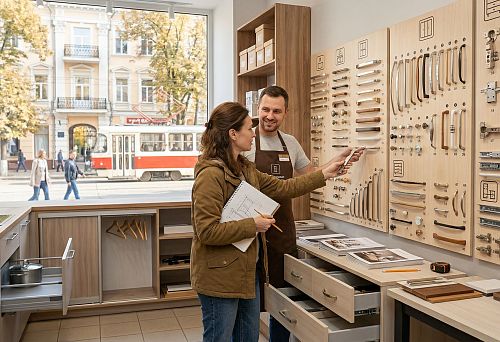
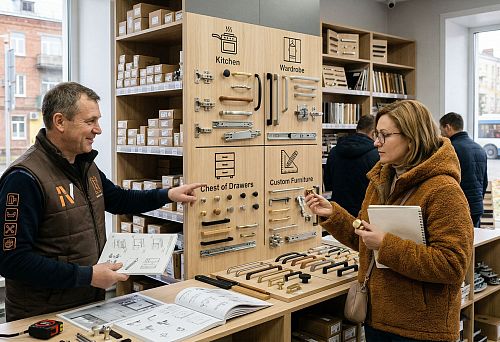
The quality of hardware (hinges, guides, handles) directly affects the ease of use and durability of furniture. Top manufacturers use hardware from well-known European brands, which ensures smooth door and drawer operation, quiet closing, and long service life.
Technology in interior: smart home and modern solutions
Modern technologies are increasingly penetrating our daily life, making it more comfortable, secure, and energy-efficient. Integrating technological solutions into the interior is not just a fashion trend, but a way to improve quality of life.
Smart home: comfort and safety
Smart home systems allow automating numerous processes and remotely controlling various functions:
- Climate control maintains optimal temperature and humidity in the room, saving energy.
- Lighting systems allow creating various lighting scenarios with one button press, and also automatically turn lights on and off depending on the time of day or presence of people.
- Security systems (cameras, motion sensors, smart locks) provide protection for the home and peace of mind for its occupants.
- Multimedia systems combine audio, video, and internet devices into a single network that can be centrally controlled.
Integration of technology into interior: aesthetics and functionality
Modern technological devices are increasingly becoming not just functional elements, but also part of interior design:
- TVs in standby mode display artworks or photographs.
- Built-in appliances harmoniously blend into furniture sets, without disrupting the aesthetics of the space.
- Wireless charging stations are integrated into table and cabinet surfaces.
- Smart mirrors display weather information, news, and reminders.
It is important that technology does not dominate the interior, but rather organically complements it, making life more comfortable without compromising aesthetics.
Individuality in details: how to create a unique interior
Despite the existence of certain styles and trends, each interior should be unique, reflecting the individuality of its owner.
Art and decor: final touches
Artworks, photographs, decorative elements — these are what make an interior truly unique and personal. They not only complete the look of the space, but also tell the story of its inhabitants.
When choosing decorative elements, it is important to maintain a sense of proportion and consider the overall interior style. It is better to choose a few high-quality, meaningful items rather than many small trinkets.
Textiles: warmth and coziness in every detail
Textile elements serve not only decorative but also practical functions: they soften room acoustics, regulate lighting levels, and provide tactile comfort.
Curtains, cushions, blankets, rugs — these elements can radically change the perception of space, adding warmth and coziness. Moreover, textiles are the simplest way to refresh an interior without resorting to major changes.
Plants: life and energy in the interior
Live plants not only purify the air and improve the microclimate, but also add life and energy to the interior. They can become a striking accent or a natural complement to the overall composition.
When choosing plants, it is important to consider the conditions in the room (lighting, humidity, temperature) and your lifestyle. If you frequently travel or lack experience in caring for plants, choose low-maintenance varieties or consider modern self-watering systems.
Conclusion: Investment in comfort and quality of life
Comprehensive furniture layout for an apartment is not just a way to arrange space — it is an investment in your comfort and quality of life. A professional approach allows you to create an interior that will delight you for many years, match your lifestyle, and reflect your individuality.
In a world where time is becoming an increasingly valuable resource, entrusting the creation of your living space to professionals is a sensible decision. This will allow you to avoid the stress associated with self-arranging, save time, and ultimately achieve a perfectly organized space where every detail is in its place.
Remember that the surrounding space affects our mood, productivity, even our health. Investing in quality furniture is investing in your well-being and comfort for many years to come.
Do not be afraid to experiment, find your unique style, and create an interior that reflects your individuality. After all, home is not just a place where we live — it is a space that shapes us and our lives.