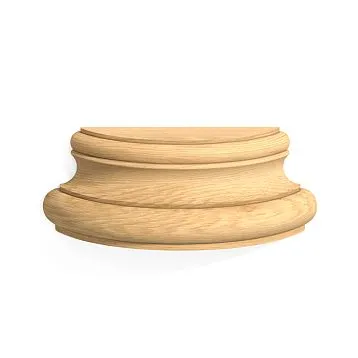
Article Contents:
- Wood as the Philosophy of Trim Production
- The Nobility of Species: The Master's Choice
- Ecological Imperative of the Time
- Technological Cycle: From Forest to Interior
- Raw material preparation: Foundation of quality
- Processing Technology: Precision to the Micron
- Final Finishing: The Path to Perfection
- Product Nomenclature: Variety for Any Task
- Baseboards: The Foundation of Harmony
- Casing: Framing Beauty
- Crown Mouldings: The Finishing Touch of Space
- Mouldings: Universal Decorative Elements
- Technical Innovations in Traditional Production
- Automation and precision
- Quality control systems
- Ecological Technologies
- Application in Architecture and Design
- Classic Interiors: Reviving Traditions
- Modern styles: minimalism and functionality
- Suburban Construction: Harmony with Nature
- Regional Characteristics and Traditions
- Northern traditions: harsh beauty
- Central Regions: The Classical School
- Southern Motifs: Abundance and Luxury
- Economic Aspects of Production
- Market and competition
- Investments in Development
- Export Potential
- Quality control: standards and certification
- State standards
- Internal Standards of Enterprises
- Product certification
- Innovative materials and technologies
- Composite materials
- Thermally Modified Wood
- Nanotechnology in finishing
- Ecological aspects of production
- Sustainable forestry
- Waste Disposal
- Energy efficiency
- Industry Development Prospects
- Production digitization
- Product customization
- New Application Areas
- Practical aspects of selection and application
- Selection criteria
- Installation features
- Maintenance and operation
- Frequently Asked Questions

What makes an interior truly complete? Why do some rooms exude elegance, while others seem unfinished? The answer lies in the details — in those very decorative elements that create harmony between walls, ceiling, and floor. We are talking about trim products — silent witnesses of craftsmanship and taste, which transform space into a work of art.
In this process, wood plays not just a material role, but that of a living substance, possessing soul and character.Wooden Trim Production— it is a symphony of traditions and modern technologies, where each note matters, and every stroke affects the overall sound of the interior.


Wood as the Philosophy of Trim Production
Why exactly wood became the basis for creating decorative interior elements? The answer lies in the very nature of this remarkable material. Wood is not just raw material — it is a living history, captured in annual rings, a unique texture created by nature itself, a warmth that cannot be artificially reproduced.




The Nobility of Species: The Master's Choice
Each wood species has its own character and purpose. Oak — symbol of reliability and longevity, its massive texture creates a sense of fundamentality. Beech — embodiment of stability, its even structure is ideal for items requiring geometric precision. Pine — a democratic choice, combining accessibility with natural beauty.
ModernProduction of wooden skirting— requires a deep understanding of the properties of each species. The master must feel the wood, understand its behavior under various processing conditions, anticipate how it will behave over years of use.
Our factory also produces:


Ecological Imperative of the Time
In the era of ecological awareness, wood becomes not just a material, but a manifesto of responsible attitude towards nature. Properly managed forestry makes wood a renewable resource, while modern processing technologies allow minimizing production waste.
Wooden products wholesalefrom responsible manufacturers — this is not only high-quality products, but also a contribution to preserving the planet's ecological balance.
Get Consultation
Technological cycle: from forest to interior
How does a living tree transform into an exquisite decorative element? This process resembles alchemy, where each stage is critically important for the final result.
Raw Material Preparation: The Foundation of Quality
Everything begins with the proper selection of timber. Logs must be prepared at a certain time of year, when sap movement in the tree is minimal. This affects the stability of future products.
Next stage — drying. Modernproduction of trimuses kiln drying, which allows controlling the moisture removal process and relieving internal stresses in the wood. The optimal moisture content for trim products is 8-12% — this is the golden standard ensuring geometric stability.
Processing Technology: accuracy to the micron
After preparing the raw material, the actualmanufacturing of trim items. Modern milling machines are capable of creating profiles of any complexity with precision to the micron. But technology is merely a tool. The true art lies in setting up equipment, selecting processing modes, and controlling quality at every stage.
Profiling — the key operation in production. It is precisely at this stage that the blank transforms into baseboard, casing, cornice, or molding. The quality of profiling determines not only the appearance of the item, but also its functionality.
Final finishing: the path to perfection
Sanding is not just surface leveling — it is preparing the wood for the final coating. Each sanding grade has its purpose: coarse sanding removes tool marks, fine sanding creates a perfectly smooth surface.
Modern technologies allow applying the coating even during production.Baseboard ProductionIt may include preliminary priming or even full coloring of the items. This saves installers' time and ensures uniform coating.
Product catalog: variety for any tasks
Modern production of wooden trim is impressive in its variety. Each element has its purpose and aesthetic value.
Baseboards: the foundation of harmony
Skirting board manufacturing— it is the art of creating an ideal transition between floor and wall. Apparently, a simple element, but it is precisely this one that defines the perception of space.
Floor baseboards serve not only a decorative function. They conceal expansion gaps, mask joint irregularities, and protect walls from damage during cleaning.Wooden skirting board manufacturingIt requires taking into account all these factors.
Ceiling baseboards (cornices) create a visual boundary between wall and ceiling. They can be simple or elaborately decorated, depending on the interior style.Manufacturing Ceiling Skirting BoardsOften requires creating complex profiles with fine details.
Skirting Boards: Framing Beauty
Skirting Board Production— it is creating frames for door and window openings. Casing highlights architectural features, creates accents, and gives the room a finished look.
Door casings must harmonize with the door panel, yet not be lost against the wall. Window casings, especially in wooden houses, can become true works of art.Manufacturing wooden window casingsOften includes carved elements, creating a unique facade appearance.
Cornices: crowns of space
Cornice Manufacturing— it is creating elements that complete the upper part of walls. Cornices can be simple or multi-profile, depending on stylistic requirements.
Ceilings in classical interiors often have complex shapes with multiple elements.Manufacturing wooden cornicesSuch projects require highly skilled craftsmen and precise equipment.
Moldings: universal decorative elements
Moldings productionThey open up boundless creative possibilities. Moldings can be used to create wall panels, frame pictures, zone spaces, and create decorative compositions.
Carved moldings are a special category of products requiring not only technical skills, but also artistic taste.Moldings productionThis is a synthesis of craftsmanship and art, traditions and innovations.
Technical innovations in traditional production
How have modern technologies changed the production of wooden molding? A revolution has occurred in almost all aspects — from raw material preparation to quality control.
Automation and Precision
Modern CNC machining centers allow creating items with complex profiles. Computer control ensures repeatability of results — each item in a batch will be absolutely identical to the previous one.
3D modeling allows the customer to see how the finished product will look even before production begins. This is especially important whenproducing custom moldingsaccording to custom drawings.
Quality Control Systems
Laser measuring systems control the geometry of products in real time. Automatic sorting systems reject defective items at an early stage of production.
Ecological technologies
Modern aspiration systems not only ensure air purity in workshops but also allow recycling production waste. Wood dust and shavings are used to produce fuel briquettes, and large waste pieces are used to manufacture technical items.
Application in architecture and interior design
Where and how are wooden molding products used in modern architecture and interior design?
Classical interiors: revival of traditions
In classical interiors, wooden molding plays a key role. Multi-profile cornices, carved moldings, elegant casings — all these elements create an atmosphere of luxury and respectability.
Door trim productionFor classical interiors, special attention to details is required. Each element must conform to historical canons, yet also meet modern quality requirements.
Modern styles: minimalism and functionality
In modern interiors, wooden molding is used more sparingly, but no less effectively. Simple geometric forms, emphasis on material texture, functionality of each element — these are the principles of the modern approach.
Baseboard from the manufacturerFor modern interiors, baseboards often have increased height and minimalist profile. This creates a sense of spaciousness and emphasizes horizontal lines of space.
Rural construction: harmony with nature
In wooden houses, molding products play a special role. They must harmonize with wall materials, emphasize the natural beauty of wood, and create a sense of unity with the surrounding nature.
Manufacturing carved casingsFor wooden houses — this is a separate direction requiring knowledge of traditional folk wooden architecture and the ability to adapt it to modern conditions.
Regional characteristics and traditions
Russia is a country with rich woodworking traditions. Each region has contributed to the development of craftsmanship.
Northern traditions: harsh beauty
On the Russian North, special traditions of wooden decor manufacturing developed. The harsh climate required the use of strong wood species and reliable joining methods.Production of wooden casingsIn northern regions, this is characterized by particular solidity and simplicity of forms.
Central regions: classical school
The central regions of Russia became the cradle of classical wooden joinery production. It was here that the technological traditions were formed, which became the foundation of modern production.
Southern motifs: abundance and luxury
In southern regions, where the climate is milder and traditions are more refined, special directions of decorative art developed.Manufacturing decorative skirting boards from a samplehere reached a special perfection.
Economic Aspects of Production
How does the economy affect the development of wooden joinery production?
Market and Competition
The modern market for joinery products is highly competitive.Joinery manufacturersare forced to constantly improve technologies, expand the product range, and enhance product quality.
Wholesale sales play a key role in the production economy.Wholesale wooden trimfrom the manufacturer allows construction companies to significantly save on purchases.
Investments in development
Modern equipment for joinery production requires significant investments. However, these investments pay off through improved product quality and labor productivity.
Export potential
Russian wooden joinery producers are increasingly entering international markets. The quality of Russian products is recognized in many countries around the world.
Quality Control: Standards and Certification
How is the quality of wooden joinery products ensured?
State standards
GOST regulates the basic requirements for wooden joinery products. These standards define permissible deviations in dimensions, surface quality, and material moisture content.
Internal enterprise standards
Leading manufacturers develop their own quality standards, often stricter than state standards.molding products factoryworld-class has a multi-stage quality control system.
Product certification
Voluntary certification allows manufacturers to confirm that their products meet international quality standards.
Innovative materials and technologies
What new materials and technologies are being introduced into joinery production?
Composite materials
Modern wood-based composites combine the best properties of wood with the advantages of synthetic materials.Manufacturing Skirting Boards from MDFis becoming increasingly popular due to its geometric stability and affordable price.
Thermally modified wood
Thermal modification improves wood properties, increases its stability and durability. Such wood is ideal for joinery products used under harsh conditions.
Nanotechnology in finishing
Nanocoatings provide wood with additional protection against moisture, ultraviolet radiation, and contaminants. This is especially relevant for products used in high-humidity environments.
Ecological Aspects of Production
How does modern wooden joinery production take into account ecological requirements?
Sustainable Forestry
Responsible manufacturers use wood only from sustainably managed forests. FSC certification guarantees that the wood is harvested in accordance with ecological and social standards.
Waste disposal
Modern production achieves nearly waste-free wood processing.MDF skirting productionallows using sawmill by-products to create high-quality products.
Energy efficiency
Using wood waste as fuel makes production energy-independent and environmentally clean.
Industry Development Prospects
What awaits the production of wooden trim in the future?
Digitalization of production
The Internet of Things, big data, artificial intelligence — all these technologies are gradually being integrated into trim production. Smart factories will autonomously optimize processes, control quality, and forecast material needs.
Product customization
Advancements in technology enable the production of unique items without significant cost increases.Custom skirting board manufacturingBecomes accessible not only for elite projects.
New application areas
Wooden trim items find applications in new fields — from the automotive industry to space technologies.
Practical aspects of selection and application
How to properly choose wooden trim items for a specific project?
Selection criteria
When selecting trim items, consider the operating conditions, interior style, and project budget.Best trim manufacturersThey offer consultations for choosing the optimal solution.
Installation features
Quality installation is the key to the longevity of trim items. Modern fastening systems allow secure mounting without visible elements.
Care and Maintenance
Proper care extends the service life of wooden items. Regular cleaning, humidity control, and timely renewal of protective coatings — key maintenance rules.
Frequently asked questions
Which wood species are best suited for trim items?
The choice of wood species depends on the intended use and operating conditions. For interior work, pine, spruce, beech, and oak are ideal. Oak and beech offer high strength and stability, while pine and spruce are more cost-effective. For humid environments, use species with enhanced moisture resistance or items with special treatment.
What is the difference between solid wood and MDF items?
Solid wood items have natural texture beauty, high strength, and longevity, but require more careful maintenance and cost more. MDF items are more geometrically stable, resistant to cracking and warping, cheaper, but have less expressive texture.
How to determine the quality of trim items?
Quality items have precise geometry, smooth surfaces without defects, uniform color and texture. Wood moisture content should be 8-12%. Check for chips, cracks, resin pockets. Manufacturer reputation and quality certificates are additional guarantees.
Can wooden trim be used in bathrooms?
Yes, but with certain limitations. Choose items from moisture-resistant species or with special treatment. Adequate room ventilation is mandatory. An alternative is using MDF items with moisture-resistant finish.
How to calculate the required amount of trim?
To calculate, measure the room’s perimeter (for baseboards), length of door and window openings (for casing), and wall length under the cornice. Add 10-15% for cuts and potential damage during installation. For complex room geometries, consult professionals.
What is the average lifespan of wooden trim items?
With proper care, items made from quality wood can last 25-50 years. MDF items last 15-25 years. Service life depends on wood species, processing quality, operating conditions, and maintenance frequency.
In today’s world, where technology develops at dizzying speed, the production of wooden trim remains an island of traditional craftsmanship enriched with innovations. This symbiosis of centuries-old traditions and advanced technologies creates products capable of enhancing any interior and lasting for many decades.
CompanySTAVROSWith its 23-year history, is a bright example of how modern production should develop.Wooden Trim ProductionBy combining traditional wood processing methods with innovative technologies, the company creates items that meet the most demanding requirements of architects, designers, and builders. Investing in quality trim from a reputable manufacturer gives you not only an attractive interior but also confidence in the longevity of your investment.