Article Contents:
- History of Production Technology Development
- Influence of Materials Science on Production Processes
- Modern manufacturing technologies
- Casting into Silicone Molds
- CNC Milling
- Additive technologies
- Materials in the Production of Decorative Elements
- Polyurethane Compositions
- High-Density Expanded Polystyrene
- Fiber Concrete Compositions
- Quality Control in the Production Process
- Raw Material Incoming Inspection
- Operational Control
- Acceptance Testing
- Production process automation
- Component Dosing Systems
- Robotic Finishing Production Lines
- Storage and Logistics Systems
- Innovations in Design and Engineering
- Parametric Modeling
- Visualization and Virtual Reality
- Mass Customization
- Ecological aspects of production
- Ecologically Safe Materials
- Closed Water Circulation Cycles
- Energy-saving technologies
- Logistics and Supply Chains
- Optimizing warehouse stock
- Transport logistics
- International Logistics
- Digitalization of Production Processes
- Production Planning Systems
- Internet of Things in Production
- Digital Interaction with Clients
- Regional Production Features
- Factors of Production Location
- Regional Advantages
- Cluster Approach
- Industry development trends
- Personalization and Mass Customization
- Sustainable development
- Digital transformation
- Challenges and Opportunities
- Technological challenges
- Market Opportunities
- Frequently Asked Questions
- Conclusion

How to turn an ordinary building into an architectural masterpiece? What secrets does modernProduction of facade decorationhide, and why do some elements last for decades while others require replacement within a few years? The decorative elements industry is undergoing a true technological revolution, where traditional manufacturing methods are giving way to innovative solutions, and product quality has reached unprecedented heights.
Modern production facilities are capable of creating decorative elements of any complexity — from the simplest moldings to the most complex architectural compositions with thousands of tiny details. 21st-century technologies have allowed a fundamental rethinking of manufacturing approaches, making high-qualityFacade Decorationaccessible to a wide range of consumers.
What determines the success of a production enterprise in this competitive industry? How do modern technologies affect the quality of the finished product? Why can the geographical location of a factory become a decisive factor when choosing a supplier? In this comprehensive study, we will reveal all the secrets of the production process, introduce you to cutting-edge technologies, and help you understand how to choose reliable partners in the world of facade decoration.


The development history of production technologies
The evolution of decorative element manufacturing methods reflects the general progress of construction technologies. If a century ago each element was crafted manually by stone carvers, today automated lines can produce thousands of items per day with flawless execution.
The revolutionary moment was the introduction of polymer materials into the production process. The first experiments with polystyrene foam in the 1960s marked the beginning of the era of mass productionproduction of facade decoration. However, the real breakthrough occurred in the 1980s with the advent of polyurethane compositions, enabling the creation of elements with detail previously unattainable with traditional materials.
Computerization of production in the 1990s opened a new chapter for the industry. Computer-aided design (CAD) systems and computer numerical control (CNC) machines radically changed the speed and precision of manufacturing. What previously required weeks of meticulous manual labor is now accomplished in hours with mathematical accuracy.
The modern stage of development is characterized by the integration of digital technologies into all aspects of the production process. 3D modeling allows the client to see the future result even before manufacturing begins, while robotic systems ensure consistent quality with minimal human involvement.




Influence of materials science on production processes
The development of the chemical industry has provided manufacturers of decorative elements with a rich arsenal of new materials. The emergence of high-tech polymers has opened opportunities for creatingpolyurethane productswith unique performance characteristics.
Nanomodifiers introduced into the polymer matrix significantly improve the physical and mechanical properties of finished products. Resistance to ultraviolet radiation, frost resistance, mechanical strength — all these characteristics can be intentionally enhanced during the preparation of the raw mixture stage.
Composite materials became a true breakthrough in the production of large decorative elements. Reinforcing fibers allow the creation of lightweight yet strong structures capable of withstanding significant mechanical loads without losing shape or appearance.
Our factory also produces:


Modern manufacturing technologies
The technological base of a modern enterprise producing decorative elements includes numerous specialized processes, each requiring deep knowledge and precise adherence to parameters.
Get Consultation
Molding in silicone molds
Silicone molding remains the primary methodproduction of facade decorationof polyurethane compositions. This process requires exquisite precision at every stage — from creating the master model to the final finishing of the finished product.
Master model creation is a separate art form. Experienced modelers create reference samples with detail surpassing the requirements of the final product. Every line, every curve is carefully processed with consideration of the technological process specifics and potential deformations during molding.
Silicone molds of various grades are selected depending on the complexity of the geometry and size of the item. Two-component systems ensure accurate transfer of the finest relief details, but require strict adherence to mixing ratios and curing temperature regimes.
The process of pouring polyurethane composition requires constant monitoring of multiple parameters. Temperature of components, mixing speed, mixture pot life, pouring pressure — each factor affects the quality of the finished product.
CNC milling
CNC machines have brought about a true revolution in processing solid materials. Modern milling centers are capable of creating the most complex reliefs with accuracy down to tenths of a millimeter.
Programming the machining process requires high-level technician qualifications. The 3D model of the item is converted into a control program, taking into account the characteristics of the material being processed, tool geometry, and surface quality requirements.
Multi-axis machining allows creating elements with complex spatial geometry in a single setup, eliminating alignment errors and significantly reducing manufacturing time.
Additive technologies
3D printing of large architectural elements is still in the experimental implementation stage, but the prospects of this technology are breathtaking. The ability to create items of any complexity without additional fixtures opens new horizons for designers and architects.
Polymer materials for 3D printing are constantly improving. Compositions with specified properties — from high strength to special decorative effects unattainable by traditional methods — are emerging.
The main limitation remains the printing speed of large elements. However, technology development is moving toward increasing productivity while maintaining surface quality.
Materials in the production of decorative elements
Material selection determines not only the operational characteristics of the finished product, but also its manufacturing technology, production cost, and design possibilities.
Polyurethane compositions
Polyurethane has become the number one material for manufacturing decorative elements due to its unique combination of properties. High mechanical strength combines with ease of processing, and a wide range of working characteristics allows creating compositions tailored to specific requirements.
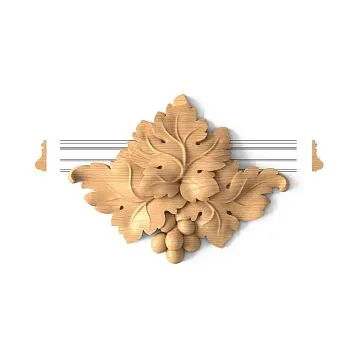
Two-component systems provide precise control over the polymerization process. The ratio of components determines the curing time, hardness, and elasticity of the finished material.Polyurethane appliquésdemonstrate excellent detail and longevity when properly manufactured.
Modifying additives expand the capabilities of base polyurethane systems. UV stabilizers prevent degradation under solar radiation, flame retardants increase fire resistance, and plasticizers improve frost resistance.
Pigments and fillers allow obtaining a wide palette of colors and textures. Metallic powders create a bronze or gold effect, mineral fillers mimic natural stone, and special additives provide various decorative effects.
High-density polystyrene
Despite the emergence of new materials, polystyrene retains important positions in the production of decorative elements. Its main advantages are low raw material cost and ease of processing.
Modern polystyrene grades differ significantly from the material of the first generation. Increased density provides better mechanical strength, and special additives improve the adhesion of protective coatings.
Hot wire cutting allows creating elements of complex shape with a smooth surface. Computer-controlled process ensures high precision and repeatability of geometric parameters.
Protective coatings play a key role in the longevity of polystyrene elements. Acrylic-based reinforcing compositions create a strong protective layer, preventing mechanical damage and atmospheric factors.
Fiber concrete compositions
Fiber concrete represents a premium segment of materials for decorative elements. High mechanical properties and durability make it an ideal choice for critical applications.
Reinforcing fibers are evenly distributed in the cement matrix, creating a composite material with isotropic properties. Glass, basalt, or polypropylene fibers are selected depending on the requirements of the finished product.
Special additives modify the properties of fiber concrete. Plasticizers improve the workability of the mix, air-entraining agents increase frost resistance, and hydrophobic agents reduce water absorption.
Vibrational molding ensures dense packing of the mix and elimination of air voids. Precisely selected vibration modes guarantee high surface quality without compromising the material structure.
Quality control in the production process
The quality control system covers all stages of the production cycle — from incoming inspection of raw materials to acceptance testing of finished products.
Incoming Raw Material Control
The quality of finished products directly depends on the characteristics of the materials used. Each batch of raw materials undergoes mandatory inspection against key parameters.
Polyurethane components are tested for viscosity, moisture content, curing time, and mechanical properties of standard samples. Any deviation from the norm in any parameter may result in rejection of the entire batch of products.
Fillers and pigments are tested for dispersion uniformity, color stability, and compatibility with the polymer matrix. Modern spectrophotometers provide objective assessment of color characteristics with high accuracy.
Operational Control
Process parameter control is performed in real-time. Automated systems continuously monitor temperature, pressure, humidity, and other critical parameters.
Geometric dimensions of products are controlled using high-precision measurement systems. Coordinate measuring machines provide 3D control of complex surfaces with accuracy down to micrometers.
Surface quality is assessed both visually and instrumentally. Profilometers measure roughness, and specialized equipment detects hidden structural defects.
Acceptance testing
Finished products undergo comprehensive tests simulating operating conditions. Climate chambers reproduce freeze-thaw cycles, ultraviolet radiation exposure, and other aggressive factors.
Mechanical tests determine flexural, compressive, and impact strength. Computer-controlled testing machines ensure high accuracy and repeatability of results.
Adhesion properties of protective coatings are tested using grid cut and peel methods. These characteristics are critically important for the longevity of decorative elements under alternating temperature and humidity conditions.
Automation of production processes
ModernProduction of facade decorationIt is unthinkable without deep automation of technological processes. Robotic systems not only increase productivity but also ensure consistent product quality.
Component dosing systems
Precise dosing of polyurethane components is critically important for obtaining material with specified properties. Modern dosing units ensure accuracy of ±0.1% at production rates up to 50 kg/min.
Computer control of the process eliminates human factors and ensures identical material properties in each batch. Recipe databases allow quick transition from one type of product to another.
Self-diagnostic systems continuously monitor equipment status and warn of required maintenance. This minimizes the risk of emergency shutdowns and ensures stable operation of the production line.
Robotic finishing lines
Finishing of products is a process requiring high precision and care. Industrial robots handle these tasks better than humans, ensuring flawless surface quality.
Grinding robots automatically adapt to the geometry of the workpiece surface, maintaining constant tool clamping force. This eliminates waviness and other defects typical of manual processing.
Painting robots ensure even application of protective and decorative coatings without runs or missed areas. Programmable motion trajectories allow processing of items of any complexity with high quality.
Warehouse and logistics systems
Automated warehouses with address-based storage optimize the use of production space and eliminate errors in order fulfillment. Barcode scanning ensures full traceability of each item.
Conveyor systems organize a continuous flow of materials through all stages of the production process. Automatic sorting and packaging of finished items minimize post-production costs.
Integration with production planning systems allows optimizing equipment loading and reducing order execution time. Customers receive real-time updates on the status of their orders.
Innovations in design and engineering
Modern technologies have fundamentally changed approaches to designing decorative elements. Capabilities that were unavailable just a decade ago are now routine design tools.
Parametric modeling
Parametric CAD systems allow creating families of related elements with the ability to quickly change dimensions and proportions. Changing one parameter automatically recalculates the entire product geometry.
Libraries of standard elements accelerate the design process and ensure compatibility of various components of the decorative system.Moldings and cornicesare designed with standard connections and transitions in mind.
Generative design uses artificial intelligence algorithms to create optimal shapes. By setting boundary conditions and strength requirements, the system automatically generates multiple solution variants.
Visualization and virtual reality
Photorealistic visualization allows customers to see the future result even during the design stage. Modern rendering engines create images indistinguishable from photographs.
Virtual reality technologies allow users to 'walk around' a building with installed decor, evaluate proportions and visual perception from different angles. This significantly reduces the risk of design errors.
Augmented reality allows 'trying on' decorative elements on an existing building through a mobile device screen. The technology is increasingly used for project presentations and decision-making.
Mass customization
Flexible production systems enable the manufacture of unique items without significant cost increases. A modular approach to design allows creating numerous variations from a limited set of basic elements.
Online configurators allow customers to independently create unique compositions from standard elements. The system automatically calculates the cost and lead time for custom orders.
Production of small batches becomes economically viable due to reduced equipment setup time and use of universal fixtures.
Ecological Aspects of Production
The modern decorative elements industry is increasingly focusing on environmental aspects of production activities. This applies to both materials used and technological processes.
Ecologically safe materials
Switching to water-based polyurethane systems significantly reduces emissions of volatile organic compounds. Such materials do not lag behind traditional ones in performance characteristics but are much safer for the environment.
Biodegradable additives in polymer compositions accelerate the natural degradation of the material at the end of the product's life cycle. This is especially relevant for temporary structures and exhibition pavilions.
Using recycled materials reduces pressure on natural resources. Recycled polystyrene foam can constitute up to 30% of the raw material mix without compromising the quality of finished products.
Closed water usage cycles
Closed-loop water systems minimize fresh water consumption and prevent discharge of contaminated wastewater. Multi-stage purification ensures that up to 95% of used water can be returned to production.
Local wastewater treatment facilities convert production waste into safe components. Dewatered sludge can be used as a component of construction mixes.
Energy-saving technologies
Utilization of heat from exothermic polymerization reactions reduces energy consumption for maintaining process temperatures. Heat exchangers return up to 60% of the generated heat back into the production cycle.
LED lighting in production areas reduces energy consumption by 70% compared to traditional systems. Smart lighting systems automatically adapt to natural light levels.
Switching to renewable energy sources makes production carbon-neutral. Solar panels on factory rooftops can provide up to 40% of a company's electricity needs.
Logistics and supply chains
Efficient organization of logistics processes has become a key factor in the competitiveness of decorative element manufacturers.
Optimizing warehouse stock
Just-in-Time inventory management systems minimize frozen capital in warehouses while ensuring uninterrupted production. Accurate demand planning eliminates material shortages and overstocking of warehouses.
Automated monitoring systems track the movement of each product unit from raw material receipt to finished goods dispatch. Barcoding and RFID tags enable instant inventory checks.
ABC analysis of the product assortment helps optimize warehouse policies for different categories of goods. Fast-moving items are placed in quick-access zones, while infrequently used items are stored long-term.
Transport logistics
Route optimization reduces transportation costs and shortens delivery times. Modern TMS systems take into account traffic jams, restrictions on heavy vehicle movement, and special handling requirements for fragile goods.
Consolidated shipments allow offering customers more favorable delivery rates. Consolidated loads are formed geographically, taking into account compatibility of different product types.
An in-house transportation fleet ensures full control over the delivery process. Specialized vehicles with soft suspension and secure mounting systems prevent damage during transport.
International logistics
Exporting decorative elements requires specialized knowledge in international law and customs clearance. Certification of products according to international standards opens access to foreign markets.
Packaging for long-distance shipments must ensure product integrity under any weather conditions. Waterproof materials and cushioning inserts protect items from mechanical damage and moisture exposure.
Cargo insurance minimizes financial risks in international shipments. Comprehensive insurance covers not only the cost of goods but also transportation expenses, customs duties, and lost profits.
Digitalization of Production Processes
The implementation of digital technologies transforms all aspects of production activities — from product design to customer interaction.
Production planning systems
ERP systems integrate all business processes of a company into a single information environment. Production, procurement, sales, and financial planning occur based on real-time data.
MES systems provide operational management of production processes. Equipment dispatching, order tracking, and operational efficiency analysis increase overall company productivity.
Predictive analytics based on machine learning helps anticipate changes in demand and optimize production plans. Algorithms analyze seasonal fluctuations, macroeconomic factors, and competitor behavior.
Internet of Things in production
IoT sensors continuously monitor the condition of production equipment and technological process parameters. Predictive diagnostics alert users to the need for maintenance long before failures occur.
Digital twins of production lines allow simulating various operating scenarios and optimizing equipment settings without interrupting production. Virtual experiments are safe and require no material costs.
Energy monitoring identifies opportunities to reduce energy consumption and improve overall production efficiency. Automatic shutdown of unused equipment and optimization of operating modes yield significant savings.
Digital customer interaction
Online catalogs with 3D visualization allow customers to thoroughly examine products without leaving their offices. Interactive configurators enable creating customized solutions and instantly receiving cost estimates.
CRM systems personalize interaction with each customer. Order history, preferences, and special requirements — all information is accessible to managers for making optimal decisions.
Mobile applications provide 24/7 access to order information, product catalogs, and technical consultations. Push notifications inform users about order readiness and changes in shipment status.
Regional Production Features
The geographical location of production facilities significantly affects economic indicators and the competitiveness of enterprises.
Factors of production placement
Proximity to raw material sources reduces logistics costs and improves supply reliability. Regions with developed chemical industries have advantages in producing polymer decorative elements.
Availability of skilled labor determines the potential for implementing modern technologies. Regions with strong technical universities and engineering traditions are attractive for locating high-tech manufacturing facilities.
Transport accessibility affects product sales potential. Proximity to major transportation hubs reduces delivery costs and expands the geographic reach of shipments.
The Northwest region of Russia demonstrates a high level of technological development in the production of decorative elements. Proximity to European markets and ports creates favorable conditions for exporting products.
The Central region is characterized by high consumer demand and a developed construction industry. Concentration of customers reduces marketing costs and accelerates the adoption of innovations.
Ural producers utilize the advantages of proximity to metallurgical enterprises. Availability of high-quality reinforcing materials contributes to the development of composite decorative element production.
Cluster approach
Formation of territorial clusters promotes the development of cooperative links between enterprises. Specialization on individual stages of the production cycle increases overall efficiency.
Joint research and development reduce innovation risks and accelerate the adoption of new technologies. Clusters create critical mass for attracting investments in industry development.
General infrastructure (logistics centers, testing laboratories, educational institutions) reduces costs for cluster participants and enhances their competitiveness.
The decorative elements industry continues to dynamically develop under the influence of technological innovations and changing market demands.
Industry development trends
Consumers increasingly value the individuality and uniqueness of architectural solutions. Flexible production technologies make manufacturing single units economically viable.
Personalization and mass customization
Online configurators allow customers to create unique compositions themselves. Artificial intelligence helps select optimal element combinations considering stylistic and technical requirements.
Reducing the time from order to manufacturing becomes a key competitive advantage. Enterprises invest in flexible production systems capable of quickly switching between different product types.
Environmental requirements are transforming the entire industry. Producers invest in clean technologies, switch to renewable energy sources, and develop biodegradable materials.
Sustainable development
Circular economy implies maximum use of secondary raw materials and organization of product recycling at the end of their life cycle. Leasing models extend the usage period of decorative elements.
Carbon neutrality is becoming a mandatory requirement for major producers. CO2 emissions compensation through reforestation and investments in green technologies is integrated into business strategies.
Comprehensive digitalization covers all aspects of activity — from design to after-sales service. Digital platforms become the basis for interaction with customers and partners.
Digital Transformation
Blockchain technologies ensure supply chain transparency and verify product authenticity. Smart contracts automate calculations and reduce transaction costs.
Augmented reality will find wide application in the design, production, and installation of decorative elements. AR applications will help customers visualize future projects and enable installers to precisely position elements.
Faces multiple challenges, but each of them opens new opportunities for development.
Challenges and Opportunities
Modern industryproduction of facade decorationTechnological challenges
Accelerating pace of technological changes requires continuous investment in equipment upgrades and staff training. Enterprises unable to keep up with progress risk losing competitiveness.
Integration of various technologies (3D printing, robotics, AI) requires a comprehensive approach and highly qualified specialists. Formation of interdisciplinary teams becomes a critically important factor for success.
Cybersecurity of industrial systems has become paramount. Protection against hacker attacks and industrial espionage requires specialized solutions and continuous threat monitoring.
Market opportunities
Market globalization opens access to new consumer segments. International expansion requires adapting products to local standards and preferences, but promises multiple growth in volumes.
Urbanization and growth of the middle class in developing countries create enormous demand for quality construction materials. Enterprises that first enter these markets gain long-term competitive advantages.
Renovation and modernization of existing housing stock open new niches for decorative elements. Specialized solutions for historic buildings and energy-efficient reconstructions promise high added value.
Renovation and modernization of existing housing stock open up new niches for decorative elements. Specialized solutions for historical buildings and energy-efficient reconstruction promise high added value.
Frequently asked questions
The choice of technology depends on the size and complexity of the elements, required precision, production volumes, and material properties. Simple large-scale elements are economically produced by hot cutting polystyrene, complex reliefs require casting in silicone molds, and unique items can be manufactured by milling or 3D printing.
How is stable product quality ensured during mass production?
How is stable product quality ensured during mass production?
Stable quality is achieved through a complex of measures: strict incoming control of raw materials, automation of critical operations, continuous monitoring of technological parameters, statistical quality control, and regular calibration of measuring equipment. Implementation of ISO 9001 quality management systems formalizes all control procedures.
Which modern materials show the best prospects for producing decorative elements?
Modified polyurethane compositions with nanofillers show the greatest prospects, offering a unique combination of strength, lightness, and durability. Composite materials based on natural fibers combine eco-friendliness with high performance. Biodegradable polymers open new possibilities for temporary structures.
How does digitalization affect relationships between manufacturers and customers?
Digital technologies radically transform interaction: online catalogs with AR visualization allow customers to thoroughly examine products, configurators enable creating customized solutions, and mobile apps ensure continuous communication and order tracking. Manufacturers gain valuable data on customer preferences to optimize their product range.
What ecological trends influence the development of decorative element production?
Key trends include transitioning to renewable energy sources, using recycled materials, developing biodegradable materials, implementing closed-loop water systems, and achieving carbon neutrality. Manufacturers invest in clean technologies not only to comply with regulatory requirements but also to meet the growing consumer demand for eco-friendly products.
How does the geographical location of production affect a company's competitiveness?
Geography affects through several factors: proximity to raw material sources reduces logistics costs, availability of skilled labor determines technological capabilities, transportation accessibility influences the sales geography, and regional specialization may create cluster effects. Optimal placement of production requires a comprehensive analysis of all these factors.
Conclusion
ModernProduction of facade decorationIt is a high-tech industry where traditional craftsmanship seamlessly combines with cutting-edge innovations. Companies successfully integrating the latest technologies with a deep understanding of market needs shape the industry’s future.
Digital transformation radically changes all aspects of production activities — from designing unique products to building long-term relationships with customers. Personalization, ecological responsibility, and technological excellence become key competitiveness factors in the new industry development paradigm.
The future belongs to companies capable of quickly adapting to changing market demands, implementing innovative solutions, and creating added value for all participants in the production chain. Investments in technology, human capital, and sustainable practices determine long-term success prospects in this dynamically evolving industry.
STAVROS demonstrates an example of a modern approach tofacade decoration productionby combining long-standing experience with innovative technologies, unmatched quality with reasonable prices, and individualized approaches with industrial-scale production. Continuous improvement of production processes, investments in research and development, and unwavering focus on customer needs enable STAVROS to remain an industry leader and set new quality standards in the production of architectural decorative elements.