Article Contents:
- Philosophy of door finishing: significance of each element
- Door casings: frames for door panels
- Door casings: functionality and aesthetics
- Capitals and pilasters: homage to classical architecture
- Material foundation of quality: selection of wood and alternatives
- Solid wood: unmatched classic
- MDF: Technologies Serving Quality
- Glued timber: strength in unity
- Technological symphony: production stages
- Material preparation: the foundation of quality
- Mechanical processing: from blank to detail
- Quality Control: Guarantee of Perfection
- Style diversity: door trim for every interior
- Classic interiors: triumph of traditions
- Modern styles: minimalism and functionality
- Ethnic styles: homage to traditions
- Innovations in traditional production
- CNC technologies: precision and flexibility
- Laser technologies: new possibilities
- Digital modeling: from idea to realization
- Features of various types of door trim
- Door casings: variety of forms and functions
- Door casings: unnoticed importance
- Architectural elements: classic in details
- Ecological aspects of production
- Sustainable forestry
- Minimization of waste
- Ecologically clean coatings
- Quality control: warranty system
- Raw Material Incoming Inspection
- Operational Control
- Final Inspection
- Logistics and packaging: preservation until consumer
- Packaging materials
- Storage
- Transportation
- Market trends and development prospects
- Demand trends
- Technological Innovations
- Economic Aspects of Production
- Cost structure
- Investment attractiveness
- Frequently Asked Questions

A door is not just an opening in a wall. It is a portal between worlds, a boundary between privacy and communication, a symbol of hospitality or solitude. But what makes a door truly perfect? What transforms a utilitarian structure into an element of interior art? The answer lies in the details — in those very elements of door trim that create harmony, emphasize style, and complete the look.
Door trim production— is a special branch of the woodworking industry, where millimeter precision meets artistic taste, where traditional craftsmanship combines with innovative technologies. Each element — from the simplest casing to complex multi-profile framing — is born from meticulous work, where there is no room for chance.




Philosophy of door trim: the meaning of each element
Upon entering a room, a person first notices door openings. It is precisely these that set the tone for the perception of the entire space. A roughly finished opening may spoil the impression even of the most exquisite interior, while quality framing can enhance even a modest setting.




Door trim: frames for door panels
Door trim is more than just decorative strips. They serve as a visual frame that separates the door opening from the wall space, creating an accent and drawing attention. But their main function is to conceal the installation gaps between the door frame and the wall, giving the opening a neat, finished look.
The history of door trim goes back to ancient times. In wooden architecture of Rus', they not only performed a practical function but also served as protective charms, guarding the house from evil spirits. Carved patterns and traditional ornaments turned simple strips into works of folk art.
Modern door trim preserves this philosophy of beauty and protection. They still serve as the boundary between external and internal space, but now their task is to create harmony in the interior, emphasizing stylistic unity.
Our factory also produces:


Door casings: functionality and aesthetics
Door casings are elements that often remain unnoticed, but play a critically important role in door construction. They extend the door frame to the thickness of the wall, ensuring proper door installation and creating a flat surface for mounting trim.
Quality door casings must precisely match the color and texture of the door panel and frame. The slightest mismatch immediately becomes noticeable and spoils the overall impression. That is why door trim produced by quality manufacturers is always made in a unified stylistic key.
Get Consultation
Capitals and pilasters: homage to classical architecture
In classical interiors, door openings are often adorned with elements borrowed from architecture. Capitals crown vertical framing elements, pilasters create an illusion of columns supporting the lintel.
These elements require special craftsmanship. Complex profiles, fine detailing, precise joints — all of this makes the production of architectural door trim a true art.
Material foundation of quality: choice of wood and alternatives
Choosing material for door trim is a compromise between aesthetics, functionality, and economy. Each material has its advantages and limitations, its area of application.
Solid wood: unmatched classic
Solid wood remains the benchmark of quality in door trim production. Natural texture, ability to stain and lacquer, capacity to 'breathe' and create a healthy microclimate — all of this makes wooden trim indispensable in luxury interiors.
Oak— the king among wood species for door trim. Its hardness ensures the longevity of products, expressive texture creates an elegant appearance, and natural resistance to moisture and mechanical damage guarantees the preservation of beauty for decades.
Beech— an alternative to oak for those who appreciate a calmer, more uniform texture. Its density is close to oak, but it is easier to process, allowing for the creation of thinner and more elegant profiles.
Ash— a species with a bright, contrasting texture, ideal for modern interiors. Its flexibility allows for creating elements of complex shapes, and its light shade combines well with most color schemes.
Spruce— a budget-friendly option combining accessibility with good technological properties. Softwood is easy to process, holds fasteners well, but requires protective treatment against moisture and insects.
MDF: Technologies at the Service of Quality
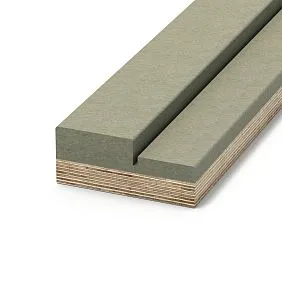
MDF (medium-density fiberboard) panels revolutionized door trim production. This material lacks the main drawbacks of solid wood: it does not crack, warp, or have knots and other natural defects.
Modern technologies allow creating MDF panels with any surface texture. Laminating, veneering, painting — all these finishing methods transform technical panels into a material indistinguishable from natural wood.
MDF gains special value in producing complex profiles. The uniform structure of the material allows creating thin details without risk of chipping, and dimensional stability guarantees precise joints.
Glued lumber: strength in unity
Glued lumber combines the beauty of natural wood with the technological advantages of artificial materials. Pressing individual lamellas together creates a material stronger and more stable than solid wood.
The technology allows creating blanks of any size, which is especially important for producing wide door trim elements. The possibility of combining different species in one detail opens up new design possibilities.
Technological symphony: production stages
Moderndoor trim production— a high-tech process where each stage affects the quality of the final product. From the correctness of raw material preparation to final finishing — the entire chain must operate as a single mechanism.
Material preparation: the foundation of quality
Production begins with careful preparation of raw materials. Timber arrives at the facility with varying moisture content, different dimensions, and various defects. The task of the preparatory production is to bring this diversity to unified standards.
DryingDrying is a critical operation. For door trim, wood with a moisture content of 8±2% is required. Achieving and maintaining this parameter requires the use of modern drying chambers with programmable control. Drying modes are individually selected for each wood species.
SortingSorting by quality allows directing each material category to the appropriate production. The highest grade is used for facing elements, the medium grade for hidden parts, and the lowest grade may be used for technical purposes.
CuttingCutting optimizes material usage. Modern cutting programs take into account defect locations, fiber direction, and requirements for the appearance of finished products. Proper cutting can increase the yield of quality products to 85-90%.
Mechanical Processing: From Blank to Component
Mechanical processing transforms prepared blanks into door trim components. At this stage, all geometric parameters of the items are formed, complex profiles are created, and dimensional accuracy is ensured.
CalibrationThickness planing — the first operation of mechanical processing. Double-sided planers create blanks of exact thickness with perfectly parallel surfaces in a single pass.
FurringFurring forms the basic edge — a flat, perpendicular surface that serves as the foundation for all subsequent operations. The quality of furring determines the accuracy of finished products.
ProfilingProfiling is a key operation that creates the characteristic shape of door trim. Modern four-sided machines form complex profiles with precision down to tenths of a millimeter in a single pass.
End CuttingEnd cutting to size completes mechanical processing. Automatic end-cutting lines ensure accuracy of length and perpendicularity of ends, which is critical for quality assembly of door units.
Quality Control: Guarantee of Perfection
Strict quality control is conducted at every stage of production. Automatic measuring systems check geometric parameters, optical scanners detect surface defects, and moisture meters monitor material moisture content.
Sample tests include checking the strength of joints, resistance to moisture, and coating quality. Statistical control methods allow identifying trends and preventing systematic deviations.
Stylistic Diversity: Door Trim for Every Interior
Modern interior design features incredible variety of styles and directions.Door trim productionDoor trim must consider these trends, offering solutions for each stylistic direction.
Classic Interiors: Triumph of Tradition
Classic style requires appropriate door trim. Wide casings with pronounced profiles, capitals, pilasters, and rosettes — all these elements create an atmosphere of palace luxury.
BaroqueandRococoRococo requires especially refined forms. Asymmetrical scrolls, floral ornaments, gilding — all of this must be reflected in the door trim. Production of such items often includes manual finishing by experienced craftsmen.
EmpireEmpire prefers strict, symmetrical forms. Straight lines, geometric ornaments, restrained luxury — these are the requirements of this style for door trim.
English classicsIt is characterized by moderation and functionality. Simple, yet well-executed profiles, natural wood colors, emphasis on material texture — these are its defining features.
Modern styles: minimalism and functionality
Modern interiors require minimalist solutions. Door trim here plays less the role of a decorative element and more that of a functional component ensuring clean lines and geometric precision.
MinimalismIt prefers hidden solutions. Casings here can be minimized or entirely absent, replaced by precise material joints.
High-techIt allows the use of non-traditional materials in door trim. Metal inserts, glass elements, unusual colors and textures — all of this must be technically feasible.
Scandinavian StyleValues naturalness and simplicity. Light wood species, natural colors, functional forms — these are its requirements for door trim.
Ethnic Styles: Homage to Traditions
Ethnic interiors require appropriate door trim reflecting national traditions and characteristics.
Russian StyleImpossible without carved casings. Traditional ornaments, plant motifs, symbolic images — all of this must be reproduced with historical accuracy.
ProvenceRequires elements imitating antiquity. Artificial aging, patina, deliberate simplicity of forms create the atmosphere of French countryside.
Innovations in traditional production
How modern technologies change door trim production? Automation, digital technologies, new materials — all this opens new opportunities for manufacturers.
CNC Technologies: Precision and Flexibility
CNC machines have revolutionized the production of complex profiles. Now it is possible to manufacture items of any shape with precision unattainable through manual processing.
Programmable machining centers allow for quick retooling from one profile to another. This is especially important for small-batch production of exclusive items.
3D milling opens up possibilities for creating volumetric decorative elements. Carved rosettes, capitals, brackets can now be manufactured by machine while preserving handcrafted quality.
Laser Technologies: New Possibilities
Laser cutting and engraving allow creating the finest ornaments and patterns on door trim surfaces. This technology is especially effective when working with panel materials.
Laser marking ensures precise identification of products. Laser-applied QR codes contain all product information: material, dimensions, manufacturing date, batch number.
Digital Modeling: From Idea to Implementation
CAD systems allow creating accurate door trim models even before production begins. The customer can see how their doors will look in the interior, make adjustments, and evaluate different options.
Parametric design automates the creation of engineering documentation. Changing one dimension automatically recalculates all related parameters, eliminating errors and speeding up production preparation.
Features of Different Types of Door Trim
Each element of door trim has its own production technology, material, and processing requirements.
Mouldings: Variety of Forms and Functions
Mouldings are the most common type of door trim. Their production seems simple, but in reality, it requires precise adherence to numerous parameters.
Flat Mouldings— the basis of the assortment. The simplicity of shape does not mean simplicity of production. Perfectly flat surfaces, precise dimensions, high-quality edge finishing — all of this requires high production standards.
Profiled Mouldings— have complex cross-sectional shapes. Their production requires special tools and precise equipment setup. Even the slightest deviation in parameters results in scrap.
Carved Mouldings— the pinnacle of craftsmanship. The combination of machine processing with manual finishing creates unique items, each of which is a work of art.
Fittings: Unnoticed Importance
Fittings are often underestimated, considered secondary elements. In reality, the quality of fittings is critical to the overall impression of the door assembly.
Straight Fittings— are used in most cases. Their production requires precise dimensions and high-quality end finishing for tight fitting to the frame.
Decorative Fittings— replicate the frame profile, creating visual unity in the structure. Their manufacturing requires the same tools as for frames.
Telescopic Fittings— have special grooves for adjusting to wall width. This technical solution requires special precision in processing.
Architectural Elements: Classic Details
Capitals, pilasters, rosettes, brackets — these elements transform an ordinary door into an architectural composition.
Capitals— crown vertical framing elements. Their complex shape requires multi-operation processing on specialized equipment.
Pilasters— imitate columns, creating an illusion of architectural support. Their production includes precise profiling and often — manual finishing of details.
Rosettes— serve as decorative inserts or conceal mounting points. Their manufacturing is often performed on turning machines or by pressing.
Ecological Aspects of Production
Modern door trim production cannot ignore ecological requirements. Environmental care has become not just a fashionable trend, but a necessity for the industry's sustainable development.
Sustainable Forestry
Responsible manufacturers use only wood from certified forests. The FSC (Forest Stewardship Council) system guarantees that forests regenerate faster than they are harvested.
Preference is given to fast-growing species and wood from forests where proper forestry is practiced. This ensures a balance between economic needs and nature conservation.
Waste Minimization
Modern technologies allow achieving a wood utilization coefficient of 90-95%. Production waste is not discarded but recycled into secondary products.
Shavings and sawdust are used for producing wood panels, fuel briquettes, animal bedding. Large waste pieces are used for manufacturing technical products or firewood.
Ecologically Safe Coatings
Traditional varnishes and paints are gradually replaced by environmentally safe compositions. Water-based coatings, natural oils and waxes provide wood protection without harming health.
UV-cured coatings contain no solvents and emit virtually no harmful substances. They rapidly polymerize under ultraviolet light, eliminating the need for long drying periods.
Quality Control: Warranty System
The quality of door trim is determined not only by material and production technology, but also by the control system at all stages. Modern enterprises implement multi-level quality assurance systems.
Incoming Raw Material Control
Control begins at the moment the material arrives at the facility. Each batch of wood undergoes inspection for multiple parameters: moisture content, density, presence of defects, geometric dimensions.
Automated sorting systems use optical scanners to detect knots, cracks, color changes. X-ray installations detect hidden defects within the wood.
Operational Control
Control of process parameters and intermediate product quality is conducted at each technological operation. Automatic measuring systems check dimensions, surface quality, profile accuracy.
Statistical control methods allow identifying trends and adjusting the process before defects occur. Control charts show production stability and signal the need for equipment adjustment.
Final Control
Finished products undergo final inspection before packaging and shipment. All geometric parameters, surface quality, and compliance with technical specifications are checked.
Sample tests include checking mechanical properties, coating durability, joint longevity. Results are recorded in the product quality passport.
Logistics and Packaging: Preservation Until the Consumer
Well-made door trim can be damaged by improper packaging or transportation. Therefore, modern manufacturers pay special attention to logistics processes.
Packaging Materials
Special materials are used to package door trim, protecting against mechanical damage and moisture. Shrink film ensures packaging airtightness, bubble wrap cushions impacts.
Cardboard corner protectors shield edges from chipping. Moisture absorbers prevent condensation inside the package. Marking contains all necessary information for proper handling of the cargo.
Storage
Proper storage ensures product preservation between production and shipment. Automated warehouses maintain optimal temperature and humidity.
Warehouse management system tracks each item, controls storage periods, optimizes product placement. The FIFO (first in — first out) principle guarantees shipment of the freshest products.
Transportation
Specialized motor transport is equipped for transporting long-length loads. Air suspension protects against vibrations, climate control maintains required conditions.
GPS monitoring allows tracking cargo movement in real time. Customers receive SMS notifications about key delivery stages.
Market Trends and Development Prospects
The door trim market constantly evolves under the influence of changes in the construction industry, design trends, and technological innovations.
Trends in Demand
Demand for individual solutions is growing. Clients increasingly require trim made to custom sizes and designs. This stimulates the development of flexible production technologies.
Ecological sustainability is becoming an important factor in selection. Consumers are willing to pay more for products made from certified wood with eco-friendly finishes.
Quality remains a priority. Despite price competition, the majority of buyers prefer quality products with long service life.
Technological Innovations
Digitalization of production opens new opportunities for optimizing processes. The Internet of Things allows machines to exchange information and autonomously adjust processing parameters.
Artificial intelligence helps in production planning, demand forecasting, material cutting optimization. Machine learning improves quality control systems.
New materials expand design possibilities. Wood-based composites combine the beauty of natural wood with improved performance characteristics.
Economic Aspects of Production
Door trim production is a business requiring significant investments in equipment, technology, and personnel. Understanding economic aspects helps assess industry development prospects.
Cost structure
Raw material cost constitutes the main portion of product cost — up to 60-70%. This makes production sensitive to fluctuations in wood prices.
Equipment depreciation accounts for 15-20% of costs. Modern machines are expensive, but their productivity and precision offset the investment.
Labor costs depend on the degree of production automation. In modern workshops, manual labor is minimal, reducing labor costs.
Investment Appeal
Door trim production attracts investors due to stable demand and relatively low risks. The construction industry is developing, ensuring a market for sales.
State support for the woodworking industry creates favorable conditions for development. Tax incentives, subsidized loans stimulate production modernization.
The industry has significant export potential. Russian products are competitive on global markets due to high-quality raw materials and relatively low production costs.
Frequently asked questions
What does the term 'door trim' include?
Door trim includes all long-form decorative elements for door openings: casings, dados, capitals, pilasters, rosettes, and other decorative details. These items provide a finished appearance to the door structure and conceal mounting gaps.
What materials are used to produce door trim?
Primary materials — solid wood of various species (oak, beech, ash, pine), MDF panels, glued-laminated beams. Material selection depends on interior style, project budget, and performance requirements.
How is the accuracy of door trim dimensions ensured?
Accuracy is ensured by using modern CNC equipment, automated measuring systems, and strict control at every production stage. Tolerances for dimensions are ±0.1–0.2 mm.
Can door trim be ordered to custom sizes?
Yes, modern technologies allow manufacturing door trim of any size and profile. Flexible production systems enable quick retooling of equipment for non-standard items.
How long does high-quality door trim last?
When properly installed and maintained, solid wood products can last 25–50 years, while MDF products last 15–25 years. Service life depends on the material, manufacturing quality, and operating conditions.
What finishes are used for door trim?
Various types of finishes are used: varnishes, paints, stains, oils, waxes. Modern UV-cured varnishes provide high durability and ecological safety of the finish.
How to properly care for wooden door trim?
Care includes regular cleaning with soft cloth, avoiding direct sunlight and high humidity, periodic renewal of protective coating. Special wood-cleaning agents are used for cleaning.
What are the advantages of MDF over solid wood?
MDF is more geometrically stable, does not crack or warp, has a uniform structure without knots. It is also cheaper than solid wood and allows creating complex profiles without restrictions.
ModernDoor trim productionIt is a complex technological process where traditional craftsmanship combines with innovative solutions. Each element — from the simplest casing to complex architectural compositions — is created with special attention to details, as it is precisely the details that define the overall impression of the interior.
CompanySTAVROSWith its 23 years of experience in woodworking, is recognized as a leader in producing high-quality door trim. Combining the best traditions of craftsmanship with advanced technologies, the company creates products that not only fulfill their functional purposes but also serve as interior decoration. Investing in quality door trim fromSTAVROSyou receive a guarantee of durability, beauty, and flawless execution quality.