Article Contents:
- Anatomy of Perfection: What Makes Profile Balusters Unique
- Technical Specifications and Standards
- Material Science: Choosing the Base for Creating a Masterpiece
- Luxurious Hardwood Species
- Coniferous species: accessibility without compromise
- Technological processes: from raw material to masterpiece
- Traditional Hand Profiling
- Modern CNC technologies
- Combined technologies
- Classification of Profile Balusters by Type of Processing
- Grooved Balusters
- Twisted Profile Balusters
- Combined profiles
- Design solutions and stylistic directions
- Classic elegance
- Modern minimalism
- Neoclassical Interpretations
- Technical Aspects of Design and Calculation
- Load calculation and strength
- Influence of Profile on Operational Characteristics
- Methods of mounting and installation
- Traditional Joining Methods
- Modern fastening systems
- Features of Installing Profile Balusters
- Surface treatment and protective coatings
- Preparation operations
- Special Coatings for Profile Surfaces
- Integration into Architectural Styles
- Classic Interiors
- Modern spaces
- Economic Aspects and Pricing
- Factors Affecting Cost
- Economic efficiency
- Trends and innovations
- New Processing Technologies
- Ecological innovations
- Quality Control and Standards
- Geometric control
- Strength Testing
- Maintenance and care
- Regular maintenance
- Preventive maintenance
- Conclusion
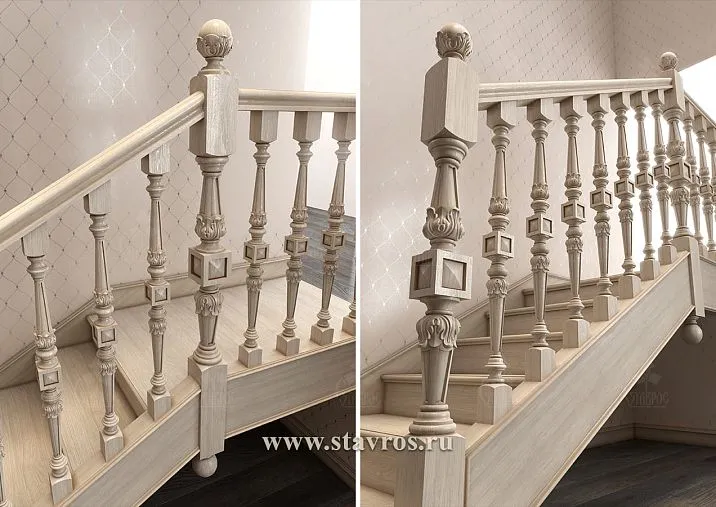
In the world of modern architecture, where every detail matters, profile balusters Profile balusters occupy a special place among staircase decor elements. These exquisite structural elements are not merely functional supports for handrails, but true masterpieces of engineering art capable of radically transforming the perception of any interior. Their unique geometry and carefully considered proportions create an unparalleled play of light and shadow, turning an ordinary staircase into an architectural masterpiece.
Modern profile balusters embody centuries-old craftsmanship traditions and innovative manufacturing technologies. Every line, every curve is meticulously calculated not only from an aesthetic standpoint but also in consideration of ergonomic requirements and building codes. These elements become a link between functionality and beauty, creating a harmonious space where safety combines with elegance.


Anatomy of Perfection: What Makes Profile Balusters Unique
Profile balusters differ from traditional round or square counterparts by their complex geometric shape, created through special processing of the blank. Profiling is a technological process in which longitudinal grooves, protrusions, channels, and other decorative elements are formed on the surface of the product, creating a unique relief.
The main elements of a profile baluster are the base — the lower supporting part ensuring stable attachment to the tread; the shaft — the central decorative part with a characteristic profile; and the capital — the upper part serving for attaching handrails. Each element performs its function, but together they create a unified composition where form follows function.
The geometry of the profile can vary from simple rectangular cross-sections with bevels to complex multi-step forms with alternating convex and concave elements. Classical profiles include grooves — vertical channels resembling columns of ancient temples, astragals — convex moldings creating rhythmic accents, and various combined forms combining several types of processing.




Technical Specifications and Standards
The production of profile balusters is regulated by strict technical standards. The height of a standard baluster is 900 millimeters, ensuring a comfortable handrail height for most people. The cross-section can vary from 40×40 to 80×80 millimeters depending on load and design requirements.
The moisture content of wood should not exceed 12% for indoor structures and 15% for outdoor ones, ensuring dimensional stability during operation. The accuracy class for processing profile surfaces corresponds to furniture standards, ensuring ideal geometry and surface smoothness.
Our factory also produces:


Material Science: Choosing the Base for Creating a Masterpiece
Get Consultation
Fine Hardwoods
Oak remains the unrivaled material for manufacturing premium-class profile balusters. Its density of 700-800 kg/m³ ensures exceptional strength and durability, while its pronounced texture creates an additional decorative effect on profiled surfaces. Natural tannins protect the wood from biological damage, making oak balusters virtually eternal.
Radial sawing of oak, where annual rings are oriented perpendicular to the surface, creates a distinctive "tiger-striped" pattern. On profiled surfaces, this effect is enhanced, creating a unique interplay of texture and light.
Ash attracts craftsmen with its plasticity and expressive grain structure. Density of 650-750 kg/m³ ensures excellent workability while maintaining high strength. Ash's natural pattern with characteristic wavy lines looks especially striking on grooved surfaces, creating a dynamic interplay of light and shadow.
Beech is distinguished by its uniform fine-pored structure, making it an ideal material for creating profile balusters with complex geometry. Uniform density of 650-700 kg/m³ ensures consistent quality of processing along the entire length of the product, while the absence of a pronounced texture allows focus on the beauty of the profile.
Coniferous species: accessibility without compromise
Spruce represents an optimal combination of quality and accessibility for manufacturing profile balusters. Density of 400-500 kg/m³ ensures light construction with sufficient strength. Resinous structure provides natural protection against moisture and insects, which is especially important for elements subjected to intensive use.
The characteristic contrast between light sapwood and dark heartwood of spruce creates a natural decorative effect, which is enhanced by profiling. Radial resin channels form unique patterns, especially noticeable on grooved surfaces.
Larch combines the advantages of coniferous and deciduous species. Its density of 650-700 kg/m³ and high resin content provide exceptional resistance to moisture and biological damage. This makes larch profiled balusters ideal for use in variable humidity conditions.
Technological processes: from rough material to masterpiece
Traditional hand profiling
Handmade profiled balusters — this is a high art requiring years of experience and deep understanding of wood properties. The master works individually with each blank, taking into account the grain direction, material density, and texture characteristics.
Profile marking is performed using special templates and patterns. Each line, each curve must be precisely aligned, as this affects not only the appearance but also the strength of the finished product. Rough processing is done with various configuration rasps, gradually bringing the blank closer to the required profile.
Final processing is done with special profiled rasps — calipers, each designed to create a specific profile element. The master must have impeccable material sense to avoid chips and scratches on complex profile sections.
Modern CNC technologies
CNC milling machines have revolutionized the production of balusters. They enable the creation of items with perfect geometry and absolute repeatability of parameters. The processing accuracy is ±0.05 millimeters, which is unattainable with manual work.
The process begins with creating a 3D model in specialized CAD software. The designer can experiment with various profile variants, simulate their behavior under load, and optimize the shape to achieve maximum strength with minimal material usage.
Multi-axis machining centers are capable of creating profiled balusters with complex geometry in a single setup. Automatic tool change allows performing various operations — from roughing to final milling — without operator involvement.
Combined technologies
The highest quality profiled balusters are created using combined technologies that combine the advantages of machine and hand processing. Rough processing is performed on CNC machines, ensuring geometric accuracy and high productivity. Final finishing is done manually by experienced masters who give the product individuality and eliminate the smallest defects.
This approach allows combining technological perfection with traditional craftsmanship, creating products that are distinguished by flawless quality and unique character.
Classification of profiled balusters by processing type
Grooved balusters
Grooved profiled balusters represent a classical processing type borrowed from ancient architecture. Grooves are vertical semi-circular or triangular recesses that create rhythmic play of light and shadow on the baluster surface.
The number of grooves can vary from 8 to 24 depending on the baluster diameter and designer intent. Groove depth is usually 3-8 millimeters, providing expressive relief without compromising structural strength. Groove width is calculated to create harmonious proportions and optimal visual effect.
Twisted profiled balusters
Twisted balusters are created by forming spiral grooves on the surface of a cylindrical blank. The spiral pitch can vary from 100 to 500 millimeters depending on the baluster height and desired visual effect. The spiral angle is usually 15-45 degrees relative to the vertical axis.
Twisted balusters create a dynamic visual effect, especially striking under artificial lighting. The number of spiral turns can range from one to four, affecting manufacturing complexity and decorative effect.
Combined profiles
Modern technologies allow creating profiled balusters with combined processing types. Combining grooves and twisted elements creates especially rich surface texture. Transition zones between different profile types require special skill during manufacturing.
Stepped profiles combine sections with different processing depths, creating a multi-level composition effect. Such balusters are especially effective in classical interiors, where rich decorative details are valued.
Design Solutions and Stylistic Directions
Classic elegance
Classic profiled balusters are based on principles of ancient architecture, where each element has functional and symbolic significance. The order system defines proportions and relationships between all elements, creating a harmonious composition.
Doric order is characterized by strictness and simplicity of forms. Profiled balusters in this style have simple but expressive grooves without decorative embellishments. Ionic order allows more elegant forms with slender profiles and delicate transitions. Corinthian order is distinguished by rich decorative elements and complex profiles.
Modern minimalism
Minimalist profiled balusters are characterized by extreme simplicity of forms and absence of decorative excesses. Geometric purity of lines creates a sense of modernity and technology. The profile may consist of simple rectangular sections with bevels or smooth transitions.
Monochromatic color solution emphasizes architectural expressiveness of form. Such balusters are ideally suited for modern interiors in high-tech, loft, or Scandinavian minimalist styles.
Neo-classical interpretations
Neo-classical profiled balusters combine traditional proportions with modern materials and technologies. Simplified profiles retain recognizability of classical forms but are adapted to modern production and usage requirements.
Contrasting combinations of different processing types create interesting visual effects. For example, smooth sections may alternate with grooved sections, creating a rhythmic composition.
Technical aspects of design and calculation
Load and Strength Calculation
Profiled balusters must withstand significant horizontal loads transmitted through handrails. The normative load is 100 kg/m for residential buildings and 150 kg/m for public buildings. With a standard installation spacing of 150 mm, each baluster must withstand a load of 15–22.5 kg.
The resistance moment of a profiled baluster depends on its geometry. Grooved balusters have a slightly lower resistance moment compared to cylindrical ones of the same diameter, which must be considered in calculations. The safety factor must be at least 2.5.
Influence of profile on operational characteristics
The aerodynamic properties of profiled balusters affect their behavior in airflow conditions. Grooved surfaces create turbulence, which may result in additional loads during strong winds for outdoor structures.
The hygroscopicity of different profile areas may vary depending on the orientation of wood fibers relative to the surface. This must be considered when selecting protective coatings and planning maintenance.
Methods of mounting and installation
Traditional connection methods
Dowel joint remains the most reliable method of attaching profiled balusters. Wooden cylindrical rods with a diameter of 10–12 mm provide a strong connection without visible metal components. The dowel depth should be at least 40 mm into each part.
The "tongue-and-groove" joint requires high manufacturing precision but provides maximum strength. The tongue dimensions are calculated based on the baluster's cross-section and expected loads. Adhesive bonding further enhances the mechanical connection between elements.
Modern fastening systems
Metallic threaded rods M8–M10 provide exceptional joint strength. They are especially effective for profiled balusters of large cross-section, where traditional methods may prove insufficient.
Specialized hardware includes corner connectors that allow mounting balusters at various angles. This is especially important for spiral staircases and structures with complex geometry.
Features of installing profiled balusters
Installing profiled balusters requires special attention to profile orientation. The groove direction must be strictly vertical, requiring precise marking and control during installation. Alignment of adjacent balusters' profiles creates a unified railing composition.
Installation sequence begins with corner and support elements, followed by intermediate balusters. Each element is checked for vertical alignment and conformity to the design position.
Surface treatment and protective coatings
Preparation operations
Profiling profiled surfaces requires special tools. For grooved balusters, profiled grinding blocks replicating the groove shape are used. Abrasive grit gradually decreases from P120 to P320.
Dust removal from profile grooves is performed using compressed air or specialized brushes. Surface preparation quality critically affects the adhesion of subsequent coatings and the final appearance of the finished product.
Special coatings for profiled surfaces
Penetrating compounds are especially effective for profiled balusters, as they reinforce the surface wood layer at stress concentration points. Wax coatings highlight the profile relief, creating an additional decorative effect.
Patination of profiled surfaces creates an aged effect, especially striking on grooved balusters. Dark patina in grooves contrasts with lighter raised areas, enhancing the profile relief.
Integration into architectural styles
Classic Interiors
In classical interiors profile balusters act as a connecting element between various architectural components. They must harmonize with columns, pilasters, cornices, and other decorative details.
The scale of the profile should correspond to the overall proportions of the room. In high halls, balusters with large, expressive profiles are appropriate, while in smaller rooms, more delicate finishes are suitable.
Modern spaces
In modern interiors, profiled balusters can create interesting contrasts with smooth surfaces and simple forms. Selective use of profiled elements allows creating focal points without overloading the space with details.
Lighting of profiled balusters creates an effective play of light and shadow, especially in the evening. LED strips installed at the base of stairs highlight the groove relief and provide additional illumination.
Economic aspects and pricing
Factors Affecting Cost
The cost of profiled balusters depends on many factors. Profile complexity is the primary pricing factor. Simple grooved balusters cost 1.5–2 times more than smooth ones, complex combined profiles — 3–4 times more.
Wood species significantly affects the price. Profiled balusters made of oak cost 2–3 times more than pine ones, and those made of exotic species — 5–10 times more than domestic ones.
Manufacturing technology also affects the cost. Handmade work is significantly more valued than machine processing, especially for exclusive projects.
Economic Efficiency
Long-term savings are achieved through the high quality of profiled balusters. The service life of quality products is 50–100 years, significantly exceeding the lifespan of cheaper alternatives.
Impact on property value is an important factor. High-quality profiled balusters enhance the attractiveness of a home to potential buyers and may increase its value by 5-10%.
Trends in development and innovation
New processing technologies
Laser processing opens new possibilities for creating complex profiles. A laser beam can create micro-relief on the surface of wood, unattainable by traditional methods.
Ultrasonic processing allows creating profiles with perfectly smooth surfaces without using abrasives. This is especially important for hardwoods, where traditional sanding may be difficult.
Ecological Innovations
Zero-waste technologies allow using production waste from profiled balusters to manufacture other products. Shavings and sawdust are used to produce wooden panels and fuel briquettes.
Bio-degradable coatings based on vegetable oils and waxes replace synthetic compositions, reducing the ecological impact of production.
Quality Control and Standards
Geometric control
Geometric control of profiled balusters is performed using special templates and measuring instruments. Profile deviations must not exceed ±0.5 mm for machine processing and ±1 mm for manual work.
The symmetry of the grooves is controlled using angular templates. All grooves must have the same depth and width along the entire length of the baluster.
Strength Testing
Each batch of profiled balusters undergoes selective strength tests. A static load is applied to the center of the baluster span, which is fixed at both ends. The product is considered quality if no residual deformations are observed under a load exceeding the working load by 2.5 times.
Fatigue tests simulate repeated loading during operation. The baluster must withstand at least 100,000 load cycles without signs of damage.
Care and Maintenance
Regular Maintenance
Profiled balusters require special care due to the complexity of their surface. Dust removal from profile grooves is performed using soft brushes or compressed air. Using a vacuum cleaner with a soft attachment is also effective.
Wet cleaning is performed with special care. Water must not accumulate in the profile grooves, as this may cause wood swelling and deformation.
Preventive Maintenance
Updating coatings on profiled balusters requires complete removal of the old coating and reapplication of protective compositions. The frequency of updates depends on the intensity of use and environmental conditions.
Local repair of profile damage requires high skill from the technician. Restoring complex profiles often requires manufacturing special tools.
Conclusion
Profiled balusters represent a unique combination of functionality, technological sophistication, and artistic expression. Their complex geometry and carefully designed proportions can radically transform the perception of stair space, turning a utilitarian structure into a work of architectural art.
Modern production technologies open boundless possibilities for creating unique profiles, but the foundation of quality remains a deep understanding of material properties and traditional craftsmanship. Profiled balusters require a combination of engineering knowledge, artistic taste, and technical skill.
Investments in high-quality profiled balusters pay off not only in durability and functionality, but also in daily aesthetic pleasure. Every detail of the profile, every play of light and shadow creates a unique atmosphere, turning a home not just into a place of residence, but into a space for life and inspiration.
The future of profiled balusters is linked to the development of new processing technologies, eco-friendly materials, and customized production. However, no matter how advanced the technologies, the foundation will remain the pursuit of beauty, functionality, and quality — principles that make profiled balusters an indispensable part of architectural heritage.
For many years, STAVROS has specialized in producing high-quality solid wood items, including exclusive profiled balusters. By combining centuries-old craftsmanship traditions with modern technologies, STAVROS creates products distinguished by flawless quality, original design, and durability. Every STAVROS profiled baluster is the result of careful material selection, application of advanced processing technologies, and strict quality control at every production stage, making STAVROS products a benchmark in the field of architectural elements capable of transforming any space.