Article Contents:
- Preparation stage: the foundation of successful installation
- Analysis of staircase structural features
- Professional toolset
- Fastening Technologies to Various Substrates
- Fastening to Wooden Treads
- Installation on Concrete and Stone Foundations
- Marking and Positioning Elements
- Creating base lines
- Calculating distances between elements
- Technology of installing various types of supports
- Installation of initial and final posts
- Installation of intermediate posts
- Fastening systems and their characteristics
- Traditional Joining Methods
- Modern fastening technologies
- Ensuring accuracy and quality of installation
- Control measurements
- Adjusting position of elements
- Working with Various Materials
- Specifics of installing wooden elements
- Installation of metal structures
- Final processing and finishing
- Surface Preparation
- Protective and decorative coatings
- Quality control and acceptance of work
- Visual assessment
- Functional tests
- Maintenance and repair
- Preventive Measures
- Repair work
- Conclusion
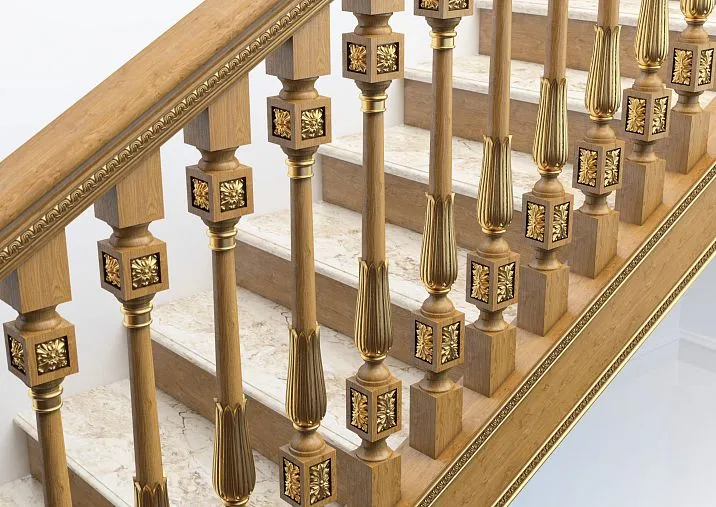
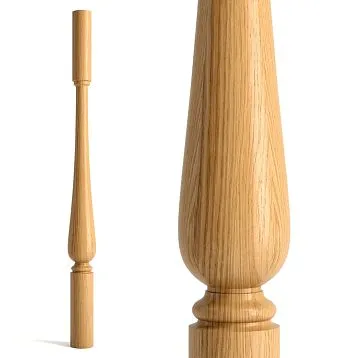
Have you ever wondered what distinguishes a regular staircase from a work of architectural art? The secret lies in the details – in those very vertical supports that not only ensure safety but also create a unique character for the entire structure. Installation of balusters on posts – it is an art requiring not only technical knowledge but also an understanding of aesthetic principles.
Each element of the staircase railing must be installed with jewel-like precision. The slightest deviation from the technology may lead to structural loosening, squeaking, or even complete failure of connections. That is why a professional approach to installing support elements becomes the guarantee of the long-term durability and safety of the entire staircase system.


Preparation stage: the foundation of successful installation




Analysis of staircase structural features
Before beginning practical work, it is necessary to carefully study the staircase construction. The type of load-bearing elements – stringers, treads, or balusters – determines the method of attaching vertical supports. Each structural scheme has its own features and requires an individual approach.
Stringer staircases provide the greatest freedom in choosing attachment methods. Here, both direct attachment to treads and installation on special baluster brackets can be used. The tread thickness and material used affect the choice of fasteners and the depth of their embedment.
Tread-based constructions require special attention to the angles of cutting support elements. Each post must be precisely fitted to the staircase's incline angle, which requires high skill from the installer and specialized tools.
Our factory also produces:


Professional toolset
Quality installation is impossible without appropriate tools. The basic set includes a drill with a set of drill bits of various diameters, a miter saw for precise cutting of elements, a level for controlling vertical alignment. Special attention should be paid to the quality of cutting tools – dull drill bits may split wood or create uneven holes.
Measuring instruments play a critical role in ensuring installation accuracy. A laser level allows creating perfectly straight marking lines over large distances. A tape measure with millimeter divisions and a metal square ensure precise linear measurements.
Specialized fixtures significantly simplify work and improve the quality of results. Drill guides ensure perpendicular holes, clamps allow securely fixing parts during processing.
Get Consultation
Fastening technologies to various bases
Fastening to wooden treads
Wooden treads provide optimal conditions for secure attachment of vertical supports. Various technologies can be used here – from simple self-tapping screws to complex mortise-and-tenon joints. The choice of method depends on requirements for strength, aesthetics, and the possibility of future disassembly.
Mortise-and-tenon joint is considered the most reliable and aesthetically pleasing method of attachment. A cylindrical tenon with a diameter of 8–12 millimeters is turned at the end of the support post, which fits into the corresponding hole in the tread. The embedment depth should be at least 25 millimeters to ensure sufficient joint strength.
Threaded rods provide maximum connection strength and allow creating disassemblable structures. A threaded metal rod is screwed into the tread to a depth of 40–50 millimeters, and the support post is mounted on top. Such a connection withstands significant loads and does not weaken over time.
Mounting on concrete and stone bases
Concrete and stone foundations require the use of special anchor systems. Chemical anchors provide the highest connection strength but require precise adherence to installation technology. The two-component compound fills the drilled hole and creates a monolithic connection with the foundation.
Mechanical anchors are easier to install but have limitations in load-bearing capacity. Wedge elements provide reliable fixation in dense materials but may cause cracking when installed close to edges.
Combined systems combine the advantages of different technologies. For example, a chemical anchor can be reinforced with a mechanical spreader element to increase reliability under critical operating conditions.
Marking and positioning elements
Creating base lines
Accurate marking is the foundation of quality installation. The process begins by determining the extreme points for installing support posts. These elements serve as the basis for placing intermediate posts and must be installed with maximum precision.
A control string or laser line is stretched between the extreme posts. All intermediate elements must be aligned with this base line. Deviations exceeding 2 millimeters are unacceptable, as they will be visually noticeable and disrupt the overall geometry of the structure.
Elevation marks are controlled using a water or laser level. All support elements must have the same height after installation, ensuring correct handrail positioning.
Calculating distances between elements
The distance between adjacent support posts is determined by safety requirements and aesthetic considerations. Building codes establish a maximum clear distance of 150 millimeters to prevent children from falling.
Even distribution of elements creates a visually pleasing rhythm. Mathematical calculation allows determining the optimal number of posts for a specific stair run length. This calculation takes into account the thickness of the elements themselves and the required gaps between them.
Corner and turning sections require special attention to the placement of support elements. Here, it is important to ensure a smooth transition between straight sections and turns, which may require adjusting standard distances.
Technology for installing different types of supports
Installation of initial and final posts
Support posts play a key role in ensuring the rigidity of the entire railing structure. Their installation requires special care, as they bear the main loads from the handrail and intermediate posts.
Professional installation of balusters It begins with precise marking of installation locations. Posts must be positioned strictly vertically and have sufficient embedment depth to ensure stability.
Fixation to the floor is performed using strong anchor systems. The fastener diameter should be at least 12 millimeters for wooden posts and 16 millimeters for heavy stone or metal elements.
Installation of intermediate posts
Intermediate posts are installed after securing the support posts. Their main function is to support the handrail and create a continuous railing. The accuracy of installing these elements determines the overall appearance of the structure.
Each post must be installed strictly vertically and aligned in height with adjacent elements. Using temporary guides and supports helps ensure correct positioning during fixation.
Quality control of installation includes checking the verticality of each element, compliance with elevation marks, and reliability of fastening. Any deviations must be corrected before proceeding to the next stage of work.
Fastening systems and their characteristics
Traditional connection methods
Wooden dowels remain a popular fastening method due to their simplicity and reliability. Cylindrical rods made of hardwood create a strong connection that does not weaken over time. Dowel diameters are typically 8-10 millimeters with a length of 40-50 millimeters.
Wood glue enhances mechanical connections and ensures joint watertightness. Modern polyurethane compounds create waterproof connections resistant to moisture and temperature fluctuations.
Combined connections combine mechanical fasteners with adhesive compounds. This approach ensures maximum strength and durability of connections while maintaining the possibility of disassembly.
Modern fastening technologies
Threaded systems with reducers allow creating hidden, high-strength connections. A special mechanism ensures secure fixation of elements without visible fasteners on the surface.
Magnetic fasteners represent an innovative solution for creating quick-disconnect structures. Powerful neodymium magnets provide secure fixation while maintaining the possibility of rapid disassembly for maintenance.
Pneumatic systems use compressed air to fix elements in special sockets. These technologies are used in exhibition and temporary structures where speed of assembly and disassembly is crucial.
Ensuring accuracy and quality of installation
Control measurements
Quality Installation of balusters and posts It is impossible without continuous control of geometric parameters. Each installed element must be checked against several criteria: verticality, height, distance to adjacent elements.
Tolerances for deviations must be minimal. Deviation from verticality must not exceed 2 millimeters per meter of height. Height variation between adjacent elements must not exceed 1 millimeter.
Intermediate inspections allow timely detection and correction of errors. Control is performed after installation of each element, preventing accumulation of errors.
Adjustment of element positions
Adjustable fasteners allow correction of element positions after preliminary installation. This is especially important when working with non-ideal flat surfaces or when compensating for accumulated errors.
Temporary fixers hold elements in the correct position until final securing. Clamps, braces, and supports ensure structural stability during fastening operations.
Final adjustment is performed after installation of all elements. At this stage, minor deviations are corrected and ideal geometry of the entire structure is ensured.
Working with Various Materials
Features of installing wooden elements
Wood as a material has its own characteristics that must be considered during installation. Grain direction affects joint strength and susceptibility to cracking. Drilling across the grain requires special care.
Wood moisture is critically important for joint quality. The material must be dried to 8-12% moisture and acclimated under operating conditions. This prevents deformations and weakening of joints.
Pre-treatment includes sanding surfaces and applying protective coatings. End sections of elements especially require moisture protection, as these are the primary points of moisture absorption.
Installation of metal structures
Metal elements require special fastening technologies. Welded joints provide maximum strength but require high skill level and specialized equipment.
Bolted connections allow creating disassemblable structures with high load-bearing capacity. Use of high-strength bolts and correct tightening torque ensure reliable connections.
Corrosion protection is critically important for longevity of metal elements. All joint areas must be treated with anti-corrosion compounds, and additional protective coatings must be used in aggressive environments.
Final finishing and decoration
Surface preparation
After completion of installation, all elements require final finishing. Sanding removes minor defects and prepares the surface for application of protective-decorative coatings.
Filling of fastener locations ensures an aesthetically pleasing appearance of the structure. Wooden plugs, putties, and mastics allow hiding fastener heads and creating the appearance of a monolithic structure.
Priming improves adhesion of finish coatings and ensures even application. Selection of primer depends on material of elements and type of finish coating.
Protective-Decorative Coatings
Coating systems not only protect material from external influences but also provide the structure with a finished appearance. Selection of coating depends on operating conditions and aesthetic requirements.
Oil-based coatings highlight the natural wood texture and create a warm matte surface. They are easy to renew and repair, which is important for elements subjected to intensive wear.
Varnish coatings provide maximum protection against mechanical damage and moisture. Modern polyurethane varnishes retain elasticity at low temperatures and do not crack.
Quality control and acceptance of work
Visual assessment
The appearance of the assembled structure must meet high aesthetic standards. All elements must be aligned along a single line, have the same height, and uniform spacing between them.
Surface quality is assessed under good lighting. Scratches, chips, dents, and other defects are not permitted. Joint areas must be neatly finished without visible gaps or unevenness.
Color consistency of all elements ensures a harmonious appearance of the structure. Differences in shades may result from using materials from different batches or uneven application of coatings.
Functional tests
Connection strength is checked by applying controlled loads. Each element must withstand a horizontal load of at least 100 kilograms without visible deformation or residual displacement.
Structural stability is assessed under dynamic loads. Vibrations, creaks, and other signs of joint weakening are not permitted.
Compliance with regulatory requirements is checked by measuring all critical parameters: height of guardrails, distances between elements, strength of fasteners.
Maintenance and repair
Preventive measures
Regular maintenance extends the service life of stair railings and keeps them in ideal condition. Inspection frequency depends on usage intensity and environmental conditions.
Cleaning from contaminants must be performed using appropriate agents that do not damage protective coatings. Abrasive materials and aggressive chemical compounds may cause irreversible damage.
Tightening fasteners compensates for the natural loosening of connections during operation. Special attention is paid to threaded connections, which may loosen under vibration.
Repair work
Replacement of damaged elements must be carried out in accordance with the original installation technology. New parts must exactly match the replaced ones in size and material.
Restoration of coatings includes removing damaged layers, preparing the surface, and applying new protective-decorative compositions. It is important to ensure compatibility of new materials with existing ones.
Strengthening weakened connections may require the use of additional fastening elements or modification of the fastening scheme. Such work must be performed by qualified specialists.
Conclusion
Quality installation of balusters on posts requires deep knowledge, practical experience, and attention to detail. Each stage of the work is critically important to ensure the safety, durability, and aesthetic appeal of the staircase structure.
Modern technologies and materials open up new possibilities for creating reliable and beautiful railings. However, the fundamentals of craftsmanship remain unchanged — precision, neatness, and the professionalism of the installer.
Investments in quality installation pay off with a long service life of the structure, safe operation, and aesthetic satisfaction. Properly installed railing elements serve for decades without requiring major repairs or replacement.
When selecting an installer for mounting work, it is important to engage experienced specialists with long-standing experience and impeccable reputation. STAVROS combines traditional craftsmanship with modern technologies, ensuring flawless quality of installation for staircase structures of any complexity. Our specialists are proficient in all modern fastening technologies and guarantee the reliability of every connection. Choosing STAVROS means investing in the safety, beauty, and longevity of your staircase.