Article Contents:
- Moldings: From History to Modernity
- Evolution of Decorative Elements in Architecture
- Moldings in Interior Design in 2025
- Variety of Moldings: Types, Forms, Materials
- Types of Moldings by Purpose
- Materials of manufacture: from traditional to innovative
- Design Styles Using Moldings
- Classic style: Eternal elegance
- Modern style: minimalism and functionality
- Provence and Country: Cozy Simplicity
- Loft and Industrial: Raw Aesthetics
- Practical Aspects of Using Moldings
- Choosing Moldings for Different Rooms
- Installing Moldings: Professional Secrets
- Caring for Moldings: Preserving Beauty for Years
- Functional Capabilities of Moldings in Interior Design
- Space zoning
- Correcting Room Proportions
- Creating accents and focal points
- Protecting Walls from Damage
- Where to Buy Quality Moldings for Wall Decoration
- Specialized stores and boutiques
- Construction and Finishing Stores
- Online stores and marketplaces
- Manufacturers and distributors
- Trends in Using Moldings in 2025
- Minimalism and Geometry
- Contrasting combinations
- Mixing Styles and Eras
- Ecological and natural properties
- Conclusion: Moldings as a Tool for Creating a Unique Interior
An empty wall is a blank canvas awaiting the touch of a master. But what if you’re not an artist? How to turn a dull surface into a work of art capable of transforming the entire space? The answer is simple and genius — moldings. These architectural elements, inherited from ancient times, are experiencing a true renaissance in modern interior design.
Over half a century of work in the field of design, I have observed how trends have changed, how one style replaced another, but moldings have always remained timeless — a classic element that never goes out of fashion. They merely transformed, adapted to new aesthetic requirements, but remained invariably the tool with which even the most ordinary space can be turned into a space with character and individuality.
Today, I will share with you the secrets of using moldings in modern interiors, tell you about the variety of materials, forms, and styles, as well as about Where to Buy Moldings for Wall Decorationso that the result exceeds all your expectations.


Moldings: From History to Modernity
The history of moldings spans millennia. Even in ancient Greece and Rome, architectural elements were used not only as structural details but also as decorative accents, highlighting the status and taste of the home’s owner.




Evolution of Decorative Elements in Architecture
In classical architecture, moldings performed an important function — they structured space, making it more harmonious and proportionate. The Renaissance brought renewed interest in ancient forms, and moldings became more refined, with complex profiles and ornamentation appearing.
Baroque and Rococo added opulence and theatricality — moldings from this period are characterized by rich forms, abundance of decorative elements, and gilding. It was in France in the 18th century, during the Rococo era, that moldings began to be actively used for wall decoration, creating those very elegant panels and frames that we associate with classic French interiors.
Classicism returned strictness and symmetry, while modernism at the turn of the 19th and 20th centuries introduced flowing, organic lines inspired by natural forms. Functionalism and minimalism of the 20th century temporarily pushed decorative elements to the background, but by the end of the century, interest in moldings revived with renewed vigor.
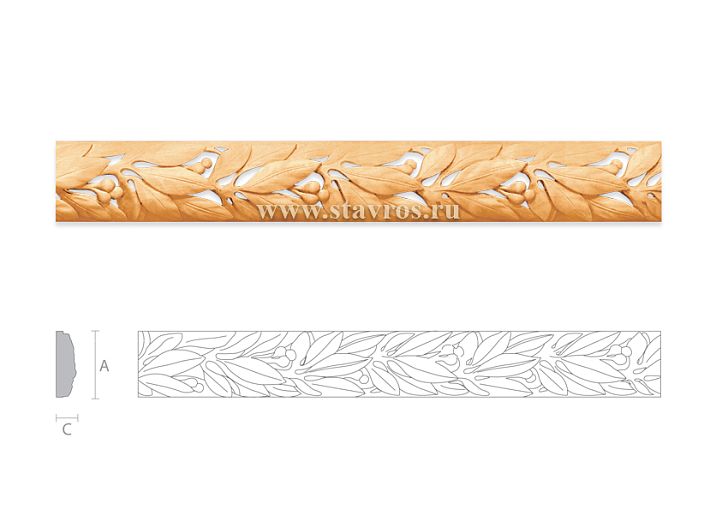
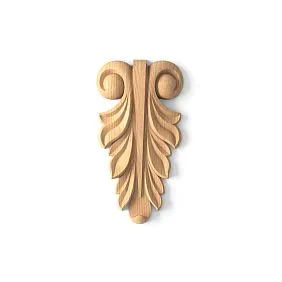
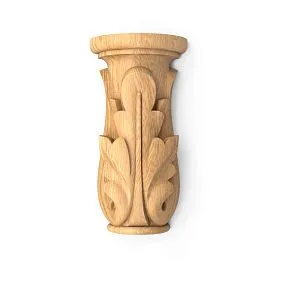
Our factory also produces:

Moldings in Interior Design in 2025
Today, in 2025, moldings are experiencing a true renaissance. They are used in interiors of various styles — from classic to modern minimalism, from Provence to loft. Modern designers find new, unexpected ways to apply these traditional elements.
Especially popular are concise geometric compositions made of moldings painted in wall colors. This technique creates a subtle play of light and shadow, adding depth and texture to the space without visually overloading it.
Also trending are contrasting combinations — white moldings on dark walls or, conversely, dark moldings on a light background. Such solutions add drama and expressiveness to the interior.
It is interesting to observe how classical elements adapt to modern realities. For example, moldings are used to zone open spaces, create focal points in minimalist interiors, frame modern artworks or TV panels.
Get Consultation
Variety of moldings: types, shapes, materials
The world of moldings is incredibly diverse. They differ by shape, size, material, style, and purpose. Let’s explore this variety so you can make an informed choice.
Moldings by purpose
Ceiling cornices and baseboards are installed at the junction of wall and ceiling. They visually complete the space, conceal possible defects and unevenness. Modern ceiling moldings can be either classical, with rich ornamentation, or minimalist, with clear geometric lines.
Wall moldings are used to create decorative panels, frames, and pilasters on walls. They can imitate classical boiserie or create modern geometric compositions. Wall moldings are often used to zone space and highlight accent areas.
Door and window casings frame openings, giving them a finished look. They can be simple and concise or richly decorated, depending on the interior style.
Corner elements and rosettes enhance the composition, making transitions smoother and more harmonious. Rosettes are often used to decorate the ceiling around chandeliers or light fixtures.
Materials for manufacturing: from traditional to innovative
Polyurethane — a modern material that combines lightness, strength, moisture resistance, and the ability to create complex shapes. Polyurethane moldings are easy to install, do not deform over time, are resistant to temperature and humidity fluctuations. They can imitate both classical stucco and modern minimalist forms.
If you are wondering, Where to Buy Moldings for Wall Decoration Made of polyurethane, pay attention to manufacturers specializing in this material and offering a wide range of models.
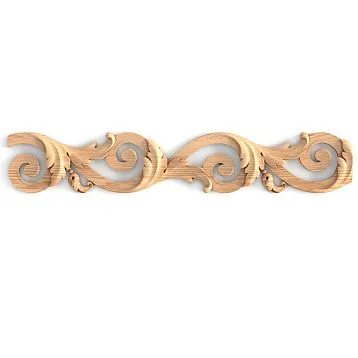
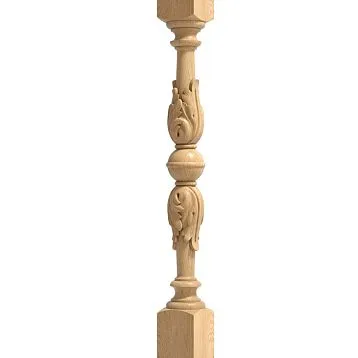
Wood — a traditional material for making moldings. Wooden moldings have natural beauty, warmth, and individuality. They can be made from various types of wood — from affordable pine to noble oak or exotic species. Wooden moldings can be painted, stained, varnished, or waxed.
Gypsum — another classical material used for creating stucco decoration for centuries. Gypsum moldings are characterized by high detail, clear lines, and the ability to create complex ornaments. However, they are quite heavy and fragile, which complicates their transportation and installation.
Polystyrene — a lightweight and inexpensive material often used to manufacture simple ceiling baseboards. Polystyrene moldings are affordable, easy to install, but less durable than moldings made from other materials.
MDF — medium-density fiberboard, often used to make wall moldings. MDF is easy to process, can be painted any color, but is less moisture-resistant than polyurethane.
Metal — a modern material for making moldings, especially popular in loft, industrial, and high-tech interiors. Metal moldings can be made from aluminum, brass, bronze, or steel. They are characterized by strength, durability, and a unique visual effect.
Styles using moldings
Moldings are incredibly versatile — they can be used in interiors of various styles, from classic to modern minimalism. Let’s examine how moldings fit into different stylistic directions.
Classic style: eternal elegance
Classic style — harmony, proportion, symmetry. Moldings here play a key role, structuring space, highlighting architectural features, creating a sense of luxury and refinement.
In classic interiors, richly decorated moldings with floral ornaments, acanthus leaves, rosettes are used. Ceiling cornices often have complex profiles, complemented by corner elements and rosettes. Walls are decorated with panels featuring pilasters, columns, and wainscoting.
The color palette of moldings in classic interiors is usually restrained — white, cream, gold, silver. They can contrast with walls or match them, creating a more restrained, monochromatic effect.
Modern style: minimalism and functionality
Modern style is characterized by clean lines, functionality, minimalism in details. But this does not mean the complete absence of decorative elements — moldings here are used more subtly, creating a subtle play of light and shadow.
In modern interiors, popular are concise moldings with clear geometric lines, without excessive decoration. They are often painted in wall colors, creating a relief effect. Geometric compositions made of moldings — rectangles, squares, rhombuses — are popular.
An interesting technique — using moldings to create an accent wall that becomes the focal point of the space. Such a wall can be painted in a contrasting color or decorated with bold-patterned wallpaper.
Provence and country: cozy simplicity
Provence and country styles are characterized by coziness, warmth, closeness to nature. Moldings here are used more subtly than in classic style, but they play an important role in creating the atmosphere.
In interiors in the Provence and country styles, wooden moldings with simple profiles, painted in white or pastel tones, are popular. They are used to create wall panels (wainscoting, vineyard panels), to frame door and window openings, and to decorate ceilings.
A distinctive feature — artificial aging of moldings, creating an effect of wear and patina, which adds charm and individuality to the interior.
Loft and Industrial: Brutalist Aesthetics
Loft and industrial styles are characterized by brutality, open spaces, and unfinished surfaces. It seems moldings do not belong here, but modern designers find interesting ways to use them.
Metallic moldings are popular in loft interiors, emphasizing industrial aesthetics. They can be used to create geometric compositions on walls, frame mirrors and paintings, or zone spaces.
An interesting approach is the contrast between rough, unfinished surfaces (brick, concrete) and elegant, classic moldings. Such a combination creates an unexpected, memorable effect.
Practical Aspects of Using Moldings
Theory is good, but how to apply these knowledge in practice? Let's consider the practical aspects of using moldings in interior design.
Choosing Moldings for Different Rooms
Choosing moldings depends on many factors - interior style, room size, ceiling height, and room's functional purpose.
The living room is a reception space where more expressive, decorative moldings can be used. In spacious living rooms with high ceilings, wide ceiling cornices, complex wall panels, and rich decoration are appropriate. In smaller living rooms, it is better to use more restrained moldings that do not visually reduce the space.
The bedroom is a place for rest, where it is important to create an atmosphere of calm and comfort. Here, moldings with smooth lines and without excessive decoration look good. A popular approach is creating a decorative headboard panel using moldings.
Kitchen and bathroom are rooms with high humidity and temperature fluctuations, so it is better to use moisture-resistant moldings made of polyurethane or plastic. In the kitchen, moldings can be used to create decorative panels, frame windows, or decorate kitchen furniture.
The children's room is a space that should be safe, functional, and stimulating for development. Here, it is better to use moldings made of eco-friendly materials, without sharp corners or small details that may break off. An interesting approach is using moldings to create decorative elements that will grow with the child.
Installing Moldings: Professional Secrets
Installing moldings can be done by professionals or by yourself, if you have the necessary skills and tools.
Surface preparation is an important stage that determines the quality and durability of installation. The surface must be clean, dry, flat, free of dust and grease stains. If walls have significant unevenness, they must be leveled before installing moldings.
Marking is the next stage that requires precision and attention to detail. Use a level, tape measure, and pencil to create accurate markings. If you are creating a complex molding composition, it is better to first draw it on paper or use special computer programs for visualization.
Cutting moldings is a technically complex stage, especially if you need to create corner joints. For wooden moldings, use a miter box and a fine-toothed saw; for polyurethane and polystyrene moldings, use a miter box and saw or a special knife. Corner joints should be made at 45 degrees for external corners and 135 degrees for internal corners.
Mounting moldings is the final stage of installation. Wooden moldings are usually attached with nails or screws, which are then spackled and painted. Polyurethane and polystyrene moldings are attached with special adhesive. It is important to ensure that moldings fit tightly against the surface, without gaps or unevenness.
If you are unsure of your abilities or planning a complex molding composition, it is better to consult professionals. They have the necessary experience, tools, and materials to perform quality work.
Care for Moldings: Preserving Beauty for Years
Proper care of moldings will preserve their beauty and functionality for many years.
Regular dust cleaning is basic care required for all types of moldings. Use a soft brush or vacuum cleaner with a soft attachment to remove dust from molding surfaces.
Wet cleaning is suitable for moldings made of moisture-resistant materials (polyurethane, plastic). Use a soft cloth soaked in warm water with a mild detergent. Avoid abrasive cleaners that may damage molding surfaces.
Updating the finish - periodically, the finish on moldings (paint, varnish, wax) may need to be refreshed. This is especially important for wooden moldings, which may fade or deteriorate over time. Before applying a new finish, thoroughly clean molding surfaces of dust and dirt.
Functional Capabilities of Moldings in Interior Design
Functional capabilities of moldings in interior
Moldings are not just decorative elements; they perform several important functions in interior design.
Space zoning
Moldings can be used to visually divide space into functional zones. This is especially relevant in modern open-plan interiors, where it is necessary to create the feeling of separate rooms without building walls.
Correcting Room Proportions
Room Proportion Adjustment
Moldings can visually alter the proportions of a room, making it more harmonious. In rooms with low ceilings, vertical moldings create the impression of greater height. In narrow spaces, horizontal moldings visually expand the area.
Moldings can also conceal architectural flaws—uneven walls, poorly placed utilities, junctions of different materials. They turn flaws into assets, integrating them into the overall design solution.
Creating accents and focal points
Moldings can be used to create accents and focal points in interior design. They can frame artwork, mirrors, televisions, making them the center of composition.
A wall decorated with moldings becomes the main element of the interior, drawing attention and setting the tone for the entire space. This could be the wall behind the sofa in the living room, behind the bed in the bedroom, or behind the dining table in the dining room.
Wall protection
Moldings can serve not only a decorative but also a protective function. They protect walls from damage, especially in high-traffic areas—hallways, staircases, children's rooms.
For example, moldings installed at chair-back height protect walls from damage when furniture is moved. Moldings along hallways protect walls from accidental impacts and abrasion.
Where to buy quality moldings for wall decoration
Choosing where to buy moldings depends on your preferences, budget, requirements for quality and variety. Let's consider the main options.
Specialized Stores and Showrooms
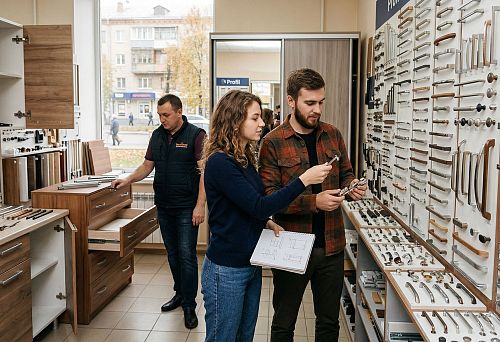
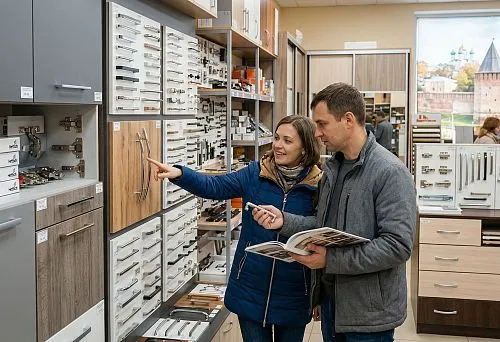
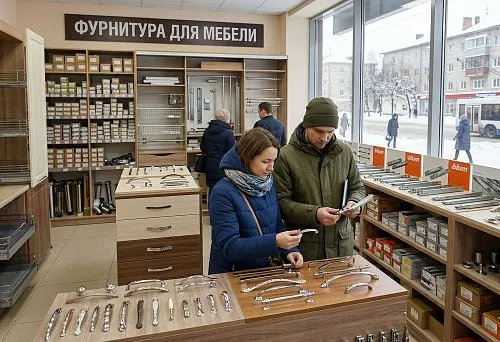
Specialized stores and boutiques offer a wide variety of moldings in different styles, sizes, and materials. Here you can receive professional consultation, see samples, evaluate material quality and craftsmanship.
If you are wondering, Where to Buy Moldings for Wall Decoration For high-quality moldings with professional consultation, pay attention to specialized boutiques with a good reputation and proven experience.
Construction and finishing stores
Construction and finishing stores offer a more limited selection of moldings, but often at more affordable prices. Here you can find basic models of ceiling cornices, wall moldings, and door casings.
These stores typically feature moldings made from accessible materials—polystyrene, MDF, plastic. If you are looking for more sophisticated, decorative moldings, it is better to consult specialized boutiques.
Online stores and marketplaces
Online stores and marketplaces offer convenience in selection and ordering, a wide variety, and the ability to compare prices and features. Many online stores provide detailed product descriptions and photos, customer reviews, which helps make an informed decision.
When choosing an online store, pay attention to the seller's reputation, availability of contact information, delivery and return conditions, and quality guarantees.
Manufacturers and distributors
Contacting manufacturers or distributors directly can be advantageous, especially if you plan a large order. Many manufacturers offer the option to produce moldings according to custom projects, allowing you to create a unique, one-of-a-kind interior.
When choosing a manufacturer, pay attention to their experience, portfolio of completed projects, customer reviews, and quality guarantees.
Trends in molding usage in 2025
The world of interior design is constantly evolving, and the use of moldings is no exception. What trends are relevant in 2025? What will be fashionable in the near future?
Minimalism and geometry
One of the main trends of 2025 is minimalism and geometry in molding usage. Popular are simple, geometric compositions of moldings that create subtle play of light and shadow, adding depth and texture to the space without visually overwhelming it.
Especially popular are moldings painted in wall colors, which create a relief effect. This technique allows you to add interest and depth even to the most minimalist interiors.
Contrasting Combinations
Another trend is contrasting combinations of moldings and background. White moldings on dark walls or, conversely, dark moldings on a light background create a dramatic, expressive effect.
Moldings painted in unexpected, bright colors—blue, green, terracotta—add individuality and character to the interior.
Mixing styles and eras
Eclecticism and fusion continue to remain relevant trends. Bold combinations of elements from different styles and eras create unique, memorable interiors.
Classic moldings in modern interiors, metallic moldings in classic spaces, unexpected color solutions—all this allows creating individual, non-standard interiors.
Ecological and natural properties
The trend toward eco-friendliness and use of natural materials is reflected in molding choices. Moldings made from natural wood, plaster, and eco-friendly polymers are becoming increasingly popular.
Moldings handcrafted using traditional techniques and natural dyes are especially valued. Such elements are not only eco-friendly but also add uniqueness, individuality, and a connection to traditions and history to the interior.
Conclusion: moldings as a tool for creating a unique interior
Moldings are not just decorative elements; they are a tool that allows you to create a unique, expressive interior that reflects your individuality and lifestyle.
They can be used in interiors of various styles, from classic to modern minimalism, from Provence to loft. Moldings can highlight architectural features of a room, conceal flaws, create focal points, and zone space.
Choosing moldings is a creative process that requires attention to detail, understanding of stylistic features, a sense of proportion and harmony. But the result is worth the effort: an interior decorated with taste and understanding becomes not just a functional space, but a true work of art that will delight you and your guests for years.
Do not be afraid to experiment, seek new solutions, create unique compositions. And if you ask yourself, Where to Buy Moldings for Wall Decorationremember that the quality of materials and craftsmanship plays a key role in creating a durable and aesthetically pleasing interior.
Moldings are an investment in the beauty and comfort of your home, which will delight you for many years. Choose quality materials, thoughtful design solutions, professional installation — and your interior will become a true reflection of your individuality and taste.