Article Contents:
- What is polyurethane decor and where is it used
- What is included in the concept of polyurethane decor
- Which rooms are suitable for polyurethane decor
- Where polyurethane decor is used: walls, ceilings, accent zones
- What types of polyurethane decor can be bought in Moscow
- Polyurethane moldings
- Polyurethane cornices
- Polyurethane skirting boards
- Polyurethane ceiling rosettes
- Decorative polyurethane overlays
- Wall Decor
- Ceiling decor
- Molding and decorative profiles
- How to choose polyurethane decor for a specific task
- If you need to decorate walls
- If you need to accentuate the ceiling
- If you need decor for a classic interior
- If you need a calm modern interior
- If it's important to visually adjust room proportions
- How to choose polyurethane decor by room
- living room
- for the bedroom
- For the hallway
- For Kitchen
- For Office
- For Country Houses
- How to choose decorative elements by interior style
- Classic
- Neoclassicism
- Modern Interior
- Interior with accent decor
- How not to overload the space
- What to choose: molding, cornice, baseboard, rosette, or overlay
- How to buy polyurethane decor in Moscow without mistakes
- Step 1. Determine the application area
- Step 2. Choose the element type
- Step 3. Check dimensions and scale
- Step 4. Match elements with each other
- Step 5. Plan the overall interior composition
- Common mistakes when choosing polyurethane decor
- Too large decor for a small room
- Mixing Incompatible Styles
- Focus only on appearance, without considering dimensions
- Purchasing individual elements without an overall system
- Overloading the ceiling and walls simultaneously
- Mismatch of baseboard, molding, and cornice
- Incorrect decorative saturation
- For what tasks in Moscow is polyurethane decor most often purchased
- For Apartments
- For Country Houses
- For commercial interiors
- For a design project
- For renovation with an emphasis on decorative finishing
- How to combine different elements in one project
- Moldings + Cornices
- Cornices + ceiling rosettes
- Baseboards + moldings
- Overlays + Wall Decor
- How to Assemble an Interior with Several Types of Polyurethane Decor
- FAQ: Answers to Popular Questions About Polyurethane Decor in Moscow
- What is Included in Polyurethane Decor for Interiors?
- How Does Polyurethane Decor Differ from Regular Molding?
- What is Better for Walls: Moldings or Overlays?
- What to Use for Ceilings: Cornices or Rosettes?
- Can Several Types of Polyurethane Decor Be Combined in One Room?
- How to choose decor for a classic interior?
- How to Choose Polyurethane Decor for an Apartment in Moscow?
- How to Avoid Mistakes with the Sizes of Decorative Elements?
- What to buy first: cornice, molding, or a room set?
- Where is polyurethane decor appropriate in a modern interior?
- Conclusion

Polyurethane decor in Moscow is no longer a niche request from restorers and professional designers, but an everyday story for thousands of people renovating an apartment, building a country house, or implementing a commercial project. Under this request, people search for moldings, cornices, baseboards, ceiling rosettes, decorative overlays, and other interior elements—everything that turns a finished space into a well-thought-out interior.
The main question that arises before purchase: what exactly to choose to avoid mistakes? Polyurethane decor is not a single product, but a whole group of solutions for different zones and tasks. A cornice cannot replace a rosette, molding cannot perform the function of a baseboard, and an overlay is not an analog of a wall panel. Therefore, the correct purchasing logic starts not with 'what is prettier,' but with 'what exactly is needed and where.'
In the catalogPolyurethane moldingsSTAVROS has its entire assortment structured by tasks:Wall Decor, ceiling decor, Crown Molding, Baseboards, Moldings, ceiling rosettes, applique, TrimandOutlets—exactly as the buyer thinks, not as is convenient for the manufacturer.
This article is a practical guide to selection. Without unnecessary theory, without advertising clichés. Only what really helps make the right decision.



What is polyurethane decor and where is it used




What is included in the concept of polyurethane decor
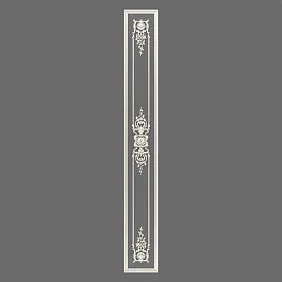
Polyurethane decor is a broad group of architectural and interior decorative products made from high-density expanded polyurethane. These are profiles, rosettes, overlays, panels, pilasters, and other molded elements that are mounted on walls, ceilings, and furniture surfaces.
The key property of the material is the accuracy of relief reproduction. Polyurethane is molded under pressure in precise molds, and each part comes out with a clear ornament, smooth edges, and a smooth surface. The finished product is painted with acrylic paint in any color, can be coated with patina or decorative glaze—and visually does not differ from gypsum stucco, while weighing 5–8 times less.
The material density range is from 150 kg/m³ (light decorative inserts and overlays) to 420 kg/m³ (load-bearing profiles and developed cornices with a pronounced overhang). This allows for the creation of both thin decorative elements for apartment interiors and large-scale decor for country houses and commercial properties.
Our factory also produces:


For which rooms is polyurethane decor suitable?
Polyurethane interior decor works in any room—without restrictions on temperature regime, humidity, or type of use.
-
City apartments are the most widespread segment. Moldings, cornices, baseboards, and rosettes for decorating living rooms, bedrooms, hallways, kitchens.
-
Country houses and cottages—the material withstands temperature fluctuations with irregular heating, is resistant to moisture, does not deform, and does not crack.
-
Commercial interiors—offices, restaurants, hotels, showrooms. Durability, ease of maintenance, and the possibility of repainting when changing the concept make polyurethane decor convenient for commercial properties.
-
Designer projects—a wide range of collections, precise ornament detailing, compatibility of elements within one stylistic family.
Get Consultation
Where is polyurethane decor used: walls, ceilings, accent zones
The application covers all the main planes of the interior.
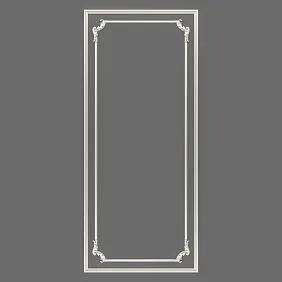
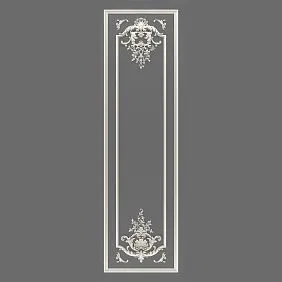
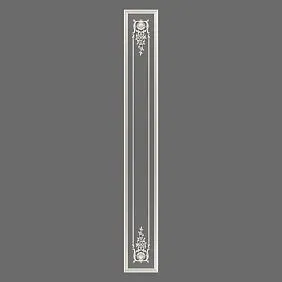
Walls. Moldings, decorative panels, pilasters, overlays, wall rosettes — for creating framed panels, accent walls, decorative zoning. WallWall Decordivides the wall plane into zones, creates geometric rhythm, adds depth.
Ceilings. Cornices, ceiling rosettes, trim, coffered profiles, decorative inserts — for structuring the horizontal plane. The full sectionceiling decorcovers solutions from simple cornices to complex multi-level ceiling compositions.
Wall and ceiling transition. Cornices are an essential element for clean joint finishing. Without it, the boundary between wall and ceiling looks unfinished.
Bottom wall line. Polyurethane skirting boards perform both decorative and protective functions — they complete the wall composition and protect the lower part from mechanical impacts.
Furniture and portals. Polyurethane decorative overlays allow transforming cabinet fronts, door panels, fireplace portals without replacing furniture.
What types of polyurethane decor can be purchased in Moscow
Polyurethane moldings
Polyurethane moldings— the most versatile category of decor. These are profiled linear strips used on walls and ceilings to create frames, dividers, panels, and rhythmic geometric compositions.
Moldings can be smooth—without ornamentation, with a clear geometric profile. These are suitable for modern and minimalist interiors: they create structure through shape, not through pattern. Moldings with ornamentation—leaves, volutes, geometric motifs—are appropriate in neoclassical and classic styles.
The width of moldings varies from 15–20 mm (the thinnest profiles for delicate zoning) to 100–150 mm (wide framing elements for large-scale wall compositions). For Moscow apartments with ceilings of 2.5–2.7 m, moldings with a width of 30–60 mm are optimal—they create a readable rhythm without visual overload.
Application of moldings in interior design:
-
Framed panels around the TV area, mirrors, paintings
-
Horizontal division of the wall into upper and lower zones
-
Decorative frames behind the bed headboard
-
Framing of door and window openings
-
Geometric grids and coffers on the ceiling
Polyurethane cornices
Cornices for the ceiling— one of the most popular types of polyurethane decor in Moscow. The cornice is installed at the junction of the wall and ceiling and serves a dual function: decorative (sets the style and creates a perimeter line) and technical (masks the joint, hides lighting cables, forms a light niche).
Polyurethane cornices are divided into several types by design and purpose:
Smooth cornices—without ornamentation, with clear geometric lines. They work in modern interiors, minimalism, Scandinavian style. They create structure through geometry, not through relief.
Cornices with ornamentation — leaves, flowers, scrolls, geometric patterns. For classic, neoclassical, art deco styles. The richer the ornament, the higher the stylistic demands on the other interior elements.
Multi-level cornices — a complex profile of several planes and projections. For formal spaces, halls of country houses, living rooms with high ceilings.
Light cornices — with a hollow construction for laying LED strips. Create soft contour lighting along the perimeter of the ceiling — one of the main lighting techniques in modern Moscow apartment design.
The width of the cornice is selected strictly according to the ceiling height. For ceilings up to 2.7 m — no more than 80–90 mm. For ceilings 2.7–3 m — 90–130 mm. For high ceilings from 3 m — from 130 mm and above.
Polyurethane skirting boards
Baseboards for interiors— the lower horizontal line of any wall composition. The baseboard is a detail often underestimated, but it is precisely what completes the interior from below, creating a sense of finish.
Polyurethane baseboards withstand wet cleaning, are impact-resistant, and do not deform with humidity fluctuations. This makes them particularly suitable for hallways, kitchens, and high-traffic areas — where plastic baseboards scratch and break, and wooden ones swell.
The height of the baseboard should correspond to the scale of the room:
-
Ceiling up to 2.6 m → baseboard 70–90 mm
-
Ceiling 2.6–3 m → baseboard 90–130 mm
-
Ceiling from 3 m → skirting board from 130 mm and higher
In neoclassical and classic styles, the skirting board is an active decorative element with a pronounced profile. In modern interiors, it is a neat line without ornament. Important: the profile of the skirting board should be coordinated with the style of the cornice. They are the lower and upper horizontal lines of a single wall system.
Ceiling rosettes made of polyurethane
ceiling rosettes— the central accent of the ceiling composition. A round (less often oval) medallion with a relief ornament is mounted in the center of the ceiling under the chandelier and turns the light source into an architectural element.
The diameter of the rosette ranges from 20 to 120 cm and more. The choice depends on:
-
Room area — the more spacious the room, the larger the rosette can be
-
Size of the chandelier — the diameter of the rosette should be equal to or slightly larger than the diameter of the chandelier's base
-
Ceiling height — with ceilings up to 2.7 m, a large rosette visually 'lowers' the ceiling
Practical rule: in a 20 m² room with a 2.7 m ceiling — a 35–50 cm rosette. In a 40 m² living room with a 3 m ceiling — a 60–80 cm rosette. In spacious halls and rooms with ceilings from 3.5 m — from 80 to 120 cm.
A rosette without a chandelier also makes sense: in modern apartments with track or recessed lighting, the rosette serves as an independent decorative medallion in the center of the ceiling. This adds depth and structure without a light source.
Polyurethane decorative overlays
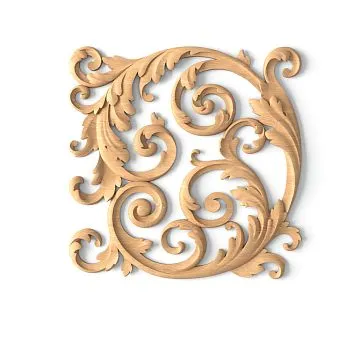
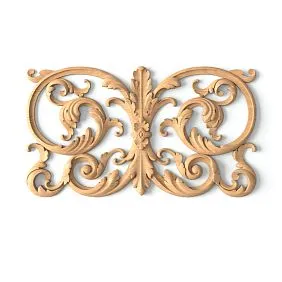
Decorative Inserts— a category for those who need a pinpoint local accent, not a linear profile. Overlays are three-dimensional ornamental elements that are mounted on walls, furniture fronts, door panels, fireplace portals, and decorative panels.
This is a powerful tool for updating the interior without a full renovation. A few overlays glued to the sliding wardrobe door fronts and painted with patina transform ordinary cabinet furniture into 'classic.' Overlays in the centers of wall panels add multi-level relief, which is otherwise possible only through expensive handcrafted work.
Overlay sizes range from 30 mm to 40 cm, with ornaments from geometric inserts to elaborate floral and acanthus motifs. Applications:
-
Decoration of furniture and built-in wardrobes
-
Accent inserts in wall panels
-
Decoration of fireplace portals and decorative niches
-
Framing of doors and window casings
Wall decor
In the sectionWall Decor— offers a wide range for wall decoration. This includes not only moldings and overlays—here you'll find pilasters, decorative panels, wall rosettes, frame elements, friezes, and other components for creating full-fledged wall compositions.
The STAVROS collections for walls cover various stylistic directions: from the strict geometry of modern interiors to lush classical ornaments. Within a single collection, you can select all elements of a wall system—molding, corner element, overlay, and wall rosette—which will be stylistically coordinated.
Ceiling decor
Sectionceiling decorcombines all elements for horizontal surfaces: cornices, moldings, rosettes, coffer profiles, decorative inserts, and panels. It's convenient to work here for comprehensive ceiling design projects — you can immediately select a cornice, rosette, and coffer moldings that are compatible in style.
Moldings and decorative profiles
Polyurethane trim— linear accessory profiles for finishing and refining interior compositions. These are accessory elements, additional horizontal rhythms, subtle dividers that help bring a composition to a logical conclusion. The sectionpolyurethane rosettesincludes elements not only for ceilings but also for walls, furniture, portals, and decorative panels.
How to choose polyurethane decor for a specific task
If you need to decorate walls
Wall decoration is built on moldings and decorative wall decor. Algorithm:
-
Determine the scenario: accent wall, framed panels, zoning, or full wall covering
-
Choose the molding width proportional to the wall area
-
Choose a style direction: smooth profile for modern, ornament for classic
-
Add corner elements and overlays as needed
Go to the section Wall Decor — here all components are structured by collections, making it easier to select compatible elements.
If you need to emphasize the ceiling
The ceiling task is solved through a combination: cornice around the perimeter + rosette in the center. If desired, add moldings for coffers or geometric frames.
The starting point is the section ceiling decor. Here you will find compatible ceiling elements from simple to complex.
If you need decor for a classic interior
Classic requires rich ornamentation, coordinated scale, and strict symmetry. Choose cornices with a developed multi-step profile, large rosettes with floral motifs, moldings with relief ornamentation, high baseboards.
Important: all elements must belong to the same style family. Mixing collections in classic style is unacceptable—it immediately destroys integrity.
If you want a calm modern interior
A modern approach to polyurethane decor is minimalist. One element or a set of two: a smooth cornice + a neat geometric rosette. No ornaments, only geometry and shadow. Thin moldings for frames on an accent wall—if you want to create structure without overload.
If it's important to visually adjust the proportions of the room
Decorative profiles help change the perception of space:
-
Thin vertical moldings on walls—visually raise the ceiling
-
Horizontal molding in the middle of the wall—makes the room wider
-
A cornice that matches the color of the ceiling—minimizes emphasis on height and doesn't cut the space
-
Light, thin elements in small rooms—add character without visual heaviness
How to choose polyurethane decor by room
For the living room
The living room is the main stage for polyurethane decor. More saturated solutions are justified here: framed panels on the walls, a cornice with an expressive profile, a ceiling rosette for the central chandelier, high skirting boards.
Optimal system for a Moscow living room of 20–30 m² with a 2.7 m ceiling: 80–100 mm cornice + moldings for frames on an accent wall + 45–55 cm rosette + 100–120 mm skirting boards. All elements are from one collection or one stylistic direction.
For a country living room with a 3 m ceiling and an area of 40–50 m²: cornice from 120 mm, rosette 65–80 cm, coffers on the ceiling, full wall panels are possible.
For the bedroom
The bedroom requires a delicate approach. The main accent is the wall behind the bed headboard. A framed panel made of moldings, possibly with vertical dividers and overlays — this creates an architectural background for the bed without aggressive decor.
The cornice in the bedroom is neat, with a soft profile. The rosette — if there is a chandelier, is small in diameter and with a simple ornament. Skirting boards — proportional to the ceiling height.
For the hallway
Hallways in most Moscow apartments are small and often with ceilings lower than 2.7 m. The principle of 'one element — maximum effect' works here. A thin cornice around the perimeter and a neat skirting board create completeness without overload.
If the area allows — moldings for vertical rhythms on the walls. This visually stretches the space upward, creating a sense of greater height.
For Kitchen
In the kitchen, polyurethane decor solves a purely practical task: the material is not afraid of steam, wet cleaning, temperature changes. A cornice around the perimeter of the kitchen, neat skirting boards — a basic set. Decorative overlays and moldings are appropriate in areas away from the work surface.
For an office
The study is a space where decor works through status and concentration. Framed panels made of moldings, a cornice with a slightly more expressive profile, high skirting boards — all this creates an atmosphere of representativeness. This works especially effectively in studies of country houses with ceilings from 2.9 m.
For a country house
In country houses of the Moscow region, all possibilities of polyurethane decor open up: high ceilings from 3 m, spacious living rooms, stair halls with double-height spaces, fireplace portals, rich cornices. The material is resistant to temperature fluctuations with irregular heating — this is a critical plus for a country property.
How to choose decorative elements according to interior style
Classic
Classical interior features developed ornamentation, strict symmetry, and scale appropriate to the area. For classic style, the following are characteristic:
-
Cornices with multi-step profile and floral ornamentation
-
Large ceiling rosettes with acanthus, flowers, leaves
-
Moldings with relief — leaves, geometric motifs
-
High skirting boards with expressive profile
-
Overlays for furniture and portal decoration
All of these should belong to the same decorative family — otherwise classic style turns into chaos.
Neoclassicism
Neoclassicism is the most in-demand style for polyurethane decor in Moscow. It combines classical form with modern restraint: less ornamentation, more precise proportions, cleaner lines.
For neoclassicism:
-
Cornice with a moderate but legible profile—not smooth, yet not overloaded
-
Medium-diameter rosette with a neat ornament—volutes, geometric motifs, light leaves
-
Moldings for framed panels of medium width
-
Baseboards with a pronounced yet concise profile
Modern interior
In a modern interior, polyurethane stucco decor works through minimalism. Smooth profiles, geometry instead of ornament, thin lines that create shadow and volume.
Optimal combination: smooth cornice + geometric rosette. Moldings—only for frames on an accent wall, narrow, without relief. Baseboards—low, smooth.
Popular technique: the cornice is used exclusively for a light niche. The decorative function takes a back seat—light is primary.
Interior with accent decor
A separate story—an interior where decor serves as the main visual statement. This is Art Deco, rich Neoclassicism, or saturated Classicism. Here, large rosettes, developed cornices, full wall systems of moldings, overlays, and friezes are appropriate.
Key condition: the scale of the room must allow for such richness. Rich decor in a small room feels oppressive and shrinks the space. In a large hall—it unfolds and creates a formal character.
How to avoid overloading the space
Three working principles:
-
One strong element as the main one — the others are subordinate. A large rosette + a modest cornice is better than two competing 'leaders'.
-
A unified style for all elements — the ornament of the cornice, baseboard, and rosette should belong to the same direction.
-
Scale according to the room — large profiles only where there is space. In a small room, laconic decor always looks better than overloaded.
What to choose: molding, cornice, baseboard, rosette, or overlay
Before you is the most practical block of the article. There is no unnecessary theory here: only a clear correspondence between the task and the tool.
| Task | Element | Where to find |
|---|---|---|
| Create frames, panels, rhythm on walls | Molding | Polyurethane moldings |
| Design the transition between wall and ceiling | Cornice | Cornices for the ceiling |
| Finish the bottom line of the walls | Baseboard | Baseboards for interiors |
| Create an accent in the center of the ceiling under the chandelier | Rosette | ceiling rosettes |
| Add a local ornamental accent | Overlay | Decorative Inserts |
| Design the walls comprehensively | Wall decor | Wall Decor |
| Design the ceiling comprehensively | Ceiling decor | ceiling decor |
| Complete and refine the composition | Molding | Polyurethane trim |
How to buy polyurethane decor in Moscow without mistakes
Want to buy polyurethane decor in Moscow and get the right result right away? Then follow five steps — in order, without skipping.
Step 1. Determine the application area
Where exactly will the decor be used: wall, ceiling, wall base line, furniture, portal? This is the first and most important question. The answer points to the catalog section — and eliminates unnecessary browsing.
Step 2. Choose the element type
From the table above, determine exactly what type of decor is needed: molding, cornice, baseboard, rosette, or overlay. Go to the corresponding section.
Step 3. Check dimensions and scale
Measure:
-
Ceiling height
-
Perimeter or area of the surface to be decorated
-
Chandelier size (for a rosette)
Compare with the profile dimensions in the product card. Add 10–15% extra for trimming when ordering linear elements.
Step 4. Match the elements to each other
If you are taking several types of decor (cornice + baseboard + moldings + rosette), make sure they are stylistically compatible. Look for elements from the same collection or the same stylistic direction. A conflict of ornaments and scales ruins even the most expensive finish.
Step 5. Think through the overall interior composition
Before purchasing, sketch a plan for the placement of elements: where the cornice will run, where the rosette will be placed, how the frames made of moldings will be arranged. This helps calculate the exact amount of material and avoid a situation where one element is missing at the final stage.
Common mistakes when choosing polyurethane decor
Here is an honest breakdown of what really happens when purchasing. Not horror stories, but specific experience.
Too large decor for a small room
The most common mistake. The cornice from a beautiful photo on the internet was taken in a large hall — in your 14 m² room it will loom and feel oppressive. Before choosing the profile width — always consider the ceiling height.
Mixing incompatible styles
A classic cornice + an Art Deco style rosette + smooth modern moldings = three different interiors on one ceiling. The result is a feeling of incompleteness and chaos. Choose one stylistic direction and proceed consistently within it.
Focus only on appearance, without considering dimensions
The photo doesn't convey the scale. A rosette that looks elegant in the catalog may turn out to be 90 cm in diameter. Always check the dimensions in the product card and try it against the actual space.
Buying individual elements without an overall system
A rosette without a cornice is a point in the void. Wall moldings without a baseboard are an unfinished system. Decor works only as a complex. If the budget is limited, start with the cornice: it provides maximum visual effect with minimal investment.
Overloading the ceiling and walls simultaneously
When both the ceiling and walls are saturated with decor of different scales and patterns, the room loses air. It's better to choose one accent (a rich ceiling + laconic walls or vice versa) than trying to fill all planes at once.
Inconsistency of baseboard, molding, and cornice
Three horizontal elements (upper, middle, and lower) should belong to the same family. Different patterns or incompatible scale, and the interior falls apart.
Incorrect decorative saturation
Lush ornamentation in a minimalist interior stands out as a foreign element. A thin profile in a rich classical interior simply gets lost. The level of ornamentation of the decor should correspond to the character of the entire interior.
For what tasks in Moscow polyurethane decor is most often purchased
For apartments
City apartments in Moscow are the largest segment of buyers for polyurethane decor. Cornices around the perimeter of the living room, moldings for an accent wall in the bedroom, a ceiling rosette for a chandelier, baseboards around the perimeter — a basic set that changes the perception of the finish.
Easy installation with glue, light weight, and the ability to work without a specialized crew — all this makes polyurethane decor an accessible solution for DIY apartment renovation.
For a country house
In suburban houses in the Moscow region, polyurethane decor is used in more extensive scenarios: elaborate cornices in living rooms with high ceilings, full wall systems in studies and halls, decorative overlays for fireplace portals. Resistance to temperature fluctuations and humidity is a key property for properties with irregular heating.
For commercial interiors
Offices, restaurants, hotels, and showrooms in Moscow actively use polyurethane decor to create a prestigious atmosphere. Durability, ease of maintenance, and the ability to repaint when updating the concept are the main arguments for commercial properties.
For a design project
In design projects, polyurethane decor is chosen for its precision detailing, wide range of collections, and the ability to select compatible elements for walls, ceilings, and furniture within a single stylistic solution.
For renovation with a focus on decorative finishing
More and more Moscow clients consider decorative finishing as a deliberate stage of renovation, not an optional addition. Polyurethane molded decor is an accessible way to get an interior 'with character' without increasing the budget by an order of magnitude.
How to combine different elements in one project
Moldings + cornices
Moldings on walls and cornices on ceilings work in tandem. The cornice sets the upper horizontal line, moldings create rhythm and structure below. For harmony, it's important: the cornice and moldings should match in style — either both smooth or both ornamented.
Popular solution: cornice with a moderate profile + wall frame moldings in wall color + horizontal divider in the middle of the wall made of molding. This creates a multi-level wall system with rhythm and geometry.
Cornices + ceiling rosettes
Classical ceiling combination that works in any style. The cornice outlines the perimeter, the rosette anchors the center. Between them — clean ceiling space.
For a modern interior: smooth cornice + geometric rosette. For neoclassicism: cornice with moderate ornament + rosette with leaves or volutes. For classic style: developed cornice profile + large ornamented rosette.
Baseboards + moldings
Lower and middle horizontal lines of the wall. The baseboard finishes the wall at the bottom, the divider molding marks the transition between the lower and upper zones. This is the basic scheme of classical wall design.
Option: high baseboard (140–180 mm) + horizontal molding at a height of 90–100 cm from the floor. The lower zone between the baseboard and molding is painted or wallpapered separately. This is a 'panel' design technique that creates a sense of architectural finish.
Appliques + wall decor
Appliques enhance the wall system by adding a third level — a focal point accent within the frames. Moldings create structure → inside the frame, the applique forms the center → together they form a multi-level composition.
How to assemble an interior using several types of polyurethane decor
Systematic approach to assembling interior decor:
-
Start with the cornice — it sets the style and basic scale
-
Choose a baseboard of the same stylistic direction
-
Add moldings for wall frames — in the same tone as the cornice
-
Select a rosette that matches the style of the cornice
-
If necessary — overlays as point accents
The entire ensemble should read as a unified statement: one style, coordinated scale, unified color scheme.
FAQ: answers to popular questions about polyurethane decor in Moscow
What is included in polyurethane interior decor?
This is a broad group of products: moldings, cornices, baseboards, ceiling rosettes, decorative overlays, panels, pilasters, trim and other profiles. All are made of expanded polyurethane and intended for decorative finishing of walls, ceilings and furniture. Full assortment — in the section Polyurethane moldings.
How does polyurethane decor differ from regular molding?
From gypsum molding - by weight (5-8 times lighter), moisture resistance (does not absorb moisture, does not crack), ease of installation (adhesive without dowels) and availability. From PVC decor - by precision of ornament detailing, material density and ability to paint in any color, including patina and gilding effects.
What's better for walls: moldings or appliqués?
Moldings - for linear solutions and framed panels. Appliqués - for point ornamental accents. In a full wall system they work together: moldings create structure, appliqués add decorative layer inside. Moldings - in section Moldings, appliqués - in section Decorative Inserts.
What to use for ceilings: cornices or rosettes?
This isn't a question of 'or' but a question of 'and'. Cornice frames the perimeter and transition with the wall, rosette creates a central accent. They complement each other. If choosing one element - start with cornice: it gives maximum completeness effect and suits any interior.
Can multiple types of polyurethane decor be combined in one room?
Yes, and this is exactly what creates a complete interior. Cornice + baseboard + moldings + rosette - a system, not a set of random details. Condition: all elements must belong to the same stylistic direction.
How to choose decor for a classic interior?
Classicism requires developed ornamentation, symmetry, and a unified decorative family. Choose elements from one collection: cornices with multi-step profiles, large rosettes with botanical motifs, moldings with relief, high baseboards.
How to choose polyurethane decor for an apartment in Moscow?
Start with the ceiling height and room area. Determine the task: walls, ceiling, perimeter. Select elements according to the scale of the room. Ensure the stylistic compatibility of the chosen products. Full range — in the catalog.Polyurethane moldings.
How to avoid mistakes with the dimensions of decorative elements?
Three key parameters: ceiling height, room area, chandelier size (for the rosette). Cornice width — no more than 3–5% of the ceiling height. Rosette diameter — 15–20% of the room's smaller dimension. When ordering linear elements — add 10–15% for trimming.
What to buy first: cornice, molding, or a set for the room?
If the project is well thought out — order a complete set right away: cornice, baseboard, moldings, rosette from one collection. If choosing step by step — start with the cornice. It is the basic element that sets the style and determines the choice of all others.
Where is polyurethane decor appropriate in a modern interior?
In a modern interior, polyurethane decor works through minimalism. A smooth cornice for a lighting niche, thin moldings for frames on an accent wall, a neat geometric rosette — all of this fits organically into a modern space without contradicting the style.
Conclusion
Polyurethane decor in Moscow is not a single product with a single function. It is a system of solutions for walls, ceilings, and decorative accents that works in apartments, country houses, commercial and design projects. Moldings create structure and frames, cornices define the perimeter line, baseboards complete the lower line of walls, rosettes fix the center of the ceiling, overlays add a point ornamental accent.
To buy polyurethane decor without mistakes means first defining the task: wall or ceiling, perimeter or accent, classic or modern, large space or compact. Only after that does the selection of elements become precise and predictable.
If the task is already defined — go directly to the appropriate category:Wall Decor, ceiling decor, Crown Molding,