Article Contents:
- The evolution of beaded molding art: from royal palaces to modern homes
- The philosophy of beaded molding decoration
- Material science of beaded molding: choice for true connoisseurs
- Oak: the king of beaded molding craftsmanship
- Beech: a noble alternative
- Ash: strength and beauty
- Technological secrets of creating ideal beaded molding
- Selection and preparation of timber
- Cabinet drying: basis of stability
- Precision profiling
- Classification of beaded molding: variety for any style
- Classic beaded profiles
- Modern Minimalist Profiles
- Exclusive custom profiles
- Applications of beaded molding in modern interiors
- Ceiling decoration
- Wall Decoration
- Framing door and window openings
- Furniture decor
- Finishing technologies for beaded molding
- Natural oil finishes
- Varnish systems
- Waxing and patination
- Installing beaded molding: the art of flawless mounting
- Preparatory work
- Fastening technology
- Finishing
- Modern trends in beaded molding design
- Minimalism and clean lines
- Combining materials
- Ecological trends
- Quality Control and Standards
- Geometric parameters
- Moisture and Stability
- Appearance and finishing
- Economic aspects of choosing beaded molding
- Comparative analysis of materials
- Impact on property value
- Care and maintenance of beaded molding
- Regular maintenance
- Periodic maintenance
- Repair of damage
- Choosing a supplier of beaded molding
- Reputation and Experience
- Technical Support
- Logistics and Service
- Prospects for the development of the beaded molding market
- Technological Innovations
- Economic Aspects of Using Picture Frame Molding
- Ecological requirements
- Frequently Asked Questions
- Conclusion
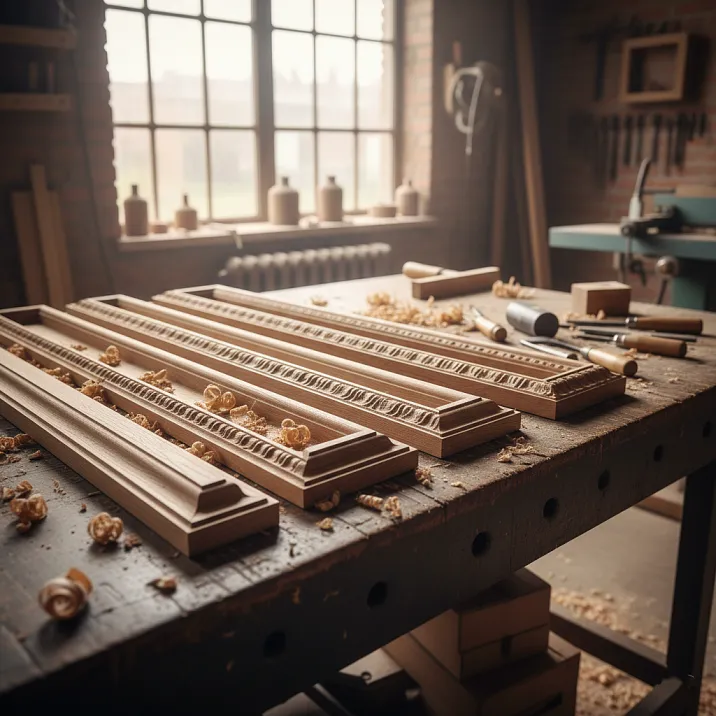
Is there any more refined and sophisticated decorative element in the world than the classic beaded molding? Can modernBatten trimtransform an ordinary room into a true masterpiece of architectural art? Absolutely! Beaded molding is not just a decorative element, it is the philosophy of beauty embodied in wood, the language spoken by elite interior design.
In the era of mass production and standardized solutions, beaded molding remains a bastion of individuality and authentic craftsmanship. Every profile, every line, every curve is the result of centuries-old carpentry traditions adapted to modern technologies and aesthetic requirements. When it comes to creating a truly luxurious interior,Trimming Itemsbeaded molding becomes indispensable elements of composition.
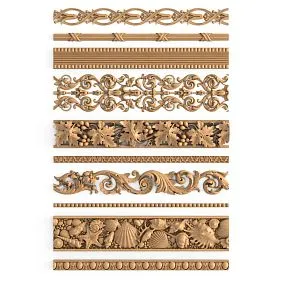



Evolution of the molding art: from royal palaces to modern homes
The history of molding traces back to the Renaissance, when master craftsmen created exquisite frames for artworks in royal palaces and aristocratic mansions. What motivated royalty to spend entire fortunes on decorative elements? The answer is simple: understanding that it is precisely the details that create the atmosphere of grandeur and luxury.
Modern molding inherits these traditions but adapts them to the needs of today. If in the past molding was a privilege of the chosen few, today quality %s molding is accessible to anyone who appreciates authentic beauty and is willing to invest in durable solutions.Wooden moldingsmolding is accessible to anyone who appreciates authentic beauty and is willing to invest in durable solutions.




Philosophy of Molding Decoration
Why is molding so attractive to designers and architects? The secret lies in its versatility and ability to transform space. A properly selected profile can visually increase ceiling height, expand space, and create an illusion of luxury even in a modest-sized room.
The psychology of interior perception is such that the human eye is primarily drawn to lines and contours. Molding creates these lines, directs the gaze, and shapes the perception of space. A well-designed system of molding elements can completely change the character of a room, transforming it from an ordinary space into a work of art.
Our factory also produces:




Molding Materials: Choice for True Connoisseurs
What materials can embody the full beauty and functionality of molding decoration? Answering this question requires a deep understanding of the properties of various wood species and their behavior under different operating conditions.
Get Consultation
Oak: King of Molding Craftsmanship
Oak wood is rightfully considered the standard for manufacturing elite molding. The density of oak, reaching 750-950 kg/m³, ensures exceptional strength and longevity of products. Hardness on the Brinell scale of 3.8-4.2 units allows creating the finest decorative elements without risk of damage during use.
A unique feature of oak wood is the presence of medullary rays, which create a characteristic silver sheen on radial cuts. These natural light reflectors impartWooden triman unparalleled depth and expressiveness, especially effective in complex molding profiles.
The high tannin content in oak wood (8-12% of total mass) provides natural protection against wood-boring insects and fungal damage. Thanks to these natural preservatives, oak molding products do not require aggressive chemical treatment and maintain ecological purity throughout their service life.
Beech: Noble Alternative
Beech wood features a uniform structure and a pleasant warm tone, which is ideal for molding in classic interiors. The density of beech (650-750 kg/m³) ensures sufficient strength for creating complex profiles, and the uniformity of the structure allows achieving perfect surface smoothness during milling.
A distinctive feature of beech wood is its ability to deeply penetrate with protective compounds, further enhancing the longevity of products. The light tone of beech makes it an ideal choice for molding profiles in Scandinavian or modern minimalist interiors, where clean lines and natural materials are essential.
Ash: Strength and Beauty
Ash wood combines high mechanical strength with an expressive texture, making it an excellent material for molding. Clearly defined annual rings create a beautiful pattern, especially effective on radial cuts and in complex molding profiles.
The density of ash (650-750 kg/m³) ensures the necessary strength, and the elasticity of the wood prevents cracking under temperature fluctuations — an important property for decorative elements that may be exposed to various microclimatic conditions.
Technological Secrets of Creating Ideal Molding
How does an ordinary board become an exquisite molding profile capable of decorating the most demanding interiors?Production of trim elementsmolding profile is a complex multi-stage process where traditional craftsmanship combines with advanced technologies.
Selection and Preparation of Wood
The quality of finished molding is established already at the stage of raw material selection. For producing elite products, logs from mature trees aged at least 80-100 years are used, when the wood reaches optimal strength and aesthetic characteristics. Logs are harvested during the tree’s dormant period (late autumn — early spring), ensuring minimal moisture content and reducing the risk of cracking during subsequent drying.
Primary processing includes sawing on high-precision equipment, allowing maximum efficiency in utilizing each cubic meter of wood. Modern band sawmills with laser guidance ensure cutting accuracy down to fractions of a millimeter, which is critically important for the future quality of molding profiles.
Cabinet drying: the foundation of stability
Drying wood for molding requires special care, as any deformations or internal stresses inevitably manifest in finished products. Modern drying chambers allow precise control of temperature, humidity, and air circulation speed.
The process is divided into several stages: the first stage at 45-50°C gradually removes free moisture from cell cavities, the second stage at 55-65°C extracts bound moisture from cell walls, and the final drying at 60-70°C reduces moisture content to the optimal 8-12%.
The entire drying cycle for oak blanks for molding may take 30 to 50 days depending on material thickness and desired quality. Attempts to accelerate the process inevitably result in defects — internal stresses, warping, cracking — which are especially critical for decorative items.
Precision Profiling
Creating a molding profile is a high art requiring not only perfect equipment but also deep understanding of material properties. Modern four-sided CNC milling machines allow creating profiles of any complexity with precision down to the micron.
Special hard-metal tools are used for processing hardwoods, capable of maintaining cutting edge sharpness for extended periods. The geometry of cutting tools is individually calculated for each profile, taking into account fiber direction, wood hardness, and desired surface quality.
Equipment setup requires the highest level of technician expertise. Feed rate, cutter spindle speed, cutting angles, clamping pressure — all these parameters are individually adjusted for each profile and batch of wood. Even minor deviations from optimal settings may result in defects — surface burning, chips, unevenness, which are unacceptable for high-class decorative items.
Baseboard trim classification: variety for any style
ModernBatten trimPresented in an enormous variety of profiles, each designed to solve specific tasks in interior design. How to correctly choose a profile that perfectly fits the concept of a particular interior?
Classic baseboard profiles
Classic baseboard profiles feature complex multi-level geometry with alternating convex and concave elements. Traditional forms — ovolato, cavetto, torus, scotia — create a play of light and shadow, giving the items volume and expressiveness.
The width of classic baseboard profiles ranges from 40 to 200 mm and more, allowing for various scale effects. Narrow profiles are suitable for delicate decoration of small rooms, while wide profiles are used to create a grand atmosphere in prestigious interiors.
The relief height of classic profiles can reach 25-30 mm, ensuring expressive play of light and creating a sense of depth. Such profiles are especially effective under special lighting, when side lighting highlights each curve and creates dramatic shadows.
Modern minimalist profiles
Modern interior design trends require more concise solutions. Minimalist baseboard profiles feature simple geometry — rectangular, trapezoidal, with one or two rounded edges or beveled edges.
Such profiles are suitable for modern interiors in high-tech, loft, Scandinavian minimalism styles. The absence of complex relief is compensated by material quality and precision manufacturing. Every line must be perfectly straight, every angle precisely set, every surface flawlessly smooth.
Exclusive custom profiles
Exclusive custom profiles are created for the most demanding clients based on individual sketches. Such items are true works of art, where every element is thoughtfully designed and executed with maximum craftsmanship.
Creating a custom profile is a lengthy process including sketch development, template creation, manufacturing of special tools, and equipment setup. The cost of such items is significantly higher than standard ones, but the result is worth it — a unique interior element that no one else has.
Applications of baseboard trim in modern interiors
Where and how is baseboard trim used in modern interior design? The possibilities are limited only by the designer’s imagination and the material’s technical characteristics.
Ceiling decoration
Ceiling baseboards — a classic application of baseboard trim. A properly selected profile creates a smooth transition between wall and ceiling, visually completing the room’s composition. In classic interiors, wide baseboards with complex relief are used, while in modern interiors — more minimalist profiles.
Installing ceiling baseboards requires special precision, as any irregularities in the ceiling or walls will be noticeable. High-quality items allow compensation for minor surface defects, but significant deviations require preliminary leveling.
Wall decoration
Wooden plankBaseboard-type trim is used to create decorative wall panels. Various profile arrangements allow creating geometric patterns, imitating classic boiserie, or dividing walls into functional zones.
Wall baseboard compositions are especially effective when combined with decorative painting or wallpaper. The contrast between the baseboard color and the main surface creates an expressive play, highlighting the architectural features of the room.
Framing door and window openings
Baseboard-type trimCasingsBaseboard-type trim transforms ordinary openings into architectural accents. Complex multi-level profiles create an illusion of depth, visually enlarge the openings, and give them a grand, prestigious appearance.
The choice of door and window casing profiles should match the overall interior style and room scale. In small rooms, delicate profiles are appropriate, while spacious halls benefit from more imposing baseboard compositions.
Furniture decor
Baseboard trim is widely used in furniture manufacturing for decorating facades, creating cornices, and finishing countertops.Furniture corniceBaseboard-type trim gives furniture a finished, professional look.
Combining different baseboard profiles allows creating complex decorative compositions on furniture facades. This approach is especially popular in classic furniture, where rich decoration highlights the owner’s status and prestige.
Finishing technologies for baseboard trim
The final finish of baseboard trim determines not only the appearance but also the durability of the items. What modern technologies allow maximizing the beauty of wood and ensuring reliable protection?
Natural oil finishes
Oil finishes deeply penetrate the wood structure, highlighting its natural texture and creating a pleasant-to-touch surface. For crown molding, it is especially important to preserve the wood's ability to 'breathe,' regulating indoor air humidity.
Different types of oils allow achieving various aesthetic effects. Linseed oil creates a natural matte sheen, tung oil provides additional water resistance, and nut oil imparts a warm golden hue to the wood. Wax finishes create a soft, noble sheen and additional surface protection.
Coating Systems
Modern coating systems provide maximum protection of the surface against mechanical impacts, moisture, and ultraviolet radiation. Polyurethane coatings create especially durable finishes capable of withstanding intensive use.
For crown molding, it is important to choose coatings with good optical properties that do not alter the natural color of the wood. Matte finishes preserve the material's natural appearance, satin finishes create a delicate sheen, and glossy finishes emphasize the beauty of the texture to the maximum extent.
Water-based acrylic coatings are distinguished by their ecological safety and lack of odor, which is especially important for interior products. Rapid drying allows accelerating the production cycle and reducing product cost.
Staining and Patination
Stains allow changing the color of the wood while preserving its natural texture. This opens up wide possibilities for creating crown molding profiles in various color solutions. Light wood can be darkened to walnut or wenge, while dark wood can be lightened for a Scandinavian style.
Patination creates an effect of natural aging, giving crown molding items an antique appearance. Different patination techniques — dry brush, sponge, cloth — allow achieving various decorative effects. Gold and silvering of individual elements create a luxurious, palace-like effect.
Installing Crown Molding: The Art of Perfect Installation
The quality of installation largely determines the final result. Even the most perfect crown molding can be ruined by improper installation. What installation features must be considered?
Preparation Work
The accuracy of the room's geometry is critically important for quality crown molding installation. Deviations from horizontal and vertical alignment exceeding 2-3 mm per linear meter are unacceptable. If necessary, surfaces are leveled using plaster compounds or drywall structures.
The room's humidity must correspond to operational parameters. Installing crown molding in high-humidity environments (above 65%) may cause deformation of the items. Material acclimatization under installation conditions must last at least 48-72 hours.
Fastening Technology
The method of fastening depends on the type of crown molding profile and the base material. Lightweight profiles can be mounted with adhesive, while heavier ones require additional mechanical fastening. Using stainless steel fasteners prevents corrosion and staining of the wood.
Jointing elements — the most critical operation during crown molding installation. Corner joints are made with precise 45-degree bevel cuts using specialized bevel saws. The quality of joints determines the overall impression of the completed work.
Final finishing
After installation, joints are finished. Minor gaps are filled with wood-colored compounds, followed by local sanding and touch-up painting. Well-executed joints should be practically invisible.
The final stage — protective surface treatment. Even if crown molding is supplied with factory finish, areas of cuts and joints require additional protection. Using coatings matching in color and type ensures a uniform appearance of the entire composition.
Modern Trends in Crown Molding Design
How is crown molding design evolving in line with modern trends? What new directions are shaping the future of the industry?
Minimalism and clean lines
Modern interiors lean toward minimalism, which is reflected in crown molding design as well. Complex multi-level profiles are giving way to simple geometric forms. Emphasis is placed on material quality and precision of execution, rather than ornate decoration.
Minimalist crown molding profiles highlight the natural beauty of wood, allowing the material to 'speak' for itself. This approach requires flawless raw material quality and the highest level of craftsmanship, since any defects will be noticeable.
Combining materials
Modern design actively combines various materials within a single product. Wooden crown molding profiles are complemented by metal inserts, glass elements, and stone. Such compositions create unique visual effects and emphasize the individuality of the interior.
Technically combined profiles are more complex to manufacture, requiring specialized equipment and highly skilled personnel. However, the result justifies the cost — unique items that cannot be mass-produced.
Ecological trends
Growing consumer environmental awareness stimulates the development of 'green' technologies in crown molding production. Using wood from sustainably managed forests, applying eco-friendly finishing materials, and minimizing production waste — all of these are becoming industry standards.
FSC (Forest Stewardship Council) certification is becoming a mandatory requirement for serious manufacturers. Consumers are willing to pay a premium for eco-friendly products, which encourages the adoption of new technologies.
Quality Control and Standards
What criteria determine the quality of crown molding? Modern quality control systems ensure the stability of product characteristics at all production stages.
Geometric Parameters
Dimensional accuracy is the fundamental indicator of crown molding quality. Deviations in profile cross-section should not exceed ±0.2 mm for premium products. Straightness is controlled on special stands with precision up to 0.5 mm per linear meter.
Profile quality is assessed by surface cleanliness, absence of processing marks, and accuracy of reproducing the specified profile. Modern measurement systems allow controlling the profile with precision down to the micron, ensuring ideal quality of finished products.
Moisture and stability
The moisture content of finished products must correspond to operational conditions and be 8-12%. Exceeding this value may lead to deformation after installation. Moisture is controlled using electronic hygrometers at multiple points on each item.
Dimensional stability is checked by conditioning samples under various climatic conditions. Quality products must maintain geometry when air humidity changes from 40% to 70% and temperature from 18°C to 25°C.
Visual inspection includes assessment of color, texture, and surface finish quality. Stains, scratches, chips, and uneven coating are not permitted. Color must be uniform along the entire length of the item; only natural wood texture variations are allowed.
Finish quality is checked under various lighting angles. Glossy finishes must not have matte areas, and matte finishes must not have glossy spots. Coating thickness is measured with special instruments and must meet technical specifications.
The finish quality is checked under various lighting angles. Glossy finishes must not have matte areas, and matte finishes must not have shiny spots. The coating thickness is measured by special instruments and must meet technical requirements.
Economic Aspects of Choosing Bагет Trim
How to properly evaluate the economic efficiency of investments in quality bагет trim? Cost analysis must consider not only initial costs but also long-term benefits.
Material comparison analysis
Bагет trim made of natural wood has a higher initial cost compared to composite materials, but its durability is measured in decades. The service life of quality wooden items can reach 50-100 years with proper care.
Composite materials (MDF, polyurethane) are cheaper but have limited service life and lack the prestige of natural wood. Additionally, they cannot create the unique atmosphere of warmth and coziness that natural wood provides.
Impact on property value
Quality bагет trim made of natural wood significantly increases property value. According to experts, professionally executed decoration can increase the property value by 10-20%. In the luxury real estate segment, this figure may be even higher.
The prestige of natural materials is growing each year, making investments in quality bагет decoration especially attractive. The possibility of disassembly and reuse adds flexibility during room renovations.
Care and Maintenance of Bагет Trim
Proper care of bагет trim ensures preservation of its appearance and functional properties throughout its service life. Different materials and finishes require specific maintenance approaches.
Regular Maintenance
Daily care involves removing dust with a soft dry cloth or special brush. Complex bагет profiles with deep relief require more thorough cleaning, as dust can accumulate in recesses.
Wet cleaning is performed with a well-wrung cloth using minimal water. Abrasive materials are not allowed, as they may damage the protective coating. Special wood care products help maintain the original finish appearance.
Periodic maintenance
Oil-based finishes require periodic renewal every 2-3 years depending on usage intensity. The procedure includes light sanding with fine-grit abrasive and applying a new layer of oil.
Lacquered surfaces are more durable and require renewal every 5-7 years. In case of serious damage, complete recoating with prior sanding down to the wood may be required.
Repair of damage
Minor scratches and chips can be repaired using special restorative compounds. Wax pencils of appropriate color mask small defects, and retouching lacquers restore the gloss of the finish in damaged areas.
Serious damage requires specialist intervention. Local restoration may include replacing damaged sections, which requires high skill to ensure the repair is not noticeable.
Choosing a Bагет Trim Supplier
What should be considered when choosing a bагет trim manufacturer? The right supplier choice is the key to project success and long-term satisfaction with the products.
Reputation and experience
Long-standing market experience indicates company stability and product quality. Positive customer reviews, participation in prestigious projects, awards, and certifications are indicators of supplier reliability.
Having an in-house production facility ensures quality control at all stages and stable product characteristics. Companies operating solely as intermediaries cannot guarantee consistent quality or delivery timelines.
Technical support
Qualified technical support is especially important when working on non-standard projects. Specialists should assist in selecting optimal solutions, provide detailed drawings, and offer recommendations for installation and operation.
The ability to manufacture items according to custom drawings expands the creative possibilities of designers and architects. Having an in-house design office and the ability to create prototype samples are significant advantages.
Logistics and service
Modern logistics systems ensure timely delivery of products in perfect condition. Specialized climate-controlled transport prevents damage during transit.
Comprehensive services including design, production, delivery, and installation simplify project implementation and reduce risks. Warranty and post-warranty service indicate the manufacturer's responsibility.
Market Outlook for Bагет Trim
What trends are shaping the future of the bагет trim market? Understanding industry development prospects will help make correct investment decisions.
Technological Innovations
The adoption of new wood processing technologies opens opportunities for creating products with improved characteristics. Thermal modification, special impregnations, and nanocoatings expand the application areas of bагет trim.
3D printing of composite material parts allows creating complex decorative elements impossible to produce using traditional methods. Combining printed and traditional elements opens new design possibilities.
Personalization and customization
Growing demand for unique interior solutions stimulates the development of mass customization technologies. Digital design allows creating individual profiles for each customer while maintaining economic efficiency of production.
Virtual reality allows the client to "see" the result even before production begins. This reduces risks and increases customer satisfaction with the final outcome.
Ecological Requirements
Increasing ecological requirements stimulate the development of new "green" technologies. Using renewable energy sources, waste-free technologies, and waste recycling become competitive advantages.
Consumers increasingly value manufacturers' ecological responsibility and are willing to pay a premium for eco-friendly products. This creates incentives for investing in new technologies and equipment.
Frequently asked questions
Question: What is the difference between a molding profile and a standard one?
Answer: A molding profile differs with a complex multi-level profile featuring alternating convex and concave elements, creating a play of light and shadow. A standard profile has a simpler geometry. Molding profiles require more sophisticated manufacturing equipment and higher-skilled personnel, which affects the cost of the products.
Question: Which wood is best suited for molding profiles?
Answer: For premium molding profiles, oak is the best choice due to its exceptional strength, beautiful texture, and durability. Beech offers excellent quality at a more affordable price. Ash combines strength with an expressive texture. The choice depends on the project budget, stylistic preferences, and usage conditions.
Question: How long does it take to manufacture custom molding profiles?
Answer: Manufacturing time depends on the profile complexity, wood species, and order volume. Standard profiles from stock can be shipped within 1-3 days. Manufacturing complex custom profiles may take 2-3 weeks to several months. Additional time is required for special finishing and non-standard sizes.
Question: Can molding profiles be used in humid rooms?
Answer: High-quality oak molding profiles with appropriate protective treatment can be used in rooms with increased humidity. It is important to choose moisture-resistant coatings and ensure good ventilation. For bathrooms and saunas, additional protective treatment with special compounds is recommended.
Question: How to properly care for molding profiles?
Answer: Regular care includes dusting with a soft cloth, especially carefully in the profile's relief areas. Wet cleaning is done with a well-wrung cloth. Oil-based finishes require renewal every 2-3 years, varnished finishes every 5-7 years. Using specialized wood care products helps maintain the original appearance of the items.
Question: Does installing high-quality molding profiles affect property value?
Answer: High-quality molding decoration significantly increases property value, especially in the premium segment. Buyers are willing to pay extra for quality finishing, understanding its value and longevity. Professionally executed molding decoration can increase property value by 10-20%, fully justifying investments in quality materials.
Conclusion
Batten trimIt represents a unique combination of artistic craftsmanship and technical perfection, where every line and curve is created with flawless precision and deep understanding of aesthetic principles. In the world of mass production and standardized solutions, molding profiles remain an island of true art, where traditional craftsmanship combines with modern technologies.
Choosing high-quality molding profiles for your home or office, the buyer invests not just in decorative elements, but in an atmosphere of elegance and nobility that will delight for many years. Natural wood, processed by master craftsmen, carries the warmth and energy of living material, creating a special aura of comfort and coziness.
Modern interior design trends increasingly favor natural materials and individual solutions. In this context, molding profiles made of quality wood become not just a fashionable trend, but a philosophy of life for people who value authentic beauty and are willing to invest in long-lasting solutions.
The company STAVROS presents a benchmark of quality in the production of molding profiles on the Russian market, combining long-standing carpentry craftsmanship traditions with modern technologies and innovative solutions. Every product leaving STAVROS production facilities undergoes strict quality control and meets the highest international standards.
Investing in high-quality molding profiles from STAVROS is a choice made by people who understand the true value of craftsmanship, durability, and beauty. In an era of rapid changes and temporary solutions, such a choice becomes a statement of enduring values passed down from generation to generation, creating a legacy of beauty and quality for future generations.