Article Contents:
- Engineering of beauty: scientific foundations for creating the ideal base
- Materials science as the basis of durability
- Technological innovations in wood processing
- Constructive solutions: variety of forms and functions
- Central support: elegance and functionality
- Four-legged classic: proven century-old reliability
- Base with braces: monumental reliability
- Bio-tech: Organic forms of the future
- Baroque: triumph of ornamentation
- Classicism: harmony of proportions
- Modern: natural forms in interior
- Minimalism: beauty of simplicity
- Manufacturing technologies: From traditions to innovations
- Cabinet drying: basis of stability
- Precision processing
- Carpentry joints: art of eternal connections
- Ergonomic principles: science of comfort
- Anthropometric foundations of design
- Psychology of space perception
- Technical specifications and quality standards
- Strength parameters
- Quality Control
- Installation and Setup: Professional Approach
- Preparatory work
- Assembly sequence
- Adjustment and setup
- Care and Maintenance: Secrets of Longevity
- Daily care
- Periodic maintenance
- Restoration and repair
- Economic aspects: investment in quality
- Analysis of total cost of ownership
- Impact on property value
- Trends in development: looking into the future
- Ecological priorities
- Technological Innovations
- Personalization and customization
- Base as a work of art
- Philosophy of handcrafting
- Transmission of craftsmanship
- Psychological aspects of furniture selection
- Emotional attachment
- Status component

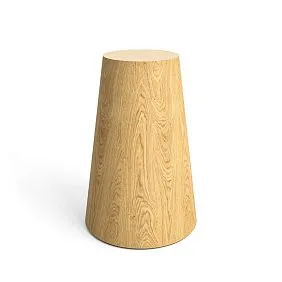
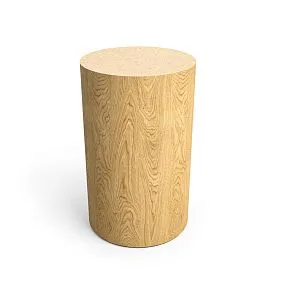
Have you ever wondered why one table becomes the center of attention for the whole family, while another remains merely a functional item? The secret lies in that invisible element at first glance, which determines the character of the entire structure. table base under the table It is not just a support system, but the soul of furniture, its architectural foundation, which transforms ordinary boards into a work of art.
In the era of mass production, when the market is flooded with faceless items made of composite materials, a quality base made of solid natural wood becomes a rare treasure. It carries the warmth of living wood, the craftsmanship of human hands, and the philosophy of true quality, measured not in years, but in generations.
Every touch on a properly made base tells a story — of the slow growth of the tree, of the craftsman’s patient work, of traditions passed down from father to son. It is an investment in beauty that does not depreciate over time, but only acquires a noble patina of age.


Engineering of beauty: scientific foundations for creating the ideal base




Materials science as the basis of durability
Creating a quality base begins with a deep understanding of wood properties. Each species has unique characteristics that determine its application area and processing methods.
Oak is an indisputable leader among furniture materials. Its density reaches 850 kg/m³, providing phenomenal compressive strength — up to 64 MPa. High tannin content (up to 8%) creates natural protection against pests and fungal damage. An oak base can withstand a load of up to 500 kg per square meter without signs of deformation.
Ash demonstrates an ideal combination of strength and elasticity. With a density of 720 kg/m³, it has high toughness, making it resistant to impact loads. Light-colored wood with contrasting annual rings creates unique decorative effects.
American walnut — material for true connoisseurs. Its dimensional stability under humidity changes (shrinkage coefficient of only 12-13%) guarantees preservation of the item’s geometry for decades. Rich color palette ranging from golden-brown to deep chocolate tones allows creating unique pieces of furniture art.
Our factory also produces:


Technological innovations in wood processing
Modern furniture frame production uses revolutionary technologies that significantly enhance the properties of natural wood.
Thermo-modification — a wood processing process at 160-240°C in a steam environment. This leads to structural changes at the molecular level:
- Reduction of hygroscopicity by 50-70%
- Increase in biostability by 15-25 times
- Increase in dimensional stability by 3-5 times
- Acquisition of noble dark tone
Impregnation with special compounds increases surface hardness and resistance to abrasion. Polymer stains penetrate into the wood structure to a depth of 5-8 mm, creating a protective barrier.
Get Consultation
Structural solutions: variety of forms and functions
Central support: elegance and functionality
Base with central leg — embodiment of engineering elegance. A single massive support ensures maximum freedom of chair placement and creates a sense of lightness for the entire structure.
Key advantages of central support:
- Maximum legroom
- Ability to place any number of chairs
- Visual lightness of the structure
- Ease of cleaning under the table
- Material savings
Technical requirements for the central leg are strict: the diameter must be at least 15-20 cm for tables up to 120 cm in diameter. The base is made in the form of a cross or disc with a minimum span of 60-70 cm to ensure stability.
Four-legged classic: proven century-old reliability
Traditional four-legged scheme remains the most popular due to optimal load distribution and universal application. Properly designed four-legged table base under the table ensures exceptional stability under any operating conditions.
Optimal leg placement is calculated by the formula: the distance from the edge of the tabletop to the leg axis should be 15-18% of the table’s total length. This ensures an ideal balance between stability and chair placement convenience.
Base with legs: monumental reliability
A-shaped legs connected by a horizontal beam create a structure of exceptional rigidity. Triangular leg geometry combined with longitudinal bracing forms a spatial truss capable of withstanding colossal loads.
Base with legs is ideal for large tables up to 200 cm in length. The massive construction requires proportional increase in tabletop thickness to 40-50 mm.
Stylistic Directions: From Classic to Avant-Garde
Baroque: triumph of decoration
Baroque-style bases transform the table into a true altar of luxury. Complex curved forms, abundance of carved elements, gilding, and patina create an atmosphere of palace grandeur.
Characteristic elements:
- S-shaped legs
- Carved floral ornaments
- Gilded details
- Marble or mosaic inlays
- Asymmetric decorative elements
Neoclassicism: harmony of proportions
Strict canons of neoclassicism require flawless adherence to proportions. Each element conforms to the laws of the golden ratio and classical orders. The simplicity of forms is compensated by noble materials and impeccable craftsmanship.
Basic principles:
- Symmetry and proportionality
- Use of architectural elements (fluting, capitals)
- Subdued color palette
- High-quality joinery
- Functionality of each element
Modern: natural forms in interior
The modern style draws inspiration from natural forms. Smooth lines mimicking plant curves create a sense of organic authenticity. Modern-style bases are often adorned with stylized depictions of flowers, leaves, and insects.
Minimalism: the beauty of simplicity
Minimalist bases are characterized by extreme simplicity of form. The absence of ornamentation is compensated by high-quality materials and flawless surface finishing. Every line is precisely calibrated, and every proportion is mathematically exact.
Production Technologies: From Tradition to Innovation
Cabinet drying: the foundation of stability
The quality of wood is established during the proper drying stage. In modern vacuum chambers, the process occurs under strictly controlled parameters:
- Temperature: 45-65°C
- Air humidity: 40-85% (variable)
- Pressure: 0.1-0.8 atm
- Air circulation speed: 2-4 m/s
Drying duration depends on wood species and material thickness: from 2 weeks for softwoods to 2 months for oak over 50 mm thick. Final moisture content should be 6-8% for furniture production.
Precision Processing
Modern CNC machining centers ensure manufacturing accuracy of ±0.05 mm. Multi-spindle heads allow complex milling in a single pass, eliminating repositioning errors.
Processing sequence:
- Cut blanks with 5-10 mm allowance
- Jointing and resawing
- Rough mechanical processing
- Intermediate stabilization (48-72 hours)
- Final processing to exact dimensions
- Multi-stage grinding (grit from 120 to 400)
Joinery: the art of eternal connections
Traditional joinery provides strength unattainable with modern fasteners. A properly executed "birdsmouth" joint withstands tensile loads up to 800 kg/cm².
Dowel joints create mechanical interlocking of parts. The dowel dimensions are calculated based on load: length is 0.8–1.2 times the thickness of the part, width — 0.4–0.6.
Insert dowel joints are used for elements subjected to bending. Oak or beech dowels are glued into pre-drilled holes.
Ergonomic principles: the science of comfort
Anthropometric foundations of design
Table dimensions must correspond to human physiological features. Standard height of 750–760 mm is optimal for people 165–175 cm tall. For other heights, use the formula: table height = height × 0.43 + 30 cm.
Working surface dimensions per person:
- Width: 60–70 cm
- Depth: 40–45 cm
- Leg space (width): 50–60 cm
- Leg space (depth): 35–40 cm
Psychology of space perception
Shape and proportions Table base Exert subconscious influence on interior perception. Massive constructions create a sense of stability and reliability, while elegant ones — lightness and elegance.
Color scheme also plays an important role:
- Light tones visually enlarge space
- Dark shades add solidity
- Contrasting combinations create dynamism
- Monochromatic solutions ensure harmony
Technical Specifications and Quality Standards
Strength parameters
A quality table base must meet strict technical requirements:
|
Parameter |
Minimum value |
Premium class |
|
Load on tabletop (uniformly distributed) |
150 kg/m² |
300 kg/m² |
|
Concentrated load at center |
75 kg |
150 kg |
|
Side Load (Overturning) |
50 kg |
100 kg |
|
Number of Loading Cycles |
50 000 |
100 000 |
Quality control
Each item undergoes multi-stage inspection:
- Incoming raw material inspection (moisture, density, defects)
- Operational inspection (dimensions, geometry, processing quality)
- Acceptance inspection (strength, appearance, completeness)
- Durability tests (cyclic loads)
Installation and mounting: professional approach
Preparation Work
Correct installation begins with preparing the placement site. The floor must be level (deviations no more than 2 mm per meter), dry, and clean. Adjustable supports or shims are used when installing on uneven surfaces.
Assembly Sequence
- Completeness check — all parts and fasteners must conform to specifications
- Pre-assembly — installation without final tightening to check geometry
- Diagonal check — diagonal difference should not exceed 3 mm
- Final assembly — tightening all connections with controlled torque
- Final inspection — check stability and absence of play
Adjustment and setup
After assembly, final adjustment is performed:
- Leveling (deviations no more than 1 mm per meter)
- Stability check under various loads
- Smooth operation check of moving parts
- Adjustment of transformation mechanisms (if applicable)
Care and Maintenance: Secrets of Longevity
Daily Care
Proper care ensures preservation of beauty and functionality for decades:
- Dust removal using soft dry cloth
- Immediate cleaning of spilled liquids
- Use of stands under hot items
- Avoiding direct sunlight exposure
Periodic maintenance
Every six months it is recommended to:
- Check tightness of all connections
- Update protective coating (oils, waxes)
- Mobile Mechanism Status Control
- Preventive Anti-Static Treatment
Minor damage to oak balusters can be repaired yourself using special wax pencils or wood putty. It is important to select the material to match the wood tone precisely for an undetectable repair.
Do not rush to part with quality furniture when damage appears. Most defects can be professionally restored:
- Scratch and Chip Removal
- Finish Restoration
- Replacement of Damaged Components
- Hardware Modernization
Economic Aspects: Investment in Quality
Total Cost of Ownership Analysis
When choosing a base, it is important to consider not only the initial cost but also the expenses over the entire service life:
Premium Solid Wood Base:
- Initial Cost: High
- Service Life: 50-100 years
- Maintenance Costs: Minimal
- Residual Value: 60-80% of initial
Budget Alternative:
- Initial Cost: Low
- Service Life: 5-10 years
- Replacement Costs: Every 5-10 years
- Residual Value: Essentially Zero
Impact on property value
Quality solid wood furniture significantly enhances interior appeal and property value. According to real estate agents, professionally equipped housing sells 15-20% higher than comparable properties with standard furniture.
Trends in development: looking toward the future
Environmental Priorities
Rising consumer environmental awareness stimulates the development of sustainable technologies:
- Use of Certified Wood (FSC, PEFC)
- Use of Eco-Friendly Glues and Finishes
- Development of Waste Recycling Technologies
- Reduction of Production Energy Consumption
Technological Innovations
Integration of Modern Technologies Opens New Possibilities:
- Smart Furniture with Built-in Sensors and Control Systems
- 3D Printing of Complex Decorative Elements
- Laser Processing for Creating Unique Textures
- Self-cleaning nanocoatings
Personalization and Customization
Modern consumers demand a personalized approach:
- Online configurators for self-design
- Custom-made sizes
- Wide range of decorative options
- Integration of original design solutions
Base as a work of art
Philosophy of handcrafting
In an era of mass automation, the craftsman's handwork acquires special value. Every movement of the chisel, every touch of the plane leaves an invisible mark of the creator's soul. furniture framescreated by the hands of an experienced carpenter, possess a unique energy that cannot be reproduced by machine.
Transmission of craftsmanship
Carpentry traditions are passed down from teacher to student for centuries. This continuity is the secret of true mastery — understanding the material not only with the mind, but also with the heart, the ability to feel wood, to reveal its hidden beauty.
Psychological aspects of furniture selection
Emotional attachment
Quality furniture creates an emotional connection with the owner. Around a solid table made of natural wood, families gather, important conversations take place, and life-altering decisions are made. The base becomes a witness to family history, a keeper of memories.
Status component
Choosing luxury furniture is a way of self-expression, a demonstration of taste and wealth. table base under the table made from premium wood species highlights the owner's status, their commitment to quality and tradition.
In today's world, where technology changes at kaleidoscopic speed, quality solid wood bases remain a constant — a symbol of stability, reliability, and enduring beauty. This is an investment not only in furniture, but in the quality of life, in the atmosphere of the home, in family traditions.
Choosing a base means choosing a companion for many years. May this choice be thoughtful, based on understanding of quality and beauty. May your home be filled with the warmth of natural wood and the craftsmanship of human hands.
Every morning, sitting at the table, you will touch a living history — the history of the tree that grew in the forest, the history of the craftsman who poured his soul into his creation, the history of traditions living in every detail. This is true luxury — luxury of quality, beauty, and time.
For many years, the company STAVROS has brought to life dreams of perfect furniture, creating bases that become family heirlooms. STAVROS masters understand that each piece carries responsibility to future generations — it must serve faithfully, delight the eye, and warm the soul. Using only premium wood and time-tested technologies, STAVROS creates not just furniture, but works of applied art. Choosing STAVROS means choosing quality that knows no compromises, beauty that defies time, and reliability that will become the foundation of your home for decades.