Article Contents:
- Mystique of solid wood: why natural wood is unmatched
- Living energy of wood fibers
- Technical superiority of natural solid wood
- Species aristocrats: choice for true connoisseurs
- Oak — king of the forest realm
- Ash — northern elegance
- Walnut — aristocratic luxury
- Beech — embodiment of stability
- Processing technologies: from rough cut to work of art
- Raw material selection: first step toward perfection
- Drying: the art of moisture control
- Mechanical processing: precision serving beauty
- Structural solutions: architecture of reliability
- Central support: elegance of minimalism
- Four-legged classic: time-tested
- Base with braces: strength and solidity
- Carpentry Joints: The Art of Invisible Strength
- Dowel joints: traditions of craftsmanship
- Glue joints: modern reliability
- Combined methods: best of two worlds
- Surface finishing: protection and beauty in unity
- Oil treatment: breath of living wood
- Lacquering: long-lasting protection
- Wax finish: aristocratic elegance
- Bio-tech: Organic forms of the future
- Classic style: eternal values
- Country style: rustic charm
- Modern minimalism: beauty of simplicity
- Eco-Style: Harmony with Nature
- Ergonomic principles: science of comfort
- Anthropometric standards
- Humidity parameters
- Quality Control: Guarantee of Perfection
- Multi-stage inspection
- Quality standards
- Installation and Setup: Professional Approach
- Preparation for Assembly
- Assembly sequence
- Final Adjustment
- Maintenance and servicing: preserving beauty
- Daily care
- Periodic maintenance
- Restoration and renovation
- Economic aspects: investment in the future
- Cost of Ownership Analysis
- Impact on interior cost
- Antique Value
- Trends in development: looking into the future
- Ecological priorities
- Technological Innovations
- Product Personalization
- Professional selection: quality criteria
- What to Pay Attention to When Buying
- Certification and documentation
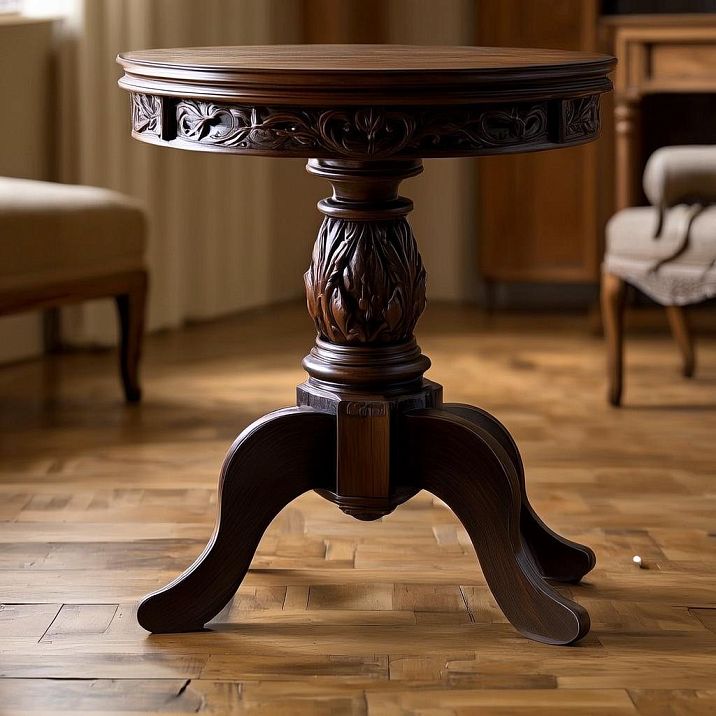
Luxury begins with details — with those subtle elements that define the character and longevity of furniture. made in the same manner. For protection and maintenance, use natural oils and waxes. It is not merely a supporting structure, but a philosophy of quality embodied in noble wood. In an era of mass production and synthetic materials, natural wood remains a symbol of authenticity, warmth, and enduring beauty.
Have you ever wondered what makes one table a work of art, while another is merely a mundane piece of furniture? The secret lies in the quality of the base, in how the craftsman works with living material, respecting its structure and highlighting its natural perfection. Modern solid wood base is the result of centuries of experience combined with advanced processing technologies.


Mystique of Solid Wood: Why Natural Wood is Unmatched




The living energy of wooden fibers
Each tree is a unique story recorded in its annual rings. When a craftsman takes a slab from a solid wood block, he reads this story: dry years left thin rings, fertile seasons — wide growth bands. It is precisely this individuality that makes each pedestal unique.
Solid wood possesses an amazing property — it continues to live even after being transformed into furniture. Wood breathes, reacts to changes in humidity and temperature, and over time acquires a noble patina. Artificial materials lack this magic of living material.
Our factory also produces:


Technical superiority of solid wood
The strength characteristics of quality solid wood are astonishing. An oak pedestal can withstand a load of up to 500 kilograms per square meter while maintaining its perfect geometry. The density of elite species reaches 900 kg/m³ — comparable to some metals!
Unique properties of solid wood:
- Natural antibacterial protection due to resins and tannins
- Ability to self-repair minor damage
- Excellent thermal insulation — solid wood always feels warm to the touch
- Sound-absorbing properties creating acoustic comfort
- Ability to be restored multiple times without loss of quality
Get Consultation
Royal species: choice for true connoisseurs
Oak — king of the forest kingdom
Solid oak is a quality standard tested over centuries. Roman ships, medieval cathedrals, Russian imperial palaces — everywhere where maximum strength and durability were required, oak was used.
Modern oak pedestals inherit all the merits of this legendary species:
- Density of 650-900 kg/m³ ensures incredible strength
- High tannin content protects against biological damage
- Distinctive texture creates unique decorative effects
- Ability to undergo multiple treatments and restorations
- Improved appearance over time
Ash — northern elegance
Light-colored beech wood embodies the purity of northern forests. The contrasting texture with clear annual rings creates visual dynamics, making each made in the same manner. For protection and maintenance, use natural oils and waxes. a piece of natural art.
Unique qualities of beech:
- Exceptional elasticity with high strength
- Minimal shrinkage — only 12-13% of volume
- Excellent machinability with all types of tools
- Resistance to cracking during drying
- Beautiful aging with acquisition of golden hue
Walnut — aristocratic luxury
American walnut — material for true aesthetes. Its rich color palette, ranging from light sapwood to deep chocolate heart, allows creating pedestals of exceptional decorative value.
Advantages of walnut solid wood:
- Noble color palette with natural transitions
- High dimensional stability under humidity changes
- Excellent polishability — from matte silk to mirror shine
- Resistance to Mechanical Damage
- Elite status among wood species
Beech — embodiment of stability
Beech veneer is valued for its uniform structure and predictable behavior. These qualities make beech ideal for complex geometric baseboards.
Technical advantages of beech:
- High density — 650-750 kg/m³
- Uniform structure without sharp density transitions
- Excellent bending capability after steaming
- Ease of processing and mechanical machining
- Availability of quality raw material
Processing technologies: from rough stock to work of art
Raw material selection: the first step toward perfection
Creating a quality baseboard begins in the forest — with selecting trees that have reached technical maturity. The age of oak for furniture production must be at least 80-100 years — only then does the wood acquire the necessary density and stability.
Criteria for selecting rough stock:
- Straight grain — fiber deviation not exceeding 3-5%
- Absence of large knots with diameter exceeding 20 mm
- Uniform density along the entire length of the trunk
- Absence of hidden defects (rot, insect damage)
- Correct geometry — minimal bowing of the trunk
Drying: the art of moisture control
Quality drying — the foundation of longevity for solid wood furniture. Modern vacuum drying chambers allow precise control of the process, preventing cracking and warping of rough stock.
Stages of technological drying:
- Initial drying — reducing moisture content from 40-60% to 20% at a temperature of 40-50°C
- Intermediate processing — equalizing moisture content across the thickness of the rough stock
- Final drying — reducing moisture content to 8-10% at a temperature of 60-70°C
- Conditioning — stabilizing internal stresses in the wood
- Controlled aging — verifying stability of achieved parameters
Mechanical processing: precision serving beauty
Modern CNC machines ensure manufacturing accuracy unattainable by hand methods. Multi-axis machining centers are capable of creating massive baseboards complex geometric shapes with deviations no more than ±0.1 mm.
Sequence of mechanical processing:
- Cutting — cutting blanks to size with a 3-5 mm allowance
- Planing — achieving precise dimensions and smooth surface
- Milling — creating profiles, grooves, decorative elements
- Polishing — step-by-step abrasive processing from P120 to P400 grit
- Fitting — individual fine-tuning of each part
Construction Solutions: Architecture of Reliability
Central support: elegance of minimalism
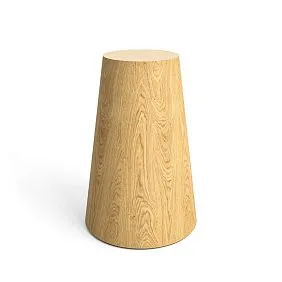
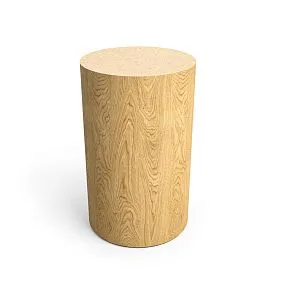
Base with central leg — for those who value spatial freedom and clean lines. A massive support made from a single piece of oak or ash can hold tabletops of any size without compromising the visual lightness of the structure.
Advantages of central support:
- Maximum freedom in chair placement
- Visual lightness of a massive tabletop
- Ease of cleaning under the table
- Universality of application
- Possibility of creating swivel mechanisms
Four-legged classic: proven over centuries
Traditional four-legged design ensures maximum stability and even load distribution. Such a construction allows creating tables of any size — from compact coffee tables to grand banquet setups.
Base with legs: strength and solidity
A-shaped legs connected by a massive beam create an impression of monumentality and reliability. Such bases are ideal for large dining tables capable of gathering large families.
Woodworking joints: the art of invisible strength
Dowel joints: traditions of craftsmanship
Classic joinery types such as "dowel-and-slot" or "birdsmouth" create mechanical interlocking of parts, ensuring strength for decades. A properly executed dowel joint holds even without glue, relying solely on precise fitting.
Types of dowel joints:
- Straight dowel — for joining parts at a right angle
- Oblique dowel — for corner joints with concealed ends
- Birdsmouth — for particularly critical joints
- Rounder — decorative joint with visible ends
- Decorative dowel — for creating decorative effects
Glue joints: modern reliability
Modern polyurethane glues create bonds stronger than wood itself. Such joints are irreversible but guarantee maximum structural reliability throughout the entire service life.
Combined methods: the best of both worlds
Combining mechanical interlocking and chemical bonding yields optimal results. A glued dowel joint withstands both static and dynamic loads, maintaining strength under any operating conditions.
Surface finishing: protection and beauty in unity
Oil finish: the breath of living wood
Natural and modified oils penetrate into the wood structure, enhancing its texture and creating a water-repellent barrier. Oil finish preserves the tactile qualities of wood — it remains warm and pleasant to the touch.
Advantages of oil finish:
- Preservation of the natural wood texture
- Ability to locally restore damage
- No film — wood continues to "breathe"
- Ecological safety of compositions
- Improved appearance over time
Lacquering: long-lasting protection
Modern polyurethane lacquers create a durable protective film resistant to mechanical damage, moisture, and chemical exposure. Contemporary formulations do not yellow over time and retain their original gloss for years.
Types of lacquer finish:
- Matte lacquers — for creating a natural surface effect
- Semi-matte — optimal combination of protection and aesthetics
- Glossy — maximum protection and decorative appeal
- Structural — for creating special effects
- Antiseptic — with bio-protective components
Wax finish: aristocratic elegance
Natural waxes impart a silk-like sheen to wood and create unique tactile sensations. Wax finishes are easy to restore and develop a noble patina over time.
Stylistic Directions: From Classic to Avant-Garde
Classic direction: timeless values
Classic solid wood pedestals are characterized by strict proportions, symmetry of forms, and use of traditional decorative elements. Grooves, capitals, carved ornaments — all of this creates an atmosphere of aristocratic luxury.
Country style: rustic charm
Pedestals in country style retain deliberate simplicity of forms and rough finish. This approach highlights the natural beauty of solid wood and creates a cozy, homey atmosphere.
Modern minimalism: beauty of simplicity
Minimalist solid wood pedestals distinguished by clean lines and absence of excessive decoration. The beauty of such items lies in perfect proportions and flawless craftsmanship.
Eco-style: Harmony with Nature
Ecological direction implies maximum preservation of natural wood forms. Pedestals may replicate natural trunk curves, retain knots and other growth characteristics.
Ergonomic principles: the science of comfort
Anthropometric standards
Table height is determined not only by aesthetic preferences but also by anthropometric characteristics of users. Standard dining table height of 75–76 cm is optimal for average-height individuals, but may be adjusted depending on specific conditions.
Formula for calculating optimal height:
- User's height × 0.43 = chair seat height
- Seat height + 290–310 mm = optimal tabletop height
Psychology of form perception
Pedestal shape subconsciously influences perception of the entire interior. Rectangular shapes create a sense of order and stability, rounded shapes — softness and coziness, unusual asymmetrical constructions stimulate creative thinking.
Quality Control: Guarantee of Perfection
Multi-stage quality check
Each solid wood pedestal undergoes comprehensive quality control at all production stages. Moisture content of wood, dimensional accuracy, surface finish quality, and joint strength are checked.
Quality Control Stages:
- Incoming Raw Material Inspection — Moisture, Defects, Dimensions Check
- Operational Control — Monitoring of Technological Parameters
- Intermediate Inspections — Quality Control After Each Operation
- Final Acceptance — Comprehensive Evaluation of the Finished Product
- Sample Testing — Testing for Durability and Strength
Quality standards
All products meet the strictest quality standards. Wood moisture does not exceed 10%, dimensional accuracy ±0.5 mm, surface quality corresponds to the highest roughness class.
Installation and mounting: professional approach
Preparation for assembly
Quality assembly begins with careful preparation of the work area and verification of delivery completeness. All parts are inspected for transportation damage and checked for dimensional accuracy.
Assembly Sequence
Correct assembly sequence ensures quality results:
- Study of the assembly drawing and instructions
- Preparation of required tools
- Pre-assembly without final tightening
- Geometry and structural stability check
- Final assembly with torque control
Final adjustment
After assembly, the structure is finely tuned. Supports are adjusted to compensate for floor irregularities, and play or wobble is checked for.
Maintenance and care: preserving beauty
Daily Care
Solid wood furniture requires careful, but not complicated, maintenance. Basic rules are simple:
- Regular dust cleaning with soft cloth
- Avoiding moisture on the surface
- Use of stands under hot items
- Protection from direct sunlight
- Maintaining stable humidity in the room
Periodic maintenance
It is recommended to perform preventive inspection and maintenance of the base once a year. The condition of the finish, strength of connections, and if necessary, tightening of fasteners are checked.
Restoration and restoration
One of the main advantages of solid wood is its restorability and restorability. Scratches, dents, and wear can be removed without replacing the entire structure. Professional restoration restores the item to its original appearance.
Economic aspects: investment in the future
Analysis of ownership cost
Solid wood base is a long-term investment. High initial cost is offset by durability and the possibility of multiple restorations. The service life of quality items is 50–100 years with proper care.
Impact on interior cost
Furniture made of natural solid wood significantly enhances the prestige of interior design and property value. This is especially important for luxury housing and prestigious spaces.
Antique value
Quality solid wood furniture may gain antique value over time. Works by renowned masters and rare pieces show steady price growth.
Trends in development: looking toward the future
Environmental Priorities
Growing consumer environmental awareness stimulates the development of sustainable forestry. FSC and PEFC certification has become a standard of quality.
Technological Innovations
New wood treatment technologies are being introduced — thermomodification, impregnation, cryo-treatment. These methods improve the performance of solid wood without losing its naturalness.
Product personalization
Modern technologies allow creating unique custom-made items. 3D modeling and CNC machines open up boundless creative possibilities.
Choosing Professionals: Quality Criteria
What to pay attention to when purchasing
When selecting a solid wood base, attention should be paid to several key factors:
- Wood species and its suitability for operating conditions
- Drying quality — moisture should not exceed 10%
- Surface treatment method and coating type
- Structural solutions and connection reliability
- Manufacturer's reputation and warranty obligations
Certification and documentation
A quality product must come with a complete set of documents:
- Certificate of conformity to quality standards
- Product passport indicating materials
- Assembly and operation manual
- Warranty card
- Certificate of wood origin
Choosing solid wood pedestals — this is a choice in favor of quality, durability, and authentic beauty. In a world where synthetic materials attempt to imitate natural wood, only solid wood offers unique sensations of warmth, comfort, and connection to nature.
Each solid wood item is unique — it carries the story of the tree, the craftsmanship of the carpenter, and love for the material. This is not just furniture, but a companion in life, a witness to family celebrations, a keeper of memories. A quality solid wood pedestal is passed down through generations, becoming a family heirloom.
In today's world, where speed often matters more than quality, choosing solid wood furniture is a demonstration of wisdom and understanding of true values. It is an investment not only in personal comfort but also in the planet's future — because quality furniture serves for decades, without contributing to landfill waste.