Article Contents:
- Philosophy of durability: why a wooden base is the foundation of quality furniture
- Material science: secrets of choosing wood for bases
- Hardwood species: rulers of longevity
- Coniferous species: economy without compromise
- Structural solutions: architecture of reliability
- Classic framed constructions
- Ergonomic T-shaped bases
- Truss constructions: traditions and reliability
- Technological aspects: from rough cut to final finishing
- Wood preparation: the first step toward perfection
- Precision processing: accuracy is the hallmark of quality
- Assembly: the art of joining
- Advantages of wooden bases: why the choice is obvious
- Ecological safety: health above all
- Repairability: savings for decades
- Aesthetic uniqueness: each item is a work of art
- Functional classification: base for every task
- Dining tables: the center of the family hearth
- Work tables: the foundation of productivity
- Coffee tables: elegance and functionality
- Stylistic directions: base as a design element
- Classic style: nobility of traditions
- Modern minimalism: beauty in simplicity
- Loft and Industrial Style: Brutality and Character
- Technical specifications: numbers defining quality
- Load-bearing capacity: boundaries of possibility
- Geometric stability: precision for years
- Moisture resistance: protection against climate whims
- Manufacturing process: from idea to finished product
- Design: birth of form
- Rough-cut operations: precision from the first cut
- Mechanical processing: forming details
- Assembly and finishing: final touches
- Protective coatings: beauty and longevity
- Oil-based coatings: the breath of wood
- Varnish systems: reliable protection
- Waxes and stains: playing with shades
- Selection criteria: how to find the perfect base
- Conformity to functional purpose
- Dimensional characteristics
- Manufacturing quality
- Operation and maintenance: extending the life of furniture
- Rules of daily care
- Protection against damage
- Restorative repair
- Trends in development: looking into the future
- Ecological requirements
- Technological Innovations
- Product customization
- Economic aspects: investment in quality
- Initial costs vs long-term savings
- Impact on interior cost
- Regional characteristics: traditions and innovations
- Russian traditions of carpentry craftsmanship
- Modern manufacturing centers
- Conclusion: choice of professionals
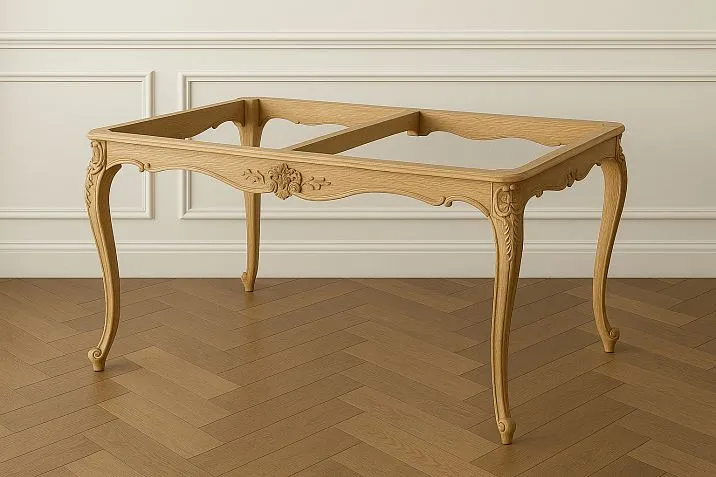
Furniture manufacturing is a symphony of precision, where each detail plays its part in the overall ensemble of functionality and beauty. A special place in this composition is held by wooden base — the hidden foundation that determines not only the stability of the entire structure, but also its longevity for decades to come.


Philosophy of Strength: Why a Wooden Base is the Foundation of Quality Furniture
In the modern world of mass production, where plastic and composite materials dominate the market, natural wood remains an unshakable symbol of reliability. Every wooden base carries the genetic memory of the tree — its ability to withstand natural catastrophes while retaining flexibility and strength.
Imagine an oak base, where the fibers hold the strength of centuries. Or a birch structure infused with the natural elasticity of northern forests. It is precisely these materials that shape the character of future furniture, determining its ability to serve not just one generation of a family.
Wooden furniture frames are not merely a technical solution. They are a philosophy of creating objects that become part of life, witnesses to important moments, companions in everyday hustle. Every cut of wood, every connection of elements — this is a small step toward creating an item that will delight with its reliability and beauty.




Wood Science: Secrets of Choosing Wood for Bases
Our factory also produces:


Hardwood Species: Kings of Longevity
Oak, beech, ash — this triad forms the foundation of premium wooden bases. Oak structures possess a unique ability to become stronger over time. Tannins contained in oak wood create a natural protection against moisture and pests, turning each base into a true fortress.
A beech base is distinguished by its uniform structure and absence of internal stresses. This feature makes it an ideal material for complex geometric bases, where precise fitting of elements is required without the risk of deformation.
Ash impresses with its flexibility while maintaining high strength. Ash bases can withstand significant dynamic loads, which is especially important for furniture that is often moved or subjected to variable impacts.
Get Consultation
Coniferous species: economical without compromise
Pine, spruce, larch — these species open up opportunities to create quality bases at a more democratic price. The resinous structure of coniferous wood provides natural antiseptic protection, extending the service life of the structure.
Larch deserves special attention due to its unique density among coniferous species. Larch bases approach hardwood analogs in strength, surpassing them in resistance to moisture.
Construction Solutions: Architecture of Reliability
Classic Frame Construction
Frame wooden base Represents a geometrically correct system of horizontal and vertical elements connected into a single rigid structure. Such architecture ensures even load distribution and maximum stability of the finished product.
The main elements of frame construction are:
- Longitudinal beams forming the main load-bearing frame
- Transverse braces ensuring geometric immutability
- Corner reinforcements increasing the rigidity of joint connections
- Central supports for large spans
Ergonomic T-shaped bases
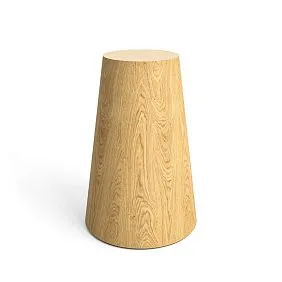
The T-shaped base configuration is a triumph of engineering thought, where minimal material ensures maximum functionality. The central post takes on the main vertical load, while the widened base guarantees the stability of the entire structure.
Such furniture bases are especially popular in modern design due to their ability to visually lighten space, creating a sense of lightness and openness.
Truss Construction: Tradition and Reliability
The truss base scheme traces its roots to traditional Russian carpentry craftsmanship. Two inclined supports connected by a horizontal beam create a triangular system with exceptional resistance to tipping.
Modern interpretations of truss bases combine the historical reliability of the construction with current design solutions, creating furniture equally suitable for classic interiors and contemporary settings.
Technological Aspects: From Rough Cut to Final Finish
Wood Preparation: The First Step Toward Perfection
The quality of the future base is established during the selection and preparation of wood. Proper drying is the foundation of longevity for any wooden item. Kiln drying at controlled temperature and humidity allows the moisture content of wood to be reduced to optimal 8-12%, eliminating the risk of subsequent deformation.
Sorting of lumber by density, grain direction, and absence of wood defects — this is a meticulous process requiring the experienced eye of a craftsman. Each piece undergoes careful visual inspection, as even a minor defect can become the cause of structural failure under load.
Precision Processing: Accuracy is the Guarantee of Quality
Modern solid wood apron production uses high-precision CNC equipment. This ensures the ideal geometry of each part, which is critical for joint strength.
Milling of tenons and slots with tolerances in fractions of a millimeter guarantees tight fitting of elements without gaps. Such precision machining ensures not only mechanical strength of the joint but also its longevity, preventing loosening during use.
Assembly: The Art of Joining
Assembling a wooden apron is a process requiring not only technical knowledge but also intuitive understanding of wood behavior. An experienced craftsman senses how each joint behaves, adjusting tightening force and operation sequence accordingly.
Modern technologies offer a wide range of connecting elements:
- Traditional tenon joints for maximum strength
- Dowel pins for quick and reliable assembly
- Wooden dowels to preserve the natural character of the structure
- Metal corner brackets for strengthening joint connections
Advantages of wooden aprons: why the choice is obvious
Ecological safety: health comes first
In the era of ecological awareness, wooden wooden base becomes a symbol of responsible consumption. Natural wood does not emit toxic substances; moreover, it can regulate indoor air humidity, creating a comfortable microclimate.
Using wooden structures is an investment in family health, especially important for children's rooms and bedrooms, where people spend most of their time.
Repairability: saving money for decades
A scratch on a plastic surface is a death sentence. Damage to a wooden apron is an opportunity for restoration. Wood readily sands, allowing surface defects to be removed and the item to be restored to its original appearance.
Local repair of individual apron elements is possible without disassembling the entire structure. Replacing a damaged part is a matter of several hours of work for an experienced craftsman, whereas repairing composite materials often requires complete replacement of the item.
Aesthetic uniqueness: each item is a work of art
The texture of natural wood is unique. Even aprons made from the same drawing will differ in grain pattern, creating uniqueness for each piece of furniture. This natural variability transforms mass production into the creation of individual items.
The possibility of staining and various finishing treatments opens up limitless design possibilities. From classic natural color to modern effects of aging or staining in unconventional shades.
Functional classification: apron for every task
Dining tables: the center of the family hearth
Dining table aprons experience special loads. Constant chair movement, placement of heavy dishes, daily cleaning — all this requires the structure to have maximum strength and resistance to wear.
The optimal height of a dining apron is 720-750 mm, ensuring comfortable seating for people of different heights. The depth of the apron's apron — the horizontal beam between legs — must also allow free leg placement for seated individuals.
Work tables: the foundation of productivity
A writing or computer desk requires the apron not only to have static strength but also to be resistant to vibrations. Typing on a keyboard, handwriting, using a printer — all these actions create micro-vibrations that must be effectively dampened by the base structure.
Ergonomics of the workspace dictates special requirements for the apron's shape. Presence of a foot cutout, possibility of placing a computer system unit, cable channels for wiring — all of this must be considered during the design phase.
Coffee tables: elegance and functionality
Low coffee tables impose special aesthetic requirements on the apron. The base becomes an important design element, often defining the style of the entire item. Here, proportions, elegance of lines, and visual lightness of the structure are crucial.
The functionality of a coffee table can be expanded through additional shelves in the apron structure, hidden drawers, or height adjustment mechanisms.
Stylistic directions: pedestal as a design element
Classic style: nobility of traditions
Classic wooden pedestal features symmetrical forms, use of traditional joinery, and rich carved elements. Precision legs, panelled aprons, elegant balusters — all of this creates an atmosphere of respectability and reliability.
For classic interiors, dark wood tones — walnut, mahogany, stained oak — are preferred. Such pedestals become central compositional elements around which the entire room’s ambiance is arranged.
Modern minimalism: beauty in simplicity
Minimalist pedestal is a triumph of functionality over decoration. Clean lines, absence of unnecessary details, emphasis on the natural beauty of the material. Such constructions fit seamlessly into modern interiors, without visually cluttering the space.
Light wood species — birch, maple, beech — create a sense of freshness and spaciousness. Matte lacquered finishes highlight the naturalness of the material, avoiding harsh reflections.
Loft and industrial style: brutality and character
Pedestals in loft style combine the rough texture of untreated wood with metallic decorative elements. Intentional carelessness in processing, contrasting material combinations, non-standard proportions — all of this creates a unique atmosphere of urban chic.
Using old beams, boards with preserved bark, combining wood with metal pipes and fittings — such solutions transform a simple pedestal into an art object.
Technical specifications: numbers defining quality
Load-bearing capacity: boundaries of possibility
Correctly designed and manufactured wooden base capable of withstanding loads significantly exceeding household requirements. A standard dining pedestal is designed to handle evenly distributed loads up to 150-200 kg, which with a large safety margin covers all possible usage scenarios.
For special applications — workbenches, industrial tables, exhibition stands — load-bearing capacity can be increased to 500-800 kg through structural reinforcement with additional elements and use of stronger wood species.
Geometric stability: precision for years
A quality pedestal retains its geometry throughout its entire service life. Permissible deviations from flatness should not exceed 2 mm per meter of length, ensuring stability of the installed countertop and eliminating any wobbling of the finished product.
Geometric control is performed at all stages of production — from cutting blanks to final assembly. Use of precise measuring tools and inspection fixtures guarantees compliance of the finished product with technical requirements.
Moisture resistance: protection against climate caprices
Wooden pedestals intended for use in residential spaces must maintain stability when humidity fluctuates between 40% and 70%. This is achieved through proper wood drying and application of quality protective coatings.
For rooms with high humidity — kitchens, bathrooms, winter gardens — special moisture-resistant impregnations and lacquer systems are used, creating a reliable barrier against moisture penetration into the wood structure.
Manufacturing process: from idea to finished product
Design: birth of form
Creating a pedestal begins with a detailed analysis of the client’s requirements and the operating conditions of the future product. An experienced designer considers not only aesthetic preferences but also functional characteristics, load-bearing capacities, and production facility capabilities.
3D modeling allows visualizing the future product, conducting virtual strength tests, optimizing material usage. Modern structural calculation programs help find the optimal balance between the pedestal’s mass and its load-bearing capacity.
Blank preparation operations: precision from the first cut
Cutting lumber is a responsible operation, the quality of which determines the accuracy of all subsequent stages. Modern format-cutting machines ensure perfectly straight edges and precise dimensions of blanks.
Accounting for wood grain direction, optimal material usage, minimizing waste — all of this requires deep knowledge of wood processing technology and extensive practical experience.
Mechanical processing: forming details
Planing, milling, drilling, sanding — each operation is performed on specialized equipment while adhering to technological regimes. Feed rate, cutting depth, tool quality — all these factors influence the final surface quality.
Special attention is paid to processing connecting elements — tenons, mortises, holes for fasteners. The accuracy of manufacturing these elements determines the strength and longevity of the entire structure.
Assembly and finishing: final touches
Pre-assembly allows checking the accuracy of manufacturing all parts, fitting connections, eliminating possible defects. After quality control, the structure is disassembled for final surface finishing.
Sanding is done in stages — from coarse to fine abrasives. Proper surface preparation is key to even application of protective-decorative coatings and their longevity.
Protective Coatings: Beauty and Durability
Oil finishes: the breath of wood
Oil impregnation is a classic method of protecting wooden surfaces, highlighting the natural beauty of the material. Oil penetrates deeply into the wood structure without forming a surface film.
Advantages of oil-based coatings:
- Preservation of Natural Wood Texture
- Possibility of Local Repair
- Ecological safety
- Pleasant tactile sensations
Drawbacks include the need for regular reapplication of the coating and limited resistance to heavy soiling.
Polyurethane Coatings: Reliable Protection
Polyurethane coatings create a strong protective film on the wood surface, providing high resistance to mechanical damage, moisture, and chemical exposure. Modern coating systems allow for various gloss levels — from deep matte to mirror gloss.
Multi-layer application with intermediate sanding ensures a perfectly smooth surface and maximum coating longevity. A quality lacquer can retain its protective properties for 10–15 years under intensive use.
Waxes and Stains: Playing with Shades
Wax coatings create an elegant matte sheen and accentuate the wood grain. Wax is easy to apply and renew, adding an extra protective layer over the base coating.
Stains allow you to change the color of wood without hiding its texture. From light tinting agents to deep-colored finishes — the range of possibilities is limited only by the designer’s imagination.
Selection Criteria: How to Find the Perfect Base
Functional Suitability
The first question a buyer should ask themselves: what is the intended purpose of the future table? A dining table requires maximum stability and an attractive appearance. A work table needs ergonomic design and space for equipment. A coffee table must harmoniously fit into the living room’s interior.
Dimensional characteristics
The proportions of the base should match the tabletop dimensions and room characteristics. An overly heavy base will visually overwhelm the space, while an excessively light one will create a sense of instability.
The height of the base is determined by the table’s functional purpose:
- Dining Tables: 720–750 mm
- Work Tables: 740–780 mm
- Bar Stools: 1050–1100 mm
- Coffee Tables: 400–450 mm
Manufacturing quality
Visual inspection can reveal much about the quality of the product. Smooth surfaces, precise joints, absence of gaps or scratches — all indicate a professional approach to manufacturing.
Special attention should be paid to the quality of the final finish. Uniformity of coating, absence of streaks or inclusions, smoothness of the surface — these details determine not only the appearance but also the longevity of the product.
Operation and Maintenance: Extending Furniture Lifespan
Daily care rules
Wooden bases require no complex maintenance, but following simple rules significantly extends their service life. Regular dry cleaning with a soft cloth removes dust and prevents the accumulation of contaminants in the wood’s texture.
Wet cleaning should be done with a well-wrung cloth using specialized wood surface cleaners. Avoid aggressive cleaning agents containing ammonia or abrasive particles.
Protection against damage
Using hot item pads, protective pads under heavy objects, avoiding impact loads — these simple precautions help preserve the base’s original appearance for many years.
Controlling climate conditions in the room is also important for preserving wooden structures. Optimal air humidity 45–55%, temperature 18–22°C — these conditions minimize wood deformation.
Restorative Repair
For minor scratches or scuffs, do not rush to contact specialists. Many damages can be fixed yourself using wax pencils, touch-up markers, or polishing pastes.
More serious damage — deep scratches, chips, stains — requires professional intervention. Local restoration allows restoring the damaged area without fully reupholstering the entire item.
Trends in development: looking toward the future
Ecological Requirements
Growing consumer environmental awareness encourages manufacturers to use wood from certified forests, apply non-toxic finishes, and minimize production waste. Wooden pedestals have become a symbol of responsible consumption and care for the environment.
Technological Innovations
Introducing modern technologies into traditional woodworking opens new possibilities. CNC machining provides previously unattainable precision in manufacturing complex parts. Laser engraving allows creating unique decorative elements.
Product customization
Mass production gives way to individualized approaches for each order. The ability to choose wood species, structural features, sizes, and finishes turns each pedestal into a unique item reflecting the tastes and needs of a specific buyer.
Economic Aspects: Investment in Quality
Initial costs vs long-term savings
A quality wooden pedestal may seem like an expensive purchase compared to cheap alternatives made of composite materials. However, an analysis of total ownership cost demonstrates the economic benefit of investing in natural wood.
Durability, restorability, and preservation of consumer properties over decades make wooden pedestals a worthwhile long-term investment.
Impact on interior cost
Quality furniture enhances the overall value of interior design, creating an atmosphere of well-being and good taste. Wooden pedestals become the foundation for forming a harmonious space around which the entire room composition is built.
Regional characteristics: traditions and innovations
Russian traditions of woodworking craftsmanship
The Russian school of woodworking art has deep historical roots. Traditional wood processing techniques, time-tested structural solutions, and use of local wood species — all of this forms a unique style of domestic furniture production.
Modern Production Centers
Large furniture manufacturers concentrate in regions with developed forestry infrastructure — the Northwest, Siberia, and the Far East. Proximity to raw material sources allows maintaining quality control at every stage of the production cycle.
Conclusion: Choosing professionals
The world of wooden pedestals is a remarkable universe, where traditional craftsmanship meets modern technologies, where every detail matters, and each item carries a piece of the creator’s soul. Choosing wooden base, you invest not only in a functional piece of furniture, but also in quality of life, harmony of home space, and family health.
In an era of disposable items and mass consumption, wooden structures remain an island of permanence, reminding us of the value of durability and quality. Each pedestal is a small monument to human craftsmanship, embodying centuries of experience working with noble materials.
STAVROS Company understands the full importance of this quality philosophy. Decades of experience working with natural wood, deep knowledge of processing technologies, and individual approach to each project — all of this enables creating items that serve not only as a base for furniture, but as a foundation for creating cozy and functional spaces.
Choosing STAVROS products means choosing traditions of quality, time-tested technologies, and an unwavering commitment to perfection in every detail. For true craftsmanship knows no compromises, and quality furniture is made to last for centuries.