Article Contents:
- The Secret Formula of the Perfect Table Base
- When Functionality Meets Beauty
- The Mathematics of Stability: Calculations That Save Holidays
- The Anatomy of Perfection: Constructive Solutions
- Central Stool: The Elegance of Minimalism
- Four-legged classic: proven century-old reliability
- Table Base as Stands: Rustic Charm in an Urban Apartment
- Material Science: The Soul and Character of the Table Base
- Oak: Aristocracy of the Wooden World
- Ash: Northern Beauty and Flexibility
- Walnut: Warmth and Nobility
- Bio-tech: Organic forms of the future
- Russian Classicism: Grandeur and Solemnity
- Scandinavian Functionalism: Beauty of Simplicity
- Industrial Style: Brutalist Aesthetics
- Production Technologies: From Sketch to Masterpiece
- Modern Wood Processing Methods
- Wood Drying: The Foundation of Durability
- Carpentry Joints: The Art of Invisible Strength
- Table height: mathematics of convenience
- Anthropometric foundations of design
- Space for Feet: Invisible Ergonomics
- Finishing and protection: beauty for centuries
- Oil finishes: breath of living wood
- Wax Protection: Traditions and Modernity
- Varnish Systems: Maximum Protection
- The Economic Philosophy of Quality Furniture
- The Principle of Long-Term Value
- Impact on property value
- Psychology of Home Space
- The Table as the Center of Family Life
- The Influence of Shape on Emotional State
- Russian traditions of wooden architecture
- Northern Traditions of Carpentry Craftsmanship
- Southern Schools of Furniture Art
- Modern Trends and Innovations
- Integration of Smart Technologies
- Ecological innovations
- Care and Maintenance: Secrets of Longevity
- Daily care
- Seasonal maintenance
- Professional Restoration
- Customization: Furniture to Measure
- Possibilities of Personalization
- 3D Modeling and Virtual Reality
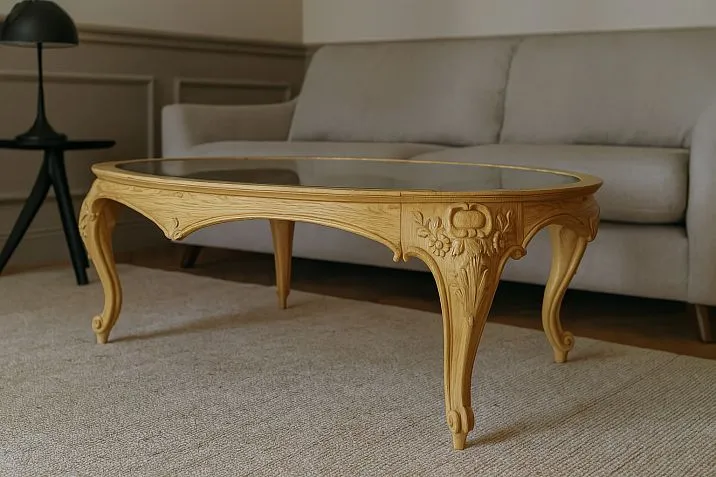
Silence... It reigns at the moment when the family gathers around the dining table. And in this sacred moment of unity, every detail matters. Base for Dining Tables — not just a supporting structure, it is the invisible foundation of family happiness, the base upon which the warmest memories are built.
Do you know that the shape and quality of the base can influence appetite, mood, and even the duration of family dinners? Psychologists assert: a stable, beautifully crafted frame subconsciously creates a sense of reliability and security. And isn't that precisely what we strive for when furnishing our homes?
Today we will unveil the secret behind the art of choosing the perfect base — that very element which will transform your dining table from an ordinary piece of furniture into the magnetic center of home coziness.


The secret formula of the ideal base




When functionality meets beauty
Choosing a base for a dining table is far from a trivial task of selecting 'legs for a tabletop'. It is a true art of balancing technical characteristics, aesthetics, and psychological impact on those around you.
Modern research reveals something astonishing: people can subconsciously assess the quality of furniture within just 3-4 seconds. And in that brief moment, it is precisely the base that forms the first impression of the entire structure's reliability. A wobbly table causes discomfort even for the most calm individuals, while an impeccably stable frame, on the contrary, invites long, heartfelt conversations.
Our factory also produces:


The mathematics of stability: calculations that save holidays
Imagine New Year's Eve. The table is overflowing with treats, guests are in high spirits, and suddenly... a wobbling table turns the celebration into a catastrophe. To avoid such scenarios, professional carpenters use precise mathematical calculations.
The golden rule of stability states: the center of gravity of the loaded tabletop must lie strictly within the area of support. For a standard dining table measuring 120×80 cm, the safe zone is approximately 100×60 cm. It is precisely within these boundaries that the supporting elements of the base must be located.
But mathematics is only the foundation. True mastery is revealed in the ability to combine calculated reliability with refined aesthetics.
Get Consultation
The anatomy of perfection: constructive solutions
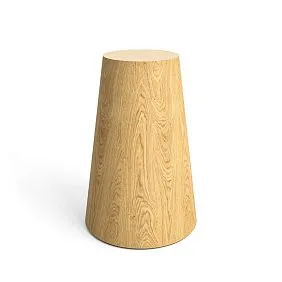
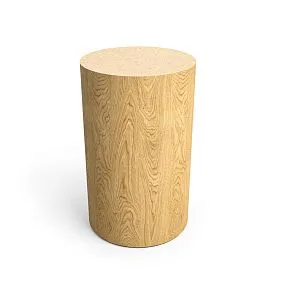
Central pillar: elegance of minimalism
A base with a central support — the choice of those who value space and freedom of movement. A single massive pillar, adorned with decorative elements or executed in a minimalist style, creates a sense of lightness throughout the entire composition.
Technically, such a construction requires special craftsmanship. The central pillar must withstand not only the static weight of the tabletop and its contents, but also dynamic loads from hands, elbows, and accidental bumps. The base diameter is calculated by the formula: no less than 40% of the tabletop width to ensure critical stability.
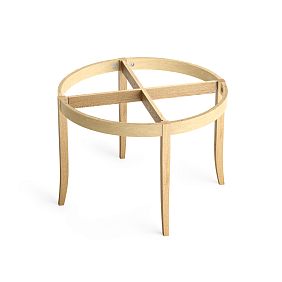
Four-legged classic: proven century-old reliability
The traditional four-legged scheme remains the most popular for a reason. It ensures even load distribution and maximum stability under any usage scenario.
The secret to success lies in the correct placement of supports. The classic rule: the distance from the edge of the tabletop to the leg's axis should be 12-15 cm. This ensures sufficient space for chairs and guarantees that the table won't tip over even under uneven loading.
Base with A-frame legs: rustic charm in an urban apartment
A-frame legs connected by a crossbar are experiencing a true revival in modern interiors. This construction, originating from traditional country furniture, is today interpreted by designers in the most unexpected styles — from brutalist loft to refined Scandinavian minimalism.
The advantage of the A-frame scheme is exceptional structural rigidity. The triangular shape of the supports and horizontal connections create a spatial truss capable of withstanding colossal loads.
Material science: the soul and character of the base
Oak: aristocracy of the wooden world
Oak Base for Dining Tables — it is not merely a material choice, but a philosophical statement about the values of the owner. Oak symbolizes strength, longevity, and connection to ancestral traditions.
The physical properties of oak are astonishing: density up to 800 kg/m³, compressive strength — 64 MPa, Brinell hardness — 3.8. In plain language, this means that an oak leg measuring 8×8 cm can withstand a vertical load exceeding one ton!
But oak is valued not only for its strength. Its high content of tannins makes it practically immune to pests and decay. And its unique texture with pronounced annual rings turns every item into a unique work of natural art.
Ash: northern beauty and flexibility
Light ash with contrasting dark annual ring lines creates a completely different aesthetic. Its wood combines high strength with remarkable elasticity — precisely why ash was used to make bows, tool handles, and sporting equipment.
In furniture manufacturing, ash's elasticity allows creating curved elements without compromising strength. Curved legs, smooth transitions, organic forms — all of this becomes possible thanks to the unique properties of this wood.
Walnut: warmth and nobility
American black walnut — material for true connoisseurs of elegance. Its rich color palette, ranging from golden-honey tones of the sapwood to deep chocolate-brown core, creates a unique play of hues on the surface of the finished piece.
Walnut is distinguished by high dimensional stability — it practically does not react to changes in humidity and temperature. This makes it an ideal material for pedestals that must maintain geometric precision for decades.
Stylistic Directions: From Classic to Avant-Garde
Russian Classicism: grandeur and solemnity
Pedestals in the style of Russian Classicism — an ode to the traditions of domestic furniture art. Fluted legs, gilded capitals, elegant curves — each element carries deep symbolic meaning.
Classical canon requires strict adherence to proportions. The height of the legs should relate to their thickness as 8:1, and decorative elements should be arranged according to the golden section. Only such mathematical precision creates a sense of perfect harmony.
Scandinavian Functionalism: beauty of simplicity
Northern design philosophy preaches the principle of 'hygge' — cozy functionality. Scandinavian pedestals are characterized by crystal-clear lines, natural wood tones, and a complete absence of excessive decoration.
Primary materials — light woods: birch, pine, beech. Processing is minimal — wood is often coated with clear oil, highlighting the natural beauty of the texture.
Industrial style: brutal aesthetics
Loft interiors require appropriate solutions. Pedestals in industrial style can combine wooden elements with metal structures, creating impressive contrasts of textures and colors.
Characteristic features: visible joints, rough surface treatment, intentional asymmetry. The paradox of industrial style is that creating a 'careless' surface requires the highest level of craftsmanship.
Production technologies: from sketch to masterpiece
Modern wood processing methods
The digital revolution has touched woodworking as well. CNC machines allow processing blanks with precision down to hundredths of a millimeter. Laser systems control every stage of production, eliminating defects and ensuring ideal repeatability of results.
But technology is merely a tool in the master's hands. Final assembly, fitting, and quality control still require human experience and intuition.
Wood drying: the foundation of longevity
Proper material preparation is the guarantee of the longevity of the finished product. Chamber drying at 60-80°C and controlled humidity allows reducing wood moisture to operational 6-8%.
The process takes from several weeks to several months depending on the species and thickness of the blanks. Rushing at this stage is unacceptable — poorly dried wood inevitably deforms during use.
Woodworking joints: the art of invisible strength
Modern dining table pedestals are created using various types of joints. Each has its advantages and areas of application.
Dowel joint "dowel-slot" provides maximum strength with minimal use of glue. A precisely fitted dowel fits into the slot with interference, creating an exceptionally reliable mechanical connection.
"Swallow's Tail" — the pinnacle of woodworking craftsmanship. The trapezoidal shape of the dowel completely eliminates the possibility of parts being pulled out under load. Such joints serve not only functional but also decorative purposes.
Ergonomic principles: science of comfort
Anthropometric foundations of design
Man is the measure of all things, and furniture is no exception. The standard height of a dining table, 75-76 cm, is derived from average human body dimensions. However, modern trends toward personalization require a more flexible approach.
For people under 165 cm tall, a comfortable table height is 72-73 cm; for tall individuals (over 185 cm) — 78-80 cm. Some manufacturers offer adjustable systems that allow customizing the height for a specific user.
Legroom: invisible ergonomics
The configuration of the pedestal directly affects the comfort of seated individuals. The minimum distance from the edge of the tabletop to the nearest frame element should be 60 cm — this ensures free placement of standard-sized chairs.
The height of the free space under the table — no less than 65 cm from the floor level. These parameters are critically important for people with disabilities and the elderly.
Finishing and protection: beauty for centuries
Oil finishes: the breath of living wood
Natural vegetable oils — linseed, tung, Danish — penetrate into the wood structure, highlighting its natural beauty. Such finishes do not create a surface film, allowing the material to "breathe".
The process of applying oil finish — a true ritual. Each layer is applied thinly, carefully worked into the surface, and polished. Full polymerization takes 2-3 weeks, but the result is worth it — the surface acquires a silk-like texture and deep, rich color.
Wax Protection: Traditions and Modernity
Beeswax — the oldest material for protecting and decorating wood. Wax coatings create a pleasant tactile surface and give furniture a distinctive matte sheen.
Modern technology involves using compositions based on carnauba wax — the hardest natural wax. Such coatings withstand intensive use and are easily restorable when necessary.
Lacquer systems: maximum protection
Polyurethane varnishes provide the highest level of protection for wood against mechanical damage and moisture. The multi-layer system includes priming, base coating, and a finish layer with UV filters.
Matte varnishes are preferable to glossy ones — they are less prone to showing marks and do not create glare under artificial lighting. The gloss level is typically 10–15% according to the ISO standard.
Economic Philosophy of Quality Furniture
Principle of Long-Term Value
Quality Base for Dining Tables — this is an investment in the future. With proper care, such items serve 50–100 years, passed down from generation to generation as family heirlooms.
For comparison: a cheap particleboard base will last at most 5–7 years, after which it will require replacement. Over a half-century, you will need to buy 7–10 sets of "budget" furniture. In the end, total costs will be significantly higher than the price of one quality item.
Impact on property value
Professional realtors know: quality solid wood furniture increases the attractiveness of real estate in buyers' eyes. A premium dining set can add 3–5% to the apartment's value.
This is especially relevant for luxury housing, where every interior detail shapes the overall impression of the owner's status and taste.
Psychology of Home Space
The Table as the Center of Family Life
The dining table — not just a piece of furniture, but a sacred space of family unity. It is here that the most important conversations take place, decisive decisions are made, and family traditions are established.
Sustainable, beautiful dining table base creates a subconscious sense of reliability and stability. Children raised at a quality family table strive to recreate this atmosphere in their own homes as adults.
Influence of Shape on Emotional State
Round tables promote equal communication — there is no "head of the table" or subordinate seats. Rectangular tables, on the contrary, emphasize hierarchy and formality in relationships.
Table height also affects psychological comfort. A table that is too low creates a sense of instability, while a high table causes discomfort and tension. The ideally chosen height makes the dining process natural and relaxing.
Regional characteristics and cultural traditions
Northern Traditions of Woodworking Craftsmanship
Craftsmen of northern regions of Russia have perfected the art of working with wood for centuries. The harsh climate taught them to create furniture of exceptional strength and durability.
Traditional northern table bases are characterized by their massiveness and solidity. Wide legs, additional connections, and carefully designed joints — all aimed at ensuring maximum reliability.
Southern Schools of Furniture Art
The warm climate of southern regions allowed craftsmen to experiment with lighter constructions and elegant forms. Here, traditions of wood carving, inlay, and creating complex decorative elements developed.
Southern table bases were often adorned with floral ornaments, grapevines, wheat sheaves — symbols of fertility and abundance.
Modern trends and innovations
Integration of smart technologies
Furniture of the future becomes "smart". Wireless charging devices, USB ports, and LED lighting controlled via mobile applications are integrated into table bases.
Some manufacturers experiment with load sensors capable of determining the number of people seated at the table and automatically adjusting lighting or playing background music.
Ecological Innovations
Growing consumer environmental awareness stimulates the development of "green" technologies in furniture manufacturing. Only certified materials from sustainably managed forests, non-toxic adhesives, and finishes are used.
Some companies implement carbon-neutral production systems, fully offsetting the carbon footprint of their products through reforestation programs.
Care and Maintenance: Secrets of Longevity
Daily Care
Proper care of wooden furniture does not require special skills or expensive products. It is enough to regularly remove dust with a soft dry cloth and avoid excessive moisture.
For wet cleaning, use a slightly damp microfiber cloth. After cleaning, the surface must be wiped dry. Aggressive cleaning agents containing alcohol or ammonia are strictly not recommended.
Seasonal maintenance
Twice a year — in spring and autumn — wooden furniture should be treated with special compositions. Oil finishes are refreshed with a thin layer of appropriate oil, while wax finishes are polished with a small amount of wax.
Special attention is paid to joints and connections — this is where the protective layer is most often compromised. Timely prevention prevents serious damage.
Professional restoration
Even with ideal care, furniture may require professional intervention. Modern restoration technologies allow restoring the original appearance even of severely damaged items.
Main stages of restoration: disassembling damaged elements, restoring geometry, replacing irreparable parts, sanding, applying a new protective coating. Qualified craftsmen can restore antique furniture to museum-quality standards.
Customization: furniture to measure
Personalization options
Modern technologies open up limitless possibilities for creating unique dining table basesParametric design allows adapting any base project to the individual requirements of the client.
Dimensions, proportions, wood species, types of joints, and finishing methods can be customized. Each item becomes a reflection of the owner’s personality, taste, and preferences.
3D Modeling and Virtual Reality
Modern clients can see their future furniture even before production begins. Photorealistic 3D models show the item from various angles and lighting conditions. Augmented reality technologies allow placing virtual furniture within a real interior.
This approach eliminates misunderstandings and guarantees full alignment with the client’s expectations.
In a world where technology changes at the speed of light, wooden furniture remains an island of stability and authenticity. Base for Dining Tables It is not just a functional element, but a link between the past and the future, between nature and civilization.
Choosing quality furniture is not only an investment in the beauty and comfort of your home, but also in family traditions that will be passed down from generation to generation. Every touch on a warm wooden surface reminds us of timeless values: craftsmanship, quality, and connection with nature.
The future of the furniture industry lies in personalization and eco-friendliness. Mass production gives way to individualized approaches, synthetic materials to natural and renewable resources. In this new paradigm, wooden furniture occupies a special place — it combines traditional craftsmanship with modern technologies, creating items that will become family heirlooms of the 21st century.
STAVROS stands at the forefront of this evolution, creating furniture masterpieces that define the aesthetics of modern homes. The long experience of STAVROS craftsmen, combined with the use of premium materials and advanced technologies, guarantees exceptional quality of every item. Choosing STAVROS is not just choosing furniture — you are choosing a lifestyle based on respect for traditions, a pursuit of perfection, and an understanding of the true values of home comfort. STAVROS is a philosophy of quality embodied in wood — a guarantee that your home will be filled with the atmosphere of authentic craftsmanship and the unique beauty of natural materials.