Article Contents:
- Round table: the philosophy of form in modern interior design
- Psychology of the circle in spatial design
- Advantages of round tables in layout planning
- Constructive features: engineering of round forms
- Central support: classic solution
- Three-point systems: stability and elegance
- Circular pedestals: when support repeats the shape
- Material Science: Foundation of Durability
- Solid noble woods: proven classic
- Composite materials: the best of two worlds
- Innovative materials of the future
- Digital design of round forms
- Precise design: mathematics of beauty
- Precision Woodworking
- Assembly and quality control
- Dimensional scale: choosing for specific needs
- Compact Solutions for Small Spaces
- Standard sizes for family use
- Representative models for formal occasions
- Style directions: pedestal as a design element
- Classic elegance: timeless values
- Modern minimalism: beauty of simplicity
- Scandinavian functionalism: northern charm
- Loft-industrialism: urban aesthetics
- Ergonomic principles: comfort in every detail
- Optimal height: science of comfort
- Space for feet: freedom of movement
- Structural stability: safety above all
- Seasonal use and adaptability
- All-season solutions: universality of construction
- Transformable structures: flexibility of use
- Installation and Setup: Professional Approach
- Preparation for installation
- Assembly sequence
- Adjustment and setup
- Maintenance and servicing: preserving beauty
- Daily care for various materials
- Periodic maintenance
- Restoration and repair
- Price categories and economic justification
- Budget solutions: sensible savings
- Mid-range segment: optimal balance
- Premium Class: Investment in Quality
- Trends in development: looking into the future
- Ecological innovations
- Technological breakthroughs
- Personalization of mass production
- Psychology of choice: emotional aspects
- Influence on home atmosphere
- Status component
- Emotional attachment
- Regional Specifics: Climate and Traditions
- Adaptation to Climatic Conditions
- Cultural Traditions in Design
- Selection Tips: Practical Recommendations
- Defining needs
- Quality Criteria
- Warranties and Service
- Specifics of Use in Different Rooms
- Dining Room: The Heart of the Home
- Kitchen: Functionality First
- Living Room: Elegance and Prestige
- Office Spaces: Business Aesthetics

A round table is more than just furniture—it is a symbol of unity, a place where sincere conversations are born, important decisions are made, and warm family traditions are created. But what transforms an ordinary round tabletop into a magical center of home coziness? The answer lies in the properly chosen base. Buy Base for Round Table This is a decision that will determine not only the functionality of the furniture but also its ability to become the soul of the interior for many years.
The round shape of the tabletop imposes special requirements on the base construction. There are no conventional angles for placing supports, no clear geometry dictating leg placement. Every solution requires engineering calculations, aesthetic sense, and understanding of ergonomic principles. Modern furniture frame manufacturers create true works of art, where every detail contributes to overall harmony.


Round Table: Philosophy of Form in Modern Interior




Psychology of the Circle in Spatial Design
The circle is the oldest symbol of perfection, completeness, and harmony. In interior design, circular forms create a unique energy, promote communication, and reduce psychological barriers. At a round table, there is no "main place"—everyone seated is equal, creating an atmosphere of trust and openness.
Spatial psychology studies confirm: people feel more comfortable in rooms with rounded furniture. The absence of sharp angles is subconsciously perceived as safety, which is especially important in family interiors with children.
Our factory also produces:


Advantages of Round Tables in Layout
The round tabletop shape ensures optimal space usage. At the same area, a round table accommodates more people than a rectangular one. The absence of corners allows chairs to be placed more densely without causing discomfort.
Important Functional Advantages:
- Equal access to the center of the table for all seated individuals
- Better circulation around the table
- Covering Defects
- Versatility across different interior styles
- Safety for children
Get Consultation
Structural Features: Engineering of Round Forms
Central Support: Classic Solution
The most natural solution for a round table is a central support. Such a construction provides maximum freedom for chair placement and creates an elegant silhouette of the entire composition.
The central column must have sufficient diameter to withstand all loads. For a tabletop with a 120 cm diameter, the minimum column diameter is 15-20 cm. The base is made in the form of a cross, disc, or complex decorative shape.
Technical Requirements for Central Support:
- Column diameter no less than 12% of tabletop diameter
- Base width 60-70% of tabletop diameter
- Column material — solid hardwood or metal
- Secure attachment to tabletop at minimum 4 points
Three-point systems: stability and elegance
Three supports positioned at 120° to each other create an ideally stable structure. Such a system eliminates table wobbling even on uneven surfaces — a feature that a four-point configuration does not possess.
A three-point system requires precise calculation of support placement. The optimal distance from the center of the tabletop to the axis of each leg is 35-40% of the tabletop radius. This ensures stability while maintaining free space for feet.
Circular bases: when support mirrors the shape
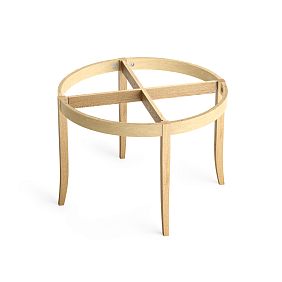
From a construction standpoint, the most complex is a base that mirrors the round shape of the tabletop. Such solutions require high craftsmanship, but create an incredibly elegant effect.
The circular base can be made from bent solid wood, glued laminated timber, or metal. The diameter of the ring base is usually 70-80% of the tabletop diameter, and the height is standard 72-75 cm for dining tables.
Material Science: The Foundation of Durability
Solid noble woods: proven classic
Oak bases are rightfully considered a benchmark of quality. The density of oak wood (650-800 kg/m³) ensures exceptional strength, while its high tannin content provides natural protection against pests and moisture.
Features of oak for bases:
- Compressive strength up to 60 MPa
- Minimal deformation under humidity changes
- Beautifully expressed texture
- Ability to be restored multiple times
- Compatibility with any type of finish
Ash constructions combine strength with natural elasticity. Light-colored wood with contrasting growth rings is ideal for modern interiors. Ash is highly bendable, allowing the creation of bases with complex curved shapes.
American walnut — the choice for true connoisseurs of luxury furniture. Its rich color palette, ranging from golden to chocolate tones, allows for unique decorative effects. Walnut bases are an investment in beauty and prestige.
Composite materials: the best of two worlds
Combining wood and metal opens up limitless design possibilities. A metal frame ensures strength and allows for complex shapes, while wooden elements add warmth and coziness.
Popular combinations:
- Steel base with wooden inlays
- Cast iron base with wooden leg
- Aluminum frame with solid wooden elements
- Metal frame with wooden filling
Innovative materials of the future
Modern composite materials based on wood fibers and polymer binders combine the best properties of wood and plastic. They are resistant to moisture, do not deform, require no complex maintenance, yet retain the natural beauty of wood grain.
Production technologies: from idea to realization
Precise design: mathematics of beauty
Creating a quality base for a round table begins with precise design. Specialized CAD systems are used to calculate optimal dimensions, load distribution, and mounting points.
Each structural element is modeled in three-dimensional space, taking into account all loads and deformations. This allows for material optimization, maximum strength, and ideal proportions.
Precision wood processing
CNC machines provide processing accuracy of ±0.1 mm, which is critical for creating quality joints. Multi-spindle machining centers allow all operations for manufacturing a part to be completed in a single setup.
Processing stages include:
- Cutting blanks to size
- Rough machining with allowance
- Drying and stabilization
- Final finishing
- Size and Geometry Control
Assembly and Quality Control
Subtable assembly is performed on specialized stands ensuring precise construction geometry. Each joint is checked for strength, and every part is verified against technical specifications.
Final control includes:
- Geometric dimension check
- Load test at 150% of nominal capacity
- Finishing quality control
- Structural stability check
- Packaging for transportation
Dimensional ruler: selection for specific needs
Compact solutions for small spaces
For small apartments and kitchens, tables with a diameter of 90-110 cm are optimal. These dimensions allow comfortably seating 4-6 people while occupying minimal floor space.
Buy subtable for round table Compact size — means finding the ideal compromise between functionality and space-saving.
Technical specifications of compact subtables:
- Tabletop diameter: 90-110 cm
- Height: 72-75 cm
- Number of seating places: 4-6
- Optimal room area: 12-16 m²
Standard sizes for family use
Tables with a diameter of 120-140 cm represent the optimal solution for most families. These dimensions allow comfortably seating 6-8 people and are suitable for living rooms of 20 m² or more.
At a table with a 130 cm diameter, each person receives approximately 50 cm of circumference, ensuring comfortable seating with service considerations. This is the optimal balance between seating density and personal space.
Representative models for festive occasions
For large spaces and festive events, tables with a diameter of 150-200 cm are suitable. These giants require a special approach to subtable construction — reinforced supports, additional connections, and special mounting methods.
Large round tables are often designed as foldable or modular. This solves transportation issues and allows transforming the size depending on the number of guests.
Style directions: subtable as a design element
Classic elegance: timeless values
Classic subtables are characterized by strict proportions, symmetrical forms, and use of traditional decorative elements. Polished legs with grooves, carved capitals, elegant bases — all of this creates an atmosphere of aristocratic refinement.
Materials for classic style:
- Solid oak, ash, walnut
- Natural finish with oils and waxes
- Traditional joinery
- Gilded or patinated details
- Carved decorative elements
Modern minimalism: beauty of simplicity
Minimalist bases are characterized by clean lines and the absence of excessive decoration. Simple geometric forms, smooth surfaces, natural colors — principles defining the aesthetics of the style.
Characteristic features:
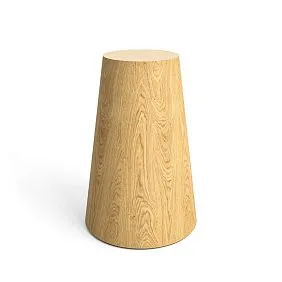
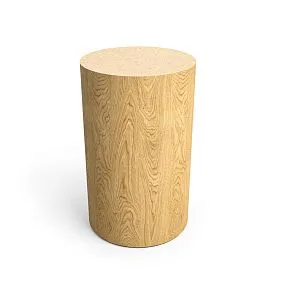
- Simple cylindrical or conical shapes
- Natural wood texture
- Matte finishes
- Minimal decorative elements
- Functionality of every detail
Scandinavian functionalism: northern charm
Scandinavian style in table base design implies the use of light wood species, simple forms, and maximum functionality. Birch, pine, or beech constructions create an atmosphere of northern coziness.
Loft industrialism: urban aesthetics
Industrial bases combine wooden elements with metal structures. Visible bolts, rough welds, patinated surfaces create an atmosphere of industrial chic.
Typical materials and solutions:
- Steel pipes and profiles
- Black or patinated steel
- Solid untreated wood
- Visible connections
- Contrasting textures
Ergonomic principles: comfort in every detail
Optimal height: the science of comfort
The standard height of a dining table, 74–76 cm, suits most people, but may be adjusted based on users' anthropometric data. For tall individuals (height over 185 cm), tables of 78–80 cm height are more comfortable.
Formula for calculating optimal height:
Table height = Person's height × 0.43 + 30 cm
Legroom: freedom of movement
The base construction must provide sufficient legroom for all seated users. Minimum distance from the edge of the tabletop to the nearest support element — 60 cm. Height of free space under the table — at least 65 cm.
Structural stability: safety above all
A round table must remain stable under any usage scenario. Calculations are made for maximum load, taking into account uneven weight distribution and possible lateral forces.
Stability parameters:
- Tilt angle not less than 25°
- Safety factor not less than 2.5
- Absence of resonant vibrations
- Floor unevenness compensation
Seasonal use and adaptability
All-season solutions: universal constructions
Quality bases should maintain stability under changes in temperature and humidity conditions. Properly dried and treated wood reacts almost negligibly to seasonal air humidity fluctuations.
Stability Technical Solutions:
- Kiln drying to 6-8% moisture content
- Radial wood cutting
- Compensatory slots in solid components
- Special adhesives
- Protective coatings with breathability
Transformable structures: flexibility of use
Modern bases may include transformation elements — sliding mechanisms, additional inserts, adjustable legs. This allows adapting the table to various situations and guest numbers.
Installation and mounting: professional approach
Pre-installation preparation
Quality installation begins with preparing the installation site. The floor surface must be flat, dry, and capable of supporting the structure's weight under load.
Required tools:
- Laser level
- Tape measure and square
- Drill with drill bit set
- Screwdrivers and wrenches
- Protective materials
Assembly Sequence
Correct operation sequence ensures assembly quality:
- Check completeness and absence of damage
- Assembly of the base
- Installation of central support or legs
- Structural geometry check
- Mounting the tabletop
- Final adjustment and inspection
Adjustment and setup
After the main assembly, fine-tuning is performed. Adjustable legs compensate for floor unevenness, ensuring perfect tabletop levelness.
Maintenance and care: preserving beauty
Daily care for various materials
Wooden surfaces require careful handling. Regular cleaning with soft cloth, avoiding moisture, using coasters under hot items — basic care rules.
Special compositions are used for metal elements, preventing corrosion and preserving decorative coating properties.
Periodic maintenance
It is recommended to conduct preventive inspections every six months:
- Connection Strength Testing
- Updating protective coatings
- Repairing minor defects
- Lubricating moving parts
- Checking structural stability
Restoration and repair
High-quality bases can be restored if serious damage occurs. Modern technologies allow restoring almost any defects without losing aesthetic properties.
Price categories and economic justification
Budget solutions: sensible economy
In the price range of 15,000 to 40,000 rubles, bases made of pine or birch with basic treatment are offered. With a limited budget, this is the optimal choice for temporary use or garden furniture.
Mid-range segment: optimal balance
The price range of 40,000 to 85,000 rubles includes items made of high-quality oak or beech with professional treatment. Such bases will last 25–30 years with proper care.
Premium class: investment in quality
Exclusive pedestals costing over 85,000 rubles are crafted from premium wood using unique technologies. These are masterpieces of furniture art for decades.
Trends in development: looking toward the future
Ecological Innovations
Modern consumers increasingly pay attention to the ecological safety of products. Only certified wood, non-toxic finishing materials, and renewable energy sources are used.
Technological breakthroughs
The introduction of 3D printing, laser processing, and "smart" materials opens new possibilities for creating unique structures. Systems for automated design tailored to individual requirements are being developed.
Mass customization
Modern technologies allow creating individual items without significant cost increase. The client can choose dimensions, materials, and finish, receiving a unique pedestal.
Choice psychology: emotional aspects
Impact on home atmosphere
A round table with a quality pedestal becomes a natural focal point in the home. Here, the family gathers, guests are received, and important conversations take place. A properly chosen round table pedestal for sale means creating a foundation for warm family traditions.
Status component
Quality furniture has always been a sign of the owner's status and taste. An exclusive pedestal demonstrates understanding of true values, readiness to invest in beauty and quality.
Emotional attachment
The most precious memories are created at a beautiful table — family dinners, festive gatherings, friendly meetings. Quality furniture becomes a witness to important life moments, acquiring emotional value.
Regional specifics: climate and traditions
Adaptation to Climatic Conditions
Different climatic zones impose specific requirements on furniture. Humid regions require special protection against mold and rot, while dry regions require prevention of cracking.
Cultural traditions in design
Regional preferences influence the popularity of certain styles and materials. Northern regions lean toward Scandinavian aesthetics, while southern regions favor more decorative solutions.
Selection tips: practical recommendations
Defining Needs
Before purchasing, it is important to clearly define requirements:
- Room size and planned number of seats
- Interior style and color preferences
- Intensity of use
- Budget Constraints
- Special requirements (ecological safety, hypoallergenic properties)
Quality criteria
When choosing, pay attention to:
- Wood species and quality
- Precision of manufacturing and assembly
- Surface finish quality
- Strength of joints
- Manufacturer's reputation
Warranties and Service
Serious manufacturers provide a warranty of at least 2-3 years and offer servicing. This is an important indicator of confidence in product quality.
Specifics of use in different rooms
Dining room: the heart of the home
In the dining room, a round table becomes the main element of the interior. Round table pedestal for sale for dining room means creating a space for family interaction and receiving guests.
Kitchen: functionality first
In the kitchen, compactness and practicality are important. The base should be easy to clean, not obstruct movement, and withstand intensive use.
Living Room: Elegance and Prestige
In the living room, the base serves not only a functional but also a decorative role. Here, more refined solutions are appropriate, highlighting the owner's status.
Office Spaces: Business Aesthetics
For negotiation and reception rooms, strict classical or modern minimalist solutions are suitable. Reliability, presentability, and alignment with corporate style are essential.
In today's world, where every interior detail matters, choosing a base for a round table becomes an art of balancing functionality, aesthetics, and durability. Buy Base for Round Table Quality means investing in comfort, beauty, and family traditions for many years.
A round table with the right base becomes not just furniture, but the center of home life. Here, ideas are born, decisions are made, memories are created. A quality base ensures the stability and longevity of this important interior element.
Choosing round table pedestal for saleRemember: this is an investment in quality of life, in creating a space where close people will gather and important family events will take place. Do not economize on quality — choose solutions that will serve generations.
The modern market offers many options, but only products from reputable manufacturers guarantee compliance with high quality and durability standards. The right choice today ensures comfort and aesthetic enjoyment for decades to come.
STAVROS embodies the finest traditions of furniture craftsmanship in its products, creating bases that become family heirlooms. Decades of experience in producing elite furniture, use of only premium materials, and advanced technologies allow STAVROS to guarantee exceptional quality of every item. Choosing STAVROS products means investing in beauty, reliability, and prestige, receiving not just furniture, but a piece of applied art. STAVROS is the guarantee that your round table will become the center of family happiness and remain so for many generations, combining traditional craftsmanship with modern innovations.