Article Contents:
- Architectural Heritage: The Foundation of Differences
- Saint Petersburg: City of High Ceilings
- Moscow: Mix of Eras and Styles
- Climate Factor
- Regional Profile Preferences
- Saint Petersburg: Classicism and Traditions
- Moscow: Modernity and Practicality
- Comparison Table of Preferences
- Ceiling height and baseboard selection
- Stalinist Buildings: Space for Large-Scale Solutions
- Khrushchev and Brezhnev Era Buildings: Compromise on Height
- Modern New Constructions: Developers' Trends
- Pre-Revolutionary Heritage: Height as a Given
- Coordination with Door Casings
- Unity of carpentry elements
- Petrograd Tradition: Wide Door Casings
- Moscow Approach: Universality
- Color Coordination
- Installation Features of Older Buildings
- Wall Curvature: The Main Challenge
- Wooden Floors: Mounting Features
- Electrical Wiring Problem
- Humidity and Mold
- Apartment Case Studies: From Project to Result
- Case 1: Restoration of a Three-Room Stalinist Apartment in Petersburg
- Case 2: Moscow Two-Room Apartment in a Premium New Construction
- Case 3: Two-Room Apartment in a Khrushchev Building in Petersburg After Renovation
- Case 4: Four-Room Apartment in a Moscow Building from the 1950s
- Price Differences and Accessibility
- Material Costs
- Cost of work
- Material availability
- Conclusion
- Practical Recommendations for Selection
- For Apartment Owners in Saint Petersburg
- For apartment owners in Moscow
- Universal tips for both cities
- Trends of 2025: what is being chosen now
- Saint Petersburg: returning to roots
- Moscow: Scandinavian minimalism
- General trend: eco-friendliness
- Conclusion: two cities, one quality

Saint Petersburg and Moscow — two of Russia’s largest cities, two different worlds. One — with imperial architecture, high ceilings of Stalin-era buildings and old, prestigious houses with parquet flooring 'in a pine tree' pattern. The other — with dynamic modern construction, premium high-rises and new builds with European finishes. And even the choicewooden baseboardsin these cities differs — not radically, but noticeably for those who professionally work with interiors.
In Saint Petersburg, wider classic skirting boards 120–150 mm are more often ordered — for high ceilings of old buildings, for restoring historical apartments, for preserving the spirit of a city-museum. In Moscow, medium sizes 80–100 mm are more popular — practical, modern, suitable for both new builds and post-renovation Khrushchev-era apartments. In Saint Petersburg, more value is placed on natural tones of oak and ash — they emphasize historic character. In Moscow, more often chooseWooden skirtingfor painting white — a universal solution for any style.
Why is that? It’s due to architectural heritage, climatic peculiarities, residents’ mentality, even specific installation features in old buildings. Let’s examine all the factors that shape regional preferences in skirting board selection. We’ll find out which profiles are popular in each city, how ceiling height affects the choice, what difficulties arise during installation in historic residential stock, and look at real case studies of apartments in Saint Petersburg and Moscow.

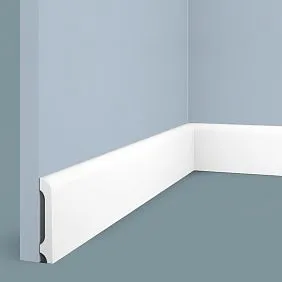
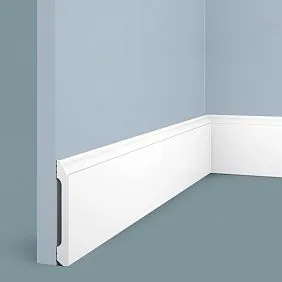
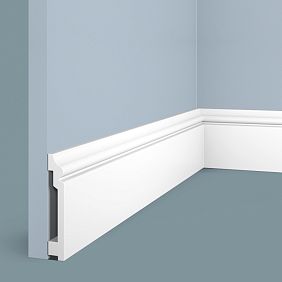
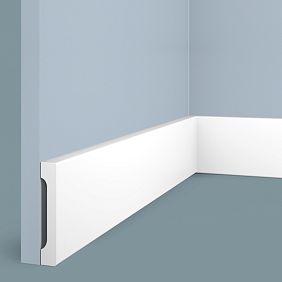
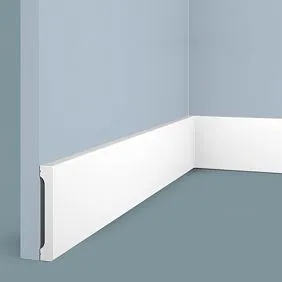
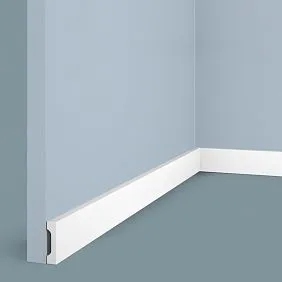
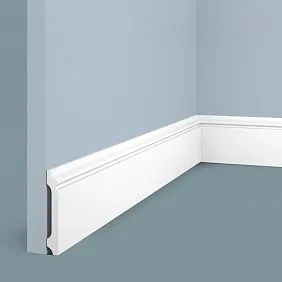
Architectural heritage: the foundation of differences




Saint Petersburg: a city of high ceilings
Saint Petersburg’s residential stock is largely an inheritance of the imperial era and Stalinist construction. Buildings from the late 19th to early 20th centuries (rental houses, mansions), Stalin-era buildings from the 1930s–1950s — all share one characteristic: high ceilings from 3.0 to 4.2 meters. This was standard construction practice at the time — spacious apartments with gallery-style rooms, parquet floors, and moldings on ceilings.
Even post-war Stalin-era buildings in Saint Petersburg have ceilings of 3.0–3.2 m, significantly higher than subsequent eras’ standards. Khrushchev-era buildings, of course, lowered the standard to 2.5–2.7 m, but their share in Saint Petersburg’s overall residential stock is smaller than in Moscow. Yet there is more historic stock requiring careful restoration.
High ceilings dictate corresponding detail scale. A narrow skirting board 50–60 mm at a room height of 3.5 m simply disappears, failing to perform the function of architectural framing. Wide skirting boards — 100–150 mm, and even 180–200 mm for exceptionally high entrance halls — are needed. Only then are proportions harmonious.
According to STAVROS data,wooden skirting boards in St. Petersburgin the 120–150 mm category make up about 40% of all orders — this is the most popular size segment. For comparison, in the Moscow region, this category accounts for only 25%.
Our factory also produces:


Moscow: a mix of eras and styles
Moscow is more architecturally diverse. There are also Stalin-era buildings with high ceilings, and historic mansions in the city center. But the residential stock is primarily composed of panel and brick buildings from later periods: Khrushchev-era buildings (ceilings 2.5 m), Brezhnev-era buildings (2.6–2.7 m), buildings from the 1970s–1990s (2.5–2.7 m), and modern new builds (2.7–3.0 m, rarely 3.2 m in premium segments).
Moscow is more actively developing — new construction volumes here are several times greater than in Saint Petersburg. New builds, especially mass-market ones, have standard ceilings of 2.7–2.8 m. This is a comfortable height, but does not require particularly wide skirting boards.
Moreover, in Moscow, there is a stronger trend toward modern minimalist interiors, where lightness and lightness are valued. Narrow and medium skirting boards 70–100 mm better suit this aesthetic than bulky classic 150 mm ones.
Sales statistics show:wooden skirting boards in Moscowin the 80–100 mm category — this is about 45% of orders, the most popular size. Wide skirting boards 120 mm and above account for only 25% — they are mostly chosen for luxury apartments with high ceilings or for restoring old buildings.
Get Consultation
Climate factor
Saint Petersburg — a city with higher humidity, proximity to the sea, frequent rains. Air humidity here is higher than in Moscow, especially in autumn and spring. This affects material and skirting board parameter selection.
Wood — a living material, reacting to humidity changes. In Saint Petersburg conditions, preference is given to thicker skirting boards with a thickness of 20–25 mm (against standard 16–18 mm). Greater thickness ensures geometric stability — wood can slightly 'breathe', swelling and shrinking, but due to thickness, this does not lead to deformation or detachment from the wall.
Also, in Saint Petersburg, harder wood species — oak, ash — are more popular, less prone to warping from humidity than soft coniferous woods. According to STAVROS statistics, in Saint Petersburg 70% of skirting board orders are for oak or ash, and only 30% for pine or larch. In Moscow, the ratio is 55% hard woods to 45% soft woods — more balanced.
Regional Profile Preferences
Saint Petersburg: Classicism and Traditions
Saint Petersburg clients tend towards classic skirting board profiles — with complex cross-sections, scrolls, mouldings, and flutes. This is due to the fact that most renovations and restorations occur in the historical residential stock, where classic style is a natural choice.
Popular profile — "Saint Petersburg Classic": height 120–150 mm, thickness 22 mm, with a smooth S-shaped scroll at the top and a small moulding that creates volume. Such a skirting board repeats the forms characteristic of late 19th-century stucco, harmonizes with tall door casings and ceiling cornices.
Another feature — the presence of so-called "heel" at the bottom of the skirting board (projecting sole). This historically conditioned detail protected walls from dirt during cleaning in old houses. Today, it is more a tribute to tradition and a sign of high-quality craftsmanship.
Color preferences: in Saint Petersburg, clients more often choose skirting boards in natural wood tones — oak staining (from light honey to dark walnut), oil or lacquer finish. White paint is also popular (about 40% of orders), but natural wood is valued higher — it emphasizes the materiality and historic character of the interior.
Moscow: Modernity and Practicality
Moscow clients more often choose skirting boards with simplified profiles — rectangular or with slight rounding of the top edge. Complex classic profiles are less in demand, except in the segment of luxury real estate and restoration projects.
Popular profile — "Modern Minimal": height 80–100 mm, thickness 18 mm, rectangular cross-section with a slight bevel (45-degree slope on the top edge for softness). No scrolls or mouldings — pure geometry. Such a skirting board suits Scandinavian interiors, lofts, and neoclassicism.
Also popular in Moscow are so-called "European skirting boards" — with cable channels allowing wires to be hidden. This is a practical solution for city apartments with many devices, internet cables, and "smart home" wiring. In Saint Petersburg, such skirting boards are less in demand — there, wires are usually laid in screed or behind walls, not in skirting boards.
Color preferences: in Moscow, white dominates — about 60% of skirting board orders are for white enamel paint. This is a universal solution that fits most modern interiors. Natural wood tones account for about 30%, dark shades (black, graphite) — 10%.
Comparison Table of Preferences
| Parameter | Saint Petersburg | Moscow |
|---|---|---|
| Popular Height | 120–150 mm (40%) | 80–100 mm (45%) |
| Popular Thickness | 20–25 mm | 16–20 mm |
| Profile | Classic with Complex Section | Modern Simple |
| Wood Species | Oak/Maple (70%) | Mixed Species (55% Hardwoods, 45% Softwoods) |
| Color | Natural Wood (60%), White (40%) | White (60%), Natural Wood (30%), Dark (10%) |
| Cable Channel Presence | Rarely (15% of orders) | Often (40% of orders) |
Ceiling height and skirting board selection
Stalinist buildings: ample room for grand-scale solutions
Stalinist buildings have ceiling heights from 3.0 to 3.6 meters (up to 4.2 m in entrance apartments). For such spaces, a narrow skirting board of 60-70 mm looks inadequate and does not match the scale of the room.
Recommendations for Stalinist buildings:
-
Skirting board height: 120-180 mm
-
Thickness: 20-25 mm (solid, substantial)
-
Profile: classic, with rounded corners and molding
-
Color: natural oak or white (depending on interior concept)
In St. Petersburg, there are more Stalinist buildings, and they are more often preserved within historical architecture (less demolished, more restored). This creates high demand for wide, classic skirting boards.
In Moscow, Stalinist buildings also exist, but a significant portion was demolished as part of renovation, especially in residential districts. The remaining Stalinist buildings are usually in the city center, representing elite housing, where wide skirting boards are also used, but such properties make up a smaller percentage of the overall market.
Khrushchev and Brezhnev-era buildings: height compromise
Khrushchev buildings — ceilings 2.5–2.7 m. Brezhnev-era buildings — 2.6–2.7 m. This is standard height, not requiring particularly wide skirting boards, but also not restricting choice with narrow profiles.
Recommendations for Khrushchev/Brezhnev-era buildings:
-
Skirting board height: 70–100 mm
-
Thickness: 16–20 mm
-
Profile: simple or moderately complex
-
Color: universally white or matching wall color (to visually increase room height)
Important note: in Khrushchev and Brezhnev-era buildings, renovations are often carried out to "modernize" the space. Here, preserving history is not the goal — instead, there is a desire to move away from typical Soviet aesthetics toward something more current. Therefore, modern, simple-profile skirting boards are chosen, often white — to create a backdrop for furniture and decor.
In Moscow, there are more Khrushchev and Brezhnev-era buildings (they constitute a significant portion of the housing stock), so demand for medium-sized skirting boards (80–100 mm) is higher here. In St. Petersburg, there are fewer of these types of buildings; instead, there is a greater presence of pre-revolutionary and Stalinist architecture.
Modern new constructions: developers' trends
New constructions from the last 10–15 years have standard ceiling heights of 2.7–2.8 m in the mass segment, and 3.0–3.2 m in the premium segment. This is a comfortable height, offering flexibility in choosing skirting boards.
Recommendations for new constructions:
-
Mass segment: skirting board 80–90 mm, simple profile, white or matching wall color
-
Premium segment: skirting board 100–120 mm, quality wood, classic profile possible
In Moscow, the volume of new construction is significantly greater — the city is actively expanding, building new districts. This creates high demand for medium-sized skirting boards suitable for typical new constructions. Developers often include skirting boards in basic finishing — using inexpensive MDF or plastic. After the developer, owners replace them with quality wooden skirting boards — here, demand arises forwooden skirting boards in Moscow.
In St. Petersburg, the volume of new construction is smaller — the city is already densely built, with no room to expand (height restrictions, protected zones). New constructions exist, but their share in the overall market is lower than in Moscow.
Pre-revolutionary historic stock: height as a given
Pre-revolutionary merchant houses, mansions — ceilings from 3.2 to 4.5 meters. Entrance rooms could have heights of 5 meters (including decorative ceilings). Here, the skirting board must be proportionally grand-scale.
Recommendations for historic stock:
-
Baseboard height: 140-200 mm (depending on ceiling height)
-
Must be solid wood
-
Classic or historical profile
-
Often requires custom manufacturing to measurements
In St. Petersburg, the pre-revolutionary heritage stock is significantly larger than in Moscow. The historical center of St. Petersburg consists entirely of buildings from the 19th to early 20th centuries. Many of these are currently being restored, and apartments in them are valued for their authenticity. Demand for large-sized and complex historical-profile baseboards here remains consistently high.
In Moscow, there is also sufficient heritage stock, but it is concentrated in central districts. Here, renovation is less common than radical remodeling with modernization — historical elements may not be preserved. However, in recent years, the trend has shifted, and there is growing interest in preserving the historical appearance.
Coordination with door casings
Unity of carpentry elements
In professional interiors, baseboards do not exist in isolation — they are part of a system of carpentry elements, including door casings, ceiling cornices, sometimes wall panels. All these elements must be coordinated in style, scale, and color.
Installation of wooden baseboardsIt begins with selection, which takes into account existing or planned doors and casings. If the door is classical, louvered, with a 90 mm wide casing of complex profile — the baseboard must be proportionate, also with profile, height 100-120 mm. If the door is modern, concealed mounting or with narrow 60 mm casing — the baseboard should also be minimalist, 70-90 mm.
Saint Petersburg tradition: wide casings
In St. Petersburg’s heritage stock, doors often have wide, solid casings of 100-120 mm, sometimes up to 150 mm (in reception rooms). This is a historically established norm — doors were tall (2.4–2.6 m), with louvered panels, and the casing had to match the scale.
When renovating such interiors while preserving doors (or installing new doors in historical style), the baseboard is chosen to match the casings. If the casing is 120 mm, a baseboard of 100–120 mm is a harmonious combination. A narrow 70 mm baseboard would look out of place, disrupting proportions.
The profile is also important: if the casing has a classic profile with rounded and protruding elements, the baseboard should have a similar or complementary profile. In heritage stock, the principle of "mirroring" is often used: the casing and baseboard profiles reflect each other, creating visual rhyme.
Moscow approach: versatility
In Moscow, especially in new constructions and after modern renovations, doors with concealed mounting (without casings) or with minimal narrow casings of 60–70 mm are popular. This is a recent trend — to eliminate visual clutter, make walls as smooth as possible, and make doors less noticeable.
With this approach, the baseboard is also chosen to be moderate — 80–100 mm, simple profile. If the baseboard and casing are painted white (or in wall color), they blend into the wall, creating an effect of spatial monolithism.
Interesting note: in Moscow, it is often common to use a technique where casings and baseboards are made of different materials (casings — painted MDF, baseboards — painted solid wood), but visually they appear identical. This is cost-saving without sacrificing result quality — MDF is cheaper than solid wood, and after painting, the difference is not visible. In St. Petersburg, this approach is less popular — here, material honesty and using solid wood for all elements are valued.
Color coordination
Classic rule: baseboards, casings, and ceiling cornices should be in the same color range, if not the same color. Possible options:
Option 1: All white. Baseboards, casings, cornices are painted white. Walls may be white (monochrome) or colored/with wallpaper (white as trim). A universal solution, popular both in St. Petersburg and Moscow.
Option 2: All natural wood. Baseboards, casings, doors are made of the same wood species, same tone of finish, with identical coating (oil or varnish). Creates warmth, materiality. More common in St. Petersburg, in interiors valuing authenticity.
Option 3: Contrast. Baseboards and casings are white, doors are dark (wenge, black oak). Or vice versa: doors and casings are white, baseboards are natural wood matching floor tone. Requires good sense of proportion — may look striking or disjointed — depends on execution.
In Moscow, Option 1 (all white) is more commonly used — it’s trendy, practical, and universal. In St. Petersburg, Options 2 and 3 are more common — greater attention is paid to materials and creating the character of the interior.
Installation specifics of heritage stock
Wall curvature: main challenge
Old residential stock (pre-revolutionary and Stalin-era buildings) was constructed using technologies far from modern standards. Walls are often uneven — deviations from vertical 2–5 cm per height, waviness, height differences. Floors are rarely level — slopes, height differences between rooms.
When installing baseboards on such walls, problems arise. A rigid wooden baseboard cannot bend — if the wall is concave, gaps form between the baseboard and wall. If the wall is convex, the baseboard hits protrusions and does not adhere along its entire length.
Solutions:
Method 1: Wall leveling. Before installing baseboards, the lower part of the wall (baseboard zone) is leveled with plaster or putty. This is the correct, but labor-intensive and expensive method. In St. Petersburg, during restoration of historical interiors, this is standard practice — walls are fully leveled, often with installation of metal plaster mesh.
Method 2: Individual baseboard trimming. The baseboard is cut from the back at places where the wall protrudes. This requires precise measurements and carpentry skills. This method is used when full wall alignment is impossible or impractical.
Method 3: Flexible baseboard. Special flexible baseboards made of polyurethane or duroplastic are used, which can conform to irregularities. But this is not a wooden baseboard — for those who value natural materials, it is a compromise.
Method 4: Filling gaps with sealant. After installing the baseboard, gaps between it and the wall are filled with acrylic sealant, sanded, and painted. Visually, the gaps disappear. This method works if the gaps are small (up to 5–7 mm). For larger gaps, the sealant may crack or peel off.
In St. Petersburg, where there is more old housing stock, installers have extensive experience working with crooked walls. This is factored into the cost of work —Installation of wooden baseboardsin old housing stock, it costs 30–50% more than in new constructions.
Wooden Floors: Features of Installation
In St. Petersburg’s old housing stock, wooden floors are often preserved — parquet in individual or panel form, sometimes also plank flooring. These floors have a tendency to 'move' — slightly flex underfoot, creak, and have height variations.
You can fasten the baseboard to a wooden floor and wooden wall (wall cladding) using self-tapping screws or nails. But here it is important to consider: the floor wood may be old, dry, cracked. A self-tapping screw may split a parquet plank or the joist beneath it.
Recommendations:
-
Pre-drilling holes for fasteners (drill bit diameter slightly smaller than screw diameter)
-
Using finish nails (with small heads) instead of self-tapping screws in fragile areas
-
Fastening the baseboard to the wall, not the floor (if the wall is brick or concrete) — this is more reliable
In Moscow’s new constructions, floors are usually concrete (slab), over which parquet, laminate, or tiles are laid. Here, baseboard fastening goes into the wall (dowel screws into concrete or aerated concrete), which is simpler and more reliable.
Problem with Electrical Wiring
In old houses, electrical wiring often runs along walls inside plaster. When installing baseboards with screws or dowels, there is a risk of hitting a wire. This not only damages the wire (requiring an electrician), but also creates a risk of electric shock.
Prevention:
-
Inspect walls with a hidden wiring detector before drilling
-
Place fasteners in 'safe zones' — above 30 cm from the floor (where horizontal wires are usually absent)
-
Use adhesive mounting instead of mechanical fastening in high-risk areas
In St. Petersburg, this problem is more relevant — in old housing stock, wiring was often laid along the shortest route, sometimes running low, in the baseboard zone. In Moscow’s new constructions, wiring is usually laid in the slab or in special channels, strictly according to standards — the risk of hitting it during baseboard installation is minimal.
Humidity and Mold
St. Petersburg’s climate is humid; ground floors of old buildings often suffer from dampness, especially if basements are not waterproofed. Mold, mildew, and efflorescence may appear on walls.
Installing a wooden baseboard on a damp wall — a bad idea. Wood will absorb moisture, swell, and may develop mold from within. Fastening will weaken, and the baseboard will detach from the wall.
Solution:
-
Before installing the baseboard, treat walls with antiseptic and allow them to dry
-
Use a waterproof primer on the lower part of the wall
-
Choose wood species resistant to moisture (larch, oak), avoid pine
-
Treat the baseboard itself with antiseptic and moisture-resistant compound before installation
In Moscow, moisture problems also exist, but to a lesser extent — the climate is drier. Nevertheless, for ground floors, especially in old buildings, prevention is necessary.
Case Studies: From Project to Result
Case 1: Restoration of a St. Petersburg Three-Room Stalin-era Apartment
Initial Data:
-
Address: Saint Petersburg, Petrogradskaya Side
-
House type: Stalinist style, built in 1953
-
Area: 85 sq.m, ceiling height 3.20 m
-
Condition: old finish, parquet partially preserved, historical doors
Task: Conduct delicate renovation while preserving historical character, replace skirting boards (old ones were plastic, installed in the 1990s).
Solution:
Selectedwooden skirting boards in St. Petersburgfrom solid oak, height 140 mm, thickness 22 mm, classic profile with rounded edge and molding. Profile matched the preserved ceiling cornice (also with rounded edge).
Color: stained to match parquet (dark walnut tone), matte varnish finish. Historical door casings (110 mm) were also restored and coated with the same finish — creating a unified look.
Mounting specifics:
-
Walls turned out uneven (deviation up to 4 cm over 3 meters). Lower wall section was leveled with plaster and metal guide strips installed.
-
Parquet — solid oak, laid in 1953, partially replaced, sanded. Skirting boards were attached to the wall (brick), not to the floor, to avoid damaging the parquet.
-
Used 8x80 mm self-tapping screws with 50 cm spacing. Screw locations were spackled, sanded, and coated with varnish — screws are not visible.
Result:
Skirting boards fit organically into the interior, emphasizing room height and classic apartment character. Wide oak skirting boards created a sense of solidity and quality. Total cost (material + labor): 68,000 rubles for the apartment (perimeter around 45 m).
Case 2: Moscow two-room apartment in a premium-class new build
Initial Data:
-
Address: Moscow, Khamskoye District
-
House type: new build 2023, monolithic-brick house
-
Area: 65 sq.m, ceiling height 3.00 m
-
Condition: developer finish, owners are doing final renovation
Task: Create a modern interior in minimalist style with Scandinavian elements. Light tones, natural materials, simple forms.
Solution:
Selectedwooden skirting boards in Moscowfrom solid ash, height 100 mm, thickness 18 mm, rectangular profile with slight bevel on top edge. Painted with white matte enamel (Tikkurila Empire, color "Snow White").
Doors selected for concealed mounting (no casings, door panel flush with wall). Ceiling cornice — polyurethane, simple shape, 12 cm, also white. Walls — light gray, painted with washable paint.
Mounting specifics:
-
Walls are perfectly flat (premium-class new build), deviation no more than 2 mm over 2 meters. Skirting boards fit perfectly, no gaps.
-
Mounted using hidden clip system: plastic clips (6x40 mm screws) are installed on the wall, skirting boards snap into clips. Advantage — skirting boards can be removed and reinstalled, fasteners are completely invisible.
-
Corners were cut at 45 degrees using a circular saw. Joints are perfect and invisible after painting.
Result:
Resulted in a clean, airy interior in Scandinavian minimalist style. White skirting boards blend with light gray walls, creating a sense of spatial unity. Height of 100 mm is optimal for 3 m ceilings — not bulky, yet not sparse. Total cost (material + labor): 42,000 rubles for the apartment (perimeter around 38 m).
Case 3: Two-room apartment in a Khrushchev-era building after renovation
Initial Data:
-
Address: Saint Petersburg, Moskovsky District
-
House type: Khrushchev-era building, built in 1962
-
Area: 44 sq.m (after renovation — combined kitchen and living room)
-
Ceiling height: 2.55 m
Task: Visually enlarge the small apartment space, perform modern renovation with limited budget.
Solution:
Selectedwooden skirting boards in St. PetersburgFrom pine wood (budget option), height 70 mm, thickness 16 mm, simple profile. Painted in wall color - light beige (walls are painted the same color).
Idea: baseboard blending with walls visually elongates walls, making the room appear higher. White ceiling cornice (polyurethane, 10 cm) creates a ceiling boundary, making it visually slightly higher.
Mounting specifics:
-
Walls in Khrushchev-era buildings are usually curved. Here, they were partially straightened using gypsum board on a frame (during renovation). The baseboard was mounted onto the gypsum board using screws into the wood (frame).
-
Floor - laminate class 33, laid on underlayment. A 10 mm gap was left between the laminate and the wall to compensate for expansion. The baseboard covers this gap.
-
Baseboard was painted after installation (to cover screw holes and joints). Acrylic paint was used in two layers.
Result:
For a small budget, a visually light interior was achieved. The trick with the baseboard in wall color worked - ceilings appear higher than they actually are. Pine baseboard under paint is indistinguishable from more expensive species. Total cost (material + work): 18,000 rubles for an apartment (perimeter around 32 m).
Case 4: Four-room apartment in a Moscow building from the 1950s
Initial Data:
-
Address: Moscow, Tverskoy District
-
Type of building: Stalinist architecture, built in 1954 (brick)
-
Area: 110 sq.m, ceiling height 3.40 m
-
Condition: requires major renovation, apartment in poor condition
Task: Create an elite interior in neoclassical style, using quality materials. Budget is not limited.
Solution:
Selectedwooden skirting boards in MoscowFrom solid oak, height 150 mm, thickness 25 mm, classic profile with grooves and moldings. Baseboard is white (enamel paint), matching door casings (also oak, 100 mm, white).
Floor - solid oak parquet, stained dark brown. The contrast between the white baseboard and dark floor creates a clear graphic effect, emphasizing the architecture of the room.
Ceiling cornices - polyurethane with classic ornament, 18 cm, white. Also installed wall moldings, creating panel frames on the walls.
Mounting specifics:
-
Walls were completely renovated: old plaster was removed, walls were leveled with new cement-sand plaster on screeds, final putty in three layers. Perfect flatness.
-
Baseboards were mounted using a combined fastening: M8 bolts + carpenter's glue. Blind holes were drilled into the baseboard, bolts were screwed into the wall, the baseboard was mounted onto the bolts, and additionally glued along the entire length. Maximum strength.
-
Corners were made using pre-made corner elements (internal and external) - this simplified installation and provided perfectly clean joints.
-
All painting (primer + two layers of enamel) was done after installation by professional painters. Achieved perfectly smooth surface without brush marks.
Result:
Resulted in an ultra-high-class interior. Wide white baseboards against dark parquet and light walls create a majestic, classic elegance. Height 150 mm perfectly matches 3.40 m ceilings. All details are flawlessly executed. Total cost of baseboards (material + work): 195,000 rubles for an apartment (perimeter around 60 m, plus complexity of execution).
Price differences and accessibility
Cost of materials
Prices for wooden baseboards in Moscow and St. Petersburg are similar, but there are nuances:
Moscow:
-
Pine baseboard, 80 mm: 350-500 rubles/m
-
Oak baseboard, 100 mm: 1000-1400 rubles/m
-
Oak baseboard, 120 mm: 1300-1800 rubles/m
Saint Petersburg:
-
Pine baseboard, 80 mm: 330-480 rubles/m
-
Oak baseboard, 100 mm: 950-1350 rubles/m
-
Oak baseboard, 120-150 mm: 1250-1900 rubles/m
The difference is small (5-10%), explained by logistics and competition. Moscow has more suppliers and higher competition — this may slightly lower prices. In St. Petersburg, market volumes are smaller, but closer to production areas (Karelia and Leningrad Oblast are rich in forests).
Cost of work
The difference here is more noticeable:
Moscow:
-
Installing skirting board in new construction: 200-300 rubles/m
-
Installing in old buildings: 300-450 rubles/m
Saint Petersburg:
-
Installing skirting board in new construction: 250-350 rubles/m
-
Installing in old buildings: 350-550 rubles/m
In St. Petersburg, work costs 15-25% more. This is due to the larger volume of old buildings, more complex work (curved walls, wooden floors, dampness), requiring experience and skill. Masters skilled in working with old buildings are valued and charge more.
Moscow has larger volumes of new construction, where work is simpler and faster — this forms lower rates.
Material availability
Moscow has more retail points, showrooms, warehouses. You can find almost any skirting board in stock, purchase it on the day of visit. The selection is wider — from budget pine to exclusive exotic wood.
The market in St. Petersburg is slightly smaller, but all main positions are in stock. For non-standard sizes (150-180 mm) you may need to order from production (delivery time 1-2 weeks).
Both capitals have developed logistics — delivery within the city is usually free when ordering a certain amount (10-15 thousand rubles).
Conclusion
The difference in demand for skirting boards between St. Petersburg and Moscow is not caprice or coincidence. It reflects different architectural realities, climatic conditions, and cultural preferences of the two capitals. St. Petersburg, with its historic stock, high ceilings, and humid climate, leans toward wide classic skirting boards made of solid hardwood. Moscow, with its active new construction, modern trends, and drier climate, chooses medium-sized universal skirting boards, often painted.
wooden skirting boards in St. Petersburgandwooden skirting boards in MoscowThese are not just products from different warehouses. They are responses to the demands of different cities, different interior cultures. St. Petersburg masters know how to work with curved walls of century-old buildings, how to select a skirting board profile to match historic door casings, how to protect wood from dampness. Moscow specialists skillfully install skirting boards in new constructions, create ideal modern interiors, and know how to work quickly and efficiently.
But there is also commonality: in both St. Petersburg and Moscow, demand is growing for high-quality wooden skirting boards made of solid wood. People are tired of plastic and MDF, wanting natural materials, durability, beauty.Installation of wooden baseboardsMade of solid oak or ash — this is an investment that pays off over decades of service and enduring relevance.
Company STAVROS has been working with both the St. Petersburg and Moscow markets for more than 15 years. During this time, deep experience has been accumulated in understanding regional specifics. For St. Petersburg, the assortment includes a wide selection of classic profiles, thicker skirting boards (22-25 mm), sizes 120-180 mm. For Moscow — modern, minimalist profiles, medium sizes 80-100 mm, options with cable channels. And for both cities — flawless solid wood quality, precise geometry, any finish option.
STAVROS consultants know the specifics of installation in St. Petersburg’s old buildings and Moscow’s new constructions. They can select skirting boards for specific projects, calculate material quantities, and provide installation advice. Because skirting boards are not just a board at the floor — they are a finishing interior detail, an architectural element that can either highlight the beauty of space or spoil the impression. In both St. Petersburg and Moscow, one law applies: quality wins. Solid wood skirting boards from STAVROS are chosen by those who value quality and understand that details create the whole.
Practical recommendations for selection
For apartment owners in St. Petersburg
If you live in St. Petersburg’s old buildings (Stalinist, pre-revolutionary houses), do not economize on skirting board width and quality. High ceilings require proportional framing — choose 120-150 mm skirting boards made of solid oak or ash. This is not luxury, but necessity for harmonious proportions.
Always consider wall curvature. Order a surveyor’s visit, who will assess surface condition and recommend installation method. Partial wall leveling may be required — include this in your renovation budget.
Protect skirting boards from humidity. Use antiseptic impregnation before installation, especially for ground floors. Choose moisture-resistant wood species and quality finish (oil-wax or multi-layer lacquer).
Coordinate skirting boards with door casings. In historic buildings, old doors with wide casings often remain — new skirting boards must match them in scale and style.
For apartment owners in Moscow
In Moscow’s new constructions, you can use medium skirting boards 80-100 mm — they are optimal for standard ceilings 2.7-2.8 m. Choose modern profiles — rectangular with bevel, without complex classic curves.
If you plan to install a lot of equipment and wiring, consider skirting boards with cable channels. This is practical and eliminates the need to cut grooves in walls for cable installation.
White finish — a universal solution for most Moscow interiors. Order skirting boards for painting and use quality enamel (Tikkurila, Dulux) — it will not yellow over time.
When renovating Khrushchev and Brezhnev-era apartments, use monochromatic painting: skirting board in wall color. This visually increases room height, which is critical for rooms with 2.5-2.6 m ceilings.
Universal tips for both cities
Do not economize on material. The price difference between pine and oak skirting boards for a 60 sq. m apartment will be 25-30 thousand rubles. But oak will last 50 years, pine — 15-20. In the long run, oak is cheaper.
Hire professionals for installation. Unprofessional installation will ruin even the most expensive skirting board. Crooked angles, gaps, visible fasteners — all are results of amateurs' work. Professional installation costs 250–400 rubles/m, but guarantees perfect results.
Check the wood's moisture content. Skirting boards made from unseasoned wood (moisture over 15%) will warp and detach from the wall after half a year to a year. Demand a certificate from the seller indicating the moisture content — it should be 8–12%.
Buy with a surplus. Take 5–10% more material than the calculation shows. This compensates for trim losses, possible defects, and installation errors. Leftover material can be returned (check return conditions) or kept for future repairs.
Trends for 2025: what is being chosen now
Saint Petersburg: returning to roots
In Petersburg, there is a trend toward restoration and recreation of historical apartment aesthetics. Young owners of old buildings are not rushing to do 'European renovations' — instead, they carefully restore parquet, stucco, and tall doors. And they choose skirting boards accordingly — wide, classic profiles, made from premium solid wood, in natural tones.
Skirting boards with patina effect, aged wood, or brushing (texture highlighting) are popular. This emphasizes historic authenticity and creates the impression that the skirting board has always been there.
Color trend — dark oak shades (wenge, tobacco) contrasting with light walls. This is a classic combination that never goes out of style.
Moscow: Scandinavian minimalism
In Moscow, Scandinavian style and minimalism dominate. Simple-form white skirting boards, 80–90 mm high, paired with white walls and light flooring (white oak, light beech, light-gray laminate).
The so-called 'hidden skirting board' is gaining popularity — a thin aluminum or MDF strip recessed into the wall, creating a shadow gap between wall and floor. This is an ultra-modern solution that visually lightens the interior. Currently a niche product, but demand is growing, especially in the premium segment.
Another trend — high skirting boards 120–140 mm in modern apartments with 3.0–3.2 m ceilings, but not classic, but minimalist profiles (rectangular with bevel). This creates a modern monumental feel.
Overall trend: eco-friendliness
In both Petersburg and Moscow, demand for eco-friendly materials is growing. People are rejecting plastic, even if it’s cheaper and more practical. They prefer natural wood, minimally processed, with natural oils instead of synthetic lacquers.
This trend benefits manufacturers of high-quality wooden skirting boards. Solid wood from oak or beech, coated with natural oil (Osmo, Biofa) — this is health, longevity, beauty. Yes, it costs 3–4 times more than plastic. But the choice is deliberate, with an understanding of the value of natural materials.
Conclusion: two cities, one quality
Differences in preferences between Saint Petersburg and Moscow are real and justified. Architecture, climate, mentality, history — all shape different demand for skirting boards. Petersburg is more conservative, values tradition, chooses wide classic skirting boards in solid wood. Moscow is more dynamic, open to the new, prefers medium-sized modern skirting boards, often paintable.
But there is a fundamental similarity: both capitals value quality. A solid oak skirting board costs more, but it’s worth it. It’s an investment for decades, a part of the interior that will outlive trends and fads. A plastic skirting board will yellow and crack within 5–7 years, requiring replacement. An oak one will look as noble after 50 years as the day it was installed.
wooden skirting boards in St. Petersburgandwooden skirting boards in Moscowfrom STAVROS — this takes into account all regional specifics while maintaining consistently high quality. For Petersburg — a wide range of classic profiles, for Moscow — modern minimalist forms. But everywhere — premium solid wood, precise geometry, professional finishing.
Installation of wooden baseboards— this is the finishing touch of renovation, a detail that can elevate or ruin an interior. A correctly chosen skirting board — in height, profile, color — creates harmony. Poor or inappropriate ones destroy the whole look. Choose wisely, consider the specifics of your city, home, and interior. Remember: details create the whole. Wooden skirting boards from STAVROS — a detail worthy of the best interiors in Saint Petersburg and Moscow.