Article Contents:
- 1. Why exactly a 'high' baseboard?
- 1.1. Effect of luxury and solidity
- 1.2. Visual 'elongation' of space
- 1.3. Additional wall protection
- 2.1. Wood species
- 2.2. Profile and shape
- 2.3. Color and finish
- 2.4. Presence of cable channel
- 3.1. Classic and neoclassic
- 3.2. Modern minimalism
- 3.3. Loft and industrial style
- 3.4. Scandinavian aesthetics
- 4. Installation and care: important nuances
- 4.1. How to install a high baseboard
- 4.2. Care for wooden baseboard
- 5. Recommendations on color and texture combination
- 6. Where to buy a high wooden baseboard and how to avoid choosing incorrectly?
- 7. Examples of using a high baseboard in interior design
- 8. Frequently Asked Questions
- 8.1. Is a high baseboard suitable for low rooms?
- 8.2. Can you install a high baseboard yourself?
- 8.3. How much more expensive is a high baseboard compared to a standard one?
- Conclusion

Modern renovation often turns into a real design adventure. One wants to consider everything — from large-scale decisions such as layout and wall finishes to the smallest details that set the overall tone of the room. One such 'accent' ishigh wooden baseboardwhich not only covers the gap between walls and floor, but can also become a standalone decorative element, highlight the owner's taste, and add a special charm to the room. In this article, we will examine the advantages of high baseboards, what to pay attention to when choosing, and how to properly incorporate them into interior design.


1. Why 'high' baseboard?




1.1. Luxury and sophistication effect
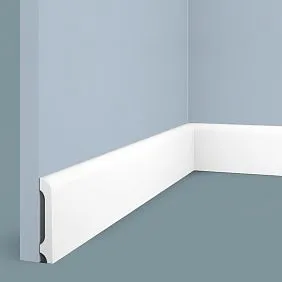
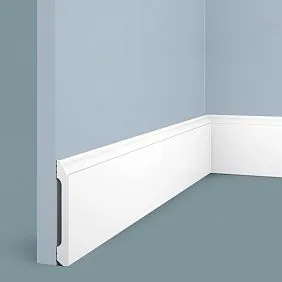
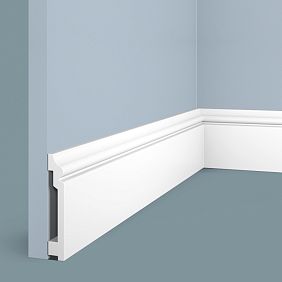
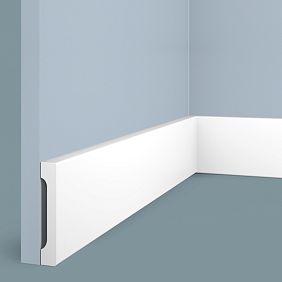
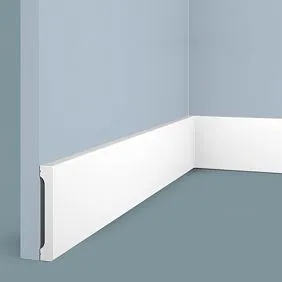
Unlike standard models (4–7 cm high), a high baseboard can reach 8–15 cm, and sometimes even more. Such a size immediately catches the eye and creates a sense of respectability. This is especially relevant for rooms where one wants to emphasize a classic, art deco, or neoclassical style. However, high baseboards often look very stylish even in modern minimalist interiors — provided they are properly coordinated with other elements.
Our factory also produces:
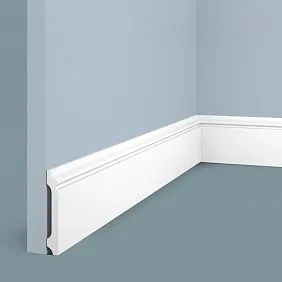

1.2. Visual 'elongation' of space
A high baseboard, when properly selected in color and shape, visually 'raises' the walls, making the room appear more spacious and taller. This is especially valuable for rooms with standard or slightly lowered ceilings (2.5–2.6 m). If the baseboard is chosen to match the wall color, it appears to continue the wall surface, while contrasting finishes emphasize the geometry of the space.
Get Consultation
1.3. Additional Wall Protection
The higher the baseboard, the more reliably it protects the lower part of the walls from damage, moisture, and dirt. During cleaning, when moving furniture, or during household activities (especially if there are children or pets), the likelihood of hitting the lower part of the wall is quite high. A high wooden baseboard absorbs the impact, preserving the wall finish in perfect condition.
2. Criteria for Choosing a High Wooden Baseboard
2.1. Wood species
There are various types of wood for baseboards: oak, beech, walnut, spruce, ash, pine, and others. Each species has its own texture, density, and shade. When selecting, consider:
- Resistance to moisture and temperature fluctuations. For example, oak and beech are renowned for their reliability and longevity.
- Color palette and texture. If you wish to preserve the natural beauty of the wood grain, prefer species with a clearly defined pattern (beech, oak).
- Budget compatibility. More expensive and rare species (walnut, merbau, wenge) have luxurious textures but significantly increase the renovation budget.
2.2. Profile and Shape
A high baseboard can be:
● Straight: a minimalist shape without unnecessary curves, well-suited for modern interiors.
● Ornamental: carved elements, smooth lines, various recesses and patterns, giving the interior a classic or vintage character.
● With a 'shelf': sometimes there is a narrow protrusion at the top of the baseboard, creating an additional decorative accent.
The choice depends on the style in which the room is decorated. A straight profile suits minimalism, while more complex shapes are appropriate for classic styles.
2.3. Color and Finish
● Natural tone. Preserving the natural wood color using oil, wax, or lacquer highlights the beauty of the grain. This option combines perfectly with parquet or solid wood of the same species.
● Painted to match the walls. If you want to visually 'raise' the ceiling and avoid drawing attention to room boundaries, the baseboard is painted the same color as the walls.
● Contrasting finish. Chosen when you want to emphasize the geometry of the room. For example, dark baseboards are installed against light walls and floors, while light baseboards are used against dark finishes.
2.4. Presence of Cable Channel
High baseboards are often equipped with internal channels for wiring, allowing various communications (TV cable, internet, audio systems) to be concealed. This is especially convenient if the room has many devices and wall drilling is not possible.
3. Which Interiors Complement a High Baseboard?
3.1. Classic and Neoclassic
In an environment with moldings, luxurious chandeliers, carved doors, and heavy furniture, a high ornamental baseboard looks natural. It enhances the overall impression of grandeur and elegance. Especially if it is warm tones of oak, beech, or walnut.
3.2. Modern Minimalism
You can use a 10–12 cm high straight-profile baseboard and paint it white, black, or gray. In this case, walls are often neutral (white or pastel), and the floor is single-toned, with an emphasis on concrete or wood texture. This creates an effective 'frame' for the room, emphasizing the clarity of lines.
3.3. Loft and Industrial Style
Brick or concrete walls typical of lofts contrast interestingly with wooden elements. A high baseboard in dark shades (e.g., wenge) or with artificial 'distressing' adds a warm note to the rugged atmosphere, while emphasizing texture contrast.
3.4. Scandinavian Aesthetic
Light flooring, white or pastel walls, minimal furniture — Scandinavian interiors are renowned for their pursuit of simplicity and light. A high baseboard matching wall color (usually white) creates a soft, 'airy' transition, visually expanding the space.
4. Installation and Maintenance: Important Details
4.1. How to install a high baseboard
- Surface preparation. Walls and floor must be sufficiently level; otherwise, gaps may appear between the baseboard and the wall.
- Choosing fasteners.
○ Adhesive (liquid nails): a simple option if walls are level and no future dismantling is planned.
○ Screws or nails: a classic method with secure fastening. Screw heads are concealed using special caps or putty.
○ Clips: convenient when periodic removal of the baseboard is needed (e.g., for accessing wiring).
- Corners and joints. For neat connection of boards at a 45° angle, use a miter box or a circular saw. Careful measurements are essential, especially for high baseboards, where even small errors are noticeable.
4.2. Care for wooden baseboard
● Regular cleaning: wipe the baseboard with a soft, dry cloth to remove dust. If wet cleaning is required, avoid excess water.
● Protective coatings: periodically renew oil, wax, or varnish if the baseboard is subjected to heavy use (frequent wet cleaning, risk of scratches).
● Caution when moving furniture: wooden baseboards can be damaged by impacts. Use furniture pads or move heavy items carefully.
By following these simple rules, a wooden high baseboard will retain its elegant appearance for many years, delighting the eye with its noble texture.
5. Recommendations for color and texture combinations
- Tone-on-tone with the floor. To achieve a smooth transition, you can select a baseboard made from the same wood species as the flooring. This will emphasize the unity of textures, while walls and furniture will serve as accents.
- Contrasting baseboard. Highlighting the baseboard with a contrasting color (e.g., black against white walls and light flooring) adds graphic appeal and originality to the interior.
- Baseboard in wall color. Another popular technique — 'blending' the baseboard by matching it to the wall color. This visually increases room height, especially if the baseboard is quite substantial (10–15 cm).
- Experiments with patina and brushing. For styles such as shabby chic, Provence, or country, apply aged effects: light patina, brushing (highlighting fibers), or whitewashing. This gives the baseboard a vintage character and pairs excellently with 'rustic' aesthetics.
6. Where to buy a high wooden baseboard and how to avoid choosing incorrectly?
Today, the market offers numerous manufacturers, and finding a quality product may be challenging. It is important to pay attention to brand reputation, presence of certifications, and reviews from real customers. An excellent solution ishigh wooden baseboard from trusted suppliers who offer a wide selection of wood species, profiles, and finishes. Buying directly from experts ensures compliance with all technical standards for wood drying and treatment.
To avoid mistakes:
- Check the surface finish quality. The surface should be smooth, without rough edges or chips.
- Confirm the wood moisture content. The optimal level is 8–12%. If the material was poorly dried, future deformation may occur.
- Compare colors of different batches. If the room is large, ensure that the entire batch of baseboards was manufactured under identical conditions: wood may exhibit minor color variations between batches.
- Learn about mounting methods. Confirm which methods are recommended by the manufacturer. Perhaps special clips are already available for this profile.
- Assess design and dimensions. Match the selected height with the actual ceiling height to avoid an unnatural appearance.
7. Examples of using a high baseboard in interior design
- Classic living room. Light walls, herringbone parquet, and a decorative white baseboard 12 cm high. The room is additionally adorned with ceiling moldings and classic furniture in beige and gold tones.
- Modern bedroom. Dark laminate, light gray walls, a tall straight baseboard (about 10 cm) matching the wall color. This creates a 'blending' effect, making the room appear higher.
- Loft space. Open layout, brick walls, polished concrete floor. A high baseboard in dark brown or black with sharp edges emphasizes the industrial character of the space while adding coziness through natural wood.
- Studio in Scandinavian style. Light-toned parquet planks, white walls, and a baseboard of the same height as in classic style, but without carving — a straight 10 cm profile. Bright colored accents (e.g., textiles or decor) enliven the space.
8. Frequently Asked Questions
8.1. Is a tall skirting board suitable for low ceilings?
Yes, if the room allows and the ceiling height is not too low (at least 2.5–2.6 m), and the skirting board color matches the overall design. It is recommended to paint it to match the walls or choose similar shades to visually 'raise' the ceiling.
8.2. Can I install a tall skirting board myself?
Yes, if you have basic skills with tools. However, the large dimensions of tall skirting boards require careful measurements and trimming at angles. If you lack experience, it’s better to hire professionals: this way, you’ll avoid noticeable gaps, scratches, and other issues.
8.3. How much more expensive is a tall skirting board compared to a standard one?
The price depends on material consumption (a taller skirting board requires more wood), wood species, and finish level. Typically, a tall skirting board costs 20–40% more than standard-height analogs, but this extra cost is often justified by the visual effect and practical advantages.
— it is not only aesthetically attractive decor, but also a universal design tool capable of performing several functions: from accent walls and zoning to furniture cladding. They bring warmth to the space, help emphasize style, and achieve a sense of harmony with nature.
Choosinghigh wooden baseboard It is an excellent way to add expressiveness, solidity, and completeness to the interior. It can harmoniously fit into any style, whether a classic living room, a modern minimalist bedroom, or a creative loft space. The key is to consider ceiling height, room style, select the optimal wood species, and profile shape.
Yes, a tall skirting board may be more expensive and slightly more complex to install than its 'younger siblings'. But it offers maximum possibilities both in design and practical terms (better wall protection, presence of cable channels). Before purchasing, determine your goals: do you want the skirting board to serve as an eye-catching accent, or should it 'blend' into the space, making it appear higher and more 'airy'?
Answering these questions and reviewing offers from reputable manufacturers, you will find the exact option that will become an indispensable part of your interior — stylish, durable, and truly unique. Let every detail in your home contribute to creating an atmosphere of comfort, elegance, and individuality, and let the tall wooden skirting board be the natural concluding chord in this 'orchestra' of design solutions!