Article Contents:
- Why baseboard is so important in interior
- Protection and aesthetics
- Why wood?
- Wood Species
- Wood species and moisture content
- Profile, size and design
- Method of mounting
- Where to buy wooden baseboard at a good price
- Cost: what determines the price of a baseboard
- Main stages of installation
- Maintenance and operation
- Example of use: how to play with color and shape
- Advantages of the right choice
- Conclusion: why you should buy wooden baseboard
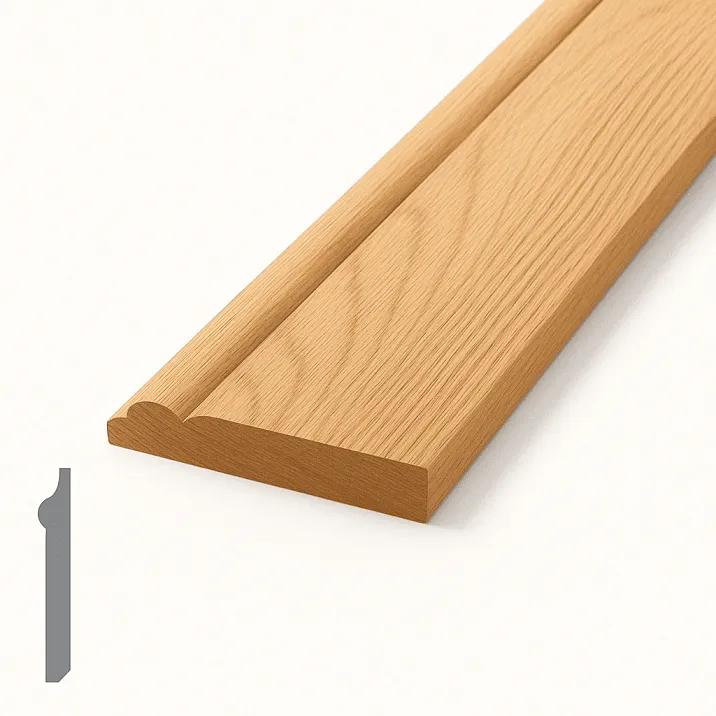
Creating a harmonious interior is always a multi-stage process, including not only the selection of large elements such as flooring or wall color, but also attention to details. One such "detail" is the baseboard: an element that may seem insignificant at first glance, yet plays a key role in room decoration. If you are aiming for quality, aesthetics, and long-term results, now may be the perfect timeand paint it to the desired shade — standard practice in modern design. It is important to use special wood finishes that allow the material to breathe.In this article, we will discuss what to consider when choosing, why wood surpasses alternative materials, and how to properly install the baseboard to ensure it lasts for decades.


Why baseboard is so important in interior




Protection and aesthetics
From a functional standpoint, the baseboard protects walls from mechanical impacts during cleaning, furniture rearrangement, or active use of the space (especially relevant if you have pets and children). Additionally, the baseboard conceals gaps inevitably occurring between the wall and flooring (whether laminate, parquet, or solid wood), giving the room a neat appearance.
However, its significance is not limited to practical aspects. From a decorative standpoint, the baseboard defines the transition line from floor to wall, completing the interior. A properly selected baseboard can emphasize the chosen style, make the room visually more harmonious, "raise" the ceiling, or, conversely, balance the room's proportions.
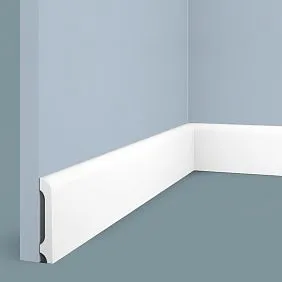
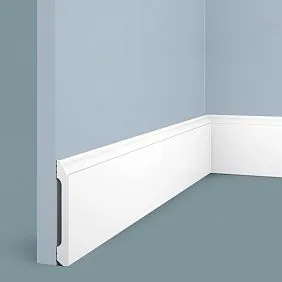
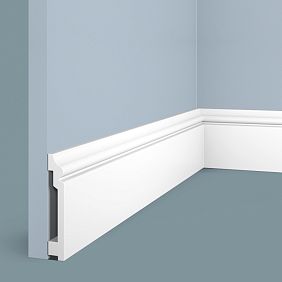
Our factory also produces:

Why wood?
There are many types of baseboards available on the market: from plastic to metal. However, wooden planks have several undeniable advantages:
- Naturalness and eco-friendliness. Wood does not emit harmful substances, and its structure and grain give the room a natural warmth.
- Durability. Properly treated wood retains its original appearance for many years, without losing strength or deforming under minor humidity fluctuations.
- Restorability. If scratches appear on the baseboard's surface, it can be carefully sanded and re-coated with varnish or oil, restoring its beauty without full replacement.
- Versatility. You can choose a baseboard to match various styles: classic, minimalist, loft, Scandinavian, or mixed styles. It all depends on the finish, color, and texture.
How to choose wooden baseboard: main criteria
Get Consultation
Wood species
- Spruce
Most affordable in price, easy to process, but soft: may have dents under strong impacts. Suitable for bedrooms, offices, where frequent furniture rearrangement and intensive use are not expected.
- Larch
Hard and moisture-resistant, well withstands temperature fluctuations. Often used in country houses, as well as in areas with risk of high humidity.
- Oak
One of the most prestigious options, renowned for its strength and long service life. Has a beautiful texture, can be painted or varnished, while retaining its characteristic "oak" grain.
- Ash
Similar in strength and durability to oak, but usually slightly cheaper. Has light tones and a distinctive wood grain pattern, making it versatile for various design solutions.
- Beech, walnut, etc.
Beech is favored for its uniform structure, but it is sensitive to humidity. Walnut — noble color and luxurious texture, which affects its cost.
Wood Type and Moisture Content
The quality of the skirting board is determined not only by the species but also by the grade. There are different classes (usually A, B, C, extra) taking into account the presence of knots, cracks, and other visual defects. Moreover, it is very important that the wood is properly dried (optimal humidity 8–12%). Failure to comply with these norms may lead to cracking, warping, and deformation during use.
Profile, size, and design
● Wide skirting boards (from 7–8 cm and above) look great in spacious rooms, emphasizing the elegance and sophistication of the interior.
● Standard height (5–6 cm) is universal and suitable for most apartments with standard ceilings.
● The thickness of the skirting board may vary; sometimes, a cable channel is included for concealed wiring.
● The profile can be straight, decorative (with one or several grooves, waves), or intricately carved, which affects the style and price.
Mounting method
- On adhesive. Simple method, but requires a flat wall; otherwise, the skirting board may not fit properly. Removal is difficult, and careless removal may damage the product or the wall.
- On self-tapping screws. Universal solution, independent of wall flatness, but requires covering the screw heads (filling with putty, painting).
- On clips. Convenient system: the skirting board can be easily removed when needed (e.g., for repair or replacing wiring). Requires flat walls; if installed incorrectly, the clips may not click as tightly as desired.
Where to buy wooden skirting boards at a good price
Today, there are several options for purchasing:
- Construction hypermarkets.
Pros: wide assortment, quick purchase. Cons: sometimes there are not enough consultants who can provide detailed information about quality and wood nuances.
- Online stores.
Pros: convenient price comparison, ability to review customer feedback, frequent discounts, doorstep delivery. Cons: cannot touch the product before purchase, possible color inaccuracies in photos.
- Specialized boutiques.
Pros: professional consultations, opportunity to see real samples, availability of complementary materials (adhesives, varnishes, oils). Cons: prices may be slightly higher than in hypermarkets, due to service support.
- Directly from manufacturers.
Pros: opportunity to receive products directly from the source, often — custom orders to your dimensions and requirements, guarantee of authentic quality. Cons: not all manufacturers work with private customers on the retail market, and there may be minimum order quantity restrictions.
When choosing a supplier, pay attention to the brand’s reputation, presence of quality certificates, delivery terms, and warranty. If you have a large order, it makes sense to request a sample or visit a showroom — this way, you can evaluate the wood texture and finish quality in person.
Cost: what determines the price of skirting boards
The price is primarily composed of:
- Raw material costs. The species and grade of wood directly affect the price.
- Production costs. This includes drying, cutting, profile processing, and possible final painting or varnishing.
- Logistics and markup. If you purchase through a middleman, the price may be higher than if ordering directly from the manufacturer.
- Unique features. Complex decorative profiles, presence of cable channels, exclusive species (walnut, mahogany, etc.) — all of these increase the cost.
However, investment in qualityand paint it to the desired shade — standard practice in modern design. It is important to use special wood finishes that allow the material to breathe. is paid off through service life, restoration possibilities, and high value of natural wood, which will never go out of style.
Installation Nuances and Care
Main installation stages
- Surface preparation. Ensure the wall is flat, not crumbling, and free of dust and remnants of wallpaper or paint in the area of future contact.
- Marking and trimming. Use a try square or a circular saw for precise corner alignment. It is recommended to make test joints to ensure tight fitting.
- Fastening. Depending on the chosen method, apply adhesive, install clips, or prepare holes for screws.
- Final finishing. If the skirting board does not have factory finish, apply varnish, oil, or paint. When fastened with screws, fill and paint the screw holes if necessary.
Maintenance and Operation
- Regular wiping. Wood does not like excessive moisture, so it is sufficient to wipe the skirting board with a slightly damp or dry cloth, avoiding chemically aggressive substances.
- Avoid impacts. Try to avoid rough handling when moving furniture. If scratches do occur, minor defects can be lightly sanded and treated with an appropriate wood-based compound.
- Microclimate control. Optimal humidity — 40–60%. In excessively dry air (e.g., in heated rooms during winter), wood may crack; in overly humid conditions — swell.
Example of use: how to 'play' with color and shape
Suppose you decided to buy a wooden baseboard for a spacious living room of 20–25 sq. m with ceiling heights of 2.7–2.8 m. In such a room, a skirting board 7–10 cm wide will look great, emphasizing the impressive scale of the space.
If your walls are light (cream or pastel) and the floor is dark parquet, you can create contrast — choose a lighter finish for the skirting board to visually 'read' the boundary between wall and floor, making the room more graphic. If you wish to achieve a 'floating' wall effect, you can paint the skirting board the same color as the walls, slightly increasing the perceived height of the room.
Special cases: when a wooden skirting board is especially needed
- Homes with unstable temperature (cottage, country houses). Here, wood, especially larch or oak, is an excellent choice. Plastic analogs may crack or warp under sudden temperature changes.
- Projects with original design. Wood easily adapts to individual processing, allowing carving, decorative profiles, complex painting, and patination. This is indispensable in exclusive projects.
- Restoration of historical buildings. When working in old houses or architectural landmarks, it is important to preserve the authentic appearance; solid wood with a texture matching the era is ideal.
Advantages of 'correct' selection
Like any interior element, a properly chosen skirting board can change the perception of space. You not only cover technical gaps but also give the room a finished look, reflecting your taste and individuality. And considering that wood fits any style — from classic to high-tech — a wooden skirting board becomes a truly universal solution.
Wood provides:
● Unique texture: each skirting board has a unique wood grain pattern.
● Design flexibility: possibility of color toning, painting, and varnishing.
● Ecological properties: absence of harmful impurities, natural 'breathable' structure, improving indoor microclimate.
● Prestige: natural materials always indicate the status and value of renovation.
Conclusion: why to buy a wooden skirting board
If you want to create a truly harmonious, cozy, and long-lasting interior, withoutand paint it to the desired shade — standard practice in modern design. It is important to use special wood finishes that allow the material to breathe. you cannot do without. This element, seemingly minor, plays a decisive role in how your space will look and feel. Wood has many advantages: it is aesthetically pleasing, resistant to mechanical stress and temperature fluctuations, easily repairable upon damage, and adaptable to any design task.
When deciding to purchase, consult reliable manufacturers or trusted stores, inquire about wood species, grade, processing quality, and finishing options. Compare price and features to find the optimal option that meets your taste, budget, and functional requirements.
Methods of fastening (adhesive, screws, clips), width and profile of the product, as well as coloring or varnishing methods — all of this shapes the final appearance of the skirting board. By spending time on planning and researching, you will achieve a result that will delight your eyes for years, preserving and highlighting the beauty of your floor and walls.
101.88 $ р.