Article Contents:
- Why 100mm — It's Not Just a Number, But a Philosophy of Space
- MDF: When Technology Serves Beauty
- Transformation Magic: Painting Possibilities
- Technological Solutions: Profiles to Any Taste
- Installation: Where Technique Meets Art
- Stylistic universality: from classic to avant-garde
- Economic Practicality: Investment in the Future
- Secrets of Professional Care
- Innovative Solutions for the Future
- Ecological Aspects: Care for the Planet
- Comparative Analysis of Dimensions
- Technical specifications and quality standards
- Design Trends and Current Solutions
- Frequently Asked Questions
- Conclusion

Do you know that there is an interior detail capable of radically changing the perception of the entire space? A detail that most people notice subconsciously, yet which determines whether the interior will appear expensive and thoughtfully designed or cheap and unfinished? MDF skirting board 100 mm for painting — exactly such an element. This seemingly insignificant finishing component has become a secret weapon for professional designers and advanced homeowners.
Imagine an interior without skirting boards. Walls seem to hang in the air, the floor appears unfinished, and the overall picture resembles an uncompleted room. Now add a properly selected skirting board — and magic begins! The space acquires completeness, elegance, character. But why exactly 100 millimeters became a magical number in the world of interior design?


Why 100mm — It's Not Just a Number, But a Philosophy of Space
Have you ever wondered why some rooms seem harmonious at first glance, while others do not? The secret lies in proportions. And 100-millimeter skirting board height — this is the result of centuries-long search for the ideal balance between functionality and beauty.
Mathematicians and architects have long proven: the human eye perceives certain size ratios as harmonious. A 100 mm skirting board creates an ideal visual base for walls in rooms with standard ceilings of 2.7–3.2 meters. This is not coincidence — it is precise calculation based on the principles of the golden ratio.
But mathematics is only the beginning of the story. Practical advantages of the 100-millimeter height become evident in everyday life. Such a skirting board effectively protects walls from vacuum cleaner impacts, mop collisions, children’s toys, and accidental furniture bumps. It is high enough to hide floor-wall joint irregularities, yet not so bulky as to visually 'consume' space.
The psychological effect of a 100-millimeter skirting board is remarkable. It creates a sense of stability and reliability in the interior, without causing feelings of pressure or bulkiness. People subconsciously perceive such height as natural and correct.
Compare this with alternatives: 60-millimeter skirting boards look unfinished and do not provide sufficient wall protection, while 150-millimeter ones may overwhelm space in ordinary apartments. MDF for Painting 100 mm height — this is precisely the golden middle that designers seek.




MDF: When Technology Serves Beauty
What if you were told that there exists a material combining the beauty of natural wood with the practicality of modern composites? A material that is not afraid of moisture, does not crack with temperature changes, does not deform over time, yet looks so natural that it is indistinguishable from solid oak? This is precisely the new-generation MDF material.
MDF is an abbreviation from the English 'Medium Density Fibreboard,' which translates to 'Medium Density Fibreboard.' But behind this technical name lies a true revolution in the world of building materials.
Imagine the MDF creation process as a recipe for perfection. Take the finest wood fibers — so fine they resemble flour more than sawdust. Add eco-friendly, next-generation binding agents — no toxic formaldehyde or harmful chemicals. Subject this mixture to high pressure and temperature in specialized presses. The result — a material that surpasses natural wood in many parameters!
The density of quality MDF for skirting boards is 750–870 kg/m³. What does this mean in practice? The material becomes sufficiently dense to hold complex shapes and withstand mechanical loads, yet remains easy to process — milling, drilling, sanding.
Moisture stability — another strength of MDF. Unlike natural wood, which may 'move' with changes in humidity, MDF maintains its dimensions with precision down to fractions of a millimeter. Forget about gaps in corners that appear in winter, or swollen skirting boards in the bathroom!
Our factory also produces:


Magic of Transformation: Coloring Options
Now, the most interesting part! What if you had a chameleon-like material that could take any form depending on your mood and design vision? — is a horizontal element that frames the room at the bottom of the walls where the wall meets the floor. Skirting boards perform several functions: they hide the technological gap between the wall and floor covering (necessary for thermal expansion), protect the lower part of the wall from mechanical damage, create visual completion, and may conceal wiring. — exactly such a material!
The ability to paint transforms the neutral MDF base into an unlimited tool for creativity. Want a classic Scandinavian-style white interior? Please! Dreaming of rich dark tones in the spirit of English classicism? Easy! Planning a vibrant accent interior? MDF can handle this task too!
Painting MDF is not just applying paint to the surface. It's an entire science requiring understanding of the material's properties and proper selection of coatings.
The structure of MDF is ideally suited for painting. Its dense, uniform surface without knots, resin pockets, or other defects of natural wood ensures even absorption of primer and paint. The result — a perfectly smooth finish without spots or unevenness.
Adhesion — the ability of paint to "stick" to the surface — is excellent on properly prepared MDF. Special primers create a reliable base for any type of paint: acrylic, alkyd, polyurethane.
Color design possibilities are limitless. From delicate pastel shades to vibrant saturated colors, from imitating valuable wood species to metallic effects — modern paints allow you to create any desired look.
Get Consultation
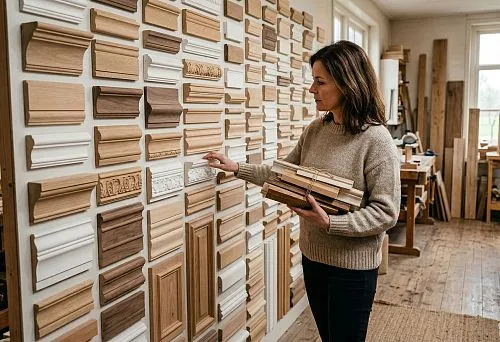
Technological solutions: profiles to any taste
How many different types of skirting boards exist in the modern world? Hundreds? Thousands? In reality, their number is limited only by the imagination of designers and the capabilities of milling equipment!
Simple rectangular profiles — this is the classic of minimalism. Clear geometric lines, absence of unnecessary details, emphasis on the purity of form. Such skirting boards are ideal for modern interiors in high-tech, Scandinavian, and loft styles.
Beveled profiles add dynamism to strict geometry. A 45° bevel creates an interesting play of light and shadow, visually lightening the bulkiness of the skirting board. A single-sided bevel gives direction, while a double-sided bevel creates symmetrical perception.
Round profiles introduce softness and coziness. Smooth transitions, absence of sharp angles create a sense of comfort and homeliness. Especially popular in Provence, country, and modern classic interiors.
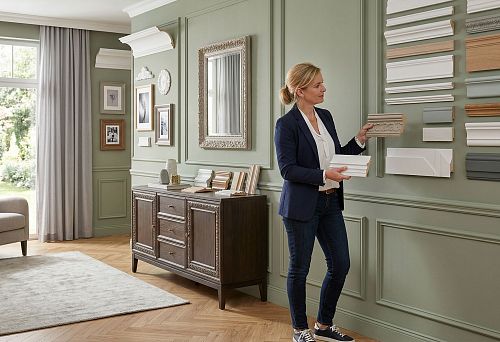
Complex multi-level profiles — this is the highest level of skill in the world of skirting boards. MDF moldings for painting With classic elements — ovals, reeded moldings, and bevels — they allow recreating the atmosphere of palace interiors.
Functional profiles solve practical problems. Skirting boards with cable channels allow hiding wiring, models with LED backlighting create dramatic lighting, profiles with mounting systems simplify installation.
Installation: where technique meets art
Many consider installing skirting boards to be a simple technical operation. But experienced professionals know: quality installation is a true art, requiring precision, patience, and understanding of the material.
Preparation — half the success. Walls must be perfectly flat, clean, and dry. Even the slightest irregularities will be noticeable after installing the skirting board. Professionals use a 2-meter level to check wall flatness.
Material acclimatization — a stage often ignored by amateurs, but critically important for quality results. MDF must rest in the installation room for at least one day to equalize temperature and humidity.
Marking requires mathematical precision. First, the longest wall is determined, where the full-length board will be installed. From this point, the entire system is calculated, taking into account the length of standard boards and minimizing the number of joints.
Cutting — a responsible operation that does not tolerate errors. A saw with a fine-toothed blade ensures a perfectly clean cut. Angles are mitered at an exact 45° — even the slightest deviation is not allowed here.
The method of attachment is chosen depending on the wall material and the weight of the skirting board. MDF baseboards for painting Skirting boards can be attached using adhesive, self-tapping screws, or a combination of both.
Stylistic Universality: From Classicism to Avant-Garde
Is there a universal interior element that looks equally good in palace halls and modern lofts? In baroque mansions and Scandinavian homes? In children's rooms and strict offices? The 100mm paintable MDF skirting board — exactly such an element!
In classic interiors, complex-profiled skirting boards with traditional moldings create an atmosphere of eternal elegance. White or cream tones highlight the nobility of forms, while gold accents add luxury.
Modern minimalist interiors require simple, clean forms. Rectangular profiles, painted in wall tone or contrasting color, create graphic accents and emphasize the geometry of space.
Scandinavian style loves natural materials and light tones. MDF skirting boards painted white or light gray perfectly fit the concept of northern simplicity and functionality.
Loft interiors value contrasts and industrial motifs. Dark skirting boards against brick walls or concrete surfaces create the desired atmosphere of urban aesthetics.
Provence and country styles require softness and coziness. Skirting boards with rounded profiles, painted in pastel tones or imitating whitewashed wood, create the desired mood.
Economic efficiency: an investment in the future
How often do we hear the phrase 'a miser pays twice'? In the world of finishing materials, this proverb is especially relevant. Cheap plastic skirting boards may seem like an economical solution, but is that truly the case?
Let's calculate the real cost of owning different types of skirting boards. PVC skirting boards are indeed cheap to buy, but they last at most 5-7 years, yellow over time, and poorly withstand mechanical impacts. Replacement requires dismantling, purchasing new materials, and redoing the work.
MDF skirting boards that can be painted cost more upfront, but they last 20-25 years without losing their appearance. If needed, they can be repainted, repaired, and modernized to match a new design.
Natural wood is more expensive than MDF, requires special care, may deform due to humidity changes, and is susceptible to insect damage. MDF lacks all these drawbacks.
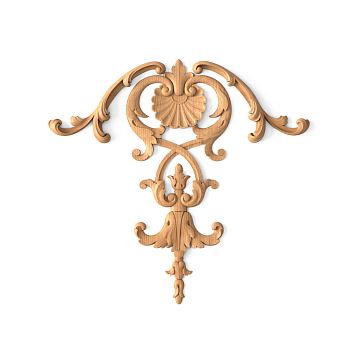
Impact on property value is another important factor. Quality finishing using modern materials increases the attractiveness of the property to buyers and tenants. Corner decorative elements and other details create the impression of a thoughtfully designed, expensive interior.
Secrets of professional care
How to maintain the flawless appearance of skirting boards for many years? Professionals know simple yet effective secrets for caring for MDF products.
Regular dry cleaning is the foundation of longevity. A soft vacuum brush or special attachment effectively removes dust from profiled elements. Cleaning frequency depends on the intensity of room use.
Wet cleaning is done with slightly damp microfiber cloth. It is important to avoid excess water — it may seep into joints and damage the material. For removing stubborn stains, special cleaners for painted surfaces are used.
Damage prevention includes protecting against impacts during furniture rearrangement, using protective pads on chair and table legs, and controlling room humidity.
Local repair of minor damage is done using special wax pencils or acrylic putty. Scratches are filled, dried, sanded, and painted over.
Innovative solutions of the future
The world of technology is not standing still, and the production of MDF products is constantly improving. What innovations await us in the near future?
Self-cleaning coatings are already appearing on the market. Photocatalytic additives break down organic contaminants under light, maintaining surface cleanliness.
Antibacterial technologies include silver ions or other active components in the coating structure. This is especially relevant for medical facilities, kindergartens, and food production.
Integration with "smart home" systems allows embedding temperature, humidity, and lighting sensors into skirting boards. LED lighting can be controlled via voice commands or smartphone.
and frames create a home atmosphere, making it truly cozy and individual. This is an investment in beauty, which pays off every day through aesthetic pleasure from admiring the beautiful. New-generation products are manufactured using 3D printing, enabling the creation of complex, custom elements for exclusive projects.
Ecological aspects: care for the planet
In the era of ecological awareness, it is important to understand how our choices affect the environment. MDF skirting boards are an ecologically responsible solution for several reasons.
The raw material base of MDF is primarily wood processing waste. Instead of rotting in landfills, sawdust and shavings are transformed into high-quality construction material. This reduces pressure on forest resources.
The longevity of the material means less resource consumption in the long term. One set of quality MDF skirting boards replaces several generations of cheap alternatives.
The ability to recycle used MDF products into new materials aligns with circular economy principles. This reduces the amount of construction waste in landfills.
Modern binding agents contain no harmful components and meet the strictest ecological standards. E0 emission class means formaldehyde emissions do not exceed natural background levels.
Comparative analysis of sizes
Why exactly 100mm, not 80 or 120? Let's examine all options and understand when each size is optimal.
60-70mm skirting boards are suitable for rooms with very low ceilings or ultra-minimalist interiors. They are practically invisible, which is sometimes required by design.
80mm size is the younger sibling of the 100mm variant. It creates less pronounced proportions and is suitable for small rooms where every centimeter counts.
100mm — the golden standard of modern design. Optimal proportions for most interiors, sufficient functionality, and universal application.
120-150mm — choice for rooms with high ceilings and classic interiors. They create a sense of monumentality and luxury.
Over 150mm — for special design tasks in large spaces or historical interiors.
Technical Specifications and Quality Standards
What lies behind the outer simplicity of MDF skirting? What technical parameters determine its quality and durability?
The material density should be at least 750 kg/m³ to ensure the required strength. Too low density leads to brittleness, too high — to processing difficulty.
The moisture content of finished products should not exceed 8-10%. This parameter is critically important for dimensional stability during operation.
Geometric deviations are strictly regulated: ±2mm in length, ±0.5mm in width, ±0.3mm in thickness. High-quality products have even stricter tolerances.
Surface roughness should ensure optimal adhesion of primer while maintaining smoothness. This balance is achieved by properly adjusting the sanding equipment.
Formaldehyde emission class E1 or E0 is confirmed by appropriate certificates and periodically controlled in accredited laboratories.
Design trends and current solutions
Fashion in interior design changes, but quality materials remain relevant always. What trends define the modern approach to using skirting boards?
The trend toward individualization means moving away from standard solutions to personalized approaches. The ability to paint MDF skirting boards in any color perfectly matches this trend.
Consumer environmental awareness requires materials with minimal impact on the environment. MDF meets these requirements.
Functionality and practicality are becoming no less important than aesthetics. Skirting boards with cable channels, mounting systems, integrated lighting — these are requirements of modernity.
Manufacturing quality is valued above cheapness. Consumers are willing to pay more for materials that will last long and look flawless.
Frequently asked questions
Why is MDF skirting better than plastic?
MDF surpasses plastic in appearance, eco-friendliness, repairability, and durability. After painting, MDF looks indistinguishable from natural wood, whereas plastic always appears artificial. MDF can be repaired and repainted, while plastic can only be replaced.
Can MDF skirting be used in wet areas?
Standard MDF is not recommended for constantly wet areas, but a quality protective coating and good ventilation allow its use in bathrooms and kitchens. There are also moisture-resistant MDF modifications.
Is it difficult to install MDF skirting yourself?
With basic skills in using tools, installation is quite accessible for self-execution. You will need a circular saw, drill, level, and careful workmanship.
How long do painted MDF skirting boards last?
With proper installation and maintenance, the service life is 20-25 years. The coating may require renewal every 7-12 years depending on usage conditions.
Can MDF skirting be repainted?
Yes, this is one of the main advantages of MDF for painting. If needed, the surface is lightly sanded, primed, and painted in a new color. This allows updating the interior without replacing the skirting boards.
Why is 100mm considered the optimal size?
100mm provides ideal proportions for most modern interiors with ceiling heights of 2.7–3.2m, sufficient wall protection, and does not visually overload the space. This size corresponds to the principles of the golden ratio in architecture.
How to choose quality MDF skirting?
Pay attention to material density (at least 750 kg/m³), geometric accuracy, surface quality, presence of environmental safety certificates. High-quality products have uniform structure without spots or inclusions.
What paints are best for MDF?
Water-based acrylic paints with preliminary priming using a special MDF primer are optimal. For wet areas, it is better to use moisture-resistant polyurethane enamels.
Conclusion
MDF skirting 100mm painted is the embodiment of a modern approach to interior design, where functionality combines with limitless creative possibilities. This material successfully combines the best qualities of natural wood with the advantages of modern technology, providing designers and homeowners with a tool to create truly individual interiors.
The 100mm height has become the gold standard due to the ideal combination of proportions, functionality, and aesthetic expressiveness. This size suits most modern interiors, creating a harmonious base for any stylistic solution.
The technological sophistication of MDF ensures stable characteristics, durability, and ease of processing. The material's ecological safety meets the strictest standards, making it suitable for any residential space.
The ability to paint transforms every project into a unique work of art. From classic elegance to avant-garde boldness — MDF skirting boards adapt to any design solution and individual preferences.
Economic efficiency is evident in the long term through minimal operating costs, the possibility of updating without replacing elements, and increased property value. This is an investment in quality that pays off over time.
STAVROS, recognized as a leading manufacturer of high-quality MDF products, offers a full range of solutions for modern interiors. Years of experience, use of advanced production technologies, and strict quality control at every stage ensure compliance with the highest international standards. STAVROS understands the importance of every detail in creating a perfect interior and offers materials that combine traditional craftsmanship with innovative solutions. Choosing STAVROS products means you are not just getting building material, but a foundation for realizing the boldest design ideas, which will delight you with refined forms and flawless quality for many years.