Article Contents:
- Evolution of the baseboard: from necessity to art
- Ancient roots of modern solutions
- Renaissance and Baroque: triumph of ornamentation
- Modern trends: functionality and aesthetics
- Anatomy of quality: what distinguishes premium wooden baseboard
- Wood species: foundation of quality
- Manufacturing technology: path to perfection
- Quality Control: Guarantee of Perfection
- Profiles and sizes: geometry of beauty at floor level
- Classic Profiles: Time-Tested Solutions
- Modern solutions: innovations in traditional material
- Size range: mathematics of harmony
- Installation Technology: Secrets of Professional Mounting
- Preparation stage: foundation of success
- Mounting methods: reliability first
- Corner processing: mastery in details
- Protective-decorative coatings: beauty and durability
- Lacquer systems: strength and gloss
- Oil-based coatings: naturalness and eco-friendliness
- Staining and special effects: limitless possibilities
- Stylistic solutions: from classic to avant-garde
- Historical styles: tribute to tradition
- Modern directions: new understanding of beauty
- Usage and maintenance: preserving beauty for decades
- Daily Care: Simple Rules
- Climate control: stability of conditions
- Preventive maintenance: preventing problems
- Economic aspects: investments in quality of life
- Initial investments: the price of quality
- Operating Costs: Savings in the Long Term
- Impact on property value
- Development trends: the future of wooden baseboards
- Ecological innovations
- Technological achievements
- Technology integration
- Selection and purchase: practical recommendations
- Production Capabilities and Technologies
- Technical requirements for ordering
- STAVROS: where tradition meets perfection
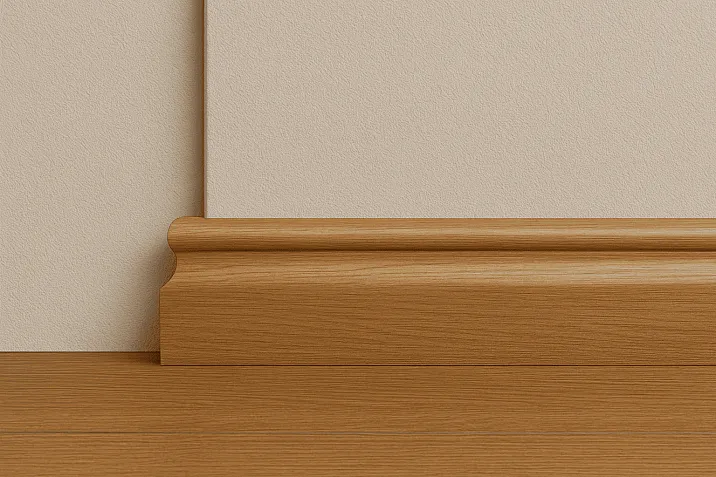
Imagine a symphony orchestra without a conductor, a painting without a frame, a luxurious dress without properly matched accessories. That’s exactly how any interior, even the most thoughtfully designed one, looks without a high-quality transition between the floor and the wall. Floor wooden cornice It is not just a functional detail intended to hide technological gaps. It is the finishing touch that transforms a set of finishing materials into a harmonious living space.
But why wood? In an era when the market is flooded with plastic imitations, composite materials, and other synthetic solutions, natural wood continues to be the benchmark of quality, beauty, and durability. Wood lives, breathes, ages gracefully, creating that unique atmosphere of coziness that no artificial material can replicate.
Today, we will discuss how to properly select, install, and use wooden baseboards so that they become not just a decorative element, but a true ornament of your home.


Evolution of the baseboard: from necessity to art
The history of the baseboard goes back to ancient times, when builders first encountered the need to beautifully finish the junction between the floor and the wall. Initially, it was purely a practical element — protection for the lower part of the wall from mechanical damage, moisture, and dirt.




Ancient roots of modern solutions
In ancient Greek and Roman buildings, decorative elements were already used to finish transitions between different surfaces. Masters of that time understood: beauty lies in details, and unfinished transitions spoil even the impression of the most luxurious finish.
Medieval castles and Gothic cathedrals developed this tradition, turning a functional necessity into an element of architectural decoration. Stone baseboards with complex profiles became an indispensable part of the interior, highlighting the owner's status and the builders' craftsmanship.
Our factory also produces:
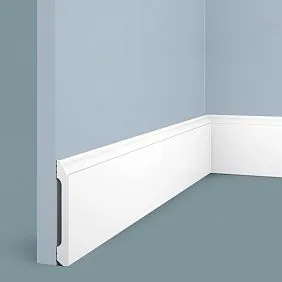
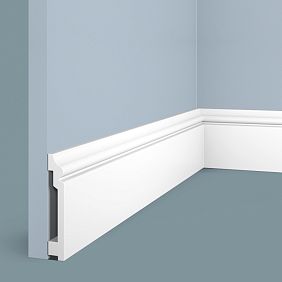
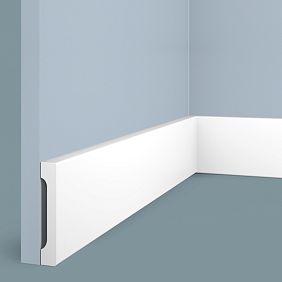
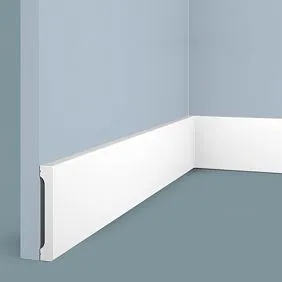
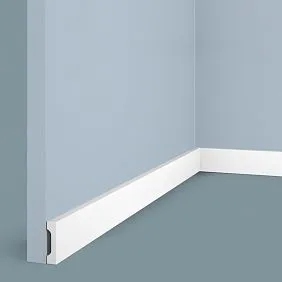
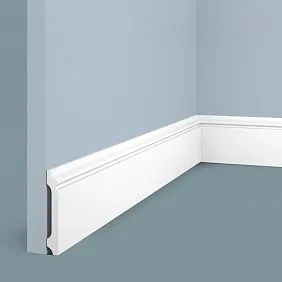

Renaissance and Baroque: triumph of decoration
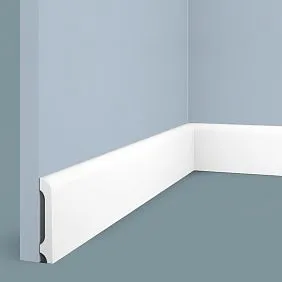
The Renaissance brought a new understanding of harmony and proportions. wooden cornice became a full-fledged participant in architectural composition, its profile was carefully developed in accordance with the overall style of the room.
The Baroque era perfected decoration. Baseboards of that time impress with the complexity of profiles, richness of carved decoration, use of gilding and other decorative techniques. Every element was a work of art.
Get Consultation
Modern trends: functionality and aesthetics
The 20th century brought an understanding that beauty can be simple. Modernism, functionalism, minimalism — all these directions influenced the development of baseboards. Modern wooden molding combine minimalist forms with high manufacturing quality and functionality.
Anatomy of quality: what distinguishes premium wooden baseboards
Not all wooden baseboards are equally useful — this paraphrased truth is especially relevant in today's realities, when the market is filled with offers of varying quality. What distinguishes a truly quality product from a mediocre imitation of wood?
Wood species: foundation of quality
Choosing wood species — this is choosing the character of the future interior. Each species has its unique properties, determining not only the appearance, but also the performance characteristics of the product.
Coniferous species are traditionally used for manufacturing baseboards due to the optimal price-to-quality ratio. Common pine with density 500-520 kg/m³ provides sufficient strength at a moderate cost. Natural resinousness provides additional protection against moisture and biological damage.
Spruce has a lighter, almost white wood with minimal resin canals. This makes it an ideal material for painting in light tones or creating contrasting solutions.
Larch occupies a special place among coniferous species. Its density reaches 650 kg/m³, comparable to hardwoods, and its natural biostability exceeds even oak. Oak baseboard can compete with larch only with special treatment.
Hardwood species represent the premium segment of the market. Oak is an undisputed leader in terms of overall characteristics. Density 650-750 kg/m³, expressive texture, high tannin content providing natural protection against rot — all this makes oak baseboards practically eternal.
Beech baseboard attracts designers with its uniform structure and ability to precise mechanical processing. Beech wood density 680-720 kg/m³ allows creating the most complex profiles with the finest details.
Ash demonstrates an impressive combination of mechanical strength and decorativeness. Contrastive texture with clearly defined annual rings makes ash baseboards especially expressive in modern interiors.
Manufacturing technology: the path to perfection
Modern production of quality wooden baseboards is a complex technological process, each stage of which affects the quality of the final product.
Drying wood — a critically important stage determining the dimensional stability of the finished product. Kiln drying under controlled temperature and humidity parameters allows reducing wood moisture to optimal 8-12%. This ensures minimal deformation during use.
Machining is performed on high-precision equipment with numerical control. Profile milling requires special skill — any inaccuracy in tool setup will result in scrap of the entire batch.
Multi-stage grinding creates a perfectly smooth surface, ready for any coatings. Final grinding with 320-400 grit abrasive ensures a mirror-like surface finish.
Quality Control: Guarantee of Perfection
Professional manufacturers implement multi-level quality control systems, ensuring defective products do not reach the consumer.
Incoming raw material inspection includes checking moisture content, grade, and absence of defects on each board. Only material meeting strict requirements enters production.
Technological control is performed at every processing stage. Geometric parameters, surface quality, profile accuracy — all are subject to thorough inspection.
Final inspection includes visual examination of each item, instrumental dimension checks, and packaging control. Only products passing all control stages are entitled to be called quality.
Profiles and Sizes: The Geometry of Beauty at Floor Level
Choosing a floor skirting board profile is not only an aesthetic decision but also a functional necessity. Different profiles handle tasks such as covering unevenness, protecting walls, and creating visual effects differently.
Classic profiles: time-tested solutions
Quarter-round molding is the most common and versatile profile. Its simple concave shape creates a smooth transition between floor and wall, without drawing excessive attention. Sizes range from 30×30 mm for small rooms to 80×80 mm for spacious halls.
The advantages of a simple profile are obvious: easy installation, universal application, affordable cost. Disadvantages also exist — limited decorative options, inability to conceal significant base unevenness.
Step profiles with multiple levels create a more expressive play of light and shadow. Such skirting boards pair well with classic interiors, where decorative elements are valued.
Decorative profiles with wavy or S-shaped lines add special elegance to interiors. However, their production requires highly skilled craftsmen and precise equipment.
Modern Solutions: Innovations in Traditional Material
Modern technologies allow creating fundamentally new types of wooden skirting boards, combining traditional beauty of natural material with current functionality.
Skirting boards with communication channels solve the problem of laying electrical cables, internet cables, and other low-voltage systems. Hidden channels preserve interior aesthetics while ensuring necessary functionality.
Profiles with built-in lighting create a "floating" floor effect and provide additional room illumination. LED strips integrated into the skirting board structure open new design possibilities.
Modular systems allow creating complex decorative compositions from standard elements. A base profile is supplemented with overlay details, creating a unique appearance while maintaining production efficiency.
Size Range: The Mathematics of Harmony
Wooden molding dimensions which must match the room's proportions — this is the foundation of a harmonious interior. An overly massive skirting board in a small room creates a feeling of confinement, while a too thin one in a large hall will be lost.
Standard sizes for residential spaces are 50-80 mm in height and 15-20 mm in thickness. These proportions are optimal for most interiors and provide a balance between functionality and aesthetics.
Increased sizes of 100-150 mm are used in rooms with high ceilings — from 3.5 meters and above. Such skirting boards require more secure mounting and professional installation.
Miniature profiles 30-40 mm high are suitable for modern minimalist interiors, where every element must be extremely minimalist.
Installation Technology: Secrets of Professional Installation
Quality installation is the guarantee of longevity and aesthetic appeal of wooden skirting boards. Jointing of wooden moldings requires special skills and understanding of natural material properties.
Preparation Stage: The Foundation of Success
Material acclimatization — the first and critically important step. Wooden skirting boards must adapt to the room’s microclimate over 48-72 hours. During this time, the wood will reach equilibrium moisture, preventing deformation after installation.
Room geometry check is performed using a laser level and other measuring tools. Walls must be vertical, floors horizontal, and angles must be right. Deviations exceeding 5 mm per linear meter require preliminary leveling.
Tool preparation includes checking sharpness of cutting elements, calibrating measuring instruments, and preparing fastening materials. Quality tools — half the success in carpentry work.
Mounting methods: reliability first
The choice of mounting method depends on the wall material, the weight of the skirting board, and the room's operating conditions.
Adhesive mounting is suitable for light skirting boards on flat, strong bases. Modern polyurethane adhesives provide strong bonding with most construction materials while maintaining some elasticity.
Advantages of adhesive mounting: no visible fasteners, quick installation, possibility of removal without significant damage to the base. Disadvantages: weight limitations for skirting boards, requirements for a flat base, difficulty replacing individual elements.
Mechanical mounting provides maximum reliability for heavy skirting boards with complex profiles. Use wood screws or concealed-head finish nails.
Advantages of mechanical mounting: high reliability, ability to work on uneven bases, ease of replacing damaged elements. Disadvantages: visible mounting points requiring concealment, more complex removal.
Combined mounting combines the advantages of both methods. The skirting board is glued to the base and additionally mechanically secured every 80-100 cm.
Corner processing: mastery in details
Corner joints — the most complex part of installation, requiring high skill and special skills.
Internal corners are usually formed using the "on the ear" method with skirting boards cut at a 45° angle. For precise cutting, use a circular saw with a fine-toothed blade or a high-precision miter box.
Important nuances: room angles are rarely exactly 90°, so before cutting, measure the actual angle and divide it in half. Cut quality is critical — any chips or unevenness will be noticeable after installation.
External corners are less common, but their processing requires even greater skill. Here, not only cutting accuracy but also the quality of fitting the mating surfaces along the entire profile height is crucial.
Pre-fabricated corner elements — a modern solution for complex profiles. Factory-made corners ensure perfect joint quality and significantly simplify installation. Especially relevant for decorative skirting boards with complex geometry.
Protective-decorative finishes: beauty and durability
Final finishing of wooden skirting boards serves two important functions: protects the wood from external influences and forms the final appearance of the product.
Lacquer systems: strength and gloss
Modern lacquers provide reliable protection for wood while preserving its natural beauty. The choice of lacquer type depends on the operating conditions and desired appearance.
Polyurethane lacquers create a strong, elastic film resistant to mechanical impacts and moisture. Two-component formulations provide maximum coating strength, while one-component formulations offer ease of application.
Water-based acrylic lacquers are environmentally safe, odorless, and dry quickly. They are ideal for residential spaces, especially children's rooms and bedrooms.
Alkyd lacquers penetrate deeply into wood and provide excellent adhesion. Particularly suitable for resinous coniferous species, where blocking resin from surfacing is important.
Oil finishes: naturalness and eco-friendliness
Deep-penetration oils — the choice for those who value the natural beauty and tactile feel of real wood. wooden cornice With an oil finish, the pores remain open, allowing the wood to "breathe".
Hard waxes create a silky finish with a characteristic matte sheen. They are easy to restore — simply apply a new layer and polish the surface.
Oils with UV filters protect wood from fading due to sunlight. Particularly relevant for rooms with large windows facing south.
Staining and special effects: limitless possibilities
Modern staining techniques allow inexpensive wood species to appear like expensive exotic materials or to create entirely original color solutions.
Water-based stains provide even coloring while preserving the wood's texture. Alcohol-based stains offer deeper, more saturated tones.
Patina creates an effect of noble aging, especially valuable in classic interiors. The technique includes applying a base tone, highlighting relief with contrasting color, and final finishing.
Brushing — mechanical surface treatment with special brushes, emphasizing the structure of annual rings. Combined with staining, it creates an expressive textured surface.
Stylistic solutions: from classic to avant-garde
Wooden skirting boards can support any interior style thanks to the variety of profiles, sizes, and finishing options.
Historical styles: homage to tradition
Neoclassicism requires strict, geometrically correct profiles. Medium-complexity profiles with clear lines and moderate ornamentation. Color solutions tend toward natural wood tones or white enamel.
Baroque and Rococo prefer richly profiled moldings with abundant decoration. Characterized by complex multi-level profiles, gilding, patination, and vegetal ornamentation. Sizes range from large to monumental.
Empire is distinguished by solemnity and strictness of form. Moldings should emphasize the grandeur of the interior, but without excessive ornamentation. Popular color combinations include white with gold, dark green with bronze.
Modern styles: a new understanding of beauty
Minimalism requires extremely simple forms or complete absence of moldings. If used, they must be clearly geometric with no decorative excesses. Sizes are minimal, colors are neutral.
Scandinavian style values the naturalness of materials and simplicity of form. Ceiling wooden molding on paneling and floor elements are made from light-colored woods with minimal processing.
Loft prefers rough, deliberately simple forms with an emphasized industrial character. Popular are dark tones, imitation of weathered or aged wood, contrasting combinations with metal and concrete.
Eco-style prioritizes naturalness and eco-friendliness. Moldings made from solid wood with minimal processing, coated with natural oils and waxes. Knots and other natural features are not concealed but highlighted.
Maintenance and care: preserving beauty for decades
Proper care of wooden floor moldings guarantees their longevity and preservation of original appearance for many years.
Daily care: simple rules
Dry cleaning with soft cloth or special brush should be performed regularly. Dust accumulating on the molding surface not only damages appearance but may contain abrasive particles that damage the finish.
Wet cleaning should be moderate. Excess moisture may damage the wood and finish. Use slightly damp cloth and special wood surface care products.
Protection against mechanical damage is especially important for floor moldings, which are exposed to vacuum cleaners, mops, and furniture. Use soft vacuum cleaner attachments and avoid impacts from hard objects.
Climate control: stability of conditions
Temperature and humidity levels should be maintained within optimal limits: temperature 18-24°C, relative humidity 40-60%. Sharp fluctuations in these parameters may cause wood to crack or warp.
Ventilation of rooms prevents moisture accumulation and ensures even drying of wood after wet cleaning. Avoid stagnant air in corners and behind furniture.
Protection from direct sunlight is especially important for tinted moldings. Ultraviolet radiation may cause fading and uneven color changes. Use curtains or blinds during sunny hours.
Preventive maintenance: preventing problems
Periodic inspection of moldings allows early detection of problems. Pay attention to the appearance of cracks, peeling finish, and loosening of fasteners.
Finish renewal is required every 5-10 years depending on usage intensity and type of finish. Oil-based finishes require more frequent renewal, while lacquer finishes require less frequent renewal.
Minor damage should be addressed immediately before it becomes a serious problem. Scratches on lacquer finish are removed with polishing pastes, while on oil finish, a new layer of oil is applied.
Economic aspects: investments in quality of life
When choosing wooden crown molding buy It is important to consider not only initial costs but also long-term economic efficiency.
Initial investments: the price of quality
The cost of wooden moldings significantly exceeds the price of synthetic analogs, but this difference is justified by material quality, processing complexity, and product longevity.
Coniferous species — the most affordable option, priced from 200 to 500 rubles per linear meter depending on size and profile complexity.
Hardwood species cost more — from 800 to 2000 rubles per linear meter for oak, from 600 to 1500 for beech and ash.
Exclusive solutions from exotic species or custom profiles may cost from 3000 rubles per linear meter and above.
Operating costs: savings in the long term
The durability of wooden skirting boards is 25-50 years with proper care, far exceeding the lifespan of synthetic analogs.
Repairability is an important economic advantage of natural wood. Minor damages are easily remedied without replacing the entire element.
The possibility of restoration allows extending the service life of skirting boards almost indefinitely. Resanding and re-finishing are cheaper than full replacement.
Impact on property value
Quality finishing with natural materials increases the market value of real estate by 8-15%. Wooden skirting boards are perceived by buyers as a sign of quality and attention to detail.
When selling real estate, the presence of quality wooden skirting boards may become a decisive factor among similar offers.
Trends in development: the future of wooden skirting boards
The market for wooden skirting boards is constantly evolving, adopting new technologies while preserving the best traditions.
Ecological Innovations
Certification of wood according to FSC and PEFC standards is becoming a mandatory requirement for operating in advanced markets. Consumers are paying more attention to the ecological properties of products.
Water-based non-toxic coatings completely replace solvent-based compositions in the residential construction segment.
Waste recycling technologies allow using secondary wood to produce high-quality skirting boards, reducing environmental impact.
Technological achievements
Thermal modification of wood improves its properties without using chemicals. Thermally treated wood has increased stability and biostability.
Nanotechnology coatings provide self-cleaning surfaces, antibacterial protection, and long-lasting color retention.
3D milling allows creating unique profiles of any complexity, opening new possibilities for designers.
Integration of Technologies
Smart skirting boards with humidity, temperature, and motion sensors integrate into "smart home" systems, providing valuable information for optimizing microclimate.
Wireless device charging through inductive elements embedded in skirting boards solves the problem of numerous wires in modern interiors.
Selection and purchase: practical recommendations
Buy wooden moldings in St. Petersburg in any other city — a task requiring careful attention and knowledge of basic quality criteria.
Criteria for selecting a quality supplier
Reputation in the market is the first criterion for evaluation. Companies with long-standing history and positive customer reviews deserve greater trust.
Presence of a production base guarantees quality control at all manufacturing stages and the ability to fulfill non-standard orders.
Quality certificates confirm compliance of products with established standards and safety requirements.
Warranty obligations of serious manufacturers are usually 3-5 years, indicating confidence in product quality.
Technical requirements when ordering
The moisture content of finished wood products should be 8-12% to ensure dimensional stability.
The accuracy class of processing determines the surface quality and geometric dimension accuracy.
The grade of material affects the appearance and cost of products. For residential spaces, a grade no lower than first grade is recommended.
The packaging and delivery method must ensure product integrity during transportation.
STAVROS: where tradition meets perfection
In the world of wooden products, there are names that have become synonymous with flawless quality and unshakable craftsmanship traditions. The company STAVROS occupies a special place among industry leaders, combining deep understanding of natural wood properties with the most advanced modern production technologies.
The history of STAVROS is a story of passion for perfection, passed down from generation to generation of craftsmen. Every employee understands: in their hands is not just a piece of wood, but a living material with its own character, history, and potential. It is precisely this attitude that allows creating items that become an indispensable part of the home, its soul and character.
The STAVROS production complex represents a unique combination of traditional carpentry techniques and innovative 21st-century technologies. Here, CNC machines of the latest generation process wood with precision down to fractions of a millimeter. However, the final quality assessment is always given by the master — a person with decades of experience working with wood.
STAVROS pays special attention to ecological responsibility. All wood is supplied exclusively from certified suppliers guaranteeing sustainable forestry. Every felled tree is compensated by planting several new ones as part of reforestation programs.
STAVROS's quality control system has no analogues in the industry. Multi-level inspection at every stage of production — from raw material receipt to packaging of finished products — ensures that each skirting board meets the strictest quality standards.
The company's innovative center continuously works on developing new products and improving existing technologies. Collaboration with leading interior designers allows STAVROS to anticipate market needs and create solutions that surpass time.
STAVROS's customer service is built on principles of individual approach and long-term partnership. Each client receives not just a product, but a comprehensive solution including professional consultations, technical support, delivery, and installation services.
Choosing STAVROS products means choosing not just wooden skirting boards. You choose time-tested craftsmanship, quality proven by thousands of satisfied customers, beauty that will delight you for years. This is an investment in your home, your comfort, your future.