Article Contents:
- What is Ceiling Skirting and Why is it Needed
- Who Needs Ceiling Skirting and When
- Types of Ceiling Skirting: Complete Overview
- Solid Wood Ceiling Skirting
- Wooden Ceiling Skirting for Painting
- Polyurethane Ceiling Profile
- MDF Skirting for Ceiling
- Wooden Ceiling Skirting: When It's the Only Right Choice
- Interior with natural materials
- Classical and Neoclassical Interior
- High-Budget Renovation
- Wooden Country House
- Long-Term Orientation
- Ceiling Skirting or Polyurethane Molding: An Honest Analysis
- How to Choose a Ceiling Skirting by Width, Profile, and Style
- Width: The Main Selection Parameter
- Profile: smooth or decorative
- Style: How Not to Miss the Mark
- Ceiling Skirting for High Ceilings: A Special Case
- Ceiling Skirting in a Wooden Interior System
- Where and How Ceiling Skirting is Used: By Room
- Ceiling Skirting for the Living Room
- Ceiling Skirting for the Bedroom
- Ceiling Skirting for the Kitchen
- Ceiling Skirting for the Hallway
- Ceiling skirting for a wooden house
- Ceiling Skirting for the Apartment
- Installation of Wooden Ceiling Skirting: What the Buyer Needs to Know
- Acclimatization is a mandatory step
- Cuts: Where Precision is Required
- Fastening
- Finishing
- Mistakes When Choosing Ceiling Skirting
- First Mistake: Choosing Based on Price Alone
- Second Mistake: Too Narrow a Profile for a High Ceiling
- Third Mistake: Overly Heavy Decoration for a Simple Interior
- Fourth Mistake: Conflict with Doors, Architraves, and Cornices
- Fifth Mistake: Incorrect Choice Between Wood and Polyurethane
- Sixth Mistake: Ignoring Molded Ceiling Elements
- Where to Buy Ceiling Skirting: From Selection to Purchase
- About the Company STAVROS
- FAQ: Answers to Popular Questions
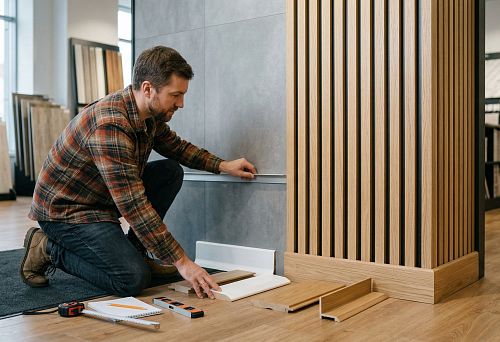
Ceiling skirting is not just a technological spacer between the wall and ceiling. It is a tool for architectural scaling of a room, an element of style, part of a unified wooden or decorative interior system. Whenwooden ceiling moldingit is made of oak or beech, tinted in a unified key with parquet and doors, and designed with an expressive profile—it ceases to be a detail and becomes an architectural statement.
In this article—a complete breakdown: from understanding the function to the practice of selection, from comparing materials to a specific answer to the question 'where to buy.' No fluff or commonplaces.
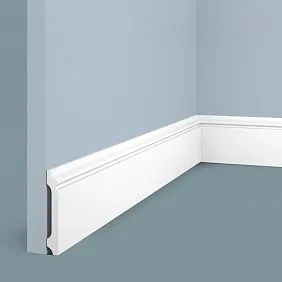

What is ceiling skirting and why is it needed
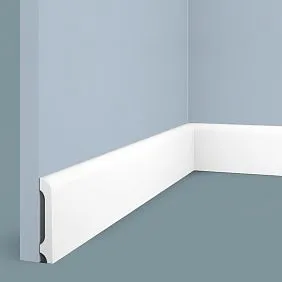
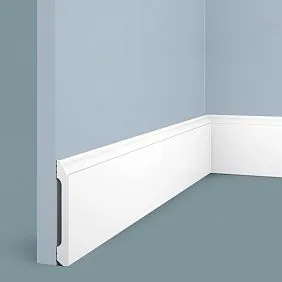
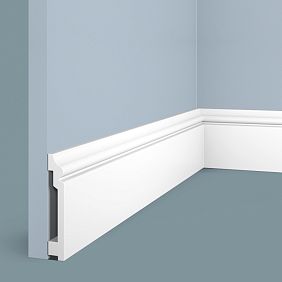
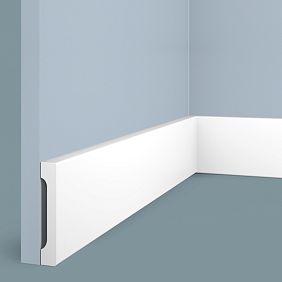
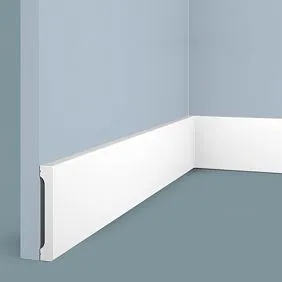
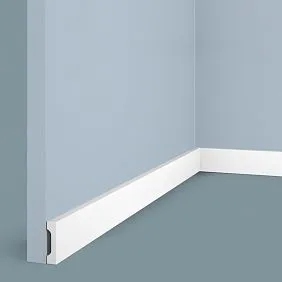
Decorative ceiling skirting is a linear profile mounted along the junction line between the wall and ceiling. In classical architectural terminology, this element is called a cornice or frieze. The modern household name 'ceiling skirting' has stuck because most such profiles are closer in shape and function to traditional skirting, only located at the top rather than the bottom of the wall.
Why is it needed? Technically—because the junction of the wall and ceiling is almost always a problematic point. Even with the most careful preparation, cracks appear here, especially in new buildings where the structure settles for several years. Here, different materials with different expansion coefficients intersect. Here, plaster of one layer transitions into plaster of another. Concealing this junction cleanly is a task solved by ceiling skirting.
Aesthetically—it creates the upper horizontal line of the room. In architecture, horizontals are the visual foundation of space. The lower horizontal is floor skirting. The upper one is ceiling skirting. When both lines are clearly defined, the space is perceived as organized, finished, and architecturally justified. When the upper line is missing—the ceiling seems to 'float.'
Systemically—ceiling skirting is part of a unified interior joinery system, which includes floor skirting, door trims, moldings, and window reveals. The more pronounced this system is, the more well-thought-out the interior appears overall.




Who needs ceiling skirting and when
Honest answer: practically everyone needs it. The only question is which one exactly — solid wood, polyurethane molding, or something in between. More details on that below.
Our factory also produces:


What types of ceiling skirting boards exist: a complete overview
The market offers several fundamentally different categories, each with its own area of application, advantages, and limitations.
Get Consultation
Solid wood ceiling skirting board
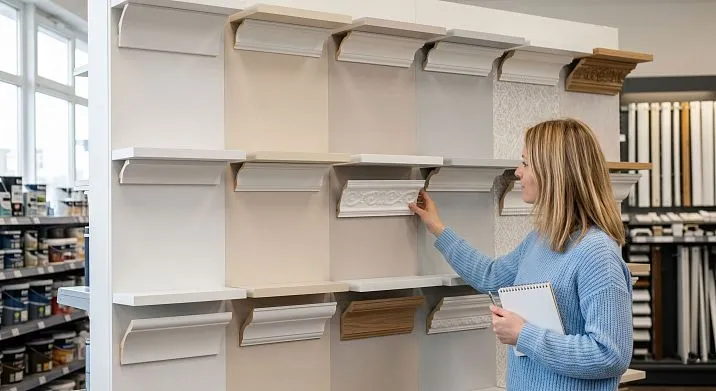
The main category for a quality residential interior.Ceiling baseboard woodenMade of oak or beech — this is a natural material with a density of 620–750 kg/m³, precise milling, perfect geometry, a surface ready for varnishing, tinting, or painting in any color. Service life under normal operating conditions — 30–50 years without replacement.
Wooden ceiling skirting boards exist in two main stylistic branches:
Smooth profile — straight, with a chamfer, or with a slight rounding. Minimalism, Scandinavian style, modern interior, transitional solutions. Here, the precision of geometry is important, not the richness of decoration.
Decorative profile — with coves, roundings, multiple levels of relief. Classic, neoclassical, Empire, Renaissance. Here, the ceiling skirting board is a full-fledged architectural element, visually equivalent to a classic cornice.
Wooden ceiling skirting board for painting
A separate, highly sought-after category. Beech skirting board with a neutral fine-pored structure — an ideal base for final painting in any color. White, gray, graphite, pastel tones — the beech profile accepts acrylic or oil enamel without stains or transitions.
Buying a wooden ceiling skirting board for painting means gaining full control over the color scheme. White today, gray-beige in five years during a restyling. No replacement needed, only repainting.
Polyurethane ceiling profile
Two-component polyurethane is an engineered material that perfectly reproduces complex molded profiles. Lightweight, moisture-resistant, adheres to any substrate.polyurethane moldingsis an affordable way to obtain a rich decorative profile where solid wood is economically excessive or technically impractical.
MDF ceiling skirting boards
High-density engineered board is an intermediate option between wood and polyurethane. Good geometry, low price, suitable for painting. Weak point: edges crumble under mechanical impact, more sensitive to moisture than wood or polyurethane.
Wooden ceiling skirting board: when it's the only correct choice
There are situations where the material choice is predetermined before opening the catalog. These are exactly such cases.
Interior with natural materials
Wooden parquet, oak doors, wooden architraves, natural stone. If the interior is built on natural materials, a wooden ceiling skirting board is a mandatory logical completion of this system. Only natural wood creates an organic visual unity, where everything looks like one whole.
Classic and neoclassical interior
Classic, neoclassical, empire, modern classic with clean lines—all require natural materials. A wooden profile with decorative oak beads is not an imitation, but a genuine architectural solution. Exactly suchWooden ceiling baseboardcreates that depth of shadow and lively sheen of the lacquer finish that distinguish true classics from their cheap copies.
High-budget renovation
When an interior features Venetian plaster, marble surfaces, expensive lighting, forged elements — a wooden ceiling skirting board is an absolute requirement. Installing polyurethane or MDF here means devaluing all investments.
Wooden country house
In a house made of timber, glued laminated timber, or a log house — a wooden ceiling skirting board is not a stylistic choice, but a structural logic. Wood to wood. A unified texture, a unified feel.
Focus on the long term
If the renovation is being done 'forever', with a horizon of 20–30 years and the possibility of restyling — take only solid wood. It can be sanded, repainted, tinted a different color. MDF and polyurethane do not offer this possibility.
Ceiling skirting board or polyurethane molding: an honest analysis
One of the most practical questions when choosing ceiling decor is what is better, wood or polyurethane? The answer depends on several specific parameters, and an honest table here is more useful than rhetoric.
| Criterion | Wooden skirting board | Polyurethane molding |
|---|---|---|
| Material | Solid oak or beech | Two-component polyurethane |
| Durability | 30–50 years | 15–25 years |
| Restoration | Sanding, repainting | Practically impossible |
| Moisture resistance | Medium, requires processing | High |
| Decorative potential | Live texture and depth | Wide selection of molded profiles |
| Ecological | Natural wood | Synthetic polymer |
| Price | Higher | Below |
| Material feel | Warmth, weight, naturalness | Lightness, neutrality |
Wooden ceiling skirting wins when:
— interior with natural materials;
— classic or neoclassical style;
— parquet or engineered wood flooring;
— priority is durability and the possibility of restoration;
— a room with a normal residential microclimate.
Polyurethane molding is preferable when:
— a rich molding profile is needed on a limited budget;
— the room has high humidity — kitchen, bathroom, basement floor;
— a large area of complex profile is needed quickly and inexpensively;
— the interior is designed for 10–15 years of use.
The STAVROS catalog features both directions.Ceiling moldingPolyurethane moldings — for those who choose decorativeness and affordability. Solid wood moldings — for those who choose naturalness and durability. When both tools are in one hand, the choice becomes honest, not marketing-driven.
It is important to understand:— everything must correspond to the chosen era.Polyurethane and wooden ceiling moldings serve different purposes. The former are decorative imitations of stucco profiles. The latter is a natural architectural element. Both are good where appropriate. Both are bad when used incorrectly.
Special attention deservescornice under the chandelier— polyurethane ceiling rosettes. This is an independent element of ceiling decor that pairs perfectly with wooden ceiling molding in classical and neoclassical interiors. Wooden molding around the perimeter, a polyurethane rosette in the center — this is a harmonious and economically sensible combination.
How to choose a ceiling skirting board by width, profile, and style
There is no room for random decisions here. Choosing the width, profile, and style of ceiling molding is an architectural task with correct answers.
Width: the main selection parameter
The width of ceiling molding directly depends on the ceiling height. A rule tested by thousands of interiors:
| Ceiling Height | Recommended skirting board width |
|---|---|
| Up to 2.5 m | 40–55 mm |
| 2.5–2.7 m | 55–70 mm |
| 2.7–3.0 m | 70–100 mm |
| 3.0–3.5 m | 100–140 mm |
| More than 3.5 m | from 140 mm, cornice system |
A narrow profile in a tall room gets lost — it simply isn't visible from eye level. A wide one in a low room feels oppressive and visually 'lowers' the ceiling. Proportion is the primary criterion.
Wide ceiling molding for classic style — 100–140 mm with rich relief — is an architectural accent that works only when the ceiling height matches its scale.
Profile: smooth or decorative
Straight smooth profile. Pure geometry, no decor. For minimalism, Scandinavian style, modern interiors with flat surfaces and neutral colors. Precision is crucial here: a smooth molding exposes any installation inaccuracy.
Profile with a bevel or rounding. Light relief that adds interest without active decor. A universal solution for modern and transitional interiors. Most commonly found in residential construction.
Figurative decorative molding. Coves, ogees, quarter rounds, shelves — rich classical relief. For classic, neoclassical, and Empire styles. Here, every curve of the profile is a shadow that enlivens the surface under side lighting.
Style: How to Get It Right
The rule is simple: the baseboard profile should reflect the overall complexity of the interior.
Many details, decor, rich surface plasticity → a rich profile with coves.
Clean surfaces, minimal decor, geometry → smooth or with a minimal chamfer.
Transitional style, modern classic → a medium-complexity profile with one level of relief.
Ceiling baseboard for high ceilings: a special case
Ceilings from 3.5 meters — this is no longer just 'choose a wider baseboard.' It's an architectural task that cannot be solved with a single profile.
In rooms with high ceilings, cornice systems of several elements are used: the main ceiling baseboard, additional moldings, dividing shelves. Together they form a complex multi-level profile — a true architectural cornice.
wooden corniceIn such a context, it can be part of a unified system with the baseboard: the cornice carries the main decorative load, the baseboard frames the lower boundary of the cornice zone. This is precisely the logic used by professional designers when working with formal halls, large living rooms, and country houses with high ceilings.
Ceiling molding for high ceilings is always a contextual solution. A single profile, even a wide one, will go unnoticed in a very tall room. A system of multiple elements united by a common stylistic approach—that's architecture.
Ceiling molding in a wooden interior system
This is where the main idea is concentrated, one that is rarely articulated explicitly but is felt by everyone who enters a well-crafted interior.
Wooden ceiling molding is not an isolated element. It is part of a system. The lower horizontal—the baseboard. The upper—the ceiling molding. The verticals—the door/window casings. Horizontal divisions—wall moldings. The junctions—window reveals and sills. When this entire system is made from the same wood species, with the same stain, and the same profile character, the room acquires a quality that is hard to define but easy to recognize: 'everything here is done with intelligence and taste.'
solid wood millwork—is a category that includes not only moldings but also battens, trims, picture rails, and strips for wall panels. When an oak ceiling molding echoes oak battens on the walls, a rhythmic connection is created between verticals and horizontals. This is a living architectural rhythm that makes an interior interesting even with a neutral color palette.
Wooden molding—in this system is used as a transitional or dividing element: it frames panels, forms friezes, creates horizontal dividing strips between finishing zones. All these are parts of a single language, and ceiling molding is one of its key words.
Where and how to use ceiling molding: by room type
Ceiling skirting for the living room
Living room—the main reception room. Here, a maximal stylistic statement is appropriate. With ceilings 2.8–3 meters—an 80–100 mm profile, decorative or with a pronounced bevel. With ceilings 3.5 meters and above—a cornice system or a wide, shaped profile from 130 mm.
In a living room with wooden parquet, leather furniture, and white walls, a wooden oak ceiling molding matching the parquet creates the effect of a 'framed' space, where the beginning and end of each plane are clearly defined.
Ceiling skirting for the bedroom
Bedroom—a space for rest. Here, decor should be delicate, unobtrusive. Width 60–80 mm, medium-complexity profile. A white beech molding for painting, matching the ceiling color, is one of the best options: minimal accents, maximum coziness.
In a bedroom with wooden beams or plank ceilings, a wooden ceiling skirting board is an essential element that connects the wooden ceiling with the walls.
Ceiling skirting for the kitchen
Kitchen - a room with grease vapors and humidity fluctuations. Wooden skirting is possible here provided proper treatment: double varnishing or oil with hard wax creates a sufficient barrier. Under very aggressive conditions - considerPolyurethane molding, which is completely indifferent to moisture.
Ceiling skirting for hallway
The hallway creates the first impression. Even a small ceiling skirting in the hallway signals that the renovation wasn't done sloppily. In narrow hallways with low ceilings - narrow, matching the wall color. In spacious entrance halls of country houses or large apartments - an expressive profile in a system with architraves and floor skirting boards.
Ceiling skirting board for a wooden house
In country houses made of timber, in bathhouses, in houses with log walls - wooden ceiling skirting is an organic continuation of the architecture itself. Here you don't need to choose anything - you just need to take wood. Pine to pine, oak to oak, larch to larch.
Ceiling skirting for apartment
In a city apartment, the choice of ceiling skirting depends on the style and ceiling height. New buildings with ceilings 2.7-2.8 meters - profile 70-80 mm, for painting to match the ceiling or walls. Apartments in old buildings with ceilings 3+ meters - decorative profile from 100 mm, wood or polyurethane depending on budget.
Installation of wooden ceiling skirting: what's important for the buyer to know
A buyer who understands at least the basics of installation makes a more informed choice of profile. Here are the practical knowledge needed.
Acclimatization — a mandatory step
Wooden molding must remain in the room for 24–48 hours before installation. Wood reacts to temperature and humidity — without acclimatization, after fixing, changes in geometry will begin, gaps and deformations will appear.
Cuts: where precision is needed
Corner joints are the most critical connection. Internal corners — a 45° cut on each side. External corners — the same, only mirrored. Wooden profile is denser than polyurethane, so it requires a sharp blade on a miter saw. For classic shaped profiles — a miter box with precise angle fixation.
Fastening
Wooden ceiling skirting is attached with finishing nails or mounting adhesive with nail fixation. On smooth surfaces — 'liquid nails' or special mounting adhesive for wood. On concrete — dowel-nails, fastening spacing 40–50 cm.
Final finishing
Nail heads are driven below the surface with a nail set, filled with wood putty, and sanded. For skirting to be painted — the final coat of enamel is applied after installation, which completely hides joints and fastening points.
Mistakes when choosing ceiling skirting
Over 50 years of working with wooden interiors, a library of mistakes accumulates. Here are the most common ones that can be avoided.
First mistake: choosing based only on price
Cheap MDF profile loses its geometry after three years, delaminates at corners, and requires replacement. Solid wood ceiling skirting costs more but lasts for decades. The economics favor quality at any planning horizon.
Second mistake: too narrow a profile in a high-ceilinged room
A 40 mm skirting board in a room with a 3.2-meter ceiling will simply not be visible. The scale must match the scale. For high ceilings, use a wide ceiling skirting board, 100 mm or more.
Mistake three: too heavy decor for a simple interior
The opposite mistake: an ornate profile with many fillets in a Scandinavian apartment with white walls and minimalist furniture. It looks like a piece accidentally brought from another interior. The profile should reflect the overall character of the space.
Mistake four: conflict with doors, architraves, and cornices
A wooden ceiling skirting board is part of a system. If door architraves are made of dark walnut and the ceiling skirting board is white, that's a conflict. If a wooden curtain cornice is made of light oak and the ceiling skirting board is dark, it's the same issue. Everything should be connected: one wood species, one finish, one character of profiles.
Mistake five: incorrect choice between wood and polyurethane
Choosing wood for a kitchen without proper treatment will lead to problems within a year. Choosing polyurethane for a classic hall with parquet flooring creates a feeling of imitation instead of authenticity. Each material should be in its proper place.
Mistake six: ignoring molded ceiling elements
If the interior has a chandelier —cornice under the chandeliera ceiling rosette is a mandatory decorative element. Without it, the chandelier's base 'hangs' on a bare ceiling. With it, the entire ceiling plane gains a center and structure. Perimeter skirting + a rosette in the center is the minimal ceiling decorative system for a classic interior.
Where to Buy Ceiling Skirting: From Selection to Purchase
The correct answer to the question 'where to buy ceiling skirting' is not a store address, but an understanding of what exactly you are buying.
In construction hypermarkets — standard assortment, mainly MDF and polyurethane. Fast, affordable, but without choice of wood species and profile for a specific interior.
Buy wooden ceiling baseboardFrom a specialized manufacturer — this is a different level. Here you choose the wood species (oak or beech), width and complexity of the profile, surface for finishing or pre-toned product. Here there is consultation that will help avoid mistakes in selection, and the possibility to order a custom profile according to a drawing.
Buy Ceiling SkirtingBuying directly from the manufacturer — this guarantees that you will get exactly what you saw in the catalog. No mixed batches, no unexpected differences in profile or 'wrong shade'. Products from one batch, from one wood species, with the same characteristics.
For those looking for a catalog of ceiling skirting with a full assortment: STAVROS presents it on the website with the ability to compare profiles, wood species, and sizes. Delivery across all of Russia — Moscow, St. Petersburg, regional centers. Pickup from warehouses in both capitals.
About the company STAVROS
STAVROS — Russian production of wooden architectural millwork and decorative products from solid oak and beech. The history began in 2002, when the company's founders, artists by education, created a workshop for carved wooden products. The very next year, STAVROS participated in the reconstruction of the Konstantinovsky Palace in Strelna — a state-significant facility with the strictest requirements for material quality and craftsmanship.
Over the next twenty-plus years, the company participated in recreating the interiors of the Hermitage, Alexander Palace, Trinity-Izmailovsky Cathedral, and dozens of other historical sites. These are not marketing claims, but specific completed projects, backed by a reputation verified by restorers and architectural historians.
Today, STAVROS produces skirting boards, cornices, moldings, architraves, balustrades, stair elements, decorative millwork from solid oak and beech, as well as a wide range of products from European-made polyurethane.
The production is equipped with European woodworking machinery. Raw materials undergo chamber drying to 8–12% moisture content, with each batch undergoing incoming inspection and final checks for geometry and surface quality. Showrooms operate in St. Petersburg and Moscow. Delivery is handled by transport companies SDEK and DPD across Russia and CIS countries.
For designers, architects, and construction companies — partnership programs and special terms for volume and wholesale orders. Custom profiles based on individual drawings — for runs of 50 linear meters or more.
FAQ: Answers to popular questions
Which ceiling skirting board is best?
For living spaces with natural materials and classic or neoclassical style — solid oak or beech wood. For areas with high humidity or on a limited budget with rich molded profiles — polyurethane. The key is that the choice aligns with the style, proportions, and material context of the interior.
What is better: wooden ceiling skirting board or polyurethane?
These are different tools for different tasks. Wood offers naturalness, durability, restorability, and a prestigious material feel. Polyurethane provides moisture resistance, a wide selection of molded profiles, and an affordable price. If the interior is natural and high-quality — choose wood. If you need an economical imitation of classic molded decor — choose polyurethane.
Where to buy wooden ceiling skirting board?
Directly from a specialized manufacturer. STAVROS produces wooden ceiling skirting boards from oak and beech and delivers across Russia. Choose by wood species, profile, and width — in the catalog on stavros.ru.
Which ceiling skirting to choose for high ceilings?
For ceilings 2.8–3 m — profile 80–100 mm. For ceilings 3–3.5 m — 100–140 mm. For ceilings above 3.5 m — a cornice system of multiple elements, including a ceiling cornice and wooden skirting board as part of a unified system.
Is ceiling skirting board suitable for a stretch ceiling?
Yes. With a stretch ceiling, the skirting board is attached to the wall and conceals the joint between the fabric and the wall. The skirting board is fixed to the wall, not to the ceiling fabric. In this case, the wooden ceiling skirting board serves both as a decorative element and as a masking profile for the stretch ceiling's mounting profile.
What is the difference between ceiling skirting and molding?
Ceiling skirting is a linear trim profile that runs along the perimeter of a room. Molding is a broader concept that includes both trim profiles (cornices, skirting boards, moldings) and three-dimensional decorative elements: rosettes, medallions, brackets, bas-reliefs. Wooden ceiling skirting is a type of trim molding made from natural wood.
How to combine ceiling skirting with curtain rods?
A curtain rod is a functional element that is best installed so it doesn't visually clash with the ceiling skirting. If it's a wall-mounted rod, the skirting is installed above the rod. If it's a ceiling-mounted rod, the entire system looks better when the rod organically continues or frames the ceiling skirting.
Wooden ceiling skirting – which wood species are best?
Oak – for interiors where expressive texture, high density, and durability are needed. Beech – for skirting boards intended for painting, where a perfectly smooth, neutral surface in any color is required. Both options are solid natural wood with chamber drying and a multi-year service life.