Article Contents:
- Why people choose wood for finishing
- What is a decorative wooden plank
- 1. Accent walls and panels
- 2. Decor for door casings or niches
- 3. Built-in furniture finishing
- 4. Ceiling finishing
- 5. Creating decorative frames and panels
- How to choose a plank for a specific project
- Then — pay attention to the finish:
- Installation process: what a beginner needs to know
- How to ensure the longevity of decorative wooden planks
- The secret of attractiveness: balance between tradition and innovation
- Recommendations for experimenters
- Looking ahead: why popularity will continue to grow
- Conclusion: when wood becomes a reflection of your individuality

Sometimes, one bright detail is enough to completely transform the atmosphere in a room. For many designers and lovers of coziness, such a "detail" becomes natural wood elements. And if previously massive wooden panels or carved balusters were associated with luxurious palace interiors, today a more subtle and universal solution is —Decorative wooden plankHow does it work? When is its installation justified? And why, in the age of high technology, do we still seek what is closer to nature? Let's find out.


Why people choose wood for finishing
- Natural warmth
No other material possesses such coziness and warmth as natural wood. It creates a unique atmosphere, making even the most strict interior "alive" and inviting for rest.
- Ecological safety
Natural wood, when properly processed, retains its structure and practically does not emit harmful substances. Unlike synthetic materials, wood can absorb and release moisture, helping to balance the microclimate in a room.
- Reliability and longevity
The times when wooden elements were fragile and quickly deteriorated have passed. Modern impregnations and protective coatings increase wood's resistance to moisture, sunlight, and mechanical damage.
- Style versatility
Wooden planks are suitable for classical interiors, Provence style, loft, and even minimalism. They can be left in their natural color or covered with paint, varnish, or oil — it all depends on your vision.




What is a decorative wooden plank
Under the formulationDecorative wooden plankUsually, it refers to a relatively narrow and flat detail made of natural wood, which serves for finishing or decorating surfaces (walls, ceilings, furniture facades, etc.). Such planks may be:
● Simple and flat: a classic option that easily complements other finishes.
● Relief: options with carved patterns or a three-dimensional profile that accentuates the wood grain and adds depth to the overall design.
● Decorative moldings: used to frame door and window openings, create frames, or even divide a wall into two different zones, each with its own color palette.
Decorative planks are made from various types of wood — from inexpensive pine to noble oak or exotic wenge. The choice depends on personal budget, desired appearance, and room specifics.
Ideas for use in modern interiors
Our factory also produces:


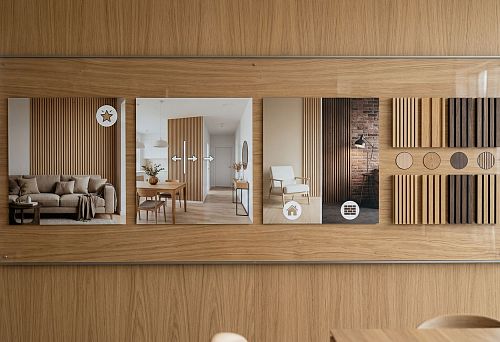
1. Accent walls and panels
Sometimes walls lack expressiveness, especially when everything around looks too smooth and uniform. A few horizontal or vertical rows of planks on one wall can completely change the impression of the room. Such solutions are often used in studios or lofts when you want to zone the space without cluttering it.
Tip: If you choose planks with contrasting colors or even different wood species, you can create an original "canvas" resembling an abstract painting.
Get Consultation
2. Decor for door casings or niches
It can be difficult to understand how to effectively decorate the space around doors or wall niches to make it look harmonious. Here, wooden planks come to the rescue. They give the interior a finished look, accentuating door panels or emphasizing the depth of a niche.
This is especially relevant in rooms where traditional door casings seem too bulky or don't match the overall style. A decorative plank made of natural wood will help avoid a "gap" in the design and make transitions between different zones smooth and stylish.
3. Built-in furniture decoration
If you use built-in cabinets, drawers, or shelves, natural wood can turn them into full-fledged decorative elements. Simply cover the fronts with narrow planks arranged, for example, in a pinecone or checkered pattern. In this way, even the simplest MDF furniture can "shine" in a new way.
4. Ceiling decoration
Besides walls, planks are sometimes used on ceilings. Here, they can serve as decorative beams or form neat stripes that visually elongate the room. Combining wooden elements on the ceiling with built-in lighting often creates a cozy and warm effect, especially in the evening.
5. Creating decorative frames and panels
Many designers experiment with small wooden elements, creating complex geometric shapes or artistic panels on walls. This can be either a fully custom project or ready-made sets, where each element has a specific shape and mounting system.
Benefits of installing decorative planks
● Quick result: installing planks rarely requires complex tools (in most cases, just a level, tape measure, saw, and glue suffice).
● Minimal construction debris: unlike some other finishes, wood is usually installed "dry".
● Defect masking: if walls have minor flaws, cracks, or small unevenness, planks can hide them, adding extra aesthetic appeal to the room.
● Design versatility: the same type of planks can be combined to create different patterns. Slightly altering the laying order or angle will give the wall a different impression.
How to choose a plank for a specific project
There are several selection criteria, and the first is the type of wood. Below are three main directions:
- Coniferous (pine, spruce): affordable price, soft structure. But requires more careful handling and proper treatments, as resin may appear on the surface.
- Broadleaf (oak, beech, ash): more expensive, but also more durable, with expressive grain. The tone can be adjusted using stains.
- Exotic (merbau, wenge, teak): option for exclusive projects. Distinguished by unique color and pattern, often with enhanced water resistance.
Then, pay attention to the finish:
● Lacquer adds shine, highlights the wood grain structure, and protects the wood from scratches.
● Oil provides a more "lived-in" effect, preserving the pleasant wood texture to the touch.
● Stain helps achieve the desired shade while not hiding the natural pattern.
● Paint offers almost endless color options, but it covers the natural texture.
Don't forget to consider practical aspects: if the boards will be in a high-humidity area (e.g., near a kitchen work zone), enhanced protection is required. And if you have pets, opt for a durable finish to prevent claws from leaving marks.
Installation Process: What Beginners Need to Know
- Preparation of Walls or Surfaces
They must be clean, dry, and as flat as possible. If there are significant unevenness, you can attach thin sheets of plywood or drywall to which the boards can be fastened.
- Marking
Its importance is hard to overestimate. Clearly define where the first board will run, how far it will be from the corner or floor, to avoid misalignment or noticeable deviations.
- Mounting methods
○ Glue or liquid nails: a quick method, but during removal, part of the wall may be damaged.
○ Clamps and screws: more reliable, but takes slightly more time. When using clamps, the fasteners are not visible from the outside.
- Regular level checking
Especially if you are creating any geometry, it is important not to forget to check alignment to ensure lines remain parallel or perpendicular — according to the original design.
- Finishing
Once everything is installed, you can additionally cover the surface with varnish or oil for greater resistance to external influences.
How to Ensure the Longevity of Decorative Wooden Boards
- Protective Coatings
Regularly renew the layer of varnish, oil, or wax. This point is especially critical in high-humidity rooms.
- Avoiding Sudden Temperature and Humidity Changes
If the room is heated irregularly (e.g., a cottage), the wood may be subjected to serious stress, which may lead to cracking.
- Cleaning with Gentle Products
Use only gentle cleaning agents, special impregnations, and wood care products. Abrasive sponges may leave scratches.
- Timely Repairs
If you notice a crack or minor swelling, address the issue immediately before it becomes significant. Sometimes local restoration is sufficient to restore the item to its original appearance.
The Secret of Appeal: Balance Between Tradition and Innovation
Interestingly, “Decorative wooden plank” is a combination of traditional craftsmanship skills and modern technologies. On one hand, wood has been used for centuries in construction and finishing; on the other, modern industry offers unique processing and impregnation methods that make the material much more resistant to adverse factors.
As a result, we obtain an aesthetic, eco-friendly, and functional product. This "universal formula" attracts many designers and property owners today who wish to infuse their space with life, without compromising on quality.
Recommendations for Experimenters
If you wish to move away from standard solutions and create something outstanding:
- Mix boards of different widths
This creates complex rhythms and visual depth on the wall.
- Play with color
You can use one type of wood but tone it in several shades. Or combine completely contrasting options — light and dark.
- Add geometric shapes
Shapes laid out with wooden segments diagonally or in a zigzag pattern immediately catch the eye.
- Include metal in the composition
Thin brass or stainless steel inlays along the wood look ultra-modern.
- Use lighting
Hidden LED strips behind the planks create a 'floating' effect and highlight the natural wood grain.
Looking to the future: why popularity will continue to grow
Many experts are convinced that interest in wood will not wane further. Moreover, with the growth of ecological awareness, people increasingly value natural materials that not only look beautiful but are also environmentally friendly.
● Manufacturers continue to develop waste-free production technologies.
● Designers are inventing new formats and finishes.
● Clients strive for uniqueness and mindful consumption.
All these factors indicate that 'decorative wooden plank' is not just a temporary trend, but a reliable tool for creating a comfortable and aesthetically pleasing space — whether it's an apartment in a metropolis, a country house, or an office.
Conclusion: when wood becomes a reflection of your individuality
Natural wood in interior design is not just a fashion statement. It's a way to show your character, taste, and mindful approach to life. Wood gives warmth, natural energy, and timeless beauty. And with such a simple yet striking detail asDecorative wooden plank, you can solve various tasks — from accent walls to functional decorative furniture.
Every project using wood acquires a special depth. It doesn't matter whether you aim for classic luxury, minimalist austerity, or bold eclectic style combinations — wood will always find its place and highlight the unique atmosphere of your interior. The key is to choose correctly and care properly, as true beauty requires a little effort. And believe me, the result is worth it.