Article Contents:
- Chapter 1. Historical context and modern application
- 1.1. Ancient roots of wood in architecture and decor
- 1.2. Role of decorative planks in modern times
- 2.1. Influence of natural wood on humans
- 2.2. Aesthetic flexibility and 'friendship' with different styles
- 3.1. By wood species
- 3.2. By manufacturing method
- 3.3. By format and profile
- 3.4. By purpose and functionality
- 4.1. Criteria for quality assessment
- 4.2. Preliminary treatment
- 4.3. Approach to design task
- 5.1. Preparation of the base
- 5.2. Mounting methods
- 5.3. Expansion gaps
- 5.4. Final finishing
- 6.1. Accent wall in the living room
- 6.2. Zoning in studio space
- 6.3. Headboard decoration in the bedroom
- 6.4. Decorative inserts in the kitchen
- 6.5. Modular panels and art objects
- 7.1. Regular cleaning and maintenance
- 7.2. Refreshing protective layer
- 7.3. Repairing individual planks
- 7.4. Protection against pests and mold
- 8.1. Responsible forestry
- 8.2. Biophilic design trends
- 8.3. Durability and secondary recycling
- Chapter 10. Conclusion: harmony of wood and space

Modern interior design increasingly leans toward natural materials and eco-friendliness. Even in the age of high technology, people continue to seek ways to get closer to nature and surround themselves with warm, living textures. Wood undoubtedly occupies a central place among such materials. When it comes to creating a striking accent element or subtle yet expressive space design, the focus is onWooden decorative wall plankThis element, which may seem insignificant at first glance, can give the room a sense of unity, warmth, and style, as well as perform a number of practical functions.
In this article, we will thoroughly examine the phenomenon of decorative wooden planks: from their history and impact on human psychology to recommendations on selection, installation, and maintenance. You will learn how to properly combine planks with other materials, what design techniques can be used, and why wooden cladding will only gain more popularity in the future. The material will be useful both for those who are first considering wooden wall decoration and for professionals wishing to expand their toolkit.


Chapter 1. Historical context and modern application




1.1. Ancient roots of wood in architecture and decoration
Wood has accompanied humanity since ancient times: early humans built dwellings from it, crafted tools and household items. As civilizations developed, wood acquired not only functional but also artistic significance. In ancient Egypt, Greece, Rome, and later during the Middle Ages and Renaissance, artisans created carved panels, decorative appliqués, and covered walls with whole boards.
Over time, people developed a need for delicate wooden decoration that would not obstruct space but harmoniously enhance it. Thus, planks, moldings, decorative appliqués, and other elements emerged, enabling the creation of volume illusions, emphasizing architectural lines, and adding elegance and coziness to interiors.
Our factory also produces:


1.2. Role of decorative planks in modernity
TodayWooden decorative wall plank has become one of the key tools of interior design. Using individual boards or moldings, you can:
- Create an accent wall: highlight a specific area or surface, drawing all attention to it.
- Zone space: divide a room into functional areas while maintaining overall stylistic unity.
- Hide imperfections: mask minor irregularities, seams, joints, or other undesirable elements.
- Add expressiveness: emphasize the overall design concept, making the interior more individual and 'warm'.
Interest in wooden planks is growing alongside the trend of 'biophilic design' — a concept that involves actively using natural materials and motifs in urban interiors.
Chapter 2. Psychological effect and advantages of wooden surfaces
Get Consultation
2.1. Influence of natural wood on humans
Numerous studies in psychology and neurodesign show that the presence of natural materials in the home positively affects a person's emotional state. Wood is associated with nature, warmth, and tranquility. It can:
● Reduce stress levels: soft natural tones have a calming effect on the psyche.
● Create coziness: wood is naturally 'warm' to the touch, forming a comfortable atmosphere.
● Positively influence concentration: in rooms with wooden elements, people find it easier to focus and be productive.
2.2. Aesthetic flexibility and 'compatibility' with various styles
Decorative wooden planks can be used in a wide range of design directions:
● Classic: carved moldings and refined appliqués.
● Rustic: rough, weathered surfaces with prominent knots and cracks.
● Loft: combination of wood with brickwork, metal structures, and raw concrete.
● Scandinavian or eco-style: light wood species, smooth shapes, minimal finishing.
● Minimalism: thin, straight, and neat planks can serve as a minimalist decoration on walls.
Thus, decorative wooden planks serve not only a utilitarian purpose but also act as a conduit, allowing the transmission of the idea of harmony with nature through the interior.
Chapter 3. Variety of forms and types of decorative wooden planks
3.1. By Wood Species
- Coniferous (pine, spruce):
○ Advantages: affordable price, pleasant aroma, versatility.
○ Disadvantages: soft structure requiring careful handling, and need for additional treatment to remove resin.
- Hardwood (oak, beech, ash):
○ Advantages: high density, durability, distinct grain pattern.
○ Disadvantages: higher cost, difficulty in processing.
- Exotic (teak, wenge, iroko):
○ Advantages: exclusive appearance, unique properties (e.g., moisture resistance).
○ Disadvantages: significantly high price and limited availability in mass-market.
3.2. By Manufacturing Method
● Solid: solid planks made from one piece of wood, more commonly used in premium segments.
● Engineered: multi-layered structure, where the top layer (veneer) is made of premium wood, and base layers are made of more affordable but stable wood (spruce, plywood).
● Glued: planks assembled from multiple parts, allowing material savings and increased resistance to warping.
3.3. By Format and Profile
● Flat: classic variant, easy to install, suitable for creating flat surfaces and accent panels.
● Profiled (decorative): with convex, concave, stepped, or other original profiles; often used in classic interiors.
● Tongue-and-groove: with a "tongue-and-groove" system, allowing easy joining of elements to form almost monolithic walls or patterns.
3.4. By Purpose and Function
- Decorative overlays: primarily used for decorating and finishing details (frames, niches, doorways).
- Planks for forming 3D walls: used for zoning and creating a 3D effect.
- Crown molding and baseboards: finishing elements that serve a concluding role (at transitions from wall to ceiling, floor, or other surfaces).
Chapter 4. How to Choose High-Quality Decorative Wooden Planks for Walls
4.1. Quality Assessment Criteria
- Moisture: optimal range — 8–12%. If the board is too wet, it may deform over time; if overly dry — it may crack.
- Geometry: absence of warping, straight edges and corners.
- Absence of defects: minimal knots, even texture, no chips or cracks.
- Grade: the highest grade implies an ideal surface, but costs more. In some cases, knots and minor defects may give planks an original "natural" look.
4.2. Preliminary Treatment
When purchasing planks, it is important to know whether they have undergone additional thermal or antiseptic treatment. This affects resistance to moisture, mold, fungi, and insects. Additionally, consider:
● Check the factory finish (lacquer, oil, wax) — if present, ensure the layer thickness is uniform, without drips or gaps.
● Clarify how best to care for such a finish.
4.3. Approach to design task
Along with visual and technical characteristics, when selecting, consider the overall interior concept. For example, light wood species (birch, beech) with minimal finish suit Scandinavian style, while oak or exotic materials are more appropriate for luxurious classic halls.
Chapter 5. Installation methods and installation specifics
5.1. Preparing the base
● Wall leveling: if the surface is too uneven, use a lath of boards or metal profile, to which the planks are subsequently attached.
● Primer: to improve adhesive bond of the glue or to protect the wall from moisture.
● Marking: mandatory step, especially if planks will be laid in a specific pattern (vertical, diagonal, chevron, etc.).
5.2. Methods of fastening
- Using adhesive
○ Suitable for flat walls and lightweight planks.
○ It is important to choose glue specifically designed for wood to avoid delamination over time.
○ Advantage: invisible fasteners, aesthetic appeal. Disadvantage: difficulty in removal.
- Climbers or hidden profiles
○ Requires installation of special clamps, onto which the planks are 'pushed'.
○ Ensures quick installation and neat appearance without visible screws.
○ Suitable for tongue-and-groove products.
- Mechanical fasteners (nails, screws)
○ Traditional solution, but fasteners may be visible.
○ For some styles (loft, country), exposed nail heads even add a special charm.
5.3. Expansion gaps
Wood is a material susceptible to temperature and humidity fluctuations. It is recommended to leave small (2–3 mm) gaps at edges or joints to prevent swelling and cracking when fibers expand.
5.4. Final finishing
If planks lack factory finish or if you need to change their color, finishing is done after installation. Optimal options:
● Lacquer: protects wood, highlights its texture, adds gloss (at varying levels).
● Oil and wax: option for those who prefer natural and 'warm' finish with matte effect.
● Paint: expands color palette, hides texture, but suits certain design solutions well (loft, shabby chic, eclectic).
Chapter 6. Design ideas and practical cases
6.1. Accent wall in the living room
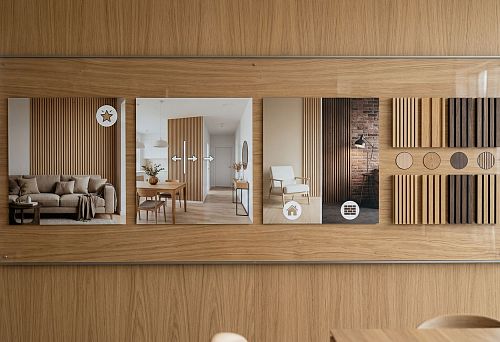
One of the most common techniques — highlighting a wall without heavy furniture or large items (or, conversely, making it a backdrop for the TV zone). Dark vertical planks against a light interior create a striking effect, playing with light and shadow.
6.2. Zoning of studio space
In large studios, it is often necessary to conditionally separate the kitchen area from the living room. You can construct a structure using vertical slats with gaps — resulting in a kind of 'blinds' that allow light to pass through while visually separating one part of the room from another.
6.3. Headboard decoration in the bedroom
Another popular option — placementWooden decorative wall plank behind the bed headboard. This allows adding coziness to the bedroom and creating an accent without taking up much space. Combining slats with a soft fabric panel or perimeter lighting adds depth to the interior.
6.4. Decorative inserts in the kitchen
Kitchens are usually associated with tiles and plastic, but here too you can find a place for wooden strips. For example, decorative slats on the wall opposite the worktop or in the dining area will add naturalness and harmonize with other surfaces when properly protected from moisture (varnish, oil).
6.5. Modular panels and art objects
Experimenters can create complete compositions from square or rectangular modules laid out in different directions (horizontal, diagonal, 'zigzag'). Such a 'picture' on the wall will become a central decorative element.
Chapter 7. Maintenance, restoration, and extending service life
7.1. Regular cleaning and prevention
● Dust and dirt: a soft dry cloth or brush is sufficient. For more stubborn stains, you can slightly moisten the cloth, but avoid excessive moisture.
● Air humidity: the optimal range in the room is 40–60%. Use humidifiers and ventilation, especially during the heating season when the air becomes too dry.
7.2. Updating the protective layer
Over time (every 2–3 years), varnish or oil may wear off. If the finish has lost its original gloss or become uneven, simply apply a new layer after lightly sanding the surface. It is important to use products compatible with the existing coating.
7.3. Repairing individual slats
If one or several slats are seriously damaged, they are usually replaceable without dismantling the entire wall (especially if the fasteners are clip or screw-type). The key is to find a material with a similar color and texture to ensure the joint is not noticeable.
7.4. Protection against pests and mold
In rooms with high humidity or poor ventilation (second-line houses, country cottages, etc.), wood may be at risk of mold and insect infestation. Prevention:
● Use of antiseptics and biocidal impregnations during installation;
● Ensuring air circulation (gaps, ventilation openings);
● Monitoring humidity and timely ventilation.
Chapter 8. Environmental responsibility and modern trends
8.1. Responsible forestry
Demand for wood in construction and decoration is constantly growing, so it is important to choose certified materials (FSC, PEFC). These certifications confirm that timber harvesting is conducted in accordance with sustainable forest management principles.
8.2. Biophilic design trends
Biophilic (from Greek 'bio' — life, 'philia' — love) design implies maximum closeness to nature in urban interiors. Using wood, greenery, natural lighting, and earthy tones helps reduce stress and increase productivity.Wooden decorative wall plank — an excellent tool for incorporating natural motifs even in limited spaces.
8.3. Durability and secondary recycling
Unlike plastic or composites, wood is easier to dispose of and can be reused if necessary. If in the future it becomes necessary to change the interior, removed slats can be used in another project or recycled into wood shavings and briquettes.
Chapter 9. Professional tips
- Plan the color scheme in advance. If additional painting or tinting is planned, it is better to test a small sample to ensure the shade will harmonize with the rest of the finishing.
- Experiment with orientation. Sometimes simply turning the planks by 30–45 degrees is enough to achieve a completely new visual effect.
- Lighting is key to volume. LED strips hidden between the planks can give the wall a 'floating' appearance and make the room more atmospheric.
- Consider scale. In a large living room, wide and voluminous planks are appropriate, while in a small bedroom, narrower and thinner options are preferable.
- Do not be afraid to combine. Wood can coexist beautifully with tile, stone, metal, and glass, provided you find the right balance.
Chapter 10. Conclusion: harmony of wood and space
Wood is not just a building material, but a symbol of natural energy, coziness, and warmth. While many strive to fill their homes with technological novelties, chemical coatings, and synthetic elements, using natural textures and earthy tones becomes a true breath of fresh air.
Choosing in favor ofWooden decorative wall plankBy choosing this, you take a step toward a more harmonious, 'living' environment that can influence your mood, enhance comfort, and highlight your individuality. Decorative planks add an elegant touch to interiors while simultaneously emphasizing closeness to nature. The ways of their installation, finishing, and stylistic solutions are so diverse that they practically know no boundaries: from minimalist lath partitions to luxurious panels and artistic compositions made from narrow laths.
Designers and architects increasingly turn to wood, confirming its enduring relevance. Even with the adoption of new composite materials and technological advancements, nothing can replace the authentic warmth and natural beauty of real wood. Continuous progress in material protection and processing opens new dimensions for realizing creative ideas: engineered boards, glued constructions, exotic species with unique properties — all of this expands the range and allows imagination to run wild.
From a practical standpoint, decorative planks are easy to install (especially if relying on modern mounting systems), universally applicable — from apartments to country homes and public spaces, and relatively simple to maintain when basic recommendations are followed. Smoothing wall irregularities, concealing wiring, visually expanding or dividing space — these are just a small part of the functions that wooden elements can perform.
If you value coziness, aesthetics, and wish your interior to look not only modern but truly 'alive,' then a decorative wooden plank for the wall will become your reliable ally. It can evolve alongside you and your design concepts, changing texture and shades as needed, while preserving its original natural base.
Let your walls become not just a backdrop, but a full participant in the interior scene — with wood, they can 'speak' in a new way, transforming into elements reflecting your taste, lifestyle, and love for natural beauty.