Article Contents:
- Architectural role of the starting element
- Principles of proportioning
- Material science and manufacturing technologies
- Innovative Processing Technologies
- Stylistic directions in design
- Modern Interpretations
- Technical aspects of installation
- Features of mounting to various bases
- Decorative possibilities and artistic treatment
- Modern Decoration Methods
- Operational Characteristics and Longevity
- Protective coating systems
- Economic Aspects and Pricing
- Factors of long-term economic efficiency
- Modern Trends and Innovations
- Technological Innovations
- Regional Characteristics and Traditions
- Influence of Climatic Conditions
- Conclusion

When we talk about creating a staircase railing, special importance is attached to first baluster — an element that sets the tone of the entire composition and determines the character of the future architectural ensemble. This is not just a starting construction element, but a true tuning fork, by which the entire symphony of the staircase space is tuned. In the world of architectural design, it is precisely the choice and installation of the first baluster that determines whether your staircase will be a mere functional structure or transform into a work of art.
Imagine a conductor raising his baton before the start of a concert. That is exactly the role played by the starting baluster in the architectural orchestra of the staircase railing. It not only bears the maximum structural load, but also visually announces the style, scale, and character of the entire structure. The perception of the staircase as a single whole depends on its proportions, material, and decorative solution.
In modern construction and interior design, understanding the role of the starting baluster goes far beyond simple functionality. It is an element that creates the first impression, forms an emotional connection with the space, and becomes the hallmark of the architectural solution. Every detail of its execution — from the choice of wood species to the finest nuances of carving — affects the overall perception of the interior.


Architectural role of the starting element
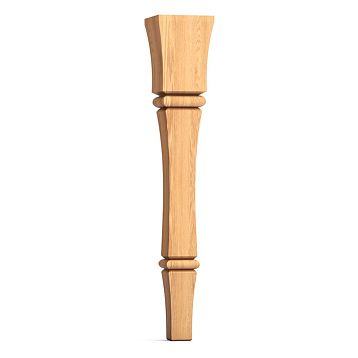
In the hierarchy of staircase elements, the starting baluster occupies a special position, combining the functions of a load-bearing element, a decorative dominant, and a compositional center. Its dimensions traditionally exceed those of standard balusters, which is due not only to structural requirements but also to aesthetic principles of architectural composition.
The structural significance of the starting baluster is determined by its role in distributing loads from the entire railing system. It bears not only vertical forces from the weight of the handrails but also horizontal loads arising from people leaning on the railing. That is why the cross-section of the first baluster is usually 80x80 mm or 100x100 mm, while intermediate elements may have dimensions of 50x50 mm or 60x60 mm.
Visual dominance is created through increased dimensions and more complex decorative solutions. The starting baluster is often adorned with carved elements, decorative profiles, or inlays, making it the focal point of attention. This is especially important in open staircase spaces, where the railing becomes one of the main decorative elements of the interior.
The compositional center is formed due to the special position of the first baluster within the overall structure of the railing. It serves as the starting point for perceiving the entire staircase run and creates a rhythmic basis for placing subsequent elements.




Principles of proportioning
Creating a harmonious starting baluster requires a deep understanding of architectural proportions and their influence on the perception of space. Classical principles established in ancient architecture remain relevant in modern design.
The golden ratio is often used to determine the proportions of various parts of the baluster. The height of the base, central part, and capital should create visually pleasing proportions based on mathematical laws of perception. This ensures a harmonious perception of the element both as a standalone object and as part of the overall composition.
Scaling relative to the space implies taking into account the overall dimensions of the room and staircase when selecting the baluster's size. In spacious halls, massive starting elements are appropriate, emphasizing the monumentality of the space. In compact interiors, more elegant solutions are preferred, avoiding visual overload of limited space.
Our factory also produces:


Material science and manufacturing technologies
The choice of material for manufacturing the starting baluster is determined not only by aesthetic preferences but also by technical requirements for strength, durability, and workability. Each wood species possesses unique characteristics that influence the final result.
Oak remains the undisputed leader among materials for manufacturing starting balusters. Its exceptional strength, noble texture, and ability to be finely worked make oak elements a standard of quality. Oak density of 700-800 kg/m³ ensures necessary resistance to loads, while high tannin content provides natural protection against biological damage.
Working with oak requires a professional approach. The high hardness of the wood imposes higher requirements on tools and processing technology. Drying oak blanks must be done particularly carefully, as uneven shrinkage may lead to cracks and deformations.
Ash offers a unique combination of strength and elasticity, which is especially important for elements subjected to dynamic loads. Light-colored wood with expressive texture is ideal for modern interiors, where the natural beauty of the material is valued without additional toning.
Get Consultation
Innovative processing technologies
Modern wood processing methods open up new opportunities for creating unique starting balusters. Combining traditional techniques with innovative equipment allows achieving results previously unavailable.
CNC processing has revolutionized the production of complex decorative elements. Multi-axis milling centers are capable of creating three-dimensional compositions of any complexity with precision down to fractions of a millimeter. This is especially important when manufacturing series elements, where absolute identity of all parts is required.
Programming of processing allows creating libraries of standard elements and combining them into unique compositions. Modern CAD/CAM systems provide a full cycle from 3D modeling to the finished product.
Laser engraving opens opportunities for creating delicate decorative elements inaccessible through traditional carving methods. Laser technologies allow applying complex ornaments, inscriptions, and emblems with jewel-like precision without mechanical impact on the material.
Stylistic directions in design
Each stylistic direction in architecture and interior design imposes its own requirements on the form and decoration of starting balusters. Understanding these features allows creating authentic solutions or modern interpretations of classical forms.
Classic style requires strict adherence to canonical proportions and the use of traditional decorative elements. first baluster In classical execution, it is a miniature column with clearly defined base, shaft, and capital.
The base of a classical baluster is usually square or round and decorated with profiled elements — beads, fluting, or braiding. The shaft may be smooth or decorated with vertical grooves, spiral grooves, or vegetal ornamentation. The capital crowns the composition and is often adorned with acanthus leaves, volutes, or geometric motifs.
Baroque style is characterized by dynamic forms, rich decoration, and theatrical overall impression. Starting balusters in the baroque style are true sculptural works, where every detail is meticulously crafted.
Modern Interpretations
Minimalism offers a radically different approach to designing starting balusters. Here, line purity, perfect proportions, and surface finish quality are valued. Decorative elements are minimized or entirely absent, and beauty is achieved through flawless execution of simple forms.
Minimalist balusters often have strictly geometric shapes — cylindrical, prismatic, or combined. Special attention is paid to surface quality, which must be perfectly smooth and evenly finished.
Eco-style emphasizes the natural beauty of wood, preserving and revealing its inherent qualities. Starting balusters in eco-style may retain natural irregularities, knots, and color variations, which would be considered defects in other styles.
Technical aspects of installation
Installing a starting baluster requires special attention to technical details, as the quality of its installation affects the reliability of the entire railing. Several proven mounting methods exist, each with its own advantages and areas of application.
Mounting on threaded rods is considered the most reliable method of fixing starting balusters. A stainless steel rod with a diameter of 12-16 mm ensures a strong connection capable of withstanding significant loads.
The installation technology includes several stages. First, a hole is drilled in the stair base, 1-2 mm smaller in diameter than the rod, to a depth of 60-80 mm. Then the rod is screwed into the base using a special wrench or held with pliers. In the baluster, a central hole of the same diameter is drilled to a depth equal to the protruding part of the rod plus 10-15 mm for adhesive placement.
Mounting on wooden dowels is a traditional carpentry method providing strong and aesthetic connections. Dowels are made from hardwoods — beech or oak — and have a cylindrical shape with small longitudinal grooves for excess glue to escape.
Features of mounting to different bases
Wooden treads provide the simplest and most reliable method of mounting starting balusters. The uniformity of the material of the base and baluster creates optimal conditions for creating a strong connection. It is important to consider the direction of wood grain and avoid installing fasteners perpendicular to the grain in high-load areas.
Concrete bases require the use of special anchor systems or chemical anchors. The anchoring depth should be at least 80 mm to ensure reliable mounting. Special attention should be paid to waterproofing the connection point to prevent moisture from penetrating the wood.
Metal structures require the use of welded or bolted connections. In this case, a metal embedded part is provided in the baluster, ensuring a reliable connection with the load-bearing structure.
Decorative possibilities and artistic treatment
A starting baluster provides the widest range of opportunities for artistic expression and unique decorative solutions. Modern wood processing technologies allow for the realization of the most daring design ideas.
Carving remains one of the most expressive ways to decorate balusters. Various carving techniques — from simple geometric to complex relief — allow creating works suitable for any stylistic direction.
Geometric carving is characterized by strict lines and repeating motifs. It is ideal for modern interiors, where clarity and simplicity of form are valued. Floral carving reproduces natural motifs — leaves, flowers, fruits — and creates a sense of connection with nature.
Inlay allows creating complex polychromatic compositions using wood of different species. Contrasting combinations of light and dark species, texture and tone play create unique visual effects.
Modern Decoration Methods
Laser engraving opens new possibilities for creating delicate decorative elements. This technology allows applying complex ornaments, portraits, coats of arms, and inscriptions with precision unattainable by hand.
Advantages of laser engraving include high precision, repeatability of results, ability to create gradient transitions and fine details. There is no mechanical impact on the material, which eliminates scratches and deformations.
Thermal treatment allows creating unique color effects without using chemical dyes. Controlled high-temperature action alters the wood structure, creating various shades — from golden to dark brown.
Operational characteristics and durability
As the most heavily loaded element of the stair railing, a starting baluster must have high operational characteristics and ensure long-term reliability of the entire structure.
Strength characteristics are determined not only by material selection but also by the quality of its processing. Proper orientation of wood grain, absence of internal stresses, quality drying — all these factors affect the baluster's ability to withstand operational loads.
Modern standards require stair railings to withstand a horizontal load of at least 100 kg per linear meter. For starting balusters, this load may be significantly higher, as they are often used as support when ascending the stairs.
Resistance to external influences includes resistance to temperature and humidity changes, UV exposure, mechanical damage. Quality protective treatment significantly extends the service life of balusters and preserves their original appearance.
Protective coating systems
Lacquer coatings create a strong protective film on the wood surface. Modern polyurethane lacquers provide high wear resistance, water resistance, and UV resistance. The number of layers and application technology determine the quality and longevity of the coating.
Oil-based coatings penetrate the wood structure, highlighting its natural texture. They create a matte surface with pleasant tactile sensations and are easily renewed when needed. Oil-based coatings are especially popular in interiors where naturalness and eco-friendliness are valued.
Wax coatings give wood a noble silk-like sheen and provide additional protection against moisture. Wax is easy to apply and renew, but requires regular maintenance to preserve its protective properties.
Economic aspects and pricing
The cost of the first newel post depends on many factors, including the material used, processing complexity, order volume, and manufacturer reputation. Understanding these factors will help make an informed choice and achieve the optimal price-to-quality ratio.
Material costs constitute the main part of the product's cost. Premium wood species — oak, beech, walnut — are significantly more expensive than coniferous species, but they provide higher performance characteristics and aesthetic qualities.
The quality of the original material also affects the price. Premium-grade wood without defects costs more but guarantees the quality of the finished product. Cutting corners on materials often leads to additional costs for repairs or replacements.
Labor costs depend on processing complexity and the skill level of the craftsmen. Hand carving requires significant time and high craftsmanship, reflected in the cost. Machine processing is more economical but may limit design possibilities.
Factors of long-term economic efficiency
The longevity of quality newel posts ensures minimal operational expenses. Properly manufactured and installed items serve for decades without requiring replacement or major repairs.
The ability to restore wooden newel posts allows restoring their appearance and functionality upon damage. This is significantly cheaper than full replacement and allows preserving the historical or artistic value of the items.
The increase in property value due to high-quality architectural elements may significantly exceed the costs of their manufacturing and installation. This is especially relevant for luxury real estate, where interior details play a crucial role in determining value.
Modern trends and innovations
The industry of producing stair elements is constantly evolving, adopting new technologies and materials. Understanding current trends will help create timely solutions that remain in demand for many years.
Consumer environmental awareness stimulates the use of certified wood from sustainably managed forests. FSC and PEFC certificates have become an important competitive advantage for manufacturers.
Zero-waste production technologies, use of renewable energy sources, waste recycling — all this forms new industry standards. Consumers increasingly value products made in accordance with ecological principles.
Personalization is becoming a key trend in interior design. Clients want to obtain unique items reflecting their individuality and lifestyle. This stimulates the development of individual production technologies and expands design possibilities.
Technological Innovations
Digital modeling allows creating accurate 3D models of future products and visualizing them in interiors. Customers can see the result before production begins and make necessary adjustments.
Robotized production ensures high precision and repeatability of items while reducing labor costs. Modern robots can perform complex wood processing operations with precision unattainable by hand.
New materials expand designers' possibilities. Wood-based composites, thermally modified wood, nanocomposites — all this opens new horizons for creativity.
Regional characteristics and traditions
Different regions of the world have developed their own traditions in manufacturing and decorating first newel posts. These traditions reflect local climatic conditions, available materials, and cultural preferences.
Northern regions prefer massive newel posts made of coniferous species, capable of withstanding harsh climatic conditions. Decoration is usually restrained, functional, emphasizing the natural beauty of the wood.
Mediterranean traditions are characterized by the use of hardwoods and rich decoration. Carved elements, inlays, and gilding create an atmosphere of luxury and refinement.
Asian craftsmanship schools are distinguished by special attention to details and symbolic meaning of decorative elements. Each ornament has its own meaning and place within the overall composition.
Influence of climatic conditions
Humid climates require special attention to protecting wood from fungal damage and rot. Special impregnations and coatings, as well as wood species with natural resistance to biological damage, are used.
Dry climates pose a risk of wood cracking and deformation. Special attention is paid to the quality of material drying and stabilizing treatments.
Sharp temperature fluctuations require the use of wood with low thermal expansion coefficient and special fastening technologies compensating for deformations.
Conclusion
World first newel post It represents a remarkable combination of engineering thought, artistic craftsmanship, and deep understanding of the material. These elements, opening the staircase composition, carry not only functional load but also emotional content, creating the first impression of the architectural space.
Choosing and manufacturing the first newel post is a process requiring a comprehensive approach, considering technical requirements, aesthetic preferences, and economic possibilities. Every decision — from selecting wood species to the smallest decorative details — affects the final result and determines the character of the entire staircase ensemble.
Modern technologies open boundless opportunities for creativity, but the foundation remains a deep understanding of craftsmanship traditions and respect for the material. It is precisely this combination that ensures the creation of items that become not just functional elements, but works of art capable of delighting and inspiring many generations.
Investing in a quality first newel post is investing in the beauty, safety, and longevity of the entire staircase structure. A properly designed and high-quality first newel post becomes the foundation for creating a harmonious architectural space, where each element is in its place and performs its role in the overall symphony of design.
The future of the industry is linked to further development of technologies, emergence of new materials and processing methods, but the core principles remain unchanged: striving for perfection, respect for traditions, and understanding that true craftsmanship lies in the ability to create beauty that will remain relevant for centuries.
STAVROS Company, recognized as a leading producer of wooden architectural elements, embodies the best craftsmanship traditions and the most modern technologies in its products. Decades of experience, use of premium raw materials, and strict quality control at every production stage enable STAVROS to create first newel posts that become true works of art. Choosing STAVROS products means investing in beauty, quality, and longevity, obtaining items that will serve as benchmarks of perfection for many years and become a source of pride for many generations.