Article Contents:
- Anatomy of perfection: what handrails consist of
- Structural elements and their significance
- Technical Specifications and Standards
- Materials for handrails: choice defining character
- Wood: eternal classic with character
- Metal: strength and elegance
- Glass: transparent elegance
- Combined solutions: play of contrasts
- Stylistic solutions: from classic to avant-garde
- Classic Style: Timeless Elegance
- Modern Minimalism: Purity of Lines
- Art Deco: luxury and geometry
- Eco-style: natural harmony
- Functional features and innovations
- Ergonomics and Safety
- Innovative solutions and technologies
- Handrails in various types of rooms
- Residential interiors: from apartment to mansion
- Public spaces: functionality and style
- Outdoor structures: meeting the elements
- Process of creating ideal handrails
- From concept to realization: stages of design
- Production technologies and craftsmanship
- Installation and mounting: precision in every detail
- Stylistic solutions for different interiors
- Classic and neoclassic: eternal elegance
- Modern Style: Functionality and Clean Lines
- Loft and Industrial Style: Brutality and Character
- Ethnic styles: cultural heritage in modern interpretation
- Maintenance and care: preserving beauty for years
- Material-specific care
- Preventive maintenance and minor repairs
- Selection and ordering: how to avoid making the wrong decision
- Criteria for choosing ideal handrails
- Working with professionals: designers and manufacturers
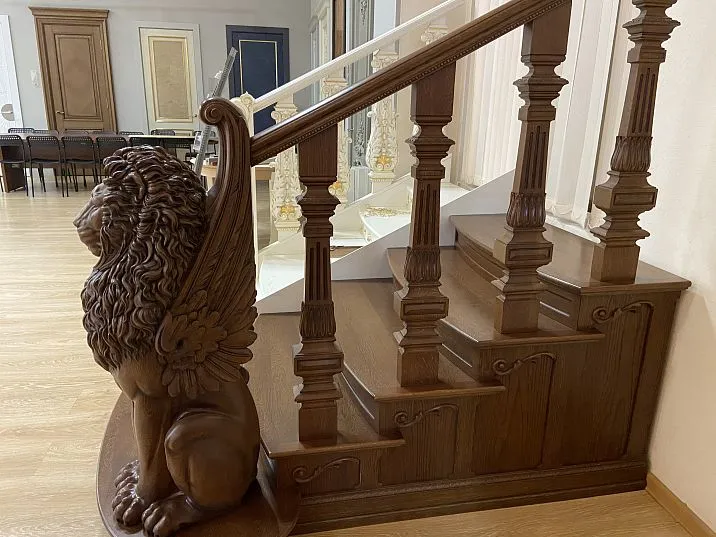
Have you ever wondered why some staircases look so majestic that they literally take your breath away? Why some interiors seem complete and harmonious, while others seem lacking a crucial touch? The secret often lies in the details, and one such decisive detail is handrailsThis element, combining functionality and aesthetics, can transform an ordinary staircase into a work of art and the interior into an example of refined taste.
In the world of architectural design, balustrades play a special role. They do not merely ensure safety when ascending or descending—they set the tone for the entire space, becoming its signature feature. Like a frame that highlights the beauty of a painting, skillfully crafted balustrades frame the staircase, turning it into the focal point of the interior.




Anatomy of perfection: what balustrades are made of




Structural elements and their significance
handrails This is a complex architectural system where each element plays an indispensable role. Understanding the structure will help you make an informed choice when designing your dream staircase.
The construction is based on:
- Handrail - a horizontal element along which the hand slides when ascending or descending. Its shape and size are crucial for comfort. The optimal width of the handrail is 5-7 cm, which perfectly matches the anatomy of the human palm. The top surface is usually slightly rounded for easy gripping.
- Balusters - vertical supporting elements that support the handrail. They are often the main decorative accent of the entire structure. The distance between balusters is regulated by building codes and is usually no more than 10-15 cm, ensuring safety, especially if there are children in the house.
- Newels (supporting posts) - massive vertical elements installed at the beginning, end, and turns of the staircase. They provide structural rigidity to the entire system and are often executed with particularly rich decorative detailing.
- Baluster base - a horizontal element to which the lower parts of the balusters are attached. It provides additional structural rigidity and completes the exterior appearance of the structure.
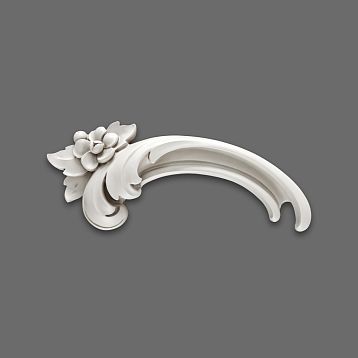
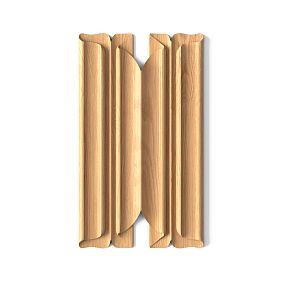
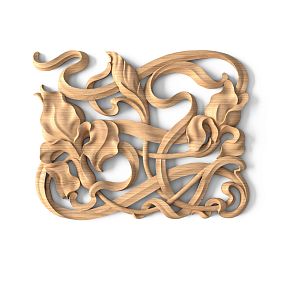
- Decorative elements - volutes, rosettes, appliqués that complement the main structure, giving it individuality and alignment with the chosen style.
Our factory also produces:




Technical Specifications and Standards
When designing and installing balustrades a number of technical requirements must be considered to ensure the safety and longevity of the structure:
- The height of the balustrades should be at least 90 cm from the stair level in residential buildings and at least 110 cm in public buildings.
- The load that balustrades must withstand is regulated by building codes and is at least 50 kg/m for residential buildings and 100 kg/m for public buildings.
- The attachment of elements must ensure structural rigidity without visible movement under load.
- Materials must comply with fire safety and ecological requirements, especially for interior spaces.
Adhering to these standards not only ensures the safety of staircase use but also guarantees the longevity of the structure, sparing you the need for premature repairs or replacements.
Get Consultation
Materials for balustrades: choice defining character
Wood: eternal classic with character
, and there are good reasons for this. This material combines natural beauty, tactile comfort, and vast design possibilities. balustradesEach wood species imparts its own unique character to balustrades:
Oak - the king among species for making balustrades. Its exceptional strength (hardness 3.7 on the Brinell scale) ensures longevity even with intensive use. The expressive texture with visible growth rings creates a unique pattern on the surface. Oak balustrades can last over 100 years, acquiring a noble patina over time.
- Beech - distinguished by uniform structure and light, slightly pinkish hue. Its density (hardness 3.5-4.0) makes it ideal for creating elegant yet sturdy constructions. Beech is easily stained, allowing for virtually any color solution.
- Ash - possesses a beautiful grain pattern and high elasticity, making it ideal for bending balustrade elements. With a hardness of 4.0 on the Brinell scale, ash combines lightness with high strength.
- Walnut - dark, noble wood with a silky texture. Walnut balustrades become a true interior decoration, bringing an atmosphere of luxury and aristocracy. Hardness 3.8 ensures excellent wear resistance.
- Exotic species (wenge, merbau, teak) - offer unique color solutions and exceptional strength (hardness up to 4.5), becoming an exclusive accent in the interior.
- Exotic species (wenge, merbau, teak) - offer unique color solutions and exceptional strength (hardness up to 4.5), becoming an exclusive accent in the interior.
Wooden balustrades require certain care, but modern protective coatings significantly simplify this task. Quality lacquer finish (typically 3-5 layers of polyurethane lacquer) protects wood from moisture, UV radiation, and mechanical damage, preserving its natural beauty for many years.
Metal: Strength and Elegance
Metal railings offer a unique combination of strength and design possibilities:
- Wrought iron - a traditional material that allows creating true works of art. Each wrought iron item is unique, as it is handmade by a craftsman. Tensile strength reaches 350-400 MPa, ensuring exceptional structural reliability.
- Stainless steel - a modern material ideally suited for minimalist interiors. Polished stainless steel (usually AISI 304 or 316) with a mirror finish (Ra 0.4-0.6 μm) creates an effect of lightness and weightlessness, while maintaining high strength (up to 600 MPa) and corrosion resistance.
- Brass and bronze - materials with a warm golden hue that develop a noble patina over time. They are ideal for classical and vintage interiors. Brass strength (300-400 MPa) combined with corrosion resistance makes it an excellent choice for humid environments.
- Aluminum - a lightweight (density 2.7 g/cm³ vs. 7.8 g/cm³ for steel) and corrosion-resistant metal often used for outdoor railings. Modern anodizing and powder coating technologies allow aluminum railings to be finished in any color and texture.
Metal railings are often combined with other materials - wooden handrails, glass inserts - enabling interesting design solutions that blend warmth and coolness, transparency and solidity.
Glass: Transparent Elegance
Glass railings - a choice for those who appreciate modern design and visual lightness:
- Tempered glass 10-12 mm thick has high strength (5-7 times stronger than regular glass) and safety - when broken, it shatters into small, blunt fragments incapable of causing serious injuries.
- Triplex - multi-layered glass consisting of two or more layers bonded with a special film. When broken, fragments remain on the film, making this material even safer. Triplex thickness for railings is typically 8+8 mm or 10+10 mm.
- Glass with various effects - matte, tinted, sandblasted patterns, digital printing - allows creating unique design solutions that match the overall interior concept.
Glass railings are mounted using special point holders made of stainless steel, clamp profiles, or embedded into special grooves in floors and steps. Modern technologies allow creating virtually invisible mounts, enhancing the "floating glass" effect.
Combined Solutions: Play of Contrasts
The most interesting and functional solutions often emerge at the junction of different materials:
- Wood and metal - a classic combination where a wooden handrail provides tactile comfort, while metal balusters offer strength and variety of forms.
- Metal and glass - a modern solution where glass transparency creates a sense of lightness and spaciousness, while metal elements provide structural rigidity.
- Wood and glass - an unexpected yet effective combination, where the warmth of wood contrasts with the cold transparency of glass, creating an interesting visual effect.
- Stone and metal - a monumental solution for luxurious interiors, where stone elements (usually marble or granite) are combined with wrought iron or bronze details.
Combined handrails allow achieving the ideal balance between aesthetics and functionality, creating unique solutions perfectly suited to a specific interior and client’s needs.
Stylistic Solutions: From Classic to Avant-Garde
Classic style: Timeless elegance
Classical handrails - embodies harmony, proportion, and refined decoration. Their distinctive features:
- Symmetrical baluster shapes, often vase- or column-shaped with characteristic bulges and tapers.
- Rich decoration - carved elements, volutes, acanthus leaves, rosettes, imparting grandeur and solemnity to the structure.
- Massive newels with decorative finials that accentuate the start and end of a staircase.
- Smooth handrail lines that follow the staircase curves and create a sense of continuity and fluidity.
Classic railings are primarily made of hardwoods (oak, walnut, mahogany) or natural stone (marble, limestone). They may be complemented with bronze or brass elements - appliqués, rosettes, decorative inserts.
The color palette of classic railings is usually restrained - natural wood tones from honey to dark brown, white or beige marble, patinated bronze. Often, artificial aging techniques are used, giving the items a noble appearance and a sense of historical value.
Modern Minimalism: Clean Lines
Modern minimalist railings - the complete opposite of classic style. Their main characteristics:
- Concise forms without unnecessary decorative elements, where beauty is achieved through ideal proportions and material quality.
- Straight lines or simple geometric shapes, creating a clear, structured appearance.
- Monochromatic color palette - black, white, gray, natural wood tones without pronounced texture.
- Combination of contrasting materials - glass and metal, concrete and wood, creating interesting visual effects.
Minimalist railings can be made of glass with minimal fixings, thin metal profiles, or wooden elements of simple geometric shapes. Horizontal elements are often used instead of traditional vertical balusters, creating a sense of linearity and emphasizing the modern character of the interior.
Particular attention in minimalist railings is paid to surface quality and precision of connections - in the absence of decorative elements, any flaw becomes noticeable and disrupts the overall impression of purity and perfection.
Art Deco: luxury and geometry
The Art Deco style offers a unique approach to railing design, combining luxury with geometric clarity:
- Symmetrical geometric patterns - zigzags, sun rays, stepped forms, creating a dynamic, energetic impression.
- Contrasting material combinations - polished wood and chrome, black lacquer and gold, creating an effect of luxurious, refined finishing.
- Exotic materials - rare wood species (ebony, zebrawood), shagreen leather, mother-of-pearl, used as decorative inserts.
- Bold color solutions - black with gold, deep blue, emerald, burgundy, creating an atmosphere of theatricality and drama.
Art Deco railings often become a central element of the interior, drawing attention with their expressiveness and uniqueness. They are ideally suited for spacious rooms with high ceilings, where they can fully realize their potential.
Eco-style: natural harmony
Eco-style in railing design reflects the modern person's desire for closeness to nature and eco-friendliness:
- Unprocessed or minimally processed materials - wood with preserved natural texture, stone, bamboo, rattan.
- Organic shapes resembling natural structures - tree branches, plant stems, waves.
- Natural color palette - shades of earth, sand, green, sky, creating a calm, soothing atmosphere.
- Handcrafted work - visible signs of manual processing, highlighting the uniqueness of each item and connection to traditional craftsmanship.
Eco-railings are often complemented by live plants - climbing along the structure or placed in special planters integrated into cabinets. This creates a sense of a living, evolving space where architectural elements harmoniously coexist with nature.
Functional features and innovations
Ergonomics and safety
Ergonomics balustrades - is the science of how to make them maximally comfortable and safe for the user:
- The handrail's shape should ideally match the anatomy of the human hand. The optimal diameter of a round handrail is 40-50 mm, ensuring comfortable grip for adults. Additional handrails at a height of 70-75 cm may be installed for children and elderly people.
- The handrail surface should be smooth but not slippery. Wooden handrails are sanded to a silky smoothness (finishing abrasive grit P220-P320) and coated with special lacquers providing pleasant tactile sensations.
- Continuity of the handrail is especially important at stair turns. Modern technologies allow creating curved wooden handrails of complex shapes that smoothly follow the staircase curves without breaks or joints.
- Step and railing lighting - an important safety element, especially in homes where elderly people or children reside. LED strips (usually warm white light 2700-3000K) embedded in the treads or under the handrail provide soft, non-intrusive lighting sufficient for safe movement during nighttime.
- Non-slip pads on steps combined with reliable railings significantly reduce the risk of falls, especially on steep staircases.
Innovative solutions and technologies
Modern technologies open new possibilities for railing design and functionality:
- Integrated lighting - LED strips embedded in the handrail or beneath it can not only ensure safety but also create a unique atmosphere by changing color and intensity depending on the time of day or mood.
- Smart handrails - equipped with motion sensors that automatically turn on lighting when someone approaches, or with touch panels allowing control of lighting and other smart home systems.
- Modular systems - allow easy configuration changes or replacement of individual components without dismantling the entire structure. This is especially relevant for growing families or when changing interior design.
- Transformable handrails - innovative structures that can change their shape or function. For example, handrails integrated with bookshelves, or foldable systems for space-saving in compact spaces.
- Bio-composite materials - combining natural fibers (wood shavings, linen) with polymer binders, create eco-friendly, strong, and low-maintenance handrails with unique tactile and visual characteristics.
Handrails for various types of rooms
Residential interiors: from apartment to mansion
in residential spaces handrails must combine aesthetic appeal with practicality and safety:
- Urban apartments often have limited space, so compact, visually light structures are in demand here. Glass handrails with minimal metal fittings or thin metal structures with horizontal elements help preserve the feeling of spaciousness. For two-level apartments, spiral staircases with handrails that follow their spiral shape are popular.
- Rural homes offer more freedom for design solutions. Here, heavier, decorative handrails made of natural wood, stone, or wrought metal are appropriate. In wooden homes, handrails in Russian or Scandinavian styles are often used, harmonizing with the overall atmosphere of eco-friendliness and closeness to nature.
- Luxury mansions allow for the most daring and luxurious ideas. Marble balustrades with bronze elements, hand-carved wooden handrails, exclusive designer solutions using rare materials — all of this creates an atmosphere of luxury and highlights the owner’s status.
In residential interiors, it is especially important to consider the needs of all family members — from small children to elderly people. Two-level handrails, additional safety elements, and carefully designed ergonomics make stair use comfortable and safe for everyone.
Public spaces: functionality and style
In public buildings, handrails must meet heightened safety requirements and withstand intensive use:
- Shopping centers require strong, easy-to-clean handrails resistant to intensive use. Often, constructions made of stainless steel and tempered glass are used, which are not only practical but also create a sense of modernity and technology.
- Hotels and restaurants use handrails as part of branding and atmosphere creation. In luxury hotels, these may be gilded bronze handrails with rich decoration, while boutique hotels feature designer solutions reflecting the establishment’s concept.
- Museums and theaters often preserve historical handrails as part of architectural heritage or create modern interpretations that harmonize with the building’s overall style. Here, handrails become part of the broader artistic concept, emphasizing the cultural significance of the space.
- Educational institutions require especially reliable and safe handrails, taking into account the active behavior of children and teenagers. Here, strong constructions with additional safety elements are used, often with bright color accents to aid navigation.
In public spaces, handrails must comply with strict fire safety regulations, have anti-vandal properties, and be accessible to people with disabilities.
Outdoor structures: facing the elements
Handrails for outdoor staircases, terraces, balconies must withstand atmospheric conditions while maintaining aesthetic appeal:
- Materials for outdoor handrails must have high resistance to moisture, ultraviolet radiation, and temperature fluctuations. The optimal choice is stainless steel (AISI 316 grade for marine climates), aluminum with powder coating, tropical wood species (teak, iroko, cumaru) with moisture resistance up to 80-85%.
- Structural features of outdoor handrails include reinforced fastenings accounting for wind loads, special drainage elements for water runoff, and thermal expansion compensators for materials.
- Protective coatings for metal handrails - hot-dip galvanizing (zinc layer 60-120 microns), powder coating with pre-phosphatization, anodizing of aluminum (layer 15-25 microns) - ensure durability of up to 25-30 years even in aggressive environments.
- Wooden elements of outdoor handrails require special treatment - deep-penetrating antiseptics, UV-filtering oils, marine varnishes with high solid content (50-60%).
Outdoor handrails often become an important element of a building’s facade, so their design must harmonize with the overall architectural concept, supporting the stylistic unity of the exterior.
The process of creating ideal handrails
From concept to realization: design stages
Creating ideal balustrades This is a complex multi-stage process requiring a professional approach:
- Conceptual design begins with an analysis of the space, its style, functional requirements, and the client's wishes. At this stage, the main parameters of the future railings are defined — materials, shape, style, color scheme.
- The technical project includes detailed drawings of all structural elements with specified exact dimensions, connection methods, and types of fasteners. Modern design is performed using specialized CAD programs, allowing the creation of highly accurate 3D models.
- Visualization helps the client see how the railings will look in the interior even before production begins. Photorealistic 3D visualizations allow assessing proportions, compatibility with other interior elements, and the play of light and shadow.
- Preparation of production documentation — detailed specifications for all elements, technological cards, installation instructions, which ensure the precise realization of the project in material.
Professional design allows avoiding errors and additional costs during production and installation, ensuring an ideal result.
Production technologies and craftsmanship
Modern railing production combines traditional craftsmanship with innovative technologies:
- Wooden elements are manufactured on high-precision CNC machines (accuracy up to 0.01 mm), which allow reproducing complex shapes with perfect precision. However, finishing processes — sanding, toning, varnishing — still require manual labor by experienced craftsmen.
- Metal elements are created using laser cutting (accuracy up to 0.1 mm), waterjet cutting, and CNC bending. Wrought elements, despite technological advancements, continue to be handmade, preserving the traditions of blacksmithing craft.
- Glass elements are produced from tempered glass or triplex on automated lines, ensuring ideal geometry and safety. Decorative effects — sandblasting, digital printing, etching — add individuality to the glass.
Combining high-tech equipment with the skill of experienced specialists allows creating railings that combine flawless quality with artistic expressiveness.
Installation and mounting: precision in every detail
Even the highest-quality railings will not look or function properly without professional installation:
- Preparation work includes precise on-site measurements, checking the staircase geometry, and preparing surfaces for mounting.
- Mounting support elements — newels and fastening parts for balusters — with strict adherence to vertical and horizontal alignment, ensuring geometric accuracy of the entire structure.
- Mounting balusters with precise adherence to intervals and vertical alignment of each element. For wooden balusters, special dowels and adhesive compounds are used; for metal balusters — welding or bolted connections.
- Installing the handrail with smooth line continuity and secure attachment to balusters. At staircase turns, special transition elements or bent handrails, manufactured according to custom templates, are used.
- Finishing treatment — sanding joints, touch-up painting, varnishing, polishing — the final stage ensuring a flawless appearance of the structure.
Professional installation guarantees not only aesthetic perfection but also safety and longevity of the railings, eliminating issues such as loosening, squeaking, or uneven surfaces.
Stylistic solutions for different interiors
Classic and neoclassic: eternal elegance
Classic design style balustrades This is the embodiment of harmony, proportionality, and refined decoration:
- Symmetry and rhythm — even distribution of balusters, creating a clear visual rhythm that calms the eye and evokes a sense of order and stability.
- Traditional forms — balusters in the shape of vases or columns with characteristic bulges and tapers, handrails with smooth curves and soft lines.
- Carved decoration — acanthus leaves, rosettes, volutes, garlands, imparting grandeur and solemnity to railings. The depth of carving is usually 5–15 mm, creating expressive play of light and shadow.
- Luxurious materials — wood of valuable species (oak, walnut, mahogany), marble, bronze, emphasizing status and respectability.
Classic railings fit perfectly into interiors with high ceilings, moldings, parquet floors, crystal chandeliers. They create an atmosphere of timeless elegance that never goes out of style.
Neoclassicism offers a more modern interpretation of classical motifs — more streamlined forms, less ornamentation, lighter shades, but retains the core principles of harmony and proportionality.
Modern style: functionality and clean lines
Modern railings reflect the principles of functionalism and minimalism:
- Concise forms - absence of unnecessary details, clean lines, geometric simplicity. Balusters may take the form of simple rods, plates, or even be absent, replaced by glass panels or horizontal elements.
- Innovative materials - stainless steel, tempered glass, composites, anodized aluminum, creating a sense of technology and modernity.
- Monochromatic color palette - black, white, gray, metallic, with possible bright accents to create a focal point.
- Hidden fasteners - technical elements are maximally concealed, creating an impression of lightness and purity of lines.
Modern railings become not just a functional element, but an art object, attracting attention with their unconventional shape or material. They fit perfectly into minimalist interiors with open spaces, large windows, and minimalist furniture.
Loft and industrial style: brutality and character
Loft-style railings reflect industrial aesthetics and functionality:
- Rough, unprocessed materials - aged metal with visible weld seams, untreated or roughly processed wood retaining natural defects, concrete.
- Industrial elements - pipes, I-beams, perforated metal, mesh, rivets, bolted connections, which are not hidden but become part of the design.
- Contrasting combinations - black metal and light wood, rusted steel and glass, creating an expressive industrial look.
- Functionality without excess - each element has a practical purpose, decorative appeal is achieved through material texture and honest construction.
Loft-style railings fit perfectly into spaces with brick walls, exposed utilities, high ceilings, creating an atmosphere of modern urban living with an industrial character.
Ethnic styles: cultural heritage in a modern interpretation
Ethnic styles in railing design allow you to bring cultural identity and exotic flair into the interior:
- Eastern style - intricate carved railings with geometric or floral patterns characteristic of Islamic art. Often use dark wood species with inlays of mother-of-pearl, ivory, or metal.
- Mediterranean style - wrought iron railings with floral motifs, spirals, volutes, painted in white, blue, terracotta colors. Wooden elements often have a sun-bleached effect.
- Scandinavian style - simple, minimalist railings made of light wood (pine, birch, beech) with minimal decoration, creating a sense of purity, light, and space.
- Japanese style - geometrically precise railings made of dark wood or black metal, often with bamboo or rice paper elements, creating an atmosphere of meditative calm and harmony.
Ethnic railings allow you to create an atmosphere of travel in your home, introduce exotic notes into everyday life, highlight the owners' interest in a particular culture or their origin.
Care and maintenance: preserving beauty for many years
Material-specific care
Each material used for manufacturing balustrades, requires a special approach to care:
- Wooden railings require regular treatment with special compositions that maintain their protective properties and aesthetic appearance. It is recommended to use oils and waxes for wood (renewed every 1-2 years), which nourish the wood, protect it from drying, and highlight its natural texture beauty. For lacquered surfaces, it is important to use special non-abrasive and non-aggressive chemical products.
- Stainless steel railings require periodic polishing with special agents that remove fingerprints and restore surface shine. For powder-coated wrought iron elements, regular cleaning with a soft damp cloth is sufficient.
- Glass elements are cleaned with special glass cleaners that do not leave streaks. To maintain ideal transparency, it is recommended to clean weekly using microfiber cloths.
- Stone railings (marble, granite) require special attention, as some stone types are sensitive to acids and abrasives. It is recommended to use pH-neutral cleaning agents and periodically renew protective impregnation (every 2-3 years), preventing the absorption of contaminants.
Prevention and minor repairs
Regular maintenance allows you to prevent serious problems and extend the service life of railings:
- Check fasteners - all connections should be checked for reliability at least once a year, tighten loose screws and bolts, and replace worn fasteners as needed.
- Wooden element processing - minor scratches or scuffs on wooden surfaces can be removed using fine-grit sandpaper (P320-P400) followed by application of a protective coating.
- Metal element touch-up - upon discovering paint chips or corrosion spots on metal railings, immediately treat the damaged area with an anti-corrosion compound and repaint with a specialized paint matching the original coating.
- Replacement of damaged elements - severely damaged balusters or handrail sections can be replaced without dismantling the entire structure, significantly saving time and resources.
Regular professional maintenance of railings (recommended every 3-5 years) includes a full structural inspection, updating protective coatings, and, if necessary, restoration of individual elements.
Selection and ordering: how to avoid making the wrong decision
Criteria for choosing ideal railings
When choosing balustrades Many factors must be considered:
- Compatibility with the building's architectural style and overall interior concept. Railings should harmoniously integrate into the space, supporting its main lines and color schemes.
- Practicality and ease of use - railings should not only be aesthetically pleasing but also functional, ensuring safety and comfort during ascent and descent.
- Durability and ease of maintenance - especially important for families with children and pets, as well as for high-traffic public spaces.
- Budget - the cost of railings can vary widely depending on materials, design complexity, and level of craftsmanship. It is important to find the optimal price-to-quality ratio.
- Ecological and safe materials - particularly relevant for families with young children and individuals with allergic reactions.
Working with professionals: designers and manufacturers
Creating ideal railings - a complex process requiring the involvement of professionals:
- An architect or interior designer will help develop a concept matching the overall style of the space, select optimal materials and forms, and create sketches and visualizations.
- The engineer will develop technical documentation considering all nuances of the specific staircase, calculate loads, and select optimal mounting methods.
- The manufacturer will realize the project in material while adhering to all technical requirements and design intentions. It is important to choose companies with a good reputation, their own production, and a portfolio of completed projects.
- The installation crew will ensure correct installation of railings in accordance with all technical requirements, guaranteeing their longevity and safety.
Collaborating with professionals at every stage - from design to installation - helps avoid mistakes, saves time, and ultimately delivers a result that will delight for many years.