Article Contents:
- Alternative Reality: What Lies Beneath the Surface
- The Hidden Power of Natural Materials
- Bioenergy of Living Spaces
- Technological Innovations: Where Craft Meets Science
- Revolution in Wood Processing
- Surface Nanostructuring
- Design Concepts: From Classicism to Avant-Garde
- Neoclassicism: Modern Interpretation of Eternal Values
- Ecological Minimalism: Philosophy of Sustainable Development
- BioTech: Fusion of Nature and Technology
- Wood species: character in every fiber
- Oak — Monarch of the Forest Kingdom
- American Walnut — Aristocrat of the New World
- Japanese Cedar — Meditative Beauty of the East
- Production Secrets: Alchemy of Modern Craftsmanship
- Cryogenic Stabilization of Wood
- Plasma Surface Modification
- Biomimetic Texturing
- Acoustic Properties: Symphony of Silence
- Resonance Theory of Wooden Panels
- Psychoacoustic Comfort
- Technology Integration: Smart Panels of the Future
- Internet of Things in Wooden Panels
- Adaptive Bioluminescence
- Regional Traditions: Cultural Heritage in Modern Interpretation
- Russian Cabinet-Making School
- Scandinavian Functionalism
- Japanese Aesthetics of Wabi-Sabi
- Ecological Aspects: Responsibility Toward Future Generations
- FSC Certification: Guarantee of Sustainable Forestry
- Carbon footprint and climate neutrality
- Forest Restoration Programs
- Economic aspects: investment in the future
- Long-term Project ROI
- Impact on property value
- Trends in development: looking into the future
- Personalization through DNA Design
- Nanobiotechnology in Finishing
- Quantum Technologies in Design
- Installation and operation: secrets of longevity
- Professional Installation — Quality Guaranteed
- Adaptive Climate Control Systems
- Conclusion: Investment in Beauty and Health
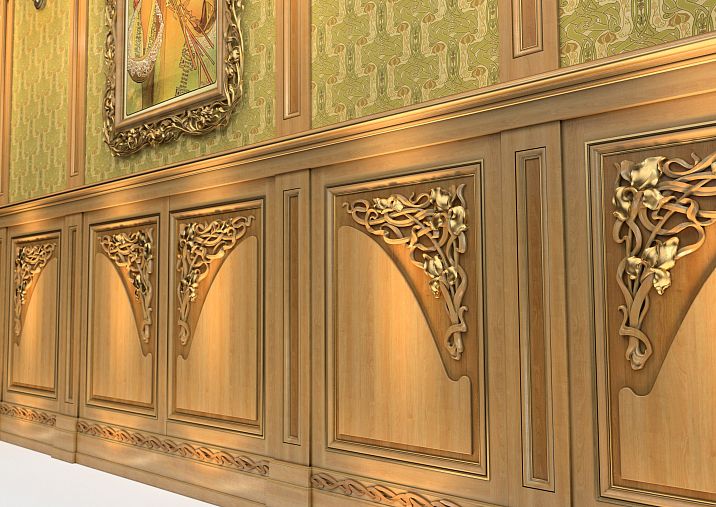
Close your eyes and imagine the moment when you first enter the room, where every wall breathes warmth and the nobility of natural wood. Wood Panels transform ordinary space into a work of art, where every wood fiber tells its unique story. This is not just a finishing material — it is a philosophy of life embodied in tangible forms.
In the age of synthetic materials and mass production, choosing natural wood for walls becomes an act of creative resistance. Each panel carries the memory of decades of growth, of seasonal changes, of the power of nature that now serves humanity, creating a unique atmosphere of home comfort and respectability.
Modern interior designers increasingly turn to this material, understanding its boundless potential in creating spaces that not only delight the eye but also positively impact human mental and physical health.


Alternative Reality: What Lies Beneath the Surface




The Hidden Power of Natural Materials
Imagine a material capable of radically altering the energy of a room simply by its presence. Wood possesses a unique ability to interact with the human body at the cellular level. Tactile contact with wooden surfaces activates the production of serotonin — the hormone of happiness and tranquility.
This is not esotericism, but scientifically proven fact. Neurophysiological studies demonstrate that the presence of natural wood in living spaces reduces cortisol levels — the stress hormone — by 15-20%. Volatile compounds emitted by wood possess bactericidal properties, naturally purifying the air from harmful microorganisms.
Our factory also produces:


Bioenergy of Living Spaces
Each wood species emits its own energy. Oak symbolizes strength and stability; its dense structure creates a sense of reliability and security. Ash represents flexibility and a desire for light; its light tones visually expand the space. Walnut embodies nobility and elegance; its deep chocolate tones add aristocracy to the interior.
Choosing a specific wood species for panels subconsciously programs the atmosphere of the room. This is ancient wisdom that modern science is only beginning to fully comprehend.
Get Consultation
Technological Innovations: Where Craft Meets Science
Revolution in Wood Processing
Modern production of wooden panels is a symbiosis of centuries-old carpentry craftsmanship and advanced technologies. The process begins with wood selection, where each log undergoes computer tomography to detect hidden defects and determine the optimal cutting direction.
Thermal modification of wood at 160-230°C without oxygen radically alters the material's structure. This process increases dimensional stability by 80%, triples biostability, and imparts unique decorative properties — from caramel to deep chocolate tones.
Surface Nanostucturing
Revolutionary technologies enable the creation of nanostuctured coatings on wood surfaces that provide self-cleaning and antibacterial properties. Photocatalytic coatings based on titanium dioxide break down organic pollutants under light exposure, maintaining surface purity.
Microencapsulation of aromatic substances allows creating panels with prolonged aromatic effect. Special capsules embedded in the coating structure gradually release essential oils, creating in the room an atmosphere of a spa salon or forest freshness.
Design Concepts: From Classic to Avant-Garde
Neoclassicism: Modern Interpretation of Eternal Values
Neoclassical style reinterprets traditional canons through the prism of modern vision. Wood Panels Neoclassical interiors are characterized by strict geometry, noble proportions, and refined finishes. The golden ratio underlies all proportional solutions.
Decorative elements — pilasters, cornices, moldings — are created using CNC routers, ensuring mathematical precision of forms. Patination and gilding are performed manually by master restorers, each of whom has undergone years of training in traditional techniques.
Ecological minimalism: Philosophy of sustainable development
Ecological minimalism preaches the principle 'less is more', but in the context of ecological responsibility. Panels are made exclusively from wood certified to FSC standards. Each cubic meter of used wood is offset by planting three young trees.
Finishing is done exclusively with natural materials — cold-pressed linseed oil, beeswax, shellac. These coatings are not only ecologically safe but also highlight the natural beauty of wood, creating a velvety surface with a deep matte sheen.
Biotek: Fusion of nature and technology
The biotek style represents a symbiosis of organic forms and advanced technologies. Panels are created using parametric design, where each form is calculated by computer algorithms to achieve optimal acoustic characteristics.
Integrated LED systems create a bioluminescent effect, mimicking the glow of living organisms. Built-in humidity and temperature sensors automatically regulate the room’s microclimate, while an aroma diffusion system recreates the scents of various natural biotopes.
Wood Species: Character in Every Fiber
Oak — monarch of the forest kingdom
Oak panels embody the power and nobility of millennia-old traditions. Wood density reaches 700 kg/m³, ensuring exceptional strength and longevity. Radial rays create a distinctive 'tiger' pattern, which becomes more pronounced after radial cutting.
High tannin content (up to 10%) gives oak wood natural resistance to biological damage. These substances also provide oak with a unique ability to age beautifully — over time, the wood develops a noble patina and deepens in color.
European oak has a denser structure and more pronounced texture compared to American oak. Russian oak, growing in harsh climatic conditions, is characterized by exceptional density and fine layering, which is highly valued by craftsmen.
American walnut — aristocrat of the new age
American black walnut is considered one of the most valuable wood species in the world. Its unique feature is the ability to display the entire spectrum of brown shades within a single board. The sapwood has a cream-white color, gradually transitioning into a chocolate-brown heartwood.
Wood density is 650 kg/m³, providing an optimal balance of strength and workability. Walnut polishes exceptionally well, creating a mirror-like surface with deep internal glow. This species hardly deforms with changes in humidity, which is critically important for large panels.
Japanese cedar — meditative beauty of the East
Japanese cedar (sugi) possesses unique relaxing properties. The wood contains a high concentration of sedative essential oils, which naturally lower blood pressure and improve sleep quality. In traditional Japanese architecture, this species was used for finishing temples and meditation halls.
Color range varies from pale pink to reddish-brown. The wood has a straight-grained structure with barely visible annual rings, creating an effect of internal glow. Low density (380 kg/m³) is compensated by high natural preservative content.
Production secrets: Alchemy of modern craftsmanship
Cryogenic wood stabilization
Revolutionary cryogenic stabilization technology involves cooling wood to -196°C followed by slow heating. This process crystallizes intracellular moisture, destroying cell walls in such a way that the wood completely loses its ability to change dimensions with humidity fluctuations.
Stabilized wood acquires glass-like hardness while retaining its natural texture and color. Such panels are virtually eternal — they do not crack, warp, or suffer biological damage. The only drawback is the high cost of the process, which increases the price of the finished product by 3-4 times.
Plasma surface modification
Processing wood with low-temperature plasma in various gas atmospheres allows radical changes in surface properties without using chemicals. Argon plasma creates a nanostructured surface with water-repellent properties. Nitrogen plasma treatment doubles surface hardness.
Plasma grafting of functional groups allows imparting wood with antibacterial, photocatalytic, or even conductive properties. This technology opens possibilities for creating 'smart' panels with integrated sensors and actuators.
Biomimetic texturing
Studying the microstructure of natural surfaces led to the development of biomimetic texturing technologies. Laser scanning of bark, leaves, and stones from various trees allows reproducing their texture on wood surfaces with nanometer precision.
Femtosecond lasers create micro- and nanostructures that mimic the surface of lotus petals (self-cleaning effect), shark skin (reduced friction), and butterfly wings (structural coloring). Such surfaces possess unique functional properties while preserving the natural beauty of wood.
Acoustic properties: Symphony of silence
Resonance theory of wooden panels
Wooden panels are natural resonators capable of controlling acoustic characteristics of a room. Anisotropic wood structure creates different sound propagation speeds along and across fibers. Along fibers, speed is 4000–6000 m/s, across fibers — 1000–2000 m/s.
This feature allows creating panels with targeted absorption of specific frequencies. Perforated panels with resonant cavities effectively absorb low frequencies (125-500 Hz), creating an acoustically comfortable environment for speech and music.
Psychoacoustic comfort
Natural wood possesses a unique ability to create psychoacoustic comfort. Unlike synthetic materials, wood absorbs and reflects sound unevenly across the frequency spectrum, imparting naturalness and warmth to the sound.
Microscopic surface irregularities create diffuse reflection, eliminating standing waves and echoes. Reverberation time in rooms with wooden panels is optimal for human perception — 1.2–1.6 seconds for speech and 1.8–2.2 seconds for music.
Technology integration: Smart panels of the future
Internet of Things in wooden panels
Modern panels made of natural wood transform into elements of a 'smart home' through integration of miniature sensors and actuators. Wireless sensors for humidity, temperature, lighting, and air quality transmit data to a central control system.
Built-in piezoelectric elements allow panels to reproduce sound, turning walls into giant audio systems. Directional sound technology creates personal sound zones without using traditional speakers. A person hears music or speech only within a specific area of the room.
Adaptive bioluminescence
Integrating bioluminescent microorganisms into the protective coating structure creates panels with natural illumination. Genetically modified bacteria respond to changes in temperature, humidity, and carbon dioxide levels, altering the intensity and color of their glow.
Such panels serve as indicators of air quality and microclimate. Blue glow signals optimal conditions, yellow indicates the need for ventilation, red signals critical atmospheric conditions in the room. This is a living monitoring system requiring no power or maintenance.
Regional traditions: Cultural heritage in a modern interpretation
Russian joinery school
Russian joinery tradition developed under harsh climatic conditions, which determined special attention to the strength and durability of structures. Using local species — oak, ash, birch — allowed creating items adapted to regional climatic features.
Traditional joints — mortise and tenon, dovetail, on wedges — ensured structural monolithism without using metal fasteners. Modern panels in Russian style combine these time-tested solutions with advanced processing technologies.
Scandinavian functionalism
The Scandinavian design school advocates principles of functionality, ecological sustainability, and connection with nature. Using light wood species — pine, birch, ash — creates a sense of spaciousness and light in conditions of long northern winters.
Minimal surface treatment preserves the natural properties of wood. Linseed oil-based finishes create a velvety surface, pleasant to the touch. The philosophy of hygge finds expression in warm, cozy interiors with wooden panels.
Japanese aesthetics of wabi-sabi
The Japanese aesthetic concept of wabi-sabi finds beauty in imperfection and naturalness. Wood Panels In Japanese style, natural wood defects — knots, cracks, uneven coloring — are emphasized as manifestations of the material's vital energy.
The sashimono technique (joining without nails) creates structures of exceptional strength and beauty. Each joint is a work of art requiring years of craftsmanship to execute. Modern Japanese panels combine these traditional techniques with innovative materials and technologies.
Ecological aspects: Responsibility toward future generations
FSC Certification: Guarantee of sustainable forestry
FSC Forest Stewardship Council certification guarantees that wood is sourced from responsibly managed forests, where a balance is maintained between economic efficiency, ecological safety, and social equity. Each cubic meter of certified wood has a traceable supply chain back to a specific forest area.
Strict FSC criteria include preserving biodiversity, maintaining water resources, preventing soil erosion, and respecting the rights of indigenous peoples. Purchasing panels made from FSC-certified wood is active participation in preserving global forests.
Carbon footprint and climate neutrality
Wood is the only building material that absorbs carbon dioxide from the atmosphere during growth. One cubic meter of wood contains approximately 250 kg of carbon, equivalent to 900 kg of CO2. Using wooden panels instead of synthetic materials significantly reduces the construction’s carbon footprint.
Modern manufacturers strive for carbon neutrality in production processes. Wood waste is used to produce energy, replacing fossil fuels. Biogas plants convert organic waste into renewable energy and organic fertilizers.
Forest restoration programs
Leading panel manufacturers implement their own forest restoration programs, planting young trees to replace felled ones. A 3:1 ratio (three planted trees for each felled tree) ensures not only the reproduction of forest resources but also their expansion.
Long-term return on investment
Economic aspects: investment in the future
Long-term return on investment
Quality panels made of natural wood last 50-100 years with proper care. Cheap synthetic materials require replacement every 10-15 years. Analysis of total ownership cost over a 50-year period shows the economic efficiency of investing in natural materials.
The ability for multiple restorations is a unique advantage of wooden panels. The surface can be sanded, re-coated, and tinted according to interior changes. Antique wooden panels often cost more than new ones, confirming the investment attractiveness of quality wood.
Impact on property value
Finishing with natural wooden panels increases property value by 15-25%. Buyers are willing to pay extra for eco-friendly materials, high-quality finishes, and unique designs. This is especially relevant for the premium market segment.
Homes with wooden finishes sell and rent out faster. Natural materials create a sense of prestige and care for health, which is highly valued by modern consumers. Well-designed wooden interiors do not become outdated morally, remaining relevant for decades.
Trends in development: looking toward the future
Personalization through DNA design
The development of DNA sequencing technologies opens opportunities to create personalized panels based on the client's genetic characteristics. Analysis of polymorphisms in genes responsible for color, scent, and tactile perception allows creating interiors optimally suited to a specific individual.
DNA design also takes into account circadian rhythms, metabolic features, and predispositions to various diseases. Panels with integrated aromatherapy, chromotherapy, and air ionization systems create a personalized wellness environment.
Nanobiotechnology in finishing
Integrating nanobiotechnology allows creating "living" panels with self-repairing properties. Microorganisms embedded in the coating structure automatically remove minor damages, maintain optimal humidity levels, and neutralize harmful substances.
Bio-sensor panels can diagnose the health status of people in a room by analyzing emitted volatile organic compounds. The warning system can alert to the onset of illness long before clinical symptoms appear.
Quantum technologies in design
Quantum effects in nanostructured materials open opportunities to create panels with unique optical properties. Quantum dots allow obtaining pure spectral colors unattainable with traditional pigments. Plasmonic nanostructures create metallic luster effects without using metals.
Quantum color superposition allows creating panels that change color depending on viewing angle and lighting. Such surfaces appear alive, constantly transforming, creating dynamic interiors of the future.
Installation and operation: secrets of longevity
Professional installation — guarantee of quality
The quality of installation determines the longevity and aesthetic characteristics of wooden panels. Foundation preparation requires a perfectly flat surface with a tolerance of no more than 2 mm per linear meter. Waterproofing prevents moisture from penetrating the wall, which could cause deformation and biological damage.
The mounting system must compensate for temperature and humidity-induced wood deformation. Sliding fasteners allow panels to expand and contract freely without gaps or stress. Gaps between panels are calculated based on wood species and operating climatic conditions.
Adaptive climate control systems
Integrating humidity and temperature sensors into panel structures allows creating adaptive climate control systems. Artificial intelligence analyzes data from thousands of sensors, predicting microclimate changes and automatically adjusting ventilation and heating parameters.
Predictive analytics-based preventive maintenance prevents potential problems before they arise. The monitoring system tracks minimal structural changes in wood, signaling the need for preventive measures.
Conclusion: Investment in beauty and health
Wood Panels Represent more than just a finishing material. They embody a philosophy of life based on harmony with nature, respect for traditions, and pursuit of perfection. In a world overflowing with synthetic materials and artificial solutions, choosing natural wood becomes a conscious step toward a healthy lifestyle.
Modern production technologies allow preserving all advantages of natural wood while eliminating traditional drawbacks — size instability, susceptibility to biological damage, and complex maintenance. The result is panels combining the beauty of natural material with the reliability of modern composites.
Scientific research irrefutably proves the beneficial impact of natural wood on human physical and mental health. Reduced stress levels, improved sleep quality, and increased productivity — these are just some of the documented effects of being in rooms with wooden finishes.
The ecological aspect gains special relevance in the context of global climate change. Choosing certified wood supports sustainable forestry and contributes to preserving planetary biodiversity. Each FSC-certified panel is a concrete contribution to combating climate change.
The economic efficiency of wooden panels manifests in the long term. High initial investments are recouped through exceptional durability, the possibility of multiple restorations, and positive impact on property value. Quality wooden panels are an investment that yields dividends for decades.
Personalization and individual approach are becoming key trends in interior design. Modern technologies enable creating unique panels reflecting the client's individuality, lifestyle, values, and aspirations. From conceptual design to final finishing — each stage can be adapted to specific requirements.
Integrating smart technologies transforms traditional wooden panels into elements of an intelligent living environment. Sensors, actuators, and communication systems create an adaptive space that automatically adjusts to human needs. This is a synergy of natural materials and advanced technologies, creating a qualitatively new level of comfort.
The future of natural wood panels is linked to the development of biotechnology, nanotechnology, and quantum effects. "Living" materials with self-repairing properties, biosensor health diagnostic systems, and quantum optical effects — all of these, once part of science fiction, are now transitioning into practical reality.
Regional craftsmanship traditions do not lose their relevance but are enriched by modern possibilities. Russian, Scandinavian, and Japanese woodworking schools find new embodiment in contemporary technological solutions. This is intergenerational continuity, a link between eras, a bridge between the past and the future.
STAVROS embodies all the best traditions of working with natural wood, creating panels of exceptional quality for the most discerning clients. Years of experience, deep understanding of the properties of various wood species, and the use of advanced technologies enable STAVROS to create items that become family heirlooms.
Each STAVROS project is a synthesis of art and craft, where traditional craftsmanship combines with innovative solutions. An individual approach to every client, attention to the smallest details, and a pursuit of perfection — these are the principles that guide the STAVROS team.
Choosing natural wood panels from STAVROS means investing not only in the beauty of your home, but also in the health of your family, the ecological future of the planet, and the preservation of cultural traditions. STAVROS is the guarantee that your Wood Panels will become a source of joy and inspiration for many years, creating a space where you want to live, create, and be happy.