Article Contents:
- Why choose a ready-made module instead of a set of individual slats
- Structural choice: rigid backing or flexible fabric base
- Material: oak, beech, or paintable MDF
- Oak wooden slat panel
- Beech wooden slat panel
- Paintable MDF: maximum color freedom
- How to choose slat spacing: a practical breakdown
- Wooden slat panel for walls: by room type
- Living room: accent wall and TV area
- Bedroom: wall behind the headboard
- Hallway: first impression and practicality
- Study and commercial interior
- Wooden slat panel for furniture and facades
- Wooden slat panel in niche and accent area
- What's important when buying: technical parameters and sample inspection
- How to read query intent: when a panel is needed, not a slat
- Combining slat panels with other materials
- Installation: error-free algorithm
- Maintenance and Durability
- Acoustics as a hidden advantage
- Where to buy: what to look for when choosing a supplier
- FAQ: Answers to Popular Questions
- About the Company STAVROS

When an interior stops working — when walls seem boring, space feels oppressive, and furniture looks bland — designers know: rhythm is needed. It's created bya panel made of wooden slats. Not an imitation, not a film, not veneer over plastic — but a genuine slatted structure made of solid oak, beech, or high-density MDF, which transforms an ordinary wall into an architectural object. But before choosing, it's worth understanding: why a ready-made module beats a collection of individual slats, and how exactly to distinguish the right product from a similar but random one.

Why a ready-made module, not a set of individual slats
This question is the first and fundamental one. The construction market offers hundreds of formats of wooden slats, moldings, and lamellas. It would seem: buy slats, set the spacing, attach them — and you're done. In practice, it's more complicated.
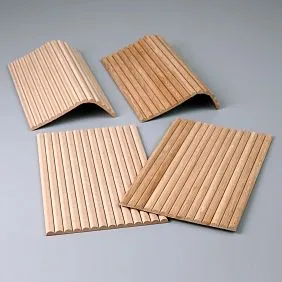
Ready-madea panel made of wooden slats— is a factory-made module with a fixed, precisely maintained spacing between the slats. The spacing is uniform along the entire length. The moldings are calibrated in height and width. The base — a rigid backing or flexible fabric — holds the structure as a single unit. When you join two adjacent modules, the rhythm of the slats doesn't break: the spacing continues without noticeable transitions, and the surface is perceived as a monolithic covering.
Reproducing this with self-assembly from individual slats is extremely difficult. The slightest deviation in marking — and the spacing 'drifts.' Add cutting inaccuracies, differences in natural moisture content between different batches of wood, uneven shrinkage — and on the finished wall, instead of a clear rhythm, chaos of micro-errors appears, clearly visible in side lighting. A ready-made factory module completely eliminates this problem.
The second argument is installation speed and cleanliness. A ready-made module is laid with adhesive or finish nails using a level. It takes hours, not days, for an entire room. Installing individual slats involves marking, attaching each slat one by one, checking the level, and filling fastener holes. For a typical accent wall of 3×2.7 m, the difference is one day of work versus three to four. By any time measurement — the ready-made module is faster.
Third is predictability of the result. In factory-made products, all slats have the same profile, cross-section, and material. When assembling independently, even from slats of the same wood species, the appearance of the finished wall depends on how correctly the batch is selected and how close in tone the wood of different boards is. A ready-made module eliminates this risk: you see a sample—and know you will get exactly that.




Structural choice: rigid backing or flexible fabric base
Before choosing the material and tone, you need to determine: what is the geometry of your task?
If the walls are even, straight, without complex geometry—rigidwooden slat panelon an MDF backing will be the optimal and most economical solution. Such panels are laid butt-jointed, hold their shape well, and do not require pre-heating or humidification. Perfect geometry, predictable installation, wide choice of formats.
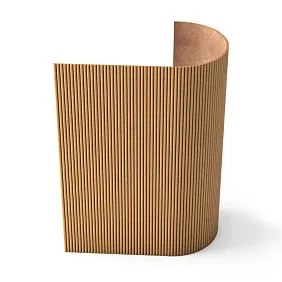
If the project includes columns, arches, rounded corners, niches with a radius vault, curved furniture fronts—onlyflexible panel made of wooden slatson a fabric base is irreplaceable here. The fabric carrier holds the battens at an exact pitch while allowing the panel to wrap around any curve—along the radius of a column, along an arched slope, along the concave wall of a niche. This is exactly what the PAN-001 model is: battens on a flexible fabric base in MDF, solid oak, or solid beech. The panel is supplied rolled up, easily cut with a utility knife, and attached with contact adhesive with recommended additional fixation using micro-pins.
Fundamental practical conclusion: for standard even walls—rigid panel. For everything non-standard—flexible. It is possible and necessary to mix structural formats within one project if the task requires it.
Our factory also produces:


Material: oak, beech, or paintable MDF
This is the most common question designers and manufacturers receive. There's no universal answer: each material serves its purpose, and the right choice depends on what exactly you're designing.
Get Consultation
Oak wood slat panel
Oak wood slat panel— a choice for those who value living natural texture and durability. Oak is one of the densest domestic species: density 700–750 kg/m³, Brinell hardness 3.7–3.9 kN/mm². A pronounced layered grain pattern that reveals itself under staining and transparent varnishes. A warm golden natural tone that can be transformed with stains into a cool Scandinavian gray, deep wenge, tobacco cognac, or expressive graphite.
Oak is the right choice for interiors where the materiality and tactility of the wall are as important as its visual solution. It fits in classical and neoclassical concepts, in Scandinavian minimalism with natural tones, in modern loft, in Japanese wabi-sabi. Solid oak panels are recommended for dry rooms: living room, bedroom, study, hallway. In high humidity areas — bathroom, laundry room — oak requires a varnish coating with a high degree of protection or replacement with moisture-resistant MDF.
The semi-circular profile of the solid oak batten creates a particularly lively play of light and shadow: the rounded surface diffuses light softer than a rectangular cross-section, and the surface looks different depending on the lighting angle — warmer in the morning, deeper in the evening.
Beech wood slat panel
Beech is a dense, fine-pored wood with a uniform structure and a neutral light tone. Its density is close to oak, but the grain pattern is significantly softer and finer. This is precisely why beech is more often chosen for enamel painting: the uniform surface better accepts opaque coating and doesn't 'reveal' the texture through layers of paint, which sometimes happens with the open porosity of oak.
Beech wood slat panel is a practical option for design concepts where color is needed, not a natural pattern. A black slatted wall, a white accent panel in a niche, powder pink or gray-green in a bedroom — beech under enamel holds color evenly and stably. At the same time, the material remains natural wood with the proper tactile feel, not an imitation.
MDF for painting: maximum color freedom
MDF slatted panels for painting— the choice for projects where color is the main tool. MDF with a density of 750–850 kg/m³ provides a perfectly smooth surface without defects, knots, or resin pockets. Any enamels—acrylic water-based, alkyd, two-component polyurethane—apply evenly and maintain stability. Matte, satin, and semi-gloss finishes perform equally well on sanded MDF.
Before painting MDF panels, priming is necessary: two coats of polyurethane-based insulating primer with intermediate sanding of raised fibers. Priming is best done before installation, especially if painting is planned in a spray booth. For furniture applications, polyurethane and acrylic enamels are recommended—they form a wear-resistant coating that is resistant to abrasion and wet cleaning. For interior walls—water-based paints on acrylic or latex base: environmentally friendly, no solvent odor, quick drying.
The main advantage of MDF: precise color matching. Any RAL shade without restrictions. The panel can be painted to match the exact wall tone—creating a clean, textured rhythm without a color accent. Or choose a contrasting shade—and the wall becomes the main focal point of the space.
How to choose slat spacing: a practical breakdown
Slat spacing is one of the key parameters that defines the visual character of the panel. Narrow, dense spacing and wide, airy spacing create fundamentally different surface impressions.
Narrow spacing—dense rhythm. When slats are placed close together, the surface is perceived as rich, heavy, and formal. This format is suitable for offices, meeting rooms, hotel lobbies—where a pronounced material weight and a sense of quality design are needed. In living rooms with high ceilings, a dense rhythm works as an architectural detail, emphasizing the scale.
Wide spacing—airy lightness. Slats with wide gaps create a more open, breathable surface. Scandinavian minimalism, Japanese interiors with large pauses—all of this is about wide spacing. In small spaces, an airy rhythm does not overwhelm the room.
Medium spacing—universal balance. For most residential interiors—living rooms, bedrooms, hallways—medium spacing provides an optimal balance of decorative richness and spatial lightness. It works equally well with solid oak and paintable MDF.
When choosing spacing, consider ceiling height: in low rooms, narrow, dense spacing enhances the vertical effect more than wide spacing. In high halls, wide spacing creates a calm, formal impression.
Wooden slat wall paneling: by room type
Living room: accent wall and TV area
Wooden slat panel for the living room— a classic and most in-demand application. The TV area is the architectural center of the living room, and a slatted surface behind the television transforms a utilitarian wall into an expressive object. The vertical rhythm of the battens creates depth even on a flat wall, and side lighting with an LED strip behind the panel amplifies the effect several times over.
For living rooms with an open floor planwooden slat panels for wallsfunction as a zoning tool: the area behind the sofa, highlighted by the slatted texture, visually separates the living room from the dining area without constructing partitions. This is especially valuable in studio apartments and combined spaces where it's necessary to create a sense of separate zones while maintaining visual openness.
For the living room, the following are typically chosen by color and material: warm natural oak with oil finish — for Scandinavian and minimalist concepts; oak with a dark stain (wenge, graphite) — for industrial or modern classic interiors; MDF with matte paint matching the wall color — for monochrome concepts where only the rhythm is important, not the material.
Bedroom: wall behind the headboard
The bed's headboard is the most personal architectural detail of the bedroom. It is here thata wooden slat panel at the headboardWorks with maximum effectiveness. The slatted texture behind the bed creates a feeling of a cozy cocoon — tactile, warm, natural. The right solution for a bedroom: warm wood tones, a soft oil or wax finish, a semi-circular bead profile that diffuses the light of bedside lamps especially softly.
Format for the bedroom: typically, the panel is not full-wall, but fragmentary — behind the bed from floor to ceiling or from the headboard to a level approximately 1.2–1.5 m above the mattress. This format — an accent panel — creates an expressive effect without overloading a small space. The side walls remain neutral, and the slatted zone functions as an architectural headboard without a furniture headboard.
In bedrooms with radius elements — niches for the bed, rounded corners, arched passages —a panel of wooden slats for a radius wallon a fabric base is indispensable: it wraps around any curve without gaps or distortion of the rhythm.
Hallway: First impression and practicality
The hallway is the first thing a guest sees and the last thing the owner sees when leaving home.A panel of wooden slats for the hallwayhere serves a dual function: it creates the character of the space and protects the wall from mechanical damage.
The vertical rhythm of the slats visually elongates the hallway in height — a particularly valuable technique for typical narrow corridors with low ceilings. The dense structure of oak or lacquered MDF is resistant to impacts and scratches, which are inevitable in a heavily used area. For the hallway, a lacquer or wear-resistant polyurethane enamel finish is recommended — such a surface is easily cleaned with a damp cloth.
An interesting format for the hallway: a slatted panel at a height of 1.2–1.5 m as the lower wall belt, above — a painted wall in a neutral tone. This classic 'panel' wall treatment interpreted with a slatted texture looks modern and functional.
Study and commercial interior
In the studywooden slat panelworks as a tool for creating an atmosphere of concentration and dignity. Dark oak with a tint on one wall of the study is a signal of a serious, established space. Such a study is perceived differently than just an office: here people think, make decisions, and work at a high level.
For cafes, restaurants, and barswooden slat panels in commercial interiorare the most effective tool for atmosphere creation. The vertical rhythm creates a sense of intimacy and cozy space even in a hall with high ceilings. A wall in a restaurant, clad with a slatted panel of dark oak or coffee beech — this is a level of design that is instantly recognized and influences the perception of the establishment.
In office meeting rooms, a slatted panel on the wall behind the presentation screen or behind the speaker's head creates a representative background. MDF in the corporate brand color, precisely matching the RAL according to the Brand Book — this is no longer just a finish, but part of the space's identity.
Wooden slat panel for furniture and facades
A separate and very strong theme is the application of slatted panels in furniture production.Wooden slat panel for furniture— these are facades of cabinets, dressers, chests of drawers, kitchen islands, wardrobe systems, bedside tables, and dining areas.
A slatted facade visually lightens a large furniture volume. A floor-to-ceiling sliding wardrobe clad in slatted panels ceases to be a monolithic rectangle—the vertical rhythm of the battens gives it an architectural character. A kitchen island with a slatted end facade looks like an object, not just a cabinet.
The flexible fabric base PAN-001 makes this panel ideal for furniture applications: it precisely follows the curves of bent facades, clads radiused ends and islands without deformation. This is critical for modern furniture with rounded corners—the 'soft' style in furniture design specifically requires a flexible cladding material.
For furniture facades, the following are recommended: MDF for polyurethane or acrylic enamel (high resistance to abrasion and wet cleaning), solid beech for opaque enamel, solid oak for tinting or clear varnish. Polyurethane enamels, applied in a paint booth, form a coating comparable in wear resistance to industrial finishes.
Panel of wooden slats in a niche and on an accent zone
A niche is an architectural boon in any interior. When there is a recess in the wall—for a TV, for a bed, for decorative shelves—slatted cladding transforms it from a construction solution into a design technique.Panel of wooden slats in a niche— the back wall and side reveals, clad with a single slatted module—creates depth and visual completeness. LED backlighting behind the slatted surface enhances the effect, making the niche a living, luminous object.
For accent zones behind a TV, a slatted panel works as a natural backdrop: the linear rhythm of the battens does not compete with the screen but creates the right architectural context for it. The TV itself then ceases to look like a black rectangle on a white wall—it becomes part of a well-considered space.
What's important when purchasing: technical parameters and inspecting a sample
Before orderingwooden slatted panel buyin the required volume, be sure to order or request a sample. A sample is not a marketing tool, but a working one: it is on a real sample that you can see how the tint behaves in the light of your room, how the semi-circular profile works at a specific backlight angle, and what the actual wood tone is.
What to pay attention to during inspection:
-
Sanding quality: the surface should be smooth, without tears or scratches. 'Prestige' level — hand sanding, products do not require finishing; 'Standard' level — machine sanding at a more attractive price.
-
Step accuracy: measure the step between slats at several points — it should be the same along the entire length of the module.
-
Fabric backing condition: for a flexible panel, the backing should be dense, uniform, without delamination or traces of glue on the front side.
-
Reglue grade: 'for enamel' — slats without color and texture matching, for opaque coatings; 'for tinting' — with matching, for semi-transparent coatings that reveal the wood grain.
-
Size compliance: check the declared module dimensions with a tape measure. Geometric accuracy is a condition for seamless joining.
How to read the query intent: when a panel is needed, not a slat
Professional designers and experienced installers understand the difference betweenwooden slat panels: how to choose panels for walls and interiorsa ready-made product and a set of individual slats. But even among ready-made panels, there are fundamental differences that affect the outcome.
A ready-made module is needed when:
-
The surface is typical, flat, rectangular—a living room, bedroom, or study with a standard layout.
-
Predictable results and minimal installation time are required.
-
Seamless joining of multiple modules into a single covering is important.
-
There is no experience working with individual slats and layout.
Individual slats may be appropriate when:
-
The size or spacing is non-standard and not covered by any module in the catalog.
-
Very complex geometry without curved surfaces but with many small fragments — for example, varying wall heights in an attic.
-
Has its own carpentry workshop and time for meticulous manual work.
However, for the vast majority of residential and commercial projects, a ready-made module wins on all parameters: precision, speed, predictability of the result.
Combining slatted panels with other materials
Wooden slat panelsorganically integrate into the multi-layered material solutions of modern interiors. Several proven combinations that always work:
Wood and stone. A stone countertop or wall of natural stone next to a slatted facade — this is a contrast of structure and texture, one of the most expressive techniques in modern design. Marble and oak, slate and beech under dark enamel — pairs that enhance each other.
Wood and metal. Matte brass, brushed steel, black matte metal in furniture legs, cornices, and lighting create an industrial-premium combination with the warm texture of wooden slats. This contrast is one of the defining trends of 2024–2026.
Wood and concrete. A textured concrete wall as a background, a slatted panel as an accent object — both materials appeal to raw architectural aesthetics. The effect is especially strong in lofts and apartments with industrial layouts.
Wood and fabric. Sofa cushions, curtains, carpets in natural warm tones work with wooden slats as a single natural tonality, creating a cozy and tactilely rich space without the risk of dissonance.
Wood and greenery. Plants — living or succulents — in a space with slatted wooden walls create a full-fledged natural image. Biophilic design in its most convincing manifestation.
Installation: an error-free algorithm
Correct installation sequence guarantees results. Slat panels don't tolerate rushing during surface preparation.
Step 1: Base preparation. The wall must be clean, dry, degreased, without crumbling fragments. Plastered and primed drywall, concrete, or plaster are suitable working bases. Old paint with poor adhesion is not: it needs to be cleaned or primed with penetrating primer.
Step 2: Marking. A vertical line from the corner, a horizontal level along the bottom edge of the first module. The first panel must be perfectly vertical—everything else depends on this. Check the level not only on the first module but on every third or fourth.
Step 3: Fixation. For rigid panels—mounting adhesive around the perimeter of the backing and diagonally. For flexible ones—contact adhesive on the fabric base with recommended additional fixation using micro-pins from a pneumatic gun. Fixation points are puttied and sanded if necessary.
Step 4: Joining. Adjacent modules are joined strictly butt-to-butt. Precise factory spacing ensures seamless continuation of the slat rhythm without visible transitions.
Step 5: Finishing. For MDF panels—priming and painting in the chosen shade. For oak or beech—applying tint, stain, or clear varnish according to recommended technology.
Care and longevity
Properly installed and finished slat panels made of natural wood or MDF last for decades without major maintenance. Regular care—dry or slightly damp soft cloth, no abrasive cleaners. Every few years—inspect the coating and perform local renewal if necessary.
MDF under enamel can be repaired locally by repainting without removing panels: just clean the area, apply primer to raised fibers, and paint exactly to match the shade. Solid oak under clear oil is even easier to restore: degrease the surface, apply a new layer of oil with a soft cloth. Oil coating is renewed every 3–5 years depending on intensity of use—closer to five in residential interiors, closer to three in commercial spaces with high visitor traffic.
Dense oak structure provides high resistance to scratches and impacts. In commercial facilities with constant mechanical load, oak slat panels under hard varnish are the most durable solution.
Acoustics as a hidden advantage
When discussing slatted panels, one cannot overlook their acoustic effect—which is often omitted in everyday descriptions, though it is precisely what makes a space physically comfortable. Vertical slats scatter sound waves, disrupting their direct reflection from a flat wall. The result is reduced reverberation, less echo, and improved clarity of speech and music.
In an open-plan living room, a slatted wall noticeably reduces the hollowness of the space. In meeting rooms, it enhances speech intelligibility during discussions. In restaurant halls with high ceilings, it creates a sense of intimacy even when fully occupied. If a layer of mineral wool or acoustic foam is placed behind the fabric backing of the panel, the effect is multiplied: the decorative panel transforms into a full-fledged acoustic screen.
Where to buy: what to look for when choosing a supplier
Buy wooden slat panelsfrom a manufacturer or dealer. The fundamental difference: the manufacturer controls the entire cycle—from the quality of the raw material to the final sanding. An intermediary lacks this control.
Key criteria when choosing a supplier:
-
Availability of real samples for visual and tactile evaluation.
-
Option to choose material (MDF, oak, beech) and sanding level.
-
Clear technical data: MDF density, solid wood species, slat spacing, module dimensions.
-
Guarantee of geometric precision and seamless joining.
-
Delivery from a single unit across the entire territory of Russia.
-
Real customer reviews with photos of installed surfaces.
Wooden slat panel— a product requiring precise manufacturing culture. Careless sanding, unstable spacing, slats with tonal variation — all of this will show on the installed wall at the first side light.
FAQ: Answers to popular questions
Can slat panels be painted after installation?
Yes, MDF panels can be painted after installation — with water-based paints on acrylic or latex bases. For more demanding coatings (polyurethane enamels), priming and painting before installation in a paint booth is recommended: the coating quality will be higher.
Is a slat panel suitable for a bathroom?
Only moisture-resistant options are applicable in bathrooms: moisture-resistant MDF under paint and varnish materials with water-resistant properties or solid wood of dense species (oak, beech) under several layers of yacht varnish. Standard MDF and untreated solid wood are not recommended in constantly humid environments.
How to calculate the number of panels for a wall?
Divide the wall area (width × height) by the area of one module. Add 10–15% for cutting and joining. When ordering, it's better to take a surplus: reordering from a new batch may differ in tone, especially for solid wood under tinting.
Is the flexible fabric-based panel only for curved surfaces?
No, the flexible panel works excellently on straight walls as well. It is also used where there is no curvature—due to the convenience of transportation in rolls, ease of cutting with a knife, and simplicity of installation without guides.
Can slatted panels be used on the ceiling?
Yes, horizontal or diagonal installation of slatted panels on the ceiling is a common technique in modern interiors. For the ceiling, additional mechanical fastening with micro-pins or screws is required in addition to adhesive.
Which material is stronger for a commercial project—oak or MDF?
Oak under hard lacquer is more durable in areas with high mechanical load: solid wood has higher resistance to scratches, impacts, and abrasion. MDF under polyurethane enamel is a good solution for commercial projects that do not require maximum wear resistance.
How much do wooden slatted panels cost?
Currentwooden slat panel priceis indicated in the catalog and updated daily. The cost depends on the material (MDF, oak, beech), sanding level (standard/prestige), and order volume. In-stock items are shipped within 3 business days, custom manufacturing takes 5–10 business days.
About the company STAVROS
planks made of wood—is a product backed by a production culture. STAVROS has been operating since 2002: the company's history began with a small creative workshop of two artists—Andrey Ragozin and Evgeny Tsapko—who were noticed and invited to participate in the reconstruction of the Konstantinovsky Palace in Strelna. After this project, STAVROS participated in the restoration of the interiors of the Hermitage, Alexander Palace, Trinity-Izmailovsky Cathedral, and Sheremetev Mansion. For over 20 years, production has maintained the principle: every wooden product is created with a flawless understanding of artistic laws and the requirements of interior styles.
Today STAVROS releases wooden slat panels for walls in MDF for painting, solid oak, and solid beech finishes — with delivery across Russia and CIS countries from a single unit. STAVROS showrooms operate in St. Petersburg and Moscow: here you can personally evaluate samples, select finishes, and receive project consultation. A large warehouse program enables tasks to be solved with maximum speed, while strict adherence to production timelines reduces all project risks. Quality without complaints is not a slogan but a work standard that STAVROS has followed for over two decades.