












































































Article Contents:
- Modular panel vs. individual slats: what's the real difference
- Step precision: what's always visible
- Curved surfaces: where individual slats simply don't work
- Seamless joining: the detail that solves everything
- Comparison conclusion: when the module clearly wins
- What is a decorative slat panel: product anatomy
- PAN-001: flexible decorative slat panel for furniture and interiors
- Construction: fabric base as the key solution
- Installation: three material options
- PAN-001 installation: contact adhesive as the basic method
- Where PAN-001 is used: zones and scenarios
- PAN-002: primed decorative MDF slat panel for painting
- What is the fundamental difference from PAN-001
- Technical specifications and formats
- PAN-002 painting: how to achieve perfect results
- Decorative slat panel in residential interiors: where and how
- Living room: wall behind TV and accent behind sofa
- Bedroom: headboard zone
- Entryway: first impression as a design task
- Kitchen: island, bar counter, dining table area
- Niche, arch, rounded surfaces: the main territory of PAN-001
- Decorative slat panel in commercial interiors
- Restaurant and cafe
- Office, meeting rooms, reception
- Boutique, showroom, gallery
- Sample before ordering: why it's important
- Slat material: oak, beech or MDF — a brief guide
- Installation of a modular panel from decorative slats: step-by-step logic
- Foundation Preparation
- Adhesive installation on contact adhesive
- Module joining: the principle of seamless connection
- Working with Corners
- Stylistic Contexts: Where Decorative Slat Panels Fit Naturally
- How to Choose a Decorative Slat Panel: A Decision-Making Algorithm
- Care: Simple and Predictable
- FAQ: Answers to Specific Questions
- About the Company STAVROS
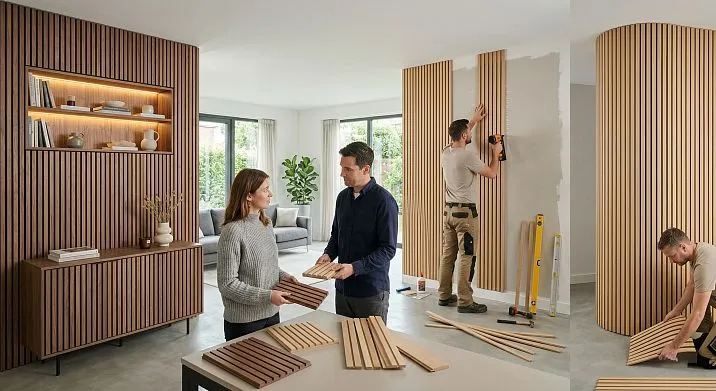
Every person seriously undertaking interior finishing eventually asks themselves one question: to nail slats one by one by hand or to take a ready-made module? The difference, it would seem, is only in installation convenience. But that's only at first glance. In reality, it's about fundamentally different results—in precision, speed, applicability to complex surfaces, and the final quality of the finish.
A decorative slat panel is not just a 'set of slats on a backing'. It is a system where every element is subordinated to precision: factory slat spacing, quality of end processing, stability of the module's geometry, the possibility of seamless connection. It is precisely these properties that make the modular solution a professional design tool, not a simplified alternative to manual work.
This article provides a detailed breakdown: what a ready-made decorative slat panel offers where individual slats fall short, how to choose a model for a specific task, how PAN-001 and PAN-002 differ, and why a primed surface is not a minor detail but a fundamental advantage.
Modular Panel vs. Individual Slats: What's the Real Difference
Before talking about specific products, let's examine the opposition itself. Why does the question even arise: to take a ready-made module or to nail slats yourself?
The answer lies not in aesthetics—in both cases, the result can be visually similar. The difference is in the process and in the quality of execution of details, which are not visible in a render but are well noticeable on the finished wall.




Step accuracy: what's always visible
With manual batten installation, the spacing is set manually: pencil marking, using a template, placing each batten. For a small area—like an entryway or a bed headboard—this method is still tolerable. But on a large surface, errors accumulate. Has the 2–3 mm spacing 'drifted' by the middle of the wall? This is visible to the naked eye, especially with side lighting.
decorative slatted panelsIn factory-made versions, it's step accuracy along the entire length of the module, guaranteed by the production process. No marking, no error accumulation. Adjacent modules join perfectly: the rhythm of the battens continues without the slightest break or shift.
Our factory also produces:


Curved surfaces: where individual battens simply don't work
Try installing individual straight battens on a column. It's possible—but only with milling, thermal bending, or custom-making battens to the radius. Each of these paths means time, money, and the risk of error at the joints.
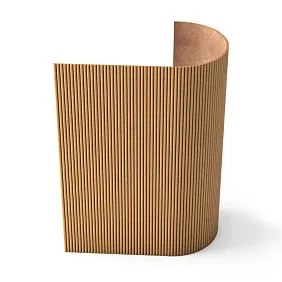
Flexible decorative batten panelon a fabric base works differently. The fabric carrier allows the module to wrap around any radius from 100–150 mm without any additional operations. The battens do not deform, crack, or separate—the spacing remains perfect along the entire arc. This is the fundamental difference that the flexible design was created for.
Get Consultation
Seamless joining: the detail that solves everything
With manual installation, the transition between sections is a separate challenge. How to align the rhythm of battens on two walls in a corner? How to make the joint between two sections invisible? There are answers, but each requires experience and time.
A ready-made module with precise factory spacing solves this task automatically: simply butt the next panel against it—and the rhythm continues as if nothing happened. The surface is perceived as a single, cohesive canvas, not a collection of separate fragments.
Comparison result: when the module clearly wins
| Criterion | Individual slats | Modular panel made of decorative slats |
|---|---|---|
| Spacing precision | Depends on the craftsman | Factory-made, guaranteed |
| Working with radii | Difficult, requires additional operations | Easy (flexible base) |
| Seamless joining | Requires experience | Automatically with precise spacing |
| Installation speed | Slowly | Significantly faster |
| Application on furniture | Labor-intensive | Accessible even for complex facades |
| Result quality | Variable | Predictably high |
What is a decorative slat panel: product anatomy
To choose consciously, you need to understand the construction. A decorative slat panel is not a monolith. It is a system of several elements, each of which influences the final result.
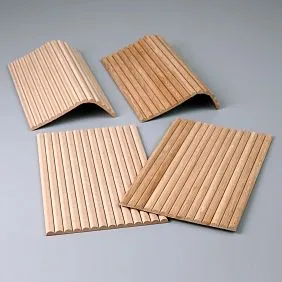
Slats are the main decorative element. The described models use a half-round bead profile: the rounded cross-section creates a soft play of light and shadow without harsh shadows. The slats are made from deeply milled MDF or solid oak (and beech).
Base is what the slats are mounted on. It comes in two types: rigid MDF backing (for strictly flat surfaces) and flexible fabric mesh (for flat and radius surfaces). The fabric base is a constructive solution that gave modular panels access to curvilinear architecture.
Slat pitch is the distance between the axes of adjacent planks. It is the precision of this parameter that ensures seamless module joining and rhythmic uniformity of the finished surface.
Surface finish — the final condition of slats before installation. This can be an un-sanded surface (requires processing), sanded (ready for priming), primed (ready for final painting), or already coated with varnish/oil.
PAN-001: flexible panel made of decorative slats for furniture and interiors
Model PAN-001 is the flagship flexible decorative slat panel from the STAVROS range. Let's examine it in detail — not as a promotional object, but as a design tool with specific properties.
Construction: fabric base as the key solution
Semi-round battens are glued onto a fabric mesh base with precisely maintained spacing. The fabric carrier holds the slats in a fixed position while maintaining sufficient flexibility for bending to a radius of 100–150 mm.
This means:panel made of decorative slats on a fabric baseis mounted on columns, arches, rounded furniture fronts, and any other curved surfaces — without milling, without thermal treatment, without special tools. The slats do not deform when bent: the semi-round profile and fabric fixation ensure perfect geometry across the entire radius.
For transportation and storage, panels are rolled into compact rolls — which is significantly more convenient for delivering large batches.
Finishes: three material options
PAN-001 is produced in three fundamentally different variants, each oriented towards its own design code:
MDF with deep milling for painting — for those who build an interior around color. The homogeneous MDF structure without defects accepts any enamels: acrylic, polyurethane, alkyd. Any shade of RAL, NCS, Pantone. Matte, satin, or semi-gloss finish. For furniture fronts, polyurethane and acrylic enamels are recommended — they form a wear-resistant coating that is resistant to abrasion. For interior surfaces — water-based acrylic paints, eco-friendly and fast-drying.
Solid oak — for natural aesthetics and living texture. Oak with a density of 700–750 kg/m³ carries a unique grain pattern that is revealed under tinting oils and clear varnishes. Rubio Monocoat oil is the recommended option: reliable protection, rich color, emphasized texture. Stains and patinas allow you to achieve any tone — from Scandinavian gray to dark wenge.
Solid beech — a dense, non-porous wood species, traditionally preferred for products under opaque enamel painting. Mechanically resistant, stable, easy to process.
PAN-001 installation: contact adhesive as the basic method
Fixation is performed with contact adhesive. To increase reliability, additional mechanical fastening with micro-pins using a pneumatic gun is recommended — the fixation points are puttied and sanded if necessary.
On flat surfaces — wall, furniture front, drywall partition — installation is simple and fast. On radius surfaces, the panel is formed along the contour and held until the adhesive polymerizes. Joining adjacent modules is done butt-to-butt: precise factory pitch ensures seamless connection without adjustment.
Where PAN-001 is used: zones and scenarios
Decorative slat panel for furniture— this is a fundamentally important application. Furniture fronts with slat cladding are one of the most relevant requests in professional furniture production. The flexible fabric base allows cladding not only straight fronts of cabinets and chests, but also radius ones — arched doors, rounded ends, curved overlay elements.
For interior application: accent walls, headboard zones in bedrooms, niches, arches, slopes, columns. Any surface that has any curvature at all — that is the territory of PAN-001.
PAN-002: Primed MDF decorative slat panel for painting
If PAN-001 is flexibility in the literal sense, then PAN-002 is readiness. Readiness for final painting straight out of the package, without any additional surface preparation.
What is the fundamental difference from PAN-001?
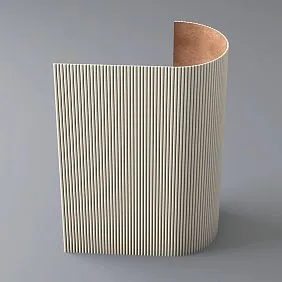
Both models have a flexible fabric base and semi-circular MDF battens. The key difference lies in the surface condition. The MDF version of PAN-001 is supplied sanded but requires priming before painting.Primed decorative slat panel PAN-002is coated with two layers of white polyurethane-based insulating primer. The surface has a high degree of adhesion and is completely ready for final painting.
What does this mean in practice? You receive a module that is ready for painting immediately after installation. No self-priming, no questions about the correct choice of primer, no risk of uneven application. The manufacturer has already solved this task under industrial conditions—with two layers and intermediate sanding of the raised fibers.
For designers and foremen working with tight schedules, this is critically important:MDF decorative slat panel for paintingreduces the production cycle and eliminates a variable that could affect the final quality of the coating.
Technical specifications and formats
PAN-002 is available in two formats:
-
1010 × 8 × 950 mm — for local accent zones: bed headboard, niche, wall panel, horizontal band in hallway
-
1010 × 8 × 2700 mm — for full wall cladding from floor to ceiling without horizontal seams
The module width of 1010 mm is convenient for calculation: knowing the width of the area to be decorated, simply divide by 1010 to get the number of panels, taking into account trimming of the edge ones.
The profile thickness of 8 mm provides sufficient relief depth for expressive light and shadow play without excessive protrusion above the wall plane.
PAN-002 painting: how to achieve perfect results
Two-layer priming is the starting point. The finish coating is applied on top:
-
For furniture scenarios — polyurethane and acrylic enamels, applied in a painting booth. They form a wear-resistant coating, resistant to abrasion, wet cleaning, and temperature fluctuations.
-
For interior scenarios — water-based paints on acrylic or latex base. Eco-friendly, fast-drying, without strong odor. Applied directly during renovation in residential premises.
When painting a slatted surface, technique is important: a paint sprayer or short-nap roller ensures even coverage on the side edges of the battens and the base between the slats. A brush is less preferable—there's a risk of an uneven layer in the recesses.
Decorative slatted panels in residential interiors: where and how
Let's examine specific application scenarios—from the perspective of practical logic, not 'beautiful descriptions'.
Living room: wall behind the TV and accent behind the sofa
The TV zone is one of the most frequently searched queries regarding slatted panels. A screen against a slatted background is perceived as part of a cohesive composition, not as a technical object 'nailed to the wall'. Vertical slats create an expressive background that, with side lighting, begins to function as an architectural object with volume and depth.
The wall behind the sofa is the second popular scenario. Herean interior panel made of decorative slatsworks as a visual 'anchor' for the zone: it structures the living room space, highlights the relaxation area, and gives it its own character.
For both scenarios, both PAN-001 (if the natural aesthetic of oak is important) and PAN-002 (if a specific color accent matching the overall interior palette is needed) are suitable.
Bedroom: headboard zone
The bed headboard is the focal point of the bedroom. What is seen first upon entering. A slatted panel at the headboard replaces a soft headboard, decorative paneling, and wallpaper all at once—while delivering a significantly more architectural result.
The PAN-002 950 mm format is the exact height for an accent rectangle above the bed: the panel starts at pillow level and ends 15–20 cm below the ceiling. This reads as an independent, complete composition.
If you wish to run battens from floor to ceiling, the 2700 mm format creates a continuous vertical line that visually raises the ceiling and gives the bedroom a monumental character.
Hallway: First Impression as a Design Task
In the hallway, the decorative batten panel plays a special role: it shapes the first and last impression of the interior as a whole. A small hallway of 4–6 m² with an accent batten wall begins to be perceived as a thoughtful, intentional space—not just a transit corridor.
A horizontal belt of PAN-002 panels in the 950 mm format at a height of 70–90 cm from the floor is a classic technique for hallways: the lower relief zone with a skirting board visually 'weighs down' and structures the space, while the upper smooth zone remains neutral.
Kitchen: Island, Bar Counter, Dining Area
In the kitchen, the batten panel does not claim to be the main decorative solution—functional logic is key here. The side facades of a kitchen island, decorated with vertical battens, visually lighten the massive volume and give it the character of a professional kitchen from high-end projects.
For kitchen applications outside the work zone—in the dining area or on the wall opposite the cooking area—PAN-001 in solid oak with an oil finish provides both aesthetics and protection from accidental splashes.
Niche, Arch, Curved Surfaces: The Main Territory of PAN-001
A niche with batten cladding is a design technique that produces a disproportionately strong impression with relatively modest investment. The end and side walls of a niche, covered with decorative battens, create a 'stage box' effect: the space inside gains depth and seclusion.
Panel of decorative slats on a radius wall— this is always PAN-001 with a fabric base. It is the flexibility of the substrate that allows the module to take the shape of a curved niche surface, an arched slope, or a rounded corner without special operations.
Decorative panel of slats in commercial interiors
Commercial application is a special story. The requirements here are stricter: intensive use, the need to create an atmosphere at first glance, compliance with the corporate design code.
Restaurant and cafe
Slatted surfaces in restaurants perform three tasks simultaneously: they create an atmosphere, improve acoustics, and mark the quality of the design. The rhythmic vertical slats on the walls of the hall communicate: thought was put into this space, it was designed by a specialist. For guests, this is a signal of trust—long before they taste the first dish.
Acoustic function: the slats scatter sound waves, reduce reverberation, and improve speech intelligibility in a space with hard surfaces. When sound-absorbing filler—mineral wool or acoustic foam—is placed behind the panel, the effect is multiplied.
Office, meeting rooms, reception
A reception desk with slatted cladding on the facade is one of the most recognizable professional design solutions for corporate interiors. The vertical rhythm of decorative slats on the desk's facade creates an image of a company that values details and quality.
In meeting rooms, panels of decorative slats solve an acoustic task: they reduce echo and make conversation comfortable even in a room with high ceilings and a large volume.
Boutique, showroom, gallery
In commercial spaces, slatted panels serve as exhibition backdrops. Their rhythmic, neutral texture—available in natural oak or custom-painted to match brand colors—doesn't compete with displays but creates a professional context for them. This is why slatted walls are found in clothing boutiques, jewelry stores, furniture showrooms, and architectural galleries worldwide.
Sample before ordering: why it matters
A separate practical tip—one of the most valuable. Before ordering a batch of material, order a Sample slat panel OPAN-001. This small fragment allows you to evaluate the actual profile of the batten, the quality of sanding, the precision of slat spacing, and—most importantly—how the specific surface behaves in your space under real lighting conditions.
Design decisions made based on photos on a screen often disappoint in execution. Not because photos are deceptive—it's simply that tactility and the play of light and shadow aren't conveyed on screen. A sample eliminates this uncertainty entirely. It's a small investment that pays off many times over through the accuracy of the final choice.
Slat material: oak, beech, or MDF—a quick guide
The three material options in the PAN-001 and PAN-002 range are not three 'versions of the same thing.' They are three fundamentally different tools.
MDF—for color solutions. Uniform structure, perfect surface for painting, precise milling. The best choice when color is the primary design tool. Geometrically stable: doesn't expand or warp under normal room conditions.
Solid oak—for natural aesthetics. A living grain pattern, unique to each slat. Warm golden tone under varnish, endless variety of stains under oil. High mechanical durability—dense fiber resists scratches and wear. The best choice for commercial projects and where longevity without regular coating renewal is important.
Solid beech—for painting with opaque enamels. Dense, non-porous structure forms an even base for opaque coatings. Mechanically strong, easy to work with.
Installation of a modular panel from decorative slats: step-by-step logic
Installation is the final stage where material quality is either realized or lost. Let's examine the key principles.
Foundation Preparation
Basic requirement: the base is clean, dry, without crumbling fragments. Plane deviations up to 3 mm are acceptable for adhesive installation. Deviations over 3 mm require installation on a frame with leveling using a laser level.
The ideal base is puttied and primed drywall or a plastered wall with primer. On furniture frames made of MDF or plywood, installation is done directly with adhesive.
Adhesive installation using contact adhesive
This is the basic and most common method. Contact adhesive is applied to the fabric backing in parallel strips, the panel is applied to the surface, leveled, and pressed firmly. Additional fixation with micro-pins around the perimeter of the fabric backing is recommended to enhance connection reliability.
On curved surfaces: the panel is applied sequentially following the bend shape and held until the adhesive begins to set. The fabric backing ensures tight adhesion along the entire curve without voids.
Joining modules: the principle of seamless connection
With proper installation, adjacent panels join so that the boundary between them disappears. The key condition: precise factory spacing of the slats within the module. If the spacing is maintained uniformly, the rhythm continues from one panel to the next without the slightest break.
Practical tip: before final fixation of the second panel, place it flush against the first and ensure perfect rhythm alignment. Only then fix it.
Working with corners
Internal corner: the outer battens are cut at 45° on a miter saw. External corner: similar trimming of opposing panels or use of corner overlay profiles. Both options yield a clean result when executed carefully.
Cutting panels to length is done with a fine-toothed saw or on a miter saw. The cut is sanded with fine sandpaper and — for PAN-001 — primed by hand before painting.
Stylistic contexts: where decorative batten paneling is organic
One reason for the enduring appeal of slatted aesthetics is its ability to function within a wide variety of stylistic contexts without losing its organic quality.
Scandinavian minimalism: light oak or white MDF, linen curtains, ceramics, live plants. The decorative batten panel is the main textural note with a minimum of other decorative elements.
Japanese minimalism and wabi-sabi: the natural irregularity of oak grain, neutral tint tones, absence of 'superfluous' elements. The batten surface here is the essence of the space, not an accent.
Neoclassical and contemporary classicism: white or cream battens combined with classical moldings,wooden pilasters and columnscreate a rich, multi-layered architectural environment with a contemporary character.
Loft and industrial style: dark oak battens against exposed concrete or brickwork. The natural texture softens the harshness of industrial aesthetics without disrupting it.
Biophilic design: natural solid oak as part of a 'living' space concept. Psychologically proven: the presence of natural materials reduces cortisol levels and increases the subjective feeling of comfort.
How to choose a decorative slat panel: a decision algorithm
Not an intuitive 'like-dislike' choice, but a systematic approach that delivers predictable results.
Step 1. Determine the surface. Flat or curved? For flat surfaces — both options. For curved surfaces — only PAN-001 or PAN-002 on a fabric base.
Step 2. Determine the priority: color or natural aesthetics? A specific RAL color — MDF. The living texture of wood — solid oak.
Step 3. Assess readiness for surface preparation. If time is limited and speed is important — PAN-002 with a pre-applied two-layer primer. If you are ready to prime yourself — PAN-001 in MDF construction.
Step 4. Determine the zone and size. Local accent (headboard, niche, part of a wall) — 950 mm format. Full-height cladding from floor to ceiling — 2700 mm.
Step 5. Order a sample. Evaluate the living surface in your own lighting, in your own space. This is one step worth the time.
Step 6. Calculate the volume. Panel width is 1010 mm. Divide the zone width by 1010, round up, add 10% margin for cutting.
Care: simple and predictable
Neither MDF nor oak require complex maintenance.
MDF under enamel or paint: dry or slightly damp soft cloth. Scratches are eliminated by local repainting without disassembly - the finish enamel is well suited for spot restoration.
Oak under varnish: soft damp cloth, neutral cleaner if necessary. Varnish renewal - every 5-7 years with normal use.
Oak under oil: oil coating renewal every 2-3 years. Wipe with fresh oil, let it absorb. Local damage - sanding with sandpaper, spot application of oil. Panel replacement is not required.
FAQ: answers to specific questions
What is a decorative slat panel?
Ready-made factory module: parallel semi-circular battens on a fabric or rigid base with precise spacing. Mounted as a single element on a wall, ceiling, furniture front, or curved surface.
Why is a modular panel better than installing individual slats?
Factory spacing eliminates errors. Flexible fabric base allows working with curved surfaces. Seamless module joining is ensured automatically. Installation speed is significantly higher.
Which decorative slat panel is better: PAN-001 or PAN-002?
PAN-001 - three material options (MDF, oak, beech), surface requires priming before painting. PAN-002 - MDF with pre-applied two-layer primer, ready for finish painting without preparation. If speed and predictability are important - PAN-002.
Can a column be faced with a decorative slat panel?
Yes. PAN-001 and PAN-002 with a fabric backing wrap around curved surfaces with a radius of 100–150 mm without slat deformation and without special operations.
Is the flexible decorative slat panel suitable for furniture?
Yes — this is one of the key application scenarios. Straight and curved furniture fronts, ends, overlay elements — all can be faced using contact adhesive.
How are modules joined?
Butt joint. Precise factory slat spacing ensures the pattern continues without shifts. The boundary between adjacent panels visually disappears.
Does PAN-002 need priming before painting?
No. The panel comes with a two-layer factory primer. Applying a topcoat paint or enamel is sufficient.
Which PAN-002 format to choose — 950 or 2700 mm?
Local accent — 950 mm. Continuous vertical from floor to ceiling in a standard room — 2700 mm.
How to order a sample before purchase?
The sample is available on the website as a separate item OPAN-001. It allows you to evaluate the profile, slat spacing, and sanding quality in person.
Is there delivery to the regions?
Yes. STAVROS ships orders throughout Russia via SDEK and DPD, as well as to CIS countries. Shipment from 1 piece.
About the company STAVROS
Choosing the right product is half the solution. The second half is choosing a manufacturer whose products meet the stated characteristics not only on the website but also in reality.
STAVROS is a Russian manufacturer of wood and MDF products with a history that began in 2002. The company was founded by two artists: Andrey Ragozin and Evgeny Tsapko. Just a year after its founding, the workshop was involved in the reconstruction of the Konstantinovsky Palace in Strelna. After that — work with the Hermitage, Alexander Palace, Trinity-Izmailovsky Cathedral, Sheremetev Mansion. This is not a list for a beautiful 'about the company' page — it is context explaining why the precision of geometry and surface quality are treated fundamentally differently here than at anonymous factories.
STAVROS production is located in St. Petersburg and operates under strictly controlled conditions: temperature 20–24°C, humidity at least 40%. This is what ensures the stability of the products' geometry — slats do not warp, the backing does not delaminate, and dimensions match the specifications both during installation and over years of use.
In the STAVROS catalog — panels made of decorative slatsin two main models: PAN-001 (flexible, three material options) and PAN-002 (flexible, primed MDF, ready for painting). A wide stock program ensures fast shipments without waiting for a long production cycle. Delivery from one piece throughout Russia.
STAVROS showrooms operate in St. Petersburg and Moscow — there you can see and touch the materials in person, which is especially valuable before making a decision on a large project. Managers will help calculate the number of panels, select the format, and place an orderdecorative slatted panelsfor a specific task — be it an apartment, a country house, a restaurant, or a representative office.


