Article Contents:
- Why paint is so demanding: physics and optics
- Light as a detector of imperfections
- Paint layer thickness
- Assessing wall condition: diagnosis before treatment
- Visual Inspection
- Instrumental inspection
- Removing old finishes: a clean slate
- Wallpaper: soaking and removal
- Paint: choosing removal method
- Whitewashing: mandatory removal
- Repairing major defects: wall surgery
- Cracks: revealing and filling
- Dents and dings: local leveling
- Peeling plaster: radical solution
- Priming: the invisible foundation of quality
- Functions of Primer
- Types of primers
- Priming technology
- Plastering for leveling: creating a flat surface
- When plastering is needed
- Installing guide strips
- Applying plaster
- Troweling and smoothing
- Spackling: the path to perfection
- Initial spackling: first leveling
- Reinforcing corners
- Final spackling: the path to a mirror finish
- Polymer spackles: premium solution
- Sanding: from coarse to fine
- Sanding tools
- Abrasion Classification
- Sanding Technique
- Quality Control: Inspection Before Painting
- Visual Inspection Under Side Light
- Tactile Inspection
- Inspection with a Straightedge
- Quality Standards Q1-Q4
- Final Priming Before Painting
- Alternative: Panels and Mouldings to be Painted
- Conclusion: Perfection is Not by Chance

Paint is merciless. It does not forgive mistakes, does not hide flaws, does not mask shortcomings. Every unevenness, every scratch, every speck under the paint layer becomes a visible defect. Wallpaper may hide, decorative plaster may mask, but paint reveals everything. That is why wall preparation before painting is the most labor-intensive and most critical stage of renovation. Saving time here leads to catastrophe, rushing leads to redoing, carelessness leads to shame.
Have you ever wondered why in some apartments painted walls look like silk, while in others they look like the surface of the Moon? The difference is not in the paint. A premium paint canister costing three thousand rubles on an unprepared wall will yield a result worse than budget paint costing five hundred rubles on a perfectly leveled surface. The secret of quality lies 90% in preparation and only 10% in the paint itself.
Leveling for painting is surgery. Precision is measured in millimeters. The tolerance for error is minimal.Wall cladding for paintingRequires a professional approach, quality materials, and patience. But the result is worth it — perfectly smooth walls, uniform color, long-lasting finish.


Why paint is so demanding: physics and optics




Light as a detector of imperfection
A painted surface interacts with reflected light. A ray of light hits the wall, reflects, and enters the eye. An ideally flat surface reflects light evenly — resulting in a uniform color. An uneven surface reflects light at different angles — shadows, highlights, and visual spots appear.
Side light is the harshest examiner. Morning or evening sunlight, falling parallel to the wall, reveals the slightest irregularities. A bump half a millimeter high, invisible under frontal lighting, casts a centimeter shadow under side light. The wall transforms into a relief map of imperfection.
Matte paint is more forgiving of defects. It scatters light in all directions, softening shadows from irregularities. But it does not completely hide them — under critical lighting, everything is visible. Glossy paint is merciless. It reflects light mirror-like, turning the wall into a diagnostic screen. Every scratch, every dent is visible as clearly as on the palm of your hand.
Our factory also produces:


Paint Layer Thickness
Paint is applied in a layer 50-100 micrometers thick. This is thinner than a human hair. Such a thin layer cannot fill irregularities — it simply reproduces the base's relief. A sand particle with a diameter of half a millimeter under paint remains a sand particle, now painted.
Attempting to hide defects with multi-layer painting is doomed. Yes, you can apply five to seven layers of paint, hoping to fill irregularities. The result? A thick, uneven film that will crack and peel over time. Paint is a hair-thin finish, not a millimeter-thick putty.
Get Consultation
Wall Condition Assessment: Diagnosis Before Treatment
Visual Inspection
Start with the obvious — look at the walls. In the morning, when side light reveals the relief. What defects are visible to the naked eye? Cracks, dents, old spackle bulges, areas of peeling plaster — all of this requires correction.
Run your hand along the wall. Do you feel irregularities? Roughness? Areas where old finish is peeling off? Tactile diagnostics reveal defects that the eye may miss. The wall should be as smooth as glass — this is the target condition.
Tap the wall with your fist. A dull sound indicates voids under plaster. A ringing sound indicates a monolithic base. Areas with voids must be opened and redone — they will eventually detach, taking paint with them.
Instrumental Inspection
A two-meter straightedge is the main diagnostic tool. Place the straightedge against the wall vertically, horizontally, and diagonally. The gap between the straightedge and the wall indicates unevenness. The allowable unevenness for painting is 2 millimeters per two meters. Anything more requires leveling.
A laser level provides a complete picture. Set the level in the center of the room, allowing it to project a plane onto the walls. Measure the distance from the laser line to the wall at various points. The spread indicates wall curvature. Modern self-leveling laser levels offer high diagnostic accuracy.
A flashlight at an acute angle — a simple but effective method. In a dark room, direct the flashlight beam along the wall almost parallel to the surface. Irregularities will cast shadows — you will see the relief, invisible under normal lighting.Putty for paintingmust create a surface without shadows.
Removing old finish: clean slate
Wallpaper: soaking and removal
Old wallpaper must be removed completely. Partial removal, leaving pieces — guaranteed problems. Wallpaper under paint will swell from the moisture of the paint adhesive and peel off, taking the paint layer with it.
Soak the wallpaper with water. Thoroughly saturate the surface with a roller or spray bottle. Wait 15-20 minutes — water should penetrate the wallpaper, soften the adhesive. Heavy wallpaper requires pre-perforation — roll with a pin roller to create holes for water penetration.
Special wallpaper removal fluids accelerate the process. They contain substances that break down adhesive. Apply the liquid, wait the specified time, then remove wallpaper with a putty knife. More effective than water, but more expensive.
Carefully peel wallpaper from the wall with a putty knife. Work at a slight angle, avoiding scratching the plaster. Wallpaper should come off in layers. If it sticks stubbornly — soak it further, do not tear it forcefully.
Paint: choosing removal method
Old paint must be removed if it is peeling, cracking, or incompatible with new paint. Strongly adhering compatible paint may remain — this is acceptable.
Mechanical removal — the most accessible method. Remove paint with a putty knife, scraper, or sander using physical force. Time-consuming, dusty, labor-intensive, but inexpensive. A sander speeds up the process, but generates a lot of dust — work with a respirator and protect furniture.
Chemical strippers dissolve paint. Apply gel, wait 20-30 minutes, then scrape off softened paint with a putty knife. Effective for oil-based and alkyd paints. Drawbacks — toxicity, high cost, need for waste disposal. Work in a well-ventilated room.
Thermal method uses a construction hair dryer. Heat paint until softened, then scrape off with a putty knife. Fast and effective for thick, multi-layer coatings. Risk — possibility of fire, toxic fumes released when heating old paints.
Whitewash: mandatory removal
Whitewash is absolutely incompatible with paint. Painting over whitewash — a disaster guaranteed within a month or two. Whitewash must be removed completely, down to the base.
Wash whitewash with water. Thoroughly saturate with a roller, wait 10 minutes, then wipe with a sponge or cloth. Change water frequently — dirty water stops dissolving whitewash. The process is dirty and wet, but necessary.
After washing, rinse the wall with clean water 2-3 times. All traces of plaster must be completely removed. Check: run your hand over the dried wall. If your hand has a white residue — wash again. The wall must be clean and not chalky.
Repairing large defects: wall surgery
Cracks: opening and filling
A narrow crack cannot simply be filled. Putty in a narrow crack will not hold — it will fall out within a week. The crack must be widened to create a V-shaped groove at least 5 millimeters wide and deep.
Score the crack with a corner putty knife or knife. Remove all loose plaster, dust, and debris from the groove. The groove must be clean with tight edges. Prime the groove — primer will penetrate pores and strengthen edges.
Fill the groove with repair compound. For narrow cracks, use gypsum putty. For wide and deep cracks — cement-based repair compound or gypsum plaster. Fill tightly, pressing the mixture in, avoiding voids.
Reinforcement prevents re-cracking. Apply fiberglass mesh (glass fabric) onto still-wet putty, pressing it down with a putty knife. Apply a second layer of putty to cover the mesh. After drying, the crack is securely fixed.
Dents and dings: local leveling
Deep dents are filled in layers. You cannot fill a 3 cm deep pit in one go — a thick layer will crack upon drying. Apply layers no thicker than 5-7 mm, allowing each to dry completely.
Prime the dent before filling. Primer will bind dust and improve adhesion of the repair compound. For deep dents, use a skim coat or repair compound — they are stronger than finishing putty.
Level the patch with the surrounding surface. Use a wide putty knife to remove excess, guiding the tool along undamaged wall areas. These areas serve as guides to create a uniform plane.
After drying, sand the patch. The transition from the repair area to the main wall must be smooth and seamless. An abrasive mesh with grit 120-180 smooths edges, creating a uniform surface.
Peeling plaster: radical solution
Areas where plaster is peeling from the base require complete removal. Attempting to secure peeling plaster is doomed — it will eventually detach, destroying all finish.
Tap suspicious areas. A hollow sound means void under the plaster. Mark such zones. Use a putty knife or scraper to remove loose plaster down to a solid base. Don't be stingy — better to remove excess than leave a problematic spot.
Thoroughly prime the exposed base (brick, concrete). Use a penetrating primer — it strengthens the surface, binds dust, and improves adhesion. Let the primer dry completely — usually 4-6 hours.
Restore the plaster layer. Use gypsum plaster for thick layers, and primer putty for thin ones. Level it with the existing plaster. After drying, sand it to create a uniform surface.
Priming: the invisible foundation of quality
Functions of primer
The primer binds dust on the surface. After sanding, the wall is covered in fine dust. Paint won't adhere to dust. The primer bonds dust particles to the base, creating a monolithic surface.
The primer equalizes absorption. Different wall areas absorb liquid differently. Putty absorbs strongly, concrete weakly. Paint applied to such areas will lay unevenly — resulting in spots. The primer creates a uniform surface with even absorption.
The primer improves adhesion — material bonding. It creates a sticky film to which paint adheres much better than to bare putty.Decorative wall finish before paintingrequires multiple priming coats.
The primer strengthens weak bases. Deep-penetration primers penetrate pores up to 10 millimeters, bonding loose material. This is critical for old, crumbling plaster.
Types of primers
Acrylic primers — universal choice. Water-based, odorless, dry quickly (2-4 hours), suitable for most bases. Used for priming putty, plaster, and gypsum board before painting.
Deep-penetration primers contain fine particles that penetrate deeply into pores. They strengthen weak, crumbling bases. Used for old plaster, porous concrete, and aerated concrete.
Adhesion primers (concrete contact) contain quartz sand. They create a rough surface on smooth bases, improving putty adhesion. Used for priming concrete ceilings and walls before plastering.
Antimold primers contain fungicides — substances that destroy and prevent mold growth. Used in humid areas — bathrooms, kitchens, basements.
Priming technology
Apply primer with a short-pile roller. Long pile picks up too much liquid — causing streaks. Short pile (4-6 mm) evenly distributes primer in a thin layer.
Prime corners and hard-to-reach areas with a brush. The roller can't reach corners, behind pipes, or into niches. The brush complements the roller, ensuring full coverage.
Don't economize on primer. The surface should be evenly moist, but not puddled. Dry, unprimed areas are weak spots in protection. But excess primer is also harmful — it runs in streaks, which after drying create unevenness.
Let the primer dry completely before the next step. Drying time is indicated on the package — usually 4-6 hours. Some professionals prime in the evening and continue work in the morning — this guarantees full drying.
Prime multiple times. After each putty layer, after each sanding — primer. It may seem excessive, but it's a guarantee of quality.Wall preparation for paintingincludes at least three priming coats.
Plaster leveling: creating a flat surface
When plaster is needed
If unevenness exceeds 20-30 millimeters, putty won't suffice. Thick putty layer will crack and flake off. Here, plaster is needed — a material designed for thick leveling layers.
Plaster is applied in layers up to 50 millimeters at once. For large unevenness, multiple layers may be needed. Gypsum plaster dries quickly — you can plaster and putty within one day.
Installing guide strips
Guide strips — metal profiles serving as guides for the trowel. They create a support plane along which plaster is leveled. Without guide strips, perfectly leveling a wall is impossible.
Install guide strips vertically with 1.5-meter spacing. Set them to a single plane using a level and plumb bob. Secure them with gypsum mortar — it sets in minutes. The mortar must firmly hold the guide strip, preventing it from bending under the trowel's pressure.
Check the alignment of the guide rods using a 2-2.5 meter straightedge. Place the straightedge against three adjacent guide rods — it must touch all three simultaneously. Gaps indicate installation errors.
Applying plaster
Apply plaster with a trowel or plastering bucket. Plaster applied this way compacts better and holds stronger. Applying with a trowel results in a less durable layer — plaster settles with voids.
Fill the space between the guide rods completely. Use slightly more plaster than needed — excess will be scraped off with the straightedge. Insufficient plaster will create depressions.
Using the straightedge resting on the guide rods, scrape off excess plaster from bottom to top. Move the straightedge in zigzag motions while simultaneously lifting. Apply even pressure and moderate speed. The straightedge should glide along the guide rods, cutting plaster to the level of the rods.
Fill in the gaps — areas where the straightedge removed too much plaster. Add more plaster and run the straightedge over again. Repeat until you achieve a smooth surface without depressions.
Troweling and smoothing
After 40-60 minutes, when the plaster has set but is still damp, perform troweling. Smooth the surface with a wooden or plastic trowel using circular motions. Minor irregularities left by the straightedge will disappear.
For an exceptionally smooth surface, perform smoothing. Spray the slightly dried plaster with water from a spray bottle. Smooth the surface with a metal trowel using firm pressure. It will become nearly mirror-like — this is an ideal base for final putty.
Puttying: the path to perfection
Initial puttying: first leveling
Initial putty contains coarse particles (fraction 0.3-0.6 mm). It fills minor irregularities and creates a basic flat layer. Applied in a 3-10 mm layer.
Mix the putty according to instructions. Consistency should be like thick sour cream — it should hold on the trowel but spread easily. Too liquid putty will run off, too thick will leave grooves.
Apply putty with a wide trowel (30-40 cm) using long strokes. Hold the trowel at a 20-30 degree angle to the wall. Layer thickness is controlled by the angle and pressure — the smaller the angle and the greater the pressure, the thinner the layer.
Apply putty in crosswise strokes. First vertical stripes, then horizontal. This equalizes layer thickness and eliminates unputtyed areas.
Do not aim for perfection on the first try. Initial putty creates a basic flatness. Minor trowel grooves and small irregularities are acceptable — they will be removed by the final putty.
Corner reinforcement
External and internal corners are the most vulnerable areas. External corners are subject to impacts, internal corners are prone to cracking. Reinforcement strengthens corners.
Install perforated corner profiles made of aluminum or plastic on external corners. Apply putty on both sides of the corner, press the profile in, level it. Remove excess putty with a trowel that protrudes through the perforations. The profile creates a strong, flat corner.
On internal corners, apply reinforcing tape — paper or fiberglass. Apply a thin layer of putty to the corner, press the tape in, and smooth with a trowel. The tape prevents corner cracking.
Final puttying: the path to mirror finish
Final putty contains ultrafine particles (fraction 0.1-0.3 mm). It creates an ideally smooth surface for painting. Applied in a thin layer of 1-3 mm.
After the initial putty dries, you must prime. Primer will bind dust and create a uniform base. Final putty applied over primer will lay perfectly.
Apply final putty in the thinnest possible layer. The goal is to fill the smallest pores and smooth micro-irregularities. A wide trowel (40-60 cm) allows applying an even thin layer.
Application technique — "peeling." Take a small amount of putty on a wide trowel, and apply it to the wall with strong pressure at a small angle (10-15 degrees). The putty fills micro-irregularities, and excess is removed immediately. This results in an extremely thin layer.
Number of layers depends on the quality of the base. Usually, 2-3 layers of final putty are sufficient. Allow each layer to dry, sand, prime, then apply the next.
Polymer putties: premium solution
Polymer putties contain polymer binders instead of gypsum. They are finely dispersed, pliable, and create an exceptionally smooth surface. More expensive than gypsum putties, but the result is superior.
Polymer putties almost do not shrink. Gypsum putties slightly shrink when drying — microcracks appear. Polymer putties retain volume, and cracks are eliminated.
Polymer putties require no sanding or minimal sanding. Properly applied polymer putty forms a surface ready for painting without sanding. This saves time and eliminates dust.
Sanding: from coarse to fine
Sanding Tools
Hand sanding with abrasive mesh is an accessible method. A sanding block is a plastic or wooden board with clamps for holding abrasive mesh. Mesh is preferable to sandpaper — it doesn't clog with dust and lasts longer.
Sanding machines speed up work by dozens of times. An eccentric (orbital) sander is the optimal choice for walls. The disc rotates and simultaneously performs eccentric movements — sanding is even, without marks.
Sanding machines with dust extraction solve the dust problem. Dust from sanding gypsum plaster is caustic, fine, and penetrates everywhere. Dust extraction sucks up dust during operation — the room remains relatively clean, breathable.
Abrasion Grade
Abrasion is indicated by grit number. The higher the number, the finer the grit, the smoother the sanding. Forsurface preparation for paintinga multi-stage sanding is required.
Grit 60-80 — coarse sanding of initial plaster. Removes large irregularities, plaster marks. Leaves visible scratches — this is normal, they will be removed by final plaster.
Grit 120-150 — medium sanding. Used for final plaster after the first layer. Removes major irregularities, prepares for the next layer.
Grit 180-240 — fine sanding. Final processing before painting. Creates a perfectly smooth surface without visible scratches. For glossy paint, use grit 320 — extra fine sanding.
Sanding Technique
Sand in circular or back-and-forth motions. Do not press hard — let the abrasive do the work, not force. Heavy pressure creates deep scratches and removes excess material.
Sand under side lighting. Install a spotlight or portable lamp, directing the beam along the wall at a sharp angle. Irregularities will cast shadows — you will see where additional sanding is needed.
Periodically clean abrasive of dust. A clogged abrasive mesh stops sanding and starts polishing. Tap the sanding block against a hard surface — dust will be shaken out of the cells.
After sanding, dust off the wall. Use a vacuum cleaner with a soft attachment to remove dust. Then wipe with a slightly damp cloth. The wall must be clean before priming.
Quality Control: Inspection Before Painting
Visual Inspection Under Side Light
Install a powerful spotlight (500-1000 W) at floor or ceiling level. Direct the beam along the wall nearly parallel to the surface. Every irregularity will cast a shadow. This is the most stringent test — if the wall appears perfectly flat under side light, it is ideal.
Mark detected defects with a pencil. Circle each irregularity. After correcting defects, repeat the inspection — ensure everything is fixed.
Tactile Inspection
Run your hand over the wall. A perfectly prepared surface is as smooth as glass — no roughness, no grit, no irregularities. If you feel a defect by hand, paint will reveal it magnified many times.
Inspection with a Straightedge
Place the straightedge against the wall in various locations and directions. The gap between the straightedge and wall should not exceed 2 millimeters. This is the tolerance for quality painting. For glossy paint, the tolerance is stricter — 1 millimeter.
Quality Standards Q1-Q4
International standards divide surface preparation quality into four levels. Q1 — the coarsest, for technical rooms. Q2 — for textured paints that hide defects. Q3 — for matte paints, standard for residential spaces. Q4 — ideal for glossy paints, the highest standard.
Q3 means: irregularities up to 2 mm per 2 meters, no visible defects under normal lighting, smooth surface. This is the target standard for most projects.
Q4 requires: irregularities up to 1 mm per 2 meters, perfectly smooth surface without any defects, ready for glossy paint. Achieved through multiple plastering and fine sanding.
Final Priming Before Painting
After all sanding, the wall is covered in fine dust. This dust is the enemy of paint. Final priming is critically important.
Vacuum the dust. Carefully clean the entire surface with a soft brush. Dust must be removed thoroughly.
Wipe the wall with a slightly damp cloth. Not wet — water will soften the putty. Slightly damp — it will collect dust residues that the vacuum didn’t pick up.
Apply the final coat of primer. Use a quality acrylic primer. Apply evenly with a roller, without gaps. This layer is the last barrier between the putty and paint.
Allow the primer to dry completely. Usually this takes 4–6 hours. Professionals prime in the evening and paint in the morning. Full drying guarantees maximum paint adhesion.
Alternative: panels and moldings for painting
It is not always advisable to level walls with putty. Sometimes it is simpler to installlath panels and MDF moldings for painting — 2025 trendy solutions for walls and ceilings— they hide defects in the base, creating a perfectly flat, paintable surface.
decorative wall finishingUsing MDF panels for painting saves time. No multi-layer putty, sanding, or dust removal is needed. Panels are mounted on a frame, primed, and painted.
Moldings made of polyurethane— for painting, they create classic decor. They are mounted on prepared walls and painted together with the walls, resulting in a unified composition with architectural details.
Plank wall cladding— for painting, a modern solution. Recessed panels create linear relief and can be painted any color. This is faster and simpler than plastering.
Conclusion: perfection is not chance
Perfectly flat walls for painting — the result of meticulous work. Dozens of hours of preparation, kilograms of materials, liters of primer, kilometers of spatula movement. But the result is worth it.
Painted walls on a perfectly prepared surface look flawless. Uniform color, absence of defects, durability — you get all of this. Walls serve for decades without requiring repairs.
Saving on preparation turns into a catastrophe. Paint will reveal every defect, every speck of dust, every unevenness. Repairs will cost more than proper preparation from the start. Don’t save on the invisible — it creates the visible.
Company STAVROS offers everything needed to create ideal walls. Decorative elements for painting, moldings, cornices, panels — high-quality materials for a professional result.
Moldings made of polyurethaneSTAVROS for painting create classic interiors. Perfect geometry, clear relief, readiness for painting — every element is perfect. Easy mounting with adhesive, ability to paint in any color makes them a universal solution.
Lath MDF PanelsSTAVROS for painting — a modern alternative to plastering. They hide wall defects, create a perfectly flat, paintable surface, and are installed within hours. Eco-friendly MDF, precise geometry, numerous designs — there’s a solution for any project.
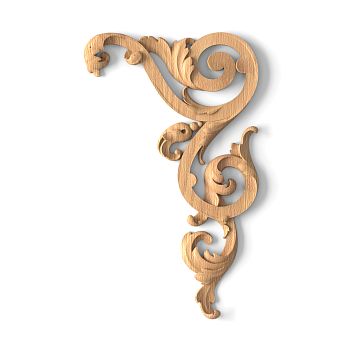
decorative elementsSTAVROS turn painted walls into works of art. Consoles, outlets, corner elements, pilasters — every detail enhances the aesthetics. Polyurethane is ideal for painting — smooth surface, excellent adhesion, durability.
STAVROS consultants will help you choose optimal solutions. Unsure which moldings will suit? Call us. Need material calculations? Provide room dimensions — we’ll calculate everything precisely. Technical support at every stage is guaranteed.
STAVROS delivery across Russia makes quality materials accessible everywhere. Moscow, Yekaterinburg, Krasnoyarsk — distance is no problem. Reliable packaging, vetted logistics partners, on-time delivery.
Create ideal interiors with STAVROS. Every wall can be perfect. Every room can impress. Quality materials, professional support, guarantee of results — all of this is STAVROS. Your ideal walls begin here!