Article Contents:
- What's behind the words 'wood paneling'
- Why wood wall paneling remains relevant in any trend
- Slat panels: a separate conversation about volume and rhythm
- Vertical, horizontal, diagonal: how slat orientation changes a room
- Materials: paintable MDF, solid oak, and what's in between
- Paintable MDF: color control and perfect surface
- Solid oak: living texture and premium character
- Comparison table: MDF vs solid oak
- Rigid and flexible panels: what's the difference and what to choose
- Rigid Slatted Panels
- Flexible Slatted Panels
- Interior slats as an independent tool
- Where to Use Wooden Panels: Complete Room-by-Room Breakdown
- Living Room: Accent, Zoning, TV Wall
- Bedroom: Warmth, Coziness, Headboard
- Entryway and Corridor: First Impression
- Study and Workspace: Focus and Professionalism
- Ceiling: Bold with Effect
- Columns, Arches, Niches: Non-Standard Surfaces
- Furniture Fronts: Interior as a Unified Whole
- Wooden Panels and Interior Styles: Where They Work Best
- Jatoba
- Minimalism
- Scandinavian Style
- Neoclassicism and Modern Classicism
- Organic and eco-style
- Loft and Industrial Style
- Wood Finishing in Commercial Spaces
- Installing Wooden Panels: Step-by-Step and Straight to the Point
- Step 1: Base preparation
- Step 2: material acclimatization
- Step 3: Marking
- Step 4: mounting
- Step 5: joining and finishing
- Step 6: Finishing
- Wood panel care: easier than it seems
- Wood panels and acoustics: an unexpected practical bonus
- Common mistakes in selection and installation
- Wood panels for different budgets and scales
- Designer tips: how to make wood paneling part of a cohesive interior
- FAQ: answers to popular questions about wood paneling
- About the Company STAVROS

There are things in an interior that work on several levels at once. They are beautiful—and that's obvious at first glance. They are practical—and you realize that within the first year of living in the updated space. They are durable—and you appreciate that a decade later. Wood paneling belongs precisely to this class of solutions. Not just decor, not just wall covering—but a conscious design choice that changes the atmosphere, geometry, and feel of a space.
But here's the paradox: the more popular wood wall finishes become, the more confusion arises when choosing. Smooth panels or slatted? MDF for painting or solid oak? Rigid format or flexible? An entire wall or an accent zone? These questions stop many right at the start of a project. That's why it's worth understanding the topic systematically—from grasping the nature of the material to specific application scenarios in your apartment, house, or commercial space.

What's behind the words 'wood paneling'
Before choosing a specific product, you need to understand: what exactly are called wooden wall panels? This term encompasses products that are very different in construction and purpose.
Wooden panels are a broad class of finishing materials based on natural wood or wood boards, intended for cladding walls, ceilings, furniture fronts, and decorative surfaces. Within this class, several fundamentally different formats are distinguished:
-
Smooth flat panels – a homogeneous surface without relief, often made of MDF or veneer, for painting or with a ready-made finish.
-
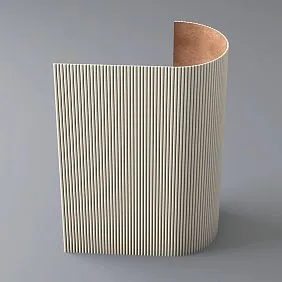
Slatted panels – a structure of parallel slats with equal spacing, creating volume, rhythm, and a chiaroscuro effect.
-
Veneered panels – sheets or boards with a thin layer of natural wood over a base, reproducing the texture of valuable wood species.
-
Solid wood boards and panels – solid wood in the format of wide boards, brasses, or assembled panels, often used for country houses and rustic style.
-
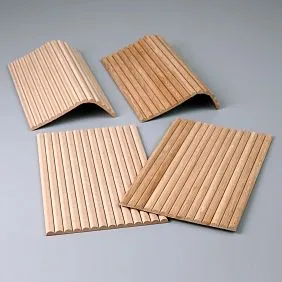
Interior battens – individual wooden profiles for piece-by-piece installation with arbitrary spacing.
For modern urban interiors, two directions are most relevant: slatted panels as the most expressive volumetric format and smooth panels for painting as a universal basis for color solutions. It is these that we will examine in the most detail.




Why wooden wall finishing remains relevant regardless of trends
Trends in interior design change quickly. What was fashionable five years ago may seem outdated today. But wooden wall finishes are one of those solutions that have already survived several waves of interior fashion and remain relevant. Why?
The first reason is material honesty. Wood is one of the few finishing materials that doesn't pretend to be something it's not. Stone is stone. Metal is metal. And wood is wood: with a living texture, warm tone, tactile appeal that cannot be imitated.
The second reason is style versatility. Wooden panels are equally organic in minimalist Scandinavian interiors and in warm Japandi. They fit into neoclassicism, organic style, loft, contemporary. Only the format and material change—but the general principle remains unchanged: wood on the wall always looks appropriate.
The third reason is durability. Qualitywood panel wall finisheslast for decades. These aren't wallpapers that bubble and yellow. Not paint that needs refreshing every three to five years. This is an investment in space quality that pays off over time.
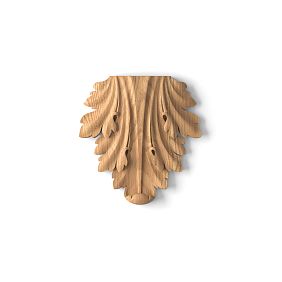
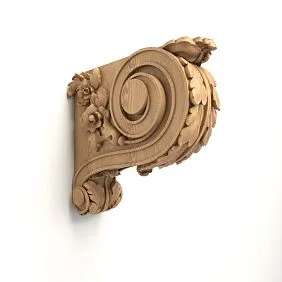
Our factory also produces:


Slatted panels: a separate conversation about volume and rhythm
Among all formats of wooden finishes, slatted panels hold a special place—and this isn't designer fashion, but architectural logic. To understand why slatted structures became a dominant trend starting in the 2020s, just look at what they do to space.
Each slat is a thin strip of wood, casting an equally thin shadow on the adjacent surface. When there are twenty, thirty, fifty slats—an effect emerges that has no equivalent in other materials. The wall gains depth. Light falling on it at an angle creates a play of shadows that changes throughout the day with natural lighting. A plane transforms into volume.
This is the main reason for the popularity of decorative slatted panels: they bring to space what neither paint, nor wallpaper, nor smooth slabs can provide—architectural expressiveness through relief.
Get Consultation
Vertical, horizontal, diagonal: how slat orientation changes a room
Slat direction is a design tool, not just a technical parameter.
Vertical slats are the most popular choice for residential interiors. They visually stretch the room upward, creating the illusion of higher ceilings. In apartments with standard heights of 2.5–2.7 m, this is especially valuable: the eye follows the vertical lines, and the ceiling seems farther away.
Horizontal slats work differently—they expand the space. A narrow, long corridor with horizontal slats no longer feels oppressive due to its elongated shape. An entryway that seems cramped gains visual 'width'.
Diagonal layout is a bold solution for designers seeking unconventional geometry. Suitable for accent zones in commercial or representative spaces.
Materials: MDF for painting, solid oak, and what's in between
Material choice is not just a matter of aesthetics. It's a question of durability, budget, interior style, and finishing method. Let's break it down honestly and in detail.
MDF for painting: color control and a perfect surface
MDF—medium-density fiberboard—in modern panel production has long moved beyond being a 'cheap substitute.' It is an independent material with certain advantages that, for some tasks, even surpass solid wood.
The main advantage of MDF is its structural uniformity. There are no pores, no knots, no random textural spots. The surface is smooth, dense, perfectly ready for applying any paint coating. This means: precise color from the RAL or NCS palette without surprises, perfect coverage with matte enamel or satin, the ability to paint panels exactly to match the walls—and create a monochrome effect with barely noticeable relief.
This approach is typical for minimalist, Scandinavian, and contemporary interiors:MDF Plank Panelspainted the same color as the wall, creating an almost imperceptible texture—volume without decorative 'loudness'.
Choose MDF if:
-
You value precise color control
-
The interior is modern, minimalist, or Scandinavian
-
Need an accent wall in one specific tone
-
Planning to periodically update the color—MDF repaints well
-
The budget requires a reasonable balance of quality and cost
Solid oak: living texture and premium character
Solid oak is a completely different story. Here the key word isn't 'uniformity,' but 'uniqueness.' Each oak plank carries its own grain pattern, its own tonal transitions, its own character. Two solid panels will never be identical—and that's precisely their value.
Oak is one of the hardest and most durable European woods: density about 700–750 kg/m³, high resistance to mechanical wear. Under transparent oils and varnishes, it reveals a warm golden tone. Tinting oils allow for Scandinavian gray, deep wenge, soft tobacco, graphite—depending on the concept.
It's important to understand: solid oak panels aren't just beautiful. They're functional. Oak holds paint, tint, and oil well, is resistant to scratches, and maintains its shape for a long time with proper care. For commercial spaces with high traffic—restaurants, hotels, showrooms—this is a fundamental advantage.
Choose solid oak if:
-
You need a living natural texture
-
Interior in Japandi, organic, Wabi-sabi, warm Scandinavian naturalism style
-
The status of the finish is important: premium look, honest material
-
Planning to finish with oil or wood tinting
-
Space — private house, country cottage, or representative object
Comparison table: MDF vs solid oak
| Parameter | MDF for painting | Solid oak |
|---|---|---|
| Surface | Smooth, uniform | Living texture, unique pattern |
| Finish processing | Paint, enamel, varnish | Oil, wax, tint, varnish |
| Color flexibility | Any RAL / NCS | Natural tones + tints |
| Durability | High | Very High |
| Style | Minimalism, modern, Scandinavian | Organic, japanandi, classic, loft |
| Cost | Optimal | Premium |
| Care | Minimal | Periodic coating renewal |
Rigid and flexible panels: what's the difference and what to choose
Slatted panels differ not only in material but also in construction. This distinction is critical for a number of tasks.
Rigid slat panels
A rigid panel is a finished product with fixed geometry. The slats are already fixed to the base at the required pitch, the geometry is precise, and the rhythm is guaranteed. Installation is quick, and joints are minimal with proper marking.
This is the optimal format for straight walls, TV zones, bed headboards, hallways, office spaces — anywhere the surface is flat and the geometry is standard. Rigid panels ensure a predictable result without manual slat pitch marking.
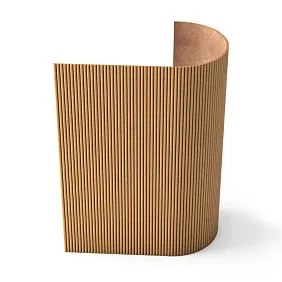
Flexible slat panels
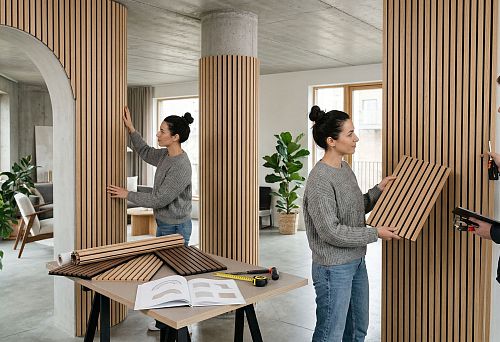
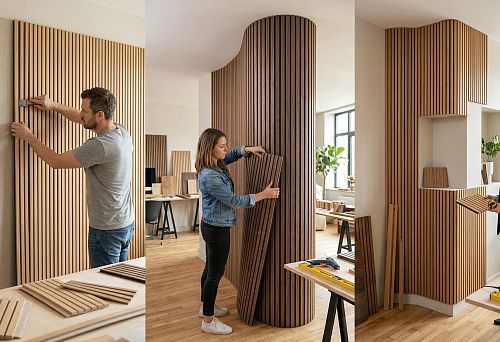
Flexible panels on a fabric base solve tasks that the rigid format physically cannot handle. Columns, arches, rounded niches, radius walls, curved furniture fronts — all of these require a panel capable of wrapping around curved surfaces without breaks or pattern distortion.
Seamless module connection is a fundamental advantage of the flexible format. On a column or arch, the joints are invisible: the rhythm of the slats is maintained around the entire circumference without interruption.
Interior slats as an independent tool
A separate interior slat offers maximum design freedom. You set the spacing, orientation, and layout pattern yourself. This is indispensable where non-standard spacing, mixed horizontal-vertical layouts, or unique geometry on a ceiling or custom-sized furniture front is needed. RK-002 interior slats, 2750 mm long, are available in several cross-sections and are perfect for individual design solutions.
Where to use wooden panels: a complete breakdown by rooms
Versatility is one of the main advantages of wooden wall cladding. There is no room where properly selected panels would be out of place. But each space has its own logic of application.
Living room: accent, zoning, TV wall
The living room is the main stage of the apartment. It is here that wooden panels work most expressively and attract the maximum number of admiring glances from guests.
Three most popular scenarios for the living room:
A full accent wall. One wall covered with vertical slats from floor to ceiling instantly becomes the architectural center of the room. The other walls can be neutral — this only enhances the contrast effect.
TV zone. A slatted panel behind the TV is a classic and very practical solution. It creates a background for the screen, conceals wires and equipment in a single plane, and adds depth to the relaxation area. Rigid panels with clear geometry are well-suited for this task.
Zoning. A slatted panel-partition is a way to separate the dining area from the living area without building walls. The openwork slat structure allows light and air to pass through, visually marking the boundaries of the zones.
Bedroom: warmth, coziness, headboard
In the bedroom, wooden panels operate on a different register — not for expressiveness, but for coziness. The wall behind the bed headboard is one of the strongest zones for slatted finishing: it highlights the sleeping area, creates a visual focus, and literally 'wraps' a person in the warmth of natural material.
For the bedroom, solid oak panels with oil treatment or soft tinting in warm beige-nut tones are especially organic. Such a surface breathes calmness — exactly the mood needed for rest.
The second option is paintable MDF in the tone of the wall, creating a monochrome accent with a barely noticeable relief. This is an intelligent solution for those who value conciseness.
Hallway and corridor: first impression
The hallway is the face of the apartment. What you see when you cross the threshold sets expectations for the entire space. That is why wooden wall finishing in the hallway is an investment with a high return.
Horizontal slats in a narrow corridor optically expand the space. Vertical ones in a hallway of normal width create a solemnity for the entrance area. Dark tinting with good spot lighting — an effect of depth and status.
Practical aspect: the hallway is a high-traffic zone. Here, the wear resistance of the coating is important. For this zone, it is better to choose oak with a varnish coating or MDF with hard enamel — they are easy to wipe clean and are not afraid of accidental impacts.
Study and workspace: focus and professionalism
A workspace requires a different quality from the finish — creating an atmosphere of concentration. Wooden panels in a study add solidity without pomp, creating a sense of 'enclosure' from the outside world.
The optimal choice for an office is dark slats (wenge, dark walnut, graphite) on one of the walls. This creates the necessary psychological background for work. Light slats are suitable where openness and lightness are important—in creative studios, designer spaces.
Ceiling: boldness with effect
Slatted ceiling finishing is not for everyone, but where it is appropriate, it makes a powerful impression. A ceiling with horizontal slats and lighting between them is one of the most memorable designer effects in modern interiors.
For ceiling installation, it is important to correctly calculate the mounting system and integrate lighting at the design stage. Lighting between the slats creates soft, diffused light that significantly changes the atmosphere of the room.
Columns, arches, niches: non-standard surfaces
Here, flexible slatted panels are indispensable. A column wrapped in a seamless slatted covering transforms from an architectural 'inconvenience' into an accent element. An arched opening with slatted cladding becomes an expressive frame for the transition between zones.
A niche with a slatted back wall gains depth and the status of a decorative object. This is especially effective in combination with spot lighting inside the niche.
Furniture fronts: interior as a unified whole
One of the most sophisticated uses of wooden panels is for furniture fronts. When walls and the fronts of cabinets, dressers, or a kitchen island are executed in the same slatted rhythm and material, the space gains architectural integrity: the boundary between furniture and wall blurs, everything works as a single volume.
For furniture frontsWall slatted panelsorganically combine withsolid wood millwork— with moldings, cornices, and baseboards from the same line. This allows for creating a unified material environment from floor to ceiling, where each element highlights and complements the adjacent ones.
Wooden panels and interior styles: where they work best
The question of stylistic compatibility is one of the most common when choosing wooden wall finishes. In short: wooden panels are organic in almost any modern style. But there are nuances.
Japandi
Japanese-Scandinavian synthesis is perhaps the most organic context for slatted wooden panels. Here, natural material, a restrained palette, and pronounced texture are important. Oak with oil treatment in warm neutral tones is ideal. No excess, only the honest texture of natural wood.
Minimalism
In minimalism, slatted panels are one of the few permissible decorative elements. They add texture without disrupting the purity of the space. MDF painted to match the wall color creates a monochrome effect with subtle architectural relief—exactly what a minimalist interior seeks.
Scandinavian style
Light wood, clear lines, functional beauty. Slatted panels in Scandinavian style are almost a mandatory element. Oak with transparent oil, birch, light ash—materials that speak the language of this direction.
Neoclassicism and modern classicism
Here, wooden panels of a different kind are needed—not slatted, but smooth with molding framing. Paneled wall division withwooden moldingscreates a classic 'filled' wall with a geometric pattern. This is a solution that appeals to tradition but remains modern in execution.
Organic and eco-style
Natural oak, oil treatment, warm tones—the language of organic interior. Solid wood slatted panels here are not just decor, but an ideological statement: living material, eco-friendliness, honest texture without imitations. Wood combines with stone, linen, natural leather, terracotta—the entire range of organic materials.
Loft and industrial style
Dark tinted slats against a concrete wall or brickwork—one of the most convincing designer contrasts. Warm wood in an industrial context softens the harshness of the space, creating a balance between raw and cozy.
Wooden Finishes in Commercial Spaces
Commercial interiors are a special topic. Here, aesthetics work for business: the right finish directly influences the perception of the establishment, the customer's mood, and their desire to return.
Restaurants and Cafes. Warm wooden wall finishes create an atmosphere people are willing to pay for. Oak slatted panels with a dark walnut or cognac stain are a classic of restaurant design. They create coziness and a 'tasty' atmosphere, reducing acoustic echo in large halls.
Offices and Meeting Rooms. Wooden panels in a meeting room are a professional signal of a company's seriousness. MDF for painting in corporate colors or oak with a lacquered finish create a solid, yet not pompous, appearance.
Hotels and Guest Houses. Slatted panels in lobbies, corridors, and rooms create that very 'atmospheric' first impression that guests remember and recommend. This is an investment in reputation.
Boutiques and Showrooms. A slatted wall is a professional backdrop for any display. It creates a neutral yet expressive foundation on which merchandise looks advantageous.
For commercial properties, it is especially important to provideDecorative Insertsand molding solutions to complete the composition — they give the finish a polished and professional look.
Installing Wooden Panels: Step-by-Step and Without Unnecessary Words
Installing slatted panels does not require special construction skills — provided you understand the basic principles.
Step 1: Surface preparation
The base must be dry, level, and sturdy. Permissible deviations are no more than 2–3 mm over 2 meters. For significant unevenness, the wall should first be leveled with plaster, putty, or drywall. Base moisture is a critical parameter: wooden panels cannot be installed on a damp or recently plastered wall without drying.
Step 2: material acclimatization
Solid oak panels are a living material that reacts to changes in temperature and humidity. Before installation, they should be kept in the room for 48–72 hours. This allows the material to adapt to the microclimate and prevents subsequent deformation.
Step 3: Marking
Precise marking is the key to correct geometry. Vertical and horizontal lines are checked with a level. The first panel must be installed strictly level—all subsequent ones will follow from it.
Step 4: fastening
Rigid panels are mounted using structural mounting adhesive in combination with mechanical fasteners (finish nails, screws along guides). Adhesive alone without mechanical fixation is not sufficiently reliable for heavy panels. Mechanical fastening alone without adhesive is weaker in sound insulation and vibration resistance.
Flexible panels on a fabric base are fixed with mounting adhesive along the shape of the curved surface—with an even layer and no gaps.
Step 5: joining and finishing
Joints between panels should align with the rhythm of the slats—this creates the effect of a continuous surface. Ends and corners are covered with matching moldings—for this, it is convenient to usesolid wood trim pieces: moldings, corner elements, baseboards. A properly selected molding made from the same wood species gives the finish a polished look.
Step 6: Finishing
MDF panels for painting are painted after installation — this allows covering small joints and creating a monolithic surface. Oak panels are treated with oil, wax, or lacquer according to the manufacturer's instructions.
Caring for wooden panels: easier than it seems
One of the most common fears about wooden finishes is 'you have to constantly maintain it.' The reality is much simpler.
MDF panels for painting require minimal care: wipe with a dry or slightly damp cloth, avoid aggressive cleaners. For mechanical damage — local touch-up without removing panels. This takes no more than 15 minutes.
Solid oak panels with lacquer — wipe with a clean soft cloth, renew the lacquer layer every 3–5 years (depending on wear). Thanks to oak's high hardness, scratches rarely appear.
Solid wood panels with oil finish — the most 'living' option. Oil is renewed locally without dismantling, every 1–2 years. The process itself is simple and pleasant: apply a small amount of oil with a cloth, let it sit, and wipe off excess.
None of these options require special equipment, professional knowledge, or significant time investment.
Wooden panels and acoustics: an unexpected practical bonus
The acoustic properties of wooden slat panels are rarely discussed, but it's a real and tangible effect. The slatted structure scatters sound waves: instead of direct reflection from a flat wall, waves 'break' against the slat edges, creating diffuse scattering. This reduces reverberation — that unpleasant echo that makes large spaces uncomfortable for speech.
The effect is especially noticeable in living rooms with high ceilings and open layouts, restaurant halls, meeting rooms, and home theaters. When sound-absorbing material is placed behind the panel backing, the acoustic effect is multiplied.
Common mistakes in selection and installation
Experience is the best teacher. But it's better to learn from others' mistakes than from your own.
-
Choosing from a photo on screen. The screen doesn't convey the actual texture, color depth, or scale of the slats. Order a sample and view it in the actual lighting of your room.
-
Ignoring proportions. Wide slats in a small room create heaviness and clutter. The scale of the slats should match the scale of the space.
-
Installation on an undried base. This is the most costly mistake: deformations and peeling are discovered only after the work is completed.
-
Skipping acclimatization. Especially critical for solid wood in rooms with unstable humidity—in winter with active heating, the air is dry, and without acclimatization, the panels may warp.
-
Mismatch between wall and furniture. If the interior has slatted cabinet fronts, their rhythm and material should match the wall panels. Otherwise—visual conflict instead of unity.
-
Lack of finishing elements. Panels without properly selected moldings, baseboards, and corner elements look unfinished. The detail makes all the difference.
-
Unaccounted lighting. Slatted panels work together with light. Incorrectly placed light sources can 'kill' the chiaroscuro effect or create unsightly shadows.
Wooden panels for different budgets and scales
One of the myths about wooden wall finishes is 'it's expensive.' Reality is more complex: the price range depends on material, format, and volume. There are solutions for different possibilities.
Budget format. MDF for painting in standard sizes is the most affordable solution. At the same time, the visual effect of a slatted wall is no worse than in expensive options. The difference is in the material, not the aesthetics.
Mid-range. Rigid MDF slatted panels in full format for one accent wall are a reasonable investment with high returns. It is one well-executed accent wall that changes the feel of the entire room.
Premium. Solid oak, full cladding of several walls, flexible panels for curved surfaces, integration with furniture fronts — this is already the level of a serious design project with a corresponding budget and result.
Designer tips: how to make wooden cladding part of a cohesive interior
Wooden wall paneling works best when it is integrated into a unified design concept, not as a separate element.
Several principles that will make the result professional:
-
Coordinate the panel material with the floor. Oak on the walls and oak on the floor is a strong solution. But the tone should be either identical or intentionally contrasting. A random mismatch looks sloppy.
-
Build a material chain. Slatted panels on the wall — moldings from the same wood — baseboards — door trims. A unified material environment from floor to ceiling is a sign of a professional project.Decorative InsertsandCarved wooden items occupy a special place in this regard. Wood carving not only emphasizes the aesthetics of a room but also gives it warmth, lively energy, and uniqueness. In modern interiors, carved elements are widely used due to their unique properties and adaptability to any style—from classic to minimalism.will help create this cohesion.
-
Think about lighting in advance. Directional light at an angle reveals the slatted relief. Diffused light 'removes' shadows. Backlighting between slats on the ceiling or in a niche is a separate design technique. Lighting is part of the finish, not a separate task.
-
Don't overload the space. One expressive slatted wall + three neutral ones = effect. Four slatted walls = overload. The accent principle only works when there is a 'quiet' background.
-
Order a sample before a large order. This isn't paranoia—it's a professional standard. A real sample allows you to assess the color, texture, and scale of the slats in the specific conditions of your room.
FAQ: Answers to popular questions about wood paneling
What is wood paneling?
It's a method of cladding walls, ceilings, or other surfaces using panels based on natural wood or wood-based boards (MDF). It includes a wide range of formats: from smooth sheets to volumetric slatted constructions.
Which panels are better to use for walls?
It depends on the task. For a modern minimalist interior—MDF for painting. For an organic, warm style—solid oak. For maximum expressiveness—slatted panels made from any of these materials.
Are wooden panels suitable for an apartment?
Absolutely. An apartment is one of the main applications of wooden wall finishes. Living room, bedroom, hallway, study—there are appropriate scenarios for use everywhere.
What is better to choose: solid wood, MDF, or veneer?
Solid wood—for naturalness, durability, and a premium look. MDF—for precise color, uniformity, and affordability. Veneer—for a balance between naturalness and price. The choice is determined by interior style and budget.
Can panels be used in the hallway and corridor?
Yes, and it's especially justified: the hallway is a zone of heightened visual attention, and wooden paneling there makes a strong first impression. For the hallway, choose a wear-resistant finish—oak with varnish or MDF with hard enamel.
Are wooden panels suitable for the bedroom?
Perfectly. The wall behind the headboard is a classic zone for slatted paneling in the bedroom. Warm oak with oil treatment creates coziness and a feeling of security.
Can you create an accent wall with wooden panels?
Yes, and it's one of the most effective ways to create an accent wall without painting or complex decor. One slatted wall instantly structures the space.
Which interior styles do wooden panels go with?
With practically all modern styles: Japandi, minimalism, Scandinavian style, organic, loft, contemporary, neoclassical. The format and finish of the material change—the working principle remains the same.
Is it difficult to care for wooden panels?
No. MDF panels for painting just need wiping with a damp cloth. Oak panels with varnish are even easier to care for. With oil finish—light oil renewal every 1–2 years.
Which is better: smooth panels or slatted panels?
This isn't a question of 'better-worse'—it's a question of purpose. Smooth panels provide a clean surface for color. Slatted panels—volume, rhythm, and chiaroscuro. In modern interiors, the slatted format dominates due to greater expressiveness.
Should you order a sample before purchase?
Highly recommended. A sample allows you to assess the actual color, scale of slats, and texture of the material in your room's conditions. This eliminates disappointment and unnecessary expenses.
Can you combine slatted panels on walls and furniture fronts?
Yes, and it's one of the strongest designer techniques. A unified rhythm and material on the wall and furniture fronts creates an effect of architectural integrity.
About the company STAVROS
If you are looking for wooden wall panels with certified quality, precise geometry, and a wide range — take a look at STAVROS products. The company has been operating since 2002, specializes in solid oak and beech products, MDF for furniture and interiors, and is one of the leaders in the Russian market in its niche.
STAVROS's range includes slatted panels made of MDF and solid oak in rigid and flexible versions, interior slats, samples for preliminary evaluation, as well as a complete kit for finishing: moldings, baseboards, decorative overlays, carved products made of natural wood. Production is located in St. Petersburg, shipping is from one unit, delivery across Russia and abroad.
Full catalogSTAVROS wooden slatted panels— the entry point into the world of professional wooden wall finishing. Here you will find solutions for any task: from an accent wall in an apartment to a large-scale commercial project.