Article Contents:
- Meaning and origin of window frames
- Modern view on carved decoration
- Constructive features of window frames
- Types of decorative solutions
- Architectural styles and visual logic
- Application of decorative frames
- Mistakes in selection and installation
- How to choose and order at STAVROS
- Examples of design
- Conclusion
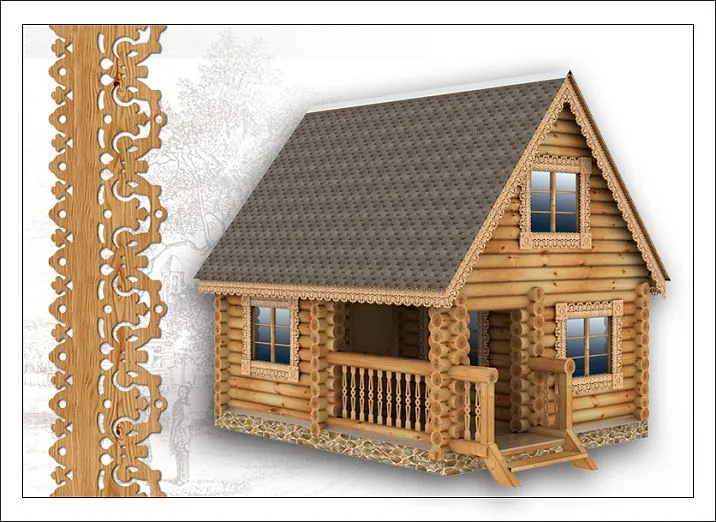
The facade of a wooden house is not just the outer shell of the building, but its face, character, history. Windows are the eyes of the house, through which it looks at the world and lets it in. That is why window framing on the facade of a wooden house acquires special significance, becoming not just a decorative element, but a true language of architecture, on which the building tells about its inhabitants, their values, cultural roots, and aesthetic preferences.
In the modern world, where standardized solutions and mass production often lead to the depersonalization of living space, returning to the traditions of wooden architecture becomes a way to create a truly unique, living, meaningful home. STAVROS company, deeply understanding this need, offers solutions that not only decorate the facade but also continue a centuries-old cultural tradition, combining the craftsmanship of the past with the possibilities of the present.
Wooden window framing is an architectural element capable of radically transforming the appearance of a house, giving it character and individuality. It is not just decoration, but an important structural component that shapes the visual perception of the entire building, sets the rhythm of the facade, creates a play of light and shadow, and unites the house with its surrounding landscape and cultural context.


Meaning and origin of window frames
The history of window frames goes back to deep antiquity, when they served not only decorative but also an important practical function. Initially, window casings were designed to protect the junction between the window frame and the wall from atmospheric precipitation, drafts, and insects. They protected wooden log structures from premature rot at the points where window casings met, extending the lifespan of the entire building.
However, the functional element quickly acquired symbolic significance. In folk architecture, the window was considered the boundary between the inner, protected space of the house and the outer world, potentially dangerous and unknown. Carved Door Casings for Windows They became a kind of protective charm, safeguarding the dwelling from evil forces. Each carving motif had its own meaning: solar symbols (circles, rosettes) symbolized the sun and celestial bodies, plant motifs were associated with fertility and abundance, images of birds and animals performed a protective function.
Over time, window frames also became an indicator of the homeowner's social status. The richer and more artistic the carving, the higher the owner's position in society. Thus, Decorative Window Treatment it became a kind of family calling card, telling about its wealth, taste, belonging to a certain cultural tradition.
It is amazing, but many ornamental motifs that originated centuries ago have remained practically unchanged to this day. This is explained not only by their aesthetic appeal, but also by their deep connection with archetypal images that resonate in people's consciousness regardless of the era. Geometric patterns, plant motifs, zoomorphic images — all this is a universal visual language, understandable on an intuitive level.
In different regions of Russia, their own schools and traditions of wooden house carvingreflecting local cultural features, available materials, climatic conditions. Northern window frames were characterized by simplicity and strictness, Volga ones — by richness and elegance, Ural ones — by massiveness and solidity. These regional differences created a rich diversity of forms and styles, which today serves as a source of inspiration for modern craftsmen and designers.




Modern view on carved decoration
In the modern context, a wooden house is increasingly viewed not just as a dwelling, but as an artistic object reflecting the individuality of the owner, his relationship to traditions, nature, and cultural heritage. In the era of standardized construction and uniform solutions, the opportunity to create a truly unique space becomes especially valuable.
Revival of interest in wooden house carving is due to several factors. First of all, it is the growing need for aesthetically pleasing, harmonious living space that is not only functional but also pleasing to the eye, creating a sense of coziness and connection with cultural roots.
The ecological aspect also plays an important role. In a world where naturalness and eco-friendliness are increasingly valued, wood as a material is experiencing a true renaissance. It is not only aesthetically pleasing but also possesses unique properties: it "breathes," regulates humidity, and creates a favorable microclimate indoors. Wooden facade elements become a natural extension of this philosophy, emphasizing the connection between the home and nature.
Durability is another factor contributing to the return of interest in wooden casings. Unlike many modern materials, well-crafted wooden elements can serve for decades, gaining even greater beauty and character over time. This makes them not only aesthetically appealing but also economically advantageous in the long term.
Finally, it cannot be overlooked that there is a general trend toward returning to artisanal, individual production. In contrast to mass-produced, standardized solutions, there is growing appreciation for items crafted with attention to detail, reflecting craftsmanship and a personal approach. Traditional casings for wooden houses perfectly fit into this trend, becoming not just a decorative element, but an expression of a certain life philosophy that values authenticity, quality, and connection to tradition.
Modern technologies do not contradict traditional techniques but complement them, opening up new possibilities. Computer modeling allows creating complex, mathematically precise patterns; CNC routers ensure high precision in execution; modern protective coatings extend the service life of wooden elements. At the same time, manual finishing, individual approach, and attention to detail remain an indispensable part of the process, ensuring the uniqueness of each item.
Our factory also produces:


Structural features of window casings
The structure of a traditional window casing includes several main elements, each performing its own function and contributing to the overall composition. The lintel (ocel) — the upper part of the casing, often the most decoratively rich, symbolizing the sky. The jambs (tetrivs) — vertical elements framing the window on the sides, connecting the top and bottom of the composition. The sill (podzor) — the finishing element, symbolizing the earth, often having a shaped lower edge.
The geometry of the casing should take into account not only aesthetic aspects but also practical considerations. The width of the casings should be sufficient to reliably cover the gap between the window frame and the wall, but not so large as to visually reduce the window opening. The thickness of the elements affects their strength and durability, as well as the expressiveness of light and shadow play.
Fastening of casings — an important technical aspect that determines the longevity of the entire structure. Traditionally, wrought nails were used, which not only securely fastened the parts but also became an additional decorative element. Today, various modern fastening systems are used — from special nails and screws to adhesive compositions that provide secure fastening without visible fasteners.
The methods of installing casings may vary depending on the house's construction, type of windows, and climatic conditions. In traditional log houses, casings were attached directly to the window frame or to special beams installed around the opening. In modern wooden houses, more complex systems may be used, taking into account possible shrinkage of the log structure, material thermal expansion, and the need for ventilation.
Choosing Casing from solid wood for windows should take into account the architectural features of the specific house — its style, proportions, other decorative elements. It is important that window casings harmonize with the overall appearance of the building, highlight its strengths, and correspond to its scale. Too massive casings on a small house will look inappropriate, just as overly modest, unremarkable casings will on a large, prestigious structure.
The material for casings also has great importance. Traditionally, local wood species were used — pine, spruce, larch, less often — oak, lime, aspen. Each species has its own characteristics — texture, color, resistance to moisture and insects, ease of processing. Today, the choice of materials is significantly broader, allowing to select the optimal solution for specific operating conditions and aesthetic preferences.
Get Consultation
Types of decorative solutions
The variety of decorative solutions for window casings is truly limitless — from simple, minimalist forms to the most complex compositions with multi-level carving. The choice of a specific variant depends on the architectural style of the house, regional traditions, the owner's personal preferences, and the project budget.
Simple forms emphasize the beauty of the wood itself, its natural texture and color. Such casings may have minimal decorative elements — just a simple profile along the edge, small shaped cutouts, a modest geometric ornament. They are ideally suited for modern interpretations of wooden architecture, where minimalism, clean lines, and natural materials are valued.
Complex decorative solutions include various woodworking techniques — from machine routing to delicate hand carving. They may combine different types of carving — through (pierced), applied, relief, sculptural. Such casings become true works of art, attracting attention and creating an expressive architectural accent.
Traditional casings for wooden houses usually have a rich symbolic language based on ancient images and motifs. Sun rosettes, plant scrolls, birds, animals — all these elements not only decorate the window but also carry a certain meaning, creating a unique visual narrative. Modern design solutions may either rely on this symbolic tradition or depart from it, creating new forms and images that correspond to current aesthetic trends.
An interesting direction — stylizing historical forms using modern technologies and materials. This approach allows maintaining visual connection with tradition while ensuring the longevity, durability against external influences, and ease of maintenance of the items. For example, traditional motifs can be reproduced using CNC routers, which ensures high precision and repeatability of elements while preserving their authentic appearance.
The color solution of casings also plays an important role in forming the appearance of the house. Traditionally, casings were painted in contrasting colors relative to the walls — white, blue, green, red. This not only emphasized their decorative role but also protected the wood from external influences. Today, the palette is significantly broader, allowing to create the most diverse color combinations — from traditional to ultra-modern.
Architectural styles and visual logic
Regional characteristics carving on the facade of the house formed over centuries under the influence of many factors — climatic conditions, available materials, cultural traditions, historical events. These differences create a rich palette of styles and directions, each with its own visual logic and aesthetic value.
The Northern Russian tradition of carving is characterized by restraint, geometricity, and clear lines. In the harsh climate of the Russian North, strength, solidity, and functionality were valued. Casings here usually have a simple form, minimal decorative elements, often painted white, contrasting with the dark log structure. Main motifs — geometric patterns, stylized plant elements, solar signs.
The Volga school of carving, on the contrary, is renowned for its richness, elegance, and abundance of decoration. Here, plant motifs prevail — flowers, leaves, grapevines, as well as images of birds and animals. Casings often have complex shapes with shaped tops and bottoms, adorned with multi-layered carving that creates an effect of depth and volume. The color palette is diverse — from natural wood tones to bright, saturated colors.
The Moscow tradition combines elements of various schools, reflecting the capital's status and the multi-ethnic character of the region. Here, one can encounter both restrained, classical forms and richly decorated, festive casings. Characteristic features — symmetry, proportionality, harmonious combination of different types of carving.
The Ural school is characterized by massiveness, solidity, and the use of large decorative elements. In a region rich in metal, wooden carving often imitated metalwork — wrought iron grilles, cast ornaments. Casings here are usually wide, with pronounced relief, creating deep shadows and expressive light play.
An important aspect of the facade's visual logic — combining window casings with other architectural elements: balconies, gables, doors, cornices. All these elements should form a unified composition, speak the same visual language, and create a cohesive, harmonious image. Casings may echo the carving on the gable, repeat motifs of the door casing, correspond to the style of balcony railings.
Rhythm and proportions play a key role in forming the appearance of the facade. The placement, size, shape, and character of window frames — all of this creates a certain visual rhythm, which may be uniform, progressive, or contrapuntal. A properly arranged rhythm makes the facade harmonious, pleasant to perceive, and logically structured.
Application of decorative frames
Within a single house, various types of window frames may be used, highlighting the hierarchy and functional purpose of rooms. Main facade windows often have more elaborate, expressive framing, while utility room windows may be styled more modestly. This approach not only creates visual variety but also helps "read" the house’s structure and understand its internal organization.
Facade carved elements must harmonize with other exterior components — roof, foundation, wall color, landscaping. It is important to create a cohesive image where all elements support and complement each other. For example, the carving on window casings may echo the pattern of roof trim, and the color of frames may match the roof or other wooden facade elements.
Color solution plays an important role in the perception of the facade. Traditionally, casings were painted in colors contrasting with the main wall tone, emphasizing their decorative role and creating a striking visual effect. Today, color design options are significantly broader — from classic contrasting combinations to subtle nuanced solutions, where casings only slightly differ in tone from the main facade color.
Decorating the facade of a wooden house The presence of carved elements significantly affects its value — both material and emotional. Well-executed, stylistically consistent casings increase the property’s market value, making the house more attractive to potential buyers. But even more important is their influence on the atmosphere of the house, on the emotional connection that forms between the dwelling and its inhabitants.
A house with a distinctive, individual appearance becomes not just a place of residence, but an extension of the owner’s personality, an expression of their taste, values, and relationship to traditions. Such a house evokes a sense of pride, a desire to maintain it in ideal condition, and to pass it on to future generations. It becomes a family treasure, a keeper of the family’s history, a material embodiment of the connection between generations.
It is also important to consider how the house facade interacts with the surrounding landscape and neighboring buildings. Ideally, it should harmoniously fit into the existing context, support regional architectural traditions, while preserving individuality and character. Carved casings can become the element that links the house to local cultural traditions, making it an organic part of the historically developed environment.
Errors in selection and installation
One of the most common mistakes in facade design is architectural "mess" — a haphazard combination of elements from different eras and styles. For example, Russian-style casings may look inappropriate on a house with clear Alpine chalet or Scandinavian minimalist features. It is important to choose frames that correspond to the overall architectural concept of the building, its proportions, character, historical and cultural context.
Ignoring dimensions and height also leads to disruption of facade harmony. Too massive casings on small windows visually "consume" the window opening, making it appear smaller. Too thin, unexpressive frames on large windows disappear, failing to fulfill their decorative function. It is important to maintain proportional relationships, consider the overall scale of the building and its individual elements.
Violation of symmetry and stylistics may destroy the integrity of the architectural image. If the house is designed in a symmetrical composition, casings on corresponding windows should be identical. If the composition is asymmetrical, differences in window framing should be logically justified, support the overall idea, and not contradict it.
Technical errors during installation of casings may lead to their premature destruction. Incorrect fastening, absence of gaps for compensating wood thermal expansion, insufficient moisture protection — all of this shortens the service life of wooden elements, leading to deformation, cracking, and fungal damage.
STAVROS Company, based on its long experience working with wooden architectural elements, offers professional consultations on selecting and installing casings. The company’s specialists will help choose frames matching the house’s architectural style, proportions, and color scheme. They also provide recommendations on proper installation, maintenance, and care of wooden elements, ensuring their longevity and preservation of aesthetic qualities.
It is important to remember that casings are not just a decorative element, but part of the house’s architectural image, influencing its perception, functionality, and energy efficiency. Therefore, their selection must be deliberate, based on understanding architectural principles, traditions of wooden architecture, and technical aspects of working with wood.
How to choose and order from STAVROS
STAVROS Company is not just a manufacturer of wooden architectural elements, but a true partner in creating a harmonious, expressive, and functional facade. Long experience working with wood, deep understanding of traditions of wooden architecture, modern production technologies — all of this allows the company to offer solutions of the highest quality, meeting the most demanding requirements.
The process of choosing and ordering casings from STAVROS is maximally convenient and oriented toward the client’s needs. The company offers an extensive catalog of ready-made solutions covering various architectural styles, regional traditions, and technical requirements. Each item is accompanied by detailed descriptions, photos, and technical specifications, helping make an informed choice.
For those seeking unique, individual solutions, STAVROS offers custom-made casings. This may involve reproducing historical samples, creating modern interpretations of traditional forms, or developing entirely original designs. A team of professional designers and woodcarvers is ready to bring the most daring ideas to life, creating unique, one-of-a-kind facade decoration elements.
An important part of STAVROS service — professional consultations on selecting casings. The company’s specialists will help determine the optimal style, dimensions, proportions of frames, their correspondence to the overall architectural concept of the house. They also provide recommendations on color solutions, combining various facade decoration elements, technical aspects of installation and maintenance.
Product delivery is carried out throughout Russia, complying with all requirements for transporting wooden items. Each element is carefully packaged, eliminating the possibility of damage during transit. For large orders or complex projects, phased delivery according to the schedule of construction or restoration works is possible.
For architects, designers, construction companies, STAVROS offers services for designing comprehensive facade decoration. This includes developing a concept, creating detailed drawings, selecting materials, calculating costs, and preparing a production and installation schedule. This approach ensures the integrity of the architectural solution, with all elements conforming to a unified stylistic and technical concept.
Examples of facade design
Let us consider several specific examples of application carved casings for windows in various architectural contexts, demonstrating diversity of stylistic and technical solutions.
A house in Russian style with rich decorative detailing represents a modern interpretation of traditional wooden architecture. A two-story structure made of round logs, with a high roof and spacious porch, is adorned with casings in the North Russian style. The upper part of the casings (ocel) has the shape of a kokoshnik with solar symbols and plant ornamentation. The sides are decorated with geometric patterns symbolizing rain and fertility. The lower part (podzor) has a shaped edge with droplets — a traditional motif associated with water and life force.
Color solution is classic — white casings against a golden log structure. This contrast not only emphasizes decorative elements but also visually structures the facade, creating a clear rhythm and making it more expressive. Casings harmonize with other carved elements — friezes on the gable, trim on the eaves, balusters on the porch, creating a cohesive, stylistically consistent image.
The modern cottage with contrasting carving represents an example of creative reinterpretation of traditions within the context of current architectural trends. The two-story structure made of glued-laminated timber, with a flat roof and large panoramic windows, combines features of minimalism and traditional wooden architecture. The casings here have a simple, unadorned form, but are crafted from dark wood, creating a striking contrast with the light-colored walls.
The carving on the casings is abstract and geometric, with subtle references to traditional motifs, but rendered in a modern interpretation. It does not overload the facade, yet gives it individuality and character, linking contemporary architecture with cultural context. Especially striking at dusk, when lighting creates a dramatic interplay of light and shadow, accentuating the relief of the carving.
Reconstruction of a historical structure with full replacement of window casings — an example of careful care for architectural heritage using modern technologies and materials. A one-story wooden house from the end of the 19th century, possessing historical value, was meticulously restored while preserving all architectural features. Originally damaged window casings were replaced with precise replicas, crafted from surviving fragments and historical photographs.
New casings, made from high-quality wood using modern processing and protective technologies, precisely replicate the style, proportions, and ornamentation of the originals. At the same time, they are more resistant to external influences, have a longer service life, and require less maintenance. This approach allows preserving the historical authenticity of the structure while ensuring its durability and functionality in modern conditions.
Conclusion
Window framing is not merely a decorative detail, but a crucial element of the architectural image of a wooden house — its soul, character, individuality. Like a frame completes a painting, giving it finality and expressiveness, window casings complete the house’s appearance, making it cohesive, harmonious, and aesthetically appealing.
With carved casings, the house seems to come alive, to breathe, to speak, to sing. It becomes not merely a structure, but a work of art reflecting the cultural traditions, aesthetic preferences, and worldview of its creators and inhabitants. Each carving element, each curve, each ornamental motif carries a specific meaning, creates a unique atmosphere, and forms an emotional bond between the house and its people.
In today’s world, where individuality, authenticity, and connection to cultural roots are so highly valued, window framing on the facade of a wooden house STAVROS’s casings become not merely decoration, but a continuation of centuries-old traditions that bridge the past and present, craftsmanship and art, functionality and beauty. This is an investment not only in the aesthetic appeal of the dwelling, but also in its cultural value, in creating a space filled with meaning, history, and soul.
Choosing carved casings from STAVROS for your home means choosing not merely decorative elements, but a certain philosophy of life that values beauty, quality, traditions, and individuality. You create a home that will delight the eye, warm the soul, evoke pride and attachment. A home that will become a true family hearth, a keeper of history, an expression of your personality and values.