Article Contents:
- History and Evolution of Mullions: From Protection to Art
- Origins of the Tradition of Framing Openings
- European Influence and Classical Forms
- From Modernism to Contemporary Design
- The Role of Mullions in Modern Interior Design
- Mullion as a Compositional Center
- Stylistic solutions for different interiors
- The "Before and After" Effect: How Mullions Transform Space
- Materials, Forms, Styles: Choosing the Ideal Framing
- Wood — The Ideal Material for Mullions
- Variety of Forms and Profiles
- Stylistic Variations and Their Application
- Mullions Framing in Façade Architecture
- Mullion as the House’s Business Card
- Proper Façade Opening Framing
- Examples of Framing Different Types of Buildings
- Practical Application and Expert Recommendations
- Technical aspects of selection and installation
- Common Mistakes When Choosing Framing
- Care for Wooden Mouldings
- STAVROS — The Choice of Professionals
- Philosophy of Quality and Craftsmanship
- Unique Advantages of the Product
- Customer Service and Support
- Conclusion: Framing as Completion, Mullion as a Sign of Taste
In the architectural symphony of the home, mullions play not merely a decorative role, but a true accent, defining the character and style of the entire space. Mullions Framing — is that final touch that transforms an ordinary window or door opening into an architectural statement, imbued with meaning and aesthetic value.
A mullion is not merely a decorative detail. It is a cultural code reflecting the historical era, regional traditions, and the individual taste of the owner. From modest wooden frames of village cottages to intricate carved compositions of palace interiors — mullions have always been and remain a key element of architectural language, a unique "style frame" for the entire building.
In today’s world, where standardization permeates all aspects of life, it is precisely such details, as well-crafted Mullions Framing— that allow you to create a truly unique space reflecting the individuality of its owner. STAVROS, a company specializing in solid wood products, offers a wide range of solutions for those who value authentic craftsmanship and aspire to create a harmonious and stylish interior.


History and Evolution of Window Casings: From Protection to Art




Origins of the Tradition of Framing Openings
The history of window casings spans more than one century. Initially, they served a purely practical function — protecting the joints between window frames and walls from cold air, moisture, and small animals. In wooden architecture of Ancient Rus, casings, which were then called "lipenies," served as an important structural element, ensuring the airtightness and longevity of buildings.
However, by the 17th-18th centuries, casings began to acquire an increasingly decorative character. Master carvers started decorating them with complex patterns that not only pleased the eye but also carried a certain symbolic meaning. Solar signs, plant motifs, depictions of birds and animals — all these elements had deep sacred significance, serving as protective charms for the home and its inhabitants.
In Russian culture, casings became a true work of folk art. Each region had its own distinctive carving features — Tomsk, Kostroma, Yaroslavl, Vologda casings are easily recognizable due to their unique ornamental motifs and execution techniques. These traditions, passed down from generation to generation, formed a rich cultural heritage that today serves as an inspiration for modern craftsmen.
Our factory also produces:


European Influence and Classical Forms
In European architecture, framing of window and door openings also underwent a long development path. From simple stone casings of the Romanesque period to refined compositions of the Renaissance and Baroque — each era brought its own characteristics to the design of openings.
The era of Classicism left a particularly rich heritage, when casings became an important element of the order system. Profiled frames with sills, pediments, and brackets created a strict and harmonious composition, governed by the laws of symmetry and proportion. These principles formed the basis of what is known as "Peter's Baroque" in Russia in the first quarter of the 18th century, characterized by casings with "ears" and "earrings" — extensions in the upper corners and hanging elements resembling ancient guttava.
In the era of Historicism in the 19th century, architects freely combined elements of various styles, creating eclectic but harmonious compositions. Casings of this period could combine features of Classicism, Baroque, and Gothic, giving buildings a unique expressiveness and individuality.
Get Consultation
From Modernism to Contemporary Design
The beginning of the 20th century marked the emergence of the Modern style, which brought a new understanding of decorative elements. Casings acquired smooth, flowing forms inspired by natural motifs. Plant ornaments, asymmetrical compositions, unusual materials and textures — all this created a unique image, distinct from historical styles.
Constructivism and functionalism of the mid-20th century practically abandoned decorative framing, focusing on the purity of lines and functionality. However, by the end of the century, interest in historical forms revived, but on a new technological level. Modern materials and technologies allow creating decorative elements that do not fall short in beauty compared to historical examples, but surpass them in strength, durability, and ease of installation.
Today we observe a revival of interest in traditional forms of window casingsbut already in the context of modern design. The masters of the company STAVROS successfully combine centuries-old woodworking traditions with innovative technologies, creating products that seamlessly fit into modern interiors while maintaining a connection to cultural heritage.
The Role of Window Casings in Modern Interiors
Window Casings as a Compositional Center
In modern interiors, casings not only serve a decorative function but also play an important role in forming the overall composition of space. A properly chosen framing of window and door openings can become a stylistic axis around which the entire interior is built.
Casings set the rhythm and scale of a room, create visual accents, and guide the viewer's gaze. They can visually increase ceiling height if they have a vertical orientation, or expand the space if they emphasize horizontal lines. In small rooms, minimalist casings create a sense of lightness and airiness, while in spacious halls, heavy carved frames add monumentality and grandeur.
Especially important is the role of casings in creating a cohesive interior image. They link various decorative elements — baseboards, cornices, rosettes — into a unified system, ensuring stylistic unity of the space. At the same time, casings can serve as a neutral background, highlighting other interior details, or as a striking accent, drawing attention and setting the tone for the entire room.
Stylistic Solutions for Different Interiors
The selection of architraves should match the overall interior style, its color palette, and scale. Let's examine which types of framing suit various stylistic directions:
Classic style requires symmetrical, proportionate casings with a clear profile. Here, elements of the order system — pilasters, capitals, sills — are appropriate. The material is usually natural wood of valuable species — oak, walnut, mahogany. The color palette includes natural wood tones, white, gold, beige.
Provence and country styles imply simpler and cozier forms. Casings in these styles often have a light patina, creating an effect of aging. Carved elements — rosettes, vignettes, plant ornaments — add romance and warmth to the interior. The color palette — pastel shades: lavender, olive, light blue, cream.
Scandinavian style is characterized by minimalism and functionality. Casings here have simple geometric shapes, without excessive decoration. The material is usually light wood — pine, birch, beech. The color palette includes white, light gray, beige, pastel shades.
Eclecticism allows boldly combining elements of different styles. Casings can be either classical or modern, the key is that they harmonize with the overall interior concept. Here, it is important to maintain balance so that the framing does not appear as an alien element.
The "Before and After" Effect: How Casings Transform Space
It is difficult to overestimate the influence of quality framing on the perception of an interior. Imagine a standard room with simple window and door openings without casings. The space appears unfinished, lacking individuality. Now add elegant wooden casings that harmonize with the overall style of the room — and the room transforms, acquiring character and depth.
The effect is especially noticeable in historical interiors, where casings are an integral part of the architectural solution. Restoration or recreation of original framing allows returning the room to its authentic appearance and restoring its historical value.
In modern interiors, casings can become the element that gives space individuality and character. They can emphasize architectural features of the room, conceal layout shortcomings, or create new visual accents. At the same time, it is important that the framing is made from quality materials and crafted with high skill — only then will it truly adorn the interior, rather than appear as a cheap imitation.
Materials, Forms, Stylistics: Choosing the Perfect Frame
Wood — the Ideal Material for Mouldings
Among the wide variety of materials used to manufacture mouldings, wood occupies a special place. Its natural beauty, warmth, eco-friendliness, and pliability make it the ideal choice for creating frames of any complexity.
Natural wood possesses a unique texture that gives each item an unmistakable character. Growth rings, knots, fibers — all these natural features create a lively, organic pattern that cannot be precisely reproduced artificially. At the same time, wood is highly workable, allowing for both simple geometric shapes and intricate carved compositions.
Another important advantage of wood is its eco-friendliness. Unlike synthetic materials, it does not emit harmful substances, creates a favorable microclimate in the room, and possesses natural energy that positively affects human well-being.
STAVROS specializes in manufacturing mouldings from solid beech and oak — species distinguished by high strength, dimensional stability, and beautiful texture. Beech has a uniform structure with fine pores, making it ideal for creating items with clear lines and smooth surfaces. Oak, with its expressive texture and warm golden hue, is perfect for classic interiors where the natural beauty of the material is important.
Variety of Forms and Profiles
The shape of a moulding determines its visual perception and stylistic affiliation. STAVROS offers various types of profiles, ranging from simple rectangular to complex shaped ones with multi-level relief.
Straight (strip) mouldings have a simple rectangular shape without additional decorative elements. They are versatile and suitable for any interior style, from classic to minimalism. Such mouldings can be very narrow (50-70 mm) or quite wide (100-150 mm), depending on the room's scale and the opening size.
Figured mouldings have a more complex shape with protrusions, rounded corners, and bevels. They create an interesting play of light and shadow, making the frame more expressive. Such mouldings are well-suited for classical and traditional interiors, where detail and decoration are important.
Profiled mouldings have a complex relief profile that may include various elements — bulges, scrolls, shelves, coves. Such mouldings create rich light-and-shadow play and add volume and depth to the frame. They are ideal for classical interiors, where architectural expressiveness of details is important.
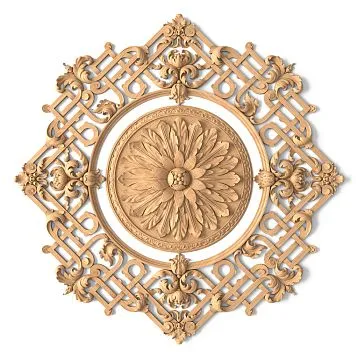
Carved mouldings are adorned with relief or openwork carving, which may depict various ornaments, plant motifs, geometric patterns. Such mouldings become true works of art and focal points in the interior. They are suitable for traditional Russian interiors, as well as for Baroque, Rococo, and Art Nouveau styles, where rich decoration and handcrafting are valued.
Stylistic Variations and Their Application
The choice of moulding style depends on the overall architectural solution of the building and the interior concept. STAVROS offers a wide range of stylistic solutions, from strict classicism to refined modernism.
Classic mouldings are characterized by strict proportions, symmetry, and restrained decoration. They may include elements of the order system — pilasters, capitals, friezes, pediments. Such mouldings are suitable for interiors in the styles of Classicism, Empire, and Neoclassicism, where architectural harmony and adherence to canons are important.
Baroque mouldings are characterized by opulence, dynamism, and abundance of decorative elements. They may include volutes, cartouches, plant ornaments, mascarons. Such mouldings are suitable for interiors in the Baroque and Rococo styles, where theatricality and rich decoration are valued.
Modern-style mouldings are characterized by smooth, flowing lines, asymmetry, and use of natural motifs. They may include stylized plant ornaments, depictions of flowers, insects, birds. Such mouldings are suitable for interiors in the Modern, Art Nouveau styles, where organic and natural forms are important.
Minimalist mouldings are characterized by simple forms, absence of decoration, and clean lines. They may have hidden mounting, creating an effect of "floating" framing. Such mouldings are suitable for contemporary interiors in the Minimalism, High-Tech, and Scandinavian styles, where functionality and simplicity are valued.
Moulding in Facade Architecture
Moulding as the House’s Identity Card
In facade architecture, mouldings play a special role, becoming the house’s identity card and reflecting its style. They not only decorate the facade but also protect window and door openings from atmospheric influences, extending the lifespan of the entire structure.
Mouldings on the facade must harmonize with the building’s overall architectural solution, its proportions, materials, and color palette. At the same time, they can either emphasize the house’s style or create an interesting contrast, becoming a striking accent against neutral walls.
Wooden mouldings look especially expressive on facades made of brick, stone, or stucco. The warmth and texture of wood create a pleasant contrast with cold surfaces, adding coziness and individuality to the facade. At the same time, it is important that the wood is properly treated and protected from moisture, ultraviolet radiation, and biological factors — only then will the mouldings retain their beauty and functionality for a long time.
Properly Designing Facade Openings
Designing facade openings requires a special approach, taking into account not only aesthetic but also practical aspects. Mouldings must not only decorate the facade but also protect the joints between window or door frames and walls from moisture, cold air, and dust.
When designing facade mouldings, it is important to consider the climatic characteristics of the region. In areas with high humidity and abundant rainfall, mouldings must have a construction that ensures effective water runoff from the opening. In regions with harsh winters, it is important that mouldings do not create cold bridges and do not contribute to wall freezing.
The material for facade mouldings must be resistant to atmospheric influences and require minimal maintenance. Solid wood treated with special protective compounds is ideal for this purpose. It retains its aesthetic and functional qualities for a long time, provided it is properly installed and regularly maintained.
Examples of Different Building Types’ Design
A wooden house is traditionally adorned with carved mouldings, which emphasize its connection to folk traditions and create a cozy, homey atmosphere. Depending on regional characteristics, these may be simple frame constructions or complex compositions with rich carving, solar symbols, and plant motifs.
A modern-style dacha can be adorned with more minimalist mouldings featuring clear geometric shapes. Here, it is important to strike a balance between tradition and modernity, creating a frame that harmonizes with the building’s architecture and surrounding landscape.
A classical-style estate requires a more formal approach to doorway framing. Here, it is appropriate to use moldings with elements of the order system — pilasters, capitals, scribes, pediments. Such framing gives the facade a respectable and historically authentic appearance, especially if it is made from quality materials and adheres to classical proportions.
An urban mansion can combine elements of various styles, creating a unique image that reflects the owners' individuality. Here, moldings can become the element that unifies different architectural solutions into a cohesive whole, ensuring stylistic unity of the facade.
Practice of application and expert recommendations
Technical aspects of selection and installation
Selecting and installing moldings requires consideration of several technical aspects that affect their functionality and longevity. First, it is necessary to correctly determine the molding dimensions according to the opening size and wall thickness.
The width of the molding should be sufficient to fully cover the joint between the frame and the wall, with a small allowance for compensating possible irregularities. On average, moldings 70-100 mm wide are suitable for standard openings, but depending on the architectural solution and room scale, they may be narrower (50-70 mm) or significantly wider (100-200 mm).
The thickness of the molding is usually 16-25 mm, ensuring sufficient strength and rigidity of the structure. However, it is important that the molding does not create an excessive protrusion from the wall plane, as this may disrupt the proportions of the opening and hinder the use of window and door mechanisms.
Molding installation can be performed in various ways, depending on the wall material and type of opening. For wooden walls, attachment with nails or self-tapping screws is typically used, followed by covering the fastening points. For brick and concrete walls, adhesive methods or combined methods using adhesive and mechanical fasteners may be applied.
Special attention should be paid to processing corners and joints between individual molding elements. They must be carefully fitted and securely connected to create the impression of a unified structure. Various carpentry joints — "in the groove," "on the tenon," "in the quarter" — may be used, with the choice depending on the specific situation and desired result.
Common mistakes when choosing framing
When selecting and installing moldings, errors are often made that can negatively affect the appearance and functionality of the framing. Let us consider the most common ones:
Mismatch with interior or facade style. Moldings must harmonize with the overall architectural solution, supporting its style and character. Using baroque moldings in a minimalist interior or rigid geometric forms in a classical space creates dissonance and disrupts the perception of unity.
Incorrect scale. Too massive moldings in a small room create a sense of heaviness and visually reduce the space. Too narrow and light moldings in a spacious hall disappear and fail to create the desired effect. It is important to observe proportions and consider room scale when selecting the size and shape of the framing.
Ignoring texture and color. Moldings must harmonize with other interior elements — floor, furniture, wall finishes. It is important to consider not only color, but also the texture of the material, direction of fibers, surface character. Incorrectly chosen texture may create visual conflict and disrupt the harmony of the space.
Cutting corners on material quality. Using inexpensive substitutes for natural wood, such as MDF or plastic, may negatively affect the appearance and longevity of moldings. Although such a solution may initially seem economical, in the long term it may lead to additional costs for repairs and replacements.
Incorrect installation. Even the most quality and beautiful moldings will look unattractive if improperly installed. Crooked lines, uneven joints, visible fastening points — all of this may spoil the impression of the framing and reduce its functionality.
Care for wooden moldings
Proper care for wooden moldings allows maintaining their beauty and functionality for many years. Let us consider the main recommendations for caring for solid wood products:
Regular cleaning from dust and dirt. For this, you can use a soft dry cloth or special cloths for caring for wooden surfaces. Avoid using abrasive materials and aggressive cleaning agents, which may damage the protective coating and the wood itself.
Protection from moisture and temperature fluctuations. Wood is a natural material that reacts to changes in humidity and temperature. Try to maintain a stable microclimate in the room, avoid placing moldings near heat sources or in areas with high humidity.
Updating protective coating. Depending on the type of coating (varnish, oil, wax) and intensity of use, periodic renewal of the protective layer may be required. For varnished surfaces, this is typically done every 5-10 years, while for surfaces treated with oil or wax — more frequently, every 1-3 years.
Restoration of damage. Minor scratches, chips, and wear can be removed using special wax pencils or mastics matched to the wood color. More serious damage may require professional restoration with partial replacement of elements or resanding the surface.
Protection from ultraviolet radiation. Direct sunlight may cause fading and color changes in wood. To protect against UV radiation, you can use special varnishes and oils with UV filters, as well as limit direct sunlight exposure on wooden surfaces using curtains or blinds.
STAVROS as a choice of professionals
Philosophy of quality and craftsmanship
For over 20 years, the STAVROS company has specialized in producing solid wood products, following a philosophy based on three key principles: material quality, craftsmanship, and attention to detail.
Only carefully selected beech and oak wood, grown in ecologically clean regions and subjected to rigorous selection, is used for manufacturing moldings. Each board undergoes natural drying and acclimatization, ensuring dimensional stability and preventing deformation of finished products.
The production process combines modern technologies with traditional woodworking methods. High-precision equipment allows creating products with ideal geometry, while experienced craftsmen manually perform final finishing, achieving flawless surface quality.
Special attention is paid to details — profile accuracy, quality of sanding, neatness of joints. Each product undergoes multi-stage quality control, eliminating the possibility of defects and ensuring the longevity and aesthetic perfection of the product.
Unique product advantages
Mullions Framing STAVROS has a range of unique advantages that distinguish it from similar products on the market:
Ecological and safety. All products are made from natural wood without the use of harmful chemicals. For finishing, only eco-friendly varnishes, oils, and waxes are used, which do not emit toxic substances and are safe for health.
Durability and stability. Thanks to proper wood preparation and high-quality processing, STAVROS casings retain their shape and appearance for decades. They do not deform, crack, or lose their aesthetic qualities when properly used.
Variety of designs and the possibility of custom orders. The company's assortment includes casings of various styles, shapes, and sizes, allowing you to choose the optimal solution for any interior. Additionally, STAVROS offers a service for manufacturing casings based on individual sketches, enabling the realization of the most daring design ideas.
Comprehensive solution. In addition to casings, the company produces a wide range of solid wood products — baseboards, cornices, moldings, rosettes — allowing you to create a cohesive and harmonious interior with a unified style for all decorative elements.
Customer service and support
STAVROS offers not only high-quality products but also a high level of service at every stage of cooperation:
Professional consultation. Company specialists will help you select the optimal solution taking into account the specifics of your interior, budget, and preferences. They will provide detailed information about materials, technologies, finishing options, and answer all questions related to the selection and installation of casings.
Accurate measurements and calculations. Before manufacturing casings, thorough measurements of openings are conducted, ensuring perfect correspondence between finished products and actual dimensions. This is especially important for older buildings, where openings may have irregular shapes or deviations from standards.
Delivery throughout Russia. The company ensures reliable packaging and delivery of products to any region of the country. Each item is carefully protected from damage during transportation, guaranteeing its condition during transit.
Installation and mounting. At the client's request, STAVROS can organize professional installation of casings, performed in accordance with all technical requirements. This ensures not only aesthetic perfection but also the longevity of the structure.
Warranty service. All products come with a warranty, confirming the company's confidence in the quality of its items. In case of manufacturing defects, STAVROS promptly resolves the issue, providing replacement or repair of the item.
Conclusion: framing as completion, casing as a sign of taste
Mullions Framing — it is not just a decorative element, but an important architectural detail that gives completeness and harmony to the entire space. Properly selected casings highlight the interior style, create visual accents, and reflect the owner's individuality.
In a world where mass production increasingly displaces handcrafted work, wooden items made with love and attention to detail acquire special value. They carry not only aesthetic but also cultural significance, connecting us with traditions and history.
Choosing casings from STAVROS means choosing not just a quality product, but a certain level of culture and attitude toward your home. You create a space where every detail is thoughtfully designed and harmonious, where beauty combines with functionality, and tradition meets modernity.
Visit the STAVROS website, browse the product range, and choose the ideal solution for your interior. Emphasize the architectural maturity of your home with high-quality solid wood casings that will delight you and your guests for years to come.
Remember that casings are not just framing of openings — they are framing of your lifestyle, your values, and your attitude toward details. Let them become a worthy completion of your interior and a reflection of your impeccable taste.