Article Contents:
- Historical and Architectural Heritage of Kitchen Framing
- European Traditions of Decorative Finishing
- Evolution of Decorative Techniques
- Kitchen Framing as an Architectural System
- Upper Level: Cornices and Moldings
- Middle Level: Facades and Moldings
- Lower Level: Plinth and Skirting
- Island Elements: Columns and Brackets
- Materials for Kitchen Framing: Advantages of Solid Wood
- Ecological and Durability of Natural Wood
- Aesthetic Qualities and Unique Texture
- Advantages of STAVROS Products
- Scenarios for Using Decorative Framing
- Provence-Style Kitchen with Carved Framing
- Modern Classic with Moldings
- Rustic Kitchen with Handcrafted Finishing
- Technical Aspects of Selection and Installation
- Structural Features and Installation
- Combination with Other Interior Elements
- Common Mistakes and How to Avoid Them
- Advantages of Choosing STAVROS for Kitchen Framing
- Product Range and Individual Approach
- Quality of Materials and Craftsmanship
- Logistics and Service
- Conclusion: Framing as an Art of Creating the Ideal Kitchen
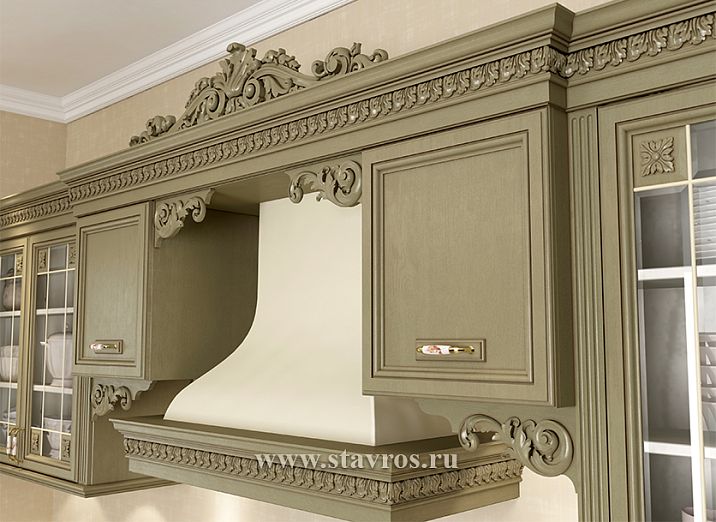
In the world of interior design, there are elements capable of transforming an ordinary space into a work of art. Kitchen Framing — precisely such an architectural technique that goes far beyond simple decoration. It is a holistic philosophy of space organization, where every detail not only serves an aesthetic function but also creates a unique atmosphere, highlights the owner’s status, and forms the distinctive character of the interior.
The kitchen has long ceased to be merely a utilitarian space. Today, it is the center of home life, a place where family gathers, culinary masterpieces are created, and heartfelt conversations take place. That is why special requirements are placed on the design of the kitchen space — it must be not only functional but also aesthetically perfect.
Decorative framing made of natural wood can transform a kitchen, giving it completeness and harmony. Solid wood brings warmth, coziness, and elegance into the interior that cannot be achieved with artificial materials. STAVROS, recognized as a leading manufacturer of solid wood products, offers a wide range of solutions for creating an ideal kitchen space — from elegant cornices to delicate moldings and carved elements.

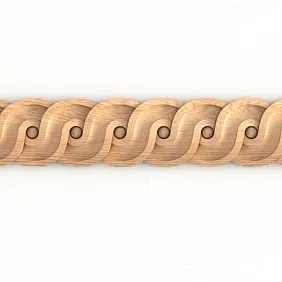
Historical and architectural heritage of kitchen framing




European traditions of decorative finishing
The history of decorative kitchen framing goes back to deep antiquity. In medieval Europe, the kitchen was the heart of the home, and its decoration reflected the status and prosperity of its owners. Alpine kitchens, with their massive wooden beams and carved elements, became the prototype of modern kitchen decor. Here, every detail had not only a functional but also a symbolic meaning — carved ornaments protected the home from evil spirits, while skillfully crafted elements demonstrated the craftsmanship of artisans.
In the English tradition of the 18th-19th centuries, a special approach to kitchen space design emerged. Victorian kitchens were distinguished by elegant wooden panels, cornices, and moldings that created an atmosphere of respectability and solidity. It was precisely during this period that characteristic facades with panels, framed by profiled borders, appeared — still associated with classic English style to this day.
French tradition brought elegance and refinement to kitchen framing. Delicate cornices, decorative capitals, and pilasters, characteristic of the Provence style, created a sense of lightness and airiness. At the same time, French craftsmen paid special attention to proportions and symmetry, which made the interior harmonious and balanced.
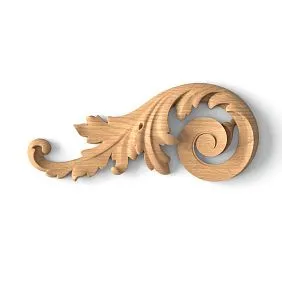
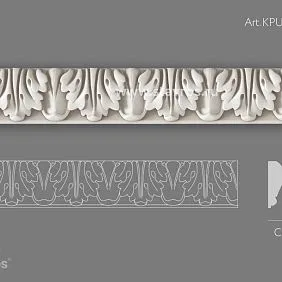
Our factory also produces:


Evolution of decorative techniques
Over time, decorative techniques in kitchen framing evolved, reflecting changes in architectural styles and technologies. From simple moldings and cornices, craftsmen moved to complex compositions using carving, inlay, and gilding. Each era brought its own characteristics to kitchen decor, but the pursuit of harmony and aesthetic perfection remained unchanged.
In the 19th century, with the development of industrial production, decorative elements became more accessible, leading to their widespread use. Standardized solutions for various styles — from neoclassicism to modernism — emerged. At the same time, handcrafted work was still valued more highly, and an individual approach to kitchen design was considered a sign of good taste and wealth.
The 20th century brought new trends in kitchen design. Functionalism and minimalism temporarily pushed decorative framing to the background, but by the end of the century, interest in traditional solutions revived. Modern designers skillfully combine classic techniques with new technologies, creating interiors that meet both aesthetic and practical requirements.
Get Consultation
Kitchen framing as an architectural system
Upper level: cornices and friezes
The architectural composition of the kitchen begins with the upper level — cornices and friezes, which complete the line of upper cabinets and create a smooth transition to the ceiling. In kitchen space, the cornice serves not only a decorative but also a practical function — it conceals technical elements such as ventilation ducts and electrical wiring, and also protects the upper part of the furniture from dust.
Wooden cornices can have varying degrees of complexity — from simple profiled strips to multi-level compositions with carved elements. In classical style, cornices with brackets are often used, which visually support the structure and give it monumentality. In more modern interpretations, preference is given to minimalist forms with clear lines, which emphasize the geometry of the space.
Friezes — decorative bands located under the cornice — allow creating an additional level of detail. They can be adorned with carving, inlay, or relief ornamentation, adding depth and expressiveness to the interior. In modern kitchens, friezes are often used for placing LED lighting, which not only serves a practical function but also creates an impressive visual solution.
Middle level: facades and moldings
The central part of the kitchen composition consists of cabinet facades, which can be decorated in various ways. Moldings — profiled strips used to frame facades — give furniture structure and completeness. They can emphasize the geometry of facades, create framed structures, or form complex compositions with panels.
In classical execution, moldings have smooth lines and elegant profiles, creating a play of light and shadow on the facade surfaces. In modern interpretations, preference is given to more rigid forms with minimal relief, which emphasize the purity of lines and geometric precision of the composition.
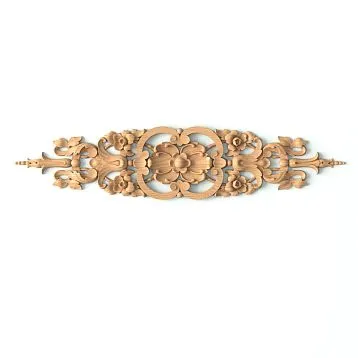
Decorative appliqués — another element of facade decoration — allow creating a unique character of the interior. Carved rosettes, medallions, pilasters, and columns can become accent elements that attract attention and set the tone for the entire space. At the same time, it is important to maintain moderation — an excess of decorative elements may lead to visual overload and disrupt the harmony of the composition.
Lower level: plinth and baseboard
The finishing element of the kitchen composition is the lower level — plinth and baseboard, which form the base of the furniture and create a transition to the floor covering. The plinth not only performs a practical function, protecting the lower part of cabinets from damage and concealing technical elements, but is also an important decorative component.
A wooden plinth can be finished in various ways — from simple profiling to complex carving. In classical style, plinths with figured profiles are often used, which correspond to other decorative elements of the kitchen. In modern interpretations, preference is given to more minimalist forms, which create a clear geometric line.
The baseboard, located between the plinth and floor covering, completes the composition and creates a smooth transition between vertical and horizontal surfaces. It can be executed in the same style as the plinth, or contrast with it, creating an additional visual effect.
Island elements: columns and brackets
Island elements — bar counters, kitchen islands, and peninsulas — occupy a special place in kitchen composition, requiring special decorative treatment. Columns and half-columns, used to support countertops and create architectural accents, can become central elements of the interior.
Wooden columns can have various shapes and degrees of decoration — from simple cylindrical or square supports to complex compositions with capitals and bases. In classical style, columns with fluting (vertical grooves) are often used, which create a sense of lightness and visually elongate the space. In modern interpretations, preference is given to more minimalist forms, which emphasize the structural function of columns.
Brackets — decorative elements used for visual support of protruding parts of countertops and shelves — also play an important role in decorating island elements. They can have various shapes — from simple geometric to complex curved forms with carved decoration. At the same time, brackets not only serve a decorative function but can also provide real structural support, making them a functional design element.
Materials for kitchen framing: advantages of solid wood
Ecological and durability of natural wood
Solid wood is the optimal material for kitchen decoration due to its unique properties. First and foremost, it is an absolutely ecological material that does not emit harmful substances and creates a healthy microclimate in the room. This is especially important for the kitchen, where food is prepared and a significant portion of time is spent.
Durability is another indisputable advantage of solid wood. With proper care, wooden elements can serve for decades without losing their aesthetic and functional qualities. Moreover, natural wood develops a noble patina over time, making it even more attractive and valuable.
Solid wood has a unique ability to "breathe," regulating humidity in the room. It absorbs excess moisture and releases it when the air is too dry, creating a comfortable microclimate in the kitchen. In addition, wood has good thermal insulation properties, making the kitchen space more cozy and energy-efficient.
Aesthetic qualities and uniqueness of texture
The unique texture of natural wood makes each item one-of-a-kind. The grain pattern, knots, and growth rings create an irreplicable pattern that cannot be exactly reproduced. Thanks to this, a kitchen adorned with wooden elements gains individuality and character.
The color palette of natural wood varies from light honey tones to deep brown shades, allowing you to select a material that perfectly matches the overall color scheme of the interior. At the same time, wood can be stained, painted, or coated with transparent varnishes, preserving its natural beauty while adding new shades.
The tactile qualities of wood also play an important role in perceiving the interior. Pleasant to the touch, warm surfaces create a sense of comfort and coziness that cannot be achieved with artificial materials. This is especially important for kitchens, where tactile contact with surfaces occurs constantly.
Advantages of STAVROS products
STAVROS specializes in producing high-quality solid wood items. Using premium raw materials — oak and beech grown in ecologically clean regions — guarantees not only aesthetic perfection but also the durability of the products.
The production technology, combining traditional craftsmanship with modern equipment, allows creating items with perfect geometry and flawless finishing. Each element undergoes multi-stage quality control, eliminating the possibility of defects and ensuring dimensional and shape stability.
STAVROS pays special attention to the final finishing of its products. Using natural oils and waxes, as well as eco-friendly varnishes, allows preserving the natural beauty of wood and providing reliable protection against moisture and stains. This is especially important for kitchen spaces, where items are exposed to steam, grease, and temperature fluctuations.
Scenarios for using decorative trim
Provence-style kitchen with carved trim
Provence style, inspired by the atmosphere of southern France, is distinguished by its unique charm and coziness. A kitchen in this style is a blend of rustic simplicity and refined elegance, where decorative trim plays a key role in creating the characteristic look.
For a Provence-style kitchen, light wood tones with a subtle patina, creating an aged effect, are characteristic. Cornices and moldings have smooth, rounded shapes reminiscent of natural lines. Carved elements — rosettes, vignettes, floral ornaments — add romance and warmth to the interior.
In the Provence style, attention is paid to details. Decorative columns with acanthus leaf capitals, carved brackets under shelves, and shaped legs on island elements — all of this creates an atmosphere of French countryside. At the same time, moderation is important — decoration should be elegant and unobtrusive, as if created by local craftsmen.
The color palette of a Provence-style kitchen is pastel shades: lavender, olive, light blue, cream. Wooden elements can be painted in these colors with a worn effect, achieved through special decorative techniques. This technique allows creating the impression that the interior has been gradually formed over many years.
Modern Classic with Moldings
Modern Classic is a style that combines traditional forms with modern materials, creating an interior that remains relevant at all times. A kitchen in this style is distinguished by elegance, restraint, and functionality, where decorative trim highlights the status and good taste of the owners.
For a kitchen in the Modern Classic style, moldings with clear but not overly complex profiles are characteristic. They create a framed structure on facades, emphasizing their geometry and giving the interior a structured look. Cornices have a minimalist shape with minimal decorative elements, creating an impression of noble simplicity.
The color palette of Modern Classic is neutral tones: white, beige, light gray, which can be complemented with accents of more saturated colors. Wooden elements usually have matte or semi-matte finishes, which highlight the material's texture but do not create excessive gloss.
In Modern Classic, special attention is paid to proportions and symmetry. All decorative trim elements must be balanced and harmoniously combined with each other. At the same time, it is important to avoid overloading with details — each element should have its place and significance within the overall composition.
Rustic Kitchen with Handcrafted Finishing
Rustic style, or country, is the embodiment of home coziness and natural beauty. A kitchen in this style is a space where traditions and handcrafted skills are valued more than modern technologies, and decorative trim creates an atmosphere of warmth and hospitality.
For a rustic-style kitchen, it is characteristic to use solid wooden elements with expressive texture. Cornices and moldings have simple but expressive shapes that highlight the natural beauty of the material. Special attention is paid to traces of handwork — small irregularities, notches, and wear marks that create a sense of authenticity and history.
The color palette of a rustic kitchen is natural wood tones: from light oak to dark walnut. Often, contrast between light and dark surfaces is used, which creates dynamism in the interior. At the same time, finishing is usually minimal — oil or wax, which protects the wood while preserving its natural beauty and tactile qualities.
Decorative elements in rustic style often have functional significance. Carved spice racks, hooks for kitchenware, towel holders — all of this not only decorates the interior but also makes it more convenient and practical. This approach reflects the philosophy of rustic style, where beauty is inseparable from utility.
Technical aspects of selection and installation
Constructive Features and Installation
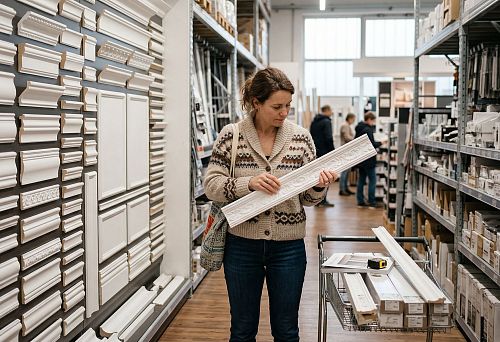
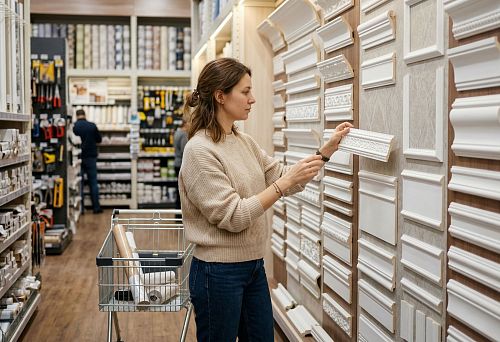
Choosing and installing decorative trim requires consideration of several technical aspects that affect the longevity and aesthetic perception of the interior. First and foremost, it is necessary to consider the characteristics of the room — its size, configuration, and presence of architectural elements that may affect the placement of furniture and decorative details.
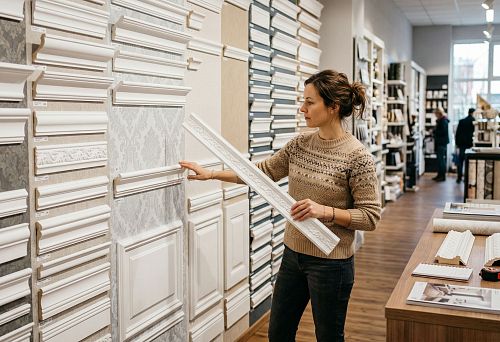
Installing cornices and moldings requires high precision and a professional approach. Incorrectly installed elements may cause visual distortions, disrupt the geometry of the space, and reduce the overall impression of the interior. Therefore, it is recommended to entrust this work to specialists with experience in working with wooden decorative elements.
Special attention should be paid to joints between individual trim elements. Joints must be perfectly fitted to create a sense of compositional unity. For this, special joining techniques are used — from simple butt joints to complex corner joints using tongues and grooves.
The mounting of decorative elements must ensure their secure fixation and allow for compensation of natural wood deformation due to changes in temperature and humidity. For this, various types of fasteners are used — from hidden adhesive joints to mechanical fasteners that allow the wood to 'breathe' and adapt to environmental conditions.
Combination with Other Interior Elements
Decorative trim must harmoniously combine with other elements of the kitchen space — countertops, backsplash, flooring, lighting. When selecting materials and color solutions, it is necessary to consider their interaction and create a cohesive composition.
Countertops can be made from various materials — from natural stone to artificial composites. It is important that they harmonize with the wooden frame in color, texture, and style. The contrast between the warm surface of wood and the cool texture of stone can create an interesting visual effect, but requires careful selection of shades and textures.
The backsplash is an important element of the kitchen space and should match the decorative frame. In classic interiors, ceramic backsplashes with ornamentation that echoes carved wooden decor elements are often used. In modern interpretations, preference is given to more minimalist solutions — solid color tiles, glass, or stone, which create a neutral background for expressive framing.
Flooring also plays an important role in creating a cohesive kitchen image. Wooden floors naturally complement wooden framing, creating a sense of harmony and unity. When using other materials — tiles, stone, vinyl — it is important that they match the frame in color or texture, creating visual connections between different interior elements.
Common mistakes and how to avoid them
When selecting and installing decorative framing, errors are often made that can negatively affect the perception of the interior and the longevity of the elements. One of the most common mistakes is mismatching the scale of decorative elements with the size of the room. Too heavy moldings and trim in a small kitchen create a sense of heaviness and visually reduce the space, while too small details in a spacious room become lost and fail to create the desired effect.
Another common mistake is lack of stylistic unity. Mixing elements of different styles without a thought-out concept can create a sense of chaos and poor taste. Each decorative element must be part of a general stylistic idea, supporting and developing it.
Incorrect material and finish selection can also lead to problems. For example, using wood with high humidity may cause deformation after installation, and an inappropriate finish may not provide sufficient protection against steam, grease, and temperature fluctuations typical of kitchen spaces.
To avoid these errors, it is recommended to consult professional designers and manufacturers who have experience with wooden decor and can offer optimal solutions for a specific space. STAVROS not only provides high-quality products but also professional consultation on their selection and installation, enabling the creation of a harmonious and long-lasting interior.
Advantages of choosing STAVROS for kitchen framing
Assortment and individual approach
STAVROS offers a wide range of decorative elements for kitchen design — from classic moldings and trim to complex carved compositions. More than 5,900 models and 20,000 variations across 39 product categories allow finding a solution for any style and interior concept.
A special advantage of STAVROS is the ability to create custom projects based on the client’s sketches. The company’s skilled craftsmen can realize the most daring design ideas in wood, creating unique elements that highlight the interior’s individuality and reflect the owner’s taste. At the same time, the company ensures documented protection of intellectual property rights for developed decor, guaranteeing its exclusivity.
STAVROS offers special cooperation conditions for professional designers and architects, including technical support at all project stages — from concept development to installation of finished items. This enables creating interiors of the highest level, where every detail is thoughtfully designed and perfectly executed.
Quality of materials and craftsmanship
STAVROS uses only premium raw materials — solid oak and beech wood grown in ecologically clean regions. The wood undergoes careful selection and preparation, including natural drying and acclimatization, ensuring dimensional and shape stability of finished items.
Production is carried out on modern equipment using traditional craftsmanship techniques. This allows combining high precision of processing with the unique character of handcrafted work. Each item undergoes multi-stage quality control, eliminating the possibility of defects and ensuring flawless appearance.
STAVROS’ finished items are treated with natural oils, waxes, and eco-friendly varnishes that highlight the beauty of wood and provide reliable protection against moisture and contamination. This is especially important for kitchen spaces, where items are exposed to steam, grease, and temperature fluctuations.
Logistics and service
STAVROS ensures delivery of products throughout Russia, making them accessible to clients from any region. The company has its own production facility in Saint Petersburg, as well as showrooms and warehouses in Saint Petersburg and Moscow, enabling prompt order fulfillment and maintaining a consistent product assortment.
STAVROS pays special attention to packaging and transportation of items, ensuring their preservation during delivery. Each element is individually packaged, taking into account its specific characteristics, which eliminates the possibility of damage during transit.
STAVROS’ service includes not only delivery but also professional consultation on selecting and installing decorative elements. The company’s specialists will help choose optimal solutions for a specific interior, considering its style, dimensions, and features, and will provide care recommendations to ensure the longevity and preservation of the items’ aesthetic qualities.
Conclusion: framing as the art of creating the ideal kitchen
Kitchen Framing Framing is not merely a decorative technique, but a true art that requires deep understanding of architectural principles, sense of style, and attention to detail. Properly selected and installed decorative elements can transform a space, giving it individuality and character, and creating an atmosphere of coziness and harmony.
The kitchen is the heart of the home, the place where family gathers, culinary masterpieces are born, and heartfelt conversations take place. That is why its design deserves special attention and careful consideration. Decorative framing made of natural wood creates a unique atmosphere of warmth and hospitality, turning the kitchen not just into a functional space, but into the center of home life.
STAVROS offers a wide range of solutions for creating the ideal kitchen — from classic moldings and trim to complex carved compositions. The highest quality materials and craftsmanship, individual approach to each project, professional consultation, and service — all of this makes STAVROS the ideal partner for those who value beauty, quality, and individuality.
Create your dream kitchen with STAVROS products — a kitchen that will delight you and your loved ones for many years, a kitchen that will become a true work of art and a source of pride. Click the link, choose decorative elements that perfectly suit your interior, and take the first step toward creating a kitchen where you want to live, create, and savor every moment.