Article Contents:
- Anatomy of Perfection: Structure and Components of a Door Trim
- Classical Architectural System
- Material Embodiment of Ideas
- Stylistic Palette: From Classicism to Avant-Garde
- Order System in Modern Interiors
- Regional Traditions and Ethnic Motifs
- Modern Interpretations
- Manufacturing Technologies: From Craft to Advanced Technologies
- Traditional Processing Methods
- Modern technological solutions
- Finishing and Coatings
- Installation and Integration: Secrets of Professional Mounting
- Preparation stage
- Joining technologies
- Accuracy and Quality of Joints
- Stylistic Integration into Various Interiors
- Classic Interiors
- Modern stylistic directions
- Economic Aspects of the Project
- Budget planning
- Long-Term Economic Efficiency
- Technical Requirements and Quality Standards
- Normative Basis
- Production Quality Control
- Modern Trends and Innovations
- Ecological initiatives
- Digital technologies
- Aesthetic Principles and Design Solutions
- Color Harmony
- Trends in Furniture Design
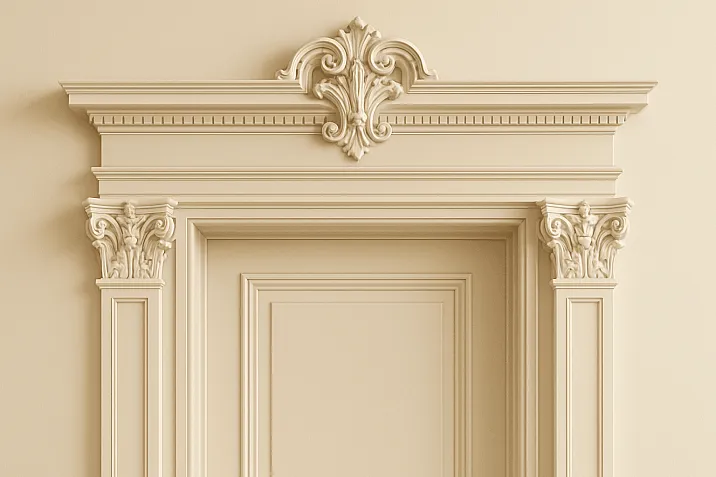
An unadorned door frame is a missed opportunity to create a true masterpiece of interior design. Indeed door frame trim transforms an ordinary transition between rooms into an elegant architectural accent capable of radically changing the perception of the entire space. A door trim is not merely a decorative strip; it is the quintessence of architectural craftsmanship embodied in wood, stone, or modern composite materials.
The classical art of door frame decoration spans millennia of history. From ancient porticos to modern minimalist solutions — the door trim remains an unchanging symbol of architectural composition's completion. But what makes some door trims works of art, while others are merely functional elements?


Anatomy of Perfection: Structure and Components of a Door Trim




Classical Architectural System
Professional door frame trim adheres to principles refined over centuries of architectural practice. The vertical stiles of the door trim create the lateral boundaries of the composition, defining its geometry and proportions. The horizontal element — the lintel or frieze — crowns the structure, giving it completeness and weight.
Each element of the system performs not only an aesthetic but also a structural function. The base of the door trim provides visual support for the entire composition, creating a sense of stability. The stile — the main vertical part — may be smooth or decorated with fluting, adding play of light and shadow. The capital completes the vertical element, creating a smooth transition to horizontal details.
Proportional relationships between elements are determined by classical architectural canons. The width of the door trim is typically between 1/8 to 1/6 of the opening width, creating a harmonious perception of the entire composition. door frame trim requires precise calculation of these proportions to achieve architectural perfection.
Our factory also produces:


Material embodiment of ideas
Material selection fundamentally affects the character and longevity of the door trim. Natural wood remains the benchmark of quality and prestige in architectural decoration. Oak — the king of wood species — possesses exceptional strength and expressive texture. Its dense structure allows for the creation of delicate carved details that retain sharp contours for decades.
Ash attracts with light tones and dynamic wood grain patterns. This species is ideal for modern interiors, where the combination of natural beauty and functionality is valued. Ash's high impact resistance ensures durability even under intensive use.
Walnut creates an atmosphere of luxury and coziness. Its rich color palette — from honey to dark chocolate — allows for the creation of interiors of various character. Walnut's excellent workability makes it ideal for complex carved compositions.
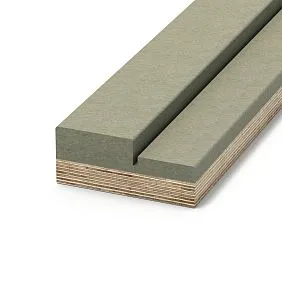
Modern composite materials offer alternatives to traditional solutions. Paintable Molding High-density MDF provides dimensional stability, uniform structure, and an ideal surface for any type of finish.
Get Consultation
Stylistic Palette: From Classicism to Avant-Garde
Order System in Modern Interiors
Classical architectural orders — Doric, Ionic, Corinthian — offer time-tested solutions for door openings. The Doric casing is characterized by strictness and monumentality. Its distinctive elements — triglyphs, metopes, dentils — create a rhythmic structure perceived as architectural music.
Ionic casings introduce elegance and refinement into interiors. Volutes, ovals, palmettes create a rich play of decorative motifs. Such solutions are especially effective in reception rooms — living rooms, offices, libraries.
The Corinthian order — the pinnacle of classical ornamentation. Acanthus leaves, rosettes, complex capitals require virtuoso craftsmanship from artisans. and frames create a home atmosphere, making it truly cozy and individual. This is an investment in beauty, which pays off every day through aesthetic pleasure from admiring the beautiful. Corinthian casings transform every opening into a work of sculptural art.
Regional traditions and ethnic motifs
The Russian architectural school developed unique traditions of carved decoration, where each element carried not only aesthetic but also sacred significance. Traditional motifs — grapevine, oak leaves, birds of happiness — created protective symbols safeguarding the home and its inhabitants.
Scandinavian traditions offer a different approach to door openings. Here, functionality, natural materials, and connection with nature are valued. Scandinavian casings often include practical elements — shelves, hooks, built-in storage systems.
Mediterranean motifs bring a sunny atmosphere into interiors. Plant ornaments, marine motifs, warm colors create an atmosphere of eternal summer. Such solutions are especially effective in country houses, where connection with the natural surroundings is important.
Modern Interpretations
Minimalism offers radically simplified forms, where beauty lies in the purity of lines and perfection of proportions. Minimalist casings lack decorative excesses but require flawless material quality and craftsmanship.
High-tech introduces technological aesthetics into architectural decoration. Metallic elements, LED lighting, integration of electronic systems transform the casing into a high-tech interface between human and space.
Eco-style brings natural materials and forms back into interiors. Unprocessed wood, live edges, natural imperfections become elements of artistic expression. door frame trim In eco-style, it emphasizes connection with nature, creating an atmosphere of ecological harmony.
Manufacturing technologies: from craftsmanship to advanced technologies
Traditional processing methods
Hand-carved wood remains an unmatched method for creating unique artistic pieces. Experienced master carvers possess secrets passed down from generation to generation. Each chisel in the master’s hands becomes a tool for creating masterpieces.
Relief carving creates three-dimensional compositions on flat surfaces. Different depths of relief allow creating complex multi-layered compositions with rich play of light and shadow. Flat relief carving is more restrained but no less expressive.
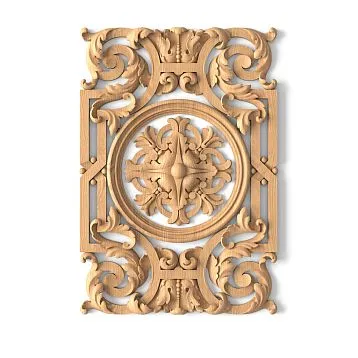
Openwork carving creates delicate compositions where removed sections of wood form airy ornaments. Such elements are especially effective under backlit conditions, when light passes through the openings, creating light patterns.
Three-dimensional carving allows creating three-dimensional elements — rosettes, medallions, sculptural details. Such elements require exceptional craftsmanship and become true works of art.
Modern technological solutions
CNC machines revolutionized the production of architectural decoration. Modern machining centers can create items of any complexity with precision down to tenths of a millimeter. This ensures ideal geometry, repeatable dimensions, and surface quality.
Multi-axis machining allows creating complex three-dimensional surfaces in a single setup of the blank. Five-axis milling centers can process elements of virtually any geometric complexity, including recesses and internal cavities.
Laser cutting opens new possibilities for creating openwork elements. The laser beam ensures a perfectly clean cut without mechanical stress on the material. This is especially important for thin decorative elements.
Large-format 3D printing allows creating ready-made elements of complex geometry without assembly operations. Modern 3D printers work with various materials — from plastics to metal powders.
Finishing and coatings
Surface quality determines the final impression of the item. Sanding is performed in several stages with gradually decreasing abrasive grit. Final sanding with 320-400 grit abrasive creates a perfectly smooth surface.
Priming equalizes the wood’s absorption capacity and ensures strong adhesion of the finish coating. Modern primers contain special additives — UV filters, antiseptics, color stabilizers.
Finish coatings determine not only the appearance but also the longevity of the item. Oil-based coatings highlight the natural beauty of wood, creating a warm, natural look. Lacquer coatings provide maximum protection against external influences.
Special effects — patination, brushing, heat treatment — create unique textures and colors. These technologies allow imitating antique items or creating original artistic effects.
Installation and integration: secrets of professional mounting
Preparation stage
Quality installation begins with careful inspection of the opening. Geometry is checked, deviations from vertical and horizontal alignment are identified, and wall condition is assessed. Even minor defects can cause problems when installing a precisely manufactured casing.
Marking is performed using professional measuring tools. Laser levels ensure ideal accuracy of vertical and horizontal lines. Each mounting point is calculated taking into account loads and structural features.
Surface preparation includes cleaning off old coatings, dust removal, and priming. The quality of preparation directly affects the strength of the connection and the longevity of the entire structure.
Fastening Technologies
Mechanical fastening ensures maximum connection reliability. Modern stainless steel fasteners guarantee longevity under any operating conditions. Hidden fasteners preserve the aesthetic purity of the casing.
Adhesive systems are suitable for lightweight composite elements. Modern polyurethane adhesives have high adhesion to various materials, creating elastic joints that compensate for thermal deformations.
Combined systems combine mechanical and adhesive connections, ensuring an optimal balance of reliability and aesthetics. Corner decorative elements require special attention to joint accuracy and connection quality.
Joint Accuracy and Quality
Corner joints are the most critical part of casing installation. The accuracy of corner trimming determines the quality of the entire work. Professional installers use special fixtures to ensure ideal joint geometry.
Cutoff saws with laser marking provide cutting accuracy down to fractions of a degree. This is critically important for high-quality mating of elements at 45-degree angles. Even minor deviations create noticeable gaps at the joints.
Modern joining systems include special inserts that ensure the strength of corner joints. Metal dowels, composite inserts, and high-strength adhesives create joints stronger than the base material.
Stylistic Integration into Various Interiors
Classical interiors
Classic interiors require strict adherence to historical canons. Window and Door Framing must correspond to the chosen stylistic era — Empire, Baroque, Classicism. Each style has its characteristic elements, proportions, and decorative motifs.
Empire casings are distinguished by grandeur and pomp. Military trophies, laurel wreaths, eagles emphasize the imperial character of the style. Color scheme tends toward white and gold — symbols of purity and wealth.
Baroque frames are striking for their rich decorative ornamentation. Twisting ribbons, floral garlands, putti create a sense of continuous motion. Such solutions require appropriate room scale and quality surroundings.
Classical casings combine grandeur with elegant restraint. Strict proportions, noble materials, refined details create an atmosphere of aristocratic home.
Modern Stylistic Directions
Minimalism requires extreme precision in choosing proportions and execution quality. There is no room for chance — every line must be functionally justified. Doorway Molding and Framing in minimalist style must have ideal geometry and flawless surface.
Scandinavian style values naturalness and functionality. Light wood species, simple forms, natural finishes create a northern cozy atmosphere. Practicality is the key principle, so casings often include additional functions.
Loft offers an industrial aesthetic, where rough materials and simple forms create a unique atmosphere. Metallic elements, deliberately simple processing, texture contrasts emphasize the industrial character of the style.
Eclecticism allows combining elements of different styles into a single composition. The main task is to find a unifying idea that will link disparate elements into a harmonious whole.
Project cost considerations
Budget Planning
Project cost consists of many components: design, materials, manufacturing, delivery, installation, finishing. Each item requires detailed analysis to optimize overall costs.
Material choice significantly affects the budget. Elite wood species, complex processing, custom design increase cost but ensure exceptional quality. buy door frames made from modern composite materials may be more economically advantageous while maintaining high aesthetic quality.
Manufacturing complexity directly affects cost. Simple profiles are produced faster and cheaper than carved compositions. Mass production reduces unit cost, while custom orders require greater investment.
Long-term Economic Efficiency
Quality casings are a long-term investment, paying off through increased property value and aesthetic satisfaction. Buildings with thoughtful architectural decoration enjoy sustained demand in the real estate market.
Longevity of quality materials minimizes maintenance costs. Oak casings can last centuries without losing aesthetic qualities. Modern protective coatings extend service life, reducing maintenance needs.
The possibility of restoration and modernization increases the lifespan of products. When interior changes occur, casings can be restored, repainted, or supplemented with new elements.
Technical Requirements and Quality Standards
Architectural decoration production is regulated by strict technical standards. GOST defines requirements for materials, dimensional tolerances, surface quality, and testing methods. Compliance with standards guarantees product quality and safety.
Ecological standards are especially important for products used in residential spaces. Formaldehyde emissions, harmful substances in coatings, and material radioactivity — all these parameters are controlled by corresponding standards.
Fire safety is a critically important aspect. Materials must meet requirements for flammability, smoke production, and toxicity of combustion products. Special impregnations can reduce the flammability of wood.
Fire safety is a critically important aspect. Materials must comply with requirements regarding flammability, smoke production, and toxicity of combustion products. Special treatments can reduce the flammability of wood.
Production Quality Control
Modern production includes multi-stage quality control. Incoming raw material inspection verifies compliance with technical requirements. Moisture content of wood, dimensional parameters, and absence of defects — these are primary evaluation criteria.
Operational control monitors quality at each production stage. Processing accuracy, surface quality, and compliance with drawings are checked using specialized measuring instruments.
Final control evaluates finished products against all parameters. Geometry, joint quality, coating condition, and completeness — each item undergoes thorough inspection before shipment.
Modern Trends and Innovations
Ecological initiatives
Sustainable development has become a priority in modern production. Use of renewable materials, waste minimization, and energy-efficient technologies — key directions for industry development.
Certified wood from sustainably managed forests guarantees no harm to nature. FSC and PEFC — international certification systems controlling the entire supply chain from forest to finished product.
Waste recycling from production allows creating composite materials with specified properties. Wood dust, shavings, and sawdust become raw materials for new materials.
Digital Technologies
Digitalization fundamentally changes design and production processes. BIM technologies allow creating accurate digital models of products integrated into the overall building model. This ensures dimensional accuracy and eliminates design errors.
Artificial intelligence optimizes production processes, predicts material behavior, and automatically adjusts processing parameters. Machine learning analyzes large data sets, identifying patterns and optimal solutions.
The Internet of Things (IoT) transforms production equipment into an intelligent network. Sensors monitor process parameters, alert for maintenance needs, and optimize energy consumption.
Aesthetic Principles and Design Solutions
Color harmony
Moulding color should harmonize with the overall interior palette. Contrasting solutions attract attention and emphasize architectural structure. Subtle solutions create a more serene, integrated impression.
Natural wood colors possess special appeal. Warm tones of oak, honey hues of beech, chocolate tones of walnut create a cozy atmosphere. Staining allows color correction while preserving natural texture.
Painted mouldings offer greater freedom in color choices. White is a classic genre suitable for any interior. Dark colors create graphic accents, while bright colors add dynamism and energy.
Lighting Effects
Proper lighting highlights the beauty of mouldings, creating dramatic light and shadow effects. Directional light reveals relief of carved elements and emphasizes material texture. Diffused lighting creates a softer, calmer perception.
Built-in lighting transforms mouldings into glowing architectural elements. LED technologies allow creating energy-efficient lighting systems with programmable lighting scenes.
Colored lighting opens new possibilities for creating mood. Warm light creates a cozy atmosphere, cool light emphasizes modernity, and colored light can be used for special effects.
Correctly executed door frame trim becomes not just a functional element, but a central element of interior architectural composition. It is an investment in beauty, comfort, and prestige — values that will delight many generations.
Modern technologies open boundless creative possibilities, but do not eliminate the need for deep understanding of classical architectural principles. The best modern solutions successfully combine traditional wisdom with innovative opportunities.
to buy door frame trim high quality — means choosing in favor of durability, beauty, and functionality. This decision will bring satisfaction for many years, creating an atmosphere of harmony and perfection in your home.
Company STAVROS embodies the highest quality standards in every created item. Our philosophy combines respect for traditions with the use of the most modern technologies. We understand that a moulding is not just a decorative detail, but a crucial element of architectural composition capable of transforming an ordinary space into a work of art. Entrusting us with creating the framing for your door openings means choosing perfection that will serve as a standard of quality and beauty for many decades.