Article Contents:
- Anatomy of Perfection: Unique properties of natural oak
- Structural Features of Oak Wood
- Chemical Components and Natural Protection
- Advantages of Choosing Natural Oak
- Durability as the Foundation of Investment Appeal
- Ecological Safety and Healthy Microclimate
- Aesthetic Value and Uniqueness
- Classification and Types of Natural Oak
- Geographical Varieties
- Age Classification
- Cutting Methods and Their Impact on Quality
- Technology of Producing Natural Oak Mouldings
- Log Preparation and Initial Raw Material Processing
- Kiln Drying and Stabilization
- High-Precision Mechanical Processing
- Size range and technical specifications
- Standard sizes and their application
- Profile Solutions
- Tolerances and manufacturing accuracy
- Stylistic Solutions for Various Interiors
- Classic and Neoclassical Interiors
- Modern and Minimalist Styles
- Eco-Style and Scandinavian Motifs
- Installation of Oak Mouldings
- Preparation Work and Requirements for the Base
- Fastening Technology and Tools
- Corner and Joint Processing
- Protective Treatment and Finishing Coatings
- Types of Protective Coatings
- Special Types of Treatment
- Care and Maintenance of Natural Oak Mouldings
- Regular Care and Prevention
- Restoration and renovation
- Economic Aspects of Choosing Natural Oak
- Investment attractiveness
- Comparison with alternative materials
- FAQ - Frequently Asked Questions
- How to Distinguish Natural Oak from Imitation?
- What sizes of oak mouldings are most popular?
- Can the color of natural oak be changed?
- Are oak door casings suitable for humid areas?
- Is special tool required for installation?
- How long do quality oak door casings last?
- Do oak door casings affect sound insulation?
- How to properly care for door casings during the heating season?
- Can oak door casings be combined with doors made of other materials?
- What warranties are provided for natural oak door casings?
- Conclusion
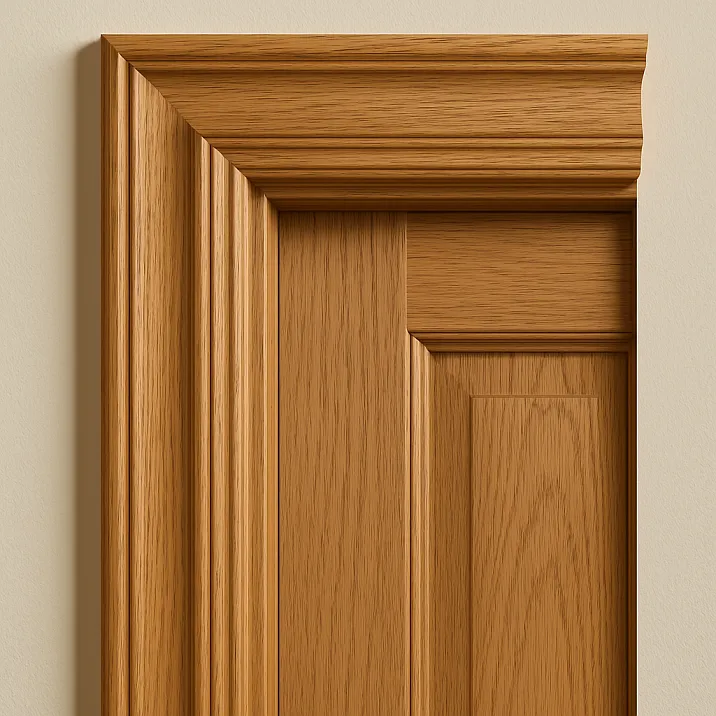
What can compare to the nobility of natural oak in creating an exquisite interior? When choosing decorative materials capable of transforming space and highlighting the owner's impeccable taste,natural oak casingit holds a special place in the hearts of true connoisseurs of quality and beauty.
Imagine a home where every door opening is framed with planks of natural solid oak, radiating the warmth of living wood and showcasing centuries-old joinery craftsmanship. This is not merely a decorative element—it is a philosophy of life, a choice in favor of authenticity, durability, and timeless elegance.
In an era of mass production and synthetic materials, choosing natural oak becomes a genuine statement of values and priorities. Each planknatural oak casingcarries within it a unique story of tree growth, an incomparable texture and character that cannot be reproduced artificially.


Anatomy of perfection: unique properties of natural oak




Structural features of oak wood
What makes natural oak such a special material for producing door casings? The answer lies in the unique anatomical structure of this noble species. The density of oak wood ranges from 700 to 900 kg/m³, significantly exceeding the values of most other wood species used in woodworking.
Oak's growth rings are characterized by clear definition and contrast between early and late wood. This feature creates a distinctive pattern on the surface of each plank, making each casing a unique work of natural art. Late wood, formed at the end of the growing season, has significantly higher density, ensuring exceptional strength of finished products.
Medullary rays—radial formations penetrating the wood from the heartwood to the bark—play a key role in forming the aesthetic and functional qualities of oak door casings. These light-colored stripes not only create a unique play of light and shadow on the surface but also serve as a natural reinforcement, ensuring dimensional stability of the product.
Our factory also produces:


Chemical components and natural protection
High tannin content in oak wood provides it with natural protection against biological influences. These natural preservatives, making up 8–20% of the dry wood mass, protect the material from fungi, mold, and insects without the need for chemical treatments.
Oak's extractives not only provide protective functions but also account for the characteristic aroma and noble patina that develops over time. These compounds contribute to the natural preservation of wood and enhance its aesthetic qualities with age.
Lignin, forming the basis of cell walls, in oak has an especially strong structure, providing high mechanical strength to the wood. Cellulose fibers bound by lignin create a strong framework resistant to deformation and mechanical stress.
Get Consultation
Advantages of choosing natural oak
Durability as the foundation of investment attractiveness
Choosingnatural oak casingBy choosing natural oak, you are investing in the future. Properly manufactured and installed oak door casings can serve for 50–100 years, retaining their aesthetic and functional characteristics. This is not exaggeration—there are examples of oak interior elements that have served for several centuries.
The mechanical strength of natural oak is remarkable. The static bending strength reaches 95–105 MPa, which is several times higher than similar characteristics of coniferous species. Hardness by Brinell reaches 3.7–4.2 HB, providing high resistance to indentation and abrasion.
Dimensional stability is a critically important property for door casings, which must maintain their geometry under changing temperature and humidity conditions. The linear expansion coefficient of oak across the grain is only 4–6×10⁻⁶ 1/°C, which is a relatively low value for natural wood.
Ecological safety and healthy microclimate
In today's world, where questions of ecological safety in homes are becoming increasingly relevant, natural oak represents an ideal choice. The absence of formaldehyde, phenols, and other harmful substances that may be emitted by synthetic materials makes oak door casings completely safe for human health.
Natural oak wood has the ability to regulate air humidity in a room. When humidity is high, the wood absorbs excess moisture, and when the air is too dry, it releases stored moisture. This natural conditioning contributes to maintaining a comfortable microclimate and positively affects the health of the home's occupants.
The antibacterial properties of oak wood are due to the presence of tannins, which suppress the growth of pathogenic microorganisms. This is especially important for maintaining a healthy atmosphere in the home, making the choice of natural oak not only aesthetic but also practically justified.
Aesthetic Value and Uniqueness
Each planknatural oak casinghas a unique texture that cannot be replicated artificially. The natural grain pattern, the play of light and shadow on the surface, and distinctive color variations—all create an irreplaceable atmosphere in the interior.
The color palette of natural oak is impressive in its variety. From light honey tones of the sapwood to rich brown hues of mature wood, oak provides designers with abundant opportunities to create harmonious interior solutions. The natural color change under light exposure further enhances the material's nobility.
The tactile qualities of natural oak create a special sensation upon contact. The natural roughness of the surface, barely perceptible under the fingers, evokes a connection with nature and provides a sense of authenticity in today's urbanized world.
Classification and Types of Natural Oak
Geographical Varieties
Oak growing in different climatic zones possesses distinctive characteristics that affect the quality of finished casings. European oak (Quercus robur), growing in a temperate climate, features a uniform dense structure and high tannin content. Its wood has a light brown color with characteristic medullary rays.
American white oak (Quercus alba) has a lighter color and less pronounced texture, making it popular for modern interiors. Its density is slightly lower than European oak, but its mechanical properties remain at a high level.
Caucasian oak is distinguished by exceptional density and hardness, making it an ideal material for manufacturing premium-grade casings. Its wood has a rich brown color and a distinctly pronounced texture.
Age Classification
The age of the tree significantly affects the quality of the resulting wood. Young oak (30-50 years) has a wide sapwood and less dense structure, making it unsuitable for producing high-quality casings. The optimal age is 80-120 years, when the wood reaches maximum density and strength.
Mature oak (120-200 years) possesses exceptional characteristics but may have internal defects related to aging changes. Such wood requires particularly careful selection and can be used to manufacture exclusive casings.
Old-growth oak (over 200 years) holds special value due to its unique texture and color, but its harvesting is limited by ecological considerations. Products made from this material are considered collectible.
Methods of Sawing and Their Impact on Quality
Radial sawing, passing through the center of the trunk parallel to medullary rays, yields the most stable wood with uniform texture. Casings made from radially sawn oak are practically immune to warping and possess maximum strength.
Tangential sawing, proceeding tangentially to growth rings, creates a more pronounced texture with characteristic oval patterns. Such wood is less stable but possesses high decorative qualities.
Semi-radial sawing represents a compromise between stability and decorativeness. It ensures sufficient strength while preserving an attractive texture, making it the optimal choice for most applications.
Technology of Producing Natural Oak Casings
Log Preparation and Primary Raw Material Processing
The process of creating high-quality oak casings begins with proper log preparation. Trees should be felled during the dormant period, when moisture content in the wood is minimal. This ensures better subsequent drying quality and reduces the risk of internal stresses.
The selection of lumber is performed with great care. Only healthy wood without knots, cracks, rot, or other defects is used for casings. The grain direction must be strictly parallel to the longitudinal axis of the log to ensure maximum strength.
Primary processing includes cutting logs into boards of required dimensions, accounting for shrinkage and mechanical processing allowances. End faces of boards are treated with special compounds to prevent cracking during drying.
Kiln Drying and Stabilization
Drying oak logs is a critically important production stage requiring strict adherence to technological regimes. The process is conducted in specialized drying kilns for 30-45 days with gradual reduction in moisture content and controlled temperature changes.
The final moisture content of the wood should be 8-10%, with deviation not exceeding ±1% throughout the entire volume of the log. This precision is ensured by modern control systems and automatic maintenance of drying parameters. Uneven moisture content leads to warping of finished products and distortion of profile geometry.
Wood stabilization includes storing dried logs for 2-3 weeks under normal conditions to relieve internal stresses. This stage allows detection of hidden defects and ensures dimensional stability of finished casings.
High-Precision Mechanical Processing
Modern productionnatural oak casingUses high-precision CNC equipment. The profile is milled in several passes with gradual approach to final dimensions, which prevents wood overheating and ensures high surface quality.
Special hard-metal tools allow achieving a perfectly smooth surface without chips or scratches typical for hard wood species. Feed rate and rotational speed are individually adjusted for each profile type.
Sanding is performed in several stages with gradual reduction of abrasive grain size from P120 to P400. Final finishing is done manually to achieve ideal smoothness and eliminate minor irregularities.
Size Range and Technical Specifications
Standard Sizes and Their Application
The width of natural oak skirting boards varies from 60 to 200 mm, with the most popular sizes being 70-120 mm. The choice of width depends on the room's scale, ceiling height, and stylistic preferences. Narrow skirting boards (60-80 mm) are suitable for small rooms and modern interiors, while wide ones (120-200 mm) are ideal for spacious halls and classic styles.
The thickness of the boards ranges from 12 to 25 mm depending on the profile complexity and structural features. Standard thickness of 16-18 mm provides an optimal balance of strength and weight. Thicker skirting boards appear more substantial and monumental, which is especially appropriate for prestigious interiors.
The length of standard elements is 2400-2700 mm, ensuring coverage of most standard door openings with a small allowance for trimming. For non-standard cases, skirting boards can be manufactured to individual lengths up to 6000 mm from a single solid piece.
Profiled Solutions
Rectangular profile — the simplest and most universal option, suitable for any interior style. Clear geometric lines create a sense of order and modernity, especially effective in minimalist interiors.
Decorative profiles with various curves and grooves create rich play of light and shadow, emphasizing the three-dimensionality of the trim. Classic profiles include moldings, grooves, bevels, and other elements characteristic of traditional architecture.
Custom profiles are developed individually for specific projects and may include the most complex geometric shapes. Modern 3D milling technologies allow any designer’s ideas to be realized in wood.
Tolerances and manufacturing accuracy
High-quality oak skirting boards are manufactured with tolerances of ±0.5 mm in length and ±0.2 mm in cross-sections. This precision ensures perfect fitting of elements and minimal gaps in joints.
The curvature of skirting boards should not exceed 2 mm per 1 linear meter of length. This parameter is controlled by special measuring instruments at each production stage.
Surface quality corresponds to grinding class S3-S4 according to European standards, ensuring ideal preparation for final coating.
Stylistic Solutions in Various Interiors
Classic and Neoclassical Interiors
In classic interiorsnatural oak casingBecomes the basis for creating a harmonious architectural composition. Wide decorative profiles with elegant curves and ornamental elements emphasize the grandeur and ceremonial nature of the setting.
Color solutions for classic interiors tend toward rich, noble oak tones. Dark stains in walnut or redwood enhance solidity and prestige. Glossy lacquered finishes enhance the ceremonial atmosphere and create a sense of luxury.
Combining oak skirting boards with other elements of classic interiors — baseboards, cornices, furniture facades made of the same material — creates a cohesive architectural system. Unity of materials and finishes highlights the thoughtfulness of the design solution.
Modern and Minimalist Directions
In modern interiors, natural oak skirting boards acquire a different character. Simple rectangular profiles emphasize the clarity of lines and geometricity of space. Light oak tones or bleached wood create a sense of freshness and spaciousness.
The contrast between the warmth of natural wood and the coolness of modern materials — glass, metal, concrete — creates interesting visual effects. Oak skirting boards soften the rigidity of minimalist interiors, making them more cozy and livable.
Wide flat skirting boards can serve as architectural accents, visually increasing ceiling height and imparting monumentality to the space. This solution is especially effective in rooms with high ceilings.
Eco-style and Scandinavian Motifs
Ecological trends in design make natural oak skirting boards especially relevant. Their authenticity and eco-friendliness perfectly align with the philosophy of eco-style, where priority is given to natural materials and sustainable development.
In Scandinavian interiors, oak skirting boards are often combined with white walls and minimalist furniture. Light oak tones emphasize Scandinavian aesthetics of simplicity and functionality. Matte finishes create a sense of naturalness and authenticity.
Combining oak skirting boards with other natural materials — stone, linen, wool — enhances the connection with nature and creates an atmosphere of harmony and tranquility.
Installation of Oak Thresholds
Preparation Work and Requirements for the Base
Quality installation of oak skirting boards begins with careful preparation of the working surface. Walls in the mounting area must be flat, dry, and free of dust, grease stains, and other contaminants. Irregularities exceeding 3 mm over the length of the element must be corrected with spackling or by installing compensating pads.
The moisture content of the base should not exceed 12%, which is controlled by electronic moisture meters. Excessive moisture may cause deformation of skirting boards and compromise the strength of the fastening. Additional drying of the surface may be required if necessary.
The temperature and humidity regime in the room must correspond to operational conditions: temperature 18-22°C, relative humidity 45-65%. Skirting boards must acclimate in the room for at least 24 hours before installation.
Technology of Installation and Tools
For installing oak skirting boards, special finish nails of 50-60 mm length and 1.2-1.5 mm diameter are used. The hardness of oak wood requires pre-drilling pilot holes 0.2-0.3 mm smaller in diameter than the fastener to prevent cracking.
The installation step for fasteners is 400-500 mm, with mandatory fastening 100-150 mm from each edge of the casing. Nails are driven at a slight angle to the surface to increase adhesion strength. Nail heads are countersunk 1-2 mm and covered with putty.
An alternative method is using special polyurethane-based adhesive compositions. This method provides invisible fastening but requires a perfectly prepared surface and precise positioning of elements.
Processing of corners and joint connections
Casing corner joints are made at an exact 45-degree angle using a circular saw with a fine-toothed blade for hardwoods. The cut quality must be flawless, as oak does not tolerate carelessness in processing.
Joint areas are additionally glued with PVA or polyurethane adhesive to ensure joint strength and sealing. If necessary, corner joints are reinforced with hidden dowels or biscuits.
Final joint finishing includes careful sanding of joints with fine-grit sandpaper and application of protective coating. Well-executed joints are virtually invisible and create an impression of monolithic continuity.
Protective Treatment and Final Coatings
Types of protective coatings
Selection of protective coating for oak casings depends on usage conditions and desired aesthetic effect. Oil-based coatings deeply penetrate wood structure, highlighting its natural texture and creating a matte surface with pleasant tactile properties.
Wax coatings create a water-repellent layer and impart a noble matte sheen. Wax is easily repairable for local damage but requires more careful maintenance. Natural waxes based on carnauba or beeswax are preferable to synthetic ones.
Lacquer coatings provide maximum protection against moisture, contamination, and mechanical damage. Modern polyurethane lacquers create a durable film resistant to abrasion. Gloss level can vary from matte to high-gloss.
Special treatment types
Brushing oak surfaces allows highlighting the natural wood structure, creating an aged effect. Soft early wood fibers are removed with special brushes, leaving a textured surface with pronounced annual rings.
Patination creates an effect of noble antiquity, mimicking natural wood darkening. Special compositions are applied into relief grooves, creating contrasting transitions between light and dark areas.
Flame-burning controlled by flame allows achieving a deep black color while preserving texture visibility. After burning, the surface is processed with metal brushes to remove soot and emphasize relief.
Care and maintenance of natural oak casings
Regular care and prevention
Oak casings do not require complex care, but following simple rules significantly extends their service life. Regular dry cleaning with soft cloth or vacuum cleaner with brush attachment removes dust and prevents its accumulation in profile grooves.
Wet cleaning is performed with slightly damp cloth without using aggressive cleaning agents. For cleaning oak surfaces, special natural wood compositions are recommended, which not only clean but also nourish the wood.
Controlling indoor microclimate helps prevent wood deformation. Optimal temperature is 18-22°C with relative humidity 45-65%. During heating season, use of air humidifiers is recommended.
Restoration and restoration
Minor scratches and scuffs on oak casing surfaces are removed using special wax pencils or retouching compounds. More serious damage requires local sanding and repainting, followed by application of protective coating.
Coating renewal is recommended every 5-7 years depending on usage conditions. The procedure includes light sanding to remove contaminants, surface degreasing, and application of new protective coating layer.
In case of serious damage, individual elements can be replaced without dismantling the entire system. Modular construction of most casings allows local repair with minimal costs.
Economic aspects of choosing natural oak
Investment Appeal
Choosing natural oak casings should be considered as a long-term investment. High initial cost is offset by exceptional durability and minimal maintenance expenses. Payback period is 7-10 years compared to budget alternatives.
High repairability of oak products ensures additional savings. Possibility of multiple coating restoration and local repair extends service life practically indefinitely, which is not available for artificial materials.
Impact on property value is an important economic factor. Quality natural oak finishing significantly increases property market value and attractiveness to potential buyers. Value increase may amount to 5-15% of total property price.
Comparison with alternative materials
MDF casings with oak imitation cost 3-4 times less than natural ones, but their service life rarely exceeds 10-15 years. They are moisture-sensitive, easily damaged, and not restorable. Ecological safety of such products also raises questions.
Casing from coniferous species is 2-3 times cheaper than oak, but significantly inferior in all main characteristics. Soft pine or spruce wood is easily damaged, requires regular protective treatment, and lacks the noble texture of oak.
Polyurethane casings imitate wood appearance but lack its natural beauty and beneficial properties. They do not 'breathe', may emit harmful substances when heated, and do not create the special microclimate characteristic of natural wood.
FAQ - Frequently Asked Questions
How to distinguish natural oak from imitation?
What are the most popular sizes for oak door casings?
The most popular sizes are casings 70-90 mm wide and 16-18 mm thick. These dimensions provide optimal proportions for most interiors. The standard length of planks is 2400-2600 mm.
The most in-demand are casings with a width of 70-90 mm and a thickness of 16-18 mm. These dimensions provide optimal proportions for most interiors. The standard length of the planks is 2400-2600 mm.
Can the color of natural oak be changed?
Yes, the color of oak door casings can be changed using stains and tinting agents. The process includes removing the old finish, sanding, applying stain and protective varnish. It is better to entrust this work to professionals.
Are oak door casings suitable for humid rooms?
Natural oak has inherent resistance to moisture, but for bathrooms, additional protective treatment is recommended. Special moisture-resistant coatings will provide reliable protection under harsh conditions.
Is special equipment required for installation?
Installing oak door casings requires professional tools due to the high hardness of the wood. Sharp saws, quality drill bits, and pneumatic nail guns are needed. It is recommended to entrust installation to experienced professionals.
How long do quality oak door casings last?
When properly manufactured and maintained, natural oak door casings can last 50-100 years, retaining their qualities. This makes them one of the most economically advantageous solutions in the long term.
Do oak door casings affect sound insulation?
Properly installed oak door casings improve sound insulation by sealing gaps. The dense wood structure also contributes to sound wave absorption.
How to properly care for casings during the heating season?
During the heating season, it is important to maintain air humidity at 45-60% using humidifiers. Avoid placing heating appliances near wooden elements. Regularly perform wet cleaning.
Can oak door casings be combined with doors made of other materials?
Oak door casings are versatile and pair well with doors made of various materials. They look especially harmonious with wooden doors but can also complement metal, glass, or composite constructions.
What warranties are provided for natural oak door casings?
Quality manufacturers provide a 5-10 year warranty when proper usage guidelines are followed. The warranty covers material and manufacturing defects but does not cover damage caused by improper installation or use.
Conclusion
Choosingnatural oak casingChoosing natural oak door casings is an investment in quality, beauty, and the longevity of your interior. Natural oak is not just a decorative material — it embodies centuries-old woodworking traditions, modern technologies, and impeccable taste.
Each plank made from natural oak solid wood carries unique beauty that only grows stronger with time. The natural patina, noble darkening, and time-enhanced texture all make oak door casings even more attractive and valuable as they age.
The economic justification for choosing natural oak is confirmed by its exceptional longevity and virtually zero maintenance costs. Once you invest in quality, you receive decorative elements that will serve multiple generations.
Ecological safety and the ability to create a healthy microclimate make natural oak an ideal choice for modern homes. In an era of growing attention to ecology and healthy living, these qualities gain special value.
STAVROS, a recognized leader in woodworking, offers a wide range of high-quality natural oak door casings. Decades of experience working with valuable wood species, modern equipment, and strict quality control ensure that products meet the highest standards.
STAVROS' professional team is ready to provide comprehensive consultations on selecting optimal solutions, perform precise measurements, and ensure high-quality installation of casings. An individual approach allows creating unique interior solutions fully aligned with the client's preferences.
Choosing STAVROS natural oak door casings is an investment in beauty, comfort, and long-term value of your home, creating interiors that will delight and inspire for many years.