Article Contents:
- Anatomy of solid oak and its advantages
- Structural Features of Oak Wood
- Chemical composition and protective properties
- Classification and varieties of oak door trims
- Constructive features
- Profile Solutions
- Production Technology of Oak Mouldings
- Raw material selection and preparation
- Modern processing methods
- Quality Control
- Application of oak door trims in interior design
- Stylistic versatility
- Color Solutions and Finishing
- Combination with Other Interior Elements
- Installation of Oak Mouldings
- Preparatory work
- Fastening technology
- Processing corners and joints
- Economic aspects of choosing oak trim
- Long-term investment
- Impact on property value
- Comparison with alternative materials
- Advantages over coniferous species
- Competition with beech
- Alternatives from artificial materials
- Design solutions and stylistic combinations
- Classic Interiors
- Modern directions
- Eco-style and organic architecture
- Technical specifications and quality standards
- Size Range
- Strength indicators
- Requirements for humidity and drying
- Modern trends in the production of oak door trims
- Innovative Processing Technologies
- Ecological aspects of production
- Digitalization of Production Processes
- Care and Maintenance Features
- Regular Maintenance
- Repairing damage
- Climate requirements
- Psychological Aspects of Perception
- Influence on psychological and emotional state
- Status characteristics
- Regional application specifics
- Climate zones
- Architectural traditions
- FAQ - Frequently Asked Questions
- How to choose the right door trim profile?
- Can oak mouldings be installed by oneself?
- How long do oak trim pieces last?
- What is the difference between radial and tangential sawing?
- Do oak door trims need to be treated with antiseptics?
- Can oak door trims be painted?
- How to combine oak door trims with other interior elements?
- What tools are needed to process oak door trims?
- Does the age of the oak affect the quality of the door trim?
- Can oak casings be used in humid areas?
- Conclusion
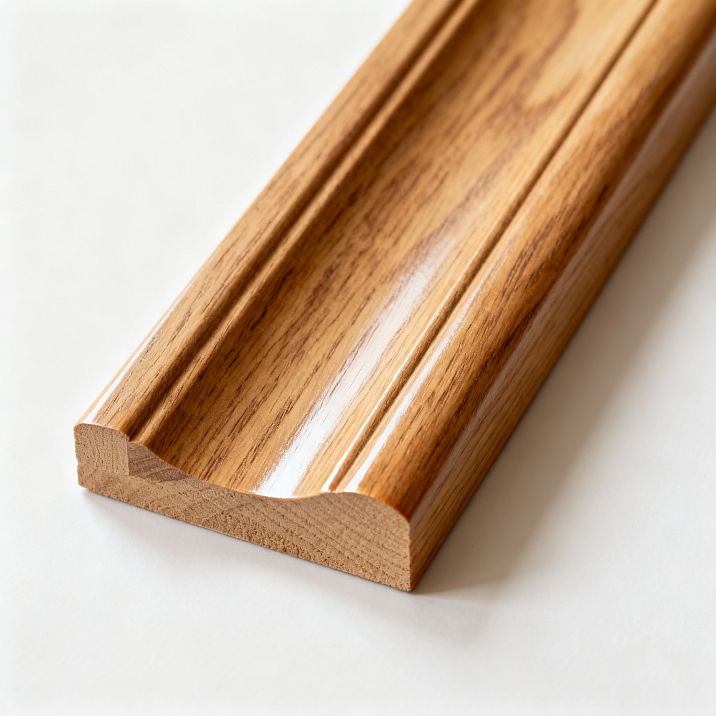
Oak door trim represents the embodiment of impeccable taste and practicality in decorating door openings. Choosing trim made from solid oak is an investment in durability, beauty, and unparalleled quality that will remain relevant for decades. In the world of wooden finishing materials, oak occupies a special place due to its unique combination of strength, aesthetic appeal, and natural resistance to external influences.
The modern market offers a wide range ofOak door trim for interior doorsThese become an indispensable part of luxury interiors. These items do not merely serve a decorative function—they create visual completeness of the design, highlight the status of the room, and demonstrate the owner’s refined taste. The natural texture of oak wood, with its characteristic medullary rays, forms a unique pattern, turning each element into a work of art.


Anatomy of solid oak and its advantages




Structural features of oak wood
Oak is a unique natural material with exceptional characteristics for productionmolding productsThe density of oak wood is 750-900 kg/m³, which ensures high mechanical strength and longevity of finished products. Hardness by Brinell reaches 3.7-4.0 HB, making the trims resistant to mechanical damage and wear even under intensive use.
Medullary rays play a special role in forming aesthetic qualities—radial formations penetrating the wood from the heartwood to the bark. These natural 'reinforcing rods' not only create a distinctive play of light and shadow on the surface but also ensure dimensional stability of the product.Wooden trimOak trim is practically immune to warping and cracking due to these natural stabilizers.
Oak’s annual rings have a clearly defined structure with dense late wood and more porous early wood. This contrast creates an expressive texture that becomes even more noticeable after finishing. Radial and tangential cuts produce different textural effects—from strict straight lines to refined wavy patterns.
Our factory also produces:
The high tannin content in oak wood provides natural protection against biological influences. These natural preservatives prevent mold and mildew growth and protect against insects, which is especially important for items used in high-humidity environments.
maintains its qualities even in harsh climatic conditions, making it an ideal choice for entrance doors and rooms with unstable microclimates.Oak door trim for interior doorsmaintains its qualities even in harsh climatic conditions, making it an ideal choice for entrance doors and rooms with unstable microclimates.
The moisture content of quality oak raw material does not exceed 8-12%, achieved through specialized kiln drying over 30-40 days. This treatment ensures dimensional stability and prevents deformation of finished products. Properly dried oak practically does not shrink or crack under temperature and humidity fluctuations.
Oak extractives impart a distinctive aroma to the wood and contribute to the formation of a noble patina over time. This natural 'aged beauty' only enhances the aesthetic value of oak door casings, making them more attractive with age.
Get Consultation
Classification and Varieties of Oak Door Casings
Structural Features
Modern oak door casings differ by mounting method and structural design. Surface-mounted casings represent a classic mounting method, where elements are fixed on top of the door frame. This system ensures secure fixation and allows easy replacement of the casing if needed, without affecting the main door structure.
Casing capitals and bases can have varying degrees of detail—from simple geometric forms to intricate carved elements. Classical order motifs lend an air of grandeur and formality to interiors, while minimalist solutions emphasize the modern character of the design.
may have various profile cross-sections, each creating a unique visual effect. A straight profile forms clear geometric lines, ideal for modern minimalist interiors. Ornamental profiles with various curves and grooves create play of light and shadow, emphasizing the classical character of the design.
Profiled Solutions
Oak door trim for interior doorsMay have various profile cross-sections, each creating a unique visual effect. A straight profile forms clear geometric lines, ideally suited for modern minimalist interiors. Profiled sections with various curves and grooves create play of light and shadow, emphasizing the classic character of the design.
Casing widths vary from 70 to 150 mm, allowing optimal proportions for any interior. Standard thickness is 12-18 mm, ensuring sufficient strength while preserving elegant forms. For particularly grand interiors, wide casings up to 25 mm thick with multi-step profiles are manufactured.
Grooves—vertical channels on the casing surface—create additional play of light and emphasize the height of the door opening. Such elements are especially effective in classical and neoclassical interiors, where architectural expressiveness of details is important.
Oak molding manufacturing technology
Raw material selection and preparation
Qualitywood trim itemsbegin with careful selection of raw material. Oak blanks must come from trees at least 80-100 years old, when the wood reaches optimal density and hardness. The trunk diameter at the base must exceed 60 centimeters to obtain boards of sufficient width without compromising the integrity of the wood fibers.
Drying of oak blanks requires special attention to uniformity and gradualness. Final moisture content must be 8-10% with deviation not exceeding 1% throughout the entire volume of the blank. Uneven moisture leads to warping of finished products and distortion of the profile geometry, which is unacceptable for quality casings.
Sorting of timber is carried out according to several criteria: absence of wood defects, uniformity of texture, compliance with dimensional parameters of technical requirements. Special attention is paid to the direction of the grain—it must be strictly parallel to the longitudinal axis of the blank for maximum strength of the finished product.
Modern processing methods
Precision processing of oak blanks is performed on high-precision CNC machines, ensuring ideal profile geometry with tolerances no greater than ±0.1 millimeters. Use of special hardmetal tools allows obtaining a smooth surface without chips or scratches typical for processing hardwoods.
3D milling opens new possibilities for creating complex decorative elements with filigree precision. This technology allows realizing the most daring design ideas, creating unique profiles inaccessible through traditional processing methods.
Sanding is performed in several stages with gradual reduction of abrasive grit from P120 to P320. Final sanding is done manually to achieve ideal surface smoothness and eliminate the slightest irregularities. Proper surface preparation is critically important for even application of protective-decorative coatings.
Quality control
Each batch of finished casings undergoes multi-stage quality control. Geometric accuracy of the profile is checked using special templates, surface quality is assessed under various lighting angles, moisture content and absence of internal stresses are monitored.
Strength tests include checking resistance to bending, compression, and tension. Oak casings must withstand loads exceeding operational loads by 3-5 times, guaranteeing longevity and reliability during use.
Application of Oak Door Casings in Interior Design
Stylistic Universality
Oak door trim for interior doorsdemonstrates remarkable stylistic versatility, harmoniously fitting into interiors of various styles. In classical interiors, oak casings emphasize traditionalism and solidity, creating an atmosphere of reliability and prestige. Their noble texture perfectly complementswooden moldingscreating a unified decorative composition.
In modern interiors, oak casings with minimalist profiles form clear geometric accents without overloading space with excessive decoration. The natural warmth of wood softens the rigidity of modern materials, creating a comfortable and cozy atmosphere.
Scandinavian style particularly embraces oak elements due to its culture of naturalness and eco-friendliness. Light oak tones perfectly complement white walls and minimalist furniture, creating a sense of spaciousness and purity. In such interiors, oak casings are often combined withwooden wall planksforming a unified design concept.
Color Solutions and Final Finish
The natural color palette of oak varies from light honey tones to rich brown shades, allowing casings to be matched to any interior color scheme. Under light and over time, oak develops a noble patina, further enhancing its aesthetic value.
Modern protective-decorative coatings allow preserving the natural beauty of oak texture or creating desired color effects. Oil and wax coatings highlight the natural wood structure, creating a matte surface with tactile qualities. Lacquer coatings provide maximum protection and allow achieving any level of gloss.
Oak staining opens wide possibilities for color experimentation. From silver-gray tones to deep ebony black—modern stains allow achieving virtually any desired shade while preserving the natural wood texture. Especially popular are 'aged' effects, imitating multi-year patina.
Combination with other interior elements
Harmonious combination of oak casings with other wooden decor elements creates a unified design concept.Wooden skirting boardsMade from the same material, they create a visual connection between vertical and horizontal interior elements. It is important to maintain consistency not only in the wood species, but also in the surface finish and color scheme.
Furniture corniceMade from oak, it can become a logical continuation of the design concept, especially in kitchen interiors and libraries. Such a solution creates the impression of furniture being integrated into the room's architecture, characteristic of classic English and French interiors.
Installation of Oak Thresholds
Preparation Work
Professional installationOak door trim for interior doorsIt begins with careful preparation of the working surface. The door frame must be cleaned of construction dust, residual mounting foam, and other contaminants. Walls must be flat, without protrusions or depressions that could prevent the jamboard from fitting tightly to the surface.
Special attention is paid to controlling the verticality and horizontality of the door frame using a level and plumb bob. Jamboards should be positioned 3-5 mm away from the door frame to avoid interfering with hinge operation and to prevent contact with the door during opening. Proper marking is a critically important stage, the accuracy of which determines the final appearance of the assembled structure.
Acclimatizing jamboards in the room for 24-48 hours allows the wood to adapt to local temperature and humidity conditions. This is especially important for oak, which may experience minor dimensional changes under varying climatic conditions.
Fastening Technology
For installing oak jamboards, special finish nails or screws of 40-50 mm length and 1.2-1.5 mm diameter are used. The hardness of oak wood requires pre-drilling pilot holes smaller than the fastener diameter to prevent material cracking. The fastening spacing is 400-500 mm, with mandatory fastening 100-150 mm from each edge.
A professional pneumatic nail gun for finish nails ensures high-quality and fast installation. Adjustable impact force allows precise control of fastener penetration depth, and a special nozzle prevents dents on the oak surface.
An alternative fastening method is using special polyurethane or epoxy-based adhesive compositions. This method provides invisible fastening but requires an ideally flat and clean wall surface. The adhesive sets in 10-15 minutes, and full polymerization occurs over 24 hours.
Corner and joint processing
Corner joints are mitered at a precise 45-degree angle using a saw with a fine-toothed blade for hardwoods. The cut quality must be perfect, without chips or irregularities, since oak demands exceptional precision in processing. The joint areas are additionally glued with carpenter's glue to ensure joint strength and seal.
If necessary, joints are sanded with fine-grit sandpaper to achieve a perfectly smooth surface. Nail heads are countersunk 1-2 mm below the surface and masked with a wood-specific putty matched to the material's tone.
Final joint finishing includes light sanding of the filler areas and applying protective coating with a brush or pad. Well-executed joints are virtually invisible and create the impression of a monolithic structure.
Economic aspects of choosing oak trim
Long-term investment
ChoosingOak door trim for interior doorsRepresents a long-term investment in the quality and prestige of the interior. Properly manufactured and installed oak jamboards can serve for 50-100 years while retaining their original appearance and functional characteristics. This makes them a cost-effective solution compared to cheaper alternatives requiring frequent replacement.
The high repairability of oak jamboards distinguishes them favorably from artificial analogs. Minor scratches or scuffs are easily removed by local sanding and reapplication of protective coating. Such restoration is significantly cheaper than full replacement and allows maintaining an ideal interior appearance for decades.
The dimensional stability of oak jamboards eliminates the need for periodic adjustments and fitting, typical of products made from lower-quality materials. This saves time and money on maintenance, making oak jamboards practically maintenance-free interior elements.
Impact on property value
Using qualitywood trimSignificantly increases the property's market value. Potential buyers highly value natural materials and quality finishes, making oak jamboards a profitable investment not only aesthetically but also financially.
The prestige of oak finishing is especially important in the luxury real estate segment, where attention to detail plays a decisive role in determining the final property value. Quality jamboards demonstrate the owner's status and their commitment to quality in every interior detail.
The ecological nature of natural wood is becoming an increasingly important factor in property valuation. Modern buyers are willing to pay a premium for eco-friendly materials, further enhancing the investment appeal of oak jamboards.
Comparison with alternative materials
Advantages over coniferous species
Compared to pine or spruce jamboards, oak demonstrates significant advantages in durability and aesthetic qualities. Coniferous species, although much cheaper, have a soft structure easily damaged by mechanical impacts. Resin in coniferous species creates problems during final finishing, and the presence of numerous knots reduces the aesthetic quality of the products.
Wooden trimOak jamboards require virtually no special care, whereas coniferous jamboards require regular treatment with protective compositions to prevent mold and rot. Oak wood does not exude resin, eliminating the risk of stains and streaks on the surface.
The dimensional stability of oak significantly exceeds that of coniferous species, which is especially important under varying humidity conditions. Coniferous jamboards may deform under seasonal climate changes, requiring additional work for leveling and fitting.
Competition with beech
Beech is the closest competitor to oak among hardwoods used for producing jamboards.Beech door casingIt has a lighter and more uniform structure, making it versatile for various color schemes. However, beech is inferior to oak in resistance to moisture and biological influences, limiting its use in demanding operating conditions.
The density of beech is 700-790 kg/m³, slightly less than oak, but still provides good strength and durability. The uniform fiber structure of beech ensures even coloring, which is especially important when using tinting compositions.
The price of beech jamboards is usually 15-20% lower than oak, making them an attractive compromise solution for projects with moderate budgets. However, long-term economic efficiency remains in favor of oak due to its exceptional durability.
Alternatives from artificial materials
MDF jamboards with oak veneer offer a similar appearance to natural oak at significantly lower cost. However, they lack the natural strength and durability of solid oak, especially vulnerable to moisture and mechanical damage. Repairing damaged MDF jamboards is practically impossible, requiring complete replacement of components.
Polyurethane jamboards imitate not only oak texture but also complex carved profiles. They are resistant to moisture and do not deform, but lack the natural beauty and tactile qualities of real wood. The ecological nature of such products remains controversial, especially under elevated temperatures.
Design solutions and stylistic combinations
Classic Interiors
In classic interiorsOak door trim for interior doorsbecomes the basis for creating a harmonious decorative composition. Combined withwooden baseboardsandfurniture cornicesmade from the same material, creates a cohesive architectural ensemble.
Decorative profiles with elegant curves and grooves emphasize the grandeur of the classical style. Wide casings with multi-step profiles create rich play of light and shadow on the surface. Grooves and other decorative elements enhance the architectural expressiveness of doorways.
Color solutions for classical interiors tend toward rich, noble tones of oak. Dark stains emphasize the solidity and elegance of the setting, creating an atmosphere reminiscent of an old English manor or French chateau. Glossy lacquered finishes enhance the grandeur of the interior.
Modern interior styles also use oak skirting boards, but in a different interpretation. Minimalism prefers simple rectangular profiles without decorative elements. Smooth surfaces with matte finish create a sense of strictness and elegance.
In modern interiors, oak casings with simple geometric profiles form clear architectural accents. Minimalist solutions highlight the beauty of the natural material without excessive ornamentation. Wide flat casings create a sense of monumentality and solidity, especially effective in rooms with high ceilings.
Combining oak casings withdecorative wooden stripsallows creating complex geometric compositions characteristic of modern design. Such solutions are especially popular in Scandinavian style, where natural materials and minimalist forms are valued.
The contrast between natural oak and modern materials — glass, metal, concrete — creates interesting visual effects. The warmth of wood softens the coldness of industrial materials, making the interior more cozy and livable.
Eco-style and organic architecture
Ecological trends in interior design make oak casings especially relevant. Their naturalness and eco-friendliness perfectly align with the philosophy of eco-style, where priority is given to natural materials and energy-efficient solutions.
Wooden plankmade of oak can complement the concept of natural design, creating rhythmic compositions on walls and ceilings. Such elements are not only decorative but also functional — they can serve as bases for hanging shelves or greenery.
Organic architecture strives for harmony with nature, using natural forms and materials. Oak casings, with their natural texture and color, fit perfectly into this concept, creating a sense of unity between the interior and its natural surroundings.
Technical Specifications and Quality Standards
Dimensional range
Standard sizes of oak casings are determined by the needs of various types of door openings. Width varies from 70 to 150 mm, allowing selection of proportions suitable for the scale of the room and architectural style. Thickness of casings ranges from 12 to 25 mm depending on profile complexity and expected loads.
Length of standard elements is 2200–2700 mm, corresponding to the height of typical door openings with a small allowance for trimming. For non-standard openings, casings can be manufactured to individual sizes while maintaining all quality characteristics of serial products.
Tolerances for dimensions are ±0.5 mm in length and ±0.2 mm in cross-sections. This precision ensures perfect fitting of elements and minimal gaps in joints. Curvature of casings should not exceed 2 mm per 1 meter of length.
Strength indicators
The static bending strength of oak is 95–105 MPa, significantly exceeding similar indicators of other wood species used in casing production. The bending modulus of elasticity reaches 13000–15000 MPa, ensuring high structural rigidity.
The impact toughness of oak wood is 65–75 kJ/m², guaranteeing resistance to dynamic loads and accidental impacts. Hardness by Brinell is within 3.7–4.2 HB, ensuring resistance to indentation and abrasion.
The coefficient of linear expansion of oak across the grain is 4–6×10⁻⁶ 1/°C, which is a relatively low value for natural wood. This ensures dimensional stability of casings during temperature fluctuations within the operating range.
Requirements for humidity and drying
The equilibrium moisture content of oak wood at 65% relative air humidity and 20°C temperature is 12–13%. For producing quality casings, the moisture content of raw material should not exceed 10±2%. Exceeding these values leads to deformation and cracking of finished products.
Kiln drying of oak blanks is performed according to special regimes with gradual reduction of moisture to avoid internal stresses. Total drying duration is 25–35 days depending on initial moisture content and material thickness.
Moisture content of finished products is controlled using electrical moisture meters at a depth of 1/3 material thickness. Variation in readings within a single batch should not exceed ±1%. Compliance with these requirements ensures dimensional stability of casings during operation.
Modern trends in production of oak casings
Innovative processing technologies
Modern thermal modification technologies for oak allow improving its operational characteristics without using chemical preservatives. Thermal treatment at 160–220°C reduces the equilibrium moisture content of wood by 40–50%, increases dimensional stability, and enhances resistance to biological damage. Thermally modified oak acquires a characteristic dark-brown color and does not require additional staining.
Impregnation of oak wood with special polymer compositions using vacuum-pressure method increases material density by 15–20% and significantly enhances its moisture resistance. This treatment is especially effective for casings used in high-humidity environments — bathrooms, saunas, winter gardens.
Laser engraving opens new possibilities for decorating oak casings. The precision of the laser beam allows creating fine ornamental patterns, imitating carving, and applying personalized elements. Engraving depth does not exceed 0.5 mm, which does not affect the strength of the products.
Ecological Aspects of Production
Certification of forests according to FSC standards ensures ecological responsibility in harvesting oak raw material. Not only legality of logging is controlled, but also forest resource restoration, biodiversity conservation, and compliance with social standards. Casings made from certified oak receive appropriate labeling confirming their ecological purity.
Waste-free production technology involves the use of all by-products of oak raw material processing. Sawdust and shavings are used to produce fuel briquettes, and non-conforming offcuts are used to manufacture small carpentry items. This approach minimizes environmental impact and increases the economic efficiency of production.
Water-soluble lacquers and paints based on acrylic polymers replace traditional compositions with organic solvents. This reduces the emission of volatile organic compounds into the atmosphere and improves working conditions for employees. The quality of coatings remains equal to that of traditional materials.
Digitalization of Production Processes
Computer-aided design (CAD) systems allow creating three-dimensional models of moldings with precise calculation of all geometric parameters. Integration of CAD with computer numerical control (CAM) systems ensures accurate reproduction of design solutions in finished products. The ability to quickly modify profile parameters simplifies the creation of exclusive design solutions.
QR codes on each item contain information about the origin of raw materials, manufacturing technology, production date, and care recommendations. This ensures full product traceability and simplifies warranty service. Consumers can access detailed product information by scanning the code with a smartphone.
Artificial intelligence is used to optimize the cutting of oak raw material and minimize waste. Machine learning algorithms analyze wood structure, detect hidden defects, and determine the optimal fiber orientation for each specific item. This increases the yield of quality products and reduces production costs.
Care and Usage Characteristics
Regular Maintenance
Oak door trim for interior doorsRequires no complex maintenance, but adherence to simple rules significantly extends the lifespan of items. Regular cleaning with a soft cloth or vacuum cleaner with a brush attachment prevents the accumulation of dirt in the profile's relief. Cleaning frequency depends on the room's usage intensity; weekly cleaning is usually sufficient.
Wet cleaning is performed with slightly damp cloth without using aggressive cleaning agents. Excess moisture may damage the protective coating and cause wood darkening. After wet cleaning, moldings must be immediately wiped dry with a cloth to remove moisture residues.
Recommended to perform preventive renewal of the protective coating every 3-5 years depending on usage conditions. Light sanding with fine-grit sandpaper removes surface contaminants and prepares the surface for applying a new protective coating.
Damage Repair
Minor scratches on the surface of oak moldings are removed by local sanding and repainting. The depth of sanding should not exceed the thickness of the protective coating to avoid damaging the wood structure. After sanding, the damaged area is treated with the same protective coating used during the initial finishing.
Dents and chips are filled with special wood putty matched to the material's tone. After the putty dries, the surface is sanded and coated with a protective finish. Quality repair is practically invisible and does not reduce the molding's aesthetic qualities.
Serious damage involving profile integrity requires replacing the damaged section or entire element. The modular construction of moldings allows replacing individual sections without dismantling the entire system.
Climate Requirements
Optimal operating conditions for oak moldings are a temperature of 18-22°C and relative air humidity of 45-65%. Sudden temperature and humidity fluctuations may cause cracking and deformation. It is especially important to maintain a stable microclimate during the heating season, when air humidity drops to critical levels.
Direct sunlight may cause uneven color changes in wood, so it is recommended to use UV-protective coatings on windows in rooms with high solar exposure. UV filters in protective lacquers slow down the photoaging process, but do not eliminate it completely.
Forced ventilation systems must be adjusted to avoid direct airflow on wooden elements. Constant air flow leads to drying of surface wood layers and formation of microcracks.
Psychological Aspects of Perception
Impact on Psychological and Emotional State
Oak wood positively affects a person's psycho-emotional state. Studies show that the presence of wooden elements in interior design reduces stress levels, improves attention concentration, and enhances overall comfort in the space.Oak door trim for interior doorsCreates a sense of security and stability due to associations with the strength and durability of oak.
The tactile qualities of oak surfaces activate sensory memory and create positive emotional reactions. The natural roughness of wood, barely perceptible under the fingertips, reminds one of connection with nature and creates a sense of authenticity in the modern urban environment.
The color palette of oak, ranging from light honey to rich brown tones, harmonizes space and creates a cozy atmosphere. Warm wood tones compensate for the coldness of modern synthetic materials and make interiors more livable.
Status characteristics
Using oak moldings demonstrates the owner's financial capabilities and commitment to quality solutions. In cultural tradition, oak is associated with reliability, durability, and nobility, which is automatically transferred to interiors where oak elements are used.
Expertise in selection is demonstrated by knowledge of advantages of natural materials over artificial analogs. Choosing in favor ofwood trimIndicates understanding of the long-term economic efficiency of quality solutions.
Generational continuity is expressed in choosing materials capable of serving for decades without loss of quality. Oak moldings become part of family heritage, passed down from generation to generation along with real estate.
Regional application specifics
Climate zones
In continental climate conditions with sharp temperature and humidity fluctuations, oak moldings demonstrate exceptional stability. Oak's low coefficient of thermal expansion minimizes seasonal deformations, which is especially important in regions with harsh winters.
Increased humidity in coastal areas is not a barrier to using properly processed oak moldings. Oak's natural resistance to biological damage is supplemented by modern protective coatings, creating a reliable barrier against moisture exposure.
Arid regions with low air humidity require special attention to maintaining humidity levels indoors. Over-drying of oak wood may lead to cracking, so it is recommended to use humidifiers during the heating season.
Architectural traditions
Russian Classicism, with its inclination toward monumentality and grandeur, finds ideal embodiment in oak moldings. Wide profiles with clear geometry emphasize the architectural expressiveness of interiors in the style of St. Petersburg palaces and Moscow mansions.
Modern interpretation of traditional motifs allows using simplified oak molding profiles in neoclassical interiors. This approach maintains a connection with historical examples while adapting them to contemporary aesthetic preferences.
Regional schools of wooden architecture introduce specific features into oak molding design. Northern restraint contrasts with southern ornamentation, which is reflected in profile selection and decorative techniques.
FAQ - Frequently Asked Questions
How to choose the right door casing profile?
The choice of profile depends on the interior's architectural style and personal preferences. For classic interiors, decorative profiles with ornamental elements are suitable, creating a rich play of light and shadow. Modern interiors require more minimalist solutions with simple geometry. The width of the casing should be proportional to the room's size — wide profiles suit large halls, while narrow ones are appropriate for smaller rooms.
Can oak casings be installed by oneself?
installation of oak casings requires professional skills and special tools.Oak door trim for interior doorsIt is recommended to entrust the installation to experienced carpenters.
How long do oak door casings last?
With proper manufacturing and maintenance, oak casings can last 50-100 years, retaining their original qualities. The high strength and natural resistance of oak to biological damage ensure exceptional longevity. Periodic renewal of protective coatings extends service life and maintains the aesthetic qualities of the items.
What is the difference between radial and tangential sawing?
Radial sawing passes through the center of the trunk parallel to medullary rays, creating a uniform texture with straight lines. Such wood is more stable and less prone to warping. Tangential sawing passes tangentially to growth rings, creating a wavy texture with characteristic oval patterns. Radial sawing is preferable for casings due to dimensional stability.
Do oak casings need to be treated with antiseptics?
Oak has natural resistance to biological damage due to its high tannin content. In most cases, additional antiseptic treatment is not required. However, in conditions of high humidity or contact with soil, preventive impregnation is recommended.Wooden trimOak made from properly dried wood is resistant to fungal damage without additional treatment.
Can oak casings be painted?
Oak casings can be painted, but this hides the natural beauty of the wood. It is preferable to use transparent or toning coatings that highlight the oak's texture. If color change is necessary, use a stain followed by a protective lacquer. The dense structure of oak requires careful surface preparation before painting.
How to combine oak casings with other interior elements?
Harmonious combination is achieved by using elements of the same wood species and similar finishing.Wooden skirting boards, Furniture made of oak complements the interior picture, especially if the furniture is also made of solid oak. Unity of material and finish creates a sense of completeness and stylistic coherence.andDecorative PlanksOak elements create a cohesive composition. It is important to maintain consistency in color scheme and surface finish.
What tools are needed to process oak casings?
Processing oak requires sharp tools made of high-quality steel. For sawing, use fine-toothed saws with carbide teeth; for planing, use planes with properly sharpened blades. Drilling holes requires sharp drills with prior marking to prevent chipping. Sanding is performed with abrasives gradually decreasing grit size.
Does the age of the oak affect the quality of casings?
The age of the tree directly affects the quality of the wood. Young oak has wide sapwood and loose structure, unsuitable for producing high-quality casings. The optimal age for harvesting is 80-120 years, when the wood reaches maximum density and strength. Older trees may have internal defects reducing the yield of usable product.
Can oak casings be used in humid areas?
Oak casings can be used in rooms with high humidity if proper moisture protection coatings are applied and good ventilation is ensured to prevent condensation on the surface. In saunas and baths, it is recommended to use specially treated wood with reduced moisture content and enhanced protection.
Conclusion
Choosing oak casings for interior doors represents an investment in long-term quality and aesthetic perfection of the interior. Unique properties of oak wood — strength, durability, natural beauty, and eco-friendliness — make these items the optimal solution for creating prestigious interiors of various stylistic directions.
Oak door trim for interior doorsSTAVROS's oak casings embody decades of experience working with premium wood species and modern woodworking technologies. Strict quality control at every stage of production — from raw material selection to final finishing — guarantees compliance with the highest standards.
A comprehensive approach to interior design implies using coordinated elements made from the same material.Trimming Items, Moldings, skirting boardsandDecorative PlanksOak elements create a harmonious architectural ensemble, highlighting the elegance and sophistication of the interior.
The economic justification for choosing high-quality oak casings is confirmed by their exceptional longevity and minimal maintenance requirements. Initial costs are offset by long service life and preservation of consumer qualities over decades.
The ecological advantages of natural oak wood align with modern trends of responsible consumption and environmental care. Renewable resource, biodegradable material, and absence of harmful emissions make oak casings an ideal choice for creating a healthy living environment.
STAVROS offers a full range of services — from consultation on selecting appropriate solutions to professional installation and post-warranty maintenance. Decades of experience working with demanding clients and impeccable reputation in the market of premium finishing materials guarantee high product and service quality.
Choosing STAVROS oak casings means investing not only in the beauty and comfort of your home, but also in its long-term value, creating an interior that will delight many generations.