Article Contents:
- Evolution of Door Decoration in Modern Architecture
- Historical Roots of Overlay Craftsmanship
- Stylistic Diversity of Modern Solutions
- Technological Innovations in Door Decoration Production
- Precision Woodworking Methods
- Innovative Protective Coatings
- Psychology of Door Decoration Perception
- First Impression and Its Significance
- Color Psychology in Door Decoration
- Functional Aspects of Door Decoration
- Masking Structural Features
- Space zoning
- Russian traditions of wooden architecture
- North Russian Motifs in Modern Decoration
- Central Russian Traditions
- Modern Trends in Door Decoration Design
- Minimalist approach
- Integration with modern systems
- Technical Requirements for Installation
- Preparatory work
- Adhesives and Mounting Methods
- Economic Aspects of Choosing Door Decoration
- Investment attractiveness
- Step-by-Step Decoration
- Professional Secrets of Masters
- Working with Proportions and Scale
- Integration with architectural elements
- Ecological aspects of production
- Sustainable forestry
- Durability as an ecological factor
- Innovative Solutions for the Future
- Digital technologies in design
- Integration with Smart Systems
- Global Trends and Their Impact on the Russian Market
- Scandinavian minimalism
- Japanese aesthetics
- Conclusion
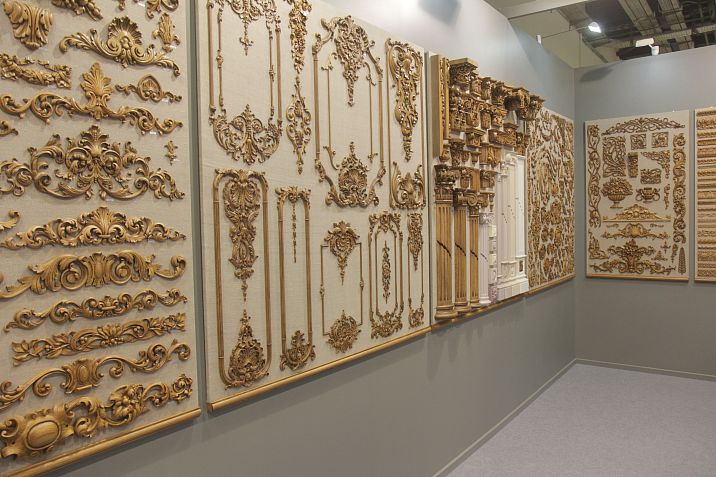
Imagine the moment when a guest enters your home and pauses at the threshold, captivated by the exquisite beauty of the door decoration. Exactly door overlay decoration can create such a first impression that will remain in memory forever. But what lies behind this magic of transformation? How does a simple wooden overlay turn an ordinary door into a true masterpiece of design art?
In the era of mass production and standardization, decorative door overlays have become a symbol of individuality, a way to tell the story of a home through the language of forms and ornamentation. Each element carries a fragment of the master's soul, the traditions of generations, the breath of living wood. Is not this the true luxury — the ability to surround oneself with authenticity?



Evolution of Door Decoration in Modern Architecture




Historical Roots of Overlay Craftsmanship
The art of creating carved door overlays traces its roots to ancient times, when master carvers transformed functional elements into works of art. In Russian tradition, the door was never merely a means to close an opening, but the face of the house, its business card, a reflection of the owners' prosperity and taste.
Modern technologies have not eliminated the significance of handcrafting, but merely expanded its application possibilities. CNC routers allow reproducing the most complex ornaments with jewel-like precision, but final finishing still requires human hands, sensitivity to the material, understanding of its nature.
Door overlays made from solid oak and beech demonstrate remarkable diversity in textures and color tones. Oak impresses with its monumentality, pronounced annual rings creating a unique pattern. Beech, on the contrary, delights with its soft, uniform structure, ideally suited for detailed work on small ornamental elements.
Our factory also produces:



Stylistic Diversity of Modern Solutions
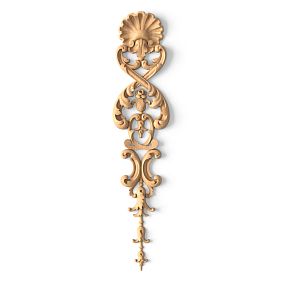
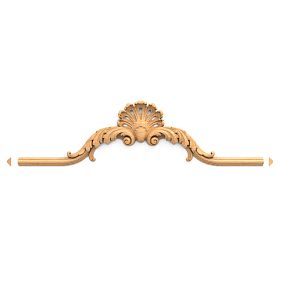
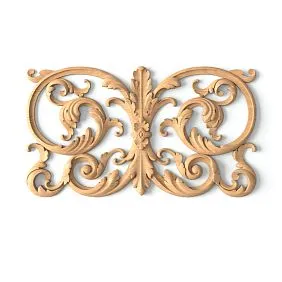
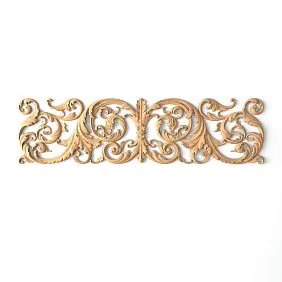
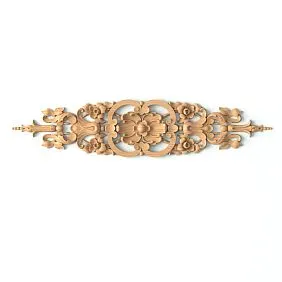
Baroque motifs in door decoration are experiencing a remarkable rebirth, but in a modern interpretation. Central overlays with floral ornaments acquire more streamlined forms, retaining the full expressiveness and vividness of classical samples. Asymmetric compositions, where traditional scrolls combine with geometric elements, allow incorporating classical decoration into minimalist interiors.
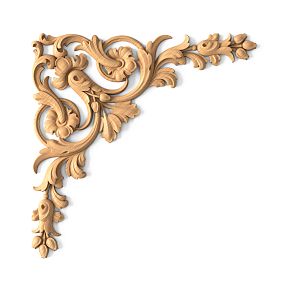
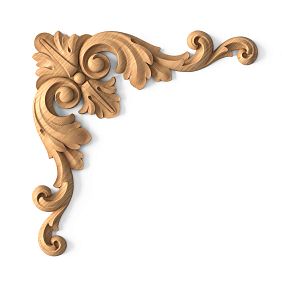
Corner overlays open up special opportunities for creative self-expression. They not only decorate the corners of the door panel, but also visually emphasize its geometry, creating a sense of compositional completeness. Particularly striking are paired corner elements, creating a symmetrical composition that lends the door a sense of solemnity and significance.
Get Consultation
Technological innovations in door decoration production
Precision wood processing methods
Modern Production door applique decoration This is a synthesis of traditional technologies and innovative solutions. Kiln-dried wood under strictly controlled temperature regimes ensures ideal material stability. The moisture content of finished products does not exceed 8%, guaranteeing the absence of deformation even under significant microclimate fluctuations.
The lamella bonding technology allows creating appliques of any size, not limited by the natural dimensions of the wooden trunk. Special water-resistant adhesives provide joint strength exceeding the strength of the wood itself. This is especially important for large decorative elements, which experience significant loads during operation.
Multi-stage sanding using abrasives of different grits creates a perfectly smooth surface ready for protective-decorative coatings. Hand-finished polishing achieves a mirror-like gloss, highlighting the natural beauty of the wood grain.
Innovative protective coatings
Modern wood lacquers and oils differ fundamentally from traditional formulations. Polyurethane lacquers create a wear-resistant coating resistant to mechanical damage and ultraviolet radiation. Oil-based impregnations penetrate deeply into the wood structure, emphasizing its natural texture and providing long-term moisture protection.
Antiseptic compositions of the new generation not only protect wood from biological damage but also preserve its ability to "breathe," supporting natural moisture exchange. This is especially important for door decoration, which is subjected to variable temperature and humidity conditions.
Psychology of door decoration perception
First impression and its significance
A door with decorative appliques forms the first impression of a house and its owners even before stepping over the threshold. Psychologists assert that a person forms an opinion about the interior within the first 15 seconds, and door decoration plays a key role in this process.
Plant motifs are subconsciously associated with nature, creating a sense of harmony and tranquility. Geometric compositions symbolize order, stability, reliability. Historical motifs convey cultural continuity, respect for traditions, and solidity.
Animal motifs in door decoration are particularly interesting. Stylized animal images create a unique atmosphere of closeness to nature, especially naturally perceived in country homes and eco-oriented interiors.
Color psychology in door decoration
Natural wood tones have the most beneficial effect on human psychology. Warm oak tones create a sense of coziness and security, while cool beech tones evoke freshness and energy. Tinted finishes allow achieving any desired color effect while preserving the natural wood texture.
Contrasting solutions — dark appliques on light doors or vice versa — create striking accents that attract attention and highlight architectural features of the doorway. This approach is especially effective in modern minimalist interiors, where each decorative element must be maximally expressive.
Functional aspects of door decoration
Masking structural features
door overlay decoration Performs not only an aesthetic but also a practical function. Central appliques can conceal technological holes, joint areas of door panels, and other structural features that disrupt the perception of the door's integrity.
Vertical and horizontal appliques help adjust the proportions of the door opening. In rooms with low ceilings, vertical elements visually increase height, while horizontal appliques in narrow openings create a sense of greater width.
Corner appliques not only decorate but also protect the most vulnerable areas of the door panel from mechanical damage. This is especially relevant for entrance doors subjected to intensive use.
Space Zoning
Decorative elements on doors help create a unified stylistic ensemble with other interior items. Appliques with plant motifs complement carved furniture, creating a sense of cohesion and thoughtful design.
Modular decoration systems allow using identical elements on doors, walls, and furniture, creating a unified decorative concept for the room. This is especially important in classical interiors, where consistency of all elements is a key to success.
Regional characteristics and cultural traditions
North Russian motifs in modern decoration
Northern woodworking traditions are distinguished by particular simplicity and functionality. Geometric ornaments, stylized images of sun, water, plants create a unique atmosphere of northern restraint and wisdom.
Mезенская роспись, adapted for wood carving, provides rich material for creating unique door compositions. Stylized deer, birds, plant motifs naturally integrate into modern interiors, bringing the spirit of Russian north into them.
Central Russian traditions
Abramtsvo-Kudrin carving, with its characteristic smooth lines and plant motifs, adapts perfectly to modern door decoration requirements. Traditional scrolls and leaves acquire more streamlined forms, retaining their recognizability and expressiveness.
The Bogorodskaya tradition of relief carving is reflected in creating relief appliques, where play of light and shadow adds additional expressiveness to decorative elements. Such appliques look especially striking under directional lighting.
Modern trends in door decoration design
Minimalist approach
The modern trend toward minimalism has fundamentally changed the approach to door decoration. Previously, the goal was to maximize ornamentation on the surface; today, restraint and selectivity are valued. A single large accent element can make a greater impression than numerous small details.
Geometric shapes are gaining increasing popularity. Simple rectangles, squares, and rhombuses combined with natural wood texture create a striking contrast between technology and nature.
Integration with modern systems
Hidden hinges and invisible locks require a special approach to placing decorative elements. Appliques must not only decorate the door but also take into account the placement of functional elements, not interfering with their operation.
Integration with smart systems opens new possibilities for door decoration. Built-in motion, temperature, and humidity sensors can be seamlessly integrated into decorative elements without compromising their aesthetic appeal.
Technical requirements for installation
Preparation Work
Quality Installation door applique decoration Begins with careful surface preparation. The door panel must be perfectly clean, degreased, and free of traces of old coatings. Sanding with fine grit creates the necessary roughness for better adhesion of adhesive compounds.
Marking the placement of decorative elements requires special precision. Even a slight deviation from symmetry will be noticeable to the naked eye and spoil the overall impression. Professional installers use laser levels and special templates to ensure perfect geometry.
Adhesive compounds and mounting methods
Polyurethane adhesives provide the strongest bond between wooden elements and various types of door panels. Their advantage lies in the elasticity of the cured layer, which compensates for natural wood deformation due to humidity changes.
Mechanical fastening with self-tapping screws is used for particularly large and heavy elements. Screw heads are fully recessed into the thickness of the overlay, and the resulting indentations are masked with specially selected wax-based compounds matching the wood tone.
Combined fastening — combining adhesive bonding with mechanical fasteners — ensures maximum reliability for demanding applications, such as entrance doors with heavy usage.
Economic aspects of choosing door decoration
Investment Appeal
Quality door decoration is an investment in the long-term future. The service life of properly manufactured and installed overlays is measured in decades, whereas cheap imitations require replacement every few years.
Impact on property value — an important factor when selecting decorative elements. Doors with quality carved decoration significantly enhance the attractiveness of a property to potential buyers or tenants, especially in the premium real estate segment.
Step-by-step decoration
It is not necessary to decorate all doors simultaneously. A phased approach allows distributing costs over time, starting with the most important elements — the entrance door, living room doors, and main bedroom doors.
A modular decoration system allows adding new elements in the future, creating more complex and expressive compositions as the interior develops.
Professional secrets of masters
Working with proportions and scale
The golden ratio remains the foundational principle when creating door compositions. The dimensions of overlays must harmoniously relate to the door panel size, ceiling height, and overall room proportions.
Visual weight of elements requires careful analysis. A large central overlay should be balanced by smaller elements around the perimeter, creating a sense of dynamic equilibrium.
Combination with architectural elements
Trim and doorways must harmonize with door decoration, creating a unified composition. This is especially important when working with historical interiors, where each element must conform to the overall stylistic concept.
Baseboards and wall moldings can echo door decoration, creating a rhythmic structure in the room. This approach is especially effective in classical interiors with high ceilings.
Ecological Aspects of Production
Sustainable Forestry
Responsible door decoration manufacturers pay special attention to the ecological properties of raw materials. Using wood from certified forestry ensures that valuable forest areas are not felled for production of overlays.
Zero-waste technologies allow using almost all wood, converting waste into fuel briquettes or raw materials for other industries. This is not only economically beneficial but also reduces environmental impact.
Longevity as an Ecological Factor
Restorability makes wooden door decoration one of the most eco-friendly solutions. Unlike plastic or MDF panels, natural wood can be restored multiple times, extending its service life by decades.
International trends
Innovative solutions of the future
Digital Technologies in Design
3D modeling allows creating photorealistic images of future decorative compositions, enabling clients to visualize the result before production begins. Virtual reality opens new possibilities for design experimentation.
Parametric design allows creating families of elements with different sizes while maintaining stylistic unity. This is especially important when decorating large objects, where numerous elements of varying sizes are required.
Integration with smart systems
Embedded electronics are seamlessly integrated into decorative elements. Sensors for motion, temperature, and humidity, hidden within carved overlays, transform an ordinary door into a component of a "smart home" system.
Dynamic lighting with adjustable color and intensity transforms static decoration into a dynamic interior element capable of adapting to mood and time of day.
Global trends and their impact on the Russian market
Scandinavian minimalism
Northern motifs exert significant influence on Russian design thinking. Simplicity of forms, natural colors, functionality — these principles are actively applied in creating modern door decoration.
Japanese aesthetics
The Japanese philosophy of wabi-sabi, which recognizes the beauty of imperfection, is reflected in the modern approach to wooden decor. Natural imperfections of wood and its inherent asymmetry are increasingly viewed not as flaws, but as unique characteristics.
The philosophy of wabi-sabi, recognizing beauty in imperfection, is reflected in modern approaches to door decoration. Natural features of wood, its inherent asymmetry, are not seen as flaws but as unique characteristics that give each piece individuality.
Minimalism in the Japanese understanding is not the absence of decoration, but its maximum meaningfulness. Each element must carry functional or aesthetic load, otherwise it has no place in the composition.
Conclusion
Modern door overlay decoration Represents a remarkable synthesis of ancient craftsmanship traditions and advanced manufacturing technologies. It is not merely a way to decorate interiors — it is an opportunity to create a unique atmosphere, tell a home’s story through the language of forms and ornamentation, and express the owner’s individuality through material objects.
In a world of mass production and standardization, wooden door decor has become a symbol of authenticity, quality, and connection to natural origins. Each applique is not just a decorative element, but a piece of living wood that continues to breathe and grow in your home, creating a unique aura of warmth and coziness.
For many years, the company STAVROS has remained a leader in creating exclusive door decor, combining the best traditions of Russian craftsmanship with innovative production technologies. Choosing STAVROS products means investing not only in the beauty of your home but also in its long-term value, creating a legacy that will delight generations of your descendants.