Article Contents:
- Modern Philosophy of Furniture Decoration
- Revival of Interest in Handcrafted Beauty
- Psychology of perceiving wooden decor
- Technological Innovations in Furniture Decoration Production
- Precision Methods of Modern Carving
- Innovative Protective Coatings
- Classification of Applied Decoration by Functional Purpose
- Decoration for Built-in Furniture
- Decoration for Dining Room Furniture
- Regional Characteristics of Decorative Traditions
- North Russian Motifs in Modern Decoration
- Central Russian Traditions
- Stylistic directions in furniture decoration
- Classical styles
- Modern directions
- Practical aspects of selection and purchase
- Quality Criteria for Applied Decoration
- Installation Features for Different Types of Furniture
- Economic Aspects of Investing in Furniture Decoration
- Long-term perspective
- Impact on Furniture Cost
- Trends in Furniture Decoration Development
- Integration with modern technologies
- Ecological trends
- Professional Secrets of Interior Designers
- Working with Proportions and Scale
- Color solutions
- Regional Preference Specifics
- Moscow Trends
- Saint Petersburg Preferences
- Regional Characteristics
- Innovative materials and technologies
- Composite materials
- Nanotechnologies in wood protection
- Conclusion
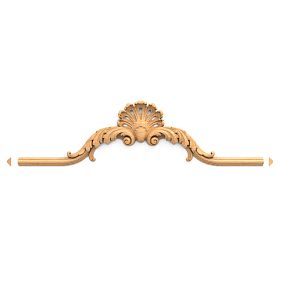
When we talk about creating a truly luxurious interior, where every detail matters, it is impossible to overlook the issue of decorative furniture finishing. applied furniture decoration to buy Today it means investing in timeless values — the beauty of natural wood, the craftsmanship of handwork, and the unique atmosphere of home comfort. But how to choose exactly the right decoration that will turn ordinary furniture into a work of art?
The world of applied decoration is an endless universe of creative possibilities, where traditional woodworking carving techniques meet modern design solutions. Here, each element tells a story, every line carries meaning, and every texture offers new tactile sensations. Isn't this exactly what every one dreams of when striving to create a truly unique space?



Modern Philosophy of Furniture Decoration




Revival of Interest in Handcrafted Beauty
In the era of digital technologies and mass production, an amazing paradox is observed — more and more people are striving to surround themselves with things created by human hands. Applied elements for furniture become the very bridge between advanced modern production technologies and ancient craftsmanship traditions.
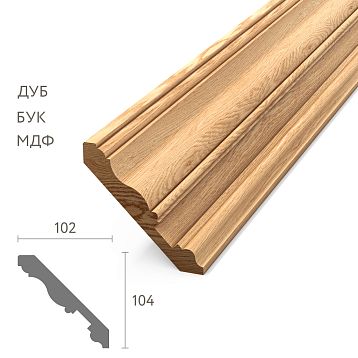
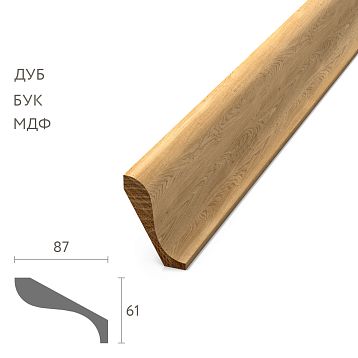
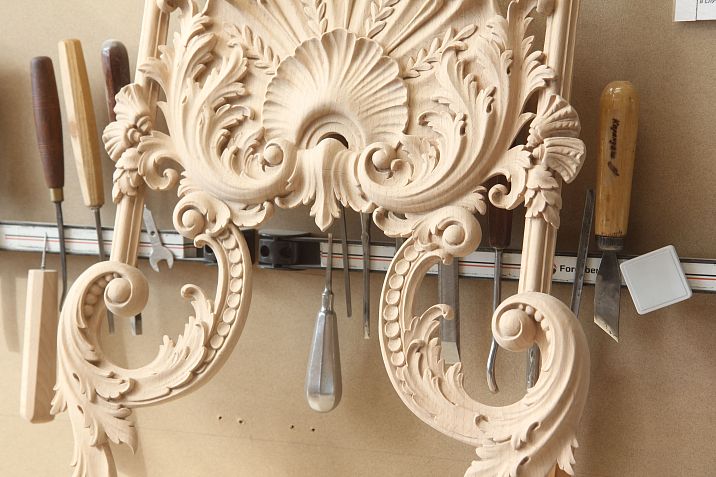
Carved appliqués made of solid oak symbolize the strength and nobility inherent in this wood species. Each annual ring tells of the tree's growth years, of seasonal changes, of nature's power. Birch appliqués attract with their delicate, uniform structure, ideally suited for creating elegant ornaments and fine detailing.
Particular interest is presented by sets of furniture decoration, where each element complements the overall composition, creating a harmonious ensemble. This approach allows transforming scattered furniture items into a unified stylistic concept.
Our factory also produces:


Psychology of Perceiving Wooden Decor
Why does wood evoke such warm emotions in us? Scientists claim that genetically, we are programmed to perceive natural wood as a symbol of safety, home, and protection. Textured appliqués enhance this effect, creating additional tactile sensations.
Plant motifs in applied decoration subconsciously associate with nature, growth, and development. They bring a sense of liveliness and dynamism into the interior. Geometric patterns, on the contrary, symbolize order, stability, and logic — qualities especially valuable in today's chaotic world.
Get Consultation
Technological innovations in furniture decoration production
Precision methods of modern carving
When deciding applied furniture decoration to buyIt is important to understand the technological aspects of production. Modern CNC routers allow achieving incredible precision in reproducing complex ornaments. At the same time, the mathematical accuracy of machine processing does not exclude the human factor — each element undergoes final hand finishing.
Kiln drying of wood is the first and critically important stage in producing quality applied decorations. The process occurs in special chambers under strictly controlled temperature regimes, ensuring the finished products have a moisture content of 6–8%. This moisture level guarantees long-term dimensional stability.
The technology of multi-layer lamination allows creating applied decorations of practically any size, not limited by the natural dimensions of a wooden log. Special water-resistant adhesives provide joint strength exceeding the strength of the wood itself.
Innovative protective coatings
Modern lacquers and coatings differ fundamentally from traditional compositions of the past. Polyurethane finishes create wear-resistant coatings resistant to mechanical damage, moisture, and ultraviolet radiation. Oil-based stains penetrate deeply into the wood structure, enhancing its natural beauty and providing long-term protection.
Tinting compositions allow achieving any desired color effect while preserving the natural wood texture. This is especially important when creating furniture ensembles, where all elements must harmoniously match in color.
Classification of applied decoration by functional purpose
Decoration for case furniture
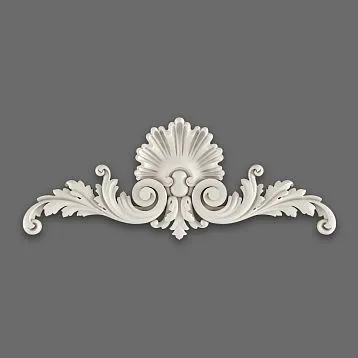
Central applied decorations on cabinet and chest facades serve as compositional centers, drawing attention and setting the tone for the entire piece. Placement of such elements requires a special sense of proportion — they must harmoniously relate to the furniture’s dimensions.
Corner appliqués not only decorate the corners of furniture facades but also visually emphasize the item’s geometry, creating a sense of compositional completeness. Particularly striking are paired corner elements, which create a symmetrical composition.
Vertical and horizontal appliqué strips help zone large facade surfaces, making them more interesting and dynamic. In large wardrobe units, such elements can visually divide a vast surface into more human-scale sections.
Decoration for dining furniture
Appliqués for tabletops require a special approach, as they must withstand intensive use. Typically, elements with enhanced wear resistance, coated with special protective compositions, are used.
Decoration for legs of tables and chairs opens wide creative possibilities. From classic reeding to modern geometric forms — the choice depends on the overall interior style and personal preferences.
Appliqués for chair backs can radically change the perception of furniture, transforming a simple chair into an element of luxurious decor. Especially popular are elements with plant motifs, evoking associations with garden furniture of aristocratic estates.
Regional characteristics of decorative traditions
North Russian motifs in modern decoration
Northern woodworking traditions are distinguished by particular restraint and functionality. Geometric ornaments based on ancient solar symbols create a unique atmosphere of northern wisdom and calm.
Carving in the 'shipboard' style, with its characteristic wavy lines, is perfectly suited for decorating furniture in a nautical style. Such elements look especially harmonious in country houses and country interiors.
Central Russian traditions
Khokhlom motifs, adapted for wood carving, provide rich material for creating unique furniture compositions. Stylized plant ornaments with their characteristic scrolls and berry motifs bring into the interior the spirit of Russian folk culture.
Gorodets traditions with their bright floral compositions also find expression in modern furniture decoration. However, unlike traditional painting, in carved appliqués these motifs acquire a more restrained, noble tone.
Stylistic Directions in Furniture Decoration
Classic styles
Baroque motifs in furniture decoration are experiencing a remarkable revival today. Traditional plant ornaments with their lush scrolls and floral garlands acquire more streamlined forms, while retaining the full expressiveness and vividness of classic examples.
Neoclassical rigor is expressed in geometric compositions, where straight lines combine with symbols of military glory. Laurel wreaths, crossed swords, eagles — all of this can be found in modern interpretations of neoclassical decoration.
Rococo, with its playfulness and lightness, is embodied in asymmetrical compositions, where natural motifs intertwine with architectural elements. Rocaille — characteristic shell-like scrolls — remain a recognizable element of this style.
Modern interior styles also use oak skirting boards, but in a different interpretation. Minimalism prefers simple rectangular profiles without decorative elements. Smooth surfaces with matte finish create a sense of strictness and elegance.
Minimalist decoration may seem a paradoxical concept, but it is precisely this paradox that makes it appealing. A single large accent element can make a greater impression than numerous small details. Geometric shapes — squares, rectangles, rhombuses — combined with natural wood texture create a remarkable contrast between technology and nature.
Eco-style implies maximum preservation of the natural beauty of wood. Natural edges, inherent imperfections of wood, knots — all of this is regarded not as flaws, but as unique features that give each item individuality.
Practical aspects of selection and purchase
Criteria for quality of applied decoration
When planning applied furniture decoration to buyFirst, attention should be paid to the quality of the wood. The surface should be perfectly sanded, without chips, cracks, or other defects. The moisture content of the wood should not exceed 8-10% — this guarantees dimensional stability.
The clarity of carving is another important indicator of quality. All lines should be straight, recesses uniform, and surfaces smooth. Symmetry is especially important for paired elements — any deviations will be noticeable to the naked eye.
The quality of the protective coating can be assessed by the uniformity of application, absence of streaks, runs, and other defects. A good coating should enhance the natural beauty of the wood, rather than conceal it.
Features of mounting on various types of furniture
Adhesive bonding remains the most popular method of attaching applied decoration. Modern polyurethane adhesives provide bond strength exceeding the strength of the wood itself. It is important to properly prepare the surface — it must be clean, dry, and degreased.
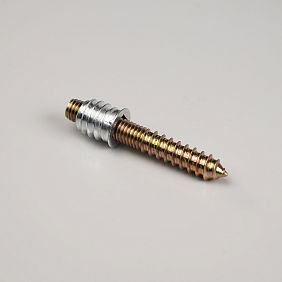
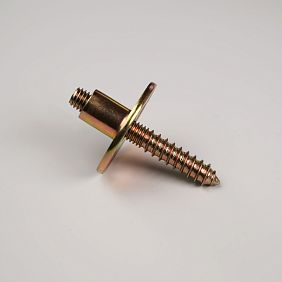
Mechanical fastening with self-tapping screws is used for particularly large and heavy elements. The heads of the screws are fully embedded into the thickness of the overlay, and the resulting recesses are masked with specially selected wax-based compounds matching the wood tone.
Combined fastening — combining adhesive bonding with mechanical fasteners — ensures maximum reliability for critical applications.
Economic aspects of investing in furniture decoration
Long-term perspective
Quality applied decoration is an investment in the long-term future. The service life of properly manufactured and installed overlays made of natural wood is measured in decades. Unlike synthetic materials, wood develops a unique patina over time, becoming even more attractive.
Restoration potential — an important advantage of wooden decoration. Scratches can be filled, surfaces sanded and re-coated with protective compounds. This makes investments in quality wooden decoration especially worthwhile.
Impact on furniture cost
Exclusive decoration can dramatically change the perception of ordinary furniture. A simple cabinet with quality overlays may cost several times more than a similar item without decoration. At the same time, the cost of decoration constitutes only a small portion of the total cost of exclusive furniture.
Collectible value — another factor to consider. Furniture with quality handcrafted decoration may significantly increase in value over time, especially if it is made by renowned artisans or represents a specific historical period.
Trends in furniture decoration development
Integration with modern technologies
Digital modeling allows creating three-dimensional models of future decorative elements with photorealistic accuracy. This enables the client to see the result before production begins and make necessary adjustments.
Laser cutting opens new possibilities for creating ultra-precise decorative elements. This technology is especially effective when working with thin sheets, where exceptional precision is required.
Built-in lighting transforms static decoration into a dynamic interior element. LED strips hidden behind translucent overlays create soft, diffused lighting that highlights the beauty of the carving.
Ecological trends
Certified wood from responsibly managed forests has become standard for manufacturers of quality decoration. Consumers are increasingly paying attention to the ecological properties of the materials used.
Zero-waste production — an important principle of modern woodworking. Sawdust is converted into fuel briquettes, offcuts are used to make small decorative elements, and grinding waste is used for mulching.
Professional secrets of interior designers
Working with proportions and scale
The golden ratio remains the foundational principle for placing decorative elements on furniture. Overlays should harmoniously relate to the dimensions of the furniture, room size, and ceiling height.
Visual weight of elements requires careful analysis. A large central overlay should be balanced by smaller elements around the perimeter. Asymmetric compositions require special skill — they should appear balanced, despite the absence of formal symmetry.
Color Solutions
Monochromatic solutions, when decoration is executed in the same color as the main furniture, create a sense of unity and elegance. Contrast is achieved through the play of light and shadow on the relief surface.
Contrasting solutions — light overlays on dark furniture or vice versa — create striking accents that draw attention to decorated elements. This approach requires caution — it is important not to overdo the contrast.
Tonal transitions — when decoration is executed in similar but not identical tones — create refined, complex color compositions, especially popular in classical interiors.
Regional preferences
Moscow trends
Capital buyers prefer status-oriented decoration that highlights the owner’s wealth and good taste. Large elements with rich carving, made from expensive wood species, are popular.
European motifs — baroque, rococo, neoclassical — enjoy enduring popularity among Moscow's elite. However, preference is given not to exact historical replicas, but to modern interpretations of classical styles.
Saint Petersburg preferences
Saint Petersburg clients lean toward more restrained, elegant solutions. Northern modernism, with its botanical motifs and flowing lines, remains a popular choice for urban apartments.
Historical reconstructions are in high demand — many owners of apartments in historic buildings strive to recreate the authentic atmosphere of past eras.
Regional characteristics
In Siberian regions, decorative motifs featuring animals — bears, wolves, deer — reflecting local nature and traditions are popular. Geometric ornaments based on ancient Siberian patterns are also in demand.
Southern regions prefer lighter, airy compositions with floral motifs. Elements reminiscent of Russia’s southern flora — grapevines, roses, laurel branches — are popular.
Innovative materials and technologies
Composite materials
Wood-polymer composites combine the beauty of natural wood with the practicality of modern materials. Such inlays are resistant to moisture, do not deform under temperature fluctuations, yet retain the natural wood grain.
Stabilized wood — the result of treating natural wood with special polymers — has increased density and durability. Such inlays can be installed even in rooms with high humidity.
Nanotechnology in wood protection
Nanoparticles in modern protective coatings create an invisible film on the wood surface, repelling water and dirt. At the same time, the wood retains its ability to 'breathe'.
Self-healing coatings can seal minor scratches under the influence of heat. This significantly simplifies maintenance of decorated furniture.
Conclusion
The modern market for furniture inlays offers limitless possibilities for realizing the boldest design ideas. From traditional carved elements to innovative composite materials — your choice depends only on your preferences and budget. When deciding applied furniture decoration to buy, remember: this is an investment not only in the beauty of your home, but also in its long-term value.
Quality decor can transform ordinary furniture into family heirlooms that will delight generations. In an era of mass production and standardization, applied decor becomes a way to express individuality, create a unique atmosphere, and tell the story of your home through forms and ornamentation.
For many years, the company STAVROS has remained a leader in creating exclusive furniture decor, combining the best traditions of Russian craftsmanship with advanced production technologies. Choosing STAVROS products, you acquire not just decorative elements, but a piece of masterful art capable of turning your home into a true museum of beauty and style.