Article Contents:
- Fundamental Principles of Baluster Mounting
- Engineering Requirements for Connections
- Material science aspects of connections
- Classification of Mounting Methods
- Mechanical connections
- Traditional joinery
- Technological Features of Installation
- Preparation operations
- Installation Sequence of Elements
- Specialized Mounting Methods
- Fastening to Various Types of Substrates
- Use of Baluster Supports
- Fasteners and Their Characteristics
- Metal Fasteners
- Adhesive Compounds
- Quality Control and Testing
- Methods for Checking Connection Strength
- Typical Defects and Ways to Eliminate Them
- Modern technologies and innovations
- Hidden mounting systems
- Composite Materials in Fastening Systems
- Economic aspects of selection
- Cost Analysis of Different Methods
- Long-Term Economic Efficiency
- Conclusion
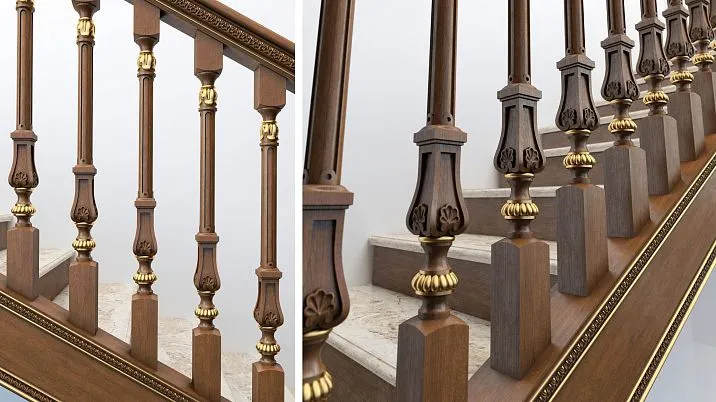
Staircase safety begins with quality mounting of each element. Wooden staircases baluster mounting Represents a key stage of construction, from which the durability of the entire structure and the safety of people depend. Properly installed balusters not only provide reliable support but also create an aesthetically pleasing railing that will become a decoration of any home.
Each mounting method has its own features, advantages, and areas of application. The choice of the optimal method depends on the staircase construction, material used, expected loads, and aesthetic requirements. Understanding all the nuances of installation allows creating a truly reliable and beautiful staircase structure.


Fundamental Principles of Baluster Mounting




Engineering Requirements for Connections
The strength of baluster mounting is determined by the ability to withstand horizontal loads up to 100 kg per linear meter of railing. This requirement is due to the need to ensure safety in case of accidental impact on the handrail or using it as support while climbing the stairs.
Each connection must take into account the natural properties of wood — its ability to shrink, swell, and deform under temperature and humidity changes. Properly designed mounting compensates for these processes, maintaining connection reliability throughout the entire service life.
Load distribution in a stair railing is uneven. Support posts bear the main forces, intermediate balusters provide system rigidity and prevent handrail deflection. Understanding these features allows selecting the optimal mounting method for each element.
Our factory also produces:


Material aspects of connections
Different wood species require individual approaches to selecting fasteners. Hardwoods — oak, ash, beech — have high strength but require pre-drilling holes to prevent cracking. Softwoods — pine, spruce — are easier to process but less resistant to pull-out loads.
Wood moisture critically affects connection quality. The optimal value is 8-12% for interior structures and 12-15% for exterior. Exceeding these values may lead to weakened fastening upon material drying.
Wood grain direction determines connection strength. Fasteners installed across the grain have greater load-bearing capacity than those installed along it. This is especially important when selecting the location of fastener elements.
Get Consultation
Classification of Mounting Methods
Mechanical connections
Bolted connections provide maximum strength and adjustability. Using bolts with a diameter of 8-12 mm with washers and nuts allows creating a detachable connection that can be tightened as needed. Through-fastening through a tread with access from below ensures reliable fixation of support posts.
Screw connections differ in simplicity of installation and material availability. Structural screws with a diameter of 6-8 mm and length of 80-120 mm provide reliable fastening when properly installed. Angled screwing at 30-45 degrees through the baluster end into the base creates a strong, visually hidden connection.
Dowel connections represent a classic method of carpentry. Wooden dowels with a diameter of 8-12 mm and length of 50-80 mm are made from hardwoods — oak, beech, ash. The accuracy of drilling holes and the tightness of dowel insertion determine the strength of the connection.
Traditional joinery
The "birdsmouth" connection provides maximum resistance to pull-out loads. The trapezoidal tenon on the baluster end fits into the corresponding mortise on the tread, creating mechanical interlock. Manufacturing such a connection requires high skill, but the result exceeds all expectations in terms of reliability.
The "birdsmouth" connection provides maximum resistance to pull-out loads. The trapezoidal tenon on the baluster end fits into the corresponding mortise on the tread, creating mechanical interlock. Manufacturing such a connection requires high skill, but the result exceeds all expectations in terms of reliability.
Joints are used to attach balusters to the stair stringer. A mortise or dado cut in the stringer allows the baluster to be set into the joint, increasing contact area and connection strength. Additional fixation with glue and screws ensures long-term durability.
Technological features of installation
Preparation operations
Marking the positions for balusters requires special precision and attention to detail. The distance between the axes of adjacent balusters should not exceed 150 mm to ensure child safety. Even distribution of elements creates a harmonious visual rhythm and optimal load distribution.
Drilling holes is performed using guide bushings or special fixtures. Drill bit diameter is selected depending on the type of fastener: for dowels — exactly the same diameter, for screws — 1-2 mm smaller, for bolts — accounting for thread. Drill depth is controlled by limiters or marks on the drill bit.
Surface treatment of joints includes sanding, dust removal, and application of adhesive compounds. The quality of preparation directly affects the strength and durability of the joint. Using special primers improves adhesive bonding to wood.
Installation sequence of elements
Installation begins with placing support posts at the start and end of the stair run. These elements define the geometry of the entire railing and must be installed with maximum precision. Temporary bracing allows precise positioning of posts before final fixation.
Intermediate balusters are installed along a taut control string between support posts. Each element is checked for verticality and adjusted if necessary. Use of temporary guide rails helps maintain correct baluster position until final fixation.
Final assembly includes installing the handrail base and handrail. All elements must be aligned along a single line parallel to the stair slope. Quality fitting of joints and careful treatment of connections ensure a professional appearance of the finished railing.
Specialized fastening methods
Mounting to different types of bases
Sloped staircases offer the greatest flexibility in choosing baluster fastening methods. Direct installation into treads provides maximum strength but requires precise marking and drilling. An alternative — mounting to the stringer via the tread — simplifies installation but may limit fastener options.
Stringer staircases require a special approach to baluster fastening. The inclined surface of the stringer necessitates beveling the bottom end of the baluster at an angle matching the staircase slope. Fastening balusters to a wooden staircase can be mounted directly to the inclined surface or via an intermediate baluster support.
Curved staircases present special challenges for railing installation. Absence of traditional load-bearing elements requires use of special brackets or creation of additional support structures. Mounting to walls or ceilings may require reinforcement of building load-bearing elements.
Use of baluster supports
L-shaped baluster supports provide maximum rigidity for mounting balusters to the stringer. The lower dado precisely matches the profile of the top edge of the stringer, while the upper dado is designed for baluster installation. This design evenly distributes loads and simplifies railing assembly.
Flat baluster supports offer a simpler option suitable for most applications. A 40×20 mm or 50×25 mm plank is mounted to the stringer using screws or glue, and balusters are installed in pre-marked positions. Ease of fabrication and installation makes this method popular among DIY enthusiasts.
Decorative baluster supports allow creation of decorative railing elements. Router profiles, carved details, and combinations of different wood species transform functional components into staircase ornaments. Manufacturing such elements requires specialized equipment and high craftsmanship.
Fastening materials and their characteristics
Metal fasteners
Stainless steel bolts provide maximum corrosion resistance and joint longevity. M8 or M10 threads with 1.25 mm and 1.5 mm pitch respectively ensure secure fixation in wood. Use of locknuts prevents accidental loosening under dynamic loads.
Galvanized screws offer optimal cost-to-quality ratio for interior structures. Zinc coating protects against corrosion under normal humidity. Countersunk or rounded heads are selected depending on installation method and aesthetic requirements.
Brass screws are used in prestigious projects where both functionality and aesthetics of fasteners are important. Natural corrosion resistance of brass and its elegant appearance make such fasteners ideal for exposed joints in classic interiors.
Adhesive compounds
Wood glue PVA remains a classic choice for joining wooden elements. Setting time of 15-20 minutes allows adjustment of part positions, full curing occurs within 24 hours. Water-resistant grades are suitable for use in high-humidity conditions.
Polyurethane adhesives provide maximum joint strength, exceeding wood strength. Resistance to moisture, temperature fluctuations, and chemical exposure makes these adhesives ideal for critical joints. Working time with the adhesive is limited to 10-15 minutes.
Epoxy compounds are used to fill gaps and reinforce weakened joints. Ability to incorporate fillers — wood flour, microspheres — allows creation of compounds with desired properties. High adhesion to various materials expands application scope.
Quality control and testing
Methods for checking joint strength
Visual inspection includes checking for tightness of part fit, absence of gaps or cracks, correct positioning of fasteners. A quality joint should not show visible defects or signs of weakening. Even gaps between balusters indicate precise installation.
Mechanical tests are conducted by applying controlled loads to installed elements. Horizontal load of 50-70 kg applied to the top of the baluster should not cause visible deformation or weakening of the fastening. Absence of play or creaking confirms quality installation.
Long-term observations allow assessing the stability of connections during operation. Periodic inspections at 3, 6, and 12 months after installation reveal potential issues at an early stage. Timely maintenance prevents serious damage and extends the service life of the structure.
Typical defects and methods of their elimination
Loosening of threaded connections occurs due to wood shrinkage or insufficient tightening during installation. Tightening bolts or nuts restores connection strength. Using locking compounds prevents re-loosening.
Cracking of wood in the fastening zone occurs when exceeding allowable loads or selecting inappropriate fasteners. Minor cracks are filled with adhesive and clamped until fully cured. Severe damage requires replacing the element.
Corrosion of fasteners develops when using inappropriate materials or when protective coatings are compromised. Replacing damaged fasteners with stainless or galvanized ones prevents further deterioration. Applying anti-corrosion compounds protects the connection.
Modern technologies and innovations
Hidden fastening systems
Magnetic connections represent an innovative approach to fastening removable railing elements. Neodymium magnets embedded in balusters and bases provide secure fixation while allowing for quick disassembly. Such systems are ideal for temporary structures or elements requiring regular maintenance.
Bayonet locks allow quick installation and removal of balusters without tools. A quarter-turn locks the element into position. Precision manufacturing and material quality determine the longevity of such a connection.
Pneumatic fastening systems use compressed air to secure elements. Special pneumatic cylinders integrated into the structure ensure even pressure across the entire contact area. Such systems are used in high-tech projects with special requirements for accuracy and reliability.
Composite materials in fastening systems
Carbon fiber rods combine high strength with low weight and corrosion resistance. The elastic modulus of carbon fiber is comparable to steel at a density four times lower. Such rods are ideal for fastening in aggressive environments or when special weight requirements are imposed on the structure.
Glass fiber elements have good dielectric properties and resistance to chemical exposure. The ability to color them in bulk allows creating fastening elements of any color. Their relatively low cost makes glass fiber an attractive alternative to metal.
Basalt fiber composites are distinguished by high heat resistance and environmental safety. Basalt fibers do not emit harmful substances and are fully recyclable. Such materials are especially relevant for eco-friendly construction.
Economic aspects of selection
Cost analysis of different methods
Bolted connections require the highest material costs but provide maximum reliability and serviceability. The cost of quality stainless fasteners is 15-20% of the baluster price, but such investments pay off through the structure’s longevity.
Shank connections are characterized by minimal material cost but require high skill from the installer. Manufacturing shanks from production waste practically does not increase cost, but requires additional preparation time.
Adhesive connections occupy a middle ground in terms of cost and complexity. Quality adhesive is more expensive than regular PVA, but provides significantly better performance. Saving on adhesive often leads to costly repairs in the future.
Long-term economic efficiency
Initial investments in quality fastening systems pay off through reduced maintenance and repair costs. Reliable connections do not require regular tightening or replacement of elements. The service life of quality fasteners may exceed 25-30 years.
Maintenance costs include periodic inspection of connection tightness, replacement of worn elements, and renewal of protective coatings. Well-designed connections minimize these expenses and simplify technical maintenance.
The residual value of a structure with quality connections remains high throughout its service life. During reconstruction or dismantling, such elements can be reused, partially offsetting initial costs.
Conclusion
Professional Baluster fastening for wooden stair railings Requires deep understanding of material properties, characteristics of various connections, and modern installation technologies. The correct choice of fastening method determines not only the reliability and longevity of the structure, but also its aesthetic qualities.
Each fastening method has its advantages and limitations that must be considered when designing stair railings. Combining different methods allows achieving optimal results at reasonable costs. Proper execution of all operations guarantees safe operation and long-term durability of the structure.
Investments in professional installation and quality materials pay off multiple times due to reliability, longevity, and aesthetic appeal of the finished railing. Properly installed balusters become an integral part of the home’s architectural appearance and a source of pride for the owner.
Modern technologies and materials open new possibilities for creating unique fastening systems that combine traditional reliability with innovative solutions. The future of stair construction lies in integrating time-tested methods with advanced technologies.
STAVROS Company has many years of experience in designing and installing stair structures, offering clients comprehensive solutions from project development to final finishing. Our specialists are proficient in all modern baluster fastening technologies and guarantee the highest quality of work. Choosing STAVROS means selecting a reliable partner who will bring your most daring architectural ideas to life while adhering to all safety and durability requirements.