Article Contents:
- Philosophy of corner decoration: what lies behind the elegant lines of moldings
- Advantages of wooden corner elements: why professionals choose them
- Types of corner moldings: variety of shapes and stylistic solutions
- The art of selection: how to find the perfect corner molding for your interior
- Wood species for corner moldings: characteristics and selection features
- Production technology of corner moldings: from blank to finished product
- Installation of corner moldings: professional secrets of flawless mounting
- Protective coatings and final finishing of corner elements
- Stylistic solutions with corner moldings: from classic to avant-garde
- Color solutions and their impact on spatial perception
- Modern trends in corner molding design
- Care and maintenance of wooden corner elements
- Economic aspects of choosing corner moldings
- Where to buy quality corner moldings: criteria for selecting a supplier
- Innovations in the production of decorative elements
- Psychology of perception of decorative elements in interior design
- Regional characteristics of using corner moldings
- The future of corner moldings: trends and prospects
- Conclusion: the art of creating a perfect interior with corner moldings
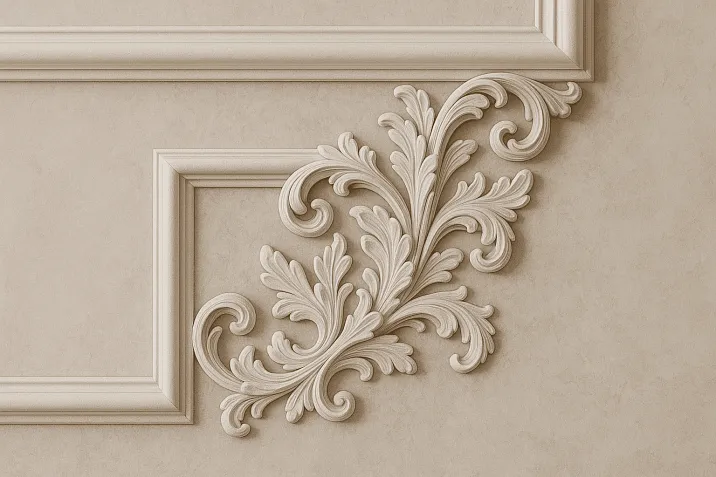
Imagine an interior where every detail seems to tell a story of refined taste and impeccable style. Where transitions between walls and ceilings are not merely functional, but become true works of decorative art. It is precisely this magic that corner moldings possess — elements capable of transforming an ordinary space into an atmosphere of aristocratic elegance.
In the world of modern interior design, corner moldings occupy a special place. They are not merely decorative overlays, but true architectural accents that create visual completeness and harmony in any room. When you decide Buy corner moldingyou invest in lasting beauty and functionality of your home.


Philosophy of corner decoration: what lies behind the elegant lines of moldings
Corner moldings are not just decorative elements, they are the philosophy of spatial thinking embodied in wood. Each corner element is a carefully considered detail that solves several tasks at once: hides uneven joints, creates smooth transitions between surfaces, and adds a touch of classical tradition's nobility to the interior.
Wooden corner moldings have a unique ability to adapt to any interior style. Whether it's the strict minimalism of modern lofts or the luxurious classicism of palace halls — a properly chosen corner element will become the very detail that turns an ordinary space into an exceptional one.
The secret to the popularity of corner moldings lies in their versatility. They look equally impressive in bedrooms and living rooms, offices and dining rooms, creating an atmosphere of coziness and respectability. The natural texture of wood brings warmth and liveliness to the interior, which cannot be achieved with artificial materials.




Advantages of wooden corner elements: why professionals choose them
Wood as a material for manufacturing corner moldings has several indisputable advantages that make it a favorite among interior designers and discerning homeowners. Above all, it is ecological purity — in an era of heightened attention to health and ecology, natural materials have become not just a fashionable trend, but a necessity.
The longevity of wooden corner moldings is another strong argument in their favor. With proper processing and care, quality solid wood products serve for decades without losing their original beauty and functionality. Wood has an amazing ability to become even more noble over time, acquiring a special patina and depth of color.
Restoration capability is a unique feature of wooden elements. Unlike plastic or polyurethane analogs, wooden moldings can be sanded, repainted, or coated with a new layer of varnish, thereby extending their lifespan and adapting them to a changed interior.
The natural beauty of wood is unmatched. Each wooden corner element is unique — the natural grain pattern, natural tones, and texture create an unmistakable character for each piece. This makes your interior truly individual and exclusive.
Our factory also produces:


Types of corner moldings: variety of shapes and stylistic solutions
The modern market of decorative elements offers an astonishing variety of corner moldings, each designed to solve specific design tasks. Understanding this diversity will help you make the right choice when purchasing.
Internal corner moldings are designed to decorate internal corners of rooms — areas where walls meet ceilings or walls meet each other. These elements create smooth transitions and visually increase ceiling height, giving the room volume and airiness.
External corner elements are used to decorate protruding corners — columns, pilasters, decorative niches. They protect vulnerable areas from mechanical damage and simultaneously serve as striking decorative accents.
By stylistic design, corner moldings are divided into several main categories. Classical elements feature complex relief, rich carving, and traditional ornaments. They are ideally suited for interiors in the Baroque, Rococo, or Classicism styles.
Modern minimalist moldings are characterized by simple geometric shapes and smooth surfaces. Such elements will harmoniously fit into loft, high-tech, or Scandinavian-style interiors.
Country-style moldings feature a more rustic finish, emphasizing the naturalness of the material. They create a rustic cozy atmosphere and are ideally suited for Provence, chalet, or Russian country house interiors.
Get Consultation
The Art of Selection: How to Find the Perfect Corner Molding for Your Interior
Choosing a corner molding is a creative process requiring consideration of many factors. The right decision can dramatically transform the space, while a mistake may disrupt the harmony of the entire interior.
The size of the room plays a key role in selecting corner elements. In small rooms, it is advisable to prefer thin, elegant moldings that will not visually 'consume' space. For spacious rooms, more substantial elements with rich decoration will be suitable.
Ceiling height directly affects the choice of size and shape of corner moldings. In rooms with low ceilings, it is recommended to use narrow elements in light tones, which visually lift the ceiling. In contrast, high ceilings allow experimenting with wide, decoratively rich moldings.
The overall style of the interior should determine the design of the corner element. Strict geometric forms suit modern interiors, while intricate carving and complex profiles are suitable for classical styles.
The color palette of the room also influences the choice of molding. Elements in the same tone as the walls create a unified, monolithic space, while contrasting solutions become striking accents that attract attention.
Wood Species for Corner Moldings: Characteristics and Selection Considerations
Choosing the wood species for manufacturing corner moldings is a crucial aspect that determines not only the appearance but also the performance characteristics of the product. Each species has unique properties that should be considered when making a decision.
Oak is the king among wood species for decorative elements. Its hardness and durability are legendary, and its beautiful, distinct texture makes each element unique. Oak moldings acquire a noble patina over time, becoming even more beautiful.
Beech has a dense structure and uniform texture. This species is excellent for processing and painting, allowing the creation of elements in any color palette. Beech moldings are ideal for modern interiors.
Ash has a beautiful contrasting texture and high strength. Ash moldings are distinguished by particular expressiveness and are suitable for creating accent elements in the interior.
Spruce is a more budget-friendly, yet no less quality option. This species is easy to process, has a pleasant natural aroma, and suits any stylistic solutions. Spruce moldings are especially popular in Scandinavian and country-style interiors.
Linden is valued for its softness and ease of processing. This species is ideal for creating elements with intricate carving and decorative details.
Technology of Producing Corner Moldings: From Raw Material to Finished Product
Creating a quality corner molding is a complex technological process requiring high skill and modern equipment. Understanding this process will help you assess the quality of the product and make the right choice.
Raw material selection is the first and most important stage of production. The wood must be properly dried, free of defects, and meet technical requirements. Quality manufacturers use only premium wood with moisture content not exceeding 8-12%.
Primary processing includes cutting the blanks, calibrating them, and preliminary sanding. At this stage, the basic dimensions of the future molding are formed, and all irregularities are eliminated.
Profiling is the key operation during which the blank is given its final shape. Modern CNC routers allow creating profiles of any complexity with the highest precision.
Sanding and finishing provide the final appearance. Several stages of sanding with different abrasives ensure a perfectly smooth surface, ready for protective coatings.
Quality control at every stage of production guarantees that finished products meet the highest standards. Geometric parameters, surface quality, and absence of defects are checked.
Installing Corner Moldings: Professional Secrets of Flawless Installation
Proper installation of corner moldings is an art requiring specific skills and knowledge. The quality of installation affects not only the appearance but also the longevity of decorative elements.
Surface preparation is the foundation of successful installation. Walls and ceilings must be perfectly flat, clean, and dry. Any irregularities must be eliminated with putty and sanding, as moldings will only accentuate existing defects.
Marking is a critical stage determining the accuracy of the entire work. Using a laser level and quality measuring tools ensures ideal geometry of installation.
Cutting elements at an angle requires special precision. A miter saw with precise angle adjustment is used. Properly executed joints should be almost invisible.
The choice of adhesive depends on the base material and operating conditions. For wooden moldings, special carpentry adhesives are used, ensuring strong and durable connections.
Additional fastening with screws or finishing nails ensures secure installation. Fasteners must be recessed into the material and filled with putty.
Protective coatings and finishing treatment of corner elements
Proper finishing of corner moldings not only enhances their aesthetic appeal but also ensures longevity and resistance to various influences.
Priming is a mandatory stage of preparing wood for applying finish coatings. Quality primer improves adhesion, prevents moisture absorption, and protects against biological damage.
Lacquering is a classic method of finishing wooden moldings. Modern lacquers create a durable protective film that highlights the natural beauty of wood. Various types of lacquers — matte, satin, glossy — allow achieving the desired visual effect.
Staining and patination are techniques that allow creating an aged effect or emphasizing wood texture. These techniques are especially popular in classic and vintage interiors.
Waxing gives moldings a special depth and elegance. Natural waxes create a pleasant to the touch surface and provide additional protection for wood.
Waxing imparts a special depth and elegance to moldings. Natural waxes create a pleasant-to-touch surface and provide additional protection for wood.
Style solutions with corner moldings: from classic to avant-garde
Corner moldings have an amazing ability to adapt to any stylistic direction, becoming an organic part of it. Understanding the principles of using moldings in different styles will help create a harmonious and expressive interior.
In classic interiors, corner moldings play the role of architectural elements that create a sense of grandeur and majesty. Richly decorated elements with carving, gilding, or patina emphasize the status and respectability of the setting.
Modern minimalist interiors use simple geometric moldings to create clear lines and spatial structure. Thin, minimalist elements in the same tone as walls are almost invisible but create important visual accents.
Scandinavian style prefers natural light-colored moldings with simple shapes. They highlight the natural beauty of wood and create an atmosphere of northern coziness and naturalness.
Loft interiors can use contrasting moldings as a means of zoning space. Dark elements on light walls or vice versa create graphic accents characteristic of industrial style.
Country and Provence styles value moldings with signs of aging — scratches, chips, uneven coloring. Such elements create a sense of history and authenticity.
Color solutions and their impact on the perception of space
The color of corner moldings is a powerful tool for visual impact on space. The right choice of color solution can dramatically change the perception of a room, its size, and atmosphere.
White moldings are a universal solution suitable for any interior. They visually expand space, create a sense of cleanliness and freshness. White color is especially effective in small rooms, where every light element contributes to increasing space.
Dark moldings create contrast and attract attention. They are suitable for spacious rooms with high ceilings, where they can serve as striking accent elements. Dark elements add solidity and elegance to the interior.
Colored moldings open up wide opportunities for creativity. They can support the overall color palette of the interior or, conversely, create bright contrasts. It is important to remember that colored elements must harmonize with the overall stylistic solution.
Natural wood tones are a foolproof option for lovers of eco-friendliness and natural beauty. Different wood species offer a rich palette from light birch to dark wenge, allowing to choose the perfect shade for any interior.
Metallic finishes give moldings a special luxury and sophistication. Gold, silver, bronze — these shades are suitable for formal interiors and create an atmosphere of palace luxury.
Modern trends in corner molding design
The world of interior decorative elements is constantly evolving, following changes in design and technology. Modern trends in corner moldings reflect a desire for individuality, eco-friendliness, and functionality.
Integrating modern technologies into traditional crafts opens new possibilities for creating unique decorative elements. Computer-aided design allows creating complex individual profiles, while CNC machines ensure their precise reproduction.
Environmental responsibility is becoming an increasingly important factor in selection. Consumers prefer products made from certified wood, produced in accordance with ecological standards.
Minimalism continues to remain a powerful trend. Simple, concise forms, absence of excessive decoration, emphasis on material quality and craftsmanship — these principles define many modern solutions.
Personalization and individualized approaches are becoming standard. Clients increasingly order moldings based on their own sketches, adapted to specific interior features.
Multifunctionality is another important trend. Modern moldings can integrate lighting systems, conceal communications, or serve as a base for attaching other decorative elements.
Care and maintenance of wooden corner elements
Proper care of wooden corner moldings ensures their longevity and preservation of their original beauty for many years. Simple, yet regular maintenance procedures will guarantee a flawless appearance of your decorative elements.
Regular dust cleaning is the foundation of molding care. Use a soft dry cloth or special wipes to remove dust. Avoid abrasive materials that may damage the finish.
Wet cleaning is permissible but requires caution. Use a slightly damp cloth and special wood care products. After wet cleaning, always dry the surface thoroughly.
Periodic renewal of protective coating extends the lifespan of moldings. Depending on the type of finish and usage conditions, renewal may be required every 3-5 years.
Controlling humidity in the room is critically important for wooden elements. Sudden humidity fluctuations may cause wood deformation. Optimal humidity level — 45-60%.
Protection from direct sunlight prevents fading and color changes in wood. Use curtains or blinds to protect from intense ultraviolet rays.
Economic aspects of choosing corner moldings
Investing in quality corner moldings is a decision that pays off in the long term. Understanding economic aspects will help make a well-considered decision and avoid unnecessary expenses.
The cost of quality wooden moldings may seem high, but it should be considered in the context of durability and aesthetic value. Cheap analogs made from artificial materials often require replacement after a few years, which ultimately costs more.
Savings on installation may result in additional expenses. Improperly installed elements may deform, detach, or get damaged, requiring repair or complete replacement.
Impact on property value is an important factor often underestimated. Quality finishing using wooden moldings significantly increases the market value of real estate.
Energy efficiency is an indirect economic benefit. Properly installed moldings can improve room insulation, reducing heating and air conditioning costs.
Where to buy quality corner moldings: criteria for selecting a supplier
Choosing a reliable supplier of corner moldings is a key factor for project success. Quality products can only be purchased from verified manufacturers and dealers who guarantee compliance with high standards.
Manufacturer's reputation is the first thing to consider. Companies with long-standing experience and positive customer reviews guarantee consistent product quality and reliable deliveries.
The presence of quality and compliance certificates confirms that the product is manufactured according to established standards. FSC certificates guarantee the manufacturer's ecological responsibility.
The product range should be sufficiently wide to meet various customer needs. The ability to manufacture items to custom sizes and sketches is an additional advantage.
Technical support and specialist consultations will help make the right choice and avoid mistakes. Qualified consultants should be knowledgeable about the characteristics of different wood species, production technologies, and installation methods.
Manufacturer's warranty obligations indicate confidence in the quality of their products. Reliable companies provide warranties on their products and are willing to take responsibility for their quality.
When you decide Buy corner moldingIt is important to consider all these factors and choose trusted suppliers with an impeccable reputation.
Innovations in the production of decorative elements
Modern technologies have fundamentally changed approaches to producing interior decorative elements. Innovative solutions allow creating products with improved characteristics and new functional capabilities.
Thermal modification technology increases wood stability and durability. Moldings processed in this way are less susceptible to deformation and rot, which is especially important for rooms with high humidity.
Computer modeling allows creating complex profiles with mathematical precision. Three-dimensional design enables visualizing the future product even before production begins.
Laser engraving opens new possibilities for decorating moldings. Precise and complex patterns, logos, or individual ornaments can be applied with jewel-like accuracy.
Nanotechnologies in protective coatings create ultra-thin films with unique properties. Such coatings can be self-cleaning, antibacterial, or have enhanced resistance to abrasion.
Ecologically clean adhesive compositions based on natural components replace traditional synthetic adhesives, making products safer for health.
Psychology of perception of decorative elements in interior design
Corner moldings affect people not only aesthetically but also psychologically. Understanding these mechanisms will help create an interior that is not only beautiful but also comfortable to perceive.
Clear lines and geometry of moldings create a sense of order and stability. This is especially important in the modern world, where people constantly face chaos and uncertainty.
Natural materials, such as wood, have a calming effect on the psyche. They are associated with nature, safety, and naturalness, which reduces stress levels.
Correct proportions of decorative elements follow the principles of the golden ratio, which are subconsciously perceived as harmonious and pleasing to the eye.
The texture of wood activates tactile sensations even during visual perception. The brain 'remembers' the sensation of touching wood, creating an additional level of comfort.
The color of moldings affects mood and emotional state. Warm wood tones create a sense of coziness and security, while light tones expand space and add optimism.
Regional characteristics of corner molding usage
Different regions of the world have their own traditions in using decorative elements in architecture and interior design. These features reflect climatic conditions, cultural preferences, and material availability.
In northern regions, massive moldings made of coniferous wood dominate. Such elements are not only decorative but also functional—they help retain heat and create a sense of protection from harsh climatic conditions.
Mediterranean countries prefer light, airy molding forms, often painted in light tones. This reflects the desire for coolness and light in hot climates.
Eastern traditions introduce philosophical concepts of harmony and balance into molding design. Elements often have symbolic meaning and serve not only as decoration but also as protective charms.
The American style is characterized by practicality and functionality. Moldings here often serve not only decorative but also utilitarian purposes—concealing wiring or serving as a base for attaching other elements.
The future of corner moldings: trends and prospects
The development of technologies and changes in lifestyle influence the evolution of interior decorative elements. Analyzing current trends allows predicting the direction of the corner molding industry's development.
Smart materials with changing properties represent a promising direction of development. Moldings capable of changing color depending on temperature or lighting are no longer science fiction but a reality of the near future.
Integration with "smart home" systems will transform decorative elements into functional components of the residence. Moldings will be able to include sensors, LEDs, or speakers, becoming part of the overall home management system.
Biomaterials based on recycled wood or plant fibers will become increasingly popular as consumer environmental awareness grows.
Individualization and customization will become the norm. 3D printing and milling technologies will allow creating unique elements for each client without significant cost increases.
Modularity and transformability are important trends for the future. Moldings will be able to easily change and adapt to new needs without requiring complete replacement.
Conclusion: the art of creating a perfect interior with corner moldings
Corner moldings are not just decorative elements, but tools for creating a perfect space where every detail contributes to overall harmony and beauty. Properly selected and professionally installed elements can transform any interior, giving it individuality and elegance.
Investing in quality wooden moldings pays off many times over—through increased living comfort, higher property value, and simply the joy of admiring a beautiful interior every day. When you make the decision Buy corner moldingyou invest in the enduring beauty of your home.
Choosing a reliable supplier is the key to a successful project. STAVROS has been a recognized leader in producing high-quality decorative elements from natural wood for many years. Decades of experience, modern technologies, and strict adherence to quality standards make STAVROS products a choice for professionals and discerning clients.
Creating a perfect interior is an art that requires knowledge, taste, and quality materials. STAVROS corner moldings will become a reliable foundation for realizing the boldest design ideas, creating a space that will delight you for years with its beauty and functionality.